I join the CTV NewsChannel to talk about the new MCU offering “Captain America: Brave New World,” the adorable “Paddington in Peru,” the romantic entanglements of “Bridget Jones: Mad About the Boy” and the sci fi love story “The Gorge.”
SYNOPSIS: In “The Gorge,” a new thriller now streaming on Apple TV+, Anya Taylor-Joy and Miles Teller star as elite snipers, one Lithuanian, one American, posted for a yearlong hitch as guards on either side of a deep gorge. “Do we need to stop people from going on the gorge?” asks Levi (Teller). “No,” comes the reply. “You need to stop what’s in the gorge from coming out.”
CAST: Miles Teller, Anya Taylor-Joy, Sigourney Weaver, Sope Dirisu, William Houston. Directed by Scott Derrickson.
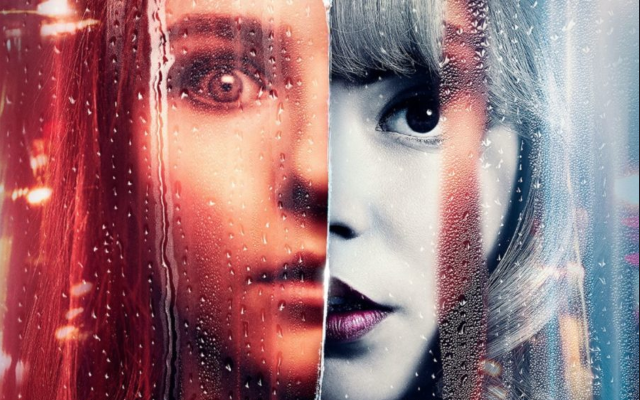
REVIEW: A mix of science fiction, horror, action with a dollop of romance (it’s coming out on Valentine’s Day after all), the genre-bending “The Gorge” is about two mad, bad and dangerous people who fall in love. Drasa (Anya Taylor-Joy) and Levi (Miles Teller) are star crossed lovers, but before they can be together, they must first battle some zombie-ish baddies.
Director Scott Derrickson throws every genre in book at “The Gorge” but at the end, after the sci fi, horror, conspiracy, action and more, this is a story of soulmates finding one another. The other stuff, the sharp shooting and monster action, is set dressing. Pretty cool set dressing, but set dec nonetheless. The leap across the gorge, isn’t just a feat of derring-do, It’s a leap of romantic faith.
It’s a daring mix, that sometimes feels like a jigsaw puzzle with too many pieces.
Surprisingly, it’s the romance that carries the day. The initial long-distance flirting—remember there is a huge gorge separating them—is goofy, but lighthearted. They hold up signs and dance, and while it isn’t perhaps exactly the kind of behavior you expect from two highly trained killers, it works. Even snipers can get smitten.
When all hell breaks loose—literally—“The Gorge” loses some of its uniqueness, even though the action sequences are large scale and well staged.
The creature designs, kind of a cross between Groot and a Yeti are cool and achieved through makeup and costumes. It gives the fight scenes a dynamic feel and heightens the stakes. Drasa and Levi aren’t battling CGI creations, they’re fighting creatures that feel organic.
At its heart, however, “The Gorge” isn’t really just a creature feature. It’s big budget actioner about human connection, but when it is running, jumping, shooting etc, it feels less inventive than it does when it focusses on the simple stuff, like the bond between two people who have searched for love.
The most famous plumbers since Thomas Crapper, the man who popularized the flush toilet, are back in “The Super Mario Bros. Movie.” The new animated film starring the voices of Chris Pratt, Charlie Day and Anya Taylor-Joy, and now playing in theatres, sends Mario and Luigi on an adventure that begins with a mysterious water pipe.
While working on a broken water main, Brooklyn, New York plumbers Mario (Pratt) and his fraternal twin brother Luigi (Day), leave the real world, sucked through the pipe into the Mushroom Kingdom.
“What is this place?” asks Mario.
Buried deep beneath the Earth’s surface, it’s the psychedelic principality of the strong-willed Princess Peach (Taylor-Joy), a ruler who shares her castle with Toad (Keegan-Michael Key), a humanoid mushroom aching to find adventure in his life.
But there is bad news.
“Your brother has landed in the Darklands,” Toad informs Mario. “They’re under Bowser’s (Jack Black) control.” Bowser, a giant, fire breathing turtle with world conquering ambitions, has Luigi, and it’s up to Mario to rescue his brother and save the Mushroom Kingdom.
“My little brother is lost,” says Mario. “He looks exactly like me, but tall and skinny. And green.”
With the help of the Princess and Toad, Mario’s quest begins.
“Excuse me, everybody,” shouts Toad. “Coming through! This guy’s brother is going to die imminently! Out of the way, please!”
There are questions you have to ask when reviewing a movie inspired by a video game. Is it good because it remains faithful to the game? Or is it successful because it transcends the game and embraces the big screen?
If you answered yes to the former and no to the latter, you may enjoy “The Super Mario Bros. Movie.” The theatrical experience of the film is essentially like playing the game, without the inconvenience of actually having to play the game.
The beautifully animated movie mostly delivers what Nintendo has been successfully doling out for forty years; Mario, Luigi and the gang dodging Bowser in the Mushroom Kingdom. That formula earned the game accolades as one of the greatest video games of all time, so why tinker with success?
I’ll tell you why. Because by not tinkering with success, by playing it safe, by bowing down to fan service, directors Aaron Horvath and Michael Jelenic have created a movie with all the charm of a broken Game Boy. Loud and frenetic, it’s propped up by nostalgia for the game and little else.
“Amsterdam,” a quirky new film starring John David Washington, Margot Robbie and Christian Bale and now playing in theatres, is a convoluted story fueled by everything from fascism and birding to murder and music. If there ever was an example of a film that could have benefitted from the KISS rule, Keep It Simple Silly, this is it.
The madcap tale begins in 1933 New York City. WWI vet Dr. Burt Berendsen (Christian Bale), once a Park Avenue physician, he now runs a downtown clinic where he caters to the needs of soldiers who came back from the war broken and in pain.
When Berendsen and his best friend, fellow vet and lawyer Harold Woodsman (John David Washington), are hired by Liz Meekins (Taylor Swift), the daughter of their beloved commanding officer, to ascertain the cause of his death, they are drawn into a murder mystery involving secret organizations, ultra-rich industrialists and a crusty Marine played by Robert DeNiro.
In a flashback to the final days of WWI, we learn their backstory and meet Valerie (Margot Robbie), a nurse who treats their wounds, physically and mentally. As a trio, they swear allegiance to one another during an extended bohemian get-a-way in Amsterdam, a city that becomes a metaphor for freedom and friendship.
Reviewing “Amsterdam” stings. The production is first rate, from Academy Award nominated director David O. Russell, to the a-list cast to the ambitious script that attempts to link events of the past to today’s headlines. But, and this is what stings, the film is definitely less than the sum of its parts.
From the off-kilter tone, part screwball, part deadly serious, to the glacial pacing, which makes the already long two-hour-and-fifteen-minute running time seem much longer, and the script, which casts too wide a wide net in hope of catching something compelling, “Amsterdam” flails about, lost in its own ambition. This is the kind of story, it’s easy to imagine, the Coen Brothers could make look effortless, but Russell does not stick the landing.
He does, however, forward some lovely ideas about embracing kindness and the full experience of being alive, but even those are muddied by the inclusion of heavy-handed, and not particularly original, warnings about domestic terrorism and authoritarianism. Ideas get lost in a sea of exposition and narration, that not even these interesting actors can bring to life.
There may be an interesting story somewhere within “Amsterdam,” but it is hidden, lost in the movie’s epic ambitions.
Robert Eggers is an idiosyncratic filmmaker whose previous films, “The Witch” and “The Lighthouse,” have more in common with silent era movies and formal stage presentation than they do with the blockbusters that rule today’s box office. His latest, the violent Viking drama “The Northman,” now playing in theatres, has all the hallmarks of Eggers’ work, but despite the inclusion of old Norse language, mysticism and its occasionally psychedelic tone, it may be his most accessible movie yet.
When we first meet Amleth, the Viking warrior prince, played as a teen by Oscar Novak, as a muscle-bound adult by Alexander Skarsgård, it is the year AD895 somewhere in the North Atlantic. He is a child about to enter the line of succession to one day take over from his father, King Aurvandill (Ethan Hawke).
An unspeakable act of betrayal interrupts Aurvandill’s plans for the future, forcing Amleth to flee the only home he has ever known, leaving behind his mother Queen Gudrún (Nicole Kidman).
Years pass. Adult Amleth is now a fierce warrior with revenge on his mind. When the would-be prince and his band of berserkers ravage a village, the locals who survived the carnage are sold off as slaves. When Amleth learns the purchaser is the man who betrayed his father, he disguises himself as one of the prisoners with a plan to get close to the man who destroyed his life and family, and earn back his honor. “I will haunt this farm like a corpse returned from the grave,” he declares.
On the journey he meets Olga of the Birch Forest (Anya Taylor-Joy), a sorceress who becomes his ally and love interest. “You are still a beast cloaked on man flesh,” she tells him. His strength, she tells him, will break their bodies. Her cunning will break their minds.
Amleth’s journey is also a spiritual one, driven by mysticism and the words of a whispering seeress played by Björk. ““Remember for whom you shed your last teardrop,” she says, sending him off on his mission. Eggers seamlessly blends the supernatural and the nature until the lines blur into one trippy whole.
“The Northman” is based on the Scandinavian legend that influenced William Shakespeare‘s beloved “Hamlet.” It’s a familiar story of payback, violent, visceral and vengeance-filled, but Eggers’ singular vision, and fondness for pathetic fallacy, ancient symbolism and psychedelia, make it a singular experience.
And don’t forget the violence. So much violence.
Amleth chews one man’s neck, killing him in a memorably bloodthirsty fashion, and that is before the revenge story comes into play. Eggers amps up the brutality, shooting long scenes in unbroken wide shots that provide full few of the action. This ain’t Michael Bay’s frantic cut and paste. It’s full coverage, carefully orchestrated violence that drives home the brutality of the battles. It’s ferocious, audacious—check out the showdown at the Gates of Hel—if occasionally unpleasant, stuff.
It’s not all fun and bloody games, however. The storytelling gets bogged down from time to time and Amleth’s frequent vocalizing of his mission mandate—avenge his father, kill his uncle and rescue his mother—gets old after a while.
Having said that, “The Northman” more than delivers on the director’s pure, primal cinematic vision. To Valhǫll!
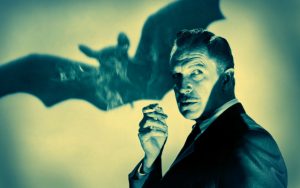
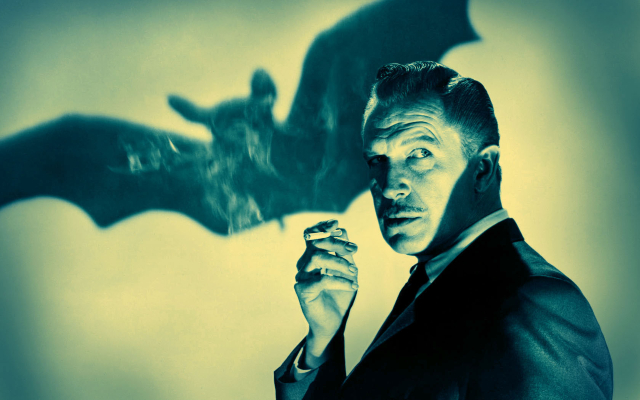
Richard joins Jay Michaels and guest host Tamara Cherry of the NewsTalk 1010 afternoon show The Rush for Booze and Reviews! Today we talk about Halloween icon Vincent Price’s favourite cocktails, the eerie “Last Night in Soho” and Wes Anderson’s latest, “The French Dispatch.”
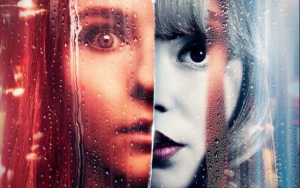
“Last Night in Soho,” the new film from director Edgar Wright, now playing in theatres, is a love letter to London’s Swingin’ Sixties by way of Italian Giallo. Surreal and vibrant, it is uneven and more than a little bit silly, but enjoyable for those with a taste for both Petula Clarke and murder.
When we first meet Cornish teenager Eloise (Thomasin McKenzie) she’s dressed head-to-toe in a throwback newspaper print dress of her own design, dancing to Peter and Gordon’s 1964 hit, “A World Without Love.” Several dramatic dance moves later, she makes her way down to her grandmother’s (Rita Tushingham) main floor and a letter announcing she’s been accepted to fashion school in London.
“London is not what you think it is,” granny warns. “It can be a lot.”
Eloise doesn’t heed the warning. She is obsessed with London, specifically the magical period when Julie Christie wore Mary Quant and Carnaby Street was the fashion capital of the world. “If I could live anywhere, I’d live in Soho in the sixties,” Eloise gushes. “It must have felt like the center of the universe.”
Unfortunately, London, as exciting as it is, doesn’t greet Eloise with open arms. At school her mean girl roommate makes life miserable to the point where Ellie moves out, renting a rundown bedsit in Soho from eccentric landlady Ms. Collins (Diana Rigg).
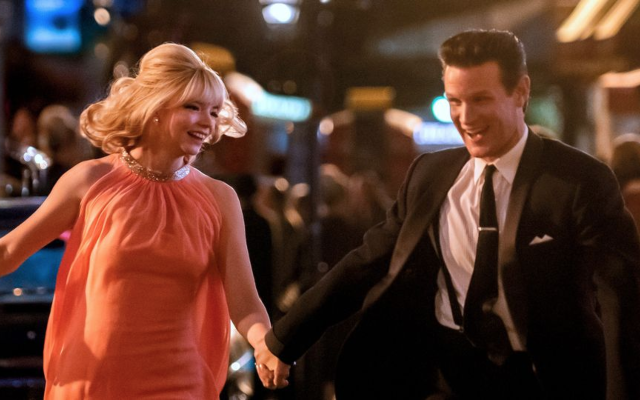
Falling asleep on her first night in the new digs, she is transported back to the glamorous world of the 1960s. “Thunderball” is at the movies, Cilla Black sings at Soho’s Cafe De Paris and the streets of are alive with people like Sandie (Anya Taylor-Joy), a wannabe singer with a great wardrobe and aspirations to stardom. Over time Eloise finds herself drawn into Sandie’s world, the world she had long dreamed about, but are these visions dreams, nightmares or dangerous manifestations of the ghosts that haunt every corner of old London town?
“Last Night in Soho” begins with verve, painting a picture of a time and place that is irresistible. A mosaic of music, fashion and evocative set decoration, the first hour brings inventive world building and stunning imagery. Wright pulls out all the stops, making visual connections between his film and the movies of the era he’s portraying and even including sixties British icons Rigg, Tushingham and Stamp in the cast.
A dance sequence that swaps out Eloise for Sandie at every twirl is exuberant, breathtaking in its choreography and an early indication that the two characters will be intertwined for the remainder of the story.
The first half is glorious fun but takes a very dark turn.
As Eloise becomes immersed in Sandie’s life, she peers beneath Soho’s dazzling veneer to see the dark underbelly of London’s nightlife. Wright changes tone, introducing horror and psychological elements. The two halves fit together like puzzle pieces, dovetailing into one another naturally despite the shift in ambience.
“Last Night in Soho” could use more character development in its lead characters, but the chemistry between McKenzie and Taylor-Joy as two sides of the same coin, is electric. Wright uses those characters to explore the misogyny that colors Sandie’s life, wringing horror out of the treatment she receives at the hands of her manager/pimp Jack (Matt Smith). The scares, which out me in the mind of Hammer Horror and “Repulsion,” are eye catching and effective, leading up to a surprising finale.
“Last Night in Soho” is more than the sum of its influences. They abound, but filtered through Wright’s sensibility become an enjoyable ride through a part of town and time that no longer exists.
Reminders of real life were all around us at this year’s Toronto International Film Festival. From the digital screenings we watched at home to half empty, socially distanced screenings at venues like The Princess of Wales Theatre. But when my mind wanders back to September 2021, I won’t be thinking of having to show my proof of vaccination or the social distancing in theatres.
What will linger?
The images of Anya Taylor-Joy in “Last Night in Soho,” crooning an a cappella version of the Swingin’ Sixties anthem “Downtown,” and “Dune’s” Stellan Skarsgård doing his best impression of Marlon Brando in “Apocalypse Now,” come to mind immediately.
Those moments and others like them are the reason the movies exist. They transcend the vagaries of real life, transporting us away from a place where masks, vaccine passports are the reality.
And boy, did we need that this year.
Here a look back at some of the moments that made memories at this year’s TIFF:
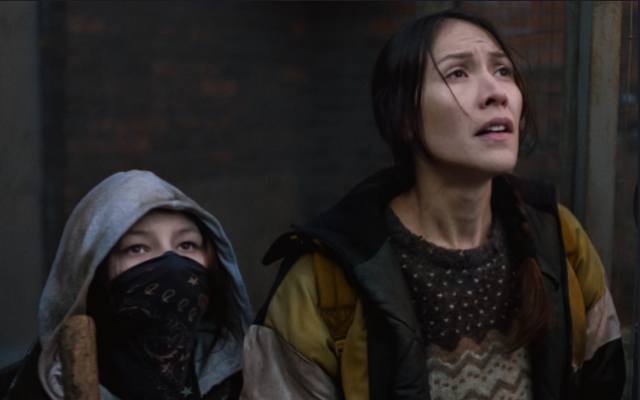
“Night Raiders,” a drama from Cree-Métis filmmaker Danis Goulet, draws on the historical horrors of the Sixties Scoop and Residential Schools to create an unforgettable, dystopian scenario set in the new future. It effectively paints a somber portrait of totalitarian future, packed with foreboding and danger. The story is fictional but resonates with echoes of the ugly truths of colonization and forced assimilation. Goulet allows the viewer to make the comparisons between the real-life atrocities and the fictional elements of the story. There are no pages of exposition, just evocative images. Show me don’t tell me. The basis in truth of the underlying themes brings the story a weight often missing in the dystopian genre.
I asked Danis Goulet about having many of her characters in Night Raiders speak Cree: “It is everything to me,” she said. “My dad is a Cree language speaker. He grew up speaking Cree. He learned to speak English in school. His parents were Cree speakers. And coming down to my generation, I’m no longer a Cree speaker and there are entire universes, philosophies and poetry and beauty contained in the language. When we think of where our heritage lies, maybe some people think of museums. For me I think it is in the language. I think that richness doesn’t just offer Indigenous people something. I think if others looked closer at what the language tells us about the history of this land, they would be incredibly amazed. My dad has looked at references in the language that talk about the movement of the glaciers, so, foe me to have the Cree language on screen is everything. I’m in my own process. I go to Cree language camp to try and learn back the language and the language gives back in a way that is so healing and incredible. It is one of the greatest gifts in my life. So, the opportunity to put my dad’s first language on the screen, and the language of the Northern Communities where I come from, and my language that I lost, is the best. It’s incredible.”
From Twitter: @RichardCrouse Was just sent this: “Wanted to check and see if you’d be able to either send proof of vaccine OR a negative covid test prior to your interviews with the talent.” I sent my proof in, but added, “Will the talent be providing me with proof of vaccination?” #TIFF21 #fairquestion 4:48 PM · Sep 9, 2021· 8 Retweets 3 Quote Tweets 206 Likes
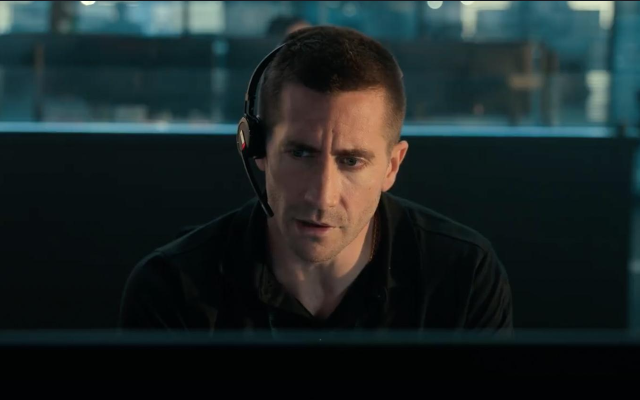
There is no mention of COVID-19 in the Jake Gyllenhaal thriller “The Guilty.” But make no mistake, this is a pandemic movie, A remake of 2018 Danish film “Den skyldige,” it is essentially a one hander, shot on a just a handful of set with strict safety protocols in place. Gyllenhaal, as 911 operator Joe Baylor, may be socially distanced from his castmates, but his performance is anything but distant. Played out in real time, “The Guilty” builds tension as Baylor races against a ticking clock to bring the situation to a safe resolution for Emily. Director Antoine Fuqua amps up the sense of urgency, keeping his camera focused on Gyllenhaal’s feverish performance. The close-ups create a sense of claustrophobia, visually telegraphing Baylor’s feeling of helplessness and his crumbling mental state.
The sound of an audience laughing, applauding, crying, or whatever. Just being an audience. The big venues were socially distanced, and often looked empty to the eye, but when the lights went down and folks reacted to the opening speeches or the films, it didn’t matter. Roy Thomson Hall, with its 2600-person capacity, may have only had 1000 or so people in the seats, but for ninety minutes or two hours they formed a community, kindred souls brought together after a long break, and it was uplifting to hear their reactions.
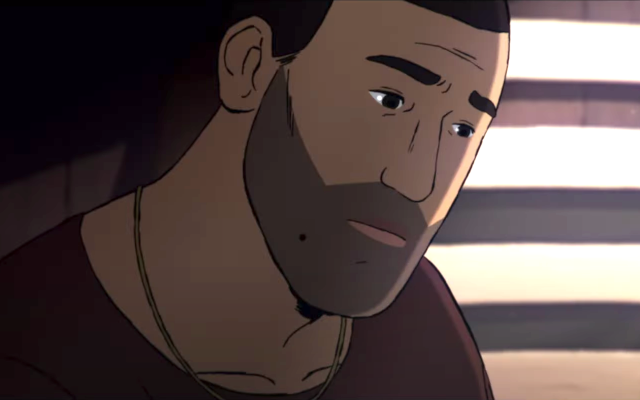
“Flee” is a rarity, an animated documentary. A mix of personal and modern world history, it is a heartfelt look at the true, hidden story of the harrowing life journey of a gay refugee from Afghanistan. Except for a few minutes here and there of archival news footage, “Flee” uses animation to tell the story but this ain’t the “Looney Tunes.” Rasmussen used the animation to protect Amin’s identity, but like other serious-minded animated films like “Persepolis” and “Waltz with Bashir,” the impressionistic presentation enhances the telling of the tale. The styles of Rasmussen’s animation change to reflect and effectively bring the various stages of Amin’s journey to vivid life. It is suspenseful, heartbreaking and often poetic.
I asked “The Survivor” star Vicky Krieps about working opposite Ben Foster: “The first day I came [on set] I was very intimidated,” she said. “I wouldn’t say scared, but it felt like a wall to me. It began like this. There was no small talk. There was no, ‘How are you?’ He was already in character and it was very clear. I thought, ‘OK, I have to play his wife.’ And then, something really interesting happened. I like having a challenge and this felt like a challenge. So, I needed to find a way [to relate to him] because I knew I was going to be his wife. How do I do that? Imagine it as a wall, but then in the wall there are eyes. I used those eyes and I felt like I could open a window, and inside of those eyes was a horizon where I could go. I liked to say to Ben, ‘And then we would dance.’ Sometimes I wrote to him and said, ‘It was nice dancing today.’”
“Last Night in Soho,” from director Edgar Wright, is a love letter to London’s Swingin’ Sixties by way of Italian Giallo. Surreal and vibrant, and more than a little bit silly, its enjoyable for those with a taste for both Petula Clarke and murder. It begins with verve, painting a picture of a time and place that is irresistible. A mosaic of music, fashion and evocative set decoration, the first hour brings inventive world building and stunning imagery. Wright pulls out all the stops, making visual connections between his film and the movies of the era he’s portraying and even including sixties British icons Rigg, Tushingham and Stamp in the cast.
I asked “Dune” star Rebecca Ferguson why she said reading Frank Herbert’s novel was like doing a crossword puzzle: “Sometimes I wonder what comes out of my mouth,” she said. “My mother and many of my friends sit and do crosswords, but I have never been in that world. There is a way of thinking around it. It’s logical, mathematical. You need to be able to see rhythms. Whatever it is. Reading “Dune” was quite dense and I think for people who are immersed into the world of science fiction, they understand worlds and Catharism and this planet and that planet. It is just another picture, which, not to stupefy myself, I am intelligent enough to understand it, but there is a rhythm. I think it is me highlighting the fact that people who live and breathe science fiction, they get it at another level.”
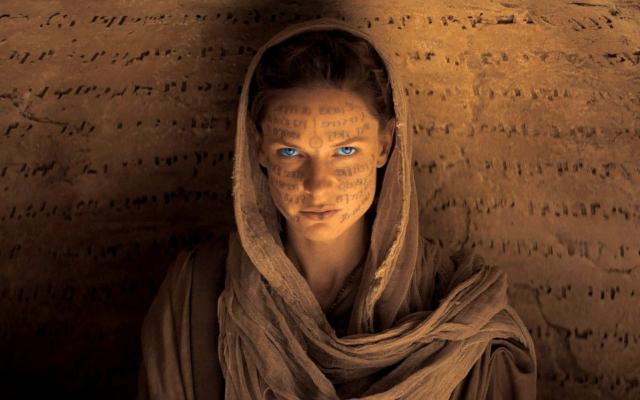
“Dune,” the latest cinematic take on the Frank Herbert 1965 classic, now playing in theatres, is part one of the planned two-part series. “Dune” is big and beautiful, with plentiful action and a really charismatic performance from Jason Momoa as swordmaster Duncan Idaho. It is unquestionably well made, with thought provoking themes of exploitation of Indigenous peoples, environmentalism and colonialism.
I will give “The New Mutants” director Josh Boone a couple of points for attempting to push the limits of what an X-Men movie can be. The spin-off of the Marvel comics, now playing in theatres, isn’t about saving the planet or battling little green beings from outer space.
Boone mixes and matches the superheroes with psychological horror, placing people with extraordinary powers battling their own, earthbound demons. It’s a genre film, but not a memorable one. In this case, you can’t spell “generic” without “genre.”
The story centers around Dani Moonstar (Blu Hunt), an indigenous teen whose entire reservation was wiped off the face of the earth by… something. For some reason she survives, only to find herself chained to a hospital bed in a mysterious facility. Enter Dr. Reyes (Alice Braga), a kindly (or is she?) physician who unchains Dani and explains the situation to her. “You’re in a safe place,” the good (once again, is she?) doctor says. “Nothing can hurt you here.”
Soon she is introduced to the other inmates… er… patients. There’s Russian meanie Illyana Rasputin (Anya Taylor-Joy), a mutant who can teleport and slice people to bits with an arm that morphs into a sword. Rahne Sinclair (Maisie Williams) is part human, part werewolf and can smell trouble from a mile away, while hunky Roberto da Costa (Henry Zaga) is so hot he will occasionally burst into flames. Completing the line-up is Sam Guthrie (Charlie Heaton), a southerner whose slowed down drawl hides the fact that he’s gifted with thermo-chemical energy propulsion that would make Usain Bolt look like a slow poke.
As young adults they are new to their powers, attending therapy sessions with Dr. Reyes to learn how to control their abilities.
How does Dani fit in? What are her powers? That’s what Reyes wants to find out. What will she do with that information? “This isn’t a hospital,” warns Illyana. “It’s a cage and you’re trapped in here forever.”
“The New Mutants” then becomes a guessing game as strange things start happening. Bad dreams terrorize Dani’s fellow mutants, each reliving a terrible, formative moment in their development. “We’re trapped in here with demons!” Roberto shrieks.
Boone conjures up some eerie imagery. Illyana’s slender-man wannabe ghouls are unsettling, but the idea of the manifestation of the character’s fears has been done before and done better in movies like “It.”
Eventually “The New Mutants” biodegrades into a computer-generated slog as the movie approaches the end of its 90-minute running time. Whatever character work the cast, who are actually quite good, have done to involve the viewer is undone by a series of loud episodes that favor empty spectacle over humanity.
 I join the CTV NewsChannel to talk about the new MCU offering “Captain America: Brave New World,” the adorable “Paddington in Peru,” the romantic entanglements of “Bridget Jones: Mad About the Boy” and the sci fi love story “The Gorge.”