The grisly events in “Barbarian,” a new house rental horror film now playing in theatres, are a better advertisement for staying in a hotel than anything the Canadian Hotel & Lodging Association could have dreamed up.
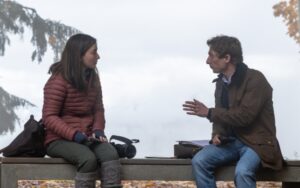
The story begins with Tess (Georgina Campbell) pulling up in front of an Airbnb in the rundown neighborhood of Brightmoor in Detroit. Turns out, the only house on the block without broken windows or a kicked-in front door, is doubled booked, and Keith (Bill Skarsgård), is already settled in. She booked on Airbnb, he booked on another site, wires were crossed, but instead of sending her out in the rain to find another place to stay, he invites her in. You take the bed, he says, I’ll sleep on the coach. She reluctantly agrees, won over by his charm and seemingly good-guy vibes.
After lights out, strange things happen. At first, it’s creepy but explainable, like creaky old doors that open and close by themselves, but, the next day, when she goes to the basement to retrieve some supplies, the house reveals a dark secret.
Cut to Los Angeles, present day, and the worst moment of self-involved television star AJ Gilbride’s (Justin Long) life. Accused of sexual impropriety by a co-star, he’s fired from his show and is the subject of an exposé in the Hollywood Reporter. His career in tatters and his bank account running dry, he decides to sell off assets, including an Airbnb property he owns in Brightmoor, Detroit. “I’m not here on vacation,” he tells his lawyer as he lands in Michigan. “I’m here for some liquidity.”
As the story of Tess and AJ collide, “Barbarian” takes one last left turn, this time to Detroit, circa the Reagan years, with the origin story of the innocent looking house’s evil.
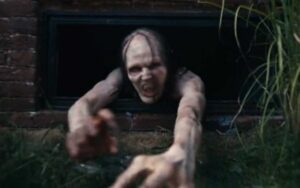
“Barbarian” is an audacious thriller with a heaping handful of solid scares. Director Zach Cregger zigs and zags, trusting the audience to hang on for the wild ride. It’s worth the trip. The tense atmosphere of Tess and Keith’s story gives way to AJ’s MeToo cautionary tale and the sinister origin story before throwing it all into the hopper to create a genre-busting final third act. Nothing is off the table as the movie tackles the worst of human nature, narcissism, murder and even incest. It’s a heady mix that should have you moving toward the edge of your seat.
“Barbarian” is one of the rare, recent horror movies that truly keeps the viewer off balance throughout. It’s never clear where the story is going, and that off-the-hook storytelling keeps the creepy story compelling. It’s a roller coaster in which only one thing is clear: Never rent an Airbnb built over a catacomb.
I appear on “CTV News at 11:30” with anchor Andria Case to talk about the music bio “California Schemin’,” the Crave series “American Hostage” and Mikey Madison in “The Social Reckoning.”
I appear on “CTV News at 6” with anchor Andria Case to talk about the Netflix Newfoundland creature feature “Below” with Josh Hartnett, the Netflix documentary “Who Is Martin Mull” and the theatrical documentary “Run terry Run” about Terry Fox.
SYNOPSIS: In the unconventional “Cuckoo,” a bonkers new horror film now playing in theatres, “Euphoria’s” Hunter Schafer plays the rebellious 17-year-old Gretchen, a traumatized young woman living with her father Luis (Marton Csokas) and his new family in the German Alps. When her father’s business partner Herr König (“Downton Abbey’s” Dan Stevens) offers her a job on the front desk of his rural mountain resort, she jumps at the chance, despite some red flags. On site, she notices women mysteriously falling ill and when her step-sister becomes sick, Gretchen aims to discover the resort and König’s secrets.
CAST: Hunter Schafer, Jan Bluthardt, Marton Csokas, Jessica Henwick, Dan Stevens. Written and directed by Tilman Singer.
REVIEW: It’s not the end of the year yet, but I’m willing to bet the aptly named “Cuckoo” will be the strangest arthouse horror film of the year. A mix-and-match of body horror, otherworldly influences and slasher violence, it’s an unpredictable ride courtesy of director’s Tilman Singer’s unbridled imagination.
The off-kilter vibe is supported by the performances. Schafer is the guide, the most earthbound of all the characters, but even she seems engulfed by the film’s sensory overload.
Even more extreme is Stevens, who leaves “Downton Abbey” in the rear-view mirror with a performance so over-the-top it’s like a Bond villain on Adderall. His ever-changing pronunciation of Gretchen’s name is so bizarre, and so entertaining, it’s like it has been filtered through Google translate every time out.
After several mind-bending episodes, “Cuckoo” pays off in the third act as most of the story threads knit themselves up, and plot holes are filled. It will still likely polarize audiences looking for easy answers, but its sheer willingness to embrace its incomprehensibility is part of its eccentric charm.
Fast reviews for busy people! Watch as I review three movies in less time than it takes to wind your watch. Have a look as I race against the clock to tell you about the doom scrolling of “The Social Reckoning,” the intimate documentary “Run Terry Run” and the stranger-than-fiction “California Schemin‘”.
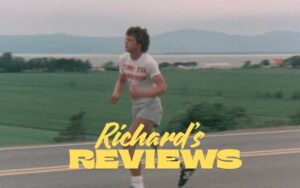
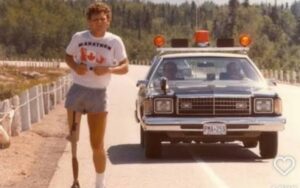
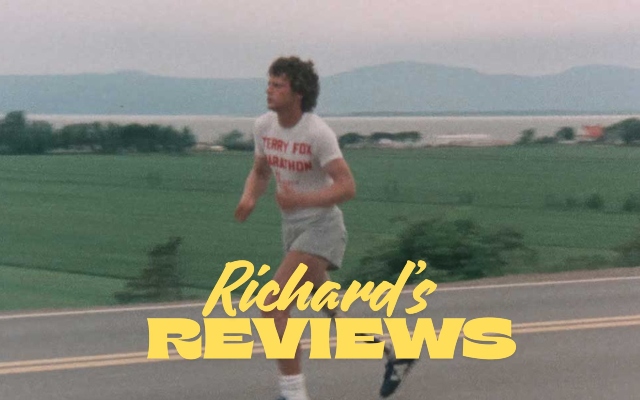
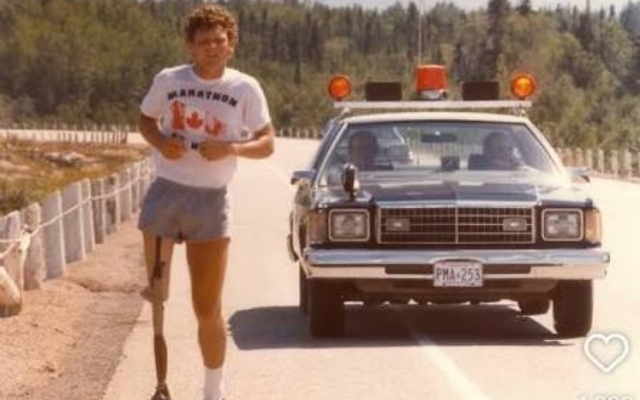
Terry Fox’s 1980 run across Canada to raise money for cancer research is a well-documented story, known to many Canadians. Despite that familiarity, the new feature length documentary “Run Terry Run” offers up new footage that packs a renewed emotional wallop.
Constructed from almost 100 hours of newly uncovered film, much of it shot during the Marathon of Hope or leftover from John Simpson’s 1981 CBC film “Terry Fox: I Had a Dream,” the new film transports us back to 1980. Like a newly opened time capsule it is locked in time, with no modern flourishes. Director Sean Menard forms a picture of Fox and his compassion and courage from the restored archival material, not from retrospective talking head interviews or the addition of newly shot footage.
It’s a trip backwards in time, one that provides an up close and personal look at Fox. From his exhaustion and humor to his stubbornness and humility, it’s as intimate a portrait as we’re ever likely to get.
The story of the plainspoken but philosophical twenty-two-year-old everyman whose Marathon of Hope mission, to run across Canada on one leg and raise a donation of $1 from every Canadian for cancer research, was cut short by cancer, is tragic, and the film, as it winds down to the conclusion of Fox’s run, is devastating.
Time has put Fox on a pedestal, celebrating him for the hero he was, but this film reminds us that he was also a twenty-two-year-old looking forward to a future which, sadly, he never got to experience.
It’s sad, but it is also a story of a country coming together to support one remarkable, determined young man. In our age of fracture and cynicism, it’s refreshing and necessary to have a movie like “Run Terry Run” provide an firsthand look at what Canadian unity and heroism look like.
“Right now, Canada is going through a real tough period politically,” says a young student in a 1981 archival clip, “and maybe just for a little while, Terry Fox sort of gave us one goal to work towards and one thing to work for as a nation, rather than as 10 provinces.”
SYNOPSIS: The directorial debut of “X-Men” star James McAvoy, “California Schemin’” is based on the true story of a Scottish hip hop act who pretended to be American to get a record deal.
CAST: Séamus McLean Ross, Samuel Bottomley, Lucy Halliday, James Corden, Rebekah Murrell. Directed by James McAvoy.
REVIEW: “California Schemin’” is a rowdy, stranger-than-fiction music bio that provides tons of fun but is also a cautionary tale of the toxic side of ambition.
The story of Billy “Silibil” Boyd (Samuel Bottomley) and Gavin “Brains” Bain (Séamus McLean Ross), two Scottish B-boys with a shared love of hip hop and skateboard culture, begins with a failed audition for a London talent show. They bare incensed when talent reps laugh them off the stage who call them “the rapping Proclaimers.”
Flat broke but determined to perform, they create an American persona, despite never having been to the States. Renaming themselves Silibil N’ Brains and dropping their Scottish accents in favor of some vaguely Valley Girl affectation, they claim to be from someplace called San Diangeles. “You actually sound American,” says Mary (Lucy Halliday). “You sound, like, entitled!”
Their new image catches the eye of a record label run by a guy (James McAvoy) who thinks they could be the next Beastie Boys or Eminem. “We’ll release a single and then we’ll come out fully Scottish and expose those wankers.”
Introduced to the world of studio sessions, appearances on MTV and groupies, success comes quickly, but their faux American dream quickly unravels. Fame and money put a wedge between the two friends as Gavin embraces he trappings of the music biz in a way that endangers Billy’s real love, his girlfriend Mary.
The well documented story—both in the documentary “The Great Hip Hop Hoax” and Gavin’s memoir—“California Schemin’” is a gritty music bio about identity and image that succeeds through its exuberance and engaging lead performances.
As the duo who Trojan Horsed themselves into the record biz, Ross and Bottomley are a boisterous pair. Underdogs who’ll do almost anything to get a leg up, they have great chemistry and which raises the stakes when things begin to sour between them.
“California Schemin’” falters here and there—a James Cordon cameo as a music executive doesn’t work well—and the ending doesn’t bring the intended feelgood vibe, but overall, with its infectious working-class spirit à la “Wild Rose,” it succeeds.
SYNOPSIS: In “The Social Reckoning,” a new legal thriller starring Mikey Madison and Jeremy Allen White now playing in theatres, a whistleblower leaks secret Facebook internal research. “The firehose of bad information you are injecting into the air supply is becoming jet powered.”
CAST: Mikey Madison, Jeremy Allen White, Wunmi Mosaku, Betty Gilpin, Billy Magnussen, Bill Burr, Jeremy Strong. Written, co-produced, and directed by Aaron Sorkin.
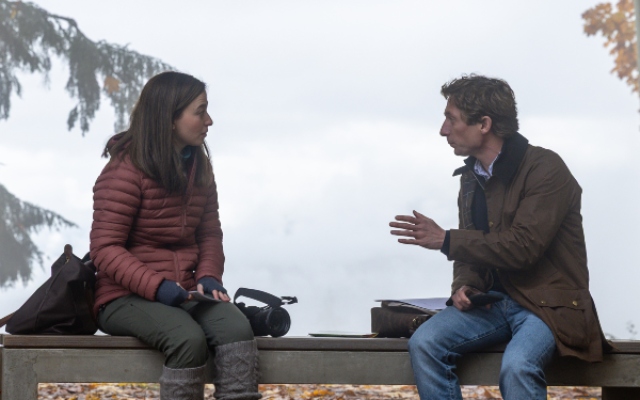
REVIEW: A companion piece to Sorkin’s 2010 film “The Social Network,” “The Social Reckoning” is based on the 2021 Facebook leak by whistleblower Frances Haugen (Mikey Madison) and Wall Street Journal reporter Jeff Horwitz (Jeremy Allen White).
When Haugen, a data engineer for Facebook, uncovers documents proving the social platform’s executives knew its products were amplifying misinformation, hate and causing body-image issues in teens.
Instead of looking for remedies, however, Facebook’s parent company choses to ignore the research in favor of engagement and growth. “Almost no one outside of Facebook,” Haugen says, “knows what goes on inside Facebook.”
Putting it all on the line, she contacts Wall Street Journal reporter Jeff Horwitz with data that implicates the company’s billionaire CEO Mark Zuckerberg (Jeremy Strong) who fights to suppress the story, now known as the Facebook Files. “I’m an investigative reporter,” says Horwitz, “and that guy and this company are playing an unprecedented role in our lives.”
Just in time for the US midterms comes a movie about how easily voters are manipulated. Unfortunately, the movie’s timely messaging of Facebook’s (now Meta) commodification of outrage, misinformation, cyberbullying and social isolation, feels like old news.
Had the film, written and directed by Aaron Sorkin with cool elegance, been released in 2021 when The Wall Street Journal unleashed the Facebook Files, it may have packed more of a punch. Today, the detrimental effects of social media are known and ingrained, so the blockbuster disclosures of 2021 aren’t dramatically compelling no matter how many times Sorkin cuts to intense footage of the storming of the United States Capitol.
As a result, watching “The Social Reckoning” in 2026 feels like the cinematic equivalent of doom scrolling, two hours of time spent learning nothing new.
Direction wise, the movie is straightforward and solid, reminiscent of prestige television from the 1990s, long before Facebook drained eyes away from the boob tube. It’s graceful, if a little dull, missing the paranoid vibe that made investigative movies like “All the President’s Men” and “The Parallax View” so compelling.
Of the headliners, Mikey Madison, Jeremy Allen White and Jeremy Strong, it’s Madison who impresses.
White leaves the chef jacket of “The Bear” behind to hand in a restrained performance as the slow-and-steady Horwitz.
Strong plays Meta Founder, Chairman and Chief Executive Officer Mark Zuckerberg as a po-faced robotic villain, the powerful embodiment of free-speech absolutism and profit. His line reading of, “This is a business, Charlie. You know why we don’t fact-check ads: because we don’t have to,” is chilling in its repercussions.
Madison impresses. The external performance of “Anora” has been turned inward as she makes the self-confessed nerdy whistleblower whose actions are driven by idealism, not malevolence, the film’s most persuasive character. “Connecting people, it’s a virtuous mission,” she says. “Something changed.”
Bill Burr also earns a nod as Charlie, an early Facebook investor who becomes one of the few who will speak truth to Zuckerberg’s power. “The firehose of bad information you are injecting into the air supply is becoming jet fuel,” he says.
These performances provide “The Social Reckoning’s” vigor even when the movie takes on the tone of a lecture on profit vs. social harm.
A: A Quiet Place: Imagine living in complete silence. Never raising your voice over the level of a faint whisper. No music. No heavy footsteps. You can’t even sneeze. Silence. Then imagine your life depends on staying completely noiseless. That’s the situation for the Abbott family—and the rest of the world—in the effective thriller A Quiet Place. Uncluttered and low key, it’s a unique and unsettling horror film.
B: Black Christmas: Without this groundbreaking 1974 Canadian horror film there might never have been a Jason Voorhees, Freddy Krueger or Michael Myers. Between them the gruesome threesome has sliced and diced their way through at least two dozen movies, but the mayhem they imposed on promiscuous college girls and studly teens owes much to one film made in Toronto, a movie Film Threat magazine calls “the first modern slasher movie.”
C: Candyman (2021): Candyman is a movie that succeeds on two levels, as a comment on the echoes of historical racism that can be heard today and as a horror film that’ll scare the pants off of you. A study of trauma in the Black community, “Candyman” expands the scope of the original to suggest that the Candyman isn’t singular. In the 2021 film William says, “Candyman’s the whole damn hive,” representing all Black men who have been lost to race-based violence.
D: The Descent: The Descent is scary. Run home to your Momma scary. Scream like a little girl scary. Close your eyes and think of something else scary. “Hold me, I’m scared” scary. There are gory moments, but it isn’t the blood and guts that terrifies. It is the hopeless situation, the unrelenting air of menace that really plays on the viewer’s fears.
E: The Exorcist: This one so traumatized audiences with shots of the possessed Regan MacNeil’s 360-degree head spinning that in the U.K. the St. John’s Ambulance Brigade were on-call at screenings to tend to fainters. Star Linda Blair says she wasn’t traumatized by the film but admits there has been one long lasting side effect. “You wouldn’t believe how often people ask me to make my head spin around,” she says.
F: Freaks: Set in the world of a funfair sideshow, it features a cast primarily made up of actual carnival performers—like Elizabeth Green the Stork Woman and Prince Randian a.k.a. the Human Torso—to tell the story of a beautiful trapeze artist who agrees to marry a deformed sideshow performer for his money. As a young man, director Tod Browning (who also helmed Dracula) had been a member of a travelling circus and that experience brought such a horrifying realism to the story that one woman threatened to sue MGM, claiming the film had caused her to suffer a miscarriage.
G: Ginger Snaps: From 2000, and directed by John Fawcett, this is a great reinvention of the werewolf myth that mixes and matches a werewolf tale with a coming-of-age story.
H: Humanist Vampire Seeking Consenting Suicidal Person: Atmospheric and gothic though it may be, the movie is actually a tender-hearted story that uses the undead to celebrate life. It breathes some of the same fetid air as What We Do In The Shadows, Let the Right One In and Only Lovers Left Alive in its creation of a vampire world that intersects with our own. Quebec filmmaker Ariane Louis-Seize builds a world for reluctant vampire Sasha to inhabit that feels familiar, like our reality, only filtered through a Tim Burton lens.
I: It Follows: It Follows is a hybrid of genres. It’s a scary film through and through, but it’s the dual horror of teenage boredom and ennui coupled with a strange and terrifying supernatural virus that is transmitted sexually. Coming of age and body/mind horror steeped together in an unholy mix and it is an effective brew.
J: Jennifer’s Body: A bloody story about demonic transference and a cheerleading succubus who feeds on the intestines of teenage boys, Jennifer’s Body breathes the same air as the great Canadian horror film Ginger Snaps. Both are inventive takes on established horror mythology—in Ginger’s case it was the werewolf legend here it is demonic possession—and both feature humor and lots of blood and guts.
K: Killer Klowns from Outer Space: Killer Klowns from Outer Space will scare the heck out of coulrophobics. The alien Klowns are beautifully realized creations, reminiscent of the outrageous puppets form the British television satire Spitting Image. Beneath large painted-on grins are rows of yellowed sharp teeth, topped off with beady jaundiced eyes, oversized ears and wildly colored hair. Every feature is madly exaggerated until you have a living caricature of a clown—something funny, but weird and scary at the same time. That feeling is the film’s greatest asset. The creative minds behind Killer Klowns, the Chiodo Brothers—Charles, Edward and Stephen—manage to strike a balance between camp and seriousness by playing it straight. The situation is bizarre and some of the dialogue is downright cheesy, but the actors never wink at the camera. Hamming it up would have made Killer Klowns just another jokey sci-fi take-off, a self-conscious look at a genre that is easy to poke fun at.
L: Late Night with the Devil: Late Night with the Devil is a Faustian show biz satire about the price of success, that contains enough genuinely disturbing images and ideas to become a found footage favorite. The film’s production value and attention to detail makes it seem like we’re watching a suppressed tape of an actual broadcast, like “War of the Worlds,” only real. The skillful filmmaking builds up the tension to an exciting and eye-popping payoff.
M: Monster Squad: A 1987 teenage horror comedy that owes a big nod to Abbott and Costello Meet Frankenstein with a side order of The Goonies thrown in for good measure.
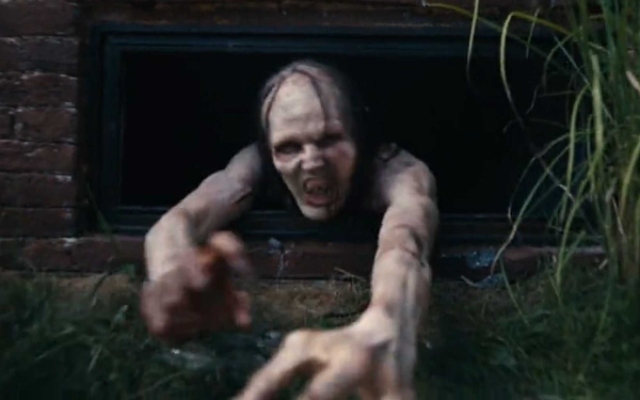
N: Night of the Living Dead: The movie premiered on October 1,1968 earning a rave from Roger Ebert and that other mark of success for a horror film, condemnation from fundamentalist Christian groups. These days it doesn’t take a lot of braaaaaaaaaaaaaaaains to see the legacy of Night of the Living Dead. The ghoulish story is considered a classic, has spawned comedies like the box office hit Zombieland and serious television shows like The Walking Dead and was even selected by the Library of Congress for preservation in the National Film Registry as a film deemed “culturally, historically or aesthetically significant.”
O: Orphan: There are a couple of lines necessary for the success of every Creepy Kid movie. Chief among them: “I have a surprise for you, Mommy!” Why is the line so successful? Because the surprise is never good. A close second is the old, “I don’t think Mommy likes me very much” gag. These lines work because of the juxtaposition of innocence against a malevolent backdrop. In other words, evil children are scary. As Orphan’s resident creepy kid, Isabelle Fuhrman is particularly good, just other-worldly looking enough to be freaky but able to turn on the charm when she needs to. She is a stern mistress who I could see inspiring a drinking game. How about a shot of Jäger every time she gives someone the creepy kid stink eye? You’d be on your butt before the forty-minute mark.
P: Psycho: If Alfred Hitchcock had any doubts about the effectiveness of the shower sequence in Psycho they must have been put to bed when he received an angry letter from the father whose daughter stopped bathing after seeing the bathtub murder scene in Les Diaboliques and then, more distressingly, refused to shower after seeing Psycho. Hitch’s response to the concerned dad? “Send her to the dry cleaners.”
Q: Q: The Winged Serpent: In a career filled with gonzo movies, exploitation director Larry Cohen outdid himself with his big monster opus Q: The Winged Serpent. The story of a petty thief, played by Law & Order’s Michael Moriarty, who comes across the nest of winged, reptilian Aztec god Quetzalcoatl. “It couldn’t have been an egg,” he says. “There are no eggs that big!” His discovery unwittingly unleashes “the fantastic flying forces of a lost age” on New York City. It’s called Quetzalcoatl, the trailer tells us,” but just call it Q because that’s all you’ll have time to say before it tears you apart.” Shot in just 18 days, this is a creature feature unlike any other. The cut rate special effects reveal its bottom-of the-barrel-budget, but fun performances from Moriarty, Candy Clark, David Carradine and Richard Roundtree and Cohen ‘s energetic work breathe life into the film, about which critic Colin Greenland noted, “It is not often that a film is enjoyable as a monster movie, a character study and a satire, but Q: The Winged Serpent scores on every one.”
R: Ready or Not: This film is a bloody satire with sly commentary about the lengths the 1% will do to keep their cash. The surprisingly nasty third act gives “Ready or Not” the feel of a future cult classic, a crowd-pleaser with some laughs and a giddily gory climax.
S: Sleepaway Camp: This gory slasher flick is most notable for a wild twist ending that has been called a “jaw-dropping, tape-rewinding, pause-and-stare-and-call-your-friends-over-to-stare” moment. Ignore the sequels, although the number two’s title Unhappy Campers is pretty great.
T: The Texas Chain Saw Massacre: An atmospheric gem, a white-knuckle movie that made Leatherface the first icon of modern horror. It’s an unforgettable movie. An atmospheric gem that, combined with other transgressive films like “Night of the Living Dead” and “The Last House on the Left,” initiated a modern age of horror in the 1970s.
U: Us: Inspired by an episode of the Eisenhower-era Twilight Zone series called “Mirror Image,” Us is a gory take on class structure, on the chasm between rich and poor, between those with power and advantages and those without. It’s an outlandish story but the powerful message resonates loudly.
V: Viva La Muerte (Long Live Death): Risky and upsetting viewing, but in the avant-garde descriptions is a beautifully crafted — although completely gonzo — portrait of a young person in mental anguish.
W: The Witch: The Witch is the kind of horror film that is not content to simply say “Boo!” There are few, if any, jump scares in the film. Instead, it’s the kind of puritanical folk tale that slowly burrows itself into your brain, leaving you queasy and uneasy. It won’t be for everyone, and certainly not for casual horror fans. There’s no Freddys or Jasons in sight, just pure terror.
X: X: X is a throwback to the horror of Tobe Hooper and Wes Craven, but with a sensibility that simultaneously feels like a tribute and an update.
Y: You’re Next: Disturbing, violent and without any redeeming social value, this home invasion survivalist film, doesn’t offer anything new in terms of motive for the killing, but the ruthless efficiency with which the killing is done is chilling. Morals or feelings need not apply. So even though there isn’t a lot of blood—it is mostly implied—the film still packs a grisly punch.
Z: Zombieland: Making a horror comedy is tricky business. Do it right and you get a classic like “Sean of the Dead,” a movie whose body count is offset by just the right amount of laughs. Do it wrong and you’ll wind up with “Repossessed,” a movie that is neither funny nor scary, just dull. “Zombieland” director Ruben Fleischer understands that horror comedies are neither fish nor fowl—they are both. For every decapitation you must have a giggle and Zombieland delivers on both counts.