Disney takes you back under the sea with “The Little Mermaid,” the latest of their photo-realistic, live action remakes of classic animated movies. Based on the 1837 Hans Christian Andersen fairy tale of the same name, the new film places the titular mermaid in an undersea world that brings to mind your work computer’s aquarium screensaver.
Singer-songwriter and actress Halle Bailey stars as Ariel, the mermaid daughter of the Kingdom of Atlantica’s ruler King Triton (Javier Bardem). She is a free spirit, fascinated by the human world. Unlike his daughter, the overprotective King is no fan of humans and has forbidden her from visiting the “above world.”
But, like the song says, she “wants to be where the people are,” despite her father’s warnings. “I want to see them dancing,” she sings. “Walking around on those… what do you call them? Oh feet!”
Her dry land dreams are fulfilled when she rescues the human Prince Eric (Jonah Hauer-King) from drowning. She is immediately smitten, and determined to live above sea level.
“This obsession with humans has got to stop,” scolds King Triton.
“I just want to know more about them,” she says.
Following her heart, Ariel makes a deal with Ursula (Melissa McCarthy), an evil sea witch with glow-in-the-dark phosphorescence tentacles, who grants the mermaid’s wish to be with Eric in trade for her “siren song,” i.e. her voice.
“Here’s the deal,” she says. “I’ll whip up a little potion to make you human for three days. Before the sun sets on the third day, you and Princey must share a kiss, and not just any kiss. The kiss of true love. If you do, you will remain human permanently. But if you don’t, you’ll turn back into a mermaid and you belong to me.”
Ursula’s “premium package” comes at a high cost, however. A steep price tag that could cost King Triton his crown and Ariel her life.
You can’t shake the feeling, while watching the new “The Little Mermaid,” that it is competing with itself.
The 2023 photo-realistic animation is very good, presenting beautiful, fluid images, buoyed by theatrical flourishes from director Rob Marshall and strong performances from Halle Bailey and Melissa McCarthy. The new songs, by Alan Menken and Lin-Manuel Miranda, are good too, particularly the fun “Scuttlebutt.”
But it feels like something is missing. That’s the magic that made the ink and paint “Little Mermaid” an enduring classic.
There is plenty of razzmatazz. Marshall, a veteran of big musical extravaganzas like “Chicago” and “Into the Woods,” is at his best when applying a Broadway style gloss to the musical numbers. “Under the Sea,” a holdover from the first film, is a knockout. The psychedelic underwater cinematography will give your eyeballs a workout and it has a good beat and you can dance to it.
But for every Ziegfeld Follies style dancing sea slug number—super cool—there is yet another movie-stopping scene of Ursula’s endless exposition where she explains her nefarious plot or a padded action scene. Those slow spots give the storytelling a choppiness that would capsize a lesser vessel but Bailey’s strong, emotional vocals and star-making performance coupled with a fun turn from Daveed Diggs as the “educated crustation” Sebastian keep the ship from sinking.
“The Little Mermaid’s” message of a young person giving up their voice so they could be heard, is unchanged, and is still powerful, but feels waterlogged by comparison to the original.
“You Hurt My Feelings,” a new Julia Louis-Dreyfus relationship dramedy now playing in theatres, is about the little lies we tell one another that can balloon into much bigger deals.
Louis-Dreyfus is Beth, a memoirist and writing teacher, struggling with the reactions to her second book. As a first reader, her therapist husband Don (Tobias Menzies) has studied each of the drafts of the book, and always told her how much he loves the writing.
Her agent Sylvia (LaTanya Richardson Jackson), however, thinks the novel needs to touch on more hot button topics and needs a complete rewrite. “There’s lots of new voices,” she says. “Refugees, cancer, murder, abuse.” Feeling she is an “old voice” in a rapidly changing world, Beth is devastated.
Meanwhile Don is having trouble connecting with his patients and their 23-year-old son Elliott (Owen Teague) is having a crisis of confidence.
Into this maelstrom of self-doubt comes a cutting remark that sends Beth into a deeper funk. By accident she overhears Don talking to a friend about her book, and he doesn’t like it. “It’s no good,” he says.
“I’m never going to be able to look him in the face again,” Beth says.
Written and directed by Nicole Holofcener, “You Hurt My Feelings” has a very “Seinfeld-ian” co-dependency premise. It often feels like nothing is happening—“A show about nothing!”—but within the carefully observed interactions are thought-provoking ideas about how relationships work.
So often, relationship dramas are about infidelity. This one is about a fidelity of a sort, the kind broken with good intentions.
It’s about the fine line between lying and encouraging, sparing someone’s feelings vs. being supportive. Don explains to Beth that he didn’t lie exactly, but that he was trying to be encouraging, even though he didn’t love the book. It isn’t until Beth realizes that she has done the same thing in her relationships with her son and sister (Michaela Watkins) that she begins to understand her husband’s sentiments.
Holofcener keeps the story low-key, focusing on the intersection of honesty and ego between longtime relations. It’s a small, but very human story of the way we interact, brought to vivid life by a tremendous cast, led by a terrific Louis-Dreyfus. She is fragile and raucous, anxious and hilarious, but always relatable.
“You Hurt My Feelings” is a small movie about big topics like honesty, insecurity and how we protect the ones we love, for better and for worse.
Gerard Butler is no stranger to action. On film he’s battled more terrorists than you can shake a stick at, and he once even took on a network of powerful of satellites gone amok.
His latest, “Mission Kandahar” (titled simply “Kandahar” in the United States), now playing in theatres, brings the action earthbound in a story based on the true experiences of screenwriter and former military intelligence officer, Mitchell LaFortune in Afghanistan in the aftermath of the Snowden leaks.
Butler is Tom Harris, a divorced MI5 military intelligence officer working undercover in Afghanistan circa 2021. He is a “total chameleon,” a man who disappears into the job as he poses as technician hired by their government to lay internet cable in the desert, all the while while gathering intelligence on the Taliban.
Just as he is about to end his mission, and head home to England to visit his daughter, an intelligence leak reveals his identity, location and mission goals. “Our cover is blown,” he says. “We leave in fifteen minutes.”
Exposed and in danger, he and his loyal Afghan interpreter and fixer (Navid Negahban) are trapped in hostile territory.
“No one is coming to rescue us,” Harris says, as he takes matters into his own hands to get the two of them across the 640 kilometers to an extraction point at an old CIA base in Kandahar Province before elite enemy forces can stop them. “The distance is not the main issue. It’s what’s in between.”
Butler, like Liam Neeson, makes very specific kinds of action films. With “Mission Kandahar” he filters the very real issue of securing safety for the Afghan citizens who worked alongside U.S. and NATO personnel for twenty years, through the lens of a Butler Action Flick. That means some defying-all-odds action, a loved one waiting at home for him to return, stereotypical baddies and lots of things that go boom. And, of course, there’s The Presence, the bulky Butler leading the action.
Often entertaining—see “Plane”—Butler’s movies exist in a world mostly untouched by reality, as though the golden era of direct-to-DVD action flicks never went away.
For better and for worse, “Mission Kandahar” fits that mold. The story’s real-life backdrop provides a canvas, but melodrama and action are the movie’s reality.
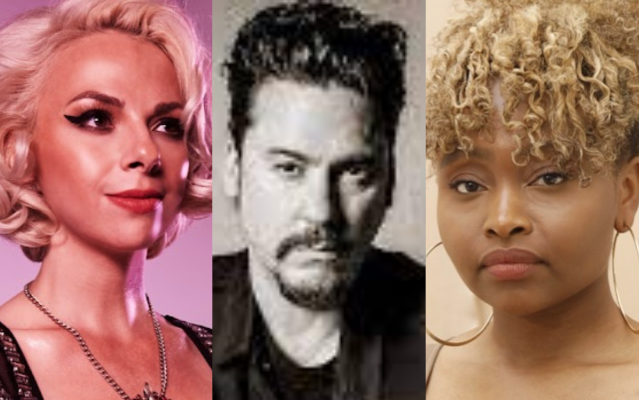
On this edition of the Richard Crouse Show we meet Samantha Fish and Jesse Dayton, collaborators on a new album called “Death Wish Blues.”
Samantha Fish, a guitarist, songwriter and singer, voted by guitarworld.com as oner of the 10 best blues guitarists in the world today joins us. Calling her a blues guitarist is a little misleading because in a career spanning over 10 years, the Kansas City, Missouri musician music features multiple genres, including blues but also rock, country, funk, bluegrass and ballads.
Jesse Dayton boasts an exceptional resume as an acclaimed solo recording artist, collaborator with artists such as Johnny Cash, Waylon Jennings and Duff McKagan, a touring guitarist for seminal punk band X, teammate with Rob Zombie on the soundtracks for his iconic horror films, and as a radio show host on Gimme Country.
We’ll also get to know Ore Agbaje-Williams. She is a British-Nigerian writer from London who has written for gal-dem and Glamour. Her new novel, “The Three of Us” now available wherever fine books are sold, tells the story of long-standing tensions between a husband, his wife, and her best friend, that finally come to a breaking point in this sharp domestic comedy of manners, told brilliantly over the course of one day.
We round things out with Joy Fielding, the New York Times bestselling author called “an ingenious master of domestic suspense,” joins me to talk about her new novel “The Housekeeper.” It’s a suspenseful story about a woman who hires a housekeeper to care for her aging parents–only to watch as she takes over their lives.
Each week on the nationally syndicated Richard Crouse Show, Canada’s most recognized movie critic brings together some of the most interesting and opinionated people from the movies, television and music to put a fresh spin on news from the world of lifestyle and pop-culture. Tune into this show to hear in-depth interviews with actors and directors, to find out what’s going on behind the scenes of your favourite shows and movies and get a new take on current trends. Recent guests include Chris Pratt, Elvis Costello, Baz Luhrmann, Martin Freeman, David Cronenberg, Mayim Bialik, The Kids in the Hall and many more!
Listen to the show live here:
C-FAX 1070 in Victoria
SAT 5:00 PM to 6:00 PM
SUN 10:00 AM to 11:00 AM
CJAD in Montreal
SAT 8 PM to 9:00 PM
CFRA in Ottawa
SAT 8 PM to 9:00 PM
NEWSTALK 610 CKTB in St. Catharines
Sat 8:00 PM to 9:00 PM
NEWSTALK 1010 in Toronto
SAT 8 PM to 9:00 PM
NEWSTALK 1290 CJBK
SAT 8 PM to 9:00 PM
AM 1150 in Kelowna
SAT 11 PM to Midnight
BNN BLOOMBERG RADIO 1410
SAT 8 PM to 9:00 PM
Click HERE to catch up on shows you might have missed!
Listen to the whole thing HERE! (Link coming soon)
Everything about “Fast X,” the latest entry in the “Fast and Furious” franchise, is big. Really big.
The a-lister cast list is a laundry list, including returning stars Vin Diesel, Michelle Rodriguez, Tyrese Gibson and Charlize Theron along with the addition of Marvel superheroes Jason Momoa and Brie Larson. The villain is faster and more furious than ever before and the action can only be described as bigly. There’s even a surprise cameo from one of the world’s biggest movie stars.
But is bigger always better?
A jumble of the usual mix of family, friends, fast cars and flashbacks, “Fast X” begins with relative calm in the world of former criminal and professional street racer Dominic Toretto (Diesel). The patriarch of the “F&F” gang, he has left the fast life behind, and retired with wife Letty (Michelle Rodriguez), and his son Brian. “We used to live our lives a quarter mile at a time,” he says. “But things change.”
Not so fast, there Dom.
Dom’s past comes back to haunt him in the form of flamboyant villain Dante Reyes (Jason Momoa), the sadistic, revenge fueled son of drug lord Hernan Reyes. “I’m Dante,” he says by way of introduction. “Enchanté.”
Way back in “Fast Five” Dom and Co. were responsible for the loss of the Reyes family fortune. “The great Dominic Toretto,” Dante snarls. “If you never would’ve gotten behind that wheel, I’d never be the man I am today. And now, I’m the man who’s going to break your family, piece by piece.”
Cue the set-up to the second part of the franchise’s three-part finale. It is, as they say on the movie poster, just the beginning of the end.
In the “Fast & Furious” world the word “ludicrous” is not just the name of prominent cast member Chris ‘Ludacris’ Bridges, it’s also the name of the game. Since the franchise’s humble 2001 debut, the movies have grown bigger and sillier with each entry. “If it can violate the laws of God and gravity,” says Agent Aimes (Alan Ritchson) in “FX,” “they do it twice.”
The latest one redefines ridiculousness.
The out-of-control car stunts that crowd the screen have no touchstone in reality, other than the cars have four wheels and drive along streets when they aren’t bursting into flames or flying through the air. It’s as if the wild car chases were dreamed up by fourteen-year-olds playing with their Hot Wheels sets as images of canon cars danced in their heads. Anything goes, and no idea is too big or too ludicrous.
When the tires aren’t squealing, Dom is whinging on about the importance of family with a straight face and a serious tone that makes Leslie Nielsen’s “Naked Gun” deadpan look positively flamboyant. Only Momoa seems to understand how colossally silly the whole thing is, and has fun pulling faces, doing a Grand Jeté or two and peacocking around as he rolls a neutron bomb through the streets of Rome. It’s a ludicrous performance in a completely ludicrous movie and it fits.
The bombastic “Fast X” is overstuffed with characters—it seems like every actor in Hollywood has a cameo—plot and, if this is possible, it is overstuffed with excess. The very definition of “go big or go home,” it is for “F&F” fans who have been along for the ride for more than two decades everyone else may want to take a detour.
“What’s Love Got to Do with It,” starring Lily James, fresh off “Pam and Tommy,” and Shazad Latif, and now playing in theatres, is a rom com that examines the customs surrounding arranged marriages.
James plays Zoe, an award-winning British documentary filmmaker focussed on her work. She swipes right from time to time, but says, “I’m still interviewing. I haven’t met the one yet.”
“I’m fine without a boring old prince,” she says.
Her childhood next door neighbor, Kaz (Latif), now a handsome and successful doctor, doesn’t use dating apps, because he’s agreed to follow the example of his traditional Pakistani parents.
“I’m going old school on this one,” he says. “I’m getting an arranged marriage. Well, ‘assisted marriage.’ That’s what we’re calling it these days.”
“What,” Zoe jokes, “like assisted suicide?”
When he spouts data that suggests the divorce rate is lower among those with arranged marriages, she proposes that she follow the process, from introduction to marriage, with camera in hand. Her bosses go for the idea, even if they jokingly call the planned documentary, “Love Contractually.”
Zoe interviews other British couples with arranged marriages until Kaz gets engaged via Skype to Maymouna (Sajal Aly), a law student from Pakistan. “Love at first Skype,” says Zoe. Travelling to Lahore for the wedding, Zoe focuses her camera on Kaz as he “walks into love.”
“What’s Love Got to Do with it?” refreshes the usual rom com formula while still hewing the line enough to be recognizable within the genre. Director Shekhar Kapur, working with a script from Jemima Khan, embraces most, but not all, of the tropes of the genre. They forgo the most obvious—and often most odious—rom com conventions, in favor of something deeper. It’s still a rom com, but the absence of the usual meet cutes and airport runs are welcome omissions.
Kapur tugs at the heartstrings in the film’s closing moments, amping up the melodrama to provide an unexpectedly emotional finale, even if the actual ending of the film is completely expected. Much of that impact is due to the chemistry between James and Latif. An easy charm exists between them, the kind of vibe that makes the audience feel like they really did grow up next door to one another. That relationship goes a long way to adding dimension to their story, both platonic and possibly even romantic.
“What’s Love Got to Do with It?” is an elevated rom com which challenges the idea of love as a sweet old-fashioned notion.
For almost 50 years writer/director Paul Schrader has essayed God’s lonely men; “Taxi Driver’s” Travis Bickle, Julian in “American Gigolo” and “First Reformed’s” Reverend Toller, among others. They are isolated characters, men who live outside regular society, haunted by the lives they’ve led.
In his latest film, “Master Gardener,” now playing in theatres, Schrader adds a new name to his soul-searching rogue’s gallery.
“Gardening is a belief in the future,” says horticulturalist Narvel Roth, played with a quiet intensity by Joel Edgerton, “that change will come in due time.” His words come steeped with meaning. A former neo-Nazi—his repulsive, racist tattoos now hidden under ever-present long-sleeved shirts—he has turned his life around and now works at the stately Gracewood Gardens. The hundred-year-old botanical beauty sits on a property owned for generations by the Haverhill family, and is the pride of mercurial old money maven Norma Haverhill (Sigourney Weaver).
Meticulous and methodical in his duties, Roth cultivates the award-winning garden with a steady hand. It’s a simple, spartan life, ruled by self-discipline and routine.
When he isn’t digging in the dirt, he occasionally visits the big colonial house for a meal, a quick tryst or a consultation with Haverhill. On one such meeting he is told that Haverhill’s biracial grandniece Maya (Quintessa Swindell) will be joining his team. The troubled young woman has fallen in with a bad crowd, and Haverhill thinks the discipline and quietude of working in the garden will straighten her out.
He agrees to show her the ropes, not realizing that her presence will upset the serenity of the garden, his new life and his relationship with Haverhill. “The seeds of love grow like the seeds of hate,” he writes in his journal.
“Master Gardener” observes racism and redemption, wondering aloud if emancipation from the stigma of past deeds is possible.
Roth is a complex character, played like a tightly wound Chauncey Gardiner, whose terrible past presents itself in flashbacks that hint at the maelstrom bubbling beneath his stoic exterior. He is a Schrader architype, a solitary man whose involvement with a protégée could complicate his life, but Edgerton sets him apart from recent Schrader characters with a mix of the serene and physical. The work is both elegant and aloof, straightforward and elliptical, and showcases Edgerton’s charisma and versatility as a leading man, when not covered in a layer of blue make-up.
He is ably supported by Swindell, who brings intelligence and understanding to the role, even if her horror at Roth’s racist past evaporates a little too easily.
Weaver, as a stereotype of every isolated wealthy matron, chews it up, delivering lines like, “I thought you had a green thumb, but it turns out you have a green middle finger,” with gusto.
“Master Gardener” is apparently the wrap to Schrader’s recent Calvanist guilt trilogy. While interesting and as rich in allegory as the previous two films—”First Reformed” and “The Card Counter”—its study of redemption, while hopeful and even-handed, requires too many leaps of logic to fully embrace.
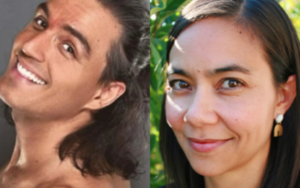
On this edition of the Richard Crouse Show we’ll meet wrestler, comedian, actor and talk show host RJ City. A lifelong wrestling fan, he’s been wrestling professionally since 2006, he’s appeared in movies and these days, you can find him at All Elite Wrestling (AEW) as a backstage interviewer and host of a weekly comedy talk show on AEW’s YouTube page called Hey! (EW) where he interviews other AEW talent.
And, later we’ll meet Corinna Chong, a writer, editor, and graphic designer based in Kelowna, BC. Her first novel, Belinda’s Rings, was published in Spring 2013. She won the 2021 CBC Short Story Prize for “Kids in Kindergarten.” Today we’ll talk about her new book, “The Whole Animal,” a collection of short stories that grapple with the self-alienation and self-discovery that make us human.
Listen to the whole thing HERE! (Link coming soon)
Here’s some info on The Richard Crouse Show!
Each week on the nationally syndicated Richard Crouse Show, Canada’s most recognized movie critic brings together some of the most interesting and opinionated people from the movies, television and music to put a fresh spin on news from the world of lifestyle and pop-culture. Tune into this show to hear in-depth interviews with actors and directors, to find out what’s going on behind the scenes of your favourite shows and movies and get a new take on current trends. Recent guests include Chris Pratt, Elvis Costello, Baz Luhrmann, Martin Freeman, David Cronenberg, Mayim Bialik, The Kids in the Hall and many more!
Listen to the show live here:
C-FAX 1070 in Victoria
SAT 5:00 PM to 6:00 PM
SUN 10:00 AM to 11:00 AM
CJAD in Montreal
SAT 8 PM to 9:00 PM
CFRA in Ottawa
SAT 8 PM to 9:00 PM
NEWSTALK 610 CKTB in St. Catharines
Sat 8:00 PM to 9:00 PM
NEWSTALK 1010 in Toronto
SAT 8 PM to 9:00 PM
NEWSTALK 1290 CJBK
SAT 8 PM to 9:00 PM
AM 1150 in Kelowna
SAT 11 PM to Midnight
BNN BLOOMBERG RADIO 1410
SAT 8 PM to 9:00 PM
Click HERE to catch up on shows you might have missed!
I join NewsTalk 1010 host Jerry Agar to talk about why the Hollywood studios want Canada to redefine what it means to be a Canadian movie. Here’s a hint… it’s one word… money.