For better and for worse the “Ice Age” franchise seems to have been around longer than the actual Ice Age. With the latest entry, “The Ice Age Adventures of Buck Wild,” starring the voice of Simon Pegg on Disney+, number six in the series, the movies are starting to show their age. The characters and the voice work are still fun, but the animation doesn’t have the same pop as the earlier movies.
The action begins in Snow Valley, home of unruly possum brothers Crash (Vincent Tong) and Eddie (Aaron Harris). The possums are restless, bored with life in the sleepy, icy dale. They want to experience the world, away from the over-protective eyes of their make-shift family, woolly mammoths Ellie and Manny. “It’s time for us to move out and make our mark on the world.” By fluke, they wind up in the Lost World—“We came here to live a life of adventure.”—a massive underground cave and land of danger that might be too extreme, even for them.
As Ellie and Manny fret—“If we don’t find them, I’m going to kill them,” says Manny.—an unlikely “superhero” comes to Crash and Eddie’s rescue, a one-eyed weasel named Buck Wild (Pegg). Together they form a team to defeat the dinosaurs who live in the Lost World. “It’s time to get buck wild.”
For better and for worse the Ice Age franchise seems to have been around longer than the actual Ice Age. With the latest entry, number six in the series, the movies are starting to show their age.
“The Ice Age Adventures of Buck Wild” has a distinctly direct-to-streaming feel about it. The above the title voice cast from the other films—Ray Romano, John Leguizamo, Denis Leary and Queen Latifah—are gone, replaced with soundalikes. Not that young kids will mind, or even notice. But older kids who grew up watching these movies—they’ve been around for twenty years—may feel this one isn’t a movie as much as it is an inexpensive, extended version of the television series that was spun off the films.
Like all the “Ice Age” movies, this one has good messages for kids about the importance of family—”The only thing that stays the same is the love we have for one another. That’s the thing about a herd, you’re a part of it, even when you are apart.”—and embracing change—“Change is scary but it is the way of the world. It can help us grow into the people we’re meant to be even if that takes us to new places.” Nothing ground breaking, just solid morals from a story that should appeal to kids who haven’t already heard those platitudes a hundred time over.
The title of “One Shot,” a new action movie starring Scott Adkins, Ryan Phillippe and Ashley Greene Khoury, and now available on VOD, is a double entendre of a sort. The adrenalized action heroes at the heart of the film have one shot to quell an attack, and director James Nunn has cleverly filmed all the action in “real time,” using camera tricks to make it look like this was shot in one, long continuous take.
The story begins with a squad of Navy SEALs led by Lt. Blake Harris (Adkins) airlifting junior CIA analyst Zoe Anderson (Khoury) to a remote Guantanamo Bay-esque prison to a “United Nations of terror” suspects. Anderson’s job is to extract Amin Mansur (Waleed Elgadi), a British national who pleads his innocence, but is suspected to be a mastermind of a 9/11 style dirty-bomb attack on all three branches of the American government.
Deputy Site Manager Tom Shields (Phillippe) stalls the prisoner’s release, inadvertently allowing time for the ruthless terrorist Charef (Jess Liaudin) and his insurgents to overrun the place, freeing captives and trying to kill Mansur before he can spill the beans on the plot to bring down the government.
“One Shot” isn’t about the characters, political subtext or even the siege story. It’s all about the “one shot” gimmick, wall-to-wall video-game style gunplay and a sense of urgency.
For the most part the gimmick works, although, if you’re like me, you’ll be taken out of the story as you try and see where the subliminal edits are. It’s a distraction that fades as the running times passes because director Nunn choreographs the action expertly, creating a sense of unpredictable immediacy. You never really know who is around the next corner or hiding behind a pile of sandbags. It’s edgy you-are-there filmmaking, aided by cinematographer Jonathan Iles, that makes the generic story and stereotyped characters somewhat interesting.
The relentless violence, however, becomes tiering after a while. The first gunshot happens around the 19-minute mark and the bullet ballet continues pretty much nonstop for the rest of the running time. There are breaks in the action, usually as someone tends to a wounded person, but they are few and far between.
“One Shot” is a b-movie with efficient brutality and some edge-of-your-seat scenes, but the script is as riddled with clichés—”Sometimes it is harder to save a life than it is to save one,” intones Anderson when the going gets tough.—as the characters are with bullet holes.
A study in toxic masculinity, greed and the sins of the father, “Two Deaths of Henry Baker,” a new thriller starring Gil Bellows now on VOD, is a pale imitation of neo-noir-westerns like “Hell or High Water.”
The action begins in a flashback to 1958 as young Henry Baker and his father hide a fortune in stolen gold coins. Cut to thirty years later. Henry, now played by Gil Bellows, is all grown up and ready to retrieve the cash. With young son Hank (Gunnar Burke) in tow, things go sideways. Henry kills his own brother (also Bellows) and gets arrested.
Decades pass. As Henry is about to be sprung from prison both his son Hank now played by Sebastian Pigott and his nephew Sam (Joe Dinicol), the son of Henry’s murdered brother, anxiously await. Everybody wants a taste of the gold, Sam wants revenge while corrupt Sheriff Ron Capman (Tony Curran) wants it all.
“Two Deaths of Henry Baker” is an ambitious movie that falls slightly short of its goal.
There are some nicely realized action set pieces and moments of tension, but those plusses are done in by slack pacing from director by Felipe Mucci. The movie’s machinations crawl along, which make some of the story’s leaps of logic even more noticeable than they might have been in a film with a quicker pace.
Having said that, the story of cross-generational toxicity resonates. Violence begets violence is not a new idea, but the handing of the baton from fathers to sons is nicely illuminated here and aided by the performances from Bellows and Dinicol.
“Two Deaths of Henry Baker” may be the feel bad movie of the year so far. Heavy on the nihilism, it’s a gritty portrait of intergenerational violence but doesn’t dig deep enough into the psychologically of the story for the characters to resonate.
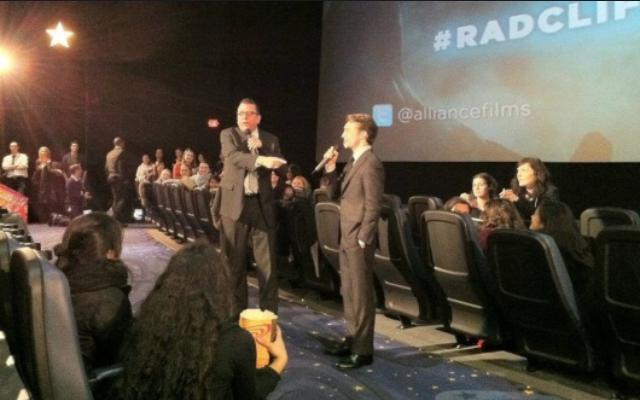
Twelve years ago tonight, at the 2012 Canadian premier of The Woman in Black a young woman yelled, “I love you!” as Daniel Radcliffe and I took the stage to introduce the film.
“I love you too,” he replied with a smirk. “But I think we should see other people.”
The audience laughed but probably missed the double meaning of his comment. For ten years Radcliffe was the face of Harry Potter, one of the biggest grossing movie franchises ever. Potter ended in 2011 (for Radcliffe, anyway) and the actor has moved on, and hopes his audience will follow along.
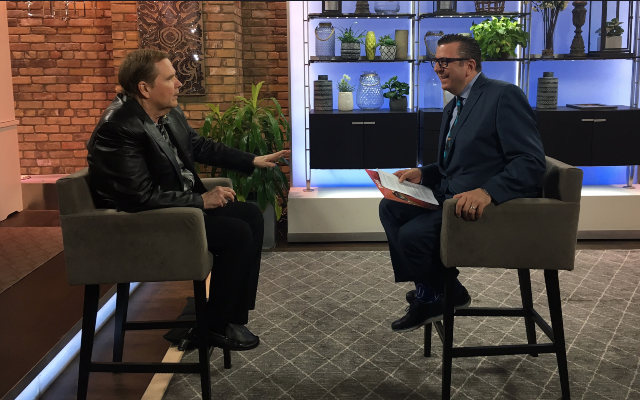
Radcliffe has perspective on where he’d like his career to go, but what about the fame that came along with playing Harry Potter? The next day after The Woman in Black premier I asked him about the screaming fans that greeted him and what that does to his ego.
“The thing you have to remind yourself is that it’s not about me. It’s about the fact that I played this character who became beloved. Anyone who took on this character would be getting this reaction. When I’m home, smoking a cigarette and it’s cold and I’m eating half a pizza. You have to take a picture of yourself then and play it to yourself when you’re on the red carpets and go, ‘Yeah, you’re not all that.’”
Radcliffe is not being modest when he says “it’s not about me,” just realistic. He understands his role in bringing the iconic character to life. The actor’s mix of vulnerability and strength won him the part and imprinted the journey from young kid to powerful wizard in the imaginations of millions of people. Had he not been cast as Harry he may or may not have found fame in some other way and someone else would likely be getting all the attention instead of him. That is the luck of the draw.
Eventually he’ll be able to walk down the street again, perhaps pick up a slice without being mobbed by eager fans but when we hosted the Woman in Black event in 2012 that tide had not yet turned.
After we introduced the movie we made our way back to the greenroom. A young woman, unaware of that Radcliffe was in the building, spotted us. Her reaction has stayed with me. Agog, she was a mix of disbelief, excitement and raw nerves. She was the definition of the word verklempt come to life. Unsure why Harry Potter was standing in front of her near the concession stand, she burst into tears and ran toward him with arms extended. He sidestepped her, while still acknowledging her excitement, and we quickly hoofed it to safety, doubtlessly leaving the young Potter fan to wonder whether she was hallucinating or not.
In the greenroom I asked him if that happens all the time. It does, he said, and then detailed some of the tricks he’s learned about not making eye-contact and how a hoodie can be an effective disguise for a late-night convenience store run. In the post Potter phase of his career Radcliffe plays a waiting game, confident in the knowledge that a burning match does not stay hot forever. He’s learned to deal with the attention and is able to cope with it because knows that it will pass.
Acceptance and understanding of situations, whether it is an excited fan tackling you or wanting to smoke when you’re trying to quit or great personal loss or business collapse, can help you find the solutions that will help you deal with whatever’s troubling you.
The lesson here is whatever happens in life, whether it is international stardom or any other of the more mundane things that touch our daily lives, the feeling is likely transitory.
Many of us live in the moment. Beautiful times are amplified. Conversely, bad stuff often feels permanent, as though it will be like this forever. It’s easy to get caught up in the moment but taking time out to think about what’s really happening is the great leveller. Perspective allows us to deeply enjoy the good times and, in bad times, reassures us that it will not always be this way. As classical pianist Arthur Rubinstein says, “there is no formula for success except, perhaps, an unconditional acceptance of life and what it brings.”
Radcliffe accepts his life but understands that fame does not define him. “I think it’s very important,” he told The Independent, “especially when you become famous young, to work out who you are without fame and without that as part of your identity, because that will go. Fame does not last forever. For anyone.”
He’s right. I recall doing a junket in Los Angeles for an unremarkable coming-of-age story with a gangland twist called Knockaround Guys. It’s the story of four sons (Vin Diesel, Seth Green, Barry Pepper, and Andrew Davoli) of Brooklyn mobsters bond together to reclaim a quarter of a million dollars lost in a small Montana town. Dennis Hopper plays cigar chomping mob boss Benny “Chains” Demaret.
Hopper’s appearance is little more than a cameo, but casts a big shadow. Here was an Actors Studio alum who made his first television appearance in 1954. He’s legend who helped do in the studio system by directing Easy Rider, appeared alongside James Dean in Rebel Without a Cause and Giant and was legendarily stoned on the set of Apocalypse Now.
On the day of the junket I sat with the other interviewers, largely lifestyle reporters, waited in the hospitality room waiting to be called. A publicist rolled into the room, clipboard in hand. “Jane Doe,” she said, “you’re on deck to interview Mr. Hopper.”
“Who?” said Jane. “I’m really only here to talk to Seth Green.”
Almost half a century of work, awards and thousands of column inches in the tabloid press shunted aside for the guy who created Robot Chicken. Radcliffe is right. Fame is fleeting.
Radcliffe breathes rarified air and reportedly enjoys a substantial bank account but the questions he grapples with maybe different than you and I but awareness of life situations is crucial to all, whether wizard or muggle.
Are you an Ethan Hawke fan? If so, “Zeros and Ones,” a cryptic new film by director Abel Ferrara and now available on VOD, gives you two Hawkes for the price of one.
But be warned, this isn’t “Dead Poets Society” or “Before Sunset.”
At one point during this enigmatic movie, a woman (Valeria Correale) asks J.J. Jericho (Hawke), a soldier who spends much of his time roaming the empty streets of Rome, “Have you figured out what you’re doing in my country?”
“Working on it,” he replies.
J.J. may also be working on understating the point of this movie. I know I am.
Jericho is an American soldier in Italy on the hunt for Justin (also Hawke), his revolutionary twin brother. Justin, who is prone to incomprehensible pontification and breaking into song, is suspected of masterminding a plan to blow up the Vatican, but now he has gone missing.
On his search J.J., also no stranger to odd verbal blurtings–“Jesus was just another soldier,” he says, “but on whose side?”—is told his brother is dead. Or that he’s in jail. And so, he continues his lonely mission through empty streets, deserted parks and shadowy alleyways.
Ferrara takes advantage of the severe Italian COVID lockdown to shoot in the abovementioned vacated spaces, and that adds to the film’s sense of unease but that’s about all there is in this impenetrable, repetitive movie.
Hawke does what he can to lift J.J. and Justin off the page, but the script only offers underdeveloped, one note characters for him and his gravelly voice to inhabit. As such, J.J.’s quest and Justin’s cause offer no emotional engagement with the audience.
“Zeros and Ones” is an odd film. It is bookended by Hawke who provides and intro, talking about how much he’s always wanted to work with Ferrara, and a prologue of a sort that begins with the actor saying that when Ferrara gave him the script, “I really didn’t understand a word of it but I really liked it.”
He liked it. I didn’t, but to each his own. An arthouse thriller of a sort, it isn’t concerned with the niceties of story or characters. It’s a kinetic exercise in abstruseness, one that conjures up a feeling of unease but little else.
“Marionette,” a new psychological thriller, now on VOD, begins with a shocking scene of self-immolation that sets the scene for the psychological fireworks to come.
The story circles around a child psychiatrist Dr. Marianne Turner (Thekla Reuten) who relocates to Scotland from America for a new job. Why did she move to Scotland? “I like rain,” she says.
She replaces Dr. McVittie, who left after psychiatric issues prevented him from properly treating his patients. One of those patients, 10-year-old Manny (Elijah Wolf) is a curly-haired boy with a faraway look who expresses himself through his drawings. “He’s a mystery,” Turner says. “My impression is that his world view is some sort of defence system, a fortress.”
Turns out, Turner is the only doctor Manny has ever spoken to. Usually, he communicates solely through his pictures, drawings of violence and disaster. As Dr. Turner settles into her new job, she makes friends with Kieran (Emun Elliott) at a book club where they discuss the mind-bending thought experiment of Schrödinger’s cat among other high-minded ideas. “We all need to see a psychiatrist if we think this is a good way of passing the evening,” Dr. Turner jokes at the end of a club meeting.
Soon, strange things start happening. Mysterious phone calls suggest, “You have to kill him before he kills you,” as Manny continues to draw unsettling images. Dr. Turner soon makes a connection between Manny’s drawings and real-life events. “You draw a lot of accidents and disasters, don’t you Manny?” she says. “What are you thinking of when you draw them?”
Leaving science and the metaphysical cat behind, she looks to the paranormal to determine whether Manny is predicting the calamitous events or causing them. “What’s in there,” she asks, pointing to a large portfolio of his pictures. “The future,” he says.
“Marionette” is a gloomy psychological drama that effectively creates an atmosphere of tension throughout. Co-writer and director Elbert van Strien weaves ambitious ideas into the story, elevating a pulpy story to something approaching gothic proportions.
Dr. Turner arrives in Scotland with the baggage of a dead husband she left behind in the States, and her grief informs the story and her reactions to the situations she finds herself in. Dutch actress Reuten—her uneven accent is explained away with a quick, “Oh, I’m not American. I just lived there for a long time.”—brings the complicated doctor to life in a performance that is equal parts anguish, intellectual curiosity, paranoia and empathy. Her quest for the disturbing truth takes her to some uncomfortable places, but Reuten keeps us interested.
Reuten may provide the heart of “Marionette,” but it is Wolf who brings the creepy kid vibe that is the movie’s engine. With a relatively small amount of screen time, he makes a startling impression with his mannered speech and wide eyes.
“Marionette” spends a bit too much time on its philosophical underpinnings. It asks big questions like, Do we have free will or are we simply marionettes dangling on the end of a string operated by something or someone we don’t understand? without truly exploring them. Also, a bit of knowledge on Schrödinger’s cat might give you a leg up. Or not, depending on how deeply you become invested in the story. Either way , these aspect of the storytelling hammer their points home with a sledgehammer when a tap would have sufficed.
A late movie twist subverts some of what came before, but before it disappears down its philosophical rabbit hole, “Marionette” is an enjoyable Hitchcockian story.
Despite a final shot that is about as subtle as one of its title character’s trademarked baseball bat attacks, “Ray Donovan: The Movie,” now streaming on Crave, brings the moody television series to a satisfying conclusion.
The movie picks up where season seven of the TV show ended. Mickey (Jon Voight), family patriarch and all-round scumbag, and his quest for cash led to a violent showdown that resulted in the accidental shooting death of his granddaughter Bridget’s (Kerris Dorsey) husband.
With Mickey on the run, his son, Ray (Liev Schreiber), a “fixer” who solves pesky personal problems for wealthy clients, is looking inward, determined to fix his own issues, beginning with his trouble-making father.
As the main action plays out in present day, through flashbacks we learn more about the Donovan clan. How Ray ended up in Hollywood doing whatever it takes to keep bold-faced names out of the gossip pages or jail or both. The roots of his lifelong beef with Mickey and why bad luck and trouble has been this family’s only friends.
Anyone familiar with the tone of the last few seasons of “Ray Donovan” will not be surprised by the downbeat feel of the movie. Dour and sour, it’s a dark sins-of-the-father story that never met a shot of Schreiber’s scowling face it didn’t love. As it wraps up the series, the movie circles around its main ideology, that violence begets violence. It’s not exactly a revelation from the Donovan timeline, but it is the thread that sews up the loose story bits left by the abrupt cancellation of the series. It’s not always subtle (no spoilers here, but check out the last hammer-the-nail-on-the-head shot of Ray) but it does get to the heart of what makes the Donovans tick.
“Ray Donovan: The Movie” is a slow burn, but at a tight 100 minutes, should provide closure for fans of the show, a bit of action and even some emotional moments.
“The Last Thing Mary Saw,” a new film about sexual repression, and now streaming on Shudder Canada, is more about mood and atmosphere and the toll that fear takes on people than it is about horror.
When we first meet Mary (Stefanie Scott), she is blindfolded, blood tickling down her cheeks, under interrogation regarding her grandmother’s (Judith Roberts) “sudden departure.”
Suspected of being a witch, one of her captors assesses the situation. “It is not our responsibility to give the devil a chance to repent. He must perish with her.”
Sombre and creepy, it is just the beginning of Mary’s unsettling journey.
Jump cut back in time to 1843 in rural Southold, New York. Much to the horror of her devout parents, Mary is having a love affair with Eleanor (Isabelle Fuhrman), the family’s maid. “Our daughter’s ears are deaf to the Lord’s preachings,” her father tells the soon-to-be-gone the family matriarch. “She continues to engage in acts with the help.”
Instead of sending the maid on her way, it’s decided the young lovers will be subjected to “corrections,” a torturous religious punishment wherein they are forced to kneel on grains of rice and recite Bible passages. “Mary and the maid played dangerous games and were punished accordingly.” Unsurprisingly, the rudimentary conversion therapy doesn’t work, and Mary and Eleanor continue to clandestinely see one another.
When they are discovered, lives are shattered as a mysterious character named The Intruder (Rory Culkin) enters the story.
“The Last Thing Mary Saw” isn’t particularly scary in its violence or visuals, save for a deeply unpleasant dinner scene, but it is chilling filmmaking. First time director Edoardo Vitaletti calibrates each scene, including a long, virtually silent middle section, for maximum discomfort.
Repression covers the entire film like a shroud, as Mary and Eleanor attempt to live their lives away from the fear and religious fervor spawned by Mary’s pious parents. Human nature is the boogeyman here, not Mary’s alleged witchcraft.
The forced clandestine nature of their relationship is enhanced by Vitaletti’s shadowy, candle lit photography. It is restrained and sophisticated throughout, etching some unforgettable images in the viewer’s imaginations.
On the downside, the restraint, while moody, feels as though the movie is holding back, stopping just short of fully embracing its horror elements. This straightforward, serious treatment undersells the creepy elements that could have made the story as memorable as the images.