No one will accuse “Clara” director/co-writer Akash Sherman of playing it safe. For his debut feature the twenty-something filmmaker essays no less a topic than the existence of life in outer space.
Suits star Patrick J. Adams is Dr. Isaac Bruno, a university professor placed on sabbatical when his obsession to find life on other planets gets in the way of him doing his job. Time off is no remedy for his fixation and he continues his search with the help of a co-worker Dr. Charlie Durant (Ennis Esmer ) and a research assistant named Clara (Troian Bellisario).
Bruno is a facts and figures guy, a pragmatist who studies the data looking for connections, desperate to fill the hole left in his heart by the death of his child by finding new life in the universe.
Clara is more abstract, a believer in the randomness of the universe beyond the numbers and maps. The push and pull between their approaches makes for a rocky relationship but her spiritualism may hold the roadmap for Isaac’s quest.
Austere, low-key and yet ambitious, “Clara” is about the power of loss and discovery. Add in a big dollop of spirituality and you have a movie that isn’t quite sci fi even though it spends much of its time ruminating on speculative themes. It’s solemn and often feels overwrought, asking question after question without offering much in the way of insight or true emotion.
Director Sherman shows an undeniable eye for composition and atmosphere. It’s in the storytelling that “Clara” wobbles. The push-and-pull between objectivity and intuition is interesting but overplayed to the point of exhaustion. The climax reaches for the stars, offering a hopeful note, that will strike some as poetic, others as the very definition of schmaltz.
“Congratulations! You just signed your own death warrant. If you’re not dead within a week you get your money back.” So begins the business deal between unpublished writer William Morrison (Aneurin Barnard) and Leslie O’Neill (Tom Wilkinson), the man he has just hired to kill him. “You seem like a decent man. I’m very happy to kill you.” That exchange sets the tone for what is to come in this dark comedy from writer-director Tom Edmunds.
The story of the benevolent hitman who only kills those who want to die is quite simple but there’s a twist. We learn more about the characters.
Leslie is an aging contract killer afraid he’ll be terminated from by the British Guild of Assassins if he doesn’t keep his quota up.
William is obsessed by death and plagued by questions—What’s the point? Why am I here? What am I contributing?—but starts to see some light at the end of the tunnel when he meets Ellie (Freya Mavor), a book editor with an interest in his book.
Will William go through with the planned assassination or will he try and get out of the ironclad contract?
“Dead in a Week” has a low-key but pitch black tone. The farcical, occasionally over-the-top treatment Edmunds applies to death and dying is tempered somewhat by Wilkinson’s performance as the genial but deadly Leslie. Ultimately the movie isn’t about the suicidal writer but the broader story of a man forced into retirement before he wants to go. “Retirement,” he moans. “It’s the start of the end of our lives.” He’s the most compelling character and as the movie finds itself drawn to cliché it is Wilkinson that keeps us interested.
There’s an old Irish proverb that says, “A good friend is like a four-leaf clover; hard to find and lucky to have.” Watching “Nothing Like a Dame,” a conversation between stage and screen legends Dame Eileen Atkins, Dame Judi Dench, Dame Joan Plowright and Dame Maggie Smith, will make you feel lucky to have these four, four leaf clovers in your life, if only for the eighty minute running time.
Director Roger Michell keeps it simple, placing his four transcendent stars in a simple setting. The Dames convene at the rural cottage Plowright built with her late husband Laurence Olivier, taking tea and champagne in the garden and on antique inside. From witty and wistful to strong and vulnerable, the four women tell stories about their lives on stage and off. They laugh about terrible reviews—“You remember the bad ones.”—dish on working with their famous husbands (all deceased)—“Obviously mine was the most difficult,” Plowright says of Olivier. “We all found him tricky,” Smith interjects.—their health—“Have we got three eyes between us all?” says Dench.—and more.
The conversation sparkles but don’t come looking for a timeline of their careers. Look instead for insight into lives lived on stage. Atkins reflects on stage fright, admitting, “On my way to the theater I would always think, ‘Would you like to be run over now, or in a massive car accident?’ And I only just about come out on the side of ‘No.’” Dench calls fear, “the petrol.” “It can be a help.”
Smith owns up to never watching “Downton Abbey,” the show she refers to it as that “wretched thing” that won her three Emmys, even though the producers gave her a box set.
Late in “Nothing Like a Dame” the quartet are asked what they have learned. “When in doubt, don’t,” Smith says after some thought. It’s that kind of documentary, a rare pleasure that succeeds on charm, wisdom and personality, and there can be no doubt about that.
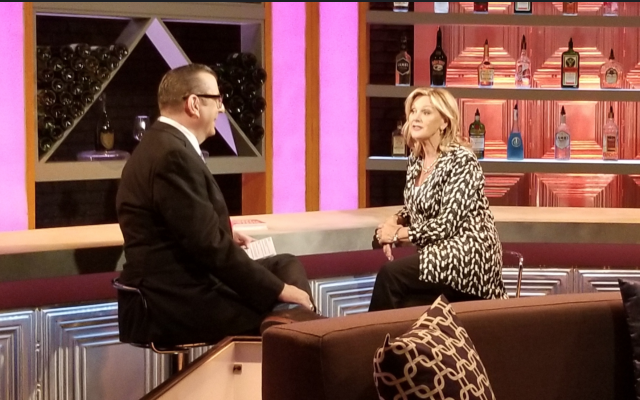
This week on “Pop Life” design expert Debbie Travis shares stories about her career and how she knows when it’s time to move on. Then the “Pop Life” panel, Travis, Karan Walia Co-Founder & Ceo of Cluep and Eden Hertzog: Owner of New Moon Kitchen Inc., speak about the different characteristics you should have to be successful.
The “Pop Life” panel, design legend Debbie Travis, Karan Walia Co-Founder & Ceo of Cluep and Eden Hertzog: Owner of New Moon Kitchen Inc., speak about the different characteristics you should have to be successful.
The “Pop Life” panel, Pamela Ross, Culture Agent At Blue Rebel Works, Rachel Blake, Canada Regional Operations Lead at Twitter and Kris Martinez, Mayor at Gadventures, share their take on what matters most when it comes to a job – management style or work perks?
Whoever said history never repeats didn’t work in Hollywood. Remakes and reboots have taken over theatres, recycling ideas and characters in what can sometimes feel like a continuous case of déjà vu. This week we have “Creed II” a sequel to a reboot, which is also a remake of sorts of a film made before star Michael B. Jordan was even born.
When we last saw Adonis Creed (Jordan) he was a young man who never knew his dad, former world champion boxer Apollo Creed. He did, however, inherit the old man’s love of boxing and much of his skill. Working with his dad’s old friend Rocky Balboa (Sylvester Stallone) to get into ring-ready shape he, like his father before him, wins the respect of the boxing world.
In the new film he finds confronted by his father’s legacy in the form of Viktor Drago (Florian Munteanu), the son of the man who killed Apollo in the ring decades ago.
The year was 1985. Apollo Creed came out of a five-year retirement to give Soviet Olympic boxer Ivan Drago (Dolph Lundgren) a good old-fashioned American pummelling. Instead, with Rocky in his corner, Apollo is beaten senseless by the 6 foot 5 inch steroid-enhanced Russian. Just as Rocky drops the towel to end the fight Drago delivers the coup de grâce, a fatal blow that kills Apollo in centre ring. Determined to avenge Apollo’s death Rocky squares off with Drago in the Soviet Union in a Christmas season match. Journeyman Rocky shocks the world by winning, beating the statuesque Eastern Bloc fighter by knockout.
Flash forward to “Creed II.” The sting of that Reagan-era loss still bothers Drago (Lundgren, who else?). Shaping his son Viktor (Florian Munteanu) into a lean, mean fighting machine. Drago seeks to vicariously regain honour in the ring. “In Russia,”
Drago says, “no one will touch the Drago name. Everything changed that night.”
Father and son challenge Adonis, now the world heavyweight champion, to a match. “My son will break your biy,” Drago says, taunting Rocky. Despite Rocky’s warnings Adonis accepts the fight, looking for vengeance for a man he never knew. The showdown between the duelling sons brings into focus the shared legacy of the four men, Adonis, Viktor, Drago and Rocky.
“Creed II” isn’t really a movie about boxing. There are two brutal fight scenes but narratively this is about finding a sense of purpose, inside and outside of the ring. It’s about the why rather than the how. On that score it works. Director Steven Caple Jr. focuses on the characters allowing us to get to know them better, or in the case of Rocky and Drago, get reacquainted with them.
The film takes its time setting up the relationships before getting into the more traditional “Rocky” tropes, ie: unconventional but effective training methods and a rousing finale, complete with a riff on Bill Conti’s rousing “Rocky” theme song “Gonna Fly Now.”
This study of fathers and sons, of vengeance and reputation is really a look at brittle masculinity. These characters are all broken somehow, looking for something they are unlikely to find in the ring. “Why do you fight?” Rocky asks Adonis several times, sending him off on an introspective journey that leads him back to where his quest began, his father.
“Creed II” reverberates with the echoes of “Rocky” past but transcends being an exercise in déjà vu by amping up the emotional content to TKO levels. It is neither a rehash nor completely original work. It’s simply another puzzle piece in the feel good “Rocky” saga.