SYNOPSIS: The times they are a-changin’ at Downton Abbey. Old-fashioned traditions clash with newfangled progress at the Edwardian country house as the upper crust Crawley family cope with a changing world. “Our lives are lived in chapters,” says cook Beryl Patmore (Lesley Nicol), “and there’s nothing wrong when a chapter ends.”
CAST: Hugh Bonneville, Jim Carter, Michelle Dockery, Paul Giamatti, Elizabeth McGovern, Penelope Wilton, Joely Richardson, Alessandro Nivola, Simon Russell Beale and Arty Froushan. Directed by Simon Curtis.
REVIEW: At Downton Abbey, that bastion of old-world tradition, change in the air. And if you don’t realize that by following along with the story, don’t worry, the characters will remind you, again and again, with wise one-liners.
It’s 1930, and the world is changing. Dinner for three at the New Ivy restaurant costs an outrageous 10 pounds—“The last time I ate there,” says Noel Coward (Arty Froushan), “I asked for the bill and a pistol.”—but in high society the very mention of the word divorce can still stop a fancy dress ball cold.
As the world turns, the Crawley family, led by Robert Crawley, 7th Earl of Grantham (Hugh Bonneville) and Cora Crawley, Countess of Grantham (Elizabeth McGovern), are feeling the winds of change blowing at their backs.
Lord Grantham is reluctant to let the old ways fall by the wayside, but his daughter Lady Mary’s (Michelle Dockery) divorce has brought scandal to the family name and ongoing financial problems may mean the end of years of tradition at their beloved home, Downton Abbey.
A melodrama in fancy dress, “Downton Abbey: The Grand Finale” is pure fan service. It’s all about change, a theme hammered home with the subtlety of a cup of Earl Grey spiked with absinthe, but series creator and writer Julian Fellowes is far too canny to change the dynamic that made the television show and the subsequent movies—”Downton Abbey” (2019) and “Downton Abbey: A New Era” (2022)—popular.
The final chapter brings with it favorite characters, like butler Mr. Carson (Jim Carter), lady’s maid Anna Bates (Joanne Froggatt) and widower Tom Branson (Allen Leech) among many others from upstairs and down. Even the Dowager Countess, memorably played by the late Maggie Smith, is a formidable presence despite having passed away in the previous film.
There are no huge surprises, and it’s all rather predictable, but Fellowes and director Simon Curtis aren’t here to turn the franchise on its head. Instead, they deliver a sentimental swansong that allows longtime fans to spend a few extra hours with beloved characters padding around the opulent rooms, and downstairs kitchen, of one of England’s most famous homes.
Sure, it’s a bit self-congratulatory—the theme music swells as an audience enthusiastically applauds the title card filling the screen in the film’s opening minutes—a montage near the end feels more spectral than sincerely heartfelt, and there are easter eggs galore, but somehow the self-indulgence seems like the right choice to tell a story about a family for whom self-indulgence is a way of life.
SYNOPSIS: In “Paddington in Peru,” the marmalade loving bear, voiced by Ben Whishaw, searches for his cherished Aunt Lucy who has gone missing in the Peruvian jungle. Helping Paddington on his dangerous quest are Oscar winner Olivia Colman as a cheery singing nun, a brave boat captain played by Antonio Banderas and his adopted parents Henry (Hugh Bonneville) and Mary (Emily Mortimer, replacing Sally Hawkins).
CAST: Hugh Bonneville, Emily Mortimer, Julie Walters, Jim Broadbent, Carla Tous, Olivia Colman, Antonio Banderas and Ben Whishaw. Directed by Dougal Wilson.
REVIEW: If the world worked the way it is supposed to there would be a picture of Paddington the Bear next to the word ‘adorable’ in your dogeared copy of Funk and Wagnalls.
Since 1958, when the marmalade loving, spectacled bear first appeared in print, he has been an avatar for mischievous fun, kindness and overall, unescapable lovability.
Eight years after two perfectly perfect instalments of the bear’s adventures with his adopted English family comes “Paddington in Peru,” a new adventure that is sure to please family audiences, but the ambitious story doesn’t have the magic of the first two films.
The impossibly cute Paddington, voiced by Ben Wishaw, is still the kindhearted agent of mild chaos he has always been, but this time around his adopted family, the Browns, play a larger role. Emily Watson and Hugh Bonneville are up to the task, expertly riding the line between silly and sentimental, but the film Itself feels less whimsical than its predecessors.
Having said that, Olivia Coleman, as the singing nun at The Home for Retired Bears, brings a big dollop of fun in the “Sound of Music” inspired musical number “Let’s Prepare for Paddington.”
Paul King, director of the first two instalments, brought an eccentric charm to Paddington’s world that was undeniably wondrous. That world is still evident, but this time around director Dougal Wilson opts for action and adventure, most of which is very compelling, and character driven, but it doesn’t lift off the screen the way the first two films did.
Nonetheless, “Paddington in Peru” is a thoroughly enjoyable family film, one with timely subtext about immigration (Paddington gets his British passport in the film’s early minutes), identity and loyalty, and, of course, is laced with the bear’s good-natured way of seeing the best in everyone, even those who done him wrong.
The title, “Downton Abbey: A New Era,” promises a moving-forward of the big screen adventures of the aristocratic Crawley family. Fans want more story, but progress? That’s something else.
The popular television series and 2019 film delivered a preserved-in-amber glimpse at melodramatic “Upstairs, Downstairs” classism mixed with some laughs, a touch of sentimentality and expertly delivered barbs from Maggie Smith’s Dowager Countess. Fans embraced the illusion of high-mindedness and the fantasy of life at the mansion.
For enthusiasts, a return to Downtown is a creature comfort, like a cup of hot tea with a warm crumpet. You don’t have it often, but when you do, you want it to taste exactly the same as it always has. The presentation can be tweaked, but the essence must be untouched.
Director Simon Curtis and writer Julian Fellows, seem to understand what fans expect, and deliver. It may be predictable, but narrative complacency is part of its appeal for folks who spent six seasons on television getting to know these characters.
The story begins in 1929 as the Dowager Countess of Grantham inherits a beautiful villa on the Cotes d’Azur from a long-ago admirer. The family, Lord Grantham (Hugh Bonneville), Lady Crawley (Elizabeth McGovern), Lady Edith (Laura Carmichael), Tom (Allen Leech), Lucy (Tuppence Middleton) and the ever-dutiful Mr. Carson (Jim Carter) pack up there best and head to the South of France. “They better be warned,” says Mr. Carson, “the British are coming.”
Once there, a mysterious locket appears to hold the key to a long-withheld family secret and a decades-old “idyllic interlude.”
Meanwhile back at Downton Abbey, an expensive roof repair convinces Lord Grantham to allow a film crew to shoot in the grand old mansion in return for a large rental fee. The downstairs workers are excited but Grantham’s enthusiasm is muted. “I think it’s a horrible idea,” he snorts. “Actresses plastered in make-up and actors just plastered.” Still, the roof is leaking and soon the house’s grand rooms are overrun by a film crew, including director Jack Barber (Hugh Danccy) and his stars, matinee idol Guy Dexter (Dominic West) and the glamorous Myrna Dalgleish (Laura Haddock). “We got through the war,” groans the Dowager Countess. “We can get through this.”
Later in the film the Dowager Countess says that life is about “getting past the unexpected.” That may apply to life at the Abbey, but it certainly doesn’t apply to the movie because there is nothing unexpected about anything that happens in the film’s two-hour running time. A better title may have been “Downton Abbey: Fan Service,” because it is a crowd-pleasing slow simmering stew of favorite ingredients, with no extra spice or flavorings. It is what the fans expect, no more but sometimes less.
“Downton Abbey: A New Era” is a plucky, stiff upper lipped movie meant for devotees who will likely excuse the filmmaking, which is as dry as a day-old scone at tea time.
Near the end of “Downton Abbey,” the big screen finale to the widely popular slice of British upper-class life, Cora Crawley, Countess of Grantham (Elizabeth McGovern) coos, “I do love our adventures.” I imagine the vast majority of the audience will nod in silent agreement, basking in the reflected glow of highly polished silverware in this very fan friendly film.
The story picks up shortly after the end of the television series. Inside the mammoth country house that gave the show its name Earl Robert Crawley (Hugh Bonneville) sips tea and trades barbs with his acid tongued mother the Dowager Countess (Maggie Smith), his wife Cora at his side. Daughters Edith (Laura Carmichael) and Mary (Michelle Dockery) are married to the 7th Marquess of Hexham (Harry Hadden-Paton) and Henry Talbot (Matthew Goode) respectively. Son-in-Law Tom Branson (Allen Leech), former chauffeur, Irish socialist and current estate manager for the property, raises his daughter with the help of… well, the help, who live downstairs.
Everyone, upstairs and down, are whipped into a tizzy when it’s announced that Queen Mary (Geraldine James) and King George V (Simon Jones) will be stopping by for a visit.
The news sends the house staff into a frenzy of silverware polishing and menu planning. Retired butler Carson (Jim Carter) is called back into service, while his head housekeeper wife Elsie (Phyllis Logan) gets the staff, including snooty butler Thomas Barrow (Rob James-Collier), cook Mrs. Patmore (Lesley Nicol) and assistant cook Daisy (Sophie McShera), ready for the Royal visit.
Trouble is, Lady Maud Bagshaw (Imelda Staunton), one of the Queen’s ladies in waiting is in the Dowager Countess’s bad books. Seems Lord Grantham is her closest relative but she intends to leave her substantial estate to someone else. Prepare for some grade-a Dowager zingers.
Add to that a suspicious character in the village (Stephen Campbell Moore), the pompous royal staff, questions about Tom’s allegiance, stolen knick-knacks, a mild mutiny in defense of Downton’s honour, unlikely love stories and one royal meltdown and you have a story that feels like a high-falutin’ soap opera made by Merchant Ivory on an Earl Grey binge.
“Downton Abbey” is pure fan service. Most of the characters return, although Lily James fans will be disappointed, the house is as grand as ever and James is just as petulant as ever, if perhaps a little less villainous this time around. Revelations are made, storylines from the TV show are closed and, as always, life goes on at Downton. It all feels very familiar but like a comforting cup of tea, very welcome.
The last time we saw Paddington, the cuddly, orphaned teddy bear voiced by Ben Whishaw, left Peru armed only with a “worrying marmalade problem” and his distinctive red hat. Arriving at Paddington Station in London he was adopted by the Brown family after an uncomfortably close scrap with a crazed taxidermist.
“Paddington 2” finds the bear settled in to a comfortable life with the Browns—Mary (Sally Hawkins), Henry (Hugh Bonneville) and kids Judy (Madeline Harris) and Jonathan (Samuel Joslin)—and trying to save money to buy his Aunt Lucy (voice of Imelda Staunton) an antique pop up book of London for her birthday. When the book is stolen from Samuel Gruber’s antique shop Paddington is accused of the crime, wrongfully convicted and jailed. While the bear languishes in prison the Browns attempt to prove Paddington’s innocence. “Paddington wouldn’t hesitate if any of us needed help,” says Henry. “He looks for the good in all of us.” One jailbreak later Paddington is also on the case, convinced he knows who took the book but can he solve the case before Aunt Lucy’s centenary celebration?
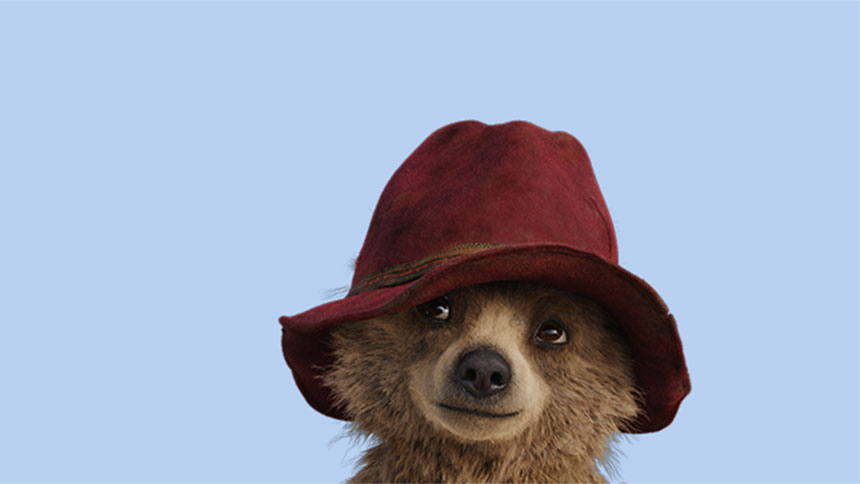
With his red hat and blue duffle coat Paddington is almost un-bear-ably cute. Gentle and good-natured, he’s at the very heart of the movie. Instead, it’s a good old-fashioned romp with larger-than-life characters supplied by Hugh Grant, in a fun pantomime performance and Brendan Gleeson as Knuckles McGinty, a hardened criminal whose bluster disguises his warm heart.
Mostly though, it about the bear. With soulful eyes, good manners and large doses of slapstick—he’s a furry little Charlie Chaplin, excelling in physical humour with lots of heart—he’s a joyful presence. Without an ounce of cynicism “Paddington 2” transmits messages of tolerance, friendship and loyalty but never at the expense of the story. Those characteristics are so central to Paddington’s character that the movie positively drips with not only the sticky sweet smell of delicious marmalade (the bear’s favourite snack) but emotional depth as well.
Add to that a delightful ode to Chaplin’s trip through a factory machine’s cogs in “Modern Times,” some expertly delivered belly laughs and you have one of the most entertaining films likely to be released this year.
“Paddington 2” isn’t just a kid’s flick, it’s a film for the whole family; it’s one of those rare movies for children it doesn’t just feel like an excuse to sell toys. #paddingtonpower
In “Breathe” Andrew Garfield plays Robin Cavendish, one of the longest-lived responauts in Britain history. It is, among other things, undoubtedly the bubbliest movie about polio ever made.
The opening moments of breeze are so unrelentingly chipper that as an audience member you just know the party will soon and in some sort of tragedy will happen. When we first meet Cavendish it’s 1958. He’s a young, vital man who falls in love at first sight with Diana Blacker (Claire Foy), a beautiful, rich woman he meets at a cricket match. It’s all sunshine and roses as they quickly fall in love, get married, get pregnant and move to Kenya to pursue Robin’s career as a tea merchant.
It’s a picture perfect romance until Robin’s health begins to falter. He’s short of breath, his limb ache. Soon he can barely stand. By the time he is diagnosed with polio he is paralyzed from the neck down. “The result is you become like a ragdoll,” Diana is told by the doctor. “He can’t breath for himself. The paralysis is irreversible.”
Grim news for the newlyweds. Given just three months to live Robin asks to be allowed to die but his doctors and Diana will hear nothing of it. Hooked up to a ventilator he lays motionless and despondent in a hospital ward waiting for the inevitable. Unable to find any joy in life he tries to push Diana away but she perseveres, visiting everyday.
Then the jaunty music reappears on the soundtrack and a smile returns to Robin’s face. The couple hatch a plan to move home so Robin can live out his final moments surrounded by the creature comforts of home. “No one, anywhere in the world with your husband’s degree of disability exists outside a hospital,” warns the doctor. Except that he does. In fact he thrives, living for decades, becoming an activist for disabled people and helping to design mobile life support machines to untether patients from their beds. “Do you see a creature who is barely alive,” he asks, “or a man who escaped the confines of a hospital board? I don’t want to just survive I want to truly live.”
“Breathe” breathes the same air as other indomitable spirit movies like “My Left Foot” and “The Theory of Everything.” The big difference is that this is a relentlessly upbeat film. “Are we plucky or pitiful” asks Diana. The answer is obvious but eventually there is something endearing, winning even, about its uncompromisingly buoyant tone. Perhaps that’s because director Andy Serkis paints the story as a love story rather than a medical drama or maybe it’s because of the winning performances from Garfield and Foy.
Garfield is ostensibly the lead but it is Foy who impresses. “The Crown” actress is the heart and soul of the story, providing a rock solid foundation for Garfield’s character.
“Breathe” doesn’t have the gravitas of “The Theory of Everything”—it spends too much time trying to wring all the emotion out of the story like tears from a sponge—but it does have compassion and heart.
There are eight million stories in the naked city, and the story of Paddington the cuddly, orphaned Peruvian bear is one of them.
Based on the much-loved children’s books by Michael Bond, “Paddington” begins in “darkest Peru” as jaunty English explorer Montgomery Clyde (Tim Downie) discovers Lucy and Pastuzo (voices of Imelda Staunton and Michael Gambon), a family of super intelligent, anglophile bears. Before heading back to old Blighty Clyde teaches them the Queen’s English, introduces them to marmalade, gifts them a floppy bright red hat and an invitation to stop by should they ever find themselves in London.
Cut to decades later. In the grand tradition of kid’s stories, an orphaned child (voice of Ben Whishaw)—in this case the marmalade-obsessed grandson of Lucy and Pastuzo—is forced to take a great journey to safety. The cub, armed only with a “worrying marmalade problem” and the distinctive red hat, lands at Paddington Station in London. Instead of the warm welcome he expected, he’s met with indifference.
“Keep your eyes down, there’s some sort of bear over there.”
After a long wait, Mr. and Mrs. Brown (“Downton Abbey’s” Hugh Bonneville and Sally Hawkins) and kids Judy and Jonathan (Madeleine Harris and Samuel Joslin) take pity on the polite little bear and bring him home, but only for one night. Of course, one night turns into a longer stay as the Browns learn to love the little bear, even though chaos follows his every step. Adding drama to the story is an ursophobic neighbor (“Doctor Who’s” Peter Capaldi) and a crazed taxidermist (Nicole Kidman).
Warm, funny and as eccentric as a movie about a talking bear should be, “Paddington” is great family entertainment. Director Paul King keeps up the pace—this is not a teddy bore!—but never allows the film to become frenetic. The action scenes are fun, yet gentle, amusing and inventive. Paddington’s unintentional takedown of a pickpocket is a wonderful, silly gag that captures and updates the spirit of the old “Paddington” books with an up-to-date look and feel for a new generation.
Laugh out loud funny—for kids and parents—“Paddington” also offers up a message of tolerance. “In London everyone is different,” says Paddington, “so everyone can fit in.” It’s a big idea, washed down with a giant melting-pot of marmalade, but also a timely one.
I root for George Clooney. He has a lot going for him; he’s good looking, has a villa in Italy and is good friends with Sandra Bullock. That’s a lot for anyone, but that’s not why I root for him. I’m on his side because even though he’s a superstar he takes chances.
As an actor he put nipples on Batman, starred in a remake of an obscure Russian sci fi film, played a fox in a Wes Anderson movie and has played the lead in a movie about paranormal goats.
As a director he’s just as edgy. He’s stood behind the camera for a black and white look at Edward R. Murrow’s battle with Senator Joseph McCarthy, an old school football movie set in 1925 and an exposé of backroom politics.
He’s an a-lister who takes chances, and I applaud that which makes me sad to report I didn’t find as much to applaud in his most recent film as actor and director “The Monuments Men.”
Based on the book “The Monuments Men: Allied Heroes, Nazi Thieves and the Greatest Treasure Hunt in History” by Robert M. Edsel, the movie stars Clooney, Matt Damon, Bill Murray, John Goodman, Jean Dujardin, Bob Balaban and Hugh Bonneville as a motley crew of art historians, engineers and museum directors recruited to locate and rescue priceless art works stolen by the Nazis. When two members of their team are killed they are no longer observers but active participants in the war.
Helping in the mission to return the plundered cultural artifacts is Rose Valland (Cate Blanchett), a French art historian and member of the French Resistance who not only aids the Allied art platoon but also tries to work her Parisian charms on Damon’s character.
“The Monuments Men” is a wartime comedy. Think “Hogan’s Heroes” by way of Leonardo Da Vinci and you’ll get the idea. It has some mild laughs (the biggest laugh, for Canadians anyway, comes from the Parisians who blame Matt Damon’s terrible French on having spent too much time in Montreal) but also a great deal of reverence for the art and the work of the real-life Monuments Men. ”People can come back but if you destroy their achievements, their history,” says George L. Stout (Clooney), “they can’t come back from that. That’s why Monuments Men was created.”
The reverential tone is reinforced by old school pacing that focuses on the character and art over action and a rousing soundtrack that sounds air-lifted in from a classic wartime era movie. The cast is uniformly fine and Bill Murray shows, once again in a brief scene in a shower (NO SPOILERS HERE), how his understated style can move an audience.
No problems there, but co-writers Clooney and longtime collaborator Grant Heslov appear to have taken a dose of sentimentality pills before putting pen to paper. What might have been an edgy, exciting look at an underreported slice of World War II history is reduced to an elegantly directed but somewhat dull film.
“The Monuments Men” is an earnestly told story but the lack of any real energy or surprises undermines its effectiveness.