“Saturday Night Live” is chaotic, it’s high-stakes, and it shouldn’t work… but for 50 years it has. From the ‘Killer Bees’ to the gritty edge of the new UK reboot, we’re dissecting the house that Lorne built. Is Saturday Night Live the last gasp of ‘Old Showbiz,’ or is it the only thing keeping live performance alive? Today, we’re talking the new Lorne Michaels documentary, the Canadian comedy mafia, and the time I ended up at an after-party with Paul McCartney and Allen Ginsberg. Everything is broken, but the red light is on. Let’s go.
I join CTV NewsChannel anchor Scott Hirsch to talk about the recently announced “Top Gun 3” and new releases in theatres, including the dark comedy “The Christophers,” the east coast crime drama “Little Lorraine,” the documentary “Lorne” and the Montreal coming-of-age “Mile End Kicks.”
SYNOPSIS: In “Lorne,” a new documentary now playing in theatres, Oscar winning filmmaker Morgan Neville goes behind the scenes to details the career and influence of “Saturday Night Live” creator and producer Lorne Michaels.
CAST: Lorne Michaels, Tina Fey, Chris Rock, Conan O’Brien, Maya Rudolph, Andy Samberg, John Mulaney, Jimmy Fallon, Seth Meyers, Kristen Wiig, Mike Myers, Paul Simon. Directed by Morgan Neville.
REVIEW: “Lorne” attempts to peel away the shroud of mystery that surrounds the most powerful, but also most elusive, man in television. For nearly half a century—he took five years off after the show’s fifth season—the Toronto born Michaels created the template for what makes us laugh.
His influence on popular culture is immeasurable, but don’t buy a ticket for “Lorne” looking for insight into his process. Michaels is, as presented in the film, a reluctant subject. Like the Wizard of Oz, he’s the enigmatic man behind the curtain.
As a result, director Morgan Neville frames the film as a kind of comedy, an irreverent look at a serious comedic virtuoso.
Off the top Neville asks him a direct question. “What is funny?”
“It’s one of those things like pornography,” Michaels replies. “You know it when you see it.”
It’s a dryly witty line, cerebral and cryptic, and it is about as close as Michaels comes to explaining his craft.
“SNL” cast members like Tina Fey, Chris Rock, Maya Rudolph, John Mulaney, Jimmy Fallon, Kristen Wiig and Mike Myers reverentially chime in with stories about their time working with the producer.
Among the tales told is John Mulaney’s story about having dinner with Michaels when a random person approached their table with a script. Michaels takes the script with the assurance that he’d have a look. Why? To avoid a repeat of what happened in 1968 when record producer Terry Melcher declined to sign aspiring musician Charles Manson to a contract. Manson got his revenge with the infamous murders on Cielo Drive, so Michaels isn’t taking any chances.
The story has a mythological edge to it, as do many of the accounts of Michaels’s life.
Anecdotes of his calm amid the chaos of “SNL,” his resilience in the high stakes world of network television—” People come in every year and they leave,” Michaels says, “but I’m still here.”—of navigating cultural challenges, and his vampiric hours (goes to bed at 4 am, up at noon, at work by 4 pm), take on a folkloric tone.
In keeping with that fabled tone, Mike Myers uses a pastoral metaphor to explain Michaels and his knack for finding talent. On a trip through the country Michaels spots a pumpkin patch. Free pumpkins as far as the eye can see. In the middle of it is a guy selling pumpkins.
Why should I buy from you when I could just take the free pumpkins? “Because I have the eye,” the seller says, “I know the good pumpkins.”
“Lorne knows the good pumpkins,” says Myers.
The film never quite nails its subject, but it entertainingly portrays a show biz survivor whose legacy is his work; fifty years of “SNL” and countless films as a producer. By the time the end credits roll Michaels remains a mystery, but by his own choice. “All of life is reinvention,” he says. “To be understood? Not gonna happen.”
“Amsterdam,” a quirky new film starring John David Washington, Margot Robbie and Christian Bale and now playing in theatres, is a convoluted story fueled by everything from fascism and birding to murder and music. If there ever was an example of a film that could have benefitted from the KISS rule, Keep It Simple Silly, this is it.
The madcap tale begins in 1933 New York City. WWI vet Dr. Burt Berendsen (Christian Bale), once a Park Avenue physician, he now runs a downtown clinic where he caters to the needs of soldiers who came back from the war broken and in pain.
When Berendsen and his best friend, fellow vet and lawyer Harold Woodsman (John David Washington), are hired by Liz Meekins (Taylor Swift), the daughter of their beloved commanding officer, to ascertain the cause of his death, they are drawn into a murder mystery involving secret organizations, ultra-rich industrialists and a crusty Marine played by Robert DeNiro.
In a flashback to the final days of WWI, we learn their backstory and meet Valerie (Margot Robbie), a nurse who treats their wounds, physically and mentally. As a trio, they swear allegiance to one another during an extended bohemian get-a-way in Amsterdam, a city that becomes a metaphor for freedom and friendship.
Reviewing “Amsterdam” stings. The production is first rate, from Academy Award nominated director David O. Russell, to the a-list cast to the ambitious script that attempts to link events of the past to today’s headlines. But, and this is what stings, the film is definitely less than the sum of its parts.
From the off-kilter tone, part screwball, part deadly serious, to the glacial pacing, which makes the already long two-hour-and-fifteen-minute running time seem much longer, and the script, which casts too wide a wide net in hope of catching something compelling, “Amsterdam” flails about, lost in its own ambition. This is the kind of story, it’s easy to imagine, the Coen Brothers could make look effortless, but Russell does not stick the landing.
He does, however, forward some lovely ideas about embracing kindness and the full experience of being alive, but even those are muddied by the inclusion of heavy-handed, and not particularly original, warnings about domestic terrorism and authoritarianism. Ideas get lost in a sea of exposition and narration, that not even these interesting actors can bring to life.
There may be an interesting story somewhere within “Amsterdam,” but it is hidden, lost in the movie’s epic ambitions.
I have very fond memories of Queen. They were one of the biggest bands in the world when I was in my early teens and their brand of pomp rock appealed to my young ears. “Bohemian Rhapsody,” the band’s best-known song and masterpiece, isn’t a dance song by any stretch of the imagination but that didn’t stop my classmates and me from giving it a go in the school gym.
The slower introduction and the rockin’ last part are fairly easy to move around the room to, it’s the operatic middle section that would have caused less determined kids to abandon the dance floor. But, in a moment I have never forgotten, my school chums spontaneously came together like a roomful of Maria Callases and Luciano Pavarottis to sing lines like, “Scaramouch, Scaramouch will you do the fandango?” at the top of their lungs.
That song brought us all together, the romantics, the head bangers, the nerds; everyone stood up and was heard. It was fantastic. Magnifico even. I wish I could say the same about the new film “Bohemian Rhapsody” starring Rami Malek as the late, great Freddie Mercury.
Mercury was not a subtle performer and that spirit has rubbed off on the film, for better but mostly for worse. The performance scenes are fun, over-the-top and enjoyable. It’s when Mercury doesn’t have a microphone in his hand that the movie suffers. “We need to get experimental,” he says to EMI executive Ray Foster (Mike Myers). Too bad screenwriter Anthony McCarten (“Darkest Hour,” “The Theory of Everything”) only wrote the line and didn’t take it to heart.
With a script researched by Wikipedia the film zips through the band’s career and singer’s personal life, focussing on the high points—the writing of “Bohemian Rhapsody” and Live Aid—while giving the truly dramatic details a boilerplate treatment.
Mercury’s homosexuality is addressed but not deeply explored. He has relationships with two men, Paul Prenter (Allen Leech) and Jim Hutton (Aaron McCusker), and we see him visit a fetish club but not until the movie is half over. Before then it spends a great deal of time establishing the bond with Mary Austin (Lucy Boynton), a woman he called the love of his life.
In the film’s best dramatic scene he comes out of the closet, admitting to her that while he loves her he also thinks he may be bisexual. She disabuses him of the notion, admitting she knows he is gay. It’s a tender scene that sheds light on their connection more than anything that comes before or after.
As for the band, if not for their brightly coloured wardrobe, Brian May (Gwilym Lee), Roger Taylor (Ben Hardy) and John Deacon (Joe Mazzello) would barely make an impression. They are there to stand behind Mercury and start the occasional argument so he can whip out a bon mot, smirk and flit away.
Mercury, of course, is the most compelling character. Overcome with father issues and a desire to perform both on stage and off he’s also a man who allows himself to be manipulated by a lover who clearly does not have his best interest in mind. Malek, fake teeth and all, does a good imitation of Mercury. He can strut and swagger but it feels like an impression, a very good one, but one that never goes beyond skin deep. To paraphrase one of Mercury’s most famous lyrics, “it never feels like real life, it feels like fantasy.”
Brian May and Roger Taylor were directly involved with the making of the movie so it shouldn’t come as a surprise that the story has an “authorized” feel to it, but it is puzzling how the timeline has been twisted to fit the narrative. The montage of their first tour of America is set to “Fat Bottom Girls,” a tune they wouldn’t write for another four years and the writing of “We Will Rock You” is off by three years.
Those are fan details and easily forgiven narratively. What’s more troubling is the film’s handling of Mercury’s AIDS diagnosis. The movie portrays Mercury telling his band mates, three men he calls “his family,” about his illness a week before Live Aid in July 1985. Jim Hutton, Mercury’s boyfriend at the time of his death, says the singer was diagnosed in late April 1987, years after the events in the film. Moving a song or two through time is one thing. Playing around with the life-and-death details of Mercury’s illness for dramatic effect is quite another.
“Bohemian Rhapsody” ends with a rousing recreation of the band’s legendary twenty-minute Live Aid set. Cut back to four songs (“Bohemian Rhapsody,” “Radio Ga Ga,” “Hammer to Fall” and “We Are the Champions”) it captures their fist-pumping triumph on the Wembley stage. It also sends audiences out of the theatre with some of Queen’s biggest hits ringing in their ears. It’s the Principle of Recency, wherein the thing you experience last is the thing you remember most, like a delicious, sugary dessert at the end of a bland meal. The “Live Aid” impersonation is an effective and memorable way to end a by-the-book movie.
Lorne Michaels, creator and guiding light of “Saturday Night Live,” said he was, “infuriatingly talented.” David Letterman called him “the human thunderball” while Dan Aykroyd noted his, “automatic charisma.” The “he” is Matt “I live in a van by the river” Foley and “Tommy’s Boy’s” main character, Chris Farley, the heavy-set comedian and subject of a new documentary, “I Am Chris Farley.”
Executive produced by Farley’s brother Kevin, this loving tribute is an affectionate look at the guy who “always looked like he was having the most fun.” Michaels and Aykroyd are joined by Adam Sandler, Mike Myers, David Spade, Bob Odenkirk and a variety of childhood friends to paint a picture of a man who was ruled by his excesses.
After an all American upbringing in Madison, Wisconsin he joined a local improv group and later trained at Chicago’s fabled Second City, where he fine-tuned his wild, out-of-control style under the tutelage of improv king Del Close, who gave him the same advice he gave another of his famous students, “Attack the stage like a bull you have that power.”
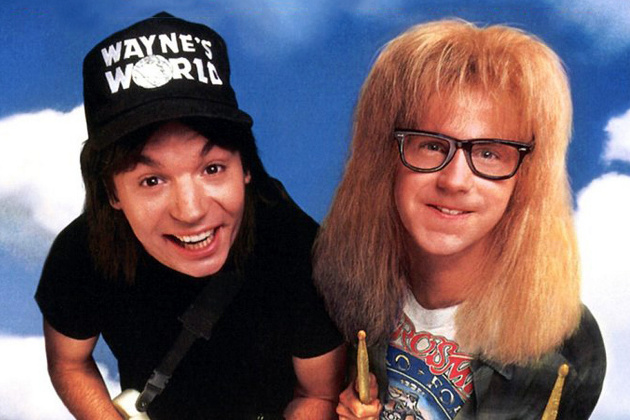
And attack he did, quickly becoming a star on “Saturday Night Live” and in films like “Wayne’s World” and “Tommy Boy.” Offstage his behaviour was as frenetic as his onscreen persona. Spade and others say whatever Farley did he did wholeheartedly. If he liked you, he loved you. If he went for a laugh, he would do anything to get it. By the same token, when he let loose, he attacked the bottle, and later drugs, with the same gusto. He was, as one talking head says, “a sweet guy before midnight.”
It’s hard not to compare Farley to another doomed “Saturday Night Live” cast member. John Belushi was another similarly driver performer who left scorched earth behind, on stage and off. Both men died at age 33, the victim of their own overindulgences.
“I Am Chris Farley” doesn’t have the same gut-wrenching impact as “Amy,” the recent doc about the tragic life and death of singer Amy Winehouse. That film has less warmth, and is more an examination of how Winehouse’s world spun out of control. The Farley doc has a kinder, gentler tone and doesn’t dwell on his final moments. Perhaps it’s just as well. As the film makes clear, Farley lived to make people laugh. He wouldn’t want to leave behind a legacy of heartbreak and misfortune.
How do you define what it is to be Canadian? Does a love of Smarties, Coffee Crisp, Bloody Caesars or ketchup chips make you true blue? Perhaps the use of the letter ‘U’ in words like colour or humour? How aboot the ability to spot and identify a toboggan on a snowy day?
We’re a quiet people, given more to subtle humblebragging than all out back slapping, so you have to do some digging to get to the bottom of Great White North culture. Calgary born ex-pat director Rob Cohen took time off his day job as “The Big Bang Theory” co-executive producer and writer to travel to his home and native land to discover the nature of our national identity.
In a mix of celebrity chats with famous Canadians like the Rush, the SCTV gang, Mike Myers and Dave Foley, on location footage and man-on-the-street interviews the Los Angeles-based Cohen treads over some well-travelled territory. The inexplicable popularity of “The Beachcombers” is examined, as is the ambivalence that Americans feel toward their neighbouring country and the virtues of maple syrup are detailed in a way that should interest Canadians but probably leave the rest of the world scratching their collective heads as to why a country as vast, interesting and diverse as Canada would look outside its borders for approval.
That, I think is the point of “Being Canadian.” In a charmingly quiet way Cohen exposes the real truth; that ultimately it doesn’t matter what our neighbours or anyone else thinks about us. (My two cents? We have Drake so we don’t need anyone’s approval for anything. End of discussion.) Like any other vital, living, breathing entity Canada is ever changing. The Canada Cohen left two decades ago is gone, replaced by a country that maintains its character while growing and maturing. We’ve developed beyond the age-old ‘Is it Peameal or back bacon?’ argument and “Being Canadian,” while traditionally structured, is a good primer on how we are seen and, more importantly, how we see ourselves.
Sylvester Stallone wanted to make a version of “Citizen Kane” about rags-to-riches rock impresario Shep Gordon called “Citizen Insane,” but never got around to it. Mike Myers, however, did and has made a documentary about the flamboyant Gordon, a man who dated Sharon Stone, discovered Alice Cooper, hung out with Mick Jagger and partied at the house Napoleon built for Josephine.
For someone who says, “There’s nothing about fame that’s healthy… it has no intrinsic value,” Shep Gordon sure has made a lot of people very famous.
He discovered Alice Cooper when he and his band were starving on Sunset Boulevard, and set them on a path that lead to superstardom. He broke Anne Murray south of the border—“She’s so straight-laced she’s not even Middle America,” he says, “she’s Canadian.”—gave Groucho Marx a late career boost and vaulted Teddy Pendergrass and many others onto the charts.
He’s a character who offers up three bits of advice for anyone thinking of getting in the game. “Always get the money. Never forget the money. Always remember to never forget the money.”
From his 1970s heyday “Supermensch” teaches us that the infant on the cover of Billion Dollar Babies was named Lola, that Charlie Chaplin was her godfather and that Shep wasn’t immune to the lures of rock and roll excess. While he was raking it in with Cooper he had a house with a model train that transported people from the pool to the main house where vials of cocaine were hidden in the kitchen drawers.
That changed when he met chef Roger Vergé, the father of nouvelle cuisine. Unlike his music industry friends, Vergé was well adjusted, respected and happy. It changed Shep’s life, he morphed from a guy content to eat spaghetti and ketchup into a foodie who even married a raw food chef. It also opened up a new avenue of work for him, and with the dawn of the Food Network he helped redefine the term celebrity chef.
Despite all the success, he’s never had a very profitable love life. “Supermensch” examines this as well, in an unvarnished look at his life outside the spotlight. It’s these moments and Gordon’s insights on his relationship with the Dali Lama (that’s right, Shep knows everybody) that lift the film from a hero-worshipping portrait of 1970s excesses to a moving glimpse into the life of a man who seems to be able to make everyone except himself truly happy.
From a gig as a dance show host (billed as “Funky Mike Myers”) to a stint on Saturday Night Live to hit films like Wayne’s World and a star on the Hollywood Walk of Fame Michael John Myers has followed the path of Canadian trailblazers like the SCTV folks who found fame making Americans laugh. The Scarborough, Ontario born comedian says he was able to break into the American comedy market “because other Canadians helped me.”
Citing early boosters like Dave Thomas, Martin Short and Lorne Michaels (who the young Myers idolized, even doing an eighth grade project on the producer) Myers found his feet as a comedian with Second City, (on stages in Toronto and Chicago), and then in 1989 he, like Dan Aykroyd and Phil Hartman before him, found fame as part of Saturday Night Live.
Since then he’s had time to reflect on why Canadians have been so successful in America. To explain he quotes one of his early advocates.
“Martin Short said something that was kind of interesting which is when Americans watch TV they’re watching TV but when Canadians watch TV they’re watching American TV. There is sort of a separation. We can look at American culture as foreigners except that we’re not all that different. ‘Wow, we are like two cultures separated by a common language,’ to quote Winston Churchill.”
Canadians, he suggests, are the great observers, carefully studying and digesting American movies, television and music before putting their own spin on them. Having both objectivity and perspective allows comics like Myers to analyze pop culture, and then create a unique style that adds to the culture while cleverly (and quietly) dissecting it.
“Canada is the essence of not being,” he says. “Not English, not American, it is the mathematic of not being. And a subtle flavor. We’re more like celery as a flavor.”