SYNOPSIS: A likeable documentary about a likeable subject, “John Candy: I Like Me” is a straightforward look at a comedian whose work is still entertaining audiences three decades after his passing.
CAST: John Candy, Dan Aykroyd, Catherine O’Hara, Steve Martin, Tom Hanks, Martin Short, Eugene Levy, and Macaulay Culkin. Directed by Colin Hanks.
REVIEW: Martin Short told “John Candy: I Like Me” documentary producer Ryan Reynolds and director Colin Hanks (whose famous father co-starred with Candy in “Splash”), they would not be able to find anyone with anything bad to say about John Candy. Short was right. Everyone in the doc speaks glowingly of Candy, his generosity of spirit and luminous talent, but this isn’t a straight up hagiography.
Those nearest and dearest to the late comic actor, like his children Jennifer and Chris, widow Rose, Steve Martin, Tom Hanks, Martin Short, Eugene Levy, Macaulay Culkin, Dan Aykroyd and Catherine O’Hara, paint a colorful portrait of a larger-than-life character who battled weight issues and an anxiety disorder.
Thirty years after his passing on a film shoot in Durango, Mexico, Candy’s work remains as funny and endearing as it was when first released. Hanks’s film offers up copious evidence in the form of clips from “SCTV,” “Uncle Buck,” “Splash,” “Spaceballs,” “Home Alone,” “Planes, Trains and Automobiles” (it’s a line in the latter that gives this movie its name: “I like me,” Candy says as Del Griffith. “My wife likes me.”) and many others, and while it’s lovey to revisit those moments, it’s the picture of Candy off screen that compels.
New interviews with school friends, family and colleagues like Dan Aykroyd, Catherine O’Hara, Martin Short and Steve Martin tell the tale. From growing up in a working-class Toronto family, to his father’s passing of heart disease at age 35 when John was four years old, to putting his dreams of football stardom aside after a knee injury to discovering acting in college, we learn how each of these events shaped the trajectory of his life and career from the people who were there with him.
Everyone describes him as a charismatic character, the first one to pick up the tab in the early days, even though they were all making the same money. He was a people pleaser, but as Conan O’Brien points out, “The hazard of this business is that it’s very unhealthy for people pleasers.”
More up-close-and-personal are the remembrances of his Chris, Jennifer and Rose. They provide an intimate, behind-the-scenes glimpse of a man who, as his daughter says, “took care of people” but didn’t necessarily take care of himself. He liked a drink, a cigarette and, as anxiety entered his life, became convinced he would die early, just as his father had.
Ultimately, “John Candy: I Like Me” is a straightforward, heartfelt documentary with a bittersweet ending. Candy passed at age 43, but the wealth of material he left behind, the TV shows and movies, still entertains, three decades after his passing.
SYNOPSIS: A likeable documentary about a likeable subject, “John Candy: I Like Me” is a straightforward look at a comedian whose work is still entertaining audiences three decades after his passing.
CAST: John Candy, Dan Aykroyd, Catherine O’Hara, Steve Martin, Tom Hanks, Martin Short, Eugene Levy, and Macaulay Culkin. Directed by Colin Hanks.
REVIEW: Martin Short told “John Candy: I Like Me” documentary producer Ryan Reynolds and director Colin Hanks (whose famous father co-starred with Candy in “Splash”), they would not be able to find anyone with anything bad to say about John Candy. Short was right. Everyone in the doc speaks glowingly of Candy, his generosity of spirit and luminous talent, but this isn’t a straight up hagiography.
Those nearest and dearest to the late comic actor, like his children Jennifer and Chris, widow Rose, Steve Martin, Tom Hanks, Martin Short, Eugene Levy, Macaulay Culkin, Dan Aykroyd and Catherine O’Hara, paint a colorful portrait of a larger-than-life character who battled weight issues and an anxiety disorder.
Thirty years after his passing on a film shoot in Durango, Mexico, Candy’s work remains as funny and endearing as it was when first released. Hanks’s film offers up copious evidence in the form of clips from “SCTV,” “Uncle Buck,” “Splash,” “Spaceballs,” “Home Alone,” “Planes, Trains and Automobiles” (it’s a line in the latter that gives this movie its name: “I like me,” Candy says as Del Griffith. “My wife likes me.”) and many others, and while it’s lovey to revisit those moments, it’s the picture of Candy off screen that compels.
New interviews with school friends, family and colleagues like Dan Aykroyd, Catherine O’Hara, Martin Short and Steve Martin tell the tale. From growing up in a working-class Toronto family, to his father’s passing of heart disease at age 35 when John was four years old, to putting his dreams of football stardom aside after a knee injury to discovering acting in college, we learn how each of these events shaped the trajectory of his life and career from the people who were there with him.
Everyone describes him as a charismatic character, the first one to pick up the tab in the early days, even though they were all making the same money. He was a people pleaser, but as Conan O’Brien points out, “The hazard of this business is that it’s very unhealthy for people pleasers.”
More up-close-and-personal are the remembrances of his Chris, Jennifer and Rose. They provide an intimate, behind-the-scenes glimpse of a man who, as his daughter says, “took care of people” but didn’t necessarily take care of himself. He liked a drink, a cigarette and, as anxiety entered his life, became convinced he would die early, just as his father had.
Ultimately, “John Candy: I Like Me” is a straightforward, heartfelt documentary with a bittersweet ending. Candy passed at age 43, but the wealth of material he left behind, the TV shows and movies, still entertains, three decades after his passing.
Based on a book by Lois Lowry, “The Willoughbys,” a new animated film now available on Netflix, is a parody of “old fashioned” classic children’s stories where terrible things happen, babies are abandoned, long-lost relatives show up and nannies look after the kids. Yet somehow, a happy ending and a lesson or two always emerge from the chaos.
Narrated by Ricky Gervais—”I’m the narrator. And a cat. Get over it, yeah.”—the story takes place at the Willoughby mansion, a home tucked away between two skyscrapers, hidden from the modern world. The family has a long and distinguished legacy of tradition, invention creativity and courage. “Their greatness passed down from generation to generation like their magnificent facial hair,” says the narrator, “until this one.” Enter the youngest son (Martin Short) and his new bride (Jane Krakowski). Madly in love, they only have eyes for one another. They don’t even care for their kids. “I am your father and that woman in there you insulted with your rude burp is your mother,” father says to eldest son Tim (Will Forte). “If you need love, I beg of you, find it elsewhere. Thank you.”
All they gave Tim was their name, and siblings Jane (Alessia Cara) and twins, both named Barnaby (Sean Cullen). “Let’s face it this Willoughby family isn’t great,” says the narrator, “and by the looks of it, they never will be. Not without a little help.”
So the kids hatch a plan to create a better life for themselves. “We can send them away!” says Tim. “What if we orphaned ourselves? We shall craft a murderous adventure that gives our insidious parents exactly what they want.” “To be left alone with their love!” says Jane.
Tim concocts a “a romantic get-a-way hiding deadly orphaning opportunities. If they do not melt in the hottest places on earth, they shall drown in the wettest. Cannibals will feast on them unless they freeze in glacial ice.” They create a travel brochure from the Reprehensible Travel Agency—No Children Allowed!—and make sure the folks see it. They love the plan but fear the children will destroy the house. The solution? Get a nanny. “But aren’t good nannies expensive?” wonders mom. “Yes, so we’ll hire a not good nanny! For cheap!” says father.
Thus, begins a wild adventure for mom, dad and the kids.
“The Willoughbys” It’s not as dark as “A Series of Unfortunate Events” or as magical as “Mary Poppins.” Instead it finds its own tone, deriving much humour from the dire circumstances. “If you like stories about families that stick together and love each other through thick and thin,” says the cat narrator, “and it all ends up happily ever after, this isn’t the film for you OK?” Director and co-writer Kris “Cloudy With a Chance of Meatballs 2” Pearn energizes the story with characters that look like they’re shaped out of bubble gum; colourful and highly stylized. Then he puts them in constant motion. It’s frenetic and fun, even when the kids are plotting to kill their parents.
There’s strong voice work from Will Forte, Alessia Cara, Jane Krakowski, Martin Short and Terry Crews but Gervais and his droll narration steals the show. “It’s hard to leave home for the first time,” he says, “although I was six days old when I left. All my folks ever did for me was lick my eyeballs open and sent me packing.”
“The Willoughbys” isn’t remarkably original story wise. It mixes and matches from a variety of sources. There’s a taste of Roald Dahl, a hint of “Despicable Me” and a dollop of “Mary Poppins,” but, all spun together, they form a delightfully dark (but not too dark) story about finding the true value of family.
Everybody knows what happens on stage at a big show like this Sunday’s Canadian Screen Awards. A host sings, dances and/or tells jokes, glamorous presenters tear open envelopes and announce award winners who thank everyone from managers to spouses to Jesus. There’s the slapping of backs, bespoke tuxedos and flowing gowns and tears.
Add in some drama, a red carpet and you have the ingredients of a big awards show, but what happens backstage?
Lots, as it turns out. Every year at the Canadian Screen Awards there’s a whole other show that happens offstage in the pressroom. Located deep in the bowels of the Four Seasons Centre for the Performing Arts it’s my domain during the live broadcast. Every year I host the room, interviewing the winners as they come off stage in front of an “audience” made up of local and national reporters there for the free food and access to the celebs. I am the purveyor of sound bites, the compère to the press who take the interviews I do and turn them into stories for the next day’s papers and newscasts.
Over the years Elvis Costello, Tatiana Maslany, William Shatner and many others have passed through, tossing out bon mots like they were candy. Jay Baruchel let it slip he was engaged to Alison Pill on our small stage. Viggo Mortensen proudly waved the Montreal Canadiens flag in the face of a roomful of Leafs fans and Jill Hennessey gushed about the Canadian Screen Awards gift bag, thanking the Academy for the Norman Jewison Maple Syrup.
It’s an easy gig for me. Everyone who comes down from the main stage is a winner, automatically in a good mood and ready to have some fun.
When Lifetime Achievement Award winner David Cronenberg was asked where the inspiration for his movies came from he took a moment to examine the assembled crowd of journalists before deadpanning, “Just standing here is giving me all kinds of ideas for horror films.”
Call Me Fitz star Tracy Dawson picked up a CSA for Best Actress but later told me that awards don’t guarantee work. She won a Gemini in 2011 for playing Meghan Fitzpatrick on the show and thought she had it made. Then her phone didn’t ring for ten months. In the pressroom she joked that she wanted to be clear—she was looking for work. “I’m totally available,” she laughed.
It’s a different show downstairs, less glitzy and more relaxed.
This year Andrea Martin is taking over hosting duties from fellow-SCTVer Martin Short but I’ll never forget last year how Short tore up the pressroom, still jacked up from hosting the show. He was hilarious when I asked if he’d try and top his spectacular flying entrance next year. “I can only fly so many times,” he said. “That harness chafes.”
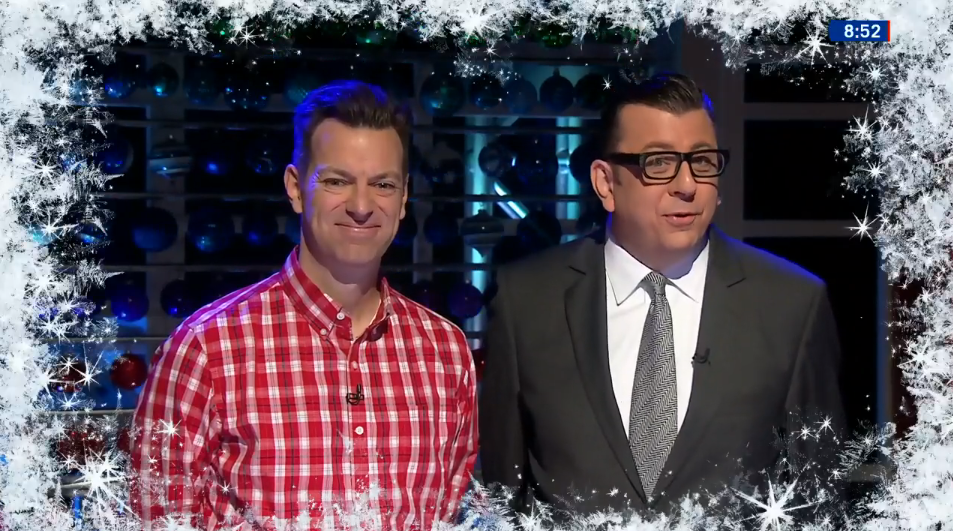
See Richard, along with Victor Garber, the cast of Corner Gas: The Movie, Martin Short, Rex Harrington, Bruce Cockburn, Meesha Brueggergosman, Gordon Pinsent and more recite “‘Twas the Night Before Christmas!” Watch the whole thing HERE!
The term “inherent vice” can be found on property insurance policies eliminating coverage for loss “caused by a quality in property that causes it to damage or destroy itself.” In other words, if the chocolate you’re shipping melts, you’re out of luck.
The new film from director Paul Thomas Anderson not only borrows the term as a title, but also the spirit. A complex stoner detective story, the movie’s characters are a doomed lot, debasing themselves with their own behavior. The result is a story of damaged personalities that requires a roadmap to navigate.
Joaquin Phoenix, is Larry “Doc” Sportello, a shaggy haired hippie detective in 1970 Los Angeles. Perpetually stoned he sees the world through a fog, and writes things like, “Paranoia Alert!” and “Not hallucinating” in his red detective’s notebook. When his ex-girlfriend Shasta (Katherine Waterston) asks him to investigate a plot to have her wealthy, married lover committed to a mental health facility, Doc is sucked into a complicated web of deceit involving a neurotic LA cop named Bigfoot (josh Brolin), a snitch (Owen Wilson), a drug crazed dentist (Martin Short), a drug syndicated called the Golden Fang and a man with a swastika tattooed on his face (Keith Jardine).
“Inherent Vice” plays like a brainier Cheech and Chong movie. The rambling story, that makes the work of Alaskan Native storytelling seem linear, sometimes gets lost in a cloud of pot smoke, and is occasionally almost incomprehensible, but never less than compelling. The actors, doing very high-level work, cut through the confusing murk of the plot, putting a human face on the twists and turns of the tale.
It’s been suggested that the mutton-chopped Phoenix based his performance on Leslie Nielsen’s work with the Zucker Brothers. That means playing it straight, or as straight as a stoner can be played. His hard-boiled lingo and natural PI ability are not played for laughs, but every now and again a measure of slapstick works its way into the performance; an unexpected yelp or an eager lunge at a table full of white powder. It’s an audacious performance that rides the line between serious and ridiculous without ever swaying too far one way or the other.
Your appreciation of Phoenix’s work, or at least the essence of the work, will relate directly to your enjoyment of “Inherent Vice.” The wonky tone, spread throughout the movie’s 148 minute running time, feels like an extended joke the audience isn’t always in on. When it works, it hums along, like a strange but enjoyable dream. When it doesn’t, it’s nightmarishly incoherent.
So says a character in “Legends of Oz: Dorothy’s Return,” a new family film that adds a chapter to L. Frank Baum’s “Wizard of Oz” series.
Where there are flying monkeys you can bet there’ll also be a Scarecrow (Dan Aykroyd), the Tin Man (Kelsey Grammer) and a Lion (as played by James Belushi he’s no longer cowardly and now suggests tearing his enemies “limb from limb.”) and, of course, witch killer Dorothy (Lea Michele) and her little dog Toto. All make appearances but this time around they’re up against a different foe—an evil Jester (Martin Short).
The movie begins several Oz years after Dorothy vanquished the Wicked Witch of the West. In her time, however, only hours have passed. When she wakes in her bed in Kansas the tornado from the original story has just laid waste to her town, but before you can say “Well, howdy, Miss Gulch,” the young girl is sucked up by a giant rainbow and transported to the world of Oz. “You guys,” she says, “dragging me into a giant rainbow really scared me!”
Trouble is, things aren’t so wonderful in Oz. The Emerald City is in turmoil at the hands of a power hungry Jester who is turning the citizenry into marionettes. Dorothy, with the help of new friends Wiser the Owl (Oliver Platt), Marshal Mallow (Hugh Dancy), China Princess (Megan Hilty) and Tugg the Tugboat (Patrick Stewart) must stop the Jester and rescue Scarecrow, the Tin Man and Lion before they are turned into puppets.
There are some good messages for kids in “The Legends of Oz: Dorothy’s Return” about working together—as heard in the clumsily rhymed “out it all together until the job is done, it should be easy, it should be fun”—and the importance of friendship. It’s just too bad they are wrapped up in a film so saccharine it would give the Wicked Witch of the West a sugar rush.
The flying monkeys are still kinda scary but the rest of the movie practically redefines the term “family friendly,” and not in all the best ways. It plays it safe to a fault throughout, smoothing over any edge until there is not much left but some poppy tunes (by Bryan Adams among others) and a story that relies on the goodwill of characters created several generations ago.
“The Legends of Oz: Dorothy’s Return” won’t give Pixar a run for their money and might be best saved for a rainy day rental.
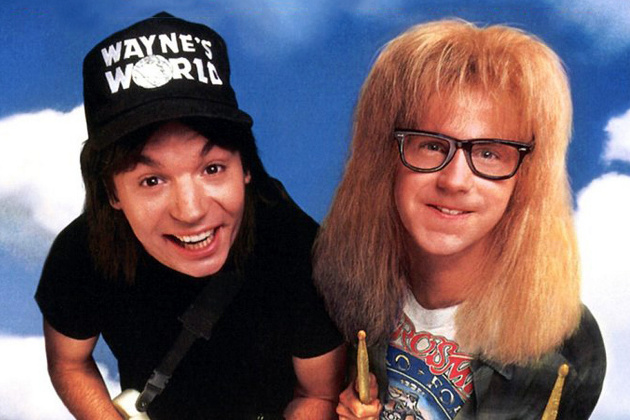
From a gig as a dance show host (billed as “Funky Mike Myers”) to a stint on Saturday Night Live to hit films like Wayne’s World and a star on the Hollywood Walk of Fame Michael John Myers has followed the path of Canadian trailblazers like the SCTV folks who found fame making Americans laugh. The Scarborough, Ontario born comedian says he was able to break into the American comedy market “because other Canadians helped me.”
Citing early boosters like Dave Thomas, Martin Short and Lorne Michaels (who the young Myers idolized, even doing an eighth grade project on the producer) Myers found his feet as a comedian with Second City, (on stages in Toronto and Chicago), and then in 1989 he, like Dan Aykroyd and Phil Hartman before him, found fame as part of Saturday Night Live.
Since then he’s had time to reflect on why Canadians have been so successful in America. To explain he quotes one of his early advocates.
“Martin Short said something that was kind of interesting which is when Americans watch TV they’re watching TV but when Canadians watch TV they’re watching American TV. There is sort of a separation. We can look at American culture as foreigners except that we’re not all that different. ‘Wow, we are like two cultures separated by a common language,’ to quote Winston Churchill.”
Canadians, he suggests, are the great observers, carefully studying and digesting American movies, television and music before putting their own spin on them. Having both objectivity and perspective allows comics like Myers to analyze pop culture, and then create a unique style that adds to the culture while cleverly (and quietly) dissecting it.
“Canada is the essence of not being,” he says. “Not English, not American, it is the mathematic of not being. And a subtle flavor. We’re more like celery as a flavor.”
“When you lose someone you love they never really leave you.” These are the comforting words parents say to their kids when a beloved pet or grandparent dies. Leave it to the twisted mind of Tim Burton to take it one step further in “Frankenweenie,” his latest stop-motion animated film, about a boy and his dead dog.
The story takes place in the small town of New Holland, the kind of place with nosy neighbors and a line in the official town song about “modest homes at modest prices.” Look just beyond the perfectly manicured lawns, however, and you’ll find goth kids with creepy names like Victor Frankenstein, (voiced by Charlie Tahan), his parents (voiced by Catherine O’Hara & Martin Short) and dog Sparky. When Sparky is unexpectedly killed, Victor takes his mother’s platitude to heart—the “never leave you” part anyway—digs up his pet and brings him back to life using a method he learned in science class. He’s thrilled to have Sparky back, but will his parents and friends be as happy?
Reanimating corpses is not exactly the subject of kid’s films… unless you’re Tim Burton, who takes a horror premise and turns it into a touching and funny family story about a lonely boy and his best friend. The climax may be too intense for small kids, so judge your child’s tolerance for giant Sea Monkeys and some mild action before shelling out for tickets for the whole family.
Using gorgeous black-and-white and 3D Burton has crafted visuals that would make James Whale proud. No detail is too small or too strange for the director’s eye, from the beautiful set design to the homages to “Gamera” and “An American Werewolf in London.”
All the macabre elements of good old fashioned horror movies are represented—mobs with torches, lightening strikes bringing dead things back to life—but underneath it all is a great deal of heart, something that has been missing from Burton’s recent blockbuster work. “Frankenweenie” feels more personal, and because of the stop-motion animation, handmade. Kids may not get the “Bride of Frankenstein” gag, but they’ll love the look of the film.
Good voice work from Burton’s “Beetlejuice” cast members O’Hara and Wynona Ryder with “Ed Wood’s” Martin Landau chiming in and new comers like Short, Tahan and Atticus Shaffer bring the ghoulish puppets to life, animating them with personality.
Tim Burton has been trying to make “Frankenweenie” for a long time. It first saw life as a Disney short way back in 1984, and has definitely been worth the wait.