What’s a wormhole anyway? According to Wikipedia it’s a “postulated method, within the general theory of relativity, of moving from one point in space to another without crossing the space between.” Huh? Maybe it’s easier to think of them as a cosmic shortcut to the past or future. If Bill and Ted could figure these things out—their first “excellent adventure” saw them sucked into a wormhole to assemble historical figures for a high school project—then so should we.
Christopher Nolan uses these theoretical bridges through time as the bridge through his new space opera “Interstellar.”
In the earthbound portion of the story crop blight has led to a food shortage and a worldwide ecological disaster. Cooper (Matthew McConaughey), is a pilot-turned-farmer trying to find a way for his family to survive the impending apocalypse. An answer to his problems arrives in the form of Professor Brand and his daughter Amelia (Michael Caine and Anne Hathaway) who believe a new planet with the possibility of supporting life exists on the other side of a wormhole near the planet Saturn. “We’re not meant to save the world,” Brand says. “We’re meant to leave it.”. Cooper, Amelia and a team of astronauts embark on a year-year quest to find the planet and find humanity’s salvation.
“Interstellar” is twice as long as the similarly themed “Gravity,” but only half as enjoyable. It’s larger in scope—this is Christopher “Billion Dollar Baby” Nolan after all—than the Sandra Bullock movie, and more ambitious too, but it’s a strange mix of sci fi and sentimentality that plays up the idea of the power of love. The only thing missing is a Celine Dion over the final credits.
Nolan reaches for the stars with beautifully composed shots and some mind-bending special effects, but the dime store philosophy of the story never achieves lift off.
McConaughey’s been down this road before in “Contact,” and acquits himself well enough, but the interesting actor who anchored “True Detective” gets lost in space for much of the 169-minute-running time.
On the upside “Interstellar” earns points for not being based on a novel or video game. On the downside, it’s not based on good sci fi either.
David Gordon Green has one of the strangest careers in Hollywood.
He made his name directing keenly observed art house films about life in the rural South like “George Washington’ and “Undertow.” They are rich with details, if sketchy story wise.
He’s probably better known, however, as the filmmaker behind the ribald comedies “Eastbound & Down” and “Your Highness.”
His career is a study of contrasts, of high art and low culture. His latest, “Joe,” rests somewhere in the middle. Like his early work it’s a Southern Gothic, set in a rugged small town where rusted pick-ups are a prized possession and there’s only work when the sun is shining. The outrageous humor of his comedies is absent, but what “Joe” lacks in laughs, it makes up for in story.
Nicolas Cage is Joe Ransom, foreman of a work crew who poison healthy trees so a forestry company can come in, raze the area and raise more valuable saplings. He’s also an ex-con, constantly struggling with a volatile temper.
When he meets and hires fifteen-year-old Gary (Tye Sheridan) he finds a kindred soul, a damaged kid with a drunken violent father (Gary Poulter). Gary is a hard worker—the main breadwinner for his drifter parents—and looks to Joe as a role model.
Emotionally involved, Joe puts himself in the middle of a father-and-son conflict.
Like Green, Cage’s career is marked with high highs and low lows. “Joe” sees him hand in his best performance since “The Bad Lieutenant: Port of Call – New Orleans.” He’s not exactly understated here, but he is textured and nuanced, giving Joe some real depth. The histrionics that earned him the nickname “Ragin’ Nic Cage” are mostly absent, replaced by an actor who convincingly portrays a raw nerve of a man who fights against his impulses on a daily basis.
He is supported by Sheridan, who delivers on the promise he displayed in the Matthew McConaughey film “Mud.” He’s a terrific actor and doesn’t allow Cage to overpower him.
The film’s tour-de-force performance comes from the late Gary Poulter in his film debut as Gary’s violent degenerate sot of a father. Green plucked him from the streets of Austin, Texas, where decades of addiction had ravaged his body. He passed away two months after filming was completed, drowned, after a night of heavy drinking. In the movie the 53 year-old is menacing, dangerous and disturbing in a role that requires him to pimp out his own daughter and physically abuse his son. It’s the work of a pro and it’s a shame we won’t see more of his work.
“Joe” may be mainly a character study of the three men, but it doesn’t skimp on the story. It’s bleak, with little relief from scene to scene, but is a happy medium for Green, melding his indie work with his Hollywood films in an interesting and satisfying way.
Looks like another actor is taking a page out of Matthew McConaughey’s playbook.
The star’s recent Oscar win for “Dallas Buyer’s Club” was the frosting on the McConaissance cake, the transformation from shirtless rom com star to serious leading man.
Jude Law seems to have taken note, trading in the “pretty young thing” roles of “The Talented Mr. Ripley” and “Alfie” in favor of darker character pieces. His latest, “Dom Hemingway,” is his most noir creation yet.
When we first meet Mr. Hemmingway he’s in jail, a safecracker with anger issues in the midst of a twelve-year stretch. Upon release he looks up best friend Dickie (Richard E. Grant), a one-handed small time crook who reconnects him with former boss Mr. Fontaine (Demian Bichir), an elegant but deadly crime lord. The way Dom sees it Mr. Fontaine owes him a great deal of money for keeping his mouth shut in prison but a near death experience changes everything.
“Dom Hemingway” is not a great movie. It is weirdly paced and betrays it’s hard edge with sentimentality but it is worth seeing despite itself; worth seeing because of Jude Law’s performance.
“I am a legend, a myth, a glorious tale to be handed down from generation to generation,” Hemmingway boasts, with a self worth almost as broad as his vocabulary. He’s an uneducated thug with a way with words and Law brings him to vivid whiskey soaked life in an aggressively comic performance.
Twenty years ago the part would have been played by Bob Hoskins or Ray Winstone, rough and tumble actors with a built in sense of menace. Law, by contrast, doesn’t seem to be an obvious substitute, but it’s the kind of character part that suits him. In retrospect he always seemed an uncomfortable fit in some of his leading man roles that relied more on his charm than talent. Here he brings an unexpectedly dangerous but funny vibe to the film, reminiscent of Ben Kingsley’s work in “Sexy Beast.”
Whether he is bragging that his manhood could save starving children in Somalia, in a bravura opening monologue, or staring moon-eyed at his estranged daughter, Law is better than the movie in a role that could come to redefine his career.
Hollywood is full of hyphenates, the kind of people who introduce themselves as a model-actor-writer-waiter-personal-trainer-dog-walker.
Lately there is one Tinsel Town citizen, however, who has actually earned every word in his hyphenated title.
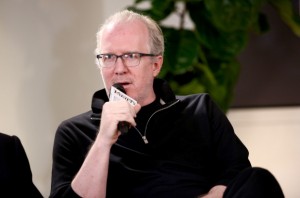
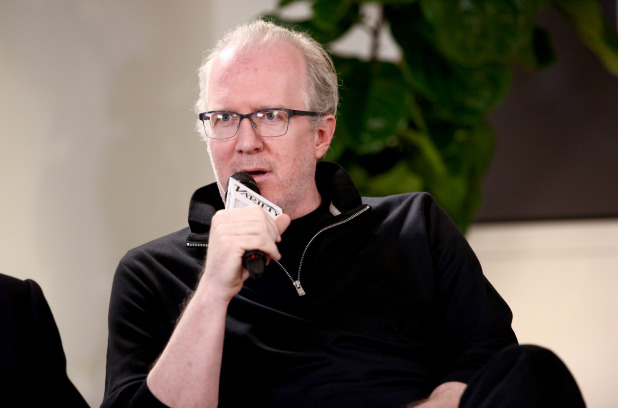
Tracy Letts is an actor-writer-producer-Pulitzer-Prize-winner who is going to have to get longer business cards if he gets any more successful. You may not recognize the name unless you pay attention to the end credits of Homeland (he plays Senator Andrew Lockhart on the popular show) or if you know who won the 2013 Tony Award for Best Actor in a Play for Who’s Afraid of Virginia Woolf?.
He’s a multi-talent with a shelf of awards, some heavyweight acting credits and a new movie screenplay on his resume.
His latest project, the script for August: Osage County, puts words into the mouths of some of the biggest stars in Hollywood. The film brings together the Weston sisters, Barbara (Julia Roberts), Karen (Juliette Lewis) and Ivy (Julianne Nicholson) with their pill-popping mommy-dearest Violet (Meryl Streep).
As a writer Letts says inspiration came from Tennessee Williams, William Faulkner and Jim Thompson, which might explain the dark vein that runs through his work.
How twisted are his plays? “Everybody in Tracy’s stories gets naked or dead,” says his mom, author Billie Letts.
Tracy jokingly says that his mother is “a liar” for saying that, pointing out that “not all of the people in my plays wind up naked or dead.”
Still there is no denying that his screenplay for Killer Joe, the 2011 Matthew McConaughey thriller, is written with what Roger Ebert called, “merciless black humor.” The story of a corrupt cop and a bad insurance claim earned critical praise even if the Women Film Critics Circle cited the film for its presentation of what they called “the worst female and male images” of the year.
According to Entertainment Weekly his script for Bug, starring Ashley Judd and Michael Shannon as a lonely woman and unhinged war veteran trapped in a bug infested Oklahoma motel room, contains an “enjoyably icky heart.”
Tracy Letts seems willing to take on any challenge to add to his hyphenate status. There’s just one thing you can’t ask him to do. “I don’t act in the stuff that I write,” he says. “I have no interest in doing that.”
TOP THIRTEEN HITS (click on the title to see trailer)
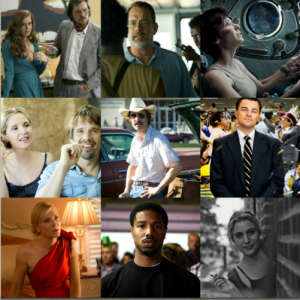
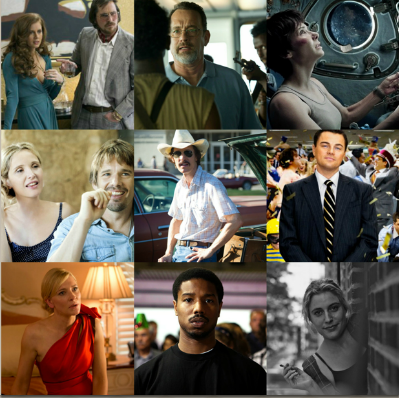
1. 12 Years a Slave. There’s a key line near the beginning of “12 Years a Slave, “ the new drama from “Shame” director Steve McQueen. Shortly after being shanghaied from his comfortable life as a freeman into a life of slavery Solomon Northup (Chiwetel Ejiofor) declares, “I don’t want to survive. I want to live.” Based on Northup’s 1853 memoir the movie is an uncompromising story about will, suffering and injustice.
2. American Hustle. “American Hustle” is one of the year’s best. It’s an entertainingly audacious movie that will doubtless be compared to “The Wolf of Wall Street” because of the similarity in tone and themes, but this time around David O. Russell has almost out-Scorsese’d Scorsese.
3. Before Midnight. “Before Midnight” is beautifully real stuff that fully explores the doubts and regrets that characterize Jesse and Celine’s (Ethan Hawke and Julie Delpy) love affair. Done with humor, heart and pathos, often in the same scene, it is a poignant farewell to two characters who grew up in front of us.
4. Blue Jasmine. Darker than most of Woody Allen’s recent output, “Blue Jasmine” doesn’t go for laughs—very often anyway—but is an astutely crafted psychological character study. Jasmine is a modern day Blanche Du Bois, a faded bright light now forced to depend on the kindness of strangers. Getting in her way are delusions of grandeur and a continued sense of denial—likely the same sense that kept her guilt free during the years the illegal cash was flowing—that eventually conspire to fracture her psyche. “There’s only so many traumas one can take,” she says, “ before you end up in the street, screaming.”
5. Captain Phillips. I don’t think it’s fair to charge audiences full price for screenings of “Captain Phillips.” While watching this exciting new Tom Hanks thriller I was reminded of the old Monster Trucks ads that bellowed, “You Pay for the Whole Seat but You’ll Only Need the Edge!”It a film about piracy and I don’t mean the sleazy guys who bootleg movies but the real pirates who were responsible for the first hijacking of an American cargo ship in two hundred years.
6. Dallas Buyer’s Club. In “Dallas Buyer’s Club” Canadian director Jean-Marc Vallée has made an emotional drama that never stoops to melodrama. Instead it’s an inspirational film about standing up for what you believe in.
7. Frances Ha. The seventh film from “Greenberg” director Noah Baumbach isn’t so much a traditional narrative as it is a character study of Frances (Greta Gerwig), an underemployed dancer struggling to find herself in New York City. It plays like a cleaned up black-and-white version of “Girls”; an emotionally rich and funny portrait of twenty-something ennui. “Frances Ha” is a collection of details. There is an engaging story, but it’s not exactly laid out in three acts. It feels more intimate and raw than the usual twenty-ish crisis flick and with each detail we get another piece of the puzzle that makes up Frances’ life.
8. Fruitvale Station. It’s important to remember that “Fruitvale Station” isn’t a documentary. Director Ryan Coogler has shaped the movie for maximum heartrending effect, and by the time the devastating last half hour plays out it’s hard to imagine any other movie this year packing such a emotional wallop.
9. Gravity. “Gravity” isn’t an epic like “2001: A Space Odyssey” or an outright horror film like “Alien.” There are no monsters or face hugging ETs. It’s not even a movie about life or death. Instead it is a life-affirming movie about the will to survive.
10. Her. “Her” is an oddball story, but it’s not an oddball film. It is ripe with real human emotion and commentary on a generation’s reliance on technology at the cost of social interaction.
11. Inside Llewyn Davis. “Inside Llewyn Davis” is a fictional look at the vibrant Greenwich Village folk scene. Imagine the cover of “The Freewheelin’ Bob Dylan” come to life. Sharp-eyed folkies will note not-so-coincidental similarities between the people Llewyn meets and real-life types like Tom Paxton, Alert Grossman and Mary Travers, but this isn’t a history, it’s a feel. It gives us an under-the-covers look at struggles and naked ambition it takes to get noticed.
12. Nebraska. The humour doesn’t come in the set-up-punch-line format but arises out of the situations. A scene of Woody’s gathered family—his elderly brothers and grown sons—watching a football game redefines the word taciturn but the subject of the sparse conversation, a 1974 Buick, is bang on, hilarious and will likely sound familiar to anyone with a large family.
13. Wolf of Wall Street. “Wolf of Wall Street” makes for entertaining viewing, mostly because DiCaprio and Jonah Hill are able to ride the line between the outrageous comedy on display and the human drama that takes over the movie’s final minutes. Both are terrific, buoyed by the throbbing pulse of Scorsese’s camera. With its fourth wall breaking narration, scandalous set pieces and absurd antics “The Wolf of Wall Street” is an experience. At three hours it’s almost as excessive as Balfort’s $26,000 dinners. It feels a bit long, but like the spoiled brats it portrays, it will not, and cannot, be ignored.
TOP FIVE MISSES
TREND: Big stars don’t guarantee box office!
1. The Fifth Estate – Budget: $28 million, Global box office: $6 million, Return: 21% Late into “The Fifth Estate” Guardian investigative journalist Nick Davies (David Thewlis) says, “most good stories start at the beginning.” I argue that he’s right– about 99% of the time. Unfortunately this look at WikiLeaks and hacker-turned-whistleblower Julian Assange falls into the 1%.
2. Bullet to the Head – Budget: $25 million, Global box office: $9 million, Return: 36% With a name like Bullet to the Head you know the new Sylvester Stallone movie isn’t a romantic comedy. Although he paraphrases the most famous rom com line of all time, “You had be at BLEEP BLEEP!” the movie is nothing but an ode to testosterone.
3. Getaway – Budget: R180-million, Global box office: R105-million, Return: 58 percent. On a scale of zero to stupid, ”Getaway” ranks an eleven. It is what we call in the film criticism business a S.D.M. (Silly Damn Movie). OK, I made that last part up, but I couldn’t really think of any other category to place this movie under. Maybe E.S.D.M. (Extremely Silly Damn Movie).
Matthew McConaughey plays Ronnie Woodruff a rough and tumble Texan oilrig electrician who is diagnosed with HIV. In 1985 this is a death sentence and his doctor matter-of-factly tells him he has only thirty days to live. His first reaction is denial, and for several of the precious days he wallows, doing drugs and drinking.
A second visit to the hospital, this time hoping for a cure, he sees Dr. Eve Saks (Jennifer Garner) in hopes of buying some AZT, an HIV drug seeking approval by the Food and Drug Administration. Turned down, he leaves, the words, “Screw the FDA, I’m gonna be DOA,” hanging in the doctor’s office.
His search for a cure—or at least something to make him feel better—leads to Mexico and a non-FDA approved holistic approach to controlling his symptoms. With the help of cross-dresser Rayon (Jared Leto), he establishes the Dallas Buyer’s Club, an exclusive arrangement where customers buy a $400 monthly membership in return for unlimited access to Woodruff’s stash of illegal but effective vitamins and concoctions.
His operation soon catches the attention of the local law enforcement and the FDA so Woodruff must step up his efforts to keep his club open.
Based on a true story, “Dallas Buyer’s Club” raises many questions regarding a person’s right to treat terminal illness in whatever way they see fit. It’s a David and Goliath story with Woodruff battling against bureaucracy and big pharma to extend his life and the lives of his customers.
At the core are dual powerhouse performances from McConaughey and Leto. They play polar opposites, bound by a disease that neither understands. Woodruff is brash, obnoxious, quick to anger but obsessed with finding answers. McConaughey, who is startlingly thin here, leaves behind the movie star grin that made him a star and relies on the acting chops that have kept him in the top tier.
Rayon is troubled, a drug addict with a heart of gold. Leto delivers a heartbreaking performance that will make you wish he’d find a way to balance his creative life between his band 30 Seconds to Mars and his acting with more emphasis on making movies.
They spend much time together on screen, but it is one quick, wordless embrace that is their most effective moment. It’s a poignant and totally earned tear jerking scene that illustrates their bond and Woodruff’s slow change from selfish redneck to altruistic man.
In “Dallas Buyer’s Club” Canadian director Jean-Marc Vallée has made an emotional drama that never stoops to melodrama. Instead it’s an inspirational film about standing up for what you believe in.