Bradley Cooper and Jennifer Lawrence first paired off in Silver Linings Playbook — he was a divorced substitute teacher, jailed for beating his wife’s boyfriend half to death; she was a troubled widow who needed his help to win a dance competition — and sparks flew.
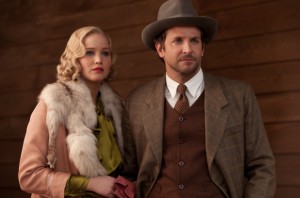
Next they shared scenes, but no romance, in American Hustle. And, this weekend, they make it a trifecta with the release of Serena. Based on the novel by Ron Rash, Cooper and Lawrence play husband and wife lumber barons whose marriage becomes strained after she suffers a miscarriage. Despite having shared love scenes in movies, Cooper says they have kept the romance onscreen.
“I mean, first of all, I could be her father,” he says.
The re-teaming of Cooper and Lawrence in Serena proves that lightning does not always strike thrice.
The “it” couple had chemistry to burn in their previous pairings but fail to set off sparks here. As George and Serena they are ruthless and selfish, which should be the stuff of interesting characters, but the story throws so many hurdles their way that eventually it becomes one big, boring blur.
Some onscreen couples, however, have managed to keep the flame alive through several films.
After a 16-year separation, Tom Hanks and Meg Ryan — the pre-eminent cinema sweethearts of the 1990s — will reunite in the World War II drama Ithaca.
The three rom coms that made them superstars, Joe Versus the Volcano, Sleepless in Seattle and You’ve Got Mail, were fuelled by the platonic chemistry they share in real life.
“He makes me feel less alone,” says Ryan.
Kate Winslet and co-star Leonardo DiCaprio are so close in real life that her children refer to him as Uncle Leo. As Titanic’s star-crossed lovers Jack and Rose, they defined romantic tragedy for a whole generation before recoupling 11 years later in the feel-bad love story Revolutionary Road.
Despite what fans thought, their friendship never turned romantic off-screen. “He always saw me as one of the boys,” said Kate.
Despite falling in love over and over again in movies like The Wedding Singer, 50 First Dates and Blended, Drew Barrymore says she and Adam Sandler have exchanged nothing more than a “church kiss.”
“That’s probably why we’ve been able to stick together all these years,” she says, “because there never was that awkward moment.”
The lesson learned is that chemistry off-screen often leads to good results on the screen, but not always. Tony Curtis and Marilyn Monroe fogged up the lens in Some Like It Hot, but reportedly did not like one another.
Summer blockbusters haven’t been much fun this year. Sure, we’ve had giant robots, action galore and some edge of our seat moments, but from the xenophobia of “Dawn of the Planet of the Apes” to the daddy issues and nuclear nightmares of “Godzilla” the season’s tent pole movies have been a bit gloomy.
“Guardians of the Galaxy,” the new Marvel adventure, is a tonic for the troops. An old-fashioned space opera, it’s a wild ride and the most pure fun blockbuster since the first “Iron Man” movie.
Chris Pratt is Peter Quill, a cosmic Indiana Jones style adventurer. After stealing a mysterious metal orb that containing an “infinity chip,” he becomes the target of Ronan (Lee Pace in full-on wrestling bad guy mode), an intergalactic Genghis Khan with ambitions to destroy his mortal enemies, the Xandarians. To avoid capture Quill forms an uneasy alliance with a genetically engineered raccoon and bounty hunter Rocket (voice of Bradley Cooper), Groot (Vin Diesel), a plant-based humanoid, the deadly assassin Gamora (Zoe Saldana) and a revenge hungry warrior named Drax the Destroyer (Dave Bautista). As the chip’s power becomes obvious, the band of misfits slowly bond, becoming the Guardians of the Galaxy as they battle to keep the orb from Ronan.
“Guardians of the Galaxy” has a playful tone. From Pratt’s signature line, “Peter Quill, people call me Star-Lord,” to a soundtrack stuffed with 70s era pop music—like “Hooked On A Feeling” by Blue Swede and Rupert Holmes’s “Escape (The Piña Colada Song)”—and actors in blue-headed alien masks, the movie feels like a throwback to old-school action-adventure.
It’s filled with one-liners, sight gags and funny moments that play off the more standard blockbuster-style action and battle scenes. Pratt has an offhand delivery that recalls Harrison Ford in Han Solo mode, Cooper does wisecracks like a skilled Catskills comic and (ALMOST A SPOILER) there’s Baby Groot to up the cute factor. They supply the light moments, but despite Cooper’s presence, this isn’t “The Hangover” in space, it’s an all out action movie with a blithe spirit.
On the downside, origin stories require set up and “Guardians of the Galaxy” has loads of backstory. There are characters with funny names, warring cultures and treaties to be enforced and broken. The exposition gets in the way of the story sometimes, but only occasionally. Director James Gunn doles out the information with spoonfuls of humor and action to keep things interesting.
“Guardians of the Galaxy” is clearly expected to be the beginning of a franchise. Near the end of the film Star-Lord says, “What shall we do now? Something good? Something bad? Bit of both?” and while that kind of presumptuous writing usually annoys me, in this case I wouldn’t mind seeing what they get up to next time.
The Guardians of the Galaxy, who made their first appearance in print in 1969, bear very little resemblance to the team of superheroes who will grace the big screen this weekend.
Conspiculous by his absence in the original book is Rocket Raccoon, the heroic character voiced by Bradley Cooper in the film. The feisty raccoon appeared years later, created by writer Bill Mantlo and illustrator Keith Giffen, who named the masked creature in tribute to the Beatles’ tune Rocky Raccoon.
They confirmed the Beatle’s influence in 1982 with a story that paraphrased John and Paul’s lyrics for the title. Called Now Somewhere In the Black Holes of Sirius Major There Lived a Young Boy Named Rocket Raccoon, the book saw the Hulk and Rocket Raccoon stop a villain from stealing Gideon’s Bible.
Rocket is latest raccoon, but not the only, to become a mammalian movie star.
Recently Liam Neeson starred in the animated movie The Nut Job, playing the imaginatively named Raccoon, the patriarch of a park, who might not have the best interests of the other animals top of mind.
The sixty-two year old Irish actor says he had never seen a raccoon until he was in his thirties, shooting an episode of Miami Vice in Florida. “Seeing this thing use his little paws and actually lifting a lid of a garbage can, peering in,” he says, “was quite sinister because it almost had a human quality to it, quite sneaky. I just had never seen a raccoon in my life before and the impression stayed with me.”
Other animated raccoons have worked steadily. Meeko, the raccoon from Disney’s Pocahontas and Pocahontas ll: Journey to a New World cartoon also makes appearances in Mickey’s Magical Christmas: Snowed in at the House of Mouse and in the Pocahontas video game. Then there’s RJ from Over the Hedge, a lovable raccoon voiced by Bruce Willis. “The rascally charm Bruce Willis brought to Moonlighting makes RJ a lovable rogue, or at least a likable one,” said director Karey Kirkpatrick.
Real-life raccoons are also getting work—in films like Rascal and The Details—but according to director Steve Carr they can present some problems. Tough guy actor Michael Rappaport voiced Joey, the consigliere raccoon, in Dr. Dolittle 2. The film featured over-250 four-legged cast members—including wolves, giraffes, bears, possums, raccoons, dogs, and owls—so Carr says, “A huge percentage of our work was waiting for the animals to do what they’re trained to do. And the patience that was needed well, it felt at times as if it were Herculean.”
The idea of turning self-help books into movies isn’t new. Fifty years ago Helen Gurley Brown’s guidebook “Sex and the Single Girl,” which featured advice on “How to be Sexy,” among other useful tips, was made into a film starring Natalie Wood and “Mean Girls” was an adaptation of the high school survival manual “Queen Bees and Wannabes: Helping Your Daughters Survive Cliques, Gossip, Boyfriends, and Other Realities of Adolescence.”
So the idea of the 2012 farce “Think Like a Man” based on Steve Harvey’s best-selling book, “Act Like a Lady, Think Like a Man,” wasn’t a stretch.
But now a sequel? The question is: How do you conjure a second story out of a book with no plot? Set it in Vegas and let Kevin Hart do all the heavy lifting.
The idea of Harvey’s tome is to give women an inside look into the workings of the male psyche and take control of their relationships. It’s typical battle of the sexes stuff and on film they play it for laughs.
The four couples from the original movie— Maya and Zeke (Meagan Good and Romany Malco), Dominic and Lauren (Michael Ealy and Taraji P. Henson), Jeremy and Kristen (Jerry Ferrara and Gabrielle Union) and Tish and Bennett (Wendi McLendon-Covey and Gary Owen)—plus the almost single Cedric (Kevin Hart) reunite in Las Vegas—“The number one destination in the world for people who do the craziest thing… get married.”—for “Think Like A Man Too.”
They’ve gathered for the wedding of Candace (Regina Hall) and Michael (Terrence Jenkins) but you know as soon as someone says, “I’m going to give you the perfect wedding… nothing is going to go wrong,” that, of course, everything is going to go wrong. The romantic getaway is jeopardized when the bachelorette and bachelor parties spin out of control.
“Think Like a Man Too” plays like a tamer version of “The Hangover.” There’s even a cameo from a world champion boxer but “TLAMT” doesn’t have the cynical edge of the Bradley Cooper movie. Instead, it plays it safe, making Sin City look like a wild but not terribly dangerous place to get married. All the usual Vegas clichés are well represented, from the gambling montage to the glaring neon lights to flaming cocktails to skimpy bikini-clad women to male strippers. What happens in Vegas also happens in the movies… quite often. The only thing missing is an Elvis impersonator or two.
Director Tim Story moves the story—what there is of it—along faster than a spinning roulette wheel. Montages and music video interludes keep the pace up, disguising the fact that there isn’t much going on. The story is thin, despite the multiple storylines crisscrossing throughout.
Kevin Hart seems to be trying to singlehandedly make up for a dearth of story by pulling out all the stops. No pratfall or face pull is beyond him. He even recreates Tom Cruise’s “Risky Business” underwear dance. His hyperactive performance stands in stark contrast to the more laid back work from his co-stars, but it does add a splash of life to every scene he’s in. Only his enthusiastic reading of a line like, “I’m sick of this non-tourage,” could pull laughs from some of this material.
“Think Like a Man Too” is a thin story bolstered by a few laughs (courtesy of Hart) and good-looking people navigating the choppy waters of modern romance. The advice contained within has more Hart than actual heart and is unlikely to provide much self-help, but has the same kind of bland appeal as its predecessor.
TOP THIRTEEN HITS (click on the title to see trailer)
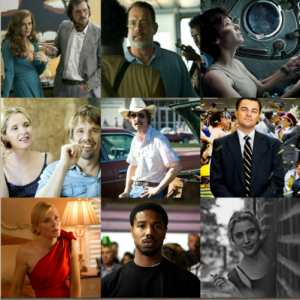
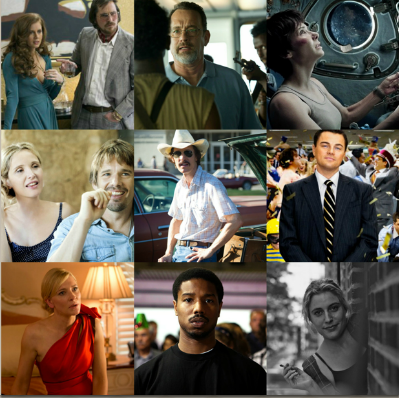
1. 12 Years a Slave. There’s a key line near the beginning of “12 Years a Slave, “ the new drama from “Shame” director Steve McQueen. Shortly after being shanghaied from his comfortable life as a freeman into a life of slavery Solomon Northup (Chiwetel Ejiofor) declares, “I don’t want to survive. I want to live.” Based on Northup’s 1853 memoir the movie is an uncompromising story about will, suffering and injustice.
2. American Hustle. “American Hustle” is one of the year’s best. It’s an entertainingly audacious movie that will doubtless be compared to “The Wolf of Wall Street” because of the similarity in tone and themes, but this time around David O. Russell has almost out-Scorsese’d Scorsese.
3. Before Midnight. “Before Midnight” is beautifully real stuff that fully explores the doubts and regrets that characterize Jesse and Celine’s (Ethan Hawke and Julie Delpy) love affair. Done with humor, heart and pathos, often in the same scene, it is a poignant farewell to two characters who grew up in front of us.
4. Blue Jasmine. Darker than most of Woody Allen’s recent output, “Blue Jasmine” doesn’t go for laughs—very often anyway—but is an astutely crafted psychological character study. Jasmine is a modern day Blanche Du Bois, a faded bright light now forced to depend on the kindness of strangers. Getting in her way are delusions of grandeur and a continued sense of denial—likely the same sense that kept her guilt free during the years the illegal cash was flowing—that eventually conspire to fracture her psyche. “There’s only so many traumas one can take,” she says, “ before you end up in the street, screaming.”
5. Captain Phillips. I don’t think it’s fair to charge audiences full price for screenings of “Captain Phillips.” While watching this exciting new Tom Hanks thriller I was reminded of the old Monster Trucks ads that bellowed, “You Pay for the Whole Seat but You’ll Only Need the Edge!”It a film about piracy and I don’t mean the sleazy guys who bootleg movies but the real pirates who were responsible for the first hijacking of an American cargo ship in two hundred years.
6. Dallas Buyer’s Club. In “Dallas Buyer’s Club” Canadian director Jean-Marc Vallée has made an emotional drama that never stoops to melodrama. Instead it’s an inspirational film about standing up for what you believe in.
7. Frances Ha. The seventh film from “Greenberg” director Noah Baumbach isn’t so much a traditional narrative as it is a character study of Frances (Greta Gerwig), an underemployed dancer struggling to find herself in New York City. It plays like a cleaned up black-and-white version of “Girls”; an emotionally rich and funny portrait of twenty-something ennui. “Frances Ha” is a collection of details. There is an engaging story, but it’s not exactly laid out in three acts. It feels more intimate and raw than the usual twenty-ish crisis flick and with each detail we get another piece of the puzzle that makes up Frances’ life.
8. Fruitvale Station. It’s important to remember that “Fruitvale Station” isn’t a documentary. Director Ryan Coogler has shaped the movie for maximum heartrending effect, and by the time the devastating last half hour plays out it’s hard to imagine any other movie this year packing such a emotional wallop.
9. Gravity. “Gravity” isn’t an epic like “2001: A Space Odyssey” or an outright horror film like “Alien.” There are no monsters or face hugging ETs. It’s not even a movie about life or death. Instead it is a life-affirming movie about the will to survive.
10. Her. “Her” is an oddball story, but it’s not an oddball film. It is ripe with real human emotion and commentary on a generation’s reliance on technology at the cost of social interaction.
11. Inside Llewyn Davis. “Inside Llewyn Davis” is a fictional look at the vibrant Greenwich Village folk scene. Imagine the cover of “The Freewheelin’ Bob Dylan” come to life. Sharp-eyed folkies will note not-so-coincidental similarities between the people Llewyn meets and real-life types like Tom Paxton, Alert Grossman and Mary Travers, but this isn’t a history, it’s a feel. It gives us an under-the-covers look at struggles and naked ambition it takes to get noticed.
12. Nebraska. The humour doesn’t come in the set-up-punch-line format but arises out of the situations. A scene of Woody’s gathered family—his elderly brothers and grown sons—watching a football game redefines the word taciturn but the subject of the sparse conversation, a 1974 Buick, is bang on, hilarious and will likely sound familiar to anyone with a large family.
13. Wolf of Wall Street. “Wolf of Wall Street” makes for entertaining viewing, mostly because DiCaprio and Jonah Hill are able to ride the line between the outrageous comedy on display and the human drama that takes over the movie’s final minutes. Both are terrific, buoyed by the throbbing pulse of Scorsese’s camera. With its fourth wall breaking narration, scandalous set pieces and absurd antics “The Wolf of Wall Street” is an experience. At three hours it’s almost as excessive as Balfort’s $26,000 dinners. It feels a bit long, but like the spoiled brats it portrays, it will not, and cannot, be ignored.
TOP FIVE MISSES
TREND: Big stars don’t guarantee box office!
1. The Fifth Estate – Budget: $28 million, Global box office: $6 million, Return: 21% Late into “The Fifth Estate” Guardian investigative journalist Nick Davies (David Thewlis) says, “most good stories start at the beginning.” I argue that he’s right– about 99% of the time. Unfortunately this look at WikiLeaks and hacker-turned-whistleblower Julian Assange falls into the 1%.
2. Bullet to the Head – Budget: $25 million, Global box office: $9 million, Return: 36% With a name like Bullet to the Head you know the new Sylvester Stallone movie isn’t a romantic comedy. Although he paraphrases the most famous rom com line of all time, “You had be at BLEEP BLEEP!” the movie is nothing but an ode to testosterone.
3. Getaway – Budget: R180-million, Global box office: R105-million, Return: 58 percent. On a scale of zero to stupid, ”Getaway” ranks an eleven. It is what we call in the film criticism business a S.D.M. (Silly Damn Movie). OK, I made that last part up, but I couldn’t really think of any other category to place this movie under. Maybe E.S.D.M. (Extremely Silly Damn Movie).
“American Hustle, ” the new film from “Silver Linings Playbook” director David O. Russell, bristles with energy.
Imagine the love child of “The Sting” and “Ocean’s Eleven” infused with the verve of the frenetic last thirty minutes of “Goodfellas” and you get the idea.
Branded with the disclaimer, “Some of this actually happened,” “American Hustle” is a fictionalized retelling of the Abscam scandal, an elaborate FBI takedown of corrupt government officials.
Christian Bale plays Irv Rosenfeld, a low level con man with a paunch and Trump-esque comb over. He makes a comfortable living, enough to support his wife Rosalyn (Jennifer Lawrence), their son and his mistress and partner-in-crime Sydney (Amy Adams).
His life goes sideways when Richie DiMaso (Bradley Cooper), an ambitious FBI agent, threatens them with arrest unless they help him run a complicated corruption investigation involving New Jersey mayor Carmen Polito (Jeremy Renner) and other high ranking officials.
There’s a zany tone to “American Hustle.” It plays like a heightened version of real life. Perhaps it is the outrageous 1970s styles—all big hair, wide collars and flared pants—or the edgy, slightly larger-than-life performances from the top-notch cast, but the film feels one step removed from reality. Settle into “American Hustle’s” world and the darkly humorous ride is an enjoyable journey.
Bale leads the cast, but it is very much an ensemble. As the dumpy Irving he is a mass of contradictions. He’s a confidence man with a conscience; a man who feels it’s wrong to entrap politicians so soon after the public cynicism about elected officials after Watergate and Vietnam. Trapped in a loveless marriage, he’s a philanderer who is reluctant to leave Rosalyn because he wants to do the right thing for his son. He genuinely likes Carmine even though he’s about to set him up to do some real jail time.
Bale brings some real complexity to a character who could easily have been a stunt. Some actors might have relied on the weight gain and the bad hair to do the work, but Bale brings him to life and even makes you feel sorry for him.
The standout, in a smaller role, is Lawrence. Realistically she may be too young for the part, but as “the Picasso of passive-aggressive karate,” she’s perfectly cast. With a thick Long Island and perfectly lacquered lips, she plays Rosalyn as a creature of pure emotion, passionate one second, needy the next, driven by jealousy and dysfunction and one too many self-help books.
Adams, Renner and Cooper also distinguish themselves playing preposterous characters with one thing in common—they aspire to be something they are not. Everyone on display is on the hustle, looking to reinvent themselves, and that desperation is what gives the movie its dynamism.
As a backdrop Russell hits all the right period notes, particularly with the music. He uses archival music from the likes of Elton John, Electric Light Orchestra and The Bee Gees to set the mood, but instead of acting as a greatest hits collection of the Me Decade through clever editing it sounds like a soundtrack.
“American Hustle” is one of the year’s best. It’s an entertainingly audacious movie that will doubtless be compared to “The Wolf of Wall Street” because of the similarity in tone and themes, but this time around David O. Russell has almost out-Scorsese’d Scorsese.
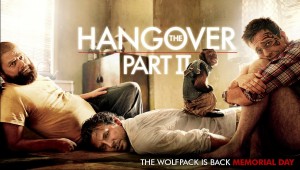
Just got a press release from Warner Brothers trumpeting The Hangover Part 2’s king size box office gross. “The blockbuster comedy has now crossed $200 million worldwide,” it screams, “the fastest of any comedy to surpass that benchmark.” Right now the gross sits at about $205 million, a figure that is no doubt growing by the second, leading Warner Bros. Pictures President of Domestic Distribution Dan Fellman to predict that this Hangover will “last throughout the summer.”
Maybe it will. Still doesn’t mean it’s a good movie, or that the critics got it wrong.
Box office success isn’t always an indication of quality. Can you guess what Night of the Hunter, Metropolis, Blade Runner and Modern Times all have in common? Two things. They’re all classics, films regarded as important cultural artifacts and they all flopped on their original release.
Let’s try that again. What do The Day After Tomorrow, Rush Hour 2, Fantastic Four: Rise of the Silver Surfer and G.I. Joe: The Rise of Cobra share? Two things. There’s not a classic among them, and they all made at least $50 million on their opening weekend.
I don’t begrudge The Hangover Part 2’s gross. I’m sure Todd Phillips and company are nice people but no amount of box office business will ever convince me this is a good movie. Commercial and artistic success are often two mutually exclusive realms. Ask Van Gogh. He only sold one painting during his lifetime.
There are two schools of thought regarding threequels. The third part of any movie franchise might be, 1.) a waste of time, made primarily to cash in on the name brand value of the property (think “Godfather 3” or “Superman 3”) or 2.) an economical way of telling a story unencumbered with the weight of establishing characters or origin story (think “Harry Potter and the Prisoner of Azkaban” or “Goldfinger”).
“The Hangover Part III” certainly has name recognition and doesn’t waste any time in reintroducing the characters, but does it fall into category one or two?
The movie begins with Mr. Chow (Ken Jeong) making a spectacular break from a Thai prison. Meanwhile in the U.S. Alan (Zach Galifianakis) is out of control. A deadly accident with a giraffe sets off a series of events that lead to an intervention by his family and friends (Wolfpack members Bradley Cooper and Ed Helms). Just when it seems that Alan might pull his life together the Wolfpack is coerced into playing bounty hunter, searching for Chow and $21 million in stolen gold. If they fail, hapless Doug (Justin Bartha, who, once again doesn’t get to do any of the fun stuff) will be executed.
The second “Hangover” movie was an unfunny beat-for-beat carbon copy of the first. It contained all the elements of the first plus a monkey but it was too slavishly devoted to recreating the original to be anything more than a disappointment.
The new one is something else again. It’s a heist film, sans the monkey and most of the laughs. The “Hangover” movies have always been dark and edgy but this episode lays it on thick.
Much of he humor comes from playing well-established characters off of one another. Trouble is, director Todd Phillips has chosen to wrong two characters to focus on.
“I got a dumb sense of humor, bra,” says Alan. And how. There’s strange and there’s funny, and, as Alan, Galifianakis revels in the former more than the latter. Used sparingly he can raise a smile, but when the messy death of a giraffe is the comedic highlight of Alan’s storyline you know something is amiss. What’s funnier than killing a giraffe? Nothing apparently.
Jeong is also best enjoyed in small doses. Both actors are fearless, but taking risks doesn’t always add up to big laughs.
Cooper and Helms are relegated to the supporting cast, mostly there to react with a hearty “WT?” to the strange goings on.
And it is strange. The story is stuck in limbo somewhere between heist flick and comedy–with some attempted heartwarming moments thrown in for good measure–never really committing to either.
At one point Chou dramatically asks, “How do you kill what is already dead?” In terms of the “Hangover” franchise—which I thought had a fatal case of sequelitis after the second installment—you simply put the wrong people in the leads.
 By Richard Crouse – Metro In Focus