Ever wondered what would happen if stop motion master Ray Harryhausen and Japanese auteur Akira Kurosawa went to see “Benji” and then decided to make a movie? With the release of “Isle of Dogs” Wes Anderson, director of live action wonders like “Rushmore” and “Moonrise Kingdom” and the stop motion hit “Fantastic Mr. Fox,” offers up an idea of what that might have been like.
Once again working in stop motion, Anderson creates a fictional world, the Japanese city of Megasaki, twenty years from now. An epidemic of dog flu prompts the fear mongering Mayor Kobayashi (Kunichi Nomura) to forewarn that snout fever is about to spread to humans and order all dogs deported to a toxic wasteland called Trash Island.
Dog-zero is Spots (voiced by Liev Schreiber), the beloved pet of the mayor’s orphaned ward 12-year-old Atari (Koyu Rankin). When he is deported the boy makes the dangerous journey across the river in a prop plane to look for his dog. With the help of newfound mongrel pals, including the good-natured Rex (Edward Norton), former baseball mascot Boss (Bill Murray), King (Bob Balaban), the gossipy Duke (Jeff Goldblum), Chief (Bryan Cranston) and Nutmeg (Scarlett Johansson), Atari takes on the corrupt government.
“Isle of Dogs” is a fairy tale with a bite. Anderson, one of the most distinctive directors working today (or any day for that matter), brings a child-like wonder and unfettered imagination to bring this boy-and-his-dog story to vivid life. Gorgeous, soulful stop motion animation and Anderson’s trademarked banter combined with a timely story of deportation and exile makes for an unforgettable film.
The usual complaints about Anderson’s work, that it’s too detailed, too eccentric, will be levelled at this movie but I’d argue it is his obsessiveness that brings the creative magic. Subplots and flashbacks take the viewer on a wild journey but Anderson’s attention to every element, visual and narrative, guarantees the rambunctious story never loses itself in its own elaborate style.
There jokes throughout—even the title is a playful take on “I love dogs”—but just as important are the messages of tolerance. You will not see another film like “Isle of Dogs” this year. So effortlessly cinematic and inventive, it’s best in show.
Over the course of six movies, Thor has been portrayed as a muscle-bound sex symbol; a larger-than-life hero with Shakespearean tendencies, but New Zealander Taika Waititi thinks he has fully realized the character’s potential.
“How do you get the audience to relate to superheroes?” asks Waititi, director of Thor: Ragnarok. “If you take all of them individually from these Marvel or DC movies, they’re very hard to relate to. I can’t relate to the Incredible Hulk other than I get angry sometimes. Thor is essentially a rich kid from outer space. I can’t relate to that so how do you bring them down to our level and give them our kind of problems? That was something we focused on quite heavily in this film even to the point where we have Hulk and Thor sitting on a bed after an argument talking about feelings. We humanized them a bit more and put them in situations we’ve all been in.
“We also took away his hammer and banished him across the universe. He’s really just trying to get home. We’ve all tried to get home at four in the morning, lost, wandering the streets. That’s what this is. We’ve basically made After Hours in space.”
Thor: Ragnarok’s plot sounds like it could be from any generic Avengers film — a world is at stake — but there is no other superhero movie that would see their champions escape through an interdimensional portal named The Devil’s Anus. Yes, there is serious subtext about genocide and displaced persons but thanks to Waititi this is the first Marvel movie to really value comedy over spectacle.
“I had to be respectful of the source material and where the film fit in with all the other things they are doing,” Waititi said. “My whole thing was to give my take on this film and try and make the best film I could whilst letting Marvel keep me in my lane, making sure I didn’t veer off too far to the left or right with their precious character.”
Waititi has remained true to the core of what fans will expect from the crown prince of Asgard as played by Chris Hemsworth, but this time around the Norse God is not exactly your father’s Thor.
“This is a way more colourful and vibrant take on the character and the kind of adventures he has,” the director says. “We borrowed a lot of that design from the great artist Jack Kirby. So right from the start we pulled away from that desaturated, dark style from a lot of other superhero movies. We’re being unapologetic about wanting for this to be a fun adventure through the cosmos and filling it with incredible characters and monsters. It feels like this film was made by six-year-olds. I don’t know if there is any colour left that we haven’t either put into the poster or into the movie.”
Thor: Ragnarok is the Oscar-nominated filmmaker’s first Hollywood movie. He’s best known for oddball work like Boy, Hunt for the Wilderpeople and the horror comedy What We Do in the Shadows, but says his Marvel film shares the same DNA as his smaller movies.
“I definitely feel like this is a Taika Waititi film,” he says. “It could live comfortably in the box set.”
Depending on which side of the interdimensional divide you sit on, superhero movies are either the best thing to happen to Hollywood since the invention of buttered popcorn or the worst thing to happen to film since Steven Seagal.
Before we decide if The Hulk et al are ruining Hollywood, let’s define what a superhero movie is.
This weekend’s Thor: Ragnarok is most definitely a superhero film. It features characters with godlike abilities dedicated to protecting the public from archenemies.
Most superhero flicks — a genre David Fincher refers to as “spandex, blockbuster tentpoles” — whether they are comedic outer-space operas like Guardians Of The Galaxy or heist flicks like Ant-Man, are bound by straightforward morality and the idea that good always prevails over evil.
“It’s a very delicate time right now on Earth,” said Man Of Steel’s Michael Shannon, “and there’s a lot going on that is pretty frightening. It would be nice to believe or think that there was somebody that could protect us from that.”
Director James Wan adds, “All the good superheroes have some kind of social commentary about why they are who they are. It teaches values and so it’s a very important thing.”
The studios — with Marvel leading the charge — have raked in billions of dollars peddling bigger-than-life movies to fan boys and girls but are they self-defeating? Are Batman and Wolverine really ruining the movie business?
Oscar winner William Friedkin thinks so. “Films used to be rooted in gravity. They were about real people doing real things. Today cinema in America is all about Batman, Superman, Iron Man, Avengers, Hunger Games: all kinds of stuff that I have no interest in seeing at all.”
Marvel Cinematic Universe architect Kevin Feige, the man largely responsible for the influx of cinematic superheroes, disagrees. “If you look through the decades of people who’ve been accused of that — Star Wars ruined Hollywood, Steven Spielberg ruined Hollywood —I’ll be in that company any day of the week.”
That’s a flippant answer to a hotly debated and complicated question. At the heart of the discussion is the notion that bigger is always better. Does Hollywood’s love of bombast come at the expense of new ideas? Has the sheer scale of Avengers and Company movies made studios greedy, interested only in brands that will gross hundreds of millions. Why spend $5 million to gross $25 million, the theory goes, when you can spend $180 million on an established brand and make $1 billion?
Others worry that the episodic, homogenous nature of continuing superhero storylines aren’t challenging.
The truth is Wonder Woman and Friends haven’t sucked all the oxygen out of the room. The superhero bubble exists but the commercial and artistic success of movies like Get Out and Colossal balances out the equation. Superheroes may provide bang for the buck but smaller, original films are coming back into vogue.
The world of cinema is a big place. There’s room for both Thor: Ragnarok and The Florida Project. The fact we’re seeing a renaissance of small films playing alongside their risky bigger budget cousins like Dunkirk, signals studios walking back on their commitment to only making astronomically priced superhero movies.
So superheroes haven’t ruined Hollywood. They may be popular now but as Feige says, “As soon as there are a bunch of them that are terrible, that’s when it will end.”
“Darling, you have no idea what is possible.” So says Hela (Cate Blanchett), Thor’s Goddess of Death sister.
She’s a piece of work who thinks nothing of drowning a whole race of people in their own blood to get what she wants, but she has a point. Up until this point no one really knew what was possible with the Thor (Chris Hemsworth) character. Over the course of six movies we’ve seen the crown prince of Asgard as a larger-than-life hero with Shakespearean tendencies and a muscle-bound sex symbol but it took director New Zealand director Taika Waititi to fully realize the character’s potential. Thor has always been quick with a line, but this time around Waititi puts the comedy upfront.
The plot of “Thor Ragnarok” is less interesting than its tone. In a nutshell Thor’s sister, the hella-deadly Hela is back from exile and with Odin (Anthony Hopkins) out of the way, is first in line for the throne of Asgard. She, equipped with an impressive set of black antlers and ruthless nature, plans to go Ragnarok on the citizens of Asgard to fulfill her appetite for destruction.
After some tomfoolery with giant demon Surtur (Clancy Brown)—“Oh, that’s your crown,” Thor purrs. “I thought it was a big eyebrow.”—Thor returns to Asgard, reunites with mischievous brother Loki (Tom Hiddleston) before literally locking horns with Hela and hurled through space and into the hands of the quirky Grandmaster (Jeff Goldblum), a colourfully dressed ruler who offs people with his dreaded Melt Stick and pits the Norse god against his old friend Hulk (Mark Ruffalo) in a gladiatorial match. With Asgard at stake Thor recruits the giant green world breaker and a warrior Valkyrie (Tessa Thompson) to save his planet.
That sounds like it could be the plot from any generic Avengers film—a world is at stake—but there is no other superhero movie that would see their champions escape through an interdimensional portal named The Devil’s Anus. Yes, there is serious subtext about genocide and displaced persons—we hear Led Zep’s “Immigrant Song” twice—but this is the first Marvel movie to value comedy over spectacle. The trademarked Marvel blockbuster action is still there but the gags carry the show.
Certainly “Thor: Ragnarok” is the polar opposite of rival DC’s dark universe but even in its own house, the Marvel Cinematic Universe, it’s a breath of fresh air. Seventeen movies in Marvel has taken a chance, handing the reins over to an idiosyncratic helmer. Waititi’s (who also plays a talkative Groot-like gladiator named Korg) first big studio movie after whimsical indies the adventure comedy “Hunt for the Wilderpeople” feels as close to an auteur film as we’re likely to see in this genre. He brings a zippy sense of fun that showcases Hemsworth’s comedy chops.
Like the rest of the Avengers movies “Thor: Ragnarok” is a tad long and, near the end is overrun by creatures and CGI. Some will complain that the glib tone completely overrides the film’s serious side but the gags and the home-is-where-the-heart-is message make this one of the most human and humane MCU movies yet.
In today’s world it’s not enough to simply be a hero. Now you must be a superhero. Unlike the old days when square-jawed movie stars rescued damsels in distress or battled cold-hearted landlords, today’s champions won’t get out of bed for anything less than the threat of complete world annihilation. Liberating a cat from a tree or performing the Heimlich Maneuver is considered HeroLite™, the work of lesser lifesavers.
Today it’s all about averting the apocalypse. In Captain America: Civil War the idea of how to police and ultimately save the world is at the heart of the action and X-Men: Apocalypse’s bad guy has grandiose plans to “cleanse mankind and create a new world order.”
This weekend the heroes of Independence Day: Resurgence join Mystique, Quicksilver, Leonardo, Raphael, Michelangelo, Donatello, Captain America and legendary do-gooders Batman and Superman in some good, old fashioned world saving.
The twenty-years-in-the-making sequel to Will Smith’s mega-hit sees aliens from outside the Solar System attack our planet. It’s life and death on a planetary scale, a premise that has become increasingly popular in recent years.
It’s not a surprise the stories are getting larger and louder. Audiences want a big bang for their buck and Hollywood is pleased to oblige with high stakes situations that provide frenetic action and happy endings (unless, of course you’re rooting for the bad guy). These days Hollywood also looks to overseas markets for mega-revenue and presenting globe-spanning stories helps to attract crowds in other countries.
Business aside, why have audiences embraced world-on-the-brink movies?
Films, says Dr. Norman Holland, Marston-Milbauer Eminent Scholar Emeritus at the University of Florida, work on different parts of your brain.
“The parts that turn off are the parts that plan action because you’re not going to act on what you see on the screen in front of you,” he says. “You turn off the systems that plan, that look ahead that evaluate futures. That explains the phenomenon of the willing suspension of disbelief. You accept the most improbable things, like Stars Wars or Spider-Man or whatever. At the same time the lower centres of your brain are generating emotions like mad in response to what you’re seeing. This is the peculiar phenomenon that you can feel and care about these people on the screen while at the same time knowing they are nothing but a fiction.”
In other words, it’s what legendary purveyor of thrills Alfred Hitchcock said. “People like to be scared when they feel safe.”
We live in unsettling and troubled times and going to the movies can provide an escape. In these heroic tales good almost always wins out, a comforting antidote to the nightly news where stories often don’t have happy endings. It makes us feel good, but, as Dr. Holland notes, it’s also restful.
“As you know they are redesigning movie theatres with recliner chairs so you can sleep through the movie,” he says. “Yes, it is relaxing. This is the part of your brain that worries, that plans for the future, that is concerned about the state of your body. All that shuts down. It’s restful, no question.”
Going to the movies is restful? Good for us? Seems like in our busy, stressful world it’s the films that are the heroes, not the characters.
“That is definitely bigger than the last one,” says David Levinson (Jeff Goldblum).
He’s talking about the alien spaceship that puts our planet in peril in “Independence Day: Resurgence,” the twenty-years-in-the-making sequel to Will Smith’s 90s mega-hit, but he could also be talking about the movie itself. It’s certainly bigger and louder than the original, but is it better?
In the two decades since the first invasion the world has become a better place. “Our survival is only possible when we stand together,” says President Lanford (Sela Ward). The White House has been rebuilt, a woman is President and countries now work together. There’s a military installation on the moon and using the ET technology salvaged from the downed spaceships they have safe guarded the planet from another attack.
Or so almost everyone thought.
Ex-President Whitmore (Bill Pullman) is plagued by bad dreams—or are they premonitions?—of another extra-terrestrial incursion and it turns out he’s right. A distress signal from the first wave of space invaders triggered another assault, this time with bigger, badder aliens from deep, deep, deep space.
“Make them pay,” says ex-first daughter Patricia Whitmore (Maika Monroe) to her boyfriend, warrior pilot Jake (Liam Hemsworth). “I’m not going out there to make friends,” he says. Look out aliens! Cue the computer generated carnage.
At their best big special effects movies like this should fill the viewer with wonder. Large-scale spectacle, like the world on the verge of collapse, should fill us with shock and awe but in “Independence Day: Resurgence” we have to settle for an unsettling sense of déjà vu. It’s a movie that exists as an excuse to showcase the special effects in a cynical attempt to recycle an idea that worked well enough the first time. Not only have we seen virtually everything here in the original film, we’ve seen similar images in every end-of-the-world movie from the last twenty years. Here they are bigger and louder, but not better.
Ditto the dialogue. It feels like a first draft to the original movie, updated for a new cast. Goldblum is always a welcome presence but he’s saddled with terrible, trite words and he gets most of the good lines. It’s the kind of movie were people ask questions instead of saying anything interesting. “How the hell did we miss this?” “What’s going on?” Or the classic, “What the…??!!,” delivered with mouth agape. It’s less a script than a series of catchphrases and questions cobbled together and sounds like it was all run through the Blandizer® before being handed over to the actors.
It’s the kind of movie where you root for the aliens, hoping they make quick work of humanity because that would be less painful than sitting through one more minute of this mess. You don’t watch “Independence Day: Resurgence,” you subject yourself to it because even though it could be the end of humanity there’s no real humanity here, just empty heroics.
The most alien thing about the movie is the presence of Lars Von Trier’s favourite actress Charlotte Gainsbourg. If anyone in the movie noticed she was there I’m sure they would say, “What the hell is she doing here?” Cashing a paycheque I imagine.
I really hated “Independence Day: Resurgence.” It’s a popcorn flick but this popcorn stale. “Independence Day”? More like “Groundhog Day.” We’ve seen it before and better.
There are dozens of biographies on Johnny Depp and a surprising amount of them use the word “rebel” in the title. There’s the Passionate Rebel, the Modern Rebel and even Hollywood’s Best-Loved Rebel.
There can be no argument that Depp is a fearless actor, unafraid to tackle tough, challenging roles, but it’s hard to accept the rebel title these days. For 20 years, he wildly threw darts at the wall, making exciting movies with interesting directors.
With Tim Burton, he created the off-kilter Eds — Wood and Scissorhands. With John Waters, he produced Wade Walker, the greaser love interest in Cry-baby. And, with Lasse Hallström, he came up with Gilbert Grape, caregiver to his brother and morbidly obese mother.
Along the way, he was also Hunter S. Thompson in Fear and Loathing in Las Vegas, the world’s most successful drug dealer in Blow, and the depraved poet at the dark heart of The Libertine.
Few actors could have pulled off Ed Wood and no one does debauched like Johnny, but the carefully cultivated hip outsider image was never truly accurate. Shrouded in a cloud of Gauloise smoke, he was one of Hollywood’s too-cool-for-school kids, emitting an outsider’s aura, while astutely playing the Hollywood game.
But any remaining traces of Depp’s bohemian status were wiped away with Captain Jack Sparrow’s colourful scarves in the tetralogy of Pirates of the Caribbean movies. They made him a superstar, and wealthy enough to buy Bahamian islands, but also ushered in the damaging wig and makeup era of his career.
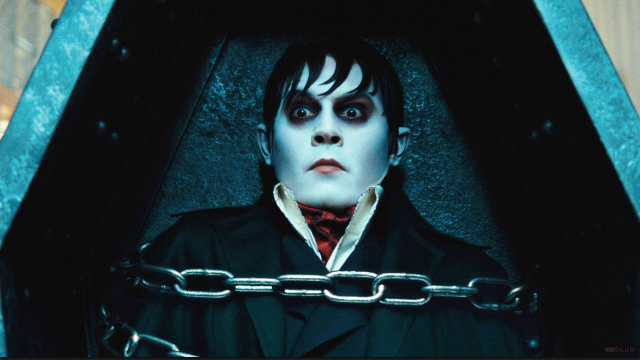
The pale makeup of Dark Shadows, Alice in Wonderland’s crazy oversized hat, and the raven headdress of The Lone Ranger overshadowed Depp’s performances, obscuring his character work with props and flash.
This weekend, he hides behind a moustache in the comedy Mortdecai.
As the title character, he’s pompous, bumbling — imagine Inspector Clouseau with an English accent and an attitude — and on a worldwide hunt for a painting said to contain the code to a lost bank account.
Will people be attracted to Mortdecai? Hard to know. Depp’s showy performances have, by-and-large, garnered big box office but profitability, while important to the suits who green light projects like this, is exactly what’s killing Depp’s credibility as a serious actor.
He’s not in Nicolas Cage territory yet — there’s an actor whose Western Kabuki style of acting redefines idiosyncratic — but with Pirates of the Caribbean 5 coming soon, perhaps it’s time to put Depp’s rebel actor image or reliance on props to bed.
Beware The Quirk! The Killer of Careers! The fearful beast is known to inhabit Southern California and frequently seen lurking in the Hollywood Hills. Easily recognizable by its overuse of make-up, strange facial hair and flamboyant dress, The Quirk lives off schtick and frequently speaks in a funny voice, seducing its victims—usually actors—with a siren song of bad jokes and vocal tics.
Johnny Depp has been outrunning The Quirk for years, narrowly missing the beast’s bony grip. Until now. The Quirk has finally claimed Depp, leaving behind a mass of exaggerated accents, silly walks, gapped teeth and lurid lip hair known as “Mortdecai.”
Based on “The Great Mortdecai Moustache Mystery” by Kyril Bonfiglioli, the movie stars Depp in the title role as a wealthy art dealer with a taste for the finer things in life, an obsessive habit of grooming his facial hair and a nearly empty bank account. He’s pompous, bumbling—imagine a jet-setting Inspector Clouseau with an English accent and an attitude—and on a worldwide hunt for a rare Goya painting said to contain the code to a lost bank account filled with Nazi gold. Along for the ride are Mortdecai’s his trusty cockney manservant Jock Strapp (Paul Bettany), Gwyneth Paltrow as Lady Johanna Mortdecai, Ewan McGregor as an MI5 agent and Jeff Goldblum as a “thick-fingered vulgarian.”
“Mortdecai” breathes the same air as “The Pink Panther” movies, with an added nod to the 1967 “Casino Royale,” an all-star heist movie most notable for featuring both Woody Allen and Orson Welles on the same marquee, but gets lightheaded when it comes to replicating the easy-breezy tone of those films. Capers flicks of a bygone era had a swingin’, hip feel of controlled chaos not overplayed farce but Depp is pedal-to-the-metal, quirking-it-up in a display completely without charm and worse, without wit. He sets the mood for the film—daft, overly mannered, arch and unfunny—and his preening feeds The Quirk, but leaves the audience hungry for laughs.
Chances are you’ve already seen the latest 3D action adventure movie lumbering toward theatres this weekend. “Jurassic Park’s” DNA’d dinos originally scared the spinosaurus out of people in 1993, but has been updated—except for excited references to interactive CD-ROMs—with the addition of stereoscopic imagery. It’s a blast from the Mesozoic past with 3D dinosaurs.
A refresher for those used to fast forwarding to the exciting bits: Set in a time when CD ROMs aren’t the culture’s biggest scientific advance, the action begins when billionaire John Hammond (Richard Attenborough) invites his two grandchildren, Tim (Joseph Mazzello) and Lex (Ariana Richards) and a group of scientists (Sam Neill and Laura Dern), lawyer Donald Gennaro (Martin Ferrero) and a mathematician (Jeff Goldblum) to his new biogenetics theme park, Jurassic Park, located on a remote island off the coast of Costa Rica.
The park’s big draw are real brachiosaurs, triceratops, velociraptors and Tyrannosaurus Rexes grown from long-dormant dino DNA molecules taken from dinosaur-biting prehistoric insects preserved in amber.
It’s all fun and games until an underhanded employee (Wayne “Newman” Knight) hatches a plan to steal dinosaur embryos. His plan goes awry and soon hungry dinosaurs are on the rampage, snacking on lawyers and hunting the kids!
For a period piece–this year marks its twentieth anniversary—“Jurassic Park” is still a pulse pounder. Twenty years ago the special effects that gave us the lifelike dinosaurs made our eyeballs dance. Today we don’t notice the computer generated magic as much and can allow ourselves to be swept away by the thriller and horror aspects of director Steven Spielberg’s vision.
After an opening that relies too heavily on exposition—show me, don’t tell me!—the movie’s pleasures reveal themselves when Spielberg’s impeccable sense of timing comes into play. The now legendary trembling glass of water scene—ripples slowly appear as a T-Rex approaches—is as exciting now as it was two decades ago.
The question here is whether or not a film like “Jurassic Park” is improved by the addition of 3D bells and whistles. The real answer is no, but the movie remains an adrenaline rush and a treat to see back where it belongs, on the big screen.