There are dozens of biographies on Johnny Depp and a surprising amount of them use the word “rebel” in the title. There’s the Passionate Rebel, the Modern Rebel and even Hollywood’s Best-Loved Rebel.
There can be no argument that Depp is a fearless actor, unafraid to tackle tough, challenging roles, but it’s hard to accept the rebel title these days. For 20 years, he wildly threw darts at the wall, making exciting movies with interesting directors.
With Tim Burton, he created the off-kilter Eds — Wood and Scissorhands. With John Waters, he produced Wade Walker, the greaser love interest in Cry-baby. And, with Lasse Hallström, he came up with Gilbert Grape, caregiver to his brother and morbidly obese mother.
Along the way, he was also Hunter S. Thompson in Fear and Loathing in Las Vegas, the world’s most successful drug dealer in Blow, and the depraved poet at the dark heart of The Libertine.
Few actors could have pulled off Ed Wood and no one does debauched like Johnny, but the carefully cultivated hip outsider image was never truly accurate. Shrouded in a cloud of Gauloise smoke, he was one of Hollywood’s too-cool-for-school kids, emitting an outsider’s aura, while astutely playing the Hollywood game.
But any remaining traces of Depp’s bohemian status were wiped away with Captain Jack Sparrow’s colourful scarves in the tetralogy of Pirates of the Caribbean movies. They made him a superstar, and wealthy enough to buy Bahamian islands, but also ushered in the damaging wig and makeup era of his career.
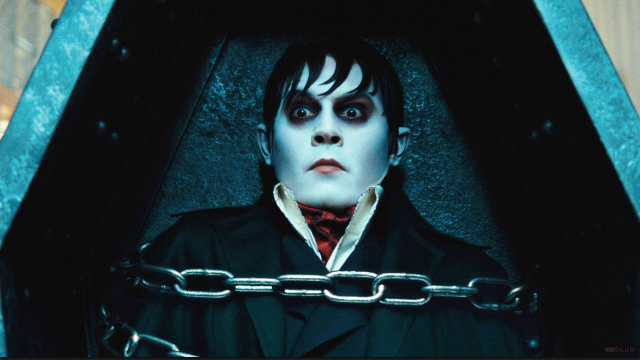
The pale makeup of Dark Shadows, Alice in Wonderland’s crazy oversized hat, and the raven headdress of The Lone Ranger overshadowed Depp’s performances, obscuring his character work with props and flash.
This weekend, he hides behind a moustache in the comedy Mortdecai.
As the title character, he’s pompous, bumbling — imagine Inspector Clouseau with an English accent and an attitude — and on a worldwide hunt for a painting said to contain the code to a lost bank account.
Will people be attracted to Mortdecai? Hard to know. Depp’s showy performances have, by-and-large, garnered big box office but profitability, while important to the suits who green light projects like this, is exactly what’s killing Depp’s credibility as a serious actor.
He’s not in Nicolas Cage territory yet — there’s an actor whose Western Kabuki style of acting redefines idiosyncratic — but with Pirates of the Caribbean 5 coming soon, perhaps it’s time to put Depp’s rebel actor image or reliance on props to bed.
Beware The Quirk! The Killer of Careers! The fearful beast is known to inhabit Southern California and frequently seen lurking in the Hollywood Hills. Easily recognizable by its overuse of make-up, strange facial hair and flamboyant dress, The Quirk lives off schtick and frequently speaks in a funny voice, seducing its victims—usually actors—with a siren song of bad jokes and vocal tics.
Johnny Depp has been outrunning The Quirk for years, narrowly missing the beast’s bony grip. Until now. The Quirk has finally claimed Depp, leaving behind a mass of exaggerated accents, silly walks, gapped teeth and lurid lip hair known as “Mortdecai.”
Based on “The Great Mortdecai Moustache Mystery” by Kyril Bonfiglioli, the movie stars Depp in the title role as a wealthy art dealer with a taste for the finer things in life, an obsessive habit of grooming his facial hair and a nearly empty bank account. He’s pompous, bumbling—imagine a jet-setting Inspector Clouseau with an English accent and an attitude—and on a worldwide hunt for a rare Goya painting said to contain the code to a lost bank account filled with Nazi gold. Along for the ride are Mortdecai’s his trusty cockney manservant Jock Strapp (Paul Bettany), Gwyneth Paltrow as Lady Johanna Mortdecai, Ewan McGregor as an MI5 agent and Jeff Goldblum as a “thick-fingered vulgarian.”
“Mortdecai” breathes the same air as “The Pink Panther” movies, with an added nod to the 1967 “Casino Royale,” an all-star heist movie most notable for featuring both Woody Allen and Orson Welles on the same marquee, but gets lightheaded when it comes to replicating the easy-breezy tone of those films. Capers flicks of a bygone era had a swingin’, hip feel of controlled chaos not overplayed farce but Depp is pedal-to-the-metal, quirking-it-up in a display completely without charm and worse, without wit. He sets the mood for the film—daft, overly mannered, arch and unfunny—and his preening feeds The Quirk, but leaves the audience hungry for laughs.
The much anticipated rebooting of the James Bond franchise is finally in theatres after months of controversy. The unceremonious canning of Pierce Brosnan, who had played the role for the better part of a decade, and the hiring of Daniel Craig, a blonde largely unknown actor, generated hate amongst Bond die-hards. Websites like craignotbond.com—and others with names I can’t repeat here—sprung up all over the net and it seemed like the barrage of bad pre-release publicity might sink the new movie before it even opened in theatres. The Craig-bashing is likely to cease, not only because it is unwarranted, but also because after seeing the movie nay-sayers may fear for their safety.
Craig is an inspired choice to reinvent Bond for a new generation. He’s a good actor—check out his turns in Enduring Love and The Mother—and he’s good looking, but in a more dangerous way than Brosnan or Roger Moore, the slickest of the Bonds. Craig has the looks of a leading man, but is lean and mean, and seems like he could punch you in the mouth and not think too much of it. Not since Sean Connery has a Bond been so volatile.
Craig takes the formerly bloated Bond franchise in a new direction. Gone are the high tech gadgets, the lasers and the pens that contain nuclear bombs. This Bond, built like a muscular British bulldog dispatched bad guys the old-fashioned way—with his hands. In one scene when he is asked how one of his victims died he replies with a wink, “Not well.”
The story, based on the first Bond novel by Ian Flemming, is typical Bond. A series of missions in far-flung corners of the world leads Bond to a high-stakes poker game hosted by an international banker who launders money for terrorists. Bond’s goal is to bankrupt the banker at the poker table so the Secret Service can use financial leverage to get the banker to turn on his terrorist contacts. Along the way there are beautiful girls, exotic locations, a great bad guy who cries blood tears and lots of over-the-top action.
Casino Royale isn’t your father’s Bond. It may, however, be a little closer to your grandfather’s. Sean Connery officially hung up his Bond tuxedo in 1971 (we won’t count Never Say Never Again, the 1983 non-starter) and since then the franchise has drifted, becoming a cartoony, pun spewing vision of the Cold War spy. Craig (with the help of a script by {Paul Haggis) brings the franchise back to its roots. His Bond is a vicious anti-hero who happens to be on the side of right. He is at once the most contemporary of heroes and one of the most old-fashioned. He’s savvy enough to understand the intricacies of the international espionage but primitive enough to use force when necessary.