I join CTV NewsChannel anchor Marcia MacMillan to talk about the winners and also rans at the Critic’s Choice Awards and why Timothée Chalamet is working at a ‘different level’ in ‘Marty Supreme.’
SYNOPSIS: In “Marty Supreme,” a new drama now playing on theaters, Timothée Chalamet plays an ambitious table tennis player who will stop at nothing in his pursuit of success and a lost dog. “Losing doesn’t even enter my consciousness,” he says.
CAST: Timothée Chalamet, Gwyneth Paltrow, Odessa A’zion, Kevin O’Leary, Tyler Okonma, Abel Ferrara and Fran Drescher. Directed by Josh Safdie.
REVIEW: I might normally be skeptical about a movie that gives Kevin “Mr. Wonderful” O’Leary billing, just under names like Timothée Chalamet and Gwyneth Paltrow, but “Marty Supreme” is such a blast of pure energy I’m willing to let it go.
Set in 1952, “Marty Supreme” begins with the title character brash New Yorker Marty Mauser (Chalamet) working as a show salesman to finance a trip to the British Table Tennis Open. He’s a prodigy, a world class ping pong player who believes the sport is the next big thing, and he wants to be part of that wave.
His quest for fame and fortune, however, is more unpredictable than a no-look serve in a ping pong match.
Equipped with only his talent, determination and arrogance, Marty’s rise, fall and redemption put him in contact with actress Kay Stone (Gwyneth Paltrow), her cruel business mogul husband Milton Rockwell (O’Leary), a violent dog owner (legendary filmmaker Abel Ferrara) and the irate husband of his childhood best friend Rachel (Odessa A’zion).
At 2 hours and 29 minutes “Marty Supreme” is an epic, Sammy Glick-style story of a guy who feeds off confidence and daring. Marty’s a fast talker in a propulsive movie that zips along as quickly as the quips that spoil effortlessly from his lips. It’s an exhilarating ride, a pedal to the metal—or paddle to ping pong ball—experience that showcases Chalamet’s career best performance. A bundle of desperation and inner struggle hidden under a veneer of overt confidence, Marty is pushed to extremes by ambition and Chalamet gets every sweaty, eager beat exactly right.
But it’s when things aren’t going Marty’s way that Chalamet shines. A squirmy, humiliating encounter (NO SPOILERS HERE), reveals both defiance and vulnerability, and it is that push and pull, that duality, that illustrates Marty’s determination into high gear. Like all good sports movies, it’s not about the big match at the end, it’s about the journey to the match and with chaotic scenes like this, and many others, “Marty Supreme” is a hell of a ride.
Chalamet is supported by a top-notch cast, including Odessa A’zion, who, in a breakout role, is the warming element that keeps the stratospheric story earth bound.
No story about the American Dream on steroids would be complete without a money-grubbing meanie, a character who values cash and power over Marty’s ambition and talent. Safdie didn’t look much beyond “Shark Tank” when he cast Kevin “Mr. Wonderful” O’Leary, who lends his smarmy reality show energy to the film. He delivers but delivers exactly what you would expect in a movie that defies expectations at every turn.
“Marty Supreme” is exceptionalism both in its story and execution. A grand tale of aspiration and consequences, à la “Boogie Nights” and “Goodfellas,” it’s one of the year’s best films.
Fast reviews for busy people! Watch as I review three movies in less time than it takes to make the bed! Have a look as I race against the clock to tell you about the gameplay of “Marty Supreme,” the slithery charms of “Anaconda” and the tuneful “Song Sung Blue.”
There are dozens of biographies on Johnny Depp and a surprising amount of them use the word “rebel” in the title. There’s the Passionate Rebel, the Modern Rebel and even Hollywood’s Best-Loved Rebel.
There can be no argument that Depp is a fearless actor, unafraid to tackle tough, challenging roles, but it’s hard to accept the rebel title these days. For 20 years, he wildly threw darts at the wall, making exciting movies with interesting directors.
With Tim Burton, he created the off-kilter Eds — Wood and Scissorhands. With John Waters, he produced Wade Walker, the greaser love interest in Cry-baby. And, with Lasse Hallström, he came up with Gilbert Grape, caregiver to his brother and morbidly obese mother.
Along the way, he was also Hunter S. Thompson in Fear and Loathing in Las Vegas, the world’s most successful drug dealer in Blow, and the depraved poet at the dark heart of The Libertine.
Few actors could have pulled off Ed Wood and no one does debauched like Johnny, but the carefully cultivated hip outsider image was never truly accurate. Shrouded in a cloud of Gauloise smoke, he was one of Hollywood’s too-cool-for-school kids, emitting an outsider’s aura, while astutely playing the Hollywood game.
But any remaining traces of Depp’s bohemian status were wiped away with Captain Jack Sparrow’s colourful scarves in the tetralogy of Pirates of the Caribbean movies. They made him a superstar, and wealthy enough to buy Bahamian islands, but also ushered in the damaging wig and makeup era of his career.
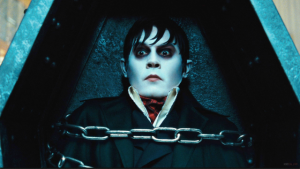
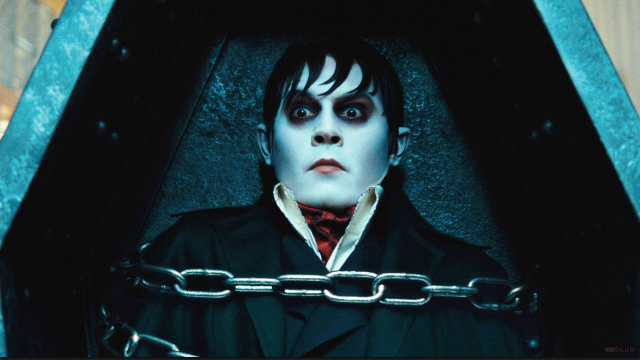
The pale makeup of Dark Shadows, Alice in Wonderland’s crazy oversized hat, and the raven headdress of The Lone Ranger overshadowed Depp’s performances, obscuring his character work with props and flash.
This weekend, he hides behind a moustache in the comedy Mortdecai.
As the title character, he’s pompous, bumbling — imagine Inspector Clouseau with an English accent and an attitude — and on a worldwide hunt for a painting said to contain the code to a lost bank account.
Will people be attracted to Mortdecai? Hard to know. Depp’s showy performances have, by-and-large, garnered big box office but profitability, while important to the suits who green light projects like this, is exactly what’s killing Depp’s credibility as a serious actor.
He’s not in Nicolas Cage territory yet — there’s an actor whose Western Kabuki style of acting redefines idiosyncratic — but with Pirates of the Caribbean 5 coming soon, perhaps it’s time to put Depp’s rebel actor image or reliance on props to bed.
Beware The Quirk! The Killer of Careers! The fearful beast is known to inhabit Southern California and frequently seen lurking in the Hollywood Hills. Easily recognizable by its overuse of make-up, strange facial hair and flamboyant dress, The Quirk lives off schtick and frequently speaks in a funny voice, seducing its victims—usually actors—with a siren song of bad jokes and vocal tics.
Johnny Depp has been outrunning The Quirk for years, narrowly missing the beast’s bony grip. Until now. The Quirk has finally claimed Depp, leaving behind a mass of exaggerated accents, silly walks, gapped teeth and lurid lip hair known as “Mortdecai.”
Based on “The Great Mortdecai Moustache Mystery” by Kyril Bonfiglioli, the movie stars Depp in the title role as a wealthy art dealer with a taste for the finer things in life, an obsessive habit of grooming his facial hair and a nearly empty bank account. He’s pompous, bumbling—imagine a jet-setting Inspector Clouseau with an English accent and an attitude—and on a worldwide hunt for a rare Goya painting said to contain the code to a lost bank account filled with Nazi gold. Along for the ride are Mortdecai’s his trusty cockney manservant Jock Strapp (Paul Bettany), Gwyneth Paltrow as Lady Johanna Mortdecai, Ewan McGregor as an MI5 agent and Jeff Goldblum as a “thick-fingered vulgarian.”
“Mortdecai” breathes the same air as “The Pink Panther” movies, with an added nod to the 1967 “Casino Royale,” an all-star heist movie most notable for featuring both Woody Allen and Orson Welles on the same marquee, but gets lightheaded when it comes to replicating the easy-breezy tone of those films. Capers flicks of a bygone era had a swingin’, hip feel of controlled chaos not overplayed farce but Depp is pedal-to-the-metal, quirking-it-up in a display completely without charm and worse, without wit. He sets the mood for the film—daft, overly mannered, arch and unfunny—and his preening feeds The Quirk, but leaves the audience hungry for laughs.
Iron Man, the heaviest of the heavy metal Marvel superheroes, undergoes a transformation in the latest installment of the popular franchise. He’s less self-assured, anxiety ridden, but at least he still looks good in a suit—the giant iron suit that turns him from mortal to immortal hero.
In this installment the sins of Tony Stark’s (Robert Downey Jr) past come back to haunt him. In a flashback to 1999 we meet a biochemist (Rebecca Hall) turned Stark one-night-stand and a meek scientist (Guy Pearce) who both feel the sting of the billionaire arms designer’s arrogance. Cut to years later. Stark is troubled by the recent battle in New York (see “The Avengers” movie) and is having trouble sleeping.
Meanwhile an Osama bin Laden wannabe named The Mandarin (Sir Ben Kingsley) is terrorizing the planet, promising a violent finale on Christmas Day. With just days to go the situation becomes personal for Stark when his girlfriend, Pepper (Gwenyth Paltrow), and longtime bodyguard Happy (Jon Favreau) are endangered by the madman.
This is a darker, talkier “Iron Man” than we’ve seen before. The thing that was so appealing in the first movie—RDJs quick wit and way with a line—had, over the course of a disappointing second movie, become tired and predictable, so writer-director Shane Black modified Stark’s behavior, stripping away some of (but not all) of Stark’s arrogance in favor of a dark character study that sees him on the verge of a breakdown.
“Iron Man 3” is still a huge action movie but between the big blow ‘em up scenes there’s more sturm and drang than usual for a big summer blockbuster. Downey handles Stark’s ups and downs well enough, although you get the feeling that the limitations of the form—tentpole summer flick—prevent him from pushing the envelope performance wise into as dark a place as he might have liked. Really exploring Stark’s turmoil might not sell as many tickets as Marvel needs to break even, but it would have been interesting to see Downey stretch his wings a bit more.
Stark is a troubled guy. Always has been in the comics, but he’s a troubled guy with a cool suit and that’s why we pay to see the “Iron Man” movies. So it’s a little hard to understand why he’s not in the suit more of the time. Imagine a Hulk movie where Bruce Banner doesn’t get angry and you get the idea. “Iron Man 1 & 2” took every opportunity to put Stark in the iron suit, while this movie takes every opportunity to take him out of the suit.
The hodge podge of hot button topics—terrorism, computer hacking, disabled war vets, ecological issues and even a “Downton Abbey” gag—push the story forward, but the core of the thing that makes these movies fun seems to have been pushed to the background.
Of course there are iron suits in the film, lots of them, they just don’t seem to fit as well as they once did.
When we last saw Iron Man he had a perfectly functioning palladium mechanical heart and a best friend who looked a lot like Terrence Howard. How times have changed. In “Iron Man 2” a mysterious malady is threatening to sideline his success and Jim Rhodes, his BFF, now looks like Don Cheadle.
In the time since the previous “Iron Man” movie, (two years in real time, six months in the story) oddball weapons inventor Tony Stark (Downey Jr.) has become a national hero. He’s one part Bono, two parts George Patton. His technologies, including the famous heavy metal suit, are keeping America safe, but not everyone are fans. The US Senate—in particular Senator Stern (Garry Shandling)—sees the egomaniacal inventor as a threat and wants him to hand over his secrets. Then there is his rival, Justin Hammer (Sam Rockwell, the best actor out there who isn’t a major movie star), an unctuous arms dealer working for the government. He can best be described as a Stark wannabe whose technology is nowhere near as advanced as Stark’s. Even worse is Ivan Vanko aka Whiplash (Mickey Rourke), a Russia engineer whose father used to work with Stark’s old man. The weathered looking Vanko Jr. has built his own suit, this one equipped with whip-like attachments that harness electrical energy. As if that weren’t enough bad guys, even Bill O’Reilly makes a cameo.
Worst of all, though, Stark’s own technology may be working against him. It appears he is slowly being poisoned by the palladium that powers the miniature arc reactor in his chest.
On the plus side there’s loyal old Pepper Potts (Gwyneth Paltrow) Stark’s Louboutin-sporting confidant who is now CEO of Stark Industries and Natalie Rushman (Scarlett Johansson) Stark’s new assistant. She’s also a S.H.I.E.L.D. (if you sat through the credits of the first film you’ll remember S.H.I.E.L.D. as the fictional espionage and law-enforcement agency run by Nick Fury, played by Samuel L. Jackson) undercover agent named Black Widow who wears tight leather outfits and shows an until now unseen capacity for gymnastics.
There’s more plot and characters, but I’m almost out of space and haven’t gotten to the review yet and that is part of the problem with the movie. The first “Iron Man” was as clean and concise as a huge summer comic book blockbuster can be—solid characters, not too many of them, and a clear cut story. This time around the director Jon Favreau has thrown simplicity out the window, opting instead for Michael Bay style bombast. Where the first “Iron Man” was an idiosyncratic character study with cool action sprinkled throughout, the new one reverses that formula, relying on action to carry the day.
The characters are still fairly strong, but Downey’s charm seems to have faded a bit since he last wore the iron suit. Maybe we got to know him too well two years ago, but here the character doesn’t have the same kind of fresh appeal he had the first time around.
Perhaps it’s because the overall tone of the film is darker, but “Iron Man 2” isn’t as much fun as the original. It should please comic fans familiar with the storyline and characters, and it certainly has its moments—things go boom and Rourke is a convincing, if underused villain—but like the “Spider Man” movies, which got bigger, but not necessarily better as time went on, “Iron Man 2” feels a bit leaden. Leaden or not, though, this will be the biggest hit this summer NOT in 3D.
Proof debuted at the 2005 Toronto International Film Festival and at the time I thought it had the potential to go on to become one of the hot movies for grown-ups to come out of the fest. Instead it was ignored on release, but now people have a chance to revisit the movie on DVD and check out the great performances by Gwyneth Paltrow as the daughter of a brilliant but mentally ill mathematician with Anthony Hopkins the father, Jake Gyllenhaal as the love interest and Hope Davis as her overbearing sister.
Based on the Broadway play, Proof –adapted for the screen by Arthur Miller’s daughter Rebecca—is the story of Catherine, the daughter of a brilliant but mentally ill mathematician who fears she may have inherited her father’s insanity. Complicating Catherine’s life are a domineering sister and a young math student who believes that he has found an important new mathematical proof in her father’s old papers. I think people assumed that this was a movie about mathematics—that it would be dry—but it is not. Proof is an absorbing drama about family, genius and self worth.
Watching Joaquin Phoenix in Two Lovers made me wish he would go to the barber, get a shave and stop his infantile flirtation with becoming the new Vanilla Ice and get back to doing what he does best—create interesting, layered characters for the big screen. In Two Lovers, which Phoenix claims will be his last film, he hands in a towering performance that is simultaneously quietly intense and tortured.
Two Lovers is set in Brighton Beach, a small community on Coney Island, New York. Phoenix is Leonard, a man left devastated by a recent break-up. He’s moved back into his parent’s home and is working at the family dry cleaning business. He lives a life of quiet desperation until his matchmaker parents try and set him up with Sandra (Vinessa Shaw), the pretty daughter of a business associate. She becomes love number one. That same week he has a chance encounter with Michelle (Gwyneth Paltrow), his beautiful, but damaged upstairs neighbor. She becomes love number two, and complicates Leonard’s already complex emotional life.
Two Lovers is a deliberately paced film filled with rich, interesting performances. Phoenix subtlety gives Leonard a full inner life as his bi-polar character swings from high points to low. It’s a quietly riveting performance and one of the best so far this year.
Paltrow redeems herself after her dull work in Iron Man. She brings the beautiful and tragic Michelle to vivid life, playing her as a woman blinded by her need to be accepted by men.
The rest of the cast is uniformly excellent and well cast. Vinessa Shaw as the nurturing Sandra takes the least interesting of the three main roles and creates a fully rounded and appealing character, while Isabella Rossellini and Moni Monoshov fill every frame they appear in with parental warmth.
Two Lovers moves slowly—one critic prescribed it as a “non-addictive, non-chemical cure for insomnia”—but for those willing to stay with the film’s reflective pace there are rewards.