Over the years I have accidentally picked up life lessons from the famous folks I’ve interviewed. Today I’ll tell you about what Will Ferrell taught me, in his own, wild way.
Will Ferrell is a wonderfully weird and committed actor. Like a dog with a bone when he latches onto a part he doesn’t let go, come hell or high water. When it works, it really works, and the result is an indelible comedic creation like the deluded Ron Burgundy that not only makes us laugh but also reveals the character’s humanity. When it doesn’t work, as in “Eurovision Song Contest: The Story of Fire Saga,” now streaming on Netflix, it is all commitment and little humanity.
Ferrell plays Lars, a middle-aged Icelander whose love for the Eurovision Song Contest began in 1974 when he dancing in front of the TV, much to his father’s (Pierce Brosnan) chagrin, to ABBA’s winning performance of “Waterloo.” No one believes in his musical dreams except for his childhood friend Sigrit (Rachel McAdams), who loves him even though her affections don’t seem to be reciprocated. She believes in elves and drops little pearls of wisdom like, “Anger cannot churn butter.”
Together they are Fire Saga, a synth-pop duo who play to crowds at the local pub who only want to hear songs like “Ja Ja Ding Dong,” and not the “real music” Lars writes. Through a series of unlikely events they stumble into a spot on the Eurovision show. Lars’ father doesn’t want them to go. “All of Iceland will laugh at you,” he says. Undeterred, Lars soldiers on. “I have to become an international star to prove to my very handsome father and all of Iceland that I have not wasted my life.”
Lars and Sigrit’s experiences in their tiny fishing village of Húsav´ík do not prepared them for the cutthroat world of Eurovision. Will predatory singers, like Russian superstar Alexander Lemtov (Dan Stevens with a George Michael frosted-tip bouffant), and stage mishaps dampen Lars’ dreams of Eurovision fame?
“Eurovision Song Contest: The Story of Fire Saga” should be a lot funnier than it is. It’s a little too loving of Eurovision’s kitschy spectacle to be a satire; a little too sincere to be truly silly, despite Ferrell’s ridiculous hair and even more outlandish sweaters. The comedy is further blunted by the film’s main conceit, that Lars and Sigrit are talentless wannabees. “We all know they are awful,” says the local Húsav´ík cop, “but they are our awful.” Thing is, in context, they fit like a puzzle piece next to the other over-the-top acts the movie showcases.
Ferrell brings the usual commitment to his trademarked arrogant man-child character but never pushes the characterization much beyond the way the townsfolk see him. “Lars is weird,” they all say, and Ferrell obliges, playing the character as the result of a damaged psyche—he feels unwanted by his father—and just a little too much confidence. It’s familiar ground for him and us.
McAdams feels like an odd choice to play opposite Ferrell’s exaggerated character. She’s good, but her more natural performance feels like it belongs in another movie.
The real Eurovision Song Contest won’t be happening this year, another victim of COVID-19, so perhaps “The Story of Fire Saga” will fill that gap for fans. If you tune in expect some scattered good moments. Ferrell delivers a few laughs and Stevens has fun but Lars and Sigrit’s protracted love story pushes the movie to an unwieldy 123 minutes with not quite enough laughs to justify the running time.
Four hundred years ago when Shakespeare wrote, “To thine own self be true,” he could not have imagined that his words would provide the bedrock of a raucous teen comedy and yet here we are. “Booksmart,” Olivia Wilde’s feature directorial debut, is both high and low brow, touching and sentimental in its look at female friendship.
Molly (Beanie Feldstein) and Amy (Kaitlyn Dever) are best friends. Inseparable, they are class president and vice-president, Michelle Obama acolytes who listen to self-empowerment tapes. “You’ve worked harder than anyone and that’s why you are a champion. Stand at the top of the mountain of your success and look down on everyone who has ever doubted you.” Molly is a perfectionist who corrects the grammar on bathroom wall graffiti while Amy is off to Botswana to “help women make tampons.”
On the eve of their high school graduation, they have Yale and Columbia in their sights but when Molly realizes her slacker schoolmates are also going to Ivy League schools she isn’t happy. “We chose to study so we could get into good schools,” she says. “They didn’t choose.” After semesters of prioritizing academics over socializing they attempt to cram four years of fun into one night. “Nobody knows we are fun,” Molly says. “We are smart and fun. What took them four years were doing in one night.”
There’s only one big problem; they don’t have the address of the hip graduation party and no one is answering their texts. “We have never hung out with any of these people except academically,” Amy says. “They probably think we’re calling about school.” After some misadventures on a tricked-out yacht and at a murder mystery party they use their academic skills. “How will we find out where next party is? By doing what we do best, homework.”
“We are 8A+ people and we need an A+ party.”
The plot synopsis of “Booksmart” sounds like it could have been lifted from any number of other high school comedies but director Wilde simply uses the of high school graduation party set-up as a backdrop for her hilarious study of female bonding. The premise may be familiar but the charm of the movie is all in execution and the connected chemistry between the leads.
In her feature debut Wilde is so self-assured, staging big party scenes, a dance number and even car chases but never allows the focus to drift from Molly and Amy. Even when the supporting cast—the cosmically free-spirited Gigi (Billie Lourd), rich kid Jared (Skyler Gisondo), the much-talked-about AAA (Molly Gordon) or the very theatrical drama club members Alan and George (Austin Crute and Noah Galvin)—gets showcased in increasingly outrageous ways Wilde never lets their humanity trump the humour. In other words, it’s funny because it’s based in truth; real human behavior.
Feldstein and Dever are the film’s beating heart. Both have crushes on other people—Molly likes party boy Nick (Mason Gooding), Amy has her eye on skater girl Ryan (Victoria Ruesga)—but deep down they are soul mates. They click, whether it is through their banter or the knowing looks they exchange, and by the time “Unchained Melody,” that ode to unconditional love, spills from the theatre’s speakers there’s no doubt that Molly and Amy are bound to be connected forever, or at least until adult life gets in the way.
Like its main characters “Booksmart” is true to its self, an overachiever that knows how to have a good time.
My desire to see 2014’s “The Lego Movie” was on par with my wish to step on a Lego brick in my bare feet. How could a movie starring plastic, singing mini figs possibly appeal to anyone who graduated Saturday morning cartoons decades ago? But I’m a professional so I put my bias of toy story movies aside and went to the screening.
Later, as I left the theatre humming “Everything is Awesome” I was own over. Directors and co-writers Phil Lord and Christopher Miller had pulled off something great, they made a movie with wide appeal using the Legos as a muse to do what the bricks have always done, light imaginations on fire.
Question is, five years later will everything be awesome in the sequel “The Lego Movie 2: The Second Part”?
The last movie ended with the revelation that the movie’s Lego Land frenetic action had actually taken place in 8-year-old Finn’s (Jadon Sand) imagination. The new one focuses on Finn’s sister Bianca (“The Florida Project’s” Brooklyn Prince) disrupting her brother’s carefully built world of fancy with her Duplo-Block creations.
In the make-believe world Duplo aliens, led by shape-shifting villain Queen Watevra Wa-Nabi (Tiffany Haddish) declare war on Bricksburg. Fast-forward five years. Optimistic construction worker Emmet (Chris Pratt) and Master Builder Lucy’s (Elizabeth Banks) home is now a smoking ruin called Apocalypseburg where if you show any weakness you will be destroyed. Dave is now called Chainsaw Dave and Sewer Babies live under the streets.
When Lucy, Batman (Will Arnett), Unikitty (Alison Brie), Benny (Charlie Day) and MetalBeard (Nick Offerman) are kidnapped and transported to the Systar System by General Mayhem (Stephanie Beatriz) Emmet and intergalactic archaeologist / Snake Plissken look-a-like Rex Dangervest (Pratt again) set off to rescue them. “Don’t worry Lucy,” says Emmett, “everything will still be awesome.”
“The Lego Movie 2: The Second Part” is a pure pop art blast as though designed by kids. A mix of non-sequiturs, silly jokes, attention deficit editing, CPDs (Convenient Plot Devices) and music it zips along but isn’t as awesome as the original. The first film was a powerhouse of imagination and adventure. “The Second Part” has its moments—like the “Catchy Song” sequence—but feels like a dim bulb that doesn’t burn as brightly as it once did.
Like the first film the mayhem of Lego Land is tempered with real life lessons. In this case it takes an existential turn in the last third, expanding the mini fig story to shine a light on the fraught relationship between Finn and Bianca and their struggle to find a way to play together. When they learn to be kind and tolerant of one another their lives improve, as do those of their plastic figures.
“The Lego Movie 2: The Second Part’s” convoluted third reel paints the screen with too much frenetic CGI action but maintains the lesson of the first film, that NOT putting away childish things, like Lego blocks, is the key to making everything awesome, no matter what age. That the message doesn’t feel like a commercial for the brightly coloured blocks is a pleasant plus even if the movie feels like diminished returns.
Who says there are no new ideas in Hollywood? A week ago we had “A Bad Mom’s Christmas,” the heart-warming (or should that be heartburning) tale of three young moms trying to make Christmas perfect for their families until their mothers crash the scene bringing with them expectations and judgement.
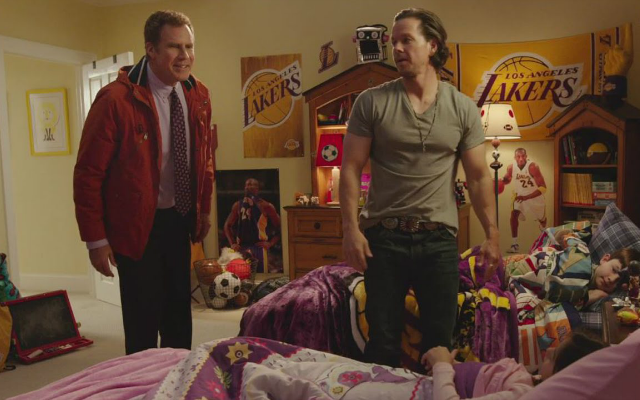
This week along comes “Daddy’s Home 2,” the story of two men Dusty (Mark Wahlberg) and Brad (Will Ferrell), a father and stepfather who just want Christmas to be perfect for the adorable kids they share. It all goes well until Dusty’s rough-around-the-edges father (Mel Gibson) and Brad’s lovey-dovey dad (John Lithgow) both come to town.
One stars women, the other, men. You’re not having déjà vu, they’re completely different, see?
When we last saw Dusty and Brad they asked a very simple question, What do kids need more, a father or a dad? Anyone can be a father, the opening narration tells us, but it takes real work to be a dad. Dusty is the mild mannered stepfather to Brad’s biological children. What’s Dusty like? “Imagine if Jesse James and Mick Jagger had a baby,” says his ex-wife Sarah (Linda Cardellini). “He sounds like a rascal,” says Brad.
The kids adore Brad because he’s more fun but Dusty, though uptight and dull, is always there when the kids need him. By the time the end credits roll the two have figured out an uneasy dente in the co-parenting game.
This time around it’s Christmas and the co-dads are determined to make it perfectly cool yule for the kids. “I got as big surprise,” says Brad. “This year, no more back and forth at Christmas. A together Christmas like a normal family.” The stressful time is made more stressful when the grandfathers show up, turning the cool yule into a blue Christmas.
For most of its running time I thought “Daddy’s Home 2” was the laziest comedy of the year. Then I thought all the way back to last week’s screening of “A Bad Moms Christmas” and I remembered—even though I tried to forget—what little effort that movie put into story, jokes… well, just about everything.
Then something else happened, after an hour and twenty minutes of uninspired comedy seemingly Xeroxed on Christmas wrapping from the 2015 original film, “Daddy’s Home 2” manages to turn from lump of coal to a diamond. At least for a few minutes. It’s too little too late, but you will leave the theatre with a grin.
Now for the elephant in the room; Gibson is a major character, eating up screen time like Santa chowing down on gingerbread cookies. In a completely charmless and grating performance he plays Dusty’s snickering dad as a man who thinks everyone not with his last name is a snowflake. He encourages his young grandson to slap a little girl on the bum and tells the kids a joke that begins with, “Two hookers walk into a bar.” If you didn’t want to see the movie because of him, this is not the performance that will win you over.
“Daddy’s Home 2” gets some things right. When the middle daughter continuously turns up the thermostat so she can be warm while she sleeps with the window open, it ignites a thermostat war that will be familiar to anyone who has ever paid a heating bill. When the movie latches on to those moments, it works. When it doesn’t, it’s as stale as last year’s fruitcake.
This weekend Jessica Chastain stars in the political thriller Miss Sloane. The title refers to the lobbyist main character but the film could easily have been titled Drain the Swamp.
Made before Donald Trump became president-elect, it only takes about 20 seconds before the word “trump” crops up in the dialogue. He’s never mentioned by name, but this look at “the most morally bankrupt profession since faith healing” paints exactly the ugly picture of behind-the-scenes machinations that Trump railed against on the campaign trail.
Chastain is Elizabeth Sloane, a sleep-deprived D.C. lobbyist “at the forefront of a business with a terrible reputation.” She’ll represent anyone, it seems, except the gun lobby, who offer her a lucrative contract, only to be laughed at and rejected.
Soon after she leaves her firm — one of the biggest in the country — to join a small, scrappy group who aim to whip up support for a bill that will demand background checks for all gun owners.
It’s a new hot-button peek behind the curtain of a political process, but Hollywood has been making Drain the Swamp movies for years.
The explosive Advise and Consent is based on former New York Times congressional correspondent Allen Drury’s Pulitzer Prize-winning novel about the ratification of a secretary of state and the dirty little secrets people in public life must keep hidden. Political battle lines are drawn as a full frontal attack is launched on the character and credentials of the new nominee.
Director Otto Preminger almost pulled off one of the great casting coups of the 1960s when he offered civil rights leader Martin Luther King Jr. a role in Advise and Consent. The mercurial director thought King would be perfect for the role of a southern senator, despite the fact that no African Americans were serving in Senate at the time. King gave the offer some thought, but declined fearing the backlash and possible harm to the civil right movement.
More recently, in The Ides of March George Clooney (who also directed) played a Democratic Party candidate; the kind of guy who would make the top of Bill O’Reilly’s head pop off. He’s pro-ecology, anti-oil. He wants to tax the rich and legalize gay marriage. If he leans any further left he’ll topple over.
Although Clooney has spoken out about many of these topics in real life, he didn’t make a left-wing film. Instead he made a warts-and-all political movie about dirty dealings on the campaign trail.
The first hour is good stuff, great acting from Ryan Gosling, Paul Giamatti and Philip Seymour Hoffman and a fascinating, if occasionally dry look at life in the political fast lane. Then comes the blackmail, the meetings in darkened stairwells and double-crossing journalists.
Finally The Campaign, a comedy starring Will Ferrell and Zach Galifianakis as incumbent congressmen, begins with a quote from former presidential hopeful Ross Perot: “War has rules. Mud wrestling has rules. Politics has no rules.”
Neither does the movie; no rules or boundaries. These candidates go beyond the usual name-calling — “He looks like Osama Bin Laden” — to dirty tricks that would make Tricky Dick blush. It’s a through-the-looking glass-vision of how politics works that features ambition, greed, corruption and even a candidate who punches a baby.
I have a brother but he’s not my bro, at least by the contemporary definition. My sibling and I are biologically brothers but neither of us fall into what the NPR Codeswitch blog described as the four rudimentary characteristics of “bro-iness”— jockish, dudely, stoner-ish and preppy.
There are as many ways to define bros and brahs as there are bros and brahs at your local frat house. Oxford Dictionary writer Katherine Connor Martin sums it up simply as “a conventional guy’s guy who spends a lot of time partying with other young men like himself.” The urban dictionary isn’t quite as elegant, describing bros as ”obnoxious partying males who are often seen at college parties… [standing] around holding a red plastic cup waiting for something exciting to happen so they can scream something that demonstrates how much they enjoy partying”
This weekend Zac Efron and Adam DeVine play brothers who are also bros in Mike and Dave Need Wedding Dates. Based on the real-life exploits of Mike and Dave Stangle, the guys get out-broed at their sister’s Hawaiian wedding by broettes Tatiana and Alice (Aubrey Plaza and Anna Kendrick).
In real life Mike, Dave, Tatiana and Alice are the kind of people it might be fun to hang out with before ten o’clock at night, before the tequila shots and samplings from the mystery medicine cabinet have taken effect. After that, all bets are off. Luckily in Mike and Dave Need Wedding Dates, like so many bro movies before it, the screen separates us and we can sit back and observe them like cultural anthropologists, as if we’re studying animals in a zoo.
Hollywood has long had a bromance with bros. Lately in movies like Neighbors and Dirty Grandpa Efron has made a career of playing dim witted frat boys but to find the proto bros you have to go back to 1940. Starting with Road to Singapore Bob Hope and Bing Crosby cocktailed and adlibbed their way through seven Road movies playing two slightly skeezy men with boatloads of bravado and an unbreakable bond—at least until love interest Dorothy Lamour showed up.
National Lampoon’s Animal House was the next landmark of bro-cinema. From toga parties to food fights and doing The Worm on the dance floor, it’s a politically incorrect classic that celebrates the best and worst of bro culture.
A 1996 movie gave us the bro with a million catchphrases like “Vegas, baby,” “wingman,” “beautiful babies” and “you’re so money.” As Trent in Swingers Vince Vaughn gave a voice and brocabulary to a generation of bros. Jon Favreau wrote the script but many of the sayings came directly from the lips of his best friends and co-stars Vaughn and Ron Livingston.
No look at bro-cinema would be complete without a nod toward Will Ferrell. The comedian has broed out on screen many times but Old School’s Frank the Tank, a character who unravels after his wife leaves him, is King Bro. When he’s not doing beer bong hits (“Once it hits your lips, it’s so good!”) or streaking he lets his freak flag fly as one of the most over-the-top bros ever seen on screen.
Dean Wormer’s classic scolding from Animal House, “Fat, drunk and stupid is no way to go through life, son,” doesn’t seem to apply, at least at the movies.
“Zoolander 2,” the fifteen years in the making follow-up to the 2001 comedy hit, finds former “Blue Steel” supermodel Derek Zoolander (Ben Stiller) “out of fashion,” literally and figuratively. Following a tragic event involving his wife and his Center For Kids Who Can’t Read Good, Derek stepped away from fashion and the world. He now lives the life of a “hermit crab,” complete with a long beard that obscures his “really, really, really, really, really ridiculously good looking face.”
When some of the most beautiful people in the world turn up dead, their Instagram images frozen in time in perma-duckface, Derek’s most famous facial expression, Zoolander and his past partner Hansel (Owen Wilson) are tricked into travelling to Rome to uncover who is behind this evil plot to rid the world of good looking celebrities.
In the Eternal City the dim-witted models will search for Derek’s long-lost son—whose blood may contain the secret to eternal fashionability—battle fashion criminal Mugato (Will Ferrell) and meet new high-powered fashionista All (Benedict Cumberbatch). Aiding the boys is Valentina (Penélope Cruz), a former swimsuit model troubled by her inability to “transition to print and runway work,” now working as an agent for Interpol’s Global Fashion Division.
“Zoolander 2’s” main joke isn’t the Blue Steel, the pouty-lipped move that made Zoolander a superstar, or the dim-witted antics of Derek and Hansel. No, the movie’s best joke is its commentary on how quickly the best-by date comes for modern day celebrities. The speed of popular culture has revved considerably since 2001 and what seems hip today may be passé tomorrow. Fashion is fleeting, as cameos from Anna Wintour, Tommy Hilfiger, Marc Jacobs demonstrate, but the big question is has “Zoolander 2” reached its expiration date?
I usually avoid the scatological in my reviews but suffice to say any movie whose best joke involves the morphing of the word “faces” into feces over and over, that features a hotel made of “reclaimed human waste” and subtitles itself with “No. 2” is really asking for it.
To put it more delicately, villain Mugato marvels at how “super white hot blazingly stupid” Derek is, and you’ll do the same thing about the film. Stupid can be OK if it’s funny but “Zoolander 2” leaves the laughs on the runway. Stiller’s mugging gets tired quickly and the simple, juvenile jokes were much funnier fifteen years ago when we heard them the first time. To use the movie’s own dialogue against itself, “You guys are so old-school,” says Don Atari (Kyle Mooney), “so lame.”
Stiller, who directs and co-wrote the script, jam packs every frame with with cameos in a desperate grab for relevancy. Everyone from Justin Bieber (who appearance may please non- Beliebers) to Joe Jonas and Katy Perry to Ariana Grande decorate the screen, while Susan Sarandon does a “Rocky Horror” call back and Billy Zane demonstrates that he is no longer an actor, but a pop-culture punchline. I doubt even Neil deGrasse Tyson could scientifically explain why he chose to appear in this dreck.
Fred Armisen as an eleven-year-old manager of social media tries his best to make his brief role strange-funny while Will Ferrell’s Mugatu is essentially an audition to play an alternate universe Bond villain.
The best thing about “Zoolander 2” that it is such a fashion faux pas and so desperately unfunny it’s hard to imagine Stiller and Company making a third one fifteen years from now.
“Daddy’s Home,” a new comedy starring Will Ferrell and Mark Wahlberg asks a very simple question, What do kids need more, a father or a dad? Anyone can be a father, the opening narration tells us, but it takes real work to be a dad.
Brad desperately wants to be a dad to his step-kids Megan and Dylan (Scarlett Estevez and Owen Vaccaro), but instead of hugs they greet him with hand drawn family pictures featuring him with a knife through his head. After being pushed away and being treated like an outsider for months, he becomes a real dad to the kids… until Dusty (Mark Wahlberg), their real father, re-enters the picture.
What’s Dusty like? “Imagine if Jesse James and Mick Jagger had a baby,” says his ex-wife Sarah (Linda Cardellini). “He sounds like a rascal,” says Brad.
A rascal to be sure. The muscle-bound ex-husband manipulates the once-happy family, slowly drives a wedge between Brad and the kids. “I’m here to defeat you and take your family,” he tells Brad.
All out war breaks out between the two men as they compete for the affection of Sarah and the kids.
“Daddy’s Home” shows a different side of Will Ferrell’s finely tuned comedic persona. Typically we see him in the role of an incompetent but arrogant man. Here he’s incompetent but he’s the über-everyman, a guy who blends into the crowd. There is no “yazz flute” in “Daddy’s Home.” Instead he is the brunt of the joke, a punch line in this comedy of humiliation and a little less fun than usual. He’s a comfortable presence in movies like this, but more often than not I had the feeling that I should be laughing instead of actually laughing.
Dusty, on the other hand, is a macho man of mystery skilled in ways Brad could only dream of. He has charisma to burn, has an answer for everything and quickly wins over the kids who look at him like he’s a superhero. When he does CPR and Brad the kids cheer, “My dad brings people back from the dead!” Wahlberg is probably that guy in real life, so he’s believable and occasionally funny but the situation is predictable—you don’t need to be gifted with ESP to see the end of this movie coming—and by the book.
As Brad’s boss Leo, Thomas Haden Church tries to inject some surreal stream of consciousness humour but falls flat. Only Hannibal Buress’s deadpan delivery of lines like, “You can’t build a tree house with a tampon, Brad,” consistently draws laughs.
“Daddy’s Home” has its giddy moments but by-and-large but doesn’t contain enough “dad jokes” to make it worthwhile.
 Over the years I have accidentally picked up life lessons from the famous folks I’ve interviewed. Today I’ll tell you about what Will Ferrell taught me, in his own, wild way.