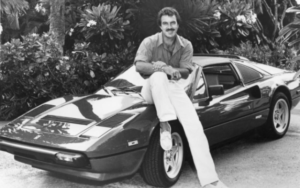
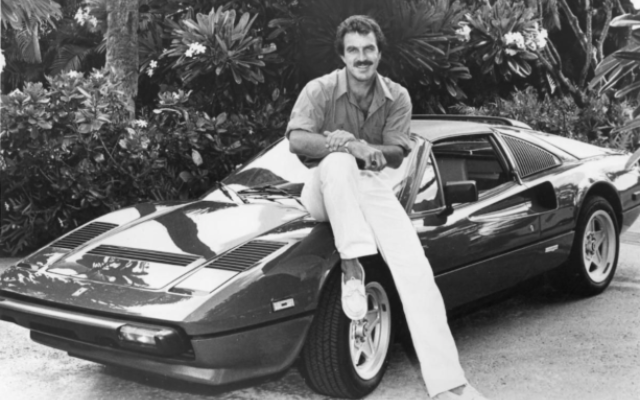
Richard writes about the super cars of 1980s television and movies, and pits them against one another.


“Popular culture in the 1980s was filled with memorable vehicles. On TV and in movies, these rides were integral to the storylines, turned heads because of how cool they were, and, in some cases, even terrified us. But which was the greatest?” Read the whole thing HERE!
With the release of “Ghostbusters: Afterlife,” the supernatural comedy now playing in theatres, the Reitman family proves they ain’t afraid of no sequels. The fourth film in the franchise sees Jason Reitman, son of the original director Ivan, reinvent the series, this time for a younger audience.
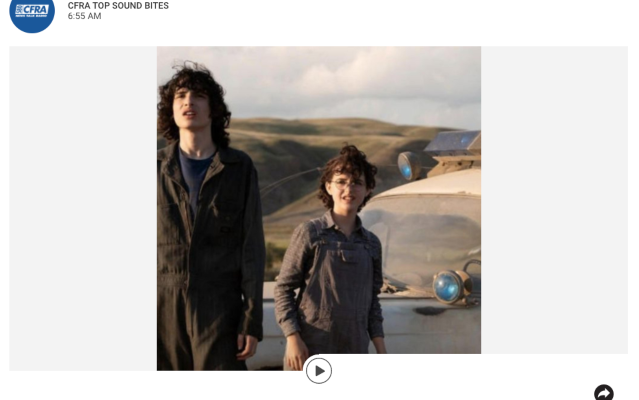
The reboot begins with single mother Callie (Carrie Coon) inheriting a rundown old house from her estranged OG (Original Ghostbuster) father Egon Spengler. Located just outside the tiny town of Summerville, Oklahoma, it’s “worthless aside from the sentimental value,” but Callie is desperate. She’s been evicted from her city apartment and sees the move as a way to start a new life for her two teenage kids, Trevor (Finn Wolfhard) and Phoebe (Mckenna Grace).
“We’re completely broke,” Trevor tells a friend. “And the only thing that’s left in our name is this creepy old farmhouse my grandfather left us in the middle of nowhere.”
Summerville is far from New York City, the original epicenter of Ghostbuster’s supernatural activity, “human sacrifice, dogs and cats living together and mass hysteria,” but it turns out the sleepy little town is also haunted. Phoebe, who takes after the grandfather she never met, is sensitive to the ghostly goings-on and with the help of her grandad’s old ghost traps, new mentor Mr. Grooberson (Paul Rudd) and some familiar faces, she will attempt to get to the bottom of the paranormal problem.
Despite the Reitman name front and center, “Ghostbusters: Afterlife” doesn’t really feel like a “Ghostbusters” film. There is plenty of fan service and call backs to the original movie but the humor is muted and the anarchy of the first film is replaced by family drama. Modelled after the kid led adventure movies of the 1980s, it feels more like a coming-of-age indie grafted onto a big studio premise.
Reitman populates the film with likable characters. Grace nails the nebbish Phoebe, creating a deadpan wise-beyond-her-years character that blends seamlessly into the “Ghostbusters” world and as her sidekick Podcast, Logan Kim is a scene stealer. The adults, Coon and Rudd, acquit themselves well, and Dan Ackroyd’s first scene is the best role he’s had in years.
But despite the characters the story takes too long to get to the ghostly stuff. Once there, it delivers a proton blast of nostalgia and an epic CGI supernatural showdown, but at twenty minutes longer than the original it feels stretched.
“Ghostbusters: Afterlife” attempts to pay tribute to the franchise while moving it forward in a different direction but despite a couple stand out performances, it is a ghost of the original.
Ben Affleck plays the title role in the thriller The Accountant. “Like, a CPA accountant?” asks a Treasury Department worker. “Not quite,” replies agent Ray King (J. K. Simmons) in what might be the understatement of the year.
Affleck is a pocket-protector-wearing forensic accountant who “risks his life cooking the books for some of the scariest people on the planet; drug cartels, arms brokers, money launderers, assassins.” An autistic math genius with a violent side, he survives his dangerous world through dual facilities for math and mayhem.
“He’s a very distinct and unusual character,” Affleck told Entertainment Weekly. “A little bit different than your average, everyday person in the way he processes information and social thinking, and the way he sees numbers and logic, and that he’s trapped a little bit in his own mind.”
Affleck joins a long list of actors who have looked for loopholes, legal, financial and otherwise, on the big screen.
The late, great Gene Wilder became a star playing bookkeeper Leo Bloom in The Producers. “I spend my life counting other people’s money. People I’m smarter than.” It’s Bloom who comes up with the get rich quick scheme to mount a terrible Broadway musical and make off with the investor’s cash when the show flops. His plan falls apart when Springtime for Hitler becomes a hit but his business partner still has good things to say. “You’re an accountant,” raves Max Bialystock. “You’re in a noble profession! The word ‘count’ is part of your title!”
Rick Moranis played Louis Tully, an accountant possessed by an ancient spirit in Ghostbusters. Before he goes all supernatural Louis throws a bash to celebrate his fourth anniversary as an auditor at his swanky Central Park West apartment. “I’m givin’ this whole thing as a promotional expense,” he says, “that’s why I invited clients instead of friends.” The scene was shot in one continuous take with Moranis making his way through the party, improvising perfectly nerdy CPA dialogue—“This is real smoked salmon from Nova Scotia, Canada, $24.95 a pound! It only cost me $14.12 after tax, though.”—throughout.
In The Untouchables Charles Martin Smith plays Oscar Wallace, the bespectacled book balancer who puts together the tax evasion case against notorious mobster Al Capone. The character was largely based on Frank Wilson, the IRS Criminal Investigator who spent years keeping tabs on Capone’s financial dealings before laying charges. A self-penned article on his exploits, He Trapped Capone, inspired the 1949 Glenn Ford film The Undercover Man.
Cher initially turned down the Oscar winning role of Loretta Castorini, the widowed accountant in Moonstruck who falls for a one-handed baker. Though exhausted from one of the busiest years of her career, she ultimately took the part, showing up on set just one day after wrapping The Witches of Eastwick. When Moonstruck was done she took a week off before shooting the courtroom drama Suspect. The singer-turned-actress later called making the film, “too silly, too much fun to be work,” and became only the second female performer, alongside Barbra Streisand, to have a #1 hit and an Oscar.
Bloom, Tully, Wallace and Castorini are reel life bookkeepers, but in real life several actors almost chose figures over fame. Bob Newhart worked the ledger books for United States Gypsum and Eddie Izzard studied accountancy at the University of Sheffield.
Alfred Hitchcock made three of his greatest films with Grace Kelly and tried to lure her back to the big screen long after she retired. Martin Scorsese and Leonardo DiCaprio have a seemingly unbreakable cinematic bond and the world of movies would be far less interesting if Werner Herzog and Klaus Kinski had never met. John Ford and John Wayne inspired one another to do their best work and Tim Burton and Johnny Depp’s shared eccentricities gave us unforgettable nights at the multiplex.
Muses inspire their directors to aspire to new heights, to push the limits of their creativity.
Add another to the list: Melissa McCarthy.
Over the course of four films — including this weekend’s Ghostbusters — she has upped director Paul Feig’s game and in turn he gave her the roles that broke her out of the TV sidekick treadmill and turned her into a big screen star. “It’s not even like we go, ‘We’ve got to do the next movie together,’” Feig says.
“It’s just that suddenly the next movie will pop up and I’m like, ‘You know who would be great for this?’ So it’s funny that people think we have an agenda to keep doing this.”
Agenda or not, their creative chemistry is undeniable.
Feig describes McCarthy’s audition for the first film they made together, Bridesmaids, as a “religious moment.” She was less sure.
“The whole ride home from the audition,” she says, “I was thinking, ‘I got too weird. Should I turn the car around and do that cheesy actor thing of I can do it better! Give me another shot!’”
The director cast her in the scene-stealing role of Megan — imagine a feral, female Guy Fieri — and it was her flashpoint.
Her wonderfully weird performance, complete with sexual hijinks and an explosive bout of diarrhea —“It’s coming out of me like lava!” — stole the show out from under other, better-known stars like Kristen Wiig — and earned her an Oscar nomination.
Next up for the dynamic duo was The Heat, an odd couple, buddy cop movie set in Boston co-starring Sandra Bullock.
McCarthy plays a tough-talking street cop who forms an unlikely alliance with the uptight Sandra Bullock to bring down a murderous drug dealer.
The role riffed on McCarthy’s signature character, the aggressive but damaged comedic persona. “I’ve played a lot of characters who are very vocal, very aggressive,” she told me in 2014.
“For the women I’ve played there is a reason why they are so ballsy and it is nice when you see the crack in the veneer and you realize, ‘It’s part of their insecurity. They stay loud so nobody yells at them.’”
Feig knows when to let McCarthy off the leash — there are some wild slapstick scenes here — but he also knows when to pull her back and let the script do the work.
This week McCarthy headlines Feig’s all-female Ghostbusters reboot alongside Bridesmaids co-star Kristen Wiig.
Will that be their final collaboration? Don’t count on it.
Feig is reportedly writing a Spy sequel as we speak.
“She’s so good,” he says, “and we just really have the same sense of humour.”
Director Paul Fieg and Company are not the Ruiners of Your Childhood. Your youthful “Ghostbusters” memories are alive and well, in your head, in your DVD drawer or digital download file folder. Ghostbros, upset their 1984 favourite is being rebooted with an all female cast, flooded the internet with low-to-no star reviews. As it turns out, the time they spent trying to torpedo a movie they had not yet seen, might have been better spent making room on their basement shelves for the new “Ghostbusters” figurines. Feig hasn’t desecrated a classic, he has added a new chapter, creating a light and fluffy concoction that moves the franchise into the future while paying homage to the past.
When we first meet Erin Gilbert (Kristen Wiig) she’s a professor at Columbia trying to hide her past as a paranormal investigator. When a ghost-hunting book she co-wrote with Abby Yates (Melissa McCarthy) comes to light she is let go. Like Peter Venkman, Ray Stantz and Egon Spengler before her, she leaves academia and becomes a professional New York City ghostbuster alongside Abby, proton pack engineer Jillian Holtzmann (Kate McKinnon) and former subway worker Patty Tolan (Leslie Jones).
After making a name for themselves they uncover a major plot hatched by hotel janitor Rowan North (Neil Casey). Upset his genius has been ignored by the world, he plans on unleashing an army of undead to come back and “pester the world” in an event he calls the Fourth Cataclysm. He has created a vortex that will allow whatever it is on that plane to come crashing down on this plane and flood New York City with ghosts. By the climax the movie dissolves into regular summertime C.G.I. tomfoolery as the Ghostbusters battle spirits in Times Square.
There is a sense of déjà vu hanging heavy over “Ghostbusters.” The new film doesn’t continue the original story, it reboots it, taking us back to the origins of the group. In other words, it’s a lot like the 1984 movie. From class four semi-anchored entities and proton streams to cameos from Slimer, Dan Aykroyd, Bill Murray, Ernie Hudson, Sigourney Weaver, Annie “Ghostbusters, whaddaya want?” Potts plus a glimpse of a Harold Ramis statue, the movie feels familiar but has been freshened up.
The cast doesn’t try to imitate Murray, Aykroyd, Ramis and Hudson. The new characters are just that, new creations plunked down into an existing world.
McCarthy and Wiig, reteamed for the first time since “Bridesmaids,” are solid and Jones is a formidable presence but most interesting is McKinnon as engineering nerd Holtzmann. She is unapologetically weird, as strange as her unruly asymmetrical haircut and a glorious addition to the “Ghostbusters” family.
Also welcome is Chris Hemsworth as the dippy receptionist who doesn’t have glass in his eyeglasses and says things like, “An aquarium is a submarine for fish.” He’s a walking non sequitur and very funny.
Like the old Abbott and Costello horror comedies, “Ghostbusters” doesn’t have any real scares but it will make you laugh. The script, co-written by Feig and “Parks and Recreation” writer Katie Dippold, is funny, if not exactly in a slap the knee kind of way, then in a slow boil constant giggle respect. Is it an out-of-this-world hit like Feig’s “Bridesmaids” or “Spy”? No. It occasionally suffers from a weird rhythm where scenes end suddenly and at least one of the cameos feels wedged in, but the overall effect is one of a respectful resurrection of a beloved franchise.
Best of all, it is self-aware. Reading on-line comments Erin comes across one that reads, “Ain’t no bitches going to hunt no ghosts.” Later Abby says, “Don’t read what crazy people write in the middle of the night online.” Are you listening Ghostbros?
In the 1950s, author Robert Schnakenberg’s father was the letter carrier who delivered jazz legend Louis Armstrong’s mail. “Louis would say, ‘Hi Mr. Mailman’ and sometimes Louis and his wife would invite my dad in for coffee. That is sort of my claim to fame.”
It also began a career Schnakenberg says involves “lurking around the edges of famous people.” The author of more than a dozen books, including The Encyclopedia Shatnerica and Christopher Walken A-to-Z, Schnakenberg’s latest is The Big Bad Book of Bill Murray, a weighty tome analyzing the life and career of everybody’s favourite Ghostbuster.
“They’re more history books than puff pieces about celebrities,” he says on the line from his Brooklyn home. “I wanted to approach them from a quasi or mock academic perspective and treat them as if they were historic artifacts rather than just pop culture icons.”
Murray was a perfect subject for the pop historian. “I had done two previous A-to-Zs and was looking around for a third person to round out the trilogy. I had visions of a three volume slip case edition in my head.”
Murray fit the criteria. “Who has a long career? Who has left a paper trail of interviews and profiles? Who has an off-camera persona that is just as interesting as what they do onscreen? It just clicked last year. He reached a point of saturation with all these viral videos going around that (the publisher) said, ‘Let’s do the book now.’”
The volume provides an overview of Murray’s long and varied time in the public eye. From critical appreciations of his films, to interesting trivia, The Big Bad Book of Bill Murray spans decades of fascinating behaviour.
“His career provides a lot of entry points for people who want to get into him,” says Schnakenberg. “If you came of age in the ’70s, the way that I did, you remember the Saturday Night Live version of Bill Murray. If you were 13 in 1984 you probably think of him as Ghostbusters Bill Murray. If you were a proto-hipster in the ’90s your image is probably the guy in all the Wes Anderson movies. Now people know him as the dishevelled guy who crashes people’s parties.”
The point is, for almost forty years Bill Murray has been a constant in our lives. “Bill Murray never had to come back because he never went away,” says the author. “He was always cool; just cool in different forms over the years.”