“There can’t be two alpha Titans,” says Ilene Andrews (Rebecca Hall), and yet, here we are with “Godzilla Vs. Kong,” a mighty monster showdown now in theatres and Premium Video on Demand.
The sequel to “Godzilla: King of the Monsters” and “Kong: Skull Island,” dispenses with a whole lotta plot rather quickly to make room for the main event, a cage match between the two Titans.
That’s not a spoiler; it’s an inevitability. But let’s not get ahead of ourselves.
Before the crash-bang-boom of the movie’s climax, the story begins with Nathan Lind (Alexander Skarsgård) pitching an idea to Walter Simmons (Demián Bichir), the big thinking, but possibly evil Elon Musk-esque CEO of Apex Cybernetix. Lind is convinced that solutions for the planet’s energy problems lie in the unexplored Hollow Earth, a subterranean world deep within Earth’s core. Long believed to be the natural home of King Kong, Lind proposes transporting the giant ape from Skull Island to act as a tour guide.
Meanwhile, there’s trouble in Pensacola, Florida. Godzilla has re-emerged with a grudge against Apex. As he lays waste to the company’s research facility a CNN headline screams, “Godzilla is no longer a saviour.”
Inside the plant nosy podcaster Bernie Hayes (Brian Tyree Henry) works feverishly to expose Apex and their plans for world-domination. He’s aided by Madison Russell (Millie Bobby Brown) and Josh Valentine (Julian Dennison), teen do-gooders who are convinced there is something twitchy causing Godzilla’s recent erratic behaviour. “There’s something provking him that we’re not seeing,” she says.
That’s a lotta plot and I haven’t even mentioned Jia (Kaylee Hottle), the youngster who teaches Kong sign language or the new creatures from Hollow Earth.
“Godzilla Vs. Kong” may be jam packed with up-to-the-minute references about podcasts and genetic memory, and hot button notions about big bad corporations and conspiracy theories, but make no mistake, at its giant heart, this is an old-fashioned creature feature.
Hall and Skarsgård et al. acquit themselves well enough to keep the action moving along, but this movie belongs to the big guys, Kong and Godzilla. The quaint days of actors in rubber suits playing movie Kaijū are gone, replaced by CGI beasts who battle on land, underwater and under the Earth’s crust. There’s nothing particularly organic about them, unlike Willis O’Brien’s original stop-motion Kong or Haruo Nakajima’s lumbering Godzilla, but “Godzilla Vs. Kong” manages to inject some personality into its leading men.
They are a classic big screen match-up. A furry Redford and Newman. A monstrous Bonnie & Clyde. Kong is the Woody to Godzilla’s Buzz Lightyear. The giant ape is introspective, soulful while Godzilla is decisive, quick to action. Together they are a fearsome yet kitschy kaiju duo who deliver the battle scenes that provide the payoff after the first reel’s exposition and plot dump.
It’s fun and franchise fans will get a kick out of the action but “Godzilla Vs. Kong” doesn’t have the social subtext of other films in the series. There is talk of the end of the world but metaphors on the devastating effects of nuclear weapons or the exploitation of nature for personal gain are buried underneath the rubble left behind by the final showdown between the titans.
For a movie about two heavyweight creatures “Godzilla Vs. Kong,” with its big battles and “Guardians of the Galaxy” style soundtrack—”The Air That I Breathe” by The Hollies and the like decorate the score—feels surprisingly lightweight.
“Teen Spirit,” a new musical drama starring Elle Fanning, sets the authentic story of hopes and dreams against the artificial backdrop of a televised singing competition.
Fanning plays Violet, an Isle of Wight teen who works in a pub, goes to school and spends weekends selling produce from her family‘s farm at a local market. She can also sing like a popstar and often sneaks into town to perform at a local open mic because her strict mother (Agnieszka Grochowska) doesn’t approve. “Do you want to sing? You have the choir. What better audience than the Lord himself?” Drawn to the more secular pleasures of “I’m Just a Girl” by Gwen Stefani, she has dreams beyond singing in church.
When a dayglo ad for an “American Idol” style talent show called “Teen Spirit” (Sing Your Heart Out!) catches her eye she signs up for the cattle call audition. Making it through the first round—after singing and dancing à la Britney—she’s told she’ll need a guardian if she is to continue. Asking her mother is out of the question so she approaches Vlad (Zlatko Buric), a local man, who happens to be a former opera singer, to pose as her uncle and sign her into the competition. He agrees but says, “If you win I’ll be your manager.”
Electro-pop isn’t his gig, but he teaches her stagecraft, how to breathe and to sing from the heart. At her next try out Jules (Rebecca Hall), a Simon Cowell type in haute couture, tells her, “You have a nice voice. You have to work on everything else.” With Vlad and the help of a local bar band she tunes up for the big show but, thrown into the fast-paced world of television and music, will all the newfound attention go to her head? “You’re a caterpillar,” Jules says. “We are a cocoon. Maybe together we can make a butterfly.”
“Teen Spirit” is a “Flashdance”-style underdog story (you even hear a snippet of the famous Irene Cara song on the soundtrack) set in a familiar milieu. In his directorial debut Max Minghella keeps the rise (there is no fall) story simple—it’s like an elaborate performer bio segment on “American Idol” and the like—but the characters are not.
Violet blooms over the snappy ninety-minute running time. From shy girl to confident performer, her character has an arc on and off stage. On stage by the time she delivers a blistering version of Robyn’s “Dancing on My Own” there is no doubt she has learned to sing from the heart. Just as interesting is her off stage behavior as she learns to trust her instincts and realize her dreams. Fanning is wonderful, she can sing but also gives vivid life to all of Violet’s aspirations and desires. Buric and Grochowska hand in heartfelt performances but it is Fanning who keeps this movie’s heart beating.
“Teen Spirit” is not a searing expose of the music business. It’s a specific story, set within the music business, that has universal messages for anyone who has ever dreamed a dream.
In its first hour, the new film Permission looks and feels a lot like a traditional romantic comedy — but this is a trick, says actress Rebecca Hall.
“When we first started out making this (director Brian Crano) said, ‘I want this to look like a classic rom-com from the ’90s. Lots of backdrops from Manhattan. Lots of completely gorgeous-looking apartments that, inexplicably, these people are living in. Everyone is beautiful. Everything is beautiful,” explains Hall.
And just when you think you’re on cosy ground, “the rug is pulled out from under you. You feel gut-punched.”
In the film, Will, played by Downton Abbey’s Dan Stevens, and Anna (Hall) have been sweethearts since high school. Now, on the cusp of her 30th birthday he’s about to pop the question. First though she drunkenly proposes they sleep around a bit. Not break up, but get some life experience before they settle down. At first they encourage one another in a bit of harmless fun but as their polyamorous relationships start to deepen, uncomfortable realities are revealed.
“Over the years we’ve all had conversations about relationships and where they were heading,” Hall says. “Brian noticed a general trend that happened somewhere around the ages of 27 to 30-something, where people who had been in shockingly monogamous, stable relationships either got married or broke up. This was something he was interested in because so many of his friends were children of divorce or had complex attitudes toward monogamy. Some were fundamentally monogamous while others were exploring other options.”
Permission’s final third contains the film’s most essential truths. In a dramatic shift in tone from the first hour, the harsh realisms of this arrangement appear.
“The thing we were interested in weren’t the moral rights or wrongs, if there are any, of having an open relationship,” she says. “It was more about these two people who are stuck, who have not allowed each other growth because they have been together for so long and have not had the level of communication in the relationship that is necessary. The film is really about giving ourselves permission to question a relationship that is basically good. It sounds like a nothing statement but no matter how sophisticated and evolved and progressive we have all become there is still this strange pressure to do the right thing. If the relationship is good you stay in it because if you leave it you might be mean or a failure.”
The film takes a thoughtful and mature approach to its story, asking: How far can you stray, even with permission?
“Brian and I used to play a little game,” Hall says, “where we would try and think of films and stories where women have sexual agency but aren’t kooky, crazy people who end up being psychopaths or pixie dream girl stereotypes. It was difficult to come up with. The construction of Anna was really someone who is working out what that means. She is going to discover what sexual agency means for her. She is going to own it and be empowered by it. I think that is a really important message to put out there right now.”
Recently CNN reported on a study that claimed cuckolding can be positive for some couples. Their reporting of it was roundly mocked on line, with one twitter user dubbing CNN the “Cuckolding News Network” while another called it, “a brilliant idea for strengthening your relationship in time for Valentine’s Day!” Validity of the study aside, “Permission,” a new movie starring Rebecca Hall, explores the same territory.
Will (Dan Stevens) and Anna (Hall) have been sweethearts since high school. Now, on the cusp of her thirtieth birthday he’s about to pop the question. First though she drunkenly proposes they sleep around a bit. Not break up, but get some life experience before they settle down. At first they encourage one another in a bit of harmless fun but as their polyamorous relationships start to deepen uncomfortable realities are revealed.
Director-writer Brian Crano takes a thoughtful and mature approach to the material but his delivery of it feels scattershot. The first hour has an effervescence to it that disappears as the various story threads wrap up. In the beginning it feels sexy and dangerous but as Anna’s relationship with musician Dane (Francois Arnaud) and Will’s fling with divorcée Lydia (Gina Gershon) heat up questions arise. How far can you stray even with permission?
The final third contains the film’s most essential truths. In a dramatic shift in tone from the first hour, the harsh realisms of this arrangement appear. Also effective is a subplot about Anna’s brother Hale (David Joseph Craig), his boyfriend Reece (Morgan Spector) and their desire (or not) to have a baby. It is heartfelt and could definitely been given more screen time.
“Permission” is easily more interesting than CNN’s treatment of the same material. Although uneven it is an interesting look at the responsibilities that come with adult relationships.
“If it bleeds it leads,” is an accepted mantra around newsrooms these days but back in 1974 it was a new, controversial idea. Christine Chubbuck (Rebecca Hall), an investigative reporter at a local ABC affiliate in Sarasota, Florida, was particularly disdainful of the idea until she became the poster child for news sensationalism.
In “Christine,” a based-on-true-events film, Chubbuck is working at local station WZRB. She’s a steely presence, a serious person doing light news. “People are listening to me,” she says, “so I have to be sure I’m really saying something.” Reports on strawberry festivals and local events are the station’s stock in trade but the station manager (Tracey Letts) is desperate to get higher ratings. How? “Juicier stories,” he says. “If it bleeds it leads.” When the station owner (John Cullum) decides to poach one or two of the Sarasota on-air talents for his much larger Baltimore new division, Christine sees that as a way out. “So if I get some footage of fat people burning in cars and I’m on my way to Baltimore?”
Her progression to the larger market is stymied by illness and depression—“My life is a cesspool,” she says.”—and culminates with the news reporter becoming the news. On July 15, 1974 Chubbuck was on air, reading the news when announced, “In keeping with WZRB’s policy of bringing you the latest in blood and guts, and in living color, you are going to see complete coverage of an attempted suicide,” before putting a gun to her head and pulling the trigger.
The events in “Christine” are well documented, so the shocking finale doesn’t come so much as a shock but the inevitable consequence of history. With the element of surprise removed what’s left is a look at the woman at the heart of the story. Hall plays Chubbuck as an almost otherworldly presence, someone who doesn’t quite feel comfortable in her own skin, always judging herself and those around her. “You’re not always the most approachable person,” co-worker George Ryan (Michael C. Hall) tells her, and that is the beauty of Hall’s work. In a terrific performance that elevates the movie, she plays Chubbuck as aloof but human, edgy and without a trace of sentimentality.
“If it bleeds it leads,” is an accepted mantra around newsrooms these days but back in 1974 it was a new, controversial idea. In the based-on-true-events film Christine Rebecca Hall plays Christine Chubbuck, an investigative reporter at a local ABC affiliate in Sarasota, Florida. She was particularly disdainful of the idea until she became the poster child for news sensationalism by announcing to her viewers, “In keeping with WZRB’s policy of bringing you the latest in blood and guts, and in living color, you are going to see complete coverage of an attempted suicide,” before putting a gun to her head and pulling the trigger.
“There are a lot of films that portray misfits and odd the people as cool,” says Hall during a stop at the Toronto International Film Festival. “I don’t want to say it fetishizes it but sometimes it makes it seem aspirational or trendy. The access [to Christine] for me personally was feeling like you are different and not excepted. That can be excruciating. Especially if you are a woman, especially at that time when you were operating it in un-meritocratic system. She had integrity. She wanted to serve your community. That was her driving force but she was not rewarded for that. [People around her] thought, ‘Well, you’re a lady in a bit weird.’ They didn’t know how to deal with that.”
Chubbuck’s progression to larger markets was stymied by illness and depression—“My life is a cesspool,” she says in the film.—and culminated with the news reporter becoming the news.
“To me Christine is someone who went through her life every day thinking, ‘OK what does it look like to be normal?’ What she perceives to be normal. She looks to everyone for affirmation. Am I doing OK? Did I get away with it today? Am I like you? Am I accepted? Sometimes she’s really good at it and sometime she’s really bad at it but regardless her community accepts her. The tragedy of the film is that she doesn’t see that. It is a compassionate film. It is a cautiously optimistic film about people.”
REBECCA HALL SIDEBAR:
“I don’t think I have given [a role] like it before and I probably won’t again because it is one of those jobs that if you are incredibly lucky you get maybe three of them in a career. And that’s only if you are incredibly successful and lucky and often only if you were a man.”
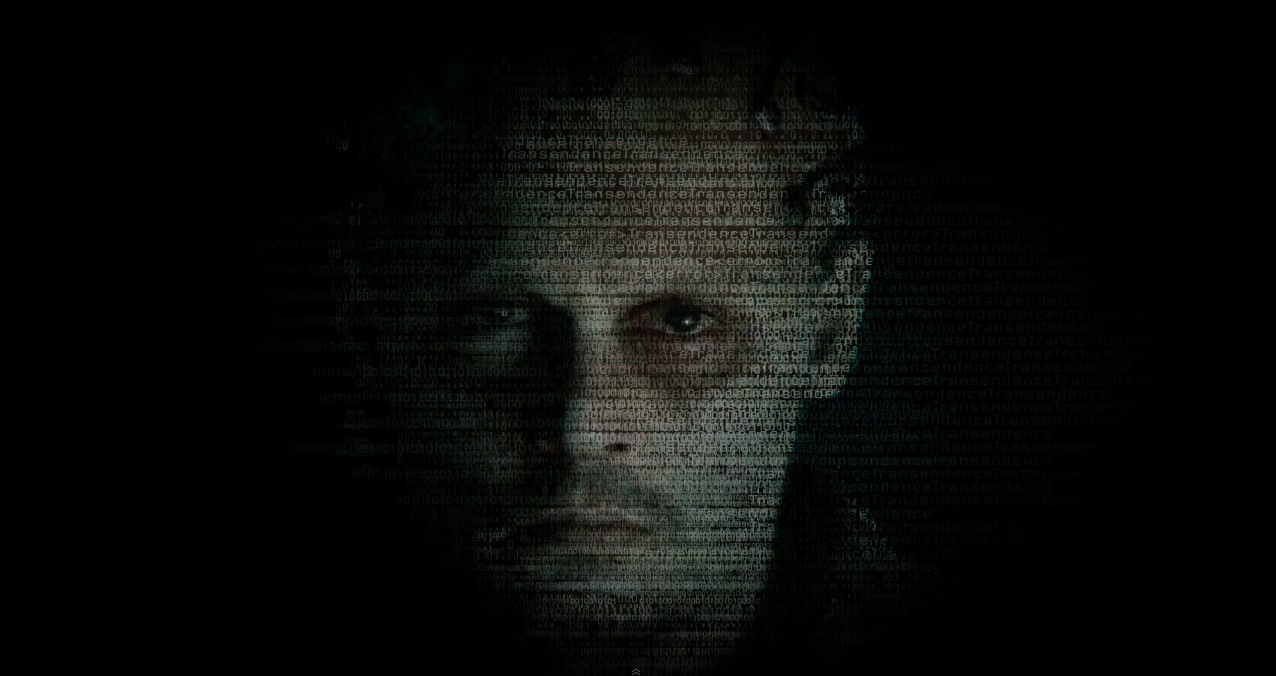
The new Johnny Depp film “Transcendence” will please those who think their cell phones are spying on them while their computers secretly plot to rule the world. Technophobes will find much to like in this high tech thriller—which speaks of “the unstoppable collision between mankind and technology”—but how about those of us who don’t believe in Hard drive Horror?
Depp plays Dr. Will Caster, a bespectacled (so you know he’s smart) scientist whose pet project is an Artificial Intelligence device. It will be, he says, “a sentient machine that will quickly overcome the limits of biology; in a short time, its analytic power will become greater than the collective intelligence of every person born in the history of the world.”
In other words it’s a self-aware computer with feelings and the combined intelligence of all humanity. “Some scientists refer to this as the Singularity,” he says. “I call it Transcendence.”
Call it what you will, but when R.I.F.T. (Revolutionary Independence From Technology) extremists try to end the project by ending Caster with a radiation laced bullet they open the door to a new, dangerous phase of the experiment. As he lay dying his thoughts, knowledge and memories are downloaded into his Artificial Intelligence machine, creating a high tech Frankenstein, only with a better vocabulary.
With binary code coursing through his veins instead of blood, Caster has now transcended, but his wife Evelyn (Rebecca Hall) and best friend Max (Paul Bettany) are left with a conundrum as the scientist becomes more and more advanced. Is this the dawn of a more advanced age or a techno terror controlled by a power mad ghost in the machine?
“Transcendence” asks some interesting questions. Can technology provide some sort of life after death? Does artificial intelligence offer more promise or peril? How much humanity can a computer program possess? Is “Her” a better movie about love in the computer age?
The questions are interesting and might have been thought provoking if “Transcendence” was a better movie. Director Wally Pfister (best known as Christopher Nolan’s DOP of choice) and screenwriter Jack Paglen tackle big questions head on, but in the most perplexing of ways. Weird tonal shifts from sci fi to cyber love to techno terrorism make for a drearily paced film. Add to that unclear character motivations—MILD SPOILER ALERT: exactly who’s side is Max on?—and an underdeveloped love story and you’re left with a film that brims with promise but underwhelms.
So too does Johnny Depp. You have to cut him some slack because for 90% of the film he only appears on computer screens, doing his best HAL impression, but he seems to have checked out long before his character does. Hall and Bettany do some soulful work, but are hampered by a love story that is more about code than contact.
“Transcendence” has style, and it should, Pfister (who used DOP Jess Hall on this film) is a gifted shooter who gave us one of my favorite shots of recent years—The Joker hanging out of the cop car in “The Dark Knight,” surrounded by blurred lights and city scape. Given the choice I’d choose to watch that thirty seconds again and again over spending one more minute in the lackluster world of “Transcendence.”
A break from familiar surroundings can do a body good. So it is with Woody Allen who spent thirty years making films in New York City before decamping to Europe. Just as Martin Scorsese won his first Oscar when he deserted Manhattan for the Boston location of The Departed and Spike Lee made his most interesting film in years with When the Levees Broke: A Requiem in Four Acts, his documentary set in New Orleans, Allen seems to have been reinvigorated by a change in scenery. Set in Spain Vicky Christina Barcelona doesn’t exactly hit Annie Hall heights, but does mark a high point for Allen after a long dry patch.
The movie begins with two girlfriends, Vicky (Rebecca Hall) and Cristina (Scarlett Johansson), on summer vacation in Spain. They’re best of friends but have very different outlooks on life. Vicky is a straight-laced New Yorker, set to marry her rich fiancée and settle in to a comfortable life in a big house in Connecticut. Cristina is a sexually audacious free spirit, still trying to find herself. “I don’t know what I want,” she says, “I only know what I don’t want.” The young Americans meet an intriguing painter (Javier Bardem) who woos them both as he tries to deal with his residual feelings for his passionate but slightly loony ex-wife (Penelope Cruz).
Despite the sun drenched setting—the film was shot on beautiful locations in Spain—Vicky Christina Barcelona still feels like a Woody Allen film. Like many of his past movies it deals with complicated relationships and the nature of love framed by a jaunty jazz score—this time with a Spanish flair—strong situational humor and good performances by the ensemble cast.
Its clear Allen loves Scarlett Johansson. In this, their third film together, his camera lovingly strokes her face, luxuriating in close-ups that adoringly fill the screen. Her character is the catalyst of all the action, the pivot on which the movie spins and like many of his muses from the past—Mia Farrow, Diane Keaton—in Vicky Christina Barcelona he pushes her to reveal previously unseen talent. Her Cristina is a complicated character—confused and quirky, she’s searching for happiness in her surroundings and in herself. It’s Johansson’s best performance since Lost in Translation.
Another of the film’s pleasures is the pairing of Bardem and Cruz as the star crossed, but tempestuous ex-lovers. As a couple who “are meant for one another and not meant for one another” they have great chemistry and sparks fly in their scenes.
The film isn’t perfect. An annoying voice over is overused and a “Speak English” gag gets tired very quickly, but overall there is more good than bad.
For me Woody Allen’s most successful movies have frequently had women’s names in their titles and while Vicky Christina Barcelona isn’t a classic like Hannah and Her Sisters and Annie Hall it is a welcome return to form after last year’s catastrophic Cassandra’s Dream.
“Closed Circuit” has most of the makings for a good thriller. There’s MI5 spooks, double-dealing, corruption, an attractive cast and ripped from the headlines style story about overreaching security in the age of terror and information. What it lacks are the thrills.
Eric Bana and Rebecca Hall are Martin Rose and Claudia Simmons-Howe, lawyers and ex-lovers who find themselves in the crosshairs when their defense of Farroukh Erdogan (Denis Moschitto), a suspected terrorist, uncovers evidence that could cause a national scandal. Rose represents Erdogan in open court, while she is a special advocate whose business all happens behind closed doors.
They’re not supposed to communicate or have any contact, but as the case heats up, are forced to work together in order to survive.
In its rush to get to the climax—which is actually twisty-and-turny enough to be interesting—“Closed Circuit” blasts through plot details, not giving us any reason to care about the characters.
Like all good stories of spy huggermuggery, the movie is stylish looking, but beneath it’s slick surface there isn’t enough to keep us interested.
Which brings me to its male star. Once again Bana proves to be a handsome cipher—he’s a good-looking actor but as dull as dishwater. Hall has charm to burn in an underwritten role but sparks don’t exactly fly between these two, despite their apparent fondness for one another.
“Closed Circuit” could have been a comment on the British legal system’s use of closed sessions following the July 7, 2005 London bombing and who determines what information the public has a right to know but instead attempts and just barely succeeds in telling a much simpler story.