“What’s in a name?” Shakespeare asked in “Romeo and Juliet. “That which we call a rose by any other name would smell as sweet.” True that, but at the movies a name can make or break a film.
“Anthropoid” is the obscure title of a new thriller starring Jamie “Fifty Shades of Grey” Dornan and Cillian Murphy as soldiers who try and assassinate SS-Obergruppenführer Reinhard Heydrich. In real life their operation was called Operation Anthropoid, but in reel life the title sounds like a sci fi story. Will the title resonate with anyone who isn’t a World War II aficionado?
Set in 1942 Dornan and Murphy play Czechoslovakian operatives Jan Kubiš and Josef Gabčík who return to Nazi-occupied Prague to kill Heydrich, one of the main architects of the Holocaust. The pair hide out with a family, where the fetching daughter Marie (Charlotte Le Bon) catches Jan’s eye, while her feisty friend Lenka (Anna Geislerová) bonds with Josef personally and in sympathy with his dangerous mission. Their best laid plans are turned upside down, and pushed ahead a few days, when Heydrich’s schedule changes. Rushed, the plan (MILD SPOILER) does not quite go as planned and the men and their compatriots are forced to go into hiding in the basement of a local church as the Nazis mount a massive manhunt.
Much of “Anthropoid” is spent with Jan and Josef as they make their way to Prague and plan the assassination. Unfortunately director Sean Ellis’s attempts to personalize the heroic tale fall flat, with good actors doing bad accents and a stultifying pace that sucks much of the excitement out of what should have been a volatile, dramatic situation. It’s only after the assassination attempt that the character work of the first hour pays off. It’s a shame Ellis couldn’t spread the story’s intensity around a little more evenly.
In the Heart of the Sea features less of Chris Hemsworth than we’ve seen on screen before. He’s in virtually every scene, but for much of the film the usually bulked up Thor star is set adrift in a raft, starving and physically much less imposing than usual.
The movie is an old-fashioned whale of a tale. Literally.
Based on the true story said to have inspired Moby Dick, it’s about whalers battling not only repeated assaults from the one whale who fought back, but also malnourishment and dehydration.
At sea for three months in tiny whaleboats the men are pushed to the edge of sanity, taking drastic steps to survive.
To convincingly play a starving sailor Hemsworth trimmed 33 pounds off his already toned 6’2 3/4” frame.
“My crazy diet would make you pass out from exhaustion,” he said. At certain points he was eating just 500 or 600 calories — that’s less than a combo lunch meal at most fast-food places — in the form of a boiled egg, two crackers and a celery stick a day.
Hemsworth and his underfed cast mates passed away the time with conversations “about our favourite foods and what we would eat when we finished the film.”
The actor says losing that amount of weight isn’t something he’d like to do again, but adds, “by those final sequences when we were supposed to be exhausted and emotional. We were feeling that way off screen too, so it helped.”
Dramatic weight loss isn’t new — actors have been yo-yo dieting for roles for years — but doctors say rapid body mass reduction can lead to malnutrition, maladies like gallstones and worse. In other words, as Christian Bale who dumped 60 pounds for his role in The Machinist says, “It ain’t great for your health.”
Still, actors take on dramatic diets to aid in their dramatic work. Anne Hathaway dropped 25 pounds by food deprivation and exercise to make Les Miserables while Matthew McConaughey survived eating only Diet Coke, egg whites and a piece of chicken a day to play AIDS patient Ron Woodroof in Dallas Buyers Club. According to The Playlist he stopped dieting when “people stopped asking if he was all right and started suggesting he seek help.”
Just as common are actors who gain weight. Russell Crowe gained 63 pounds to play a CIA bigwig in Body of Lies, George Clooney gained 35 pounds for Syriana and Renee Zellweger gained 30 pounds for Bridget Jones’s Diary, lost it, only to regain it for the sequel.
Jared Leto who lost 40 pounds to play Rayon in Dallas Buyer’s Club, gained 67 pounds for the film Chapter 27 by drinking melted pints of chocolate Haagen Dazs ice cream mixed with olive oil and soy sauce “to get me bloated even more.”
Why do actors alter their bodies? Some call it dedication while cynics suggest it’s an easy Oscar. Physical transformations (plus acting talent) brought Robert DeNiro, Charlize Theron and McConaughey to the winner’s circle.
But some actors have sworn off manipulating their weight. Jim Carrey turned down a role in the Three Stooges biopic that would have required him to gain 40 to 50 pounds and Tom Hanks blames gaining and losing weight for roles with him developing Type 2 diabetes.
“I’ve talked to a number of actors who have gained weight for roles and — just out of the sheer physical toll on one’s knees and shoulders — no-one wants to do it again,” he told the BBC.
“In the Heart of the Sea” stars the man who plays Thor, another guy who was Batman villain Scarecrow and ‘Mad-Eye’ Moody from the “Harry Potter” series but it’s not aimed at the comic book crowd. Based on a the best-selling Nathaniel Philbrick novel of the same name, it’s a retelling of the true events that inspired one of the literature’s greatest novels, Moby Dick.
The story begins with Herman Melville (Ben Whishaw) offering inn owner Thomas Nickerson (Brendan Gleeson) three months room and board for one night of conversation about a terrible whaling disaster. As a young man Nickerson’s first seafaring job saw him sail out of Nantucket aboard the Essex. Crewed by Captain George Pollard, Jr. (Benjamin Walker), first officer Owen Chase (Chris Hemsworth) and second officer Matthew Joy (Cillian Murphy), their mission is to reach the Pacific Ocean and harvest 2000 barrels of whale oil.
Their journey leads them to 1000 leagues along the equator, a place where, they are warned, “wales go to hide from men.” There are whales aplenty, but soon the tables are turned and the hunters become the hunted as a “demon whale, 100 feet long, white as alabaster,” attacks the Essex, destroying the ship leaving the crew a drift in small whaleboats.
The ship gone, the remaining crew attempt to sail to South America battling not only repeated assaults from the whale, but also starvation and dehydration. At sea for three months the men were pushed to the edge of sanity as they took drastic steps to survive.
“In the Heart of the Sea” feels like an old-fashioned whale-of-a-tale. Big strapping men battle nature, drip testosterone, reinvent sushi (I guess you’ll eat almost anything when you’re adrift) and drink grog. The only thing missing is Errol Flynn.
Director Ron Howard does a good job of respecting the power of the sea, effectively showcasing the brutal payback from Mother Nature when the Essex sail too close to a storm. It’s too bad then, later, when the whale is using the Essex as a ping-pong ball, the movie isn’t nearly as intense or exciting. By that point it’s a horror movie with the whale as Freddie Kruger and the crew as scared-but-determined teens trying to stay alive. The whale is menacing due to its size but it’s barely a character, more a malevolent force but Jason Voorhees had more personality than this leviathan.
At the same time it’s hard to view the sailors as victims when they have been spearing the whales and scooping oil from inside the beast’s heads. So it feels like a lose, lose situation where you don’t care much about the creature or the sailors.
“In the Heart of the Sea” is a handsomely mounted film, just not an exciting one.
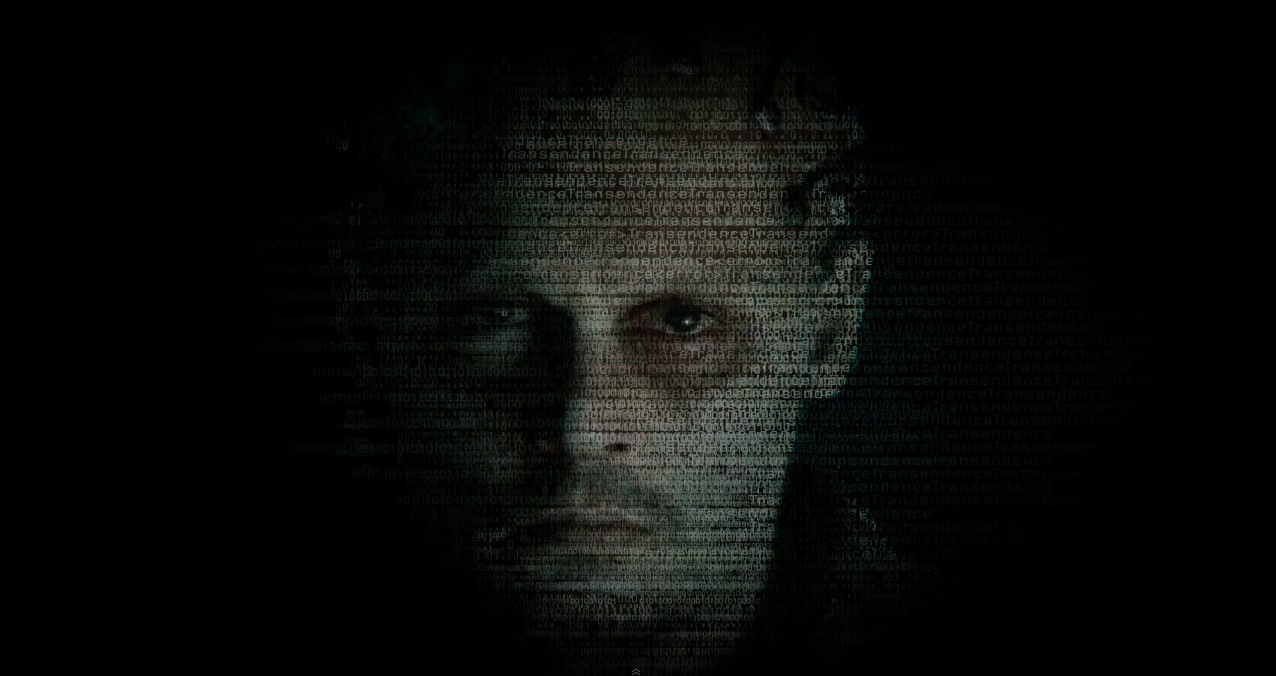
The new Johnny Depp film “Transcendence” will please those who think their cell phones are spying on them while their computers secretly plot to rule the world. Technophobes will find much to like in this high tech thriller—which speaks of “the unstoppable collision between mankind and technology”—but how about those of us who don’t believe in Hard drive Horror?
Depp plays Dr. Will Caster, a bespectacled (so you know he’s smart) scientist whose pet project is an Artificial Intelligence device. It will be, he says, “a sentient machine that will quickly overcome the limits of biology; in a short time, its analytic power will become greater than the collective intelligence of every person born in the history of the world.”
In other words it’s a self-aware computer with feelings and the combined intelligence of all humanity. “Some scientists refer to this as the Singularity,” he says. “I call it Transcendence.”
Call it what you will, but when R.I.F.T. (Revolutionary Independence From Technology) extremists try to end the project by ending Caster with a radiation laced bullet they open the door to a new, dangerous phase of the experiment. As he lay dying his thoughts, knowledge and memories are downloaded into his Artificial Intelligence machine, creating a high tech Frankenstein, only with a better vocabulary.
With binary code coursing through his veins instead of blood, Caster has now transcended, but his wife Evelyn (Rebecca Hall) and best friend Max (Paul Bettany) are left with a conundrum as the scientist becomes more and more advanced. Is this the dawn of a more advanced age or a techno terror controlled by a power mad ghost in the machine?
“Transcendence” asks some interesting questions. Can technology provide some sort of life after death? Does artificial intelligence offer more promise or peril? How much humanity can a computer program possess? Is “Her” a better movie about love in the computer age?
The questions are interesting and might have been thought provoking if “Transcendence” was a better movie. Director Wally Pfister (best known as Christopher Nolan’s DOP of choice) and screenwriter Jack Paglen tackle big questions head on, but in the most perplexing of ways. Weird tonal shifts from sci fi to cyber love to techno terrorism make for a drearily paced film. Add to that unclear character motivations—MILD SPOILER ALERT: exactly who’s side is Max on?—and an underdeveloped love story and you’re left with a film that brims with promise but underwhelms.
So too does Johnny Depp. You have to cut him some slack because for 90% of the film he only appears on computer screens, doing his best HAL impression, but he seems to have checked out long before his character does. Hall and Bettany do some soulful work, but are hampered by a love story that is more about code than contact.
“Transcendence” has style, and it should, Pfister (who used DOP Jess Hall on this film) is a gifted shooter who gave us one of my favorite shots of recent years—The Joker hanging out of the cop car in “The Dark Knight,” surrounded by blurred lights and city scape. Given the choice I’d choose to watch that thirty seconds again and again over spending one more minute in the lackluster world of “Transcendence.”
Director Rodrigo Cortés compares watching his new paranormal thriller Red Lights to taking in a magic show.
“In the beginning you feel comfortable when you see the magician moving his hands,” he says. “You know what’s happening; you know where the card is. Then little-by-little things become harder and you don’t know exactly where he hid the card, so you look closer. From that moment on you start not trusting him until you have the final revelation of the magic trick.”
The film is an exploration of “where our beliefs come from,” he says, “which I find fascinating. It’s about human nature and contradiction and ambivalence.”
It was that magical complexity that drew star Cillian Murphy to the story of two paranormal debunkers and their greatest challenge, psychokinetic superstar Simon Silver (Robert De Niro).
“I enjoy doing films that are intelligent or presuppose that the audience is intelligent,” the Dark Knight star says.
Murphy, who became an atheist after researching his role as a nuclear physicist for the sci fi film Sunshine—“That was a powerful time for me,” he says.”—adds the experience of immersing himself into Cortés’s preternatural story didn’t change his world-view.
“There is a thematic crossover occasionally between the two films,” he says, “but my position has remained the same since [Sunshine]. This movie hasn’t changed that in any way.
“We have to be, as actors, open, blank canvases and not transpose our beliefs or morals or lack of them on a character.”
Despite having previously explored philosophical themes on screen in movies like Inception and In Time the Irish born actor says he doesn’t go out of his way to find scripts that contain metaphysical motifs.
“I have no plan or strategy,” he says. “When a script comes in, if it’s good, great. If it’s not good, I don’t do it. That is how I have tried to operate. I try and not repeat myself and always have a challenge.
“I’ve had a lot of questions regarding a thread between various roles or various types of films and it’s entirely random. I’ve never met any actor who’s had a plan or a strategy. ‘In five years time I’m going to have done this and this and worked with this guy.’ You can’t do it.”
He not only looks to challenge himself, but the audience as well. The beauty of the film,” he says, “is that confounds your expectations.”
“Red Lights,” a new paranormal thriller starring Signorney Weaver, Robert DeNiro and Cillian Murphy, is review proof. I saw this because I can’t tell you the plot twist that pushes this movie from the realm of the ridiculous into the land of the ludicrous without spoiling the whole premise.
Dr. Margaret Matheson (Sigourney Weaver, who knows a thing or two about ghostbusting) and Dr. Tom Buckley (Cillian Murphy) are college professors who specialize in debunking psychic phenomenon. Faith healers are sent to prison and séances are demystified but their orderly, science based world is turned upside down when celebrity psychic Simon Silver (Robert DeNiro) comes out of retirement. Imagine Uri Gellar with dark side and you get the picture. Silver was a huge star in the 70s but retired when it was suggested his powers caused a massive heart that killed one of his harshest critics. Matheson wants nothing to do with Silver but Buckley becomes obsessed with getting to the truth of the matter and discovering, once and for all, if Silver has extraordinary powers or is simply a talented magician who takes advantage of the gullible.
“Red Lights” doesn’t make much sense. Writer/director Rodrigo Cortés tries to play both sides of the psychic debate, simultaneously debunking and supporting the idea of extrasensory ability to an extent where the film loses any point of view it might have had. Straddling the fence on the subject at the heart of the story only serves to impale the tale on a mushy middle fence post, nullifying the story’s power.
You’ll only notice the wishy-washy statement of purpose, however, if you can get past the uneven performances. Murphy, a talented actor who delivered a powerhouse performance in “The Wind That Shakes the Barley,” flounders here. His off-balance performance simmers one second and boils the next. It’s strange, (and largely ineffective), work, which I suppose, was meant to add to the otherworldly feel of the film but instead only seems as nonsensical as the story.
Weaver and Elzabeth Olsen emerge largely unscathed because their roles are underwritten and underplayed, but DeNiro has the opposite problem. Theatrical and pretentious, the only uncanny thing about his portrayal of psychic Silver is that he took the role at all.
With its reliance on old-school narrative tricks—explaining the story through news broadcasts—and a muddy point-of-view “Red Lights” is a movie that is as confounding as the subject it portrays.
The Wind That Shakes the Barley, the new film from director Ken Loach, does a remarkable thing. It puts a human face on a complicated political situation and makes hundreds of years of strife understandable and compelling.
Set in county Cork in the early 1920’s The Wind That Shakes the Barley is essentially the story of two brothers who start off as allies and end up as enemies. Damien O’Donovan (Cillian Murphy) is a young doctor about to leave his native Ireland to intern at a prestigious English hospital. His brother Teddy, a fierce nationalist and activist with a deep hatred of the English doesn’t want him to go and tries to convince him to stay and fight for a free Ireland.
Damien isn’t politically active, but a series of events change his mind. After witnessing the brutality of the Black and Tans, the British army who guarded Britain’s interests in Ireland, firsthand as they kill an Irish lad for refusing to speak English and beat a train conductor for refusing them entry on his vehicle, he joins his brother in the Irish Republican Army.
They work together for a time, until the Anglo-Irish Peace Agreement, which formed the Irish Free State as a dominion within the British Empire, leaves them on different sides of the ideological fence. Teddy sides with the Free Staters who believe in compromise with the English, while Damien sticks with the IRA’s goal of a totally autonomous Ireland.
The film, with it’s brutal depiction of the English Army has already stirred up controversy since the film won the Palme d’Or at last year’s Cannes Film Festival. In Britain right-wing newspaper columnists have compared director Ken Loach to both propagandist Leni Riefenstahl and Hitler and have suggested that the veteran filmmaker should leave the country if he hates it so much. Loach’s film likely won’t garner that kind of hysterical response when it opens here today, and nor should it.
The film doesn’t simply condemn the English, it showcases the plight of a suppressed people who wanted something very basic—the right to govern themselves. The film is uncompromising, showing brutal, ugly and realistic violence on both sides, but also speaks to conflict outside of Ireland. The depiction of torture in the film brings to mind Abu Ghraib and Guantànamo, suggesting that not much has changed in the intervening 85 years.
The Wind That Shakes the Barley is a well-acted, well-directed film which suggests that freedom isn’t always free.