SYNOPSIS: Christopher Nolan’s adaptation of Homer’s ancient Greek epic “The Odyssey,” now playing in theatres, sees Odysseus, the Greek king of Ithaca, use cunning and courage to defeat mythical beasts on his ten-year journey home after the Trojan War. “After years of war, no one could stand between my men and home. Not even the gods.”
CAST: Matt Damon, Anne Hathaway, Tom Holland, Robert Pattinson, Lupita Nyong’o, Samantha Morton, Zendaya, Charlize Theron. Directed by Christopher Nolan.
REVIEW: Large in scale, but personal in nature, “The Odyssey” is an epic tale of what it means to be human. A study of survival, homecoming and family, it breathes the same air as old school Hollywood epics like “Ben-Hur” and “Spartacus” but feels undeniably modern, blending bravado filmmaking with dynamic, psychologically dense storytelling.
Director Christopher Nolan alters story elements from the original epic poem but keeps the core narrative and spirit of Homer’s 2,775-year-old original alive. That includes the ancient text’s nonlinear “in medias res” (starting in the middle of the action), style, flashbacks and parallel storylines. It’s familiar ground for Nolan, whose films “Memento,” “Inception,” “Dunkirk” and “Tenet” tinkered with time and works effectively here, helping to build suspense that pays off in the film’s final act.
The story begins after the fall of Troy. On his ten-year maritime journey home Greek hero King Odysseus (Matt Damon) encounters mythical monsters, like the one-eyed Cyclops, the alluring-but-deadly Sirens, and Circe, a sorceress who turns his men into swine.
He returns to find his kingdom in shambles, his palace overrun with mobs of suitors pressuring his wife Penelope (Anne Hathaway) into marriage while son Telemachus (Tom Holland) searches for his lost father. “You’re pining for a daddy you didn’t even know,” taunts Antinous (Robert Pattinson. “Like some sniveling bastard.”
Reclaiming his throne and family will test Odysseus’s cunning and courage in ways not even the gods could.
Among the first things you’ll notice about “The Odyssey” is a lack of antiquated language. Purists may rankle as Telemachus calls Odysseus “dad,” familiar, modern curse words are placed in the soldier’s mouths and Odysseus yells, “Let’s go,” instead of the Homeric “draw back” or “give way,” but the vernacular, in the style of Emily Wilson’s lauded modern translation, is accessible, without the theatrics of vintage sword and sandal epics.
It takes some getting used to, and for some will break the immersive historical effect of the larger-than-life IMAX images—this is the first feature film shot entirely on IMAX 70mm film cameras—but once the anachronistic language settles, it lends a naturalism to a story that features fantastical creatures like a Cyclops and witches. Although, it must be said that the second time Odysseus hollers, “Let’s go,” as a call to retreat, it borders on parody, as if the king and his men are racing away from a Scooby-Do villain and not giant, man-eating Laestrygonians.
The topline cast, Matt Damon, Anne Hathaway, Robert Pattinson, and Tom Holland deliver topflight work, but Nolan is the film’s star.
He crams a lot into the film’s episodic, three hour run time. After a slow start, the action picks up with a heart-pounding scene, the first of two that can comfortably be described as horror.
In search for food Odysseus and his crew land on an island presided over by a 60-foot one-eyed giant shepherd (Bill Irwin). What begins as a hunt turns into a desperate attempt to survive as the Cyclops defends his flock after an ambush in a claustrophobic cave. Nolan stages the scene largely without the use of CGI, instead opting for a massive puppet with voice and movements provided by Irwin. Nolan is notoriously allergic to CGI, but here using practical effects is absolutely the right decision. It feels organic, and not like Damon and the other actors are staring at a tennis ball to get the right eyeline. It’s the Ray Harryhausen effect, the Cyclops’s tangible nature brings a sense of scale that adds to the terror of the scene.
The film’s most memorable moments reveal themselves in a tour de force body horror sequence. On another island, and still in search of food, Odysseus and his men encounter Circe (Samantha Morton), a witch and goddess who turns unwanted visitors to her home into animals. Once again, using practical effects, alongside clever camera placement by cinematographer Hoyte van Hoytema, the horror is vividly brought to life as Circe transforms them. Beautifully choreographed, it is as impressive as any of Nolan’s large-scale battle sequences.
A bonus is Morton’s detailed, humanizing work as Circe, a character generally played as a villain or seductress. Here she’s more emotionally complex, almost sympathetic.
And then there’s the claustrophobic dread of the Trojan Horse sequence that sees Odysseus and soldiers inside the wooden horse, placed on top of one another like Tetris pieces. The Trojan Horse is the most famous example of Odysseus’s cunning, but Nolan visualizes it in a way that shows the cramped reality of his plan.
Ultimately, “The Odyssey” is a bit of a Trojan Horse itself. It’s a big, flashy package stuffed with surprises. Nolan delivers on the spectacle you expect, but he is more concerned with what’s inside, the unexpected attack of thematic discussions on intergenerational trauma, obsession, grief and the psychological toll of war.
Nolan fans know what to expect. His trademark murky audio is in place, occasionally making the dialogue difficult to understand and, at 2 hours and 50 minutes, it’s a bladder bursting effort, but despite the knocks, when “The Odyssey” is great, which is often, it’s exhilarating filmmaking.
“Large in scale, but personal in nature, “The Odyssey” is an epic tale of what it means to be human. A study of survival, homecoming and family, it breathes the same air as old-school Hollywood epics like “Ben-Hur” and “Spartacus” but feels undeniably modern, blending bravado filmmaking with dynamic, psychologically dense storytelling…” Read the whole thing HERE!
SYNOPSIS: Based on Peter Brown’s award-winning, #1 New York Times bestseller of the same name, “The Wild Robot,” a new animated film starring the voices of Lupita Nyong’o and Pedro Pascal, and now playing in theatres, features a shipwrecked robot named ROZZUM unit 7134— “Roz” for short—who develops a parental bond with an orphaned gosling. “A ROZZUM always completes its task,” she says.
CAST: The Wild Robot Lupita Nyong’o, Pedro Pascal, Kit Connor, Bill Nighy, Stephanie Hsu, Mark Hamill, Catherine O’Hara, Matt Berry, Ving Rhames. Directed by Chris Sanders.
REVIEW: The animated “The Wild Robot” will put you in the mind of “The Iron Giant,” “E.T. the Extra-Terrestrial” and “WALL-E,” but carves out its own, unique, rewarding space. Brimming with compassion, humor and kindness, it’s an exciting adventure story with a big, beating heart.
It’s a deceptively simple film. Roz’s sleek character design and the unpretentious premise of finding your logical, not necessarily biological family, are brought to life by the power of a great voice cast, inventive animation and director Chris Sanders’s vivid imagination.
Roz (voiced by Lupita Nyong’o) is a bigger BB-8 style robot, mechanical and, when we first meet her, mission driven with no visible signs of compassion behind her crystal blue electronic eyes. At first the matriarchal relationship with the gosling named Brightbill (voice of Kit Connor) is a job, nothing more. “A ROZZUM always completes its task,” she says.
But as time passes a warmth appears in her eyes and voice as Nyong’o reveals the bot’s hidden humanity. She’s less Siri and more a mother. “Sometimes to survive,” she says, “we must become more than we were programmed to be.”
Nyong’o does the heavy lifting, shifting Roz from automaton to sentient being, but she is supported by a terrific cast.
Catherine O’Hara brings comedic relief as frazzled possum mother Pinktail. As Fink, a fox who undergoes a transformation from predator to patriarchal figure, fan favorite Pedro Pascal brings sly humor and, as robot Vontra, Oscar nominees Stephanie Hsu is the icy-but-wacky voice of authoritarianism.
“The Wild Robot” is a wonderful film for the whole family. It has humor, adventure and uplift, but mostly, it has heart and the makings of a classic. “Was this task completed to your satisfaction?” Roz asks several times in the film. The answer is an emphatic yes.
The world was shocked when Chadwick Boseman passed away in 2020 at the tender age of forty-four, just two years after finding superstardom as King T’Challa in “Black Panther.” His passing left the future of the “Black Panther” franchise in flux. Would it be possible to make a “Black Panther” movie without the Black Panther?
The second film in the series, “Black Panther: Wakanda Forever,” answers the question. The new film has all the action you expect from a blockbuster Marvel movie, but also acts as a eulogy of a sort to the late actor and his most famous character.
“Wakanda Forever” begins on a sombre note, acknowledging the passing of T’Challa. “Your brother is with the ancestors,” Queen Ramonda (Angela Bassett) tells daughter Shuri (Letitia Wright). After a grand funeral fit for a king, director Ryan Coogler moves the action forward by one year.
Queen Ramonda, still healing from the wound left by T’Challa’s passing, is forced to defend her kingdom from international poachers intent on stealing their most valuable resource, a rare metallic ore with energy-manipulating properties called Vibranium. “We mourn the loss of our king,” she informs the United Nations, “but don’t think for a moment that Wakanda has lost its ability to protect her resources.”
Meanwhile, the U.S. military discovers a cache of Vibranium, previously thought to only exist in Wakanda, at the bottom of the ocean. But before you can say “Wakanda Forever,” the expedition is attacked by sea people, led by Namor (Tenoch Huerta), “feathered serpent god” of an ancient race of teal-skinned underwater people who look like they could have been extras in James Cameron’s “Avatar.”
Namor’s kingdom of Talokan also has Vibranium, and now that Wakanda has made the ore’s awesome power public knowledge, his nation is under threat from people who want what they have. That puts Wakanda at odds with an enemy unlike any they’ve fought before, an army outfitted with Vibranium weapons.
With a 2-hour-and-41-minute runtime, “Black Panther: Wakanda Forever” takes on a lot. It’s a study in loss and grief mixed with big time Marvel action set pieces. In addition, Coogler and co-screenwriter Joe Robert Cole have woven an indictment of colonialism into both the history of Wakanda and the Mayan-influenced backstory of Talokan. It makes for rich subtext in the storytelling, even if the movie occasionally has a rough time balancing all its elements.
If those missteps can be forgiven, its simply because “Wakanda Forever” isn’t a typical Marvel film. It exists outside Marvel Cinematic Universe. That means there is no connection to the other Avengers films, and it is better for it. Instead of feeling as if it is a puzzle piece of a larger picture, it is its own thing, a movie able to walk a different path and get away from the increasingly rigid structures of the late period MCU movies. The mix of the intimate and epic is what makes this movie work, both as a tribute to Boseman and as blockbuster entertainment.
The ensemble cast is very strong, but it is Bassett who leaves a mark. As Queen and T’Challa’s mother, she is majestic and melancholy, a woman attempting to balance duty with grief. “I am Queen of the most powerful nation in the world,” she says in anguish, “and my entire family is gone. Have I not given everything?” It’s a powerful moment and a poignant exploration of the weight that comes with loss coupled with obligation.
“Black Panther: Wakanda Forever” has a few draggy moments, but its determination to be its own thing makes for compelling viewing.
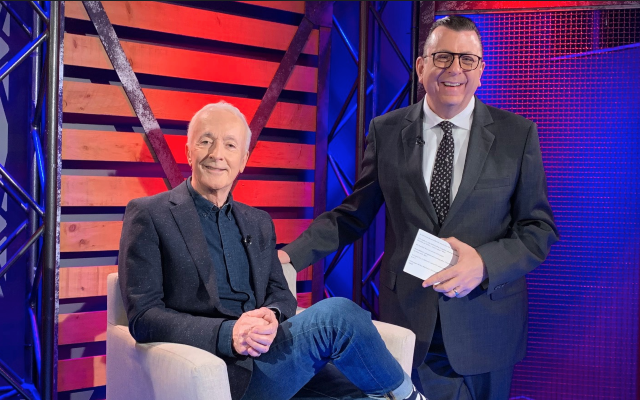
On an encore presentation of “Pop Life” on June 13, 2020 we welcome the droid you’ve been looking for, Anthony Daniels. As C-3PO he is the only actor to have appeared in all of the episodic films in the series, as well as many of its spin-offs, including television shows, video games and radio serials. On this twelfth episode of season five of “Pop Life,” he talks about his first stage appearances, the uncomfortable nature of the gold suit that made him famous and how he once felt like a “secret outcast” from the rest of the cast. Then the “Pop Life” panel, Marvel, DC, Lucasfilm and Hasbro artist Ken Lashley, CTV NewsChannel anchor and “Star Wars” super-fan Todd Van Der Heyden and Roger Christian, the Academy Award winning Set Decorator and Production Designer for “Star Wars”–he created the lightsaber and R2D2 and decided to put dice in the film as a nod to Han Solo gambling–discuss why “Star Wars” is still important forty two years after its initial release.
Film critic and pop culture historian Richard Crouse shares a toast with celebrity guests and entertainment pundits every week on CTV News Channel’s exciting talk show POP LIFE.
Featuring in-depth discussion and debate on pop culture and modern life, POP LIFE features sit-down interviews with celebrities from across the entertainment world, including rock legends Sting and Meat Loaf, musicians Josh Groban and Sarah Brightman, comedian Ken Jeong, writer Fran Lebowitz, superstar jazz musician Diana Krall, stand-up comedian and CNN host W. Kamau Bell, actors Danny DeVito and Jay Baruchel, celebrity chefs Bobby Flay and Nigella Lawson, and many more.
It has taken forty-two years but the story of the Resistance, begun in “Star Wars: A New Hope” comes to a conclusion in “Star Wars: The Rise of Skywalker.” With an amped-up story, featuring flying Stormtroopers and much talk of destiny, confronting fear and inner turmoil, the ancient conflict between the Jedi and the Sith promises to deliver big box office, but will it satisfy old school fans who have waited a lifetime for the film’s final showdown?
The events of “Episode VII: The Last Jedi” and the passing of Carrie Fisher presented challenges that helped shape the plot of the new film, but you’ll get no spoilers here. I will say that old footage of Fisher as General Leia Organa from “The Force Awakens” appears alongside new work from Darth Vader’s grandson, Kylo Ren (Adam Driver), Jedi apprentice Rey (Daisy Ridley), Stormtrooper-turned-Resistance-fighter Finn (John Boyega), Resistance pilot Poe Dameron (Oscar Isaac), Chewbacca (Joonas Suotamo) and the First Order’s General Hux (Domhnall Gleeson).
Add to that new characters like diabolical First Order Allegiant General Pryde (Richard E. Grant), Spice Runners of Kijimi leader Zorii Bliss (Keri Russell) and returning faves Lando Calrissian (Billy Dee Williams) and Mark Hamill’s Luke Skywalker (in what form I will not say) and you have a blended “Brady Bunch-style” family in space. That is, a complicated intergalactic family dynamic in which not everyone sees eye to eye.
Tasked with wrapping the Skywalker Saga up in a pretty bow director J.J. Abrams has made a film that is part fan service—many familiar faces come along for the ride—and part homage to the Original Trilogy. He replaces subtext with action, rehabilitates one character’s tarnished, cranky-old-man reputation (NO SPOILERS HERE) and essentially delivers the movie you expect.
Abrams knows there are no do overs on this one. “Do or do not; there is no try,” comes to mind. It is the wrap to one of the most popular and talked-about film franchises of all time. Expectations are high with the possibility of fan backlash ever present. Questions are answered—Rey’s parentage chief among them—quips are thrown, Chewbacca howls and star ships are blasted to Kingdom Come as “The Rise of Skywalker,” for better and for worse, replaces the nuanced take of Rian Johnson’s “The Last Jedi” with the more tried and true Star Wars tale of nature vs nurture and good vs evil.
Jam packed with action and plot, “The Rise of Skywalker” gets bogged down with exposition and tying up loose ends. Worse, it often drifts from the thing that made “Star Wars” great in the first place—the characters. They’re all present and accounted for but are often overshadowed by the whiz bang pacing and over-abundance of story.
Having said that, the film’s final third, the payoff to the Saga, hits several emotional high points. It’s the end of the Saga and, therefore (NO SPOILERS HERE JUST THE FACTS) the final appearances of several members of the original cast. Their exits are handled with sensitivity and should generate a sniffle or two from hard core fans.
The core of the movie is the anguished dynamic between Rey and Kylo. The push and pull between their logical vs biological family commitments is the most compelling part of the story. It also provides for several of the film’s most visually interesting scenes, including a climatic lightsaber battle on the wreckage of the Death Star.
“Star Wars: The Rise of Skywalker” ticks a lot of boxes for fans but—again, no spoilers but be careful—the mythic battle of good vs evil, of finding balance in the Force, that has fuelled the franchise for forty plus years, was really only going to resolve itself in one way. As such the metaphysical struggle is about the journey and not as much about the actual conclusion.
Richard speaks with “Rise of the Skywalker” star Joonas Suotamo about playing the iconic Wookie character Chewbacca, and what it is like wearing the fur suit for ten hours a day.
Director Jordan Peele follows up the Oscar-winning success of his social thriller “Get Out” with a trip to the “Twilight Zone.” No, not his reboot of the famous anthology series (that will come to small screens later this year) but to a storyline he says was inspired by an episode of the Eisenhower-era show called “Mirror Image.”
According to Rod Serling’s original opening monologue when look-a-likes torment a young woman, “circumstances assault Millicent Barnes’s (played by “Psycho’s” Vera Miles) sense of reality and a chain of nightmares will put her sanity on a block.”
Peele updates the doppelgänger danger premise but also ups the horror elements to tell the story of a trip gone wrong for the Wilsons, overprotective mom Adelaide (Lupita Nyong’o), goofy dad Gabe (Winston Duke) and young kids Zora (Shahadi Wright Joseph) and Jason (Evan Alex).
On vacation in Adelaide ‘s hometown of Santa Cruz, site of an upsetting incident when she was a child, the young mom is tormented the past. Her attempts to squash the unhappy memories have been unsuccessful and now she is troubled by the fear that something bad will happen to her family if they don’t pack up and head home. “I can’t be here,” she says. “It’s too much. I feel like there’s a black cloud hanging over me and I don’t feel quite like myself.”
Her worst nightmares come true when strange beings in red jumpsuits, carrying scissors, show up in their driveway. The really creepy part? They call themselves the Tethered because they look like each member of the Wilson family. When they invade the house, the horror is kicked up a notch or three. “They look exactly like us,’ says Adelaide. “They think like us. They know where we are. We need to move and keep moving. They won’t stop until they kill us… or we kill them.”
When the family first spies the mysterious family in the driveway Gabe puts on a brave face. “Let’s all stay calm,” he says. But this isn’t the kind of movie where people stay calm. Especially when feral shadow people with a grudge against anyone who grew up in the light are out for revenge. The Wilsons are a nice family confronted by something they could not imagine, let alone control. “How many of anybody are there going to be,” asks little Jason.
Peele proves, as if there was any doubt, that “Get Out” was not a fluke. He skilfully navigates “Us’s” story, establishing the Wilsons as a regular, likable family with a teen daughter prone to rolling her eyes and a father who’s always quick with a dad joke. When the going gets grim Peele uses ingenuity, humour, a creepy kid choral score and some very scary images to add life to what might have been a simple home invasion movie. From the opening scenes in a California carnival to an audaciously choreographed climax, Poole crafts a memorable horror film with a message.
For much of the film it’s the Wilsons against the world but soon the subtext sinks in. The Tethered aren’t exact replicas of the Wilsons, they are the Wilsons if they didn’t have advantages—education, money—and they are here to get what they think they deserve. It’s a gory take on class structure, on the chasm between rich and poor, between those with power and advantages and those without. It’s an outlandish story but the powerful message resonates in Trump era America.
“Us” is given it’s humanity by Nyong’o’s Adelaide. Even when she’s cracking heads with a fireplace poker she has compassion. She is by times a mom, a monster, a victim and the aggressor but never less than compelling. For too long women of colour have been dispensable in genre films. Nyong’o’s deft touch makes one hopeful for more colour-blind casting in the horror and fantasy genres, even if the overall tone of this film is one of hopelessness.
For those who complain that the recent spate of superhero movies aren’t about anything other than bombast and reaching into your wallet, I give you Black Panther. Directed by Ryan Coogler and starring Chadwick Boseman in the title role, it’s a movie that delivers wham-bam action but serves it up with compelling sides of mythology and social awareness.
“Part of my frustration that led me to write,” says playwright of the Tony Award-winning play Eclipsed and Black Panther star Danai Gurira, “was that I didn’t see stories that allowed truths to be told about the continent and about our potential and our power and our dimensionality and our perspective and our personality and our languages. What was really exciting to me was to see all of that embodied in what Wakanda and the Black Panther narrative bring with the African perspective. It is completely unprecedented.”
The film starts with a quick origin story, detailing the introduction of vibranium to the small (fictional) African nation of Wakanda. This mysterious metal is a wonder. Near indestructible, it can absorb kinetic energy and has imbued a Wakandan flower called the Heart-Shaped Herb with a supercharge that gives superpowers when ingested.
Cut to modern day. After his father’s death T’Challa (Boseman) is crowned king but just as he is ordained a rare Wakandan artifact made of vibranium is lifted from a London museum by two very bad men, Ulysses Klaue (Andy Serkis) and Erik “Killmonger” Stevens (Michael B. Jordan).
To retrieve the precious metal, T’Challa, a.k.a. Black Panther, along with spy Nakia (Lupita Nyong’o) and warrior Okoye (Gurira), travel to Korea where the artefact is about to be sold to CIA agent Everett K. Ross (Martin Freeman).
A wild battle leads to a power struggle that may not only compromise the throne of Wakanda but also threaten the safety of the world.
“I loved the idea of being able to enact a nation that was never colonized,” says Gurira, who also plays the katana-wielding Michonne on The Walking Dead. “I grew up in post-colonial Africa. There is a lot of work that goes into reclaiming who you are, how you define your place in the world and what your power potential truly is when you have been colonized.
“One thing that colonized people don’t have is that part of their history that tells them who they would have been had they never been colonized. The beauty of Wakanda is that is shows us something. It’s a celebration. So many things are pulled from actual stories and narratives. The costumes, the language are actually African. It is a celebration of a place that often gets distorted or misrepresented or presented as something deficient, which we all know, Africa is so not.”
Black Panther takes place in a couple of time frames (NO SPOILERS HERE!) but at its heart it is a timely story about social responsibility — a wealthy nation state must confront its role in the world — that pulsates with smart commentary about race and revolution. It takes a well-known comic book character, the first Black standalone superhero in the Marvel Universe, and delivers a movie ripe with subtext. Black Panther is not only capable of fighting the bad guys but is also a vessel for the film’s study of legacy and identity.