Richard sits down with Dean-Charles Chapman and George MacKay, the two stars of the Fist World War epic “1917” to discuss creating the characters and the challenges of the one-shot technique used to film the movie.
SYNOPSIS: At the height of the First World War, two young British soldiers, Schofield (Captain Fantastic’s George MacKay) and Blake (Game of Thrones’ Dean-Charles Chapman) are given a seemingly impossible mission. In a race against time, they must cross enemy territory and deliver a message that will stop a deadly attack on hundreds of soldiers—Blake’s own brother among them.
In an unconscious way Rachel McAdams has been preparing to play Dr. Christine Palmer in Doctor Strange her whole life.
“My mother is a nurse,” says the London, Ontario born actress. “She is a very compassionate kind of nurse and Christine is sort of that way as a doctor. She has excellent bedside manner as opposed to Doctor Strange. I took a page from my mom.
“I’ve been talking to her about it for my whole life. She brought her job home sometimes. I picked it up over the years.”
Doctor Strange, the fourteenth film in the Marvel Universe aims to introduce you to the neurosurgeon, played by Benedict Cumberbatch, who goes from saving lives to saving planets. Trauma surgeon Dr. Palmer is his ex-girlfriend but still a constant in his life, and later, when things get mystical, his anchor to the real world.
“It’s a much less typical love trajectory,” she says of their connection. “I think because we had so few scenes to establish our relationship it was a better jumping off point. We had a lot more subterranean life and a much richer history for the characters.”
In the comic books Christine Palmer is a very different person than the one McAdams brings to life on the screen.
“She is an amalgamation of a couple of characters,” she says. “It gave us a lot of creative freedom. We were inventing something. I kind of looked at the comic books more for the flavour of the world and Doctor Strange himself and less so for my character.”
McAdams’s nurse mother may have helped the actress access the emotional side of playing a doctor, but what about the practical stuff, like tying a suture?
“This great neurosurgeon we had on set with us taught us how to sew up a raw turkey breast,” she laughs. “I guess it’s the closest thing to a real live human being, Poor turkey. Then I used oranges, which were easier to carry in my purse. Better smell too. I also had a fake head to practice on. It was kind of like knitting. I would take the suture stuff around, put it on a light stand while we were shooting and practice. I still have sutures on my doorknobs. Haven’t gotten around to cutting them off yet.
“I was really nervous about it because I thought it was going to take forever but it is just one of those thing that one you get the hang of it it’s kind of fun to do.”
The result of all her work is a movie she calls “an ambitious film on the page that I think ticks a lot of those boxes for people are hoping for when they go see a big, blow-out Marvel film. There’s also a quiet deep emotion that runs through it that may catch people off guard.
“I find it hard to get swept away by a film I am in,” she adds, “because I look at it differently, but I actually jumped at one point in my own scene. My friends were laughing. ‘You knew that was coming!’ I know, but I was wrapped up in it.”
As everybody knows The Avengers exist to save the planet from physical threats like rogue sentient robots and red skulled Nazis. But who protects us from metaphysical danger? Apparently a guy in a crazy cape who looks a lot like Sherlock Holmes.
If you’re not familiar with Stephen Strange, “Doctor Strange,” the fourteenth film in the Marvel Universe introduces you to the neurosurgeon who goes from saving lives to saving planets.
When we first meet Strange (Benedict Cumberbatch) he’s a gifted surgeon, a good-looking mix of ambition, charm and arrogance. When a car accident leaves him with severe nerve damage in his hands, he feels he has lost his best asset. The fingers that one’s free-handed complicated nerve surgery cannot now even hold a pen.
His search for a cure leads him to Jonathan Pangborn (Benjamin Bratt), a paraplegic who regained use of his hands and legs. “You came back from a place there is no coming back from,” says Strange. “I’m trying to find my way back.” Pangborn tells the desperate man of a place in Kathmandu, Nepal where he can experience a spiritual journey of healing.
In Nepul he meets the Ancient One (Tilda Swinton) an immortal Celt and Sorceress Supreme who teaches Strange some weird new tricks. With her guidance and his photographic memory, he quickly learns how to re-orient the spirit to heal the body. He also discovers who to teleport himself form one place to another and control the very fabric of time. Nifty stuff.
His lessons come in handy when Kaecilius (Mads Mikkelsen), a former student, returns to steal a single page of an ancient text. The spell contained on the page would give him a power over time that would make Dr. Who envious. His endgame is to join our world with the Dark Dimension, a place beyond time, thus ensuring life eternal. With the very essence of time at stake can Doctor Strange take a licking, but keep on ticking?
Despite a plot that deals with horology and the metaphysical make-up of the universe, “Doctor Strange” doesn’t take itself too seriously. It’s an origin story, pure and simple, that breaks up the interdimensional gobbledegook with bits of levity. Add to that a running gag with Beyoncé’s “Single Ladies” and some very trippy visuals and you have a movie that feels fresh despite being yet another origin tale.
Cumberbatch’s take on Strange echoes Marvel’s Tony Stark character. He’s arrogant and quick with a line, but where Stark had an air of unpredictability about him, Strange has none. He’s driven by ego and a need to get his life back, not the darker, and more interesting urges that propelled Stark’s world-saving.
Instead the movie focuses on bringing his experience to vivid life. As Strange begins his mystical journey director Scott Derrickson fills the screen with kaleidoscopic images. The trippy pictures entertain the eye and lend an authentic comic book feel to the movie that is sometimes missed in these big screen adaptations. Who knows how many pixels were harmed to create the hallucinogenic M.C. Escher-esque folding landscapes. Imagine the shifting terrains of “Inception,” but on steroids and you get the idea.
It takes some doing to stand out amid the film’s psychedelic visuals but Tilda Swinton as the Ancient One and Chiwetel Ejiofor as mentor Karl Mordo stand head and shoulders above the fray. Swinton sidesteps early criticism of character whitewashing—in the comic books the Ancient One is generally portrayed as a Tibetan man—by handing in an androgynous character who identifies as Celtic.
“Doctor Strange” is a lively mix of mysticism and mirth that breathes some new life into the Marvel Universe.
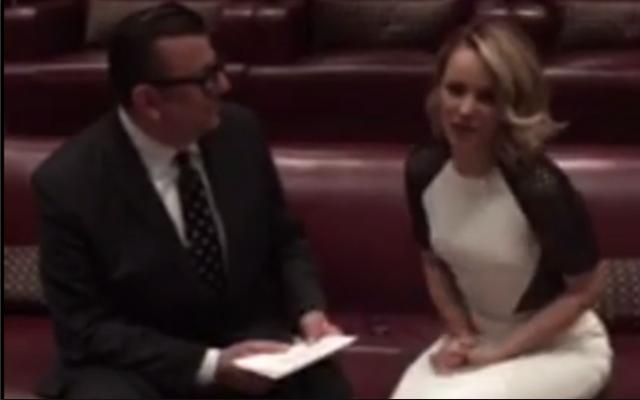
Richard hosted a Facebook Live session with “Doctor Strange” star Rachel McAdams! Find out how the actress prepared for the suturing scenes, what she has to say about working with Benedict Cumberbatch and who her favourite Marvel superhero is! See the video on Marvel Facebook Page!
Seven years ago director J.J. Abrams, the brains behind hit TV shows like Lost and movies like Star Wars: The Force Awakens, thought there was still some uncharted life to be found in the Star Trek universe.
This weekend the third film in his new generation of movies, Star Trek Beyond, puts phasers on stun. Directed by Fast & Furious director Justin Lin it continues Abrams’s mission to seek out new cinematic life and civilizations.
After five television series, ten movies, countless books, comics and video games, a stage version and even an Ice Capades style show Abrams re-launched the big screen Trek franchise. Simply called Star Trek, he took audiences where no man (or director) has gone before, back to the very beginning of the story before James Tiberius Kirk bore an uncanny resemblance to T.J. Hooker.
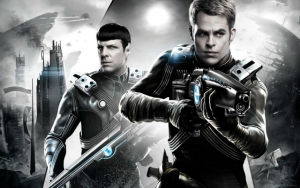
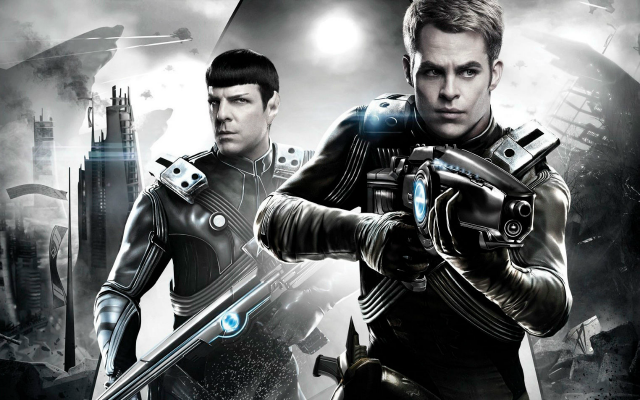
In this prequel to the original series Kirk (Chris Pine) and Spock (Zachary Quinto) are assigned to the maiden voyage of the most advanced starship ever created, the U.S.S. Enterprise under Captain Christopher Pike (Bruce Greenwood).
Star Trek was one of the great popcorn movies of 2009. Notice I didn’t say sci-fi movie. Star Trek is a lot of things but despite all the talk of warp speed, black holes and time travel, it can’t be strictly classified as science fiction. It’s a character based space serial more concerned with the burgeoning relationship between Spock and Kirk than with photon thrusters.
2013’s Star Trek: Into Darkness is a sequel AND a prequel (something so illogical Spock would never approve) that gets underway when an act of terror robs Kirk of a close friend. Determined to bring the perpetrator to justice the reckless Starfleet captain takes the Enterprise and crew to a war zone populated by Klingons and one brilliant and ruthless genetically engineered adversary (Benedict Cumberbatch). To finish his mission he must make difficult decisions.
Abrams finds a balance of old—Kirk, Spock et al—and new—the space suits are redesigned, the tech is different and there are younger characters—that should satisfy hard-core Trekkers and attract tenderfoot Trekkies. For fans there are in-jokes like Kirk telling two expendable members of the landing team to “lose the red shirts.”
At the beginning of Star Trek Beyond Kirk’s life on board the U.S.S. Enterprise has become a grind. He’s three years into a five-year mission and he is, personally lost in space, trying to find meaning in his mission. “It can be hard to feel grounded when even gravity isn’t real.”
Lin, taking over for Abrams, does his best to spice things up for the good captain. The director, best known for his Fast & Furious films, knows there is nothing like a wild alien attack to snap James T. out of his funk. Expect more hi-fly action than sci fi intrigue.
Star Trek Beyond producer Abrams admits he “didn’t love Kirk and Spock when I began this journey, but I love them now.” It seems the fans love his interpretation of the characters as well. Trekkers have embraced the new movies but Abrams knows the Star Trek universe is so vast it’s impossible to please everyone. Instead he says he caters to the average moviegoer “who just wants to be entertained, understand, and care about the world and the characters.” As Spock might say, “Sounds logical to me.”
“Zoolander 2,” the fifteen years in the making follow-up to the 2001 comedy hit, finds former “Blue Steel” supermodel Derek Zoolander (Ben Stiller) “out of fashion,” literally and figuratively. Following a tragic event involving his wife and his Center For Kids Who Can’t Read Good, Derek stepped away from fashion and the world. He now lives the life of a “hermit crab,” complete with a long beard that obscures his “really, really, really, really, really ridiculously good looking face.”
When some of the most beautiful people in the world turn up dead, their Instagram images frozen in time in perma-duckface, Derek’s most famous facial expression, Zoolander and his past partner Hansel (Owen Wilson) are tricked into travelling to Rome to uncover who is behind this evil plot to rid the world of good looking celebrities.
In the Eternal City the dim-witted models will search for Derek’s long-lost son—whose blood may contain the secret to eternal fashionability—battle fashion criminal Mugato (Will Ferrell) and meet new high-powered fashionista All (Benedict Cumberbatch). Aiding the boys is Valentina (Penélope Cruz), a former swimsuit model troubled by her inability to “transition to print and runway work,” now working as an agent for Interpol’s Global Fashion Division.
“Zoolander 2’s” main joke isn’t the Blue Steel, the pouty-lipped move that made Zoolander a superstar, or the dim-witted antics of Derek and Hansel. No, the movie’s best joke is its commentary on how quickly the best-by date comes for modern day celebrities. The speed of popular culture has revved considerably since 2001 and what seems hip today may be passé tomorrow. Fashion is fleeting, as cameos from Anna Wintour, Tommy Hilfiger, Marc Jacobs demonstrate, but the big question is has “Zoolander 2” reached its expiration date?
I usually avoid the scatological in my reviews but suffice to say any movie whose best joke involves the morphing of the word “faces” into feces over and over, that features a hotel made of “reclaimed human waste” and subtitles itself with “No. 2” is really asking for it.
To put it more delicately, villain Mugato marvels at how “super white hot blazingly stupid” Derek is, and you’ll do the same thing about the film. Stupid can be OK if it’s funny but “Zoolander 2” leaves the laughs on the runway. Stiller’s mugging gets tired quickly and the simple, juvenile jokes were much funnier fifteen years ago when we heard them the first time. To use the movie’s own dialogue against itself, “You guys are so old-school,” says Don Atari (Kyle Mooney), “so lame.”
Stiller, who directs and co-wrote the script, jam packs every frame with with cameos in a desperate grab for relevancy. Everyone from Justin Bieber (who appearance may please non- Beliebers) to Joe Jonas and Katy Perry to Ariana Grande decorate the screen, while Susan Sarandon does a “Rocky Horror” call back and Billy Zane demonstrates that he is no longer an actor, but a pop-culture punchline. I doubt even Neil deGrasse Tyson could scientifically explain why he chose to appear in this dreck.
Fred Armisen as an eleven-year-old manager of social media tries his best to make his brief role strange-funny while Will Ferrell’s Mugatu is essentially an audition to play an alternate universe Bond villain.
The best thing about “Zoolander 2” that it is such a fashion faux pas and so desperately unfunny it’s hard to imagine Stiller and Company making a third one fifteen years from now.
“The Hobbit: The Battle of the Five Armies” is the end of an era, and the beginning of one of the biggest movie franchises in history. As the third part of the Hobbit trilogy, it brings to an end the Peter Jackson movies inspired by J.R.R. Tolkien’s books. In the chronology, however, it is midway, the film that sets up the “Lord of the Rings” movies.
The action picks up seconds after the Dwarves evicted greedy dragon Smaug (Benedict Cumberbatch) from the gold filled Lonely Mountain in “The Desolation of Smaug.” With the wicked worm gone exiled Dwarf king Thorin Oakenshield (Richard Armitage) has now reclaimed his homeland and all the gold and power but wearing the crown has made him paranoid. He trusts no one, not even his loyal warriors and won’t listen to Bilbo Baggins’s (Martin Freeman) attempts to make him see reason. His irrational behavior leads to the epic showdown mentioned in the title. Legions of bloodthirsty Orcs (complete with their giant, hard-headed War Beasts) face off with Dwarves, Elves of the Woodland Realm, King Dain II Ironfoot of the Iron Hills and the Men of Laketown. The fate of Middle Earth hangs in the balance as alliances are made and skulls are cracked.
At least I think that’s what happens. There is so much going on, so many characters struggling for power and survival it’s sometimes hard to keep track. Jackson wraps up the series with a movie that tries to close every door it has opened which leads to a cluttered film short on story but long on characters and action scenes.
Big themes abound—greed, power, love, loyalty, family, all cloaked in a story about dragons, halflings, wizards, ill tempered Orcs and a struggle for a mountain filled with gold but the one thing, by and large, missing from the story is a strong presence from the title character. That’s right, “The Hobbit: The Battle of the Five Armies” treats Hobbit Bilbo Baggins (Martin Freeman) like a supporting character.
Baggins bookends the action and appears sporadically throughout, but the spotlight is fixed firmly on the other characters, rendering the “Hobbit” part of the title a tad superfluous.
The “Battle” part, however, is bang on. The movie is essentially a series of combat scenes stitched together and within those bruised and bloody sequences are some of the film’s highlights. Legolas (Orlando Bloom) running atop bricks, Mario Brothers style, as they fall through the air from a disintegrating bridge is a striking visual image and a scene where Gandalf (Ian McKellen), Saruman (Christopher Lee) and Galadriel (Cate Blanchett) thrash away at evil spirits will entertain the eyes.
Jackson’s grey palette infuses “The Battle of the Five Armies” with an ominous air as the dozens of characters breath life into the fight scenes. Heroes and villains abound, and while there isn’t quite enough actual story to justify the two-hour-and twenty-minute running time, the battle between good and evil is so primal, so elemental you can’t help but let it get your blood racing.