“Marriage Story” is not a first date movie. It is a three hankie, emotionally fraught movie about appealing but damaged people whose divorce is filled with a sense of loss and a growing shroud of incivility.
Adam Driver is Charlie, a hotshot avant-garde theatre director living and working in Brooklyn, New York with his wife Nicole (Scarlett Johansson). She is a former movie star with a list of teen comedies to her credit. They met at a party, instantly fell in love, had son Henry (Azhy Robertson) all was well until it wasn’t. Charlie may have slept with a stage manager but it’s Nicole’s growing dissatisfaction that widen the chasm between them. “I never really came alive for myself,” she says. “I was only feeding his aliveness.”
What begins as a simple conscious uncoupling becomes complicated when Nicole accepts a starring role on a television series based in Los Angeles, taking Henry to live with her. The family, stretched between two coasts and two careers, wears thin and soon the pressures of the split take their toll. “It’s not as simple as not being in love anymore,” says Nicole.
On my way into the press screening for “Marriage Story” a publicist handed me a small package of Kleenex branded with the movie’s logo. “I won’t need these,” I thought. “I’m a professional, here to dispassionately judge this film on its merits. I made it through ‘Kramer vs. Kramer’ like a dry-eyed superman and if I can do that, I can do anything.” I’m not too proud to tell you that I was glad I had the Kleenexes. “Marriage Story” is so agonizingly vivid, so without melodrama, that I felt at times as though I was a voyeur, that I shouldn’t be watching some of these emotionally charged scenes. As Charlie and Nicole drift apart and lawyers, like the ruthless Nora Fanshaw (Laura Dern in full beast mode), become involved the idea that they might have a chance of staying friends once this is all said and done becomes heartbreakingly remote.
Driver and Johansson convincingly play the bond that made them a couple and as it unravels both reveal the fatal flaws that drove a wedge between them. The two actors, unshackled from the constraints of the blockbusters that pay for their Italian castle retreats, dig deep, wallowing in their character’s self-absorption and anger.
Johansson, in full monologue mode, thrills in a lengthy speech detailing her state of mind. And do not even get me started by Driver’s final scene with his son as he reads a long-forgotten note. (NO SPOILERS HERE) Director Noah Baumbach keeps those scenes—and the entire movie for that matter—uncluttered. Simple and direct, he allows the actors to do the heavy lifting with naturalistic performances and both pack a wallop.
“Marriage Story” may not be a great choice for a first date but the emotional, sincere truth Baumbach and cast wring out of the material is best seen with a companion, or at the very least a package of Kleenex.
“The Report,” starring Adam Driver as lead investigator and author of the “Senate Select Committee on Intelligence Committee Report of the CIA’s Detention and Interrogation Program” Daniel Jones, sets up what is to come very early on in the film when a CIA agent says,
“Paper has a way of getting people into trouble at our place,” to Jones.
When we first meet Jones he is an idealistic staffer for California’s Democratic Senator Dianne Feinstein (Annette Bening). A hard worker, he throws himself into his latest project as chief investigator on what would become the largest study the Senate ever conducted, a look into the use and abuse of E.I.T.s – enhanced interrogation techniques, sanctioned by the Bush/Cheney administration in the months and years following 9/11.
Working with a small team in a small underground bunker with no wi-fi and, at first, no printers to create documents that could leave a paper trail, Jones uncovers unimaginable cruelty and through the course of six years and in generating a document that spans almost 7,000 pages cannot find any instances of the torture—i.e. waterboarding, sense deprivation techniques and physical abuse—leading to the uncovering of any useful information. When Feinstein is told one subject was waterboarded—a method of torture that simulates drowning—183 times she says, “If it works why do you have to do it 183 times?”
Jones finds himself stuck in the political process, a cog in a very big wheel determined to crush him and keep the results of his work, including accusation of CIA certified murder, under wraps.
“The Report” contains high voltage ideas and accusations but is dry as a bone. It’s a Sorkin-esque social drama without the engaging drama the “Social Network” writer brings to his projects. Writer-director Scott Z. Burns captures the labyrinthine machinations that keep Washington in a constant state of intrigue but gets lost in the complexity of the situation. Cover-ups are never straightforward, especially one with the juice to generate 7,000 pages of damning evidence. The result is a plodding procedural that, although incendiary, never catches fire.
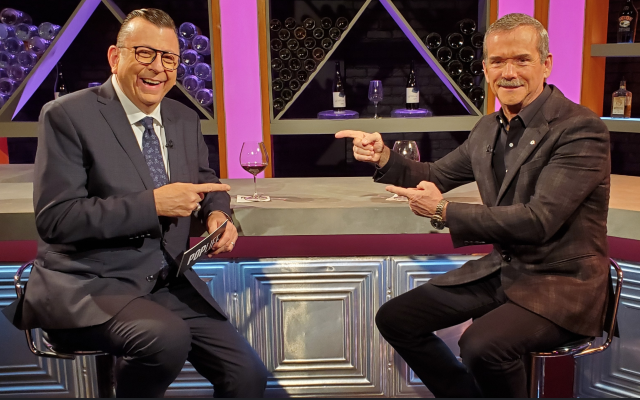
The eighth episode of season five of “Pop Life,” features an in-depth interview with astronaut Chris Hadfield. He stops by the “Pop Life” bar to discuss when science and pop culture collide. Then the “Pop Life Panel,” CTV science And technology specialist Dan Riskin, engineering program manager at Google Komal Singh and science commentator & author Of ‘An Earthling’s Guide To Outer Space’ Bob Macdonald, discuss how science became cool again.
When asked about how being in space made him feel connected to earth he said: “The sunrises and sunsets, they were more like watching a painting be created in front of you. What really tied you to home was seeing all seven and a half billion people every day. Because, the world turns underneath you. So, you see, everybody you look down and go, ‘Oh look there’s Karachi. Nine 9 million people. Holy cow,’ and 10 minutes later you’re coming over Singapore and you wait 40 minutes and now you’re over San Francisco. The whole world and everybody in it, all of our what we think are so wildly different cultures… you know we pretend we’re so radically different from each other. When you see the whole thing in 90 minutes you realize this is one little shared planet. If you go around it in 90 minutes, it can’t be very big. You can run for 90 minutes, you know. So the world is not very large and I think that’s what really tied me back, the sunrises and sunsets.”
Film critic and pop culture historian Richard Crouse shares a toast with celebrity guests and entertainment pundits every week on CTV News Channel’s exciting talk show POP LIFE.
Featuring in-depth discussion and debate on pop culture and modern life, POP LIFE features sit-down interviews with celebrities from across the entertainment world, including rock legends Sting and Meat Loaf, musicians Josh Groban and Sarah Brightman, comedian Ken Jeong, writer Fran Lebowitz, superstar jazz musician Diana Krall, stand-up comedian and CNN host W. Kamau Bell, actors Danny DeVito and Jay Baruchel, celebrity chefs Bobby Flay and Nigella Lawson, and many more.
As unbelievable as it may seem Helen Mirren and Ian McKellen have never appeared on screen together. They did a stint on Broadway in August Strindberg’s “Dance of Death” but the con job flick “The Good Liar” is the first time they have acted together in a film. It’s been worth the wait. More on that later.
The old-fashioned story of secrets and lies begins in a very modern way, on a dating site for widowed septuagenarians. Mirren plays Betty McLeish, a wealthy widow and retired Oxford professor. She’s upbeat and realistic, looking for new love in the time she has left. McKellen is Roy Courtnay, a charming but dirty-rotten-scoundrel looking to separate Betty from her cash who complains that the dating site is “a system for matching the delusional with the hopeless.” Over their lunch he beguiles her and soon romance blossoms. “Do you know who you are?” she asks. “You’re the only person on this planet who makes me feel that I’m not alone.” When the crafty old guy fakes a knee injury so he can move in with her she agrees it is the second part of his plan (along with a skeevy sidekick played by “Downton Abbey” star Jim Carter) to convince her to sign over her bank accounts, combining their money to provide for their future together. Despite the objections of her grandson Steven (Russell Tovey), she agrees but first they take a trip to Berlin where cracks in their stories are revealed. “In just a blink,” Roy says, “your life is changed forever.”
“The Good Liar” is a b-movie with an a-list cast.
Director Bill Condon has made a nicely crafted cat-and-mouse thriller that for most of its running time rattles along at a good clip, doling out clues like candy at Halloween. It’s when the twists become preposterous that the plot lets down its fine cast. As the story starts swinging for the fences McKellen and Mirren are left batting clean-up, trying to keep the thrills intact while the drawn-out conclusion dilutes the pleasures of the earlier, tension-laden scenes.
It’s a delight to watch McKellen and Mirren’s chemistry. As Roy, McKellen is easy charm one second, hard and cunning the next. Mirren gives Betty a naïve appeal tempered with the excitement of the start of a new adventure. Together they click, belonging together like peanut butter and jelly but nothing is as it seems in “The Good Liar.” The film’s biggest pleasure is (MILD SPOILER) witnessing these two fine actors carefully gauge their performances as the power dynamic between them shifts. Their work provides the thrills the over-plotted story misses.
The cars of the early 1960s were sexy beasts. Sleek and metallic on the outside, perfumed with the sweet smell of fine Corinthian leather on the inside, they tore along the highways and byways like, to paraphrase Bruce Springsteen, like big old dinosaurs. The action in “Ford v Ferrari,” however, begins in 1963 with the least sexy things ever, a failed corporate takeover.
Suffering a slump in sales the Ford Motor Company tries unsuccessfully to take over the infinitely more seductive Ferrari. The Italian car company, on a winning streak with at the 24 Hours of Le Mans, replies in no uncertain terms. “Ford makes ugly little cars in ugly factories,” says Enzo Ferrari (Remo Girone).
That’s a no.
Insulted, Henry Ford II (Tracy Letts) flip-flops an old maxim. If he can’t join ‘em, he can beat ‘em. “This isn’t the first time Ford Motors’ gone to war,” he says. “We know how to do more than push papers. When early attempts to create a race car to take the wind out of Ferrari’s sails fails Ford marketing executive Lee Iacocca (Jon Bernthal) brings in car designer Carroll Shelby (Matt Damon) to make a Ford that will rule at La Mans. “My name is Carroll Shelby and performance is my business.” A former racer—he won the Le Mans in 1959 with partner Roy Salvadori—heart problems forced him off the track.
Shelby asks hot-headed British racer Ken Miles (Christian Bale) to help. “How long did you tell them that you needed?” he asks. “Two, three hundred years?” Together they work to make a sports car that will appeal to young consumers and “go like hell.”
Some basic knowledge of how cars work may enhance your enjoyment of “Ford v Ferrari” but the resonate part of the story has nothing to do with horsepower or Gurney flaps. At its fuel Injected heart the James Mangold-directed movie is a Davey and Goliath story about friendship and burning rubber.
The bromance angle comes in the bond between Shelby and Miles. The two men are like brothers who fight and love in almost equal measure. Damon and Bale share an easy camaraderie, fuelled by their character’s love of the art of racing and the desire to stick it to the big guys, the Ford Motor Company. Shelby is the diplomat, Miles the one more likely to punch a Ford executive, but both are underdogs who take pleasure in making the suits squirm.
“Ford v Ferrari” is formulaic in laying out the story. It’s a longshot tale with revving engines and many predictable twists and turns but Mangold injects some real excitement in the extended racing scenes.
Maclean’s once called her “Canada’s most gossiped-about writer,” but what do we really know about Margaret Atwood? Her first book came out fifty-eight years ago and since then she has been a constant presence on bookshelves. The television adaptation of her novel “The Handmaid’s Tale” has lived at the very centre of pop culture since its debut in 2017 and she has won every award for writing, including two Bookers and the National Book Critics and PEN Center USA Lifetime Achievement Awards.
But what about the woman behind the words?
A new documentary, “Margaret Atwood: A Word After A Word After A Word Is Power” from directors Nancy Lang and Peter Raymont, aims to open the book on a person the film calls “a cultural rock star.”
Pulling its name from a line in one of Atwood’s poems, “A Word After A Word After A Word Is Power” is an overview of a literary life. Beginning with her earliest memories—the snow in Ottawa, the city of her birth— to writing her first novel at age seven, through to poetry readings at coffee houses like Toronto’s Bohemian Embassy, the all-male library at Harvard (apparently one of the inspirations for “The Handmaid’s Tale”) to suggesting CBC’s Hana Gartner read Harlequin Romances instead of her “sad” books, the film reveals a fearsome intellect with a sense of curiosity, humour and self-definition. “I never thought I’d be a popular writer,” someone quotes her as saying in the film’s opening minutes, “I only wanted to be a good one.”
We learn of the ironies of being a pioneering figure—her first book signing for “The Edible Woman” was at men’s sock and underwear department of a Hudson’s Bay store in Edmonton, chosen because it was near a highly trafficked escalator—and get a rare behind the scenes peak into her private life, including her first marriage to Jim Polk, a student she wed so he wouldn’t be drafted and sent to Vietnam.
To provide contemporary context the directors spent a year filming the septuagenarian as she and her late partner, novelist Graeme Gibson (the film is dedicated to his memory), travel to book signings and speaking engagements, while she works on the final pages of “The Testaments,” the sequel to “Handmaids.”
The linear presentation is linear skips through the events that make up her life, leading to a film that, while it covers a wide swathe of her life, feels rushed. At just ninety-two minutes it’s a rapidly paced but occasionally superficial telling of the life and work of an important artist.
The seventh episode of season five of “Pop Life,” features an in-depth interview with hip hop musician, former elementary school teacher and author Humble the Poet. He stops by the “Pop Life” bar to discuss his new book “Things No One Else Can Teach Us,” what he learned from his failures, including a bad record deal, how even after he crawled out of crippling debt, the satisfaction was short lived and much more. Then the “Pop Life” panel, Humble the Poet and “The Awesome Music Project Canada: Songs of Hope and Happiness” authors Terry Stuart and Robert Carli, discuss teachable moments in life.
“They saw that I was working on music after school,” Humble says of his parents. “I was working two jobs, working as a full-time teacher and I was tutoring high school kids at math. So I spent about four hours after work doing that, and I’d come home I’d write record and release something on YouTube. So they saw the work ethic and the main thing I was sacrificing at that point was sleep. And so, they knew when I said I’m going to leave the job full time, that I had a potential record deal on the table and was going to work on music full time, they knew that I wasn’t, you know, just looking for an excuse to quit my job and do nothing.”
Film critic and pop culture historian Richard Crouse shares a toast with celebrity guests and entertainment pundits every week on CTV News Channel’s exciting talk show POP LIFE.
Featuring in-depth discussion and debate on pop culture and modern life, POP LIFE features sit-down interviews with celebrities from across the entertainment world, including rock legends Sting and Meat Loaf, musicians Josh Groban and Sarah Brightman, comedian Ken Jeong, writer Fran Lebowitz, superstar jazz musician Diana Krall, stand-up comedian and CNN host W. Kamau Bell, actors Danny DeVito and Jay Baruchel, celebrity chefs Bobby Flay and Nigella Lawson, and many more.
The last time we saw Danny Torrance, son of Jack and Wendy Torrance by way of Stephen King, he was a young boy who had trapped his father in a deadly maze outside The Overlook Hotel. In Stanley Kubrick’s film “The Shining” little Danny has psychic powers known as the “shining.” A new film, “Doctor Sleep,” brings us up to date on Danny’s later life and the effects of family tauma.
Now going by the more adult name Dan (Ewan McGregor), Torrance is still haunted by the events of his youth. Alcoholic and unhappy, he pursues peace by working in a hospice, using his unique power to comfort the dying. His patients call him Doctor Sleep and soon his work, along with the help of AA, help him overcome his torment. His tranquility is undone when he meets psychic teenager Abra Stone (Kyliegh Curran). “You’re magic,” Abra says, “like me.” “I don’t know about magic,” Dan replies. “I always called it “the shining.”
Abra’s abilities—“Her head is like a radio that sometimes picks up strange stations.”—have caught the attention of the True Knot, a tribe of demonic psychics led by Rose the Hat (Rebecca Ferguson), an almost-immortal being who feeds off children’s telepathic abilities to prolong her own life. “They eat screams and drink pain,” says Dan’s mentor-in-shining Dick Hallorann (Carl Lumbly). To battle Rose and her evil minions Danny must face his greatest fear, returning to the psychological horrors of the Overlook Hotel.
The spirit of Stanley Kubrick’s “The Shining” hangs heavy over “Doctor Sleep”—visual homages and callbacks abound—but where the 1980 film is an exercise in icy exterior thrills the new one, directed by Mike “Oculus” Flanagan, brings a thaw to the action. He has opened up the action and the characters. Kubrick created claustrophobia by setting the action mostly in the closed off rooms and hallways of the Overlook Hotel while Flanagan, who also wrote the script, lets the characters roam free, exploring the world around them and the inner workings of their extra-special-psyches. It makes for a much different feeling film that contains similar amounts of suspense—although it must be said, not nearly the same level of outright fear—but an added dose of emotional resonance and friendship.
McGregor is never quite as compelling as Jack Nicholson was in the original film but the supporting characters pick up much of the slack. As Abra, Curran is the most compelling character on screen. Fearless and resilient, she has an open heart and it is her friendship with Torrance that brings his lifelong journey for peace to a head. In one nicely rendered scene Dan speaks through her in a moment ripe with danger. Curran embodies the character and it is eerie to see the thirteen-year-old take on the weight of her adult counterpart.
Ferguson plays Rose the Hat as a bohemian villain. Callous and cruel, she brings a much-needed sense of unpredictability and danger to a story that isn’t particularly scary. It’s atmospheric and the character work brings us in, but it likely won’t haunt your dreams with the exception of one scene.
(MILD SPOILER ALERT) The True Knot believe that pain purifies the “steam,” the essence of their victims, which leads to a very unpleasant scene involving the demise of Jacob Tremblay as a young baseball player. You either remember him as the vulnerable child in “Room” or the foul-mouthed star of “Good Boys,” but this grim scene will give you new, nasty memories of his work.
“Doctor Sleep” often feels like a tribute to “The Shining” but brings enough of its own ideas on the effects of childhood trauma and the lingering pain of a shattered family to add richness and originality to the movie.
“The Irishman,” starring septuagenarian powerhouses Robert De Niro, Joe Pesci and Al Pacino, is based on “I Heard You Paint Houses” Charles Brandt’s book about a man who claims to have offed mobster Crazy Joe Gallo and Teamster Jimmy Hoffa. It’s familiar territory for the trio of stars, all of whom have made a career out of playing wiseguys, and for director Martin Scorsese, but it feels different. The heady, rambunctious filmmaking of “Goodfellas” and “Casino” is gone, replaced by the richly, contemplative tone of a man at the end of his life wondering if he did the right thing.
De Niro is Frank “The Irishman” Sheeran, an 82-year-old World War II veteran, truck driver, union leader and hitman. He developed his deadly skills as a combat veteran in Italy, talents he put to use as an associate of Russell Bufalino (Joe Pesci), head of a notorious crime family.
Now wheelchair bound in a retirement home Frank recounts, in flashback, how he rose from smuggler to hitman to Bufalino’s inner circle. “It was like the army,” he says. “You followed orders.” It’s a wild story that reads like it was torn out of the pages of a colorful twentieth century history book. In Frank’s tale crime and politics are bedmates, bound together by power struggles between the underworld and Washington, involvement in elections and even the Bay of Pigs fiasco.
Frank rise is accelerated when Bufalino gives him the job of overseeing Teamster leader Jimmy Hoffa (Pacino). Hoffa ushers Frank through the corridors of power and becomes a family friend but when the Teamster’s actions threaten to expose his mafia co-conspirators Frank is pressed to choose between his loyalty to Hoffa and Bufalino.
Much has been written about “The Irishman’s” three-and-a-half-hour running time and the movie hocus pocus that de-ages the leads, allowing them to play their characters from cradle to grave. Don’t buy into the distractions. Scorsese wrestles the story and technology into shape, making a film that plays like a requiem for the kind of characters that made him famous. Unlike the cocky “Goodfellas,” which is all about the rush, “The Irishman” is ripe with themes of loss and legacy, regret and mortality. It’s about the consequences of the life Frank chose for himself and is a devastating portrait of a forgotten man who did terrible things out of a sense of duty.
Lead by the trio of marquee actors, the cast is uniformly fine. Anna Paquin as Frank’s daughter takes a role made up of sideways glances and terse dialogue and turns it into a damning condemnation of Frank’s work. She conveys depths with just a turn of her head. Bobby Cannavale as the colourfully named Felix “Skinny Razor” DiTullio and Ray Romano as a mob lawyer add interesting hues to an already colorful story.
The holy trinity, De Niro, Pesci and Pacino, hand in late career work that feels like the culmination of a lifetime of character studies. This is an examination of men who live by a brutal code that leaves little wiggle room for mistakes and disrespect but each actor find ways to humanize their characters. Rich in detail, these actors riff off one another, finding internal rhythms in the repetitious way they speak to one another.
Pesci lets go of his famous “Like I’m a clown? I amuse you?” film persona to present understated work that is equal parts loyalty and menace. Pacino plays an over-the-top character with an unhinged gusto that breathes life into someone who is now a name from the history books but was once, as is said in the film, as popular as Elvis with the working man.
Strong work abounds but De Niro has the resonate moments. The look on his face as (MILD SPOILER ALERT) he makes the grim trip to Detroit to kill his friend is stoic but pained. Placed in an unthinkable position he grims up but you can sense the wheels turning in his head. He fuels a remarkably tense thirty-minute lead up to a senseless act of violence that will have you leaning forward in your seat.
It’s in the film’s elegiac final moments that De Niro brings all of Franks humanity to the fore. “You don’t know how fast it goes until you get there,” he says. It’s a quiet, unhurried analysis of a man’s final days as he looks back that erases the memory of De Niro in movies like “Dirty Grandpa,” reminding us why he was thought of as the best actor of his generation.
“The Irishman” is an event, a movie that feels like the obvious conclusion to the gangster stories the director and cast have been telling for decades.