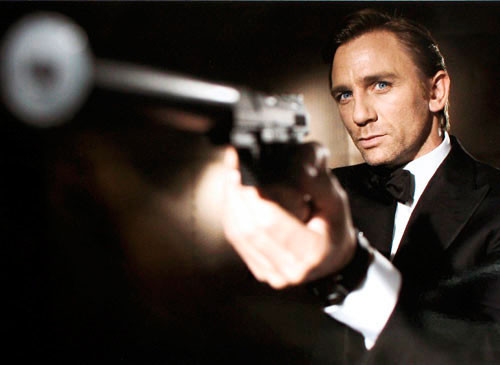
Humphrey Bogart used to say you weren’t a star until they could spell your name in Karachi and while there’s nothing tricky about the order of the letters in Daniel Craig’s name I’m not sure if people in Karachi spell his name D-a-n-i-e-l or J-a-m-e-s-B-o-n-d. That’s my long winded way of asking, “Is Craig a movie star or are his movies the stars?”
He has all the attributes of a movie star. He’s good looking, the camera loves him and Del Monte Foods once launched an ice pop molded in his image but I’m not sure if people say, “Man, I gotta see the new Daniel Craig movie,” as much as they pronounce, “Man, I gotta see Insert Iconic Title Here.”
But, you say, millions of people flock to see some of his movies. That must mean he’s a movie star, right? Well, no, not exactly.
In recent years Craig’s biggest successes have been in films that almost sell themselves. He’s a great James Bond, perhaps the most interesting of the Connery replacements, but he can’t rightly lay claim to the Bond box offices grosses. Who can? Bond, James Bond. That’s who. It’s a recognizable brand no matter who is on the poster.
It is a fact that Craig can hold the lead in a movie. He’s a powerful presence with acting chops to spare—he’s earned good reviews for serious movies like Love is the Devil, Elizabeth, The Mother and Enduring Love and praise for his work in bigger Hollywood pictures—but being a good actor is just one element of being a movie star.
Box office grosses are important to maintaining status as a movie star, but I’m talking about something more ephemeral, something that has nothing to do with dollars and cents but lots to do with sense and sensibility.
A movie star should be bigger than the movie or character they are playing. Years ago people went to see John Wayne movies regardless of title or content. Wayne was a movie star, an actor who transcended his characters, filling the screen with his, well… Wayness.
There aren’t that many performers these days who can create that kind of excitement on the strength of their name alone. Tom Cruise used to inspire lineups. No more. Julia Roberts, ditto. Jim Carrey, not so much. They are big stars, but their time as movie stars, quote, unquote, is over. Will Smith and Johnny Depp are movie stars (although I wish Johnny would make Captain Jack walk the plank and move on). Their movies are events, not simply because of premise, but because they came to work with their indefinable movie star-ness in hand.
Craig has four movies set for release 2011, which is a pretty movie star thing to do, but none of them could be described as “a Daniel Craig movie.”
This weekend Cowboys & Aliens looks primed to do well on the strength of a catchy trailer and cool premise. December’s double hit of The Adventures of Tintin and The Girl with the Dragon Tattoo are both franchises waiting to happen and Dream House, a psychological drama directed by Jim Sheridan which has been sitting on the shelf for over a year, has zero buzz.
It’s that last movie, set for release in September, which proves my point. His other movie releases this year are hotly anticipated high profile pictures based on popular preexisting material—a graphic novel, a beloved comic series and a cultural phenomenon. Dream House stands alone as the film which will rise or fall based on Craig’s star power, and yet it has almost no public awareness.
John Wayne never released a film that had zero public awareness, and if Craig was an honest-to-goodness movie star, he wouldn’t either.
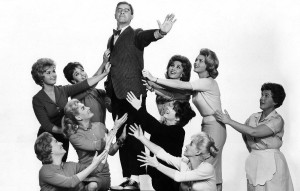
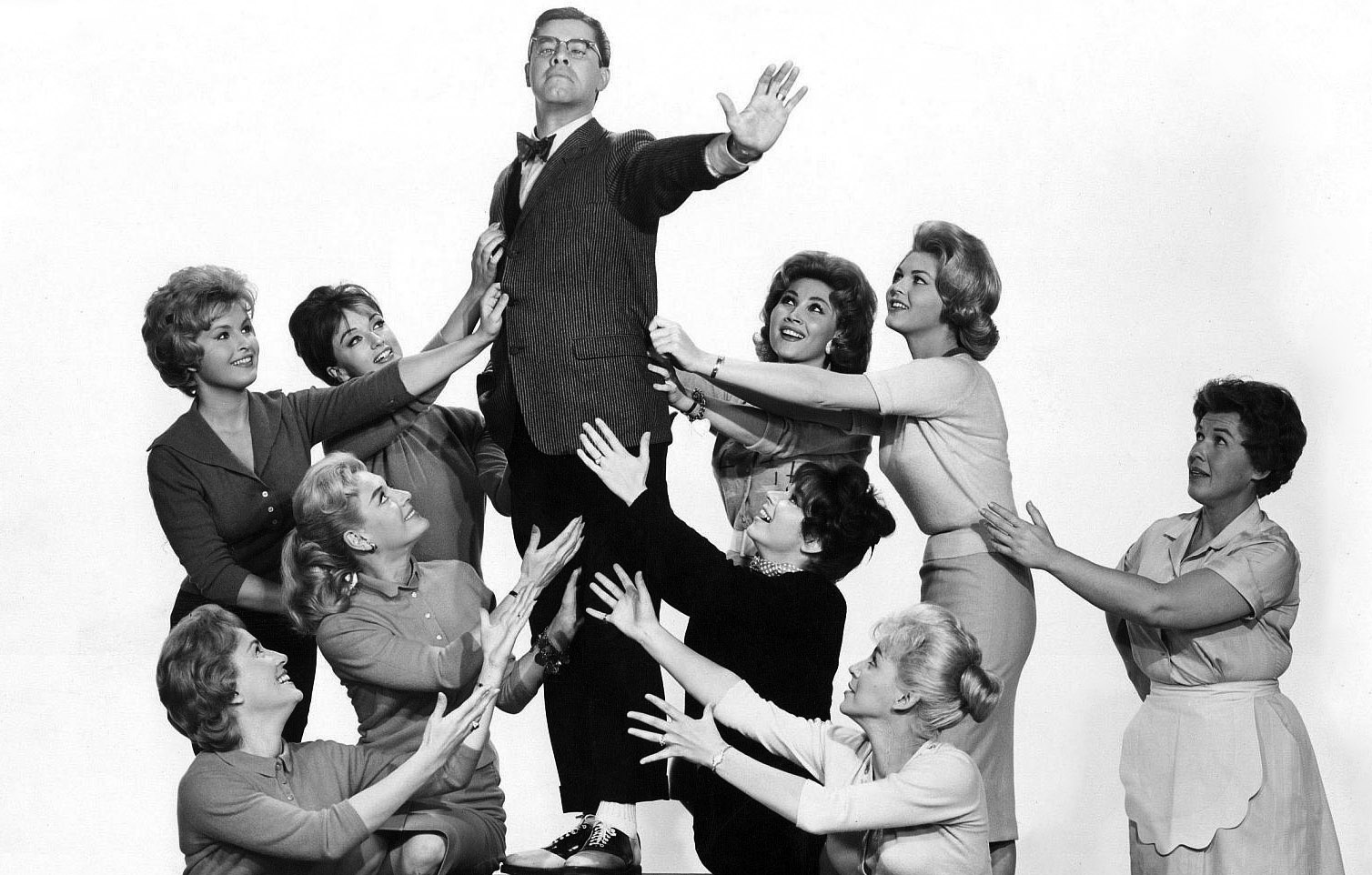
Jerry Lewis didn’t find Lucille Ball amusing. Not only that but the man who, ironically as it turns out, made a career of spastically yelling, “Laaa-dy!” at every opportunity says he doesn’t “like any female comedians.” Doesn’t find them funny
Jerry meet Tina Fey.
Jerry meet Kristen Wiig.
Jerry meet… I could go on but I think the point I’m making is that old Jerry is about as right about this as he is funny. Which is to say, not so much.
This summer has seen the release of two movies headlined by women and aimed at the funny bone. Bridesmaids and Bad Teacher, which premiers this weekend, both take the tried and true recipe of mixing vulgar jokes with sentimentality and heart—the boys have been doing it for years in movies like The Forty Year Old Virgin and Knocked Up—and folds in female characters that are used as more than set decoration.
Women have yukked it up on the small screen since the beginning of the medium. The aforementioned Ball gave way to Marlo Thomas, Betty White, Cloris Leachman, Sarah Silverman and others, but on the big screen women have often been simply regarded as an attractive foil for the male star or given what Modern Family’s Julie Bowen calls the “finger shaking role.”
Women frequently headline big screen romantic comedies, but there is a reason why the word romantic comes first in the genre description. Sure Kathryn Hiegl or Kristen Bell will be allowed to do a pratfall or two in movies like 27 Dresses or When in Rome, but when it comes right down to it are there to deliver the romance and leave the chuckle-grabbing to their costars.
It’s rare to see comedic women front and center in the movies, but Bridesmaids had six of them and is already a hit and depending on the audience appetite for Cameron Diaz’s return to her There’s Something About Mary-esque comedic roots, Bad Teacher might usher in an era of funny female flicks that rely on chuckles and not C cups.
In an article called Why Women Aren’t Funny Christopher Hitchens wrote “women do not find their own physical decay and absurdity to be so riotously amusing.” I would suggest Mr. Hitchens have a look at the food poisoning scene in Bridesmaids and rethink his position.
I would also suggest everyone take a gander at Lake Bell, an actress who shares initials and comedic style with Lucille Ball, and who never fails to make me laugh, which is more than I can say about Jerry Lewis.
Why I am left nursing a nasty Hangover after drinking in too many movie sequels?
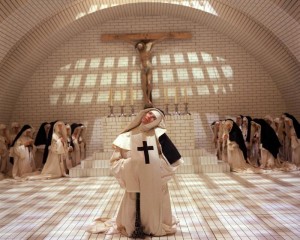
There is a great scene in Ken Russell’s 1971 forgotten masterpiece The Devils. Oliver Reed as the whiskey priest Father Grandier has been tortured by a church sanctioned witch hunter. His legs crushed, his tongue pierced, he refuses to confess to heresy. His tormentor leans in one last time to question the priest’s commitment to his faith.
“Do you love the church?”
After a long pause the broken and battered holy man says, “Not today.”
I bring this up because I have just read that 2011, with a sum total of 27 movie sequels scheduled to hit theatres, is the biggest year yet for sequels and I feel like my cinematic church has been defiled.
This weekend alone offers up two part twos, the imaginatively titled The Hangover Part Two and Kung Fu Panda 2.
There’s nothing inherently wrong with movie sequels. Arguably The Godfather 2 outstrips the original, and The Bride of Frankenstein is unquestionably a better movie than its predecessor. So are Aliens, Toy Story 2 and Dawn of the Dead. It’s possible to make sequels that improve on the source, so why doesn’t Hollywood do it more often?
Because they don’t have to, that’s why. Audiences get the movies they deserve.
Need proof. Look no further than last week’s box office. Pirates of the Caribbean: On Stranger Tides, which I called a “monstrosity” in this space just seven days ago, soldiered on despite my scathing review to gross $90 million domestically, $260.4 million world wide.
Hollywood wouldn’t spend the time or effort to make these photocopy quality sequels if we didn’t line up to see them, so the next time you’re wondering why you haven’t had a truly great time at the movies recently, think back to the amount of movies you saw with a 2, 3 or 4 in the title and hang your head in shame.
I love going to the movies, sitting with strangers and getting wrapped up in the images flying through the air, but when I leave the theatre after watching—or should I say, enduring—PotC: On Stranger Tides and its ilk, I feel like Grandier. I love the movies, but catch me on the right day, ask me the question, and my answer would be, “Not today.”
I get paid to watch these things, what’s your excuse?
Call me a prophet if you like, but seven days ago in this very space I foretold of a future littered by sequels and threequels. And lo, just days after I made that pronouncement a tentative deal to make The Hangover Part 3 was announced.
Now before you start calling me for stock market tips or to predict whether or not bird flu will mutate again this summer keep in mind that it didn’t take ESP or a special connection to the movie gods to predict The Hangover’s tsunami sized box office would begat a sequel. And while the prospect of a third movie in that series is about as welcome as a plague of locusts at least my pronouncement didn’t have people selling their homes and moving underground (I’m looking at you Harold Camping). No, instead, the news should have moviegoers—at least those silly buggers who bought tickets to the film—bowing their heads in shame.
Why? Because their dollars made the threequel possible. Want to know how to stop the cycle of abuse and prevent sequels from clogging up your local multi-plex? Use your buying power to demand better movies. Want to know how? Read these easy-to-follow rules for sequel avoidance:
1. Generally speaking, shun movies with numbers in the titles. This sounds straightforward, but movies like One Flew Over the Cuckoo’s Nest, Three Days of the Condor, 8½ and The Seven Samurai muddy the waters.
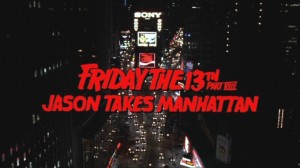
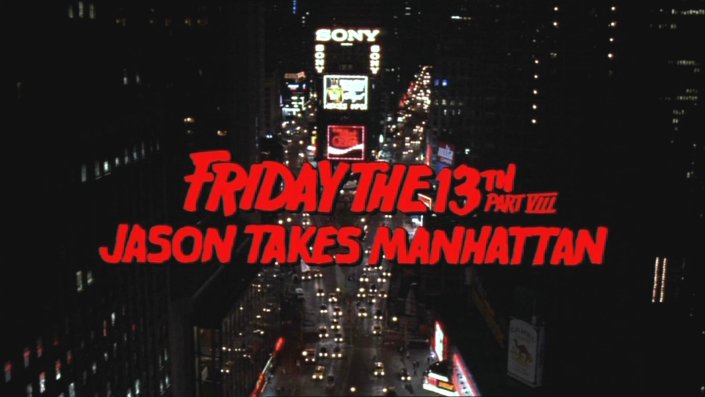
By all means go see or rent those, but when choosing a movie beware of titles containing colons (Lawnmower Man 2: Beyond Cyberspace), the word “part” (Friday the 13th Part 3: 3D), unless of course it’s The Godfather Part II, a subtitle like “This Time It’s Personal” (Sister Act: Back in the Habit), roman numerals (Superman IV: The Quest For Peace) or any combination of the above (Friday the 13th Part VIII: Jason Takes Manhattan).
Other trouble spots include titles containing the words “Beginning” (Psycho IV: The Beginning), “Bride” (Bride of Chucky), “Return” (Return to the Blue Lagoon), “Vs.” (Gamera vs. Jiger), “Boogaloo” (Breakin’ 2: Electric Boogaloo) or “Revenge” (Jaws: The Revenge).
2. Worse than numbered sequels are movies which substitute a homophonous word for the number (Look Who’s Talking Too, Teen Wolf Too).
3. Avoid movies that recycle ideas while simply changing the tense of the movie title. Examples? What was funny in Analyze This became less so in Analyze That and there is a reason I Still Know What You Did Last Summer sits at a 7% approval rating on Rotten Tomatoes.
4. And finally, as a matter of principle, steer clear of any movie in which Eddie Murphy wears a fat suit.
Of course I’m joking (except about Eddie Murphy). You can go see whatever you want, but keep in mind when we support bad movies the joke is on us. It feeds the notion that audiences are as creatively bankrupt as the studios. Not so. I think if you are given a steady diet of dog food, pretty soon you get a taste for Alpo, but if occasionally you have something better soon enough you’ll crave foie gras. Sequels are the dog food of the movie industry. Don’t let them force feed you.
This weekend for instance sees Beginners, Midnight in Paris and (if you’re in Canada) Good Neighbors in theaters. All good movies with great reviews and not a sequel among them. What are you waiting for? Do yourself a favor, have some foie gras with your popcorn.
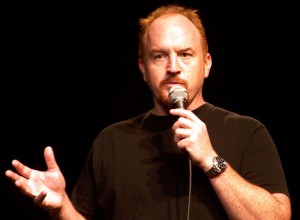
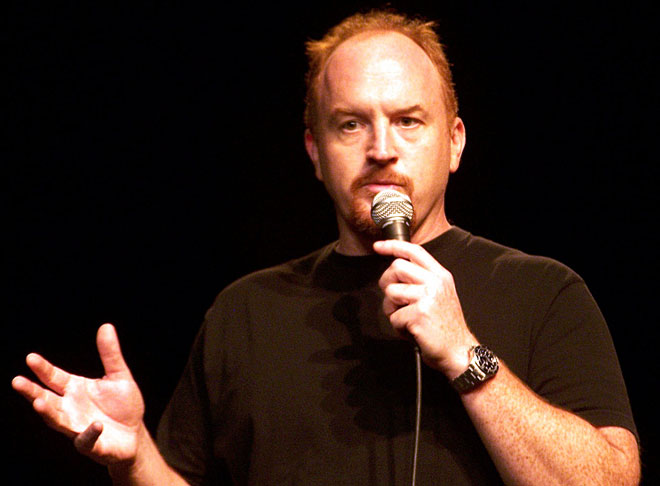
Louis CK has added some nuance to his humor since the first time he made an audience laugh.
“I was in class at school,” he told me during Just for Laughs in Montréal last week, “and they were talking about the parts of the skull. They asked the class to name them, and I said ‘noggin’.”
All his friends doubled up, he remembers, and since then he has been refining the art of making people guffaw.
“I know how I sort of do it now,” he said. “I generate material from whatever thoughts are burning in my brain. I used to ignore that.”
That has led to an emotional honesty in his work that has earned him comparisons to Richard Pryor, another comedian who pushed the boundaries of cathartic comedy. Whether he is talking about Sarah Palin, changing his daughter’s diaper or his hatred of deers, the material is intensely personal and, one gets the sense, therapeutic. But it doesn’t come easily.
Every year the comic abandons his entire act and starts over. A recent GQ profile noted he is “taking stuff that other comics only dream of and throwing it away.”
“The way to improve is to reject everything you’re doing,” he told me. “You have to create a void by destroying everything. You have to kill it. Otherwise you’ll just say the same jokes every night for years and years.”
The process is the same every 365 days. Material that has been buffed to a high polish is discarded, replaced by new untried jokes.
“Ever year I’m an open mic-er again,” he says. “It’s really good pressure. I like pressure. It’s enabling.”
He’s one of the hottest comedian in the world—the deadspin blog calls him “the flat-out best comedian alive on Earth right now”—with sold out live shows and an Emmy nomination for Outstanding Lead Actor in a Comedy Series (“I don’t deserve an Emmy Award,” he says) for Louie, his semi-autobiographical show (Thursday nights on FX) but he’s philosophical about his success.
“You don’t sell tickets forever,” he says. “I know it’ll go down from where it is now.”
But for now there are moments to savor. Recently his kids stood backstage while he appeared on the Letterman show. Afterwards his daughter said, “I felt like you were falling and falling and every joke was like a plane that took you and brought you back up.”
“And now that’s a memory she has,” he says. “That meant a lot.”
This week I read with cringing amusement some of the more withering critical reactions to former underwear model Rosie Huntington-Whiteley’s performance in Transformers: Dark of the Moon. Total Film’s Neil Smith wrote that she sucks “the life out of every scene she appears in like some pneumatic Dyson sexbot,” while Chris Hewitt of Empire said, “You’ll believe a robot can fly, but you won’t believe a Huntington-Whiteley can talk.”
I even posted some of these on my facebook page without thinking about it too much; nothing like a funny jab from a bitchy critic to brighten up the day. I’ve cracked wise myself a few times. Years ago I wrote “the former commercial director has a knack for making everything look shiny but having great taste doesn’t make a great film director any more than great taste makes a Snicker’s bar a gourmet meal,” about Transformers filmmaker Michael Bay.
Now, that’s a pretty good line, if I do say so myself, but it’s also a cheap shot and I sometimes find myself pondering the merits of including puns and jokes in reviews.
Having said that one of my favorite reviews of all time is also the shortest. In 1986 former Genesis guitarist Steve Hackett and Yes and Asia guitarist Steve Howe released a vanity project simply titled GTR, a hip abbreviation of the word “guitar.” Reviewing the album in Musician magazine J.D. Considine wasted no ink, writing simply “GTR-SHT.”
Considine says it the most famous thing he ever wrote and the band claimed the popularity of the review actually helped sales of the record. GRT went gold and produced the hit single When the Heart Rules the Mind.
Others haven’t been so gracious in their acceptance of bad reviews. The Story Sisters novelist Alice Hoffman responded poorly to Roberta Silman’s review of book in the Boston Globe. Her reaction? 27 angry tweets, one of which included Silman’s phone number, e-mail address and urged follwers to, “Tell her what u think of snarky critics.”
Hoffman eventually apologized for the outburst and was the subject of a number of “How not to respond to a bad review” articles.
Darren Aronofsky was a bit more direct when he chastised New York Press critic Armond White at last year’s New York Film Critics Circle Awards. From the stage he said, “Keep it up, because you give us all another reason not to read New York Press,” while staring White down.
White, who panned Aronofsky’s Black Swan and once suggested that director Noah Baumbach’s mother should have had a “retroactive abortion,” responded with, “That’s all right. Darren reads me. That’s all I want. And because he reads me, he knows the truth.”
There’s a life lesson for Ms. Huntington-Whiteley in all of this. Too bad she won’t have time to learn it this weekend. She’ll be too busy counting the truckloads of money her movie’s going to make to pay too much attention to the reviews.
Final Destination 5 is a chronicle of carnage in which a group of good looking young people die in the most terrible ways imaginable, usually preceded by the tell tale line, “Something’s wrong!”
For example, a gymnast earns a 9.5 from the Splatterville judge and star Jacqueline MacInnes Wood succumbs to laser surgery gone horribly wrong. It’s the kind of movie which makes audiences shout, “No, you didn’t!” and “Awwwwwwwwwwwww! I can never un-see that!” usually while laughing and having a gruesome good time.
This week I asked Wood why people would pay money to go see her movie.
“We’re all twisted,” she said. “That’s the answer.”
Others have different ideas. In his excellent book Shock Value author Jason Zinoman suggests that one of the pleasures of getting scared at the movies is “that it focuses the mind.” He uses the example of a baby being born. “Try to imagine the shock of one world running into another,” he writes. “Nothing is familiar and the slightest detail registers as shockingly new. Think of the futility of trying to process what is going on. No wonder they scream.
“Overwhelming terror,” he continues, “may be the closest we ever get to the feeling of being born.”
Whether it’s as deep seeded as that or not, there is no denying that terror is a primal feeling. Its part of our DNA but, counter intuitively, it isn’t horrible when experienced at the movies. As Eduardo Andrade and Joel B. Cohen said in a study published in the Journal of Consumer Research, “the most pleasant moments of a particular event may also be the most fearful.”
A Saturday matinee screening of Paranormal Activity was the first and only time I ever heard anyone actually scream in a theatre. I don’t mean a quiet whimper followed by an embarrassed laugh or a frightened little squeal. No, I mean a full-on, open throated howl of terror. But the woman didn’t run from the theatre. She stayed and enjoyed the rest of the film, so she must have liked the cathartic release of tension the scream gave her.
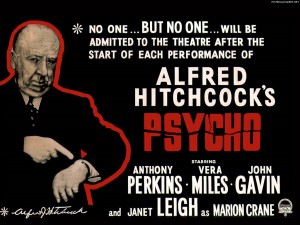
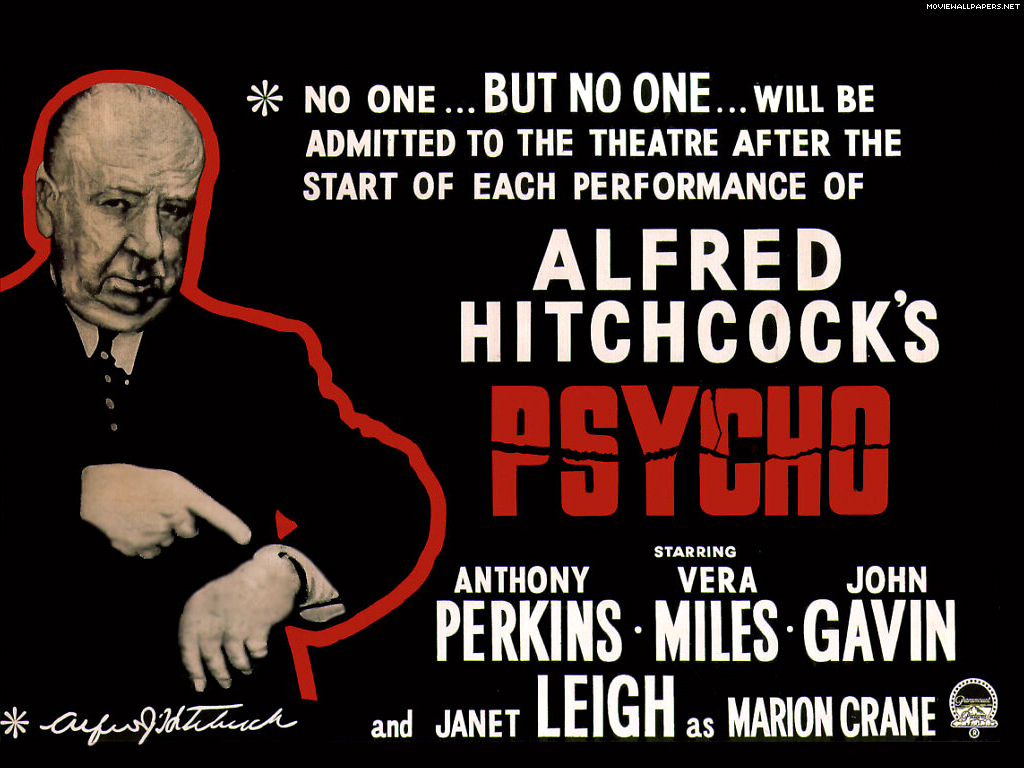
Alfred Hitchcock, knew how to scare the wits out of people. The shower scene in Psycho, for example, is a benchmark in cinematic fear. If he had any doubts about the effectiveness of that sequence they must have been put to bed when he received an angry letter from a father whose daughter stopped bathing after seeing the bathtub murder scene in Les Diaboliques and then, more distressingly, refused to shower after seeing Psycho. Hitch’s response to the concerned dad? “Send her to the dry cleaners.”
The director was always quick with a line, but when it got down to the business of terrifying audiences he summed up the appeal of the scary movie in one brief sentence: “People like to be scared when they feel safe.”
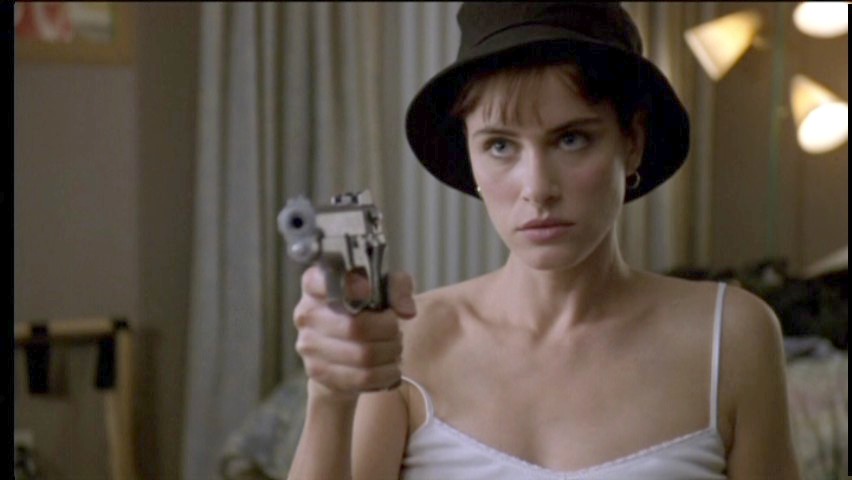
When Amanda Peet was just three years old she made her on-stage debut, by rushing the stage from the audience during a play. “I was a big show off,” she says. Even so, the native New Yorker had a hard time convincing her family she was destined for a career in Hollywood.
With no performers in her family tree the 36 year-old actress says she was considered “a little bit of a freak show” by the rest of her family.
Parents Charles, a lawyer and Penny, a social worker looked down their noses at her show biz aspirations. “It was something too intangible,” she says, “too tied up with charisma and presence.”
Her mother was concerned about Amanda’s career choices from the get go—”Don’t you know what happens to people who rely on their looks?” she asked the 14-year-old when she decided to pursue modeling—but both parents softened when she was taken on by legendary acting coach Uta Hagen, the Tony award winning actress who also trained Robert De Niro and Al Pacino. “Finally, the stamp of approval!” Peet said.
Even then, Amanda says, it took the elder Peets “a long time” to accept that she “wasn’t just going to be a drug addict person cavorting around in parties in a very short dress or something.”
Even as early success came her way—like co-starring as a ditzy but kind hearted hit-woman opposite superstar Bruce Willis in The Whole Nine Yards and its sequel The Whole Ten Yards—the rents were still not impressed.
“My mom is like, ‘Who’s Bruce Willis?’” she says of her two time co-star. “I remember when I got Seinfeld and she literally didn’t know who Seinfeld was. It was kind of like, ‘Guys! I’m getting famous!’”
Chances are family dinners are now a little more relaxed. Amanda’s days of doing Skittles commercials—her first TV gig—or guest shots on episodic television and direct-to-the-bargain-bin indies, or small roles in big movies—like playing Jennifer Aniston’s sister in She’s the One— are over.
“You’re always hearing stories about people who do an indie that goes to Sundance and you become famous overnight,” she says, “but somehow, I managed to do 12 indies that never made it to the video store, to the Quad or even to the Buffalo Film Festival.”
Somebody was paying attention, though, and she began mixing larger studio pictures in amongst the independent films that were her mainstay. Being voted one of the 50 Most Beautiful People in the World by People in 2000 further raised her mainstream profile. Since then she has been featured in everything from the great, but doomed TV series, Studio 60 on the Sunset Strip, and the micro budgeted Please Give to 2012, the $200 million end-of-the-world epic which airs on TMN and Movie Central this month.
The big budget movie was a challenge for her. Director Roland “Master of Disaster” Emmerich, a filmmaker best known for making epic special effects movies, told USA Today that 2012 would be his last disaster movie, “so I packed everything in,” which made for an occasionally uncomfortable shooting experience.
Amanda called the shoot “grueling in an athletic way.” Her character Kate, ex-wife of hero John Cusack, spends much of the movie on the run from encroaching natural disasters.
She sprints away from a massive earthquake, does aerial tricks in a Cessna and spent far too long submerged in a water tank “with costumes over our wet suits,” she says. “Remind me never to do a water movie ever.”
Worse than that was the uncomfortable feeling of acting in the key of chroma, which she describes as one of the two worst things about her job (the other being auditioning).
“It’s really hard to do blue screen and part of it is combating the feeling of being a jackass,” she says. “You respond to nothing in front of a lot of people. If you’re alone in a room, it’s less embarrassing but here you have a bunch of people you don’t know who are watching you so it’s embarrassing and you have to get over it really quickly.”
These days Peet balances acting with her new role, as mother. “The truth is I’m quite lucky because I can be a real diva and demand that [daughters Frances and Molly June] come to the trailer and hang out so I really can’t complain.”
Peet will next be seen in December’s Gulliver’s Travels, a reworking of Jonathan Swift’s classic story. She plays the magazine editor (and potential love interest) who assigns Lemuel Gulliver (her Saving Silverman co-star Jack Black) to write a travel piece on the Bermuda Triangle where he uncovers a race of miniature people.
Best of all? It’s based on a classic, one that even her mother probably has heard of.
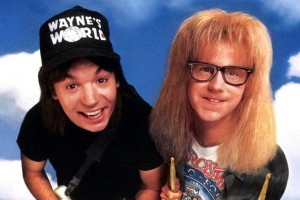
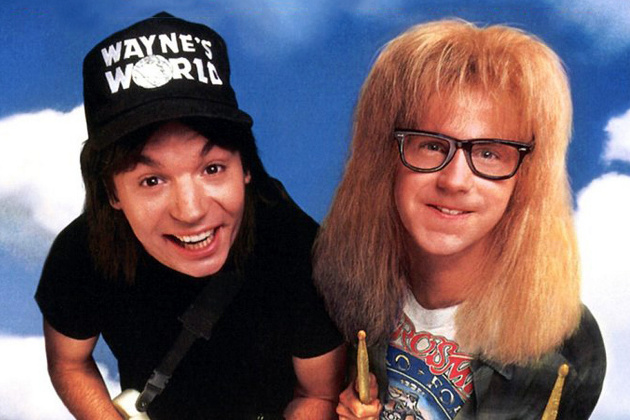
From a gig as a dance show host (billed as “Funky Mike Myers”) to a stint on Saturday Night Live to hit films like Wayne’s World and a star on the Hollywood Walk of Fame Michael John Myers has followed the path of Canadian trailblazers like the SCTV folks who found fame making Americans laugh. The Scarborough, Ontario born comedian says he was able to break into the American comedy market “because other Canadians helped me.”
Citing early boosters like Dave Thomas, Martin Short and Lorne Michaels (who the young Myers idolized, even doing an eighth grade project on the producer) Myers found his feet as a comedian with Second City, (on stages in Toronto and Chicago), and then in 1989 he, like Dan Aykroyd and Phil Hartman before him, found fame as part of Saturday Night Live.
Since then he’s had time to reflect on why Canadians have been so successful in America. To explain he quotes one of his early advocates.
“Martin Short said something that was kind of interesting which is when Americans watch TV they’re watching TV but when Canadians watch TV they’re watching American TV. There is sort of a separation. We can look at American culture as foreigners except that we’re not all that different. ‘Wow, we are like two cultures separated by a common language,’ to quote Winston Churchill.”
Canadians, he suggests, are the great observers, carefully studying and digesting American movies, television and music before putting their own spin on them. Having both objectivity and perspective allows comics like Myers to analyze pop culture, and then create a unique style that adds to the culture while cleverly (and quietly) dissecting it.
“Canada is the essence of not being,” he says. “Not English, not American, it is the mathematic of not being. And a subtle flavor. We’re more like celery as a flavor.”
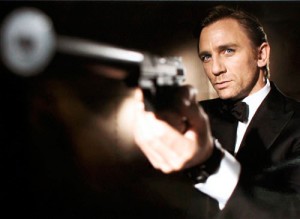 Humphrey Bogart used to say you weren’t a star until they could spell your name in Karachi and while there’s nothing tricky about the order of the letters in Daniel Craig’s name I’m not sure if people in Karachi spell his name D-a-n-i-e-l or J-a-m-e-s-B-o-n-d. That’s my long winded way of asking, “Is Craig a movie star or are his movies the stars?”