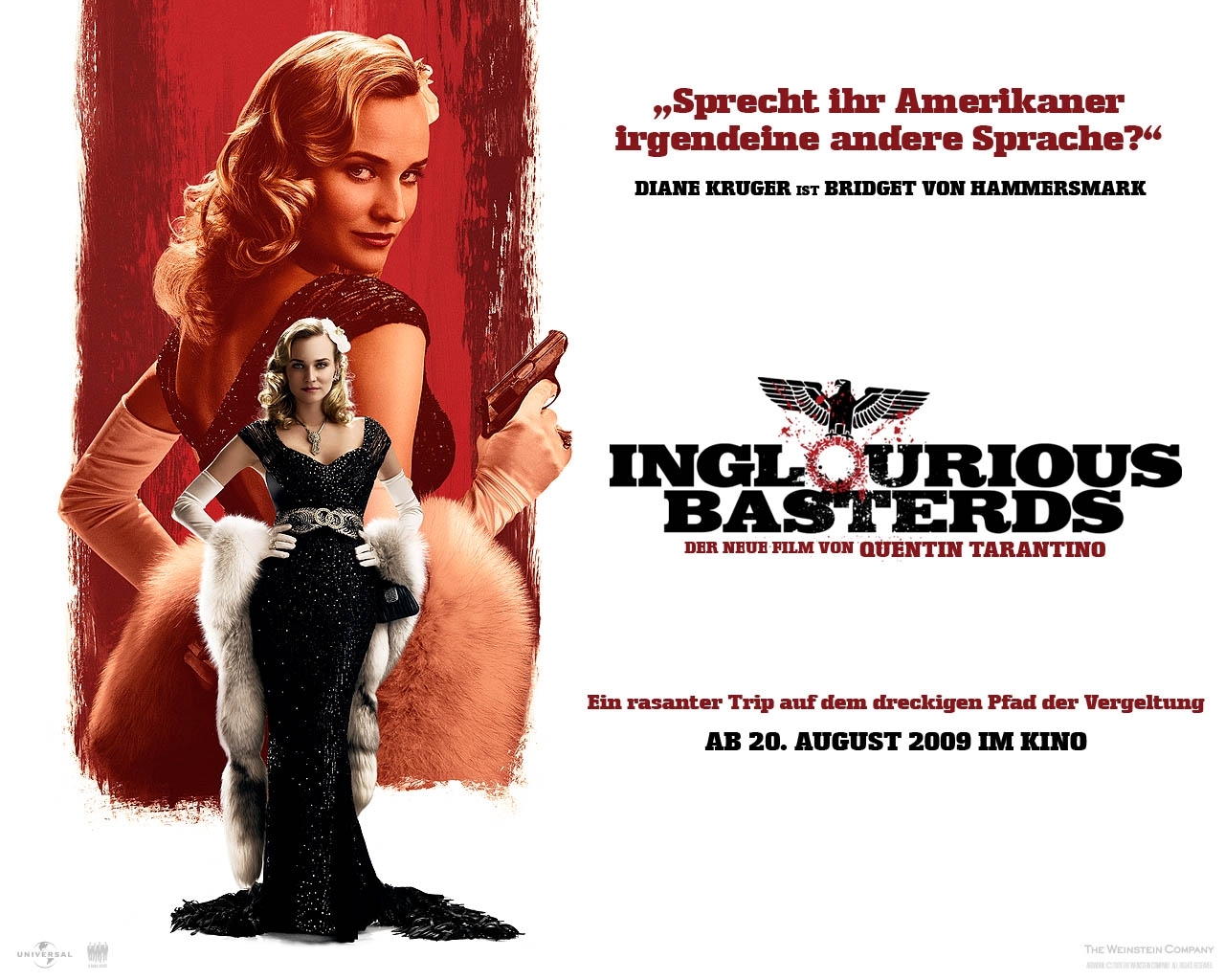
Diane Kruger almost didn’t win the part of German movie-star-turned- Mata-Hari Bridget von Hammersmark in Inglourious Basterds because Quentin Tarantino’s didn’t think she was German enough. He was familiar with her from National Treasure, Wicker Park and Troy, but assumed she was American and would have trouble with the German dialogue and accent.
“It’s a testament to my dialect coaches throughout the years,” says the actress, born Diane Heidkrüger thirty-four years ago in Algermissen, Germany. “They eventually convinced him I was actually German,” she says, but unfortunately Tarantino wanted Natasha Kinski for the role.
When Kinski backed out Kruger saw her chance. “I can be really obnoxious when I want something badly,” she says. For the audition she flew herself to Berlin and learned thirty pages of dialogue in German and in English. “I knew if I got my chance he couldn’t hire anyone else.”
The Berlin set of Inglourious Basterds was a long way from Algermissen. “I come from the middle of nowhere,” she says. “No one in my family knows anyone in the business.”
Her first taste of “the business” was at the Royal Ballet in London before an injury sidelined her dancing career. Returning to Germany she pursued modeling and became a top model. After starring in campaigns for Chanel and Giorgio Armani it was time for a change.
“You can only care so much about free clothes and posing. I wanted to be intellectually engaged.
At the suggestion of The Fifth Element filmmaker Luc Besson she left the runway to try acting. Working internationally—she’s fluent in three languages—she made an impression in a series of French films like Mon idole before Wolfgang Petersen cast her as Helen of Troy opposite Brad Pitt in the big budget epic Troy.
Admitting to being “inexperienced and completely overwhelmed” while making the movie, it nonetheless put her “on the map” in Hollywood. Soon she was starring opposite Nicolas Cage in National Treasure and its sequel while still finding time to make challenging films like Frankie and the Oscar nominated Joyeux Noël.
Inglourious Basterds is another jewel in her crown, but don’t expect her to return to that kind of role again anytime soon.
“Every movie has to be a different challenge,” she says. “I don’t want to play the same part that I’ve played in a different movie. I have to be scared of it to want to do it.”
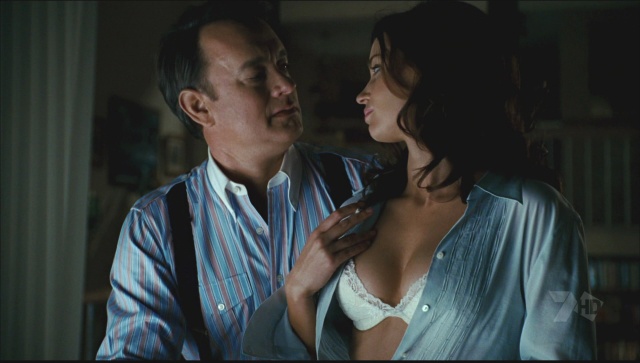
The first time most of us noticed Emily Blunt she was “’on-the-edge of sickness thin.” To play the role of Emily Chalton, the prickly first assistant to the editor in The Devil Wears Prada, Blunt had to drop pounds from her already slight frame. “It wasn’t like doughnuts were snatched out of my hand,” says the 5′ 7½” actress, but she was encouraged to slim down. So much so she would occasionally cry from hunger during the shoot. Luckily, though rake thin, she still had the energy to steal the movie from her more seasoned co-stars, Meryl Streep and Stanley Tucci.
Although the character fell directly into the love-to-hate-her category, audiences found Blunt irresistible. Her mix of vulnerability and fork-tongued charm—crowned by crystal clear blue eyes and a face anchored with a cleft chin that would make Kirk Douglas envious—earned the title Best Female Scene-Stealer from Entertainment Weekly and nominations for everything from a Teen Choice Award to a Golden Globe.
The kudos and notoriety that followed her Prada performance on this side of the Atlantic were simply an echo of her much-admired, though lesser seen work, in the UK.
After dabbling in drama at age 12 to help conquer a stutter she made her professional stage debut while still in school. From there it was a short leap to the small screen and praised performances in British television period pieces. It was, however, only when she left the lace-bonnets behind and took on a role in the critically-acclaimed My Summer of Love that she really made a splash. The story of a teenage infatuation between Mona (Nathalie Press) and the manipulative and cynical Tamsin (Blunt) earned both Press and Blunt equal shares in an Evening Standard British Film Award for Most Promising Newcomer.
When asked why she is so often cast as bad girls like Tasmin she says, “I have sly eyes. When I was in school they always said, ‘Emily can never be elected Head Girl because you never know what she’s thinking.’” Just don‘t ask her to further explain her acting method. “I think it’s embarrassing to hear people talk about their process because you always sound wanky,” she says bluntly.
We can say that she has an enigmatic quality which has served her well in supporting parts as diverse as a gawky, uptight French teacher in The Jane Austen Book Club, an oversexed young women opposite Tom Hanks in Charlie Wilson’s War and as a babysitter in Dan in Real Life, all movies she says, that share “a very human heartbeat.”
Even when she appears in something less than Oscar worthy, take the 2005 miniseries Empire, for instance, a project she dismisses as “the sad little brother of Rome,” she still stands out, giving her characters both subtlety and complexity. She’s not a flashy actor; often she expresses an idea with a simple lift of an eyebrow or an understated movement, a trait she shares with her acting idol Cate Blanchett.
While she says “I want to do my own thing and not emulate anyone else,” she calls Blanchett’s chameleon-like ability to disappear into a variety of roles very brave.
The disappearing act is a trick Blunt seems to have picked up from Blanchett. Following a bravura turn in the offbeat comedy Sunshine Cleaning, and the now obligatory for stars-on-the-rise Simpson’s cameo, she took on, and disappeared into, the most challenging role of her career to date. In The Young Victoria Blunt returned to the period roles that defined the early part of her career, playing Queen Victoria from headstrong teen to Queen of the Realm to love sick widow.
“I definitely made a real play for the part because I knew it would be one of those roles that people would hound because it was so rare and so well written,” she says. “It’s hard to find a film that is shouldered by a woman about a girl like that who is so remarkable and so complex. I went in and met them and said, ‘I love it. I’m very aware that a lot of other people do as well but I’d like you to give me a chance.”
Since then she’s worked nonstop, in movies both big—like this month’s mega budget Gulliver’s Travels—and small—a 10 minute short named Curiosity, shot on a budget of £2,000. Mixed into that eclectic stew is The Wolfman, a reimagining of the 1941 Lon Chaney classic which airs on TMN and Movie Central this month. Blunt says she took the role for two reasons. First to work with co-stars Anthony Hopkins and Benicio Del Toro and secondly because her character Gwen is “the girl in a werewolf film, and that’s cool.”
One more very cool job in Emily Blunt’s white-hot career.
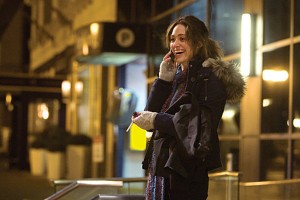
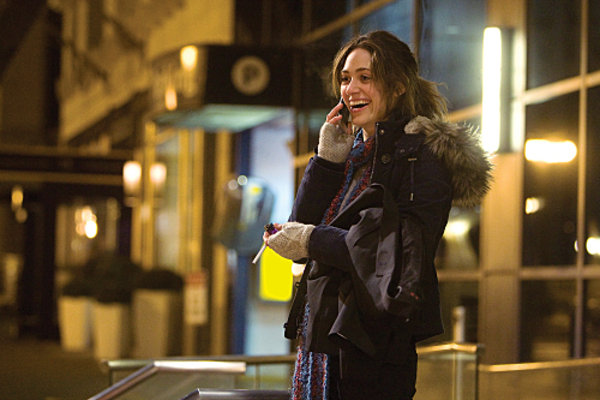
For many performers playing the Metropolitan Opera alongside Plácido Domingo and Luciano Pavarotti would be a career crowning achievement. To Emmy (that’s short for Emmanuelle) Rossum it was just another day at work. She made $5 a night singing with the children’s choir. “There was a horse on stage in a Zeffirelli production that got one hundred and fifty a night,” she laughs, before adding that the experience taught her to never take a job for the money. “You really realize you’re there because you love it,” she says.
Rossum, the New York City raised star of Shameless (which airs on TMN and Movie Central this month), left the opera at age twelve, frustrated that solos were only handed out to the boys. She took with her a work ethic: Be prepared, be on time. It’s a privilege to perform for a living. “Those are the ideas I’ve taken to every set with me.”
Her early resume looks like a lot of New York City based actor’s. A stint on As the World Turns here. A guest shot on Law & Order there. But it was a role as gap-toothed Appalachian orphan in the film Songcatcher that made people stand up and notice her. The movie showcased the preteen’s acting ability—she was nominated for an Independent Spirit Award for Best Debut Performance—and gave her the chance to show off her singing skills, performing five tunes on the soundtrack, including a song with one of her idols.
“Having a chance to record with Dolly Parton was something I’ll never forget,” she says of When Love Is New, a country duet that appears on the soundtrack.
The low budget film—just 2 million dollars total—led to more work, including playing title character from ages 12 to 16 in the television movie The Audrey Hepburn Story and the small, but crucial part of Katie Markum, Sean Penn’s daughter murdered daughter, in her first major studio film, Mystic River.
“When I arrived on the set the first day, [director Clint Eastwood] was incredibly warm,” she says. “But before the day ended, he was yelling at me for calling him Mister Eastwood. He’s a very quiet man who doesn’t say much, but you better listen, because, if he says something, it’ll be damned important.”
Working with Eastwood was exciting, but every career has a moment, a crack in time when an actor goes from unknown to known and for Emmy it was yet to come. Her career had been a slow build, from small roles in big films (Mystic River) and big roles in small films (like the urban fairy tale-romantic comedy Nola), that lead to 2004, her breakout year.
First the 18 year old spent six months shooting the wild end-of-the-world epic The Day After Tomorrow. With a budget of $85,807,341 the global warming disaster movie probably cost more than all of Emmy’s previous films combined, but it gave the young actress a showcase for one of her pet causes. “One of the reasons I’m glad I did The Day After Tomorrow is because it opened a dialogue about the effects of global warming,” she says, despite the movie being listed by Yahoo! Movies listed the film as one of the Top 10 Scientifically Inaccurate Movies of all time.
The second part of her 2004 breakout took her back to her stage roots. Fresh from Day After Tomorrow’s grueling shoot she auditioned for Sir Andrew Lloyd Webber who hired her to play Christine in the film version of The Phantom of the Opera. “Actually I didn’t think I would get it just because it was too big. They don’t normally give Hollywood ninety-million dollar budgeted musicals to un-famous sixteen-year- olds.”
Amazingly she had never seen the stage show before taking the role, but she put an indelible stamp on the character, but it wasn’t easy. “I was wearing corsets the entire six months which were insanely uncomfortable and prohibited me eating any solid food all day long besides ice cream which would melt and actually pass my esophagus. It had enough sugar to actually sustain me and give me enough energy.”
Since then she has worked steadily. Her CD Inside Out was a mixture of pop-rock electronica, new age and classical. She’s lent her name to causes like breast cancer awareness and Global Green USA and of course, has stared in high profile films like Poseidon and the wild action flick Dragonball Evolution.
But despite all her achievements she hasn’t let Hollywood go to her head. “I would say a big accomplishment is that I’ve stayed true to who I am and not let fame affect me.”
Would you spend money to see an animated movie starring Nicole Jaffe and Henry Corden? Probably not, because you’ve never heard of either of them.
Oh, but you’ve heard them.
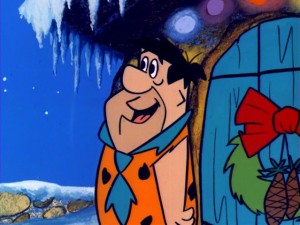
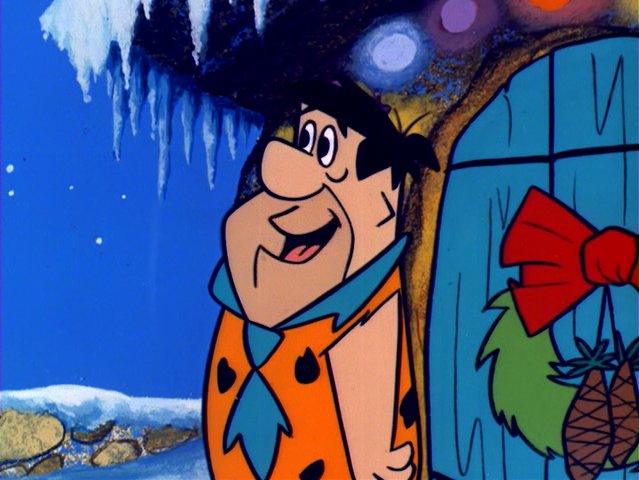
Jaffe voiced Velma on Scooby Doo, while Corden vocalized for Fred Flintstone. Their voices are familiar, but not well-known enough for the producers of most of today’s big budget cartoons.
“If they were doing a half-hour Flintstone show today, they’d still go with me,” said Corden in 1999, “but for a motion picture, even an animated one, they’d go with a celebrity to play Fred, because they need to sell the picture.”
It boils down to bucks —George Clooney as the Fantastic Mr. Fox will put more bums in seats than Henry Corden. “I hate it but I understand it,” Corden said.
Luckily marquee actors like voice work— the hours are good and you don’t have to shave.
Marlon Brando was so taken with the easy money of voice acting he suggested doing the role of Superman’s Jor-El in voice-over, with his onscreen character portrayed as a glowing, levitating green bagel. That one didn’t pan out but he took further audio-only roles, including his final gig performing an old lady voice in the unreleased Big Bug Man.
Other star turns haven’t been so ignoble. Orson Welles thrilled a generation of tweens as the voice of planet-gobbler Unicron in Transformers: The Movie and Angela Lansbury was Mrs. Potts , the perkiest teapot ever in Disney’s Beauty and the Beast.
In the old days, Disney frequently used celebrity voices to augment their cartoons — remember Bob Newhart in The Rescuers?—but the trend kicked into overdrive when Robin Williams’s hyperkinetic jabbering stole the show in Aladdin.
It was a tour de force performance and Williams’s star power helped push the box office past $200,000,000, an animated film first. Since then Disney has made a habit of regularly hiring well known actors to voice their characters—“They properly recognized that you couldn’t send an animated character out there to Entertainment Tonight to promote your movie,” said animation producer Fred Seibert–but sometimes big name talent can work against the part they’re playing. Can you hear James Earl Jones as Mufasa without thinking of Darth Vader? Me neither.
Perhaps that’s why the House of Mouse went a different way with The Princess and the Frog, premiering this month on The Movie Network. They kept things fresh by casting Keith David, Bruno Campos and Anika Noni Rose.
“I was so wanting to be a Disney voice my entire life,” says Rose, the voice of Disney’s first African-American princess in The Princess and the Frog, “and I would have been more than happy to play anything. Is there a blade of grass? Do you need it to whistle? Because I’ve got that.”
She’s a good actor, but hardly a household name and that lack of familiarity allowed her character to live and breathe and not simply be an extension of an already well-known celebrity persona.
In animation circles the debate rages on about the pros and cons of casting big name actors versus voice only performers, but there is one thing everyone agrees on. “It’s not just about the voice, it’s about the character under the role,” says voiceover actor M.J. Lallo.
“It’s not just standing in the studio doing funny voices, it’s acting,” adds casting director Michael Hack. “It’s more realistic CG animation and more realistic voices. You need to be trained and have instincts for real acting. If you don’t bring anything as an actor, the animation suffers.”
Voxography: Ten Great Voice Actors
1. The Man of a Thousand Voices Mel Blanc was best known as the voice behind Bugs Bunny, but he also vocalized for Porky Pig, Bugs Bunny, Daffy Duck, Tweety & Sylvester and Yosemite Sam. He supplied so many voices in films that Jack Benny once joked, “There are only five real people in Hollywood. Everybody else is Mel Blanc.”
2. June Foray, best known for voicing Rocket “Rocky” J. Squirrel, was praised by animation kingpin Chuck Jones who said, “Mel Blanc is the male June Foray.”
3. Andy Serkis says he used the sound of his three cats clearing fur balls out of their throats to develop the inspired voices he produced for Gollum and Smeagol in the Lord of the Rings trilogy.
4. Paul Lynde played off his irascible personality to play Templeton the Rat in Charlotte’s Web. Tony Randall was originally cast in the role, but when the director asked him to sound more “nasal” Randall suggested they get Paul Lynde instead.
5. Ben Burtt in WALL-E makes the list for creating the blips and beeps that make Pixar’s Waste Allocation Load Lifter Earth-Class, or WALL-E character, such a charmer.
6. Despite an acting career that spans almost 70 years Peter Sallis is best known as the Yorkshire accented voice of eccentric inventor Wallace in the Wallace & Gromit films.
7. Named a Disney Legend in 1991 Sterling Holloway voiced dozens of characters for the Mouse House including the endearingly raspy voiced Winnie the Pooh. Ironically the actor best known for his distinctive voice made his silver screen debut in silent movies.
8. As the know-it-all Judith in Where the Wild Things Are Catherine O’Hara left behind her mimicry skills—remember her turn as Katharine Hepburn on SCTV?—to deliver a pure and lovely unaffected performance in her own voice.
9. As the swashbuckling Puss in Boots in the Shrek series Antonio Banderas is a scene stealer. He’s flirty—“I don’t know you,” he says to one comely cat, “but I’d like to.”—and daring with a flair for the dramatic.
10. In addition to writing and directing The Incredibles Brad Bird also cast himself in one of the film’s most memorable roles, the superhero costume designer and Edith Head look-a-like Edna “E” Mode.
On-screen and off Rachel McAdams defies categorization. A bundle of contradictions—she describes herself as “a daydreamer and a dawdler,” and “a very serious person” who has “always been kind of girly”—she lives in Toronto despite having a thriving career in Hollywood.
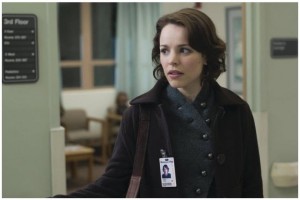
The common thread that links her movies, from the über-romance of The Notebook to the bawdy comedy of Wedding Crashers and the intrigue of State of Play is a simple, yet indefinable quality: intelligence. Her intellect informs every role she takes, even in a completely silly comedy like The Hot Chick, her first hit. It takes smarts to suggestively deliver a line like, “I hear it’s good for the skin if you take your towel off,” to a sauna full of women while playing a boy trapped in a woman’s body and still have a career once critics get through with the film.
“That brain is substantial,” says Diane Keaton of her frequent co-star, “and if you have that along with a face you can’t take your eyes off, it’s so compelling. It’s rare.”
She is a rarity, one of the few gilded members of young Hollywood who has made her work the focus of her career and avoided becoming a tabloid punching bag like her Mean Girls co-star Lindsay Lohan.
“I want to pick good projects,” she said in 2004, “I want to work with great directors and try not to put too much pressure on myself and just read things for the story and recognize when I’m drawn to something for the right reasons.”
After years of figure skating at ice carnivals, working at MacDonald’s in southwestern Ontario, studying drama at York University and appearing in forgettable TV shows (Shotgun Love Dolls anyone?) the smart and funnyexposé of high school caste systems Mean Girls was the movie that put her on the map.
She modeled the flamboyantly wicked Regina George on Alec Baldwin’s performance in Glengarry Glen Ross. Spitting out lines like, “So you think you’re pretty?” through a cobra smile, she won critical praise and very nearly stole the show.
Then, just when audiences thought they had her typecast along came 2004s The Notebook, the deeply romantic Nicolas Sparks story. Given the script just one day in advance of the auditions McAdams beat out nine other actresses (including Ashley Judd, Britney Spears and Reese Witherspoon) for the now iconic role of Allie, the woman who finds freedom in the arms of a man (Ryan Gostling) her mother calls “trash.” Roger Ebert said her performance contained “beauty and clarity” and suddenly Hollywood had a new “it” girl.
Although she admits to being a “sucker for sweeping love stories” she didn’t capitalize on the breakout success of The Notebook by churning out a series of cookie-cutter romances or taking advantage of the huge offers coming her way—she turned down the role of Bond girl Vesper Lynd in Casino Royale—instead she opted for a variety of projects, none of which was a romance in the traditional sense.
She made waves as Owen Wilson’s love interest in the raunchy comedy Wedding Crashers, became an action star in Wes Craven’s thriller Red Eye and played the outspoken daughter of Diane Keaton and Craig T. Nelson in the critically lauded ensemble family drama The Family Stone.
Then, as quickly as she came to prominence, she was gone. For almost two years she was absent from screens until she took on the role of Kay, the platinum blonde focus of a love triangle between Chris Cooper and Pierce Brosnan, in the suspenseful psychological thriller Married Life. It’s the film she credits with rejuvenating her interest in filmmaking after some time off.
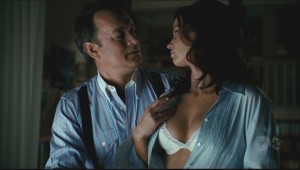
Since then she’s been a mainstay at festivals and multiplexes playing everything from a soldier whose boyfriend was killed saving her life in The Lucky Ones to the titular spouse in the sci fi romance The Time Traveler’s Wife and Sherlock Holmes’s beguiling Irene Adler opposite Robert Downey Jr.
Her best reviews of 2009 came with State of Play (which airs on TMN and Movie Central this month), a political drama in the spirit of All the Presidents Men. She co-stars with Russell Crowe and Helen Mirren as a Washington Post blogger working with Crowe’s investigative reporter to unravel clues in the murder of a congressman’s mistress.
With a full slate of films announced for the next couple of years—including Morning Glory with Harrison Ford and Diane Keaton and a project with legend Terrence Malick—it seems the chameleon spirit of Rachel McAdams is just as restless as ever.
“It’s fun to experiment,” she says, “I’m always kind of a slave to the character. Whatever kind of vision comes to my head I just have to go with it.”
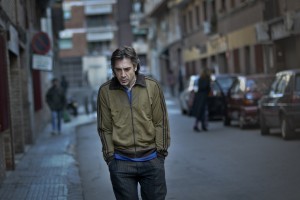
Javier Bardem dedicated his No Country for Old Men Oscar to a frequent co-star. “Mom this is for you,” the emotional actor said. “This is for your grandparents, for your parents, Rafael and Matilde, this is for the actors of Spain, who have brought, like you, dignity and pride to our job.”
You see, Bardem, the first Spaniard to win an acting Academy Award, comes from a long line of actors. His performing arts lineage stretches back nearly a hundred years but it wasn’t always a given that he would join the family business.
His first acting gig came at age six and even though he continued to work on TV and in films he studied to be a painter. He put down the brush, however, when he realized he’d never be a great artist and tried his hand at writing, construction and even stripping (but only for one night).
His road to Hollywood began at age twenty with an offer to appear alongside his mother Pilar Bardem in the movie Las edades de Lulú. She advised him to take the role seriously and take acting classes. He did, and never looked back.
The young Bardem appeared on TV, worked with Pedro Almodovar, certainly a rite of passage for all future Spanish superstars, and found fame with Jamon, Jamon, a film co-starring his future wife, Penelope Cruz.
If not for the persistence of John Malkovich however, English language audiences may never have discovered the Spanish star. In 1997 Malkovich was planning his directorial debut, The Dancer Upstairs. He offered the lead to Bardem who turned it down because he didn’t feel confident acting in English. Continuing to work in Spain, Bardem made two dozen films, collected awards like Best Actor at the Venice Film Festival for The Sea Inside and become the first Spanish actor to be nominated for a Best Actor Oscar for Before Night Falls.
The part made him an international superstar—Al Pacino even left a message on his answering machine praising the performance and Francis Ford Coppola compared him to Robert de Niro.
Meanwhile Malkovich finally had the money to make The Dancer Upstairs, and by this time, 2002, Bardem had becoming fluent in English—he says he sang along with AC/DC to learn the language—and felt confident enough to take on a major English speaking role.
Of course, Hollywood came calling—he turned down the Witwer role in Minority Report which eventually went to Colin Farrell—and he finally made his Hollywood debut in a cameo appearance as a crime lord who hires Tom Cruise to dispatch some troublesome witnesses in the thriller Collateral.
He made his strongest impression as No Country for Old Men’s sociopathic assassin, Anton Chigurh. Entertainment Weekly called him one of the “50 Most Vile Villains in Movie History.”
Then he switched gears, playing a comedic role in Woody Allen’s Vicky Christina Barcelona, a part which made him a Hollywood romantic lead, on screen and off. Reunited with his old Jamon Jamon co-star Penelope Cruz in Allen’s film they quietly started dating in 2007. The couple kept a low profile—when asked about their relationship in 2009 all Cruz would say is, “He’s a friend and the best actor in the world.”—but married in 2010 in front of family members during an intimate ceremony at a friend’s Bahamian home. In January 2011 the actress gave birth to their son, Leo.
Professionally Bardem also kept busy. In 2010 he proved he could do it all. In the same calendar year he released two movies back to back, Eat Pray Love, a big budget romance and Biutiful, a gritty Spanish language drama that cemented his rep as the movie’s most versatile leading man.
Speaking with him the night before Biutiful made its debut at the Toronto International Film Festival I asked if his preparation process varies from role to role.
“I think it is the same process but of course there is more weight in this,” he said. “There is more emotional weight than in Eat Pray Love because the character has to carry a lot of things with him but I think at the end it is about trying to understand who the person is, being honest and trying to put that on the screen.”
Biutiful’s story of a low-level criminal in Barcelona trying to put his life together in light of unbearable guilt over a tragic accident and a death sentence from his doctor grabbed Bardem right away.
“Most of the scripts [I get] are very boring,” he told me. “They are the worst reading material you can have. When you are in to too many scripts you don’t read a good book for a long time and you realize you need to get a good book and lose yourself in those words. In this case [the script] had an emotional impact on me.”
Biutiful offered up one of the biggest challenges of his career. “To take a man that you are not actually liking from the first moment [and make an audience] understand that behind that is a man who really needs compassion, who really needs to love. That is the challenge.”
Biutiful which airs on TMN this month, earned Bardem his third Oscar nomination. He calls the movie a “a gift” and acknowledged to me that his performance wouldn’t have been possible without the help of his director Alejandro González Iñárritu.
“I think he is one of the greatest actor’s directors,” he said, adding that Iñárritu provided a detailed, written character sketch before shooting began.
“When he handed that great work to me I was pleased because I am lazy. It helps you to more or less have the image. We work with imagination so we have to understand who [the character is]. Even if the others don’t get it you need to know where you are when he says action, otherwise you are up in the air.”
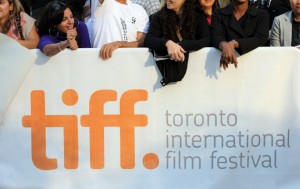
Every year around this time people ask me, “How should I do TIFF?”
“I beg your pardon?” is my usual shocked reply until I realize they’re referring to the Toronto International Film Festival, or as acronym aficionados refer to it, TIFF.
Gaining my composure I continue, “Get ready to enjoy ten days of standing in lines, sitting in the dark and only eating sporadically.” It sounds like some new age sense deprivation therapy or a Toronto City Council session but it’s actually what you can expect from attending the biggest public film festival in the world.
For ten days each September movie stars decorate red carpets, thousands of miles of film unspool and movie mavens push the limits of their endurance to take it all in. But how, exactly, does one “do” TIFF?
Let’s start with the galas, the star-studded screenings of the festival’s biggest movies. Advance tickets may come with sticker shock, but they also come with the chance of eyeballing George Clooney or Angelina Jolie up-close-and-personal.
These tickets are in high demand, so how do you get them? It helps if you strongly resemble someone famous. A few years ago a Bono look-a-like talked his way into gala screenings and parties and it wasn’t until much later everyone realized he was an imposter. If you are not a rock star or genetically blessed enough to look like Jon Hamm or Emily Blunt, however, you must plan in advance and be prepared to stand in lines. The gala presentations usually have a rush line the night of.
With the galas come celebrities so your chances of bumping into a bold-faced name or two increases exponentially during festival days. What’s the etiquette when you find yourself basking in the reflected glow of Brad Pitt or Dame Judi Dench?
Be yourself and don’t try too hard to impress and you’ll be fine. If that doesn’t work talk in film critic speak to get noticed. If you must sully their golden ears with your speech, fall into meaningless movie-speak; label their film a “tone poem” or tell them it was “quirky but inspiring.” Drop Pedro Almodóvar’s name. Say things like “the films this year show an international scope and diversity of voices,” and pepper your speech with any of the following words in any way that seems appropriate at the time: avant-garde, unconventional, innovational or causative. Don’t worry if what you’re saying doesn’t make sense, the celebs will be too tired or too self-absorbed to notice.
Do NOT corner Brad and spout your detailed opinion about his new movie. He doesn’t care what you think. He’d rather be at home with Angie and the kids. Also don’t ask about Angie or fish for an invite to George’s villa.
If you see Jackie Chan at TIFF’s Asian Film Summit refrain from asking how many times he’s broken his nose. Google it instead.
The above rules also apply to the festival parties. Keep the conversation going without offending anyone or actually saying anything worth repeating. Perfect for the party circuit.
The festival is more about celluloid than celebrities, however. You may get a great water cooler story from a casual celeb encounter, but the fest’s main attraction is, and has always been, the movies.
TIFF offers up the chance to see the best of domestic and world cinema, get a jump on Oscar season and watch movies you’d never be able to see otherwise.
What are three things one must bring to a screening? A good attitude, a willingness to be swept away by the movie and, on a less ephemeral note, a snack. These things never start on time and there is nothing worse than watching a movie on an empty stomach.
Three things NOT to bring: a cell phone (unless you promise to turn it off before the movie starts), candy wrapped in crinkly paper and a bad attitude.
It can be hard to maintain a rosy outlook, but as I always say, if TIFF isn’t an endurance test, you aren’t doing it right. You should go in filled with the hope of seeing great movies and possibly sharing a moment with your favorite movie star, and emerge on the other end of the ten days exhausted, but satisfied.
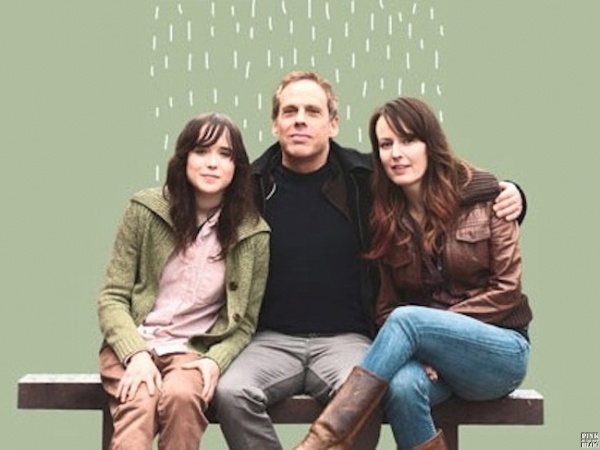
In the years since she was nominated for an Oscar for her performance in Juno, she has worked with directors Christopher Nolan, Woody Allen and Drew Barrymore, but Touchy Feely filmmaker Lynn Shelton asked her to do something she hasn’t done since her teens working in her hometown of Halifax—improvisation.
“I had done nothing remotely like improv since Trailer Park Boys,” she says.
“It was an intriguing challenge for me because it was completely stepping out of my comfort zone. There were some scenes she had written where she’d be pushing us to improvise because that’s what she likes, and I’d be like, ‘Lynne, the scene is great. I’m not going to improve on this, believe me.’”
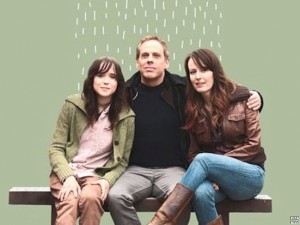
The movie focuses on three relatives, a massage therapist with an aversion to touch, her dentist brother and Jenny, a character Page describes as having an “incredibly quiet, self contained, deep, deep sadness and fear and unwillingness to move forward in life.”
Page breathes life into the character and says she was “completely intrigued with her journey as a person” but what really keeps her going is trying new things.
“It’s funny because after certain things happen in your career and things change and etcetera, etcetera, etcetera there is definitely a mind set that tries to get put on you about the next move,” she says.
“I get all that but what is hands down the most important thing for me is that I feel inspired and serious and passionate and continue to feel ambitious.”
With a variety of projects in the works—including the Beyond: Two Souls video game and X-Men: Days of Future Past—Page is keeping it interesting by staying varied.
“I get paid to explore all kinds of things and it always feeds you in a way that is incredible. Any job I do I try and do everything I can to grow as an actor. I love what I do so I’m always trying to get better at it, always learn more from all of the amazing people I work with. The ability to get to go to work and feel so deeply—deep sadness, deep pain, joy, anger and feel that flow through you. To get to do that as your job is pretty incredible.”
As “Alien” famously reminded us, “In space no one can hear you scream,” but they didn’t mention anything about heavy breathing. “Gravity,” a new space thriller starring Sandra Bullock and George Clooney as two astronauts adrift in the wild blue yonder, features more heavy breathing than a Linda Lovelace movie.
Beginning with an uninterrupted fifteen-minute opening shot, director Alfonso Cuarón presents a spacy story about medical engineer Dr. Ryan Stone (Bullock) and astronaut Matt Kowalsky (Clooney). She’s an uptight novice; he’s a wisecracking vet on his final mission.
It’s routine stuff—or as routine as space travel ever gets—until a debris storm, comprised of bits and pieces of old satellites, chunks of metal traveling as fast as bullets, crashes into their space shuttle. Stone is knocked “off structure” and drifting through the inky darkness while Kowalsky uses his experience and calm to rescue her. Cue the heavy breathing as her oxygen slowly runs out and panic sets in.
The storm has knocked their communications offline and they are forced to become Space MacGyvers in order to survive.
“Gravity” is an ambitious film. A two-hander set against the bleak backdrop of space, it relies on the cast and some tricky camerawork to maintain interest over the film’s deliberately paced but slight 85 minute running time.
The story is one of survival, but screenwriter Cuarón (who co-wrote it with his son Jonás) hasn’t simply written a horror film about imminent disaster. Stone signed up for outer space travel to isolate herself from a personal tragedy, but when the chips are down she finds new meaning in her life.
It’s a good way to ground the story. The isolation of space is well portrayed, the “off structure” sequences are tense and effective and the shots of Bullock drifting in the void or floating through her space shuttle are beautiful, like interstellar ballet. As effective as the human story is in Gravity, however, I could almost imagine turning the sound down and being content to just watch the pictures. Like Laser Floyd in Space.
But “Gravity,” while beautiful to look at, is occasionally too in love with its technique. The seventeen minute long uninterrupted shot that starts the film is spectacular and overall the look will make your eyeballs dance but then there’s a scene where we see Sandra Bullock reflected in one of her own, gravity free, tears. It’s a great image but one that feels a bit too clever. It was one of the few times in the film that I thought I was watching a special effect.
The look is an achievement, but when you find yourself daydreaming about how a scene was shot, it’s a sure sign the technique has taken you outside the story.
“Gravity” isn’t an epic like “2001: A Space Odyssey” or an outright horror film like “Alien.” There are no monsters or face hugging ETs. It’s not even a movie about life or death. Instead it is a life-affirming movie about the will to survive.
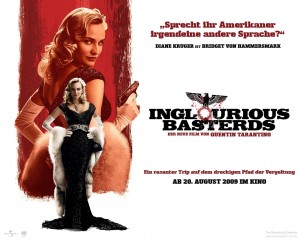 Diane Kruger almost didn’t win the part of German movie-star-turned- Mata-Hari Bridget von Hammersmark in Inglourious Basterds because Quentin Tarantino’s didn’t think she was German enough. He was familiar with her from National Treasure, Wicker Park and Troy, but assumed she was American and would have trouble with the German dialogue and accent.