Blade Runner 2049 director Denis Villeneuve and I are talking about how technology impacts our lives, when technology impacts our interview. The phone goes dead.
“Sorry about that,” he says back on the line. “There was another call and I didn’t want it to be distracting but I pushed the wrong button. I was doing an interview with someone who was not understanding a word I was saying! Then I realized, I’m not talking to Richard anymore. I’m talking to an unknown person. That says a lot about where we are now.”
Villeneuve, the Oscar-nominated Trois-Rivières, Que.-born director, saw the original Blade Runner when he was 15 years old.
“It was a hybrid of film noir with sci-fi,” he says. “The world that was depicted in the first movie, it was the first time I felt like I had seen a serious vision of what could be our future. There was so much poetry involved in the characters. There is strength in the vision. It is very singular, very unique and at the time I was a science fiction addict and for me it became an instant classic.”
A self-described dreamer, Villeneuve says the movie lit his imagination on fire.
“In those years my strength was dreaming,” he recalls. “I spent the first years of my life more in dreams than in reality. There are a lot of dreams I had back then that are inspiring me today.”
Thematically the new film harkens back to Ridley Scott’s original but instead of being a reboot or a remake it grows organically out of the 1982 film. Like the original it is about discovering what is real and what it means to be human and how technology fits into that puzzle.
“I felt it had the potential to tell a very strong story about the human condition,” he says, “about our relationship with technology. These are timeless questions that were already present in the first movie but I thought it made sense to bring back those questions today, 30 years later when our relationship with technology has evolved so much. When Blade Runner was released it was the time when we were starting to see personal computers in homes. It was the very beginning of the electronic revolution and now it is a different world.
“When you make a science fiction movie it is a mirror of today. It is nothing else than that, an exploration of today.”
Blade Runner 2049 is a mix of old and new, of Scott’s classic vision and Villeneuve’s new ideas. A throwback to the first film comes in the form of Harrison Ford, who recreates his role of retired blade runner Rick Deckard. To find someone who could carry himself against the screen legend Villeneuve brought in fellow Canadian Ryan Gosling.
“I needed that taciturn quality; quiet and strong,” he says. “I needed someone with charisma, big enough to be in front of Harrison Ford and not melt. A real movie star. I knew at some point he would be face-to-face with one of the biggest stars of all time.”
Reinventing a beloved classic like Blade Runner takes guts. When I ask Villeneuve if he looked to Scott for guidance he laughs. “His advice was, ‘Don’t f-— it up.’”
BladeHeads hoping to learn intimate details about Denis Villeneuve’s continuation of Ridley Scott’s 1982 sci fi detective masterwork will be disappointed by this review. I’m treating “Blade Runner 2049” like a high tech “Crying Game.” Remember that? “The movie everyone is talking about… But no one is giving away its secrets.” Spoilers for the flick will likely be available on twitter roughly 0.0001 nanoseconds after the film’s first public showing so check there. You won’t find them here.
I will say the new film is set thirty years after the events of Scott’s film. Ryan Gosling is Los Angeles Police Department’s Officer K, a blade runner who hunts down and eliminates rogue humanoid androids called replicants. When he makes a startling discovery in the field his supervisor Lieutenant Joshi (Robin Wright) sends him to track down the only person who can help save humanity, retired blade runner Rick Deckard (Harrison Ford). “You’re a cop. I did your job once. I was good at it,” he says.
I will also say that Jared Leto plays a replicant manufacturer named Niander Wallace, that David Bautista makes an appearance and that it rains a lot. But that’s it.
“Blade Runner 2049” is a beautiful looking movie, simultaneously lush but austere. Villeneuve’s frequent collaborator, cinematographer Roger Deakins, creates eye-catching tableaus that blend moody film noir, desaturated dystopia, vivid neon cityscapes and more. Each setting in every scene has its own unique palette that has echoes of the original film, but feels fresh. It’s a movie that visually doesn’t slavishly adhere to Scott’s vision but grows organically out of it.
Thematically it harkens back while creating a new story. Like the original it is still about discovering what is real, and what it means to be human but it expands on the search for self and the coming to grips with what you find, touching on real life issues like false memories and fear of progress.
Keeping it grounded are reverberations from our lives. A hologram that keeps K company is simply the logical extension of Siri, a comforting voice that tells you what you want to hear. Our brave new world of self-driving cars and machines that replace human interaction is simply the analogue “Blade Runner,” a prototype of the world we see on screen. Virtually everything we see is futuristic but not outside of the realm of possibility. These touchstones from our present lives and the primal search for self ensure the humanity of the story doesn’t get lost amid the technology.
Fans of the original will find much to like in “Blade Runner 2049.” It’s a skilfully made movie that works as a companion piece to Scott’s film and as a detective mystery. What it isn’t is easy. It’s a ponderous two-and-a-half hours long, grappling with ideas rather than simply allowing characters to physically grapple with one another. There is the odd combat scene but the real action here happens internally.
I think it’s time Terrence Malick and I called it quits.
I used to look forward to his infrequent visits. Sure, sometimes he was a little obtuse and over stayed his welcome, but more often than not he was alluringly enigmatic. Then he started coming around more often and, well, maybe the old saying about familiarity breeding contempt is true.
For most of his career he was a tease, a mythic J.D. Salinger type who burst on the scene in a blinding flash of brilliance, made two of the best films of the 1970s, then left us hanging. Like spurned lovers we waited for him to return for two decades and at first were happy to see him again. He told wondrous stories about personal connections and the nature of relationships.
Then he started repeating himself. In the beginning I didn’t mind but soon his whispered philosophical asides became tiresome and I began to look for reasons to avoid him.
Now I have one.
It’s been said that the essence of cinema is beautiful people saying interesting things. In his new film Malick gets it half right, parading good-looking heart throbs like Ryan Gosling, Rooney Mara, Michael Fassbender and Natalie Portman around in a pointless exercise called “Song to Song.”
Fassbender plays a Machiavellian a record producer who uses his wealth and power to seduce those around him, including aspiring musician Mara, rising star Gosling and waitress-turned-wife Portman. The willowy women and mumbling men run barefoot through the loose story—which often feels cobbled together from scraps of film found on the editing room floor—pondering philosophical questions in hushed tones. “How do you know when you were lying to yourself?” they whisper. “Is any experience is better than no experience?” All the while Malick’s camera, light as a feather, floats above it all capturing his puzzling whims. For the entire running time nobody looks like they’re having any fun even when they’re dancing, being goofy or laughing. They’re not having any fun and neither will you.
Airy and disjointed, it’s a collage of feelings and shards of life strung together on a fractured timeline. Malick indulges himself to the point that the film is less a movie and more like an experience, like going to “Laser Floyd.”
There are highlights. Val Kilmer singing to a festival crowd, “I got some uranium! I bought it off my mom!” before hacking off his hair with a giant Bowie knife is a memorable moment and cameos from Patti Smith and John Lydon are welcome, but at its heart “Song to Song” is a movie about people trying to connect that keeps its audience at arms length.
There’s a quick shot of a tattoo in the movie that sums up my feelings toward my relationship with Malick. Written in flowery script, the words “Empty Promises” fill the screen, reminding us of the promise of the director’s early work and amplifying the disappointment we feel today. “Song to Song” is the straw that broke the camel’s back, the Terrence Malick movie that put me off Terrence Malick movies.
I’ll be nice though and say, it’s not him, it’s me.
“La La Land” reinvents the traditional big screen musical by playing it straight. The original songs and new story feel like something Gene Kelly would approve of but not quite recognize as the form he helped perfect in Hollywood’s Golden Age.
Aspiring actress and barista Mia (Emma Stone) and serious jazz pianist Sebastian (Ryan Gosling) can’t help but meet cute. He honks his horn at her during a traffic jam. She flips him off. They meet again in a restaurant. She’s about to compliment him, he’s rude to her. Worse yet they bump into one another at a pool party where he’s playing with a 80s cover band, playing a-ha covers for be-bopping drunks. Third time is a charm and they finally connect, for real. Flirting, dancing and singing they build a relationship as they construct careers in modern day Los Angeles.
The real and the unreal collide in a film that values naturalism in an unnatural genre. Mia and Sebastian burst into song, dance on city streets but do so in the most unaffected of ways. It looks and feels like an old-school musical—the camera dances around the actors and it’s always magic hour—but Stone and Gosling are very contemporary in their approach to the material. Woven into the romantic, joyful script are real comments on the setting—“That’s LA, they worship everything,” says Sebastian, “but value nothing.”—a sense of the pleasure and pain that accompany passion, whether its for a person or a career and melancholy when things don’t quite work out. It’s a movie that dances to it’s own beat. By times bright and garish or atmospheric and moody, it’s never less than entertaining.
Gosling is a charming leading man and equal match for Stone whose remarkable face and expressive performance give the movie much of its heart. Director Damien Chazelle is clearly smitten with his leading lady, allowing his camera to caress her face in long, uninterrupted close-ups.
From a trickily edited opening song-and-dance number in a traffic jam to a spectacular dance among the stars to heartfelt human feelings, “La La Land” doesn’t just breathe new life into an old genre it performs CPR on it, bringing its beating heart back to vibrant life.
Way back when Rick Astley was one of the biggest stars in the world Shane Black wrote the classic L.A.P.D. buddy action comedy “Lethal Weapon.” A mix of chemistry and quips it set the template, for better and for worse, for a generation of cop buddy flicks. Black is back, breathing the same air, as co-writer and director of “The Nice Guys,” a hardboiled comedy that places Russell Crowe and Ryan Gosling amid the mayhem.
Set in smoggy 1970s era Los Angeles, the story revolves around an odd couple brought together by circumstance. Jackson Healy (Crowe) is the muscle. He’s a brass-knuckled enforcer who makes his money through intimidation and violence. Holland Marsh (Gosling) is a drunken private investigator so desperate he specializes in doing missing persons cases for dementia patients who have forgotten their loved ones are dead, not missing. He’s so inept even his own thirteen-year-old daughter, Holly (Angourie Rice), refers to him as the world’s worst detective.
They are thrown together when March is hired to find Amelia (Margaret Qualley) but she hires Healy to get rid of the creep she thinks is a stalker. An uneasy alliance leads them head on into a wacky web of sleaze, corruption and catalytic converters. There’s a load more plot, but the point here isn’t the story as much as it is the journey it takes its characters on.
By rights “The Nice Guys” should be called “The Nice Guys and a Girl” because the teenage Angourie Rice is a key player. She’s an adolescent sidekick who, unlike Black’s child hanger-on in “Iron Man 3,” doesn’t have a precocious bone in her body. She’s funny, lends some heart to the cynicism on display and nearly steals the movie from the leads.
Nearly, but not completely. Crowe and Gosling bring seedy charm to their roles. They’re part “Freebie and the Bean,” part Abbott and Costello. Each hand in loose performances in a film that is unafraid to spend time listening to its leads bantering back and forth. Gosling excels with physical bits—trying to maintain his modesty in a bathroom stall scene is pure slapstick—while Crowe is more menacing but with solid comic timing.
Black’s way with a visual gag is also used to ample effect. An elevator scene that made me laugh in the trailers is played out with precision, escalating the laughs as the violence increases.
“The Nice Guys” is funny and even thrilling by times, but its greatest trick is to make you fall on side with these two not-always-so-nice-guys. They are neither particularly heroic nor gifted. Instead they are everymen looking for redemption and a fast paycheque. The ending sets things up for a sequel and that’s OK. I’d like to spend more time with these nice guys and girl.
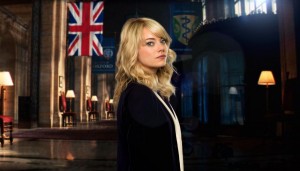
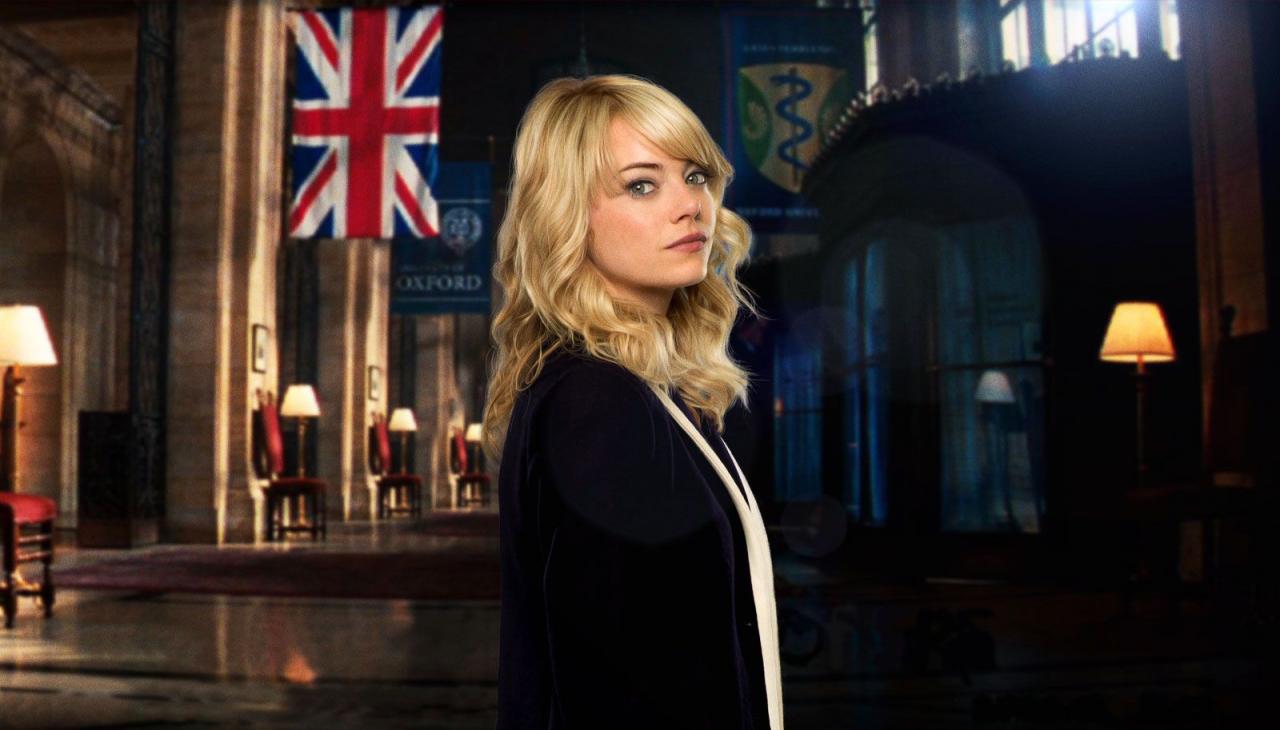
The Spider-Man movies don’t skimp on the stuff that puts the “super” into superhero movies. There’s web-slinging shenanigans and wild bad guys galore, but The Amazing Spider-Man 2 director Marc Webb calls the relationship between Spidey and girlfriend Gwen Stacy, “the engine of the movie.”
The chemistry the real-life couple brings to the screen is undeniable, but it almost didn’t get a chance to blossom. Before Emma Stone landed the role of the brainiac love interest, Mia Wasikowska, Imogen Poots, Emma Roberts and even Lindsay Lohan were considered.
Stone won some of the best reviews of her career playing Gwen in The Amazing Spider-Man — Peter Travers said she, “just jumps to life on screen” — in a role that gave her the biggest hit of her career to date.
Smaller roles in Superbad and Zombieland hinted at her ability to be funny and hold the screen, but in 2010’s Easy A she turned a corner into full-on Lucille Ball mode, mixing pratfalls with wit while pulling faces and cracking jokes. Smart and funny, she’s the film’s centrepiece.
The movie begins with the voice over, “The rumours of my promiscuity have been greatly exaggerated.” It’s the voice of Olive (Stone), a clean-cut high school senior who tells a little white lie about losing her virginity. As soon as the gossip mill gets a hold of the info, however, her life takes a parallel course to the heroine of the book she is studying in English class — The Scarlet Letter.
Stone is laugh-out-loud funny in Easy A, but her breakout film was a serious drama.
In The Help, she plays Jackson, Miss. native “Skeeter” Phelan who comes home from four years at school to discover the woman who raised her, a maid named Constantine (Cicely Tyson), is no longer employed by her family. Her mother says she quit, but Skeeter has doubts. With the help of a courageous group of housekeepers she tells the real story of the life of the maids, writing a book called The Help.
The Flick Filosopher called her performance, “on fire with indignation and rage,” and she moved from The Help to a variety of roles, including playing a femme fatale in Gangster Squad opposite Ryan Gosling and Josh Brolin, and lending her trademark raspy voice to cave girl Eep in the animated hit The Croods.
The 25-year-old actress is living her childhood dream of being an actress but says if performing hadn’t worked out, she would have been a journalist, “because (investigating people’s lives is) pretty much what an actor does.
“And imagine getting to interview people like me,” she laughs. ‘’It can’t get much better than that.”
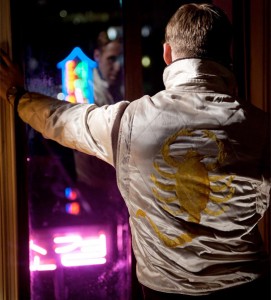
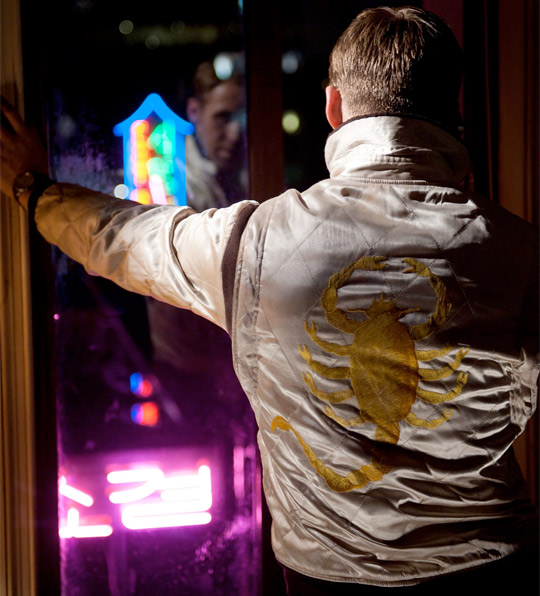
Give the gift of Ryan Gosling for Christmas! Or at least a replica of the cool scorpion jacket he wore in “Drive” from steadyclothing.com. Wear it and try to resist the urge to beat the hell out of people in restaurants!
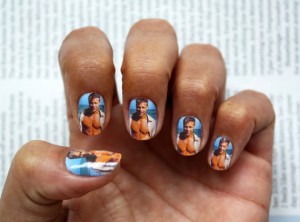
Know any manicurists? How about Brad Pitt fans? Why not combine the two with these nail art decals from NailSpin on Etsy?
From the etsy.com page: “Give yourself a professional looking manicure at a fraction of the price! This set includes 15 Brad Pitt nail art decals printed on white water slide decal paper.”
Also featured are finger-sized portraits of Liam Hemsworth, Ryan Gosling and many more!
Here’s the dilemma: You’re a young assistant DA who is something of a wizard in the courtroom. In your last case before leaving public service for a high paying job at a fancy legal firm you are faced with a man who is clearly guilty, but you just can’t put your finger on the crucial piece of evidence that will put him on death row. How far do you go to put him behind bars? Such is the question facing Oscar nominated Canadian Ryan Gosling in the new courtroom thriller Fracture.
Fracture doesn’t exactly break new ground in the legal drama genre—Primal Fear, also from director Gregory Hoblit, tread the same ground a decade ago—but there’s no grounds for a dismissal either. The movie’s premise may be a little frayed around the edges and the are more than a couple of fissures in Fracture’s plot, but the performances of the film’s leads, Gosling and Anthony Hopkins, make it worth the price of admission.
Hopkins plays Ted Crawford, a wealthy aeronautical engineer, who discovers his wife is having an affair. When she returns home one night after some afternoon delight with her cop lover, Hopkins calmly and coolly shoots her in the face. The police arrive, he confesses and is arrested. It should be an open and shut case, but of course there’d be no movie if it were that simple. What may look like a crime of passion was actually a well thought out execution, and difficult to prove.
Hopkins plays Crawford as though he was portraying Hannibal Lecter’s creepy brother—he’s cunning, has a genius level IQ and an annoying condescending tone. When he bests Gosling’s smarty-pants Willie Beachum in a game of wits, he sneers by way of consolation, “Even a broken clock gets the time right twice a day.”
There is an echo of the Lecter – Starling tension in the interaction between Hopkins and Gosling, and while nothing in this movie comes close to the atmosphere of dread in Silence of the Lambs it is fun to watch these two great actors spar.
They really are the main reason to see Fracture. The big twist at the end is pure Jessica Fletcher and not particularly shocking—anyone schooled in the Law and Order brand of courtroom maneuvering could figure out Beachum’s next move before he does—but the stylishly shot movie does offer interesting character studies and a satisfying finale.