In an unconscious way Rachel McAdams has been preparing to play Dr. Christine Palmer in Doctor Strange her whole life.
“My mother is a nurse,” says the London, Ontario born actress. “She is a very compassionate kind of nurse and Christine is sort of that way as a doctor. She has excellent bedside manner as opposed to Doctor Strange. I took a page from my mom.
“I’ve been talking to her about it for my whole life. She brought her job home sometimes. I picked it up over the years.”
Doctor Strange, the fourteenth film in the Marvel Universe aims to introduce you to the neurosurgeon, played by Benedict Cumberbatch, who goes from saving lives to saving planets. Trauma surgeon Dr. Palmer is his ex-girlfriend but still a constant in his life, and later, when things get mystical, his anchor to the real world.
“It’s a much less typical love trajectory,” she says of their connection. “I think because we had so few scenes to establish our relationship it was a better jumping off point. We had a lot more subterranean life and a much richer history for the characters.”
In the comic books Christine Palmer is a very different person than the one McAdams brings to life on the screen.
“She is an amalgamation of a couple of characters,” she says. “It gave us a lot of creative freedom. We were inventing something. I kind of looked at the comic books more for the flavour of the world and Doctor Strange himself and less so for my character.”
McAdams’s nurse mother may have helped the actress access the emotional side of playing a doctor, but what about the practical stuff, like tying a suture?
“This great neurosurgeon we had on set with us taught us how to sew up a raw turkey breast,” she laughs. “I guess it’s the closest thing to a real live human being, Poor turkey. Then I used oranges, which were easier to carry in my purse. Better smell too. I also had a fake head to practice on. It was kind of like knitting. I would take the suture stuff around, put it on a light stand while we were shooting and practice. I still have sutures on my doorknobs. Haven’t gotten around to cutting them off yet.
“I was really nervous about it because I thought it was going to take forever but it is just one of those thing that one you get the hang of it it’s kind of fun to do.”
The result of all her work is a movie she calls “an ambitious film on the page that I think ticks a lot of those boxes for people are hoping for when they go see a big, blow-out Marvel film. There’s also a quiet deep emotion that runs through it that may catch people off guard.
“I find it hard to get swept away by a film I am in,” she adds, “because I look at it differently, but I actually jumped at one point in my own scene. My friends were laughing. ‘You knew that was coming!’ I know, but I was wrapped up in it.”
As everybody knows The Avengers exist to save the planet from physical threats like rogue sentient robots and red skulled Nazis. But who protects us from metaphysical danger? Apparently a guy in a crazy cape who looks a lot like Sherlock Holmes.
If you’re not familiar with Stephen Strange, “Doctor Strange,” the fourteenth film in the Marvel Universe introduces you to the neurosurgeon who goes from saving lives to saving planets.
When we first meet Strange (Benedict Cumberbatch) he’s a gifted surgeon, a good-looking mix of ambition, charm and arrogance. When a car accident leaves him with severe nerve damage in his hands, he feels he has lost his best asset. The fingers that one’s free-handed complicated nerve surgery cannot now even hold a pen.
His search for a cure leads him to Jonathan Pangborn (Benjamin Bratt), a paraplegic who regained use of his hands and legs. “You came back from a place there is no coming back from,” says Strange. “I’m trying to find my way back.” Pangborn tells the desperate man of a place in Kathmandu, Nepal where he can experience a spiritual journey of healing.
In Nepul he meets the Ancient One (Tilda Swinton) an immortal Celt and Sorceress Supreme who teaches Strange some weird new tricks. With her guidance and his photographic memory, he quickly learns how to re-orient the spirit to heal the body. He also discovers who to teleport himself form one place to another and control the very fabric of time. Nifty stuff.
His lessons come in handy when Kaecilius (Mads Mikkelsen), a former student, returns to steal a single page of an ancient text. The spell contained on the page would give him a power over time that would make Dr. Who envious. His endgame is to join our world with the Dark Dimension, a place beyond time, thus ensuring life eternal. With the very essence of time at stake can Doctor Strange take a licking, but keep on ticking?
Despite a plot that deals with horology and the metaphysical make-up of the universe, “Doctor Strange” doesn’t take itself too seriously. It’s an origin story, pure and simple, that breaks up the interdimensional gobbledegook with bits of levity. Add to that a running gag with Beyoncé’s “Single Ladies” and some very trippy visuals and you have a movie that feels fresh despite being yet another origin tale.
Cumberbatch’s take on Strange echoes Marvel’s Tony Stark character. He’s arrogant and quick with a line, but where Stark had an air of unpredictability about him, Strange has none. He’s driven by ego and a need to get his life back, not the darker, and more interesting urges that propelled Stark’s world-saving.
Instead the movie focuses on bringing his experience to vivid life. As Strange begins his mystical journey director Scott Derrickson fills the screen with kaleidoscopic images. The trippy pictures entertain the eye and lend an authentic comic book feel to the movie that is sometimes missed in these big screen adaptations. Who knows how many pixels were harmed to create the hallucinogenic M.C. Escher-esque folding landscapes. Imagine the shifting terrains of “Inception,” but on steroids and you get the idea.
It takes some doing to stand out amid the film’s psychedelic visuals but Tilda Swinton as the Ancient One and Chiwetel Ejiofor as mentor Karl Mordo stand head and shoulders above the fray. Swinton sidesteps early criticism of character whitewashing—in the comic books the Ancient One is generally portrayed as a Tibetan man—by handing in an androgynous character who identifies as Celtic.
“Doctor Strange” is a lively mix of mysticism and mirth that breathes some new life into the Marvel Universe.
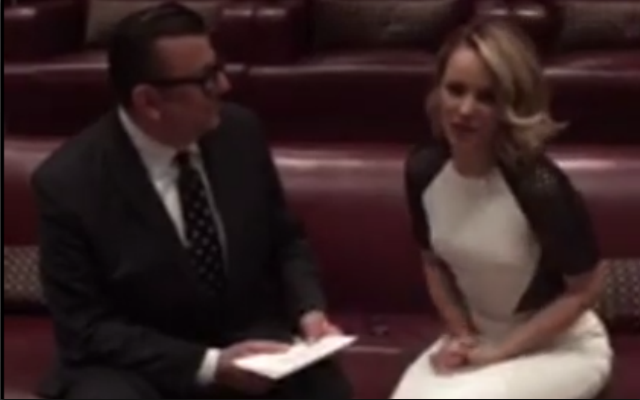
Richard hosted a Facebook Live session with “Doctor Strange” star Rachel McAdams! Find out how the actress prepared for the suturing scenes, what she has to say about working with Benedict Cumberbatch and who her favourite Marvel superhero is! See the video on Marvel Facebook Page!
“I was born. I went to New York. I made some music. Did some dope and made some more music and you showed up at my door,” says Miles Davis (Don Cheadle) to journalist Dave Brill (Ewan McGregor). Of course, if that were all there was to the story “Miles Ahead” wouldn’t be much of a film. Luckily director, co-writer and star Cheadle fleshes out the story of one of the twentieth century’s greatest but most troubled musicians in a biopic that defies expectations. Expected: drug use and sublime music. Less expected: a car chase and shoot out.
We meet Davis as he seems to have reached the “more profitable dead than alive” stretch of his career. At the end of the five-year hiatus from music, and the world, the trumpeter is holding new session tapes hostage until his record company Columbia pays him $20,000.
Brill hopes to get the inside scoop on the Howard Hughes of jazz but isn’t above making a deal with Columbia to steal the tapes from Davis’s home. Instead the tapes or stolen by an enterprising music manager (Michael Stuhlbarg) who seizes the opportunity to make some cash off of Davis notoriety. This sets off a string of events that underscores the movie’s central theme, the idea that Miles cared more about music than his life.
Woven throughout are flashbacks to Davis’s early life, how he found fame and Frances (Emayatzy Corinealdi), the woman who would change his life. The tortured artist scenes that make up the bulk of the film are the most interesting for obvious reasons, but the backstory fill in the gaps, explaining why and how he became the man he did. Undone by police brutality, long-lost love, drugs, ego, women, infidelities and health issues Davis emerges as a textbook example of an artist who channelled his restless, self destructive personality into beautiful, ground breaking music.
“If you’re going to tell the story tell it was some attitude,” says Davis. “Don’t be coy.”
“Miles Ahead” is anything but coy. It’s not quite as wild as Davis or his music, but Cheadle mixes and matches various periods from Davis’s life to paint an impressionistic portrait of the man, warts and all. He builds a complete picture, showing Davis on his highest highs and lowest lows. There isn’t much insight into the nuts and bolts of how Davis actually created his music. The creative process remains a mystery but we do get the biographical details that shed light on a troubled life.
For a brief time Dalton Trumbo was the highest paid writer in Hollywood, which also meant he was the highest paid writer in the world.
He was a family man, a wealthy and proud American communist whose career was sidelined by The Motion Picture Alliance for the Preservation of American Ideals.
A new film called Trumbo, starring Breaking Bad’s Bryan Cranston, tells the story of how the Academy Award winning screenwriter was reduced to penning scripts for b-movies like The Alien and the Farm Girl.
“Under the first amendment you have the right to free speech and Trumbo felt very strongly about that,” says Cranston.
“He thought it was un-American and unconstitutional for the House Un-American Activities Committee to hold these hearings and demand under threat of contempt of Congress that people answer these questions.
The questions were things like: Are you now or have you ever been a member of the Communist Party? And, if so, to save yourself, renounce it now and tell us who else was a member.
The committee wanted these people to give names so they could go after more people.
“It’s fundamentally wrong and he felt that was wrong and unconstitutional to ask that question,” says Cranston of Trumbo’s reaction.
Trumbo didn’t name names and paid a heavy price, losing his lofty Hollywood perch and almost his family.
“In a way I relate to Trumbo,” says Cranston, but admits he’s not sure what he would do if his career was ever placed in a similar kind of jeopardy.
“What would you do if they subpoenaed you and said, ‘We want to know who else likes baseball? Who is it?’ Would you point the finger at other people who found enjoyment out of playing baseball?
“Of course I would love to think I would be honourable and not do it, but I have to be honest and say, that’s a hypothetical. I think I would be resistant to that pressure and perhaps even pay the price, but do I know for sure? No.
“I don’t know for a certainty because I’m not faced with it.”
After wrapping his five-season career-making run as Breaking Bad’s Walter White, Cranston has kept busy, winning a Tony Award for playing Lyndon B. Johnson on Broadway in All the Way and has eight films in various stages of completion. He made time for Trumbo because “the story itself is brilliant and that is the first thing I look for,” but admits he’s gotten picky about the parts he plays.
“I don’t want to now take a job for money. I take jobs because I’m attracted to them by the creative element or because it challenges me in some way and my agents are incentivized to work out the best deal they can.
“I don’t want to portray this idea that I’m just about the art. I’ve been poor and I’ve been rich and rich is better.”
Dalton Trumbo was an Academy Award nominated screenwriter when his political beliefs saw him drummed out of Hollywood’s inner circles, reducing him to penning scripts for b-movies like “The Alien and the Farm Girl.”
For a brief time he was the highest paid writer in Hollywood, which also meant he was the highest paid writer in the world. He was a family man, a wealthy man and a proud American communist whose career was sidelined by Hollywood conservatives like Hedda Hopper (Helen Mirren), John Wayne (David James Elliott) and The Motion Picture Alliance for the Preservation of American Ideals. “I love our country,” he says, “and our government is good but couldn’t anything good to be better?”
The film “Trumbo,” starring Bryan Cranston begins as the writer is enjoying the success of his scripts for “Thirty Seconds Over Tokyo,” “Our Vines Have Tender Grapes” and “Kitty Foyle.” He’s a committed communist, who, along with a group of Tinsel Town activists like Edward G. Robinson (Michael Stuhlbarg) and Arlen Hird (Louis C.K.) work tirelessly to create unions within the studio system to ensure that everyone, from the grips to the set decorators on up, earn a living wage.
Their socialist leanings didn’t go unnoticed by Congress and by a cadre of concerned actors who think the group’s socialist ways are un-American. When Hopper, using extortion and bigotry, coerces studio head Louis B. Mayer (Richard Portnow) to fire Trumbo, an industry wide blacklist bans the writer and nine others from working in Hollywood.
With all legal avenues exhausted Trumbo sees his professional and personal worlds crumble as former friends like Robinson stand before Congress and call him “a sinister force.” Punished for his political beliefs, Trumbo makes ends meets by writing screenplays under aliases and creating a script factory staffed by blacklisted writers. After a decade of working in the shadows and winning two Oscars under fake names, he finds two powerful people willing to break the blacklist and put his name where it belongs, on screen.
“Trumbo” is not the story of Senator Joe McCarthy communist witch hunt or a rehash of the Congressional hearings. Instead it is the tale of the times and the personal story of one man who would not allow his civil liberties to be stripped away.
Perhaps its appropriate that a film about the Golden Age of Hollywood—even one that tarnishes the glamour of the period—should feel a little old fashioned. It’s a redemption story, simply told and populated by archetypal characters—Elliott’s John Wayne isn’t a person, for instance, he’s a blustery caricature of The Duke taken directly from the actor’s movie roles—who revolve around Cranston’s flamboyant performance.
The “Breaking Bad” star plays Trumbo as a raging ball of ideology, quick with a quip—in a showdown with John Wayne Trumbo sneers the patriotic actor spent World War II “on a film set shooting blanks and wearing make up.”—and willing to pay the price for his actions. It’s a large cigarette chomping performance of a larger-than-life person.
It takes some time before the rest of the movie catches up with Cranston’s theatrics, but by the time John Goodman, in a hilarious portrayal of a b-movie producer, says, “We bought a gorilla suit and we gotta use it,” the film finds its level.
“Trumbo” is a film with a social conscience with important messages about civil liberties and the importance of freedom of belief, wrapped up in an old-fashioned biopic.
There was a time when one of the best-known sportsmen in the world didn’t wear a uniform, cleats or throw a ball. As unlikely as it seems in the summer of 1972 chess master Bobby Fischer held the world transfixed, battling against Soviet grandmaster Boris Spassky.
Tobey McGuire is Fischer, a child chess prodigy determined to be recognized as the best player in the world. As a young, cocky player he easily decimates his opponents, earning national ranking and the opportunity to play the best players in the world.
At Fischer’s side are Paul Marshall (Michael Stuhlbarg) as a shadowy government figure who sees Fischer’s triumph over the Russians as a Cold War triumph for all of America and a chess whiz priest (Peter Sarsgaard) who provides guidance, both personal and professional.
Between Fischer and his goal is Spassky (Liev Schreiber), a stately Russian genius who thoroughly unnerves the American, highlighting his descent into mental illness and paranoia. By the time to two face off at the 1972 World Chess Championship in Reykjavík, Iceland, Fischer’s obsessions—anti-Semitism (even though he himself is Jewish) and a deep seeded distrust of his Russian opponents—threaten to incapacitate him.
Considering Fischer’s ability to think several steps ahead of his opponents, “Pawn Sacrifice” is surprisingly straightforward. Fischer’s life is divided into major events laid out end to end, from prodigy to world champion to eccentric recluse. McGuire transcends the basic biopic structure with a nuanced performance that breathes life into Fischer’s brilliance and demons. The reason for his torments aren’t examined as deeply as it might have been—his issues with identity seem to only stem from his mother’s taunts about his absent father—which may have deepened the character but McGuire plays him with confidence and vulnerability.
Also strong is Schreiber, performing here in Russian, as the august but human grandmaster.
“Pawn Sacrifice” kicks into gear in its final third as Fischer and Spassky go mano e mano over a chess board as the world watches.
Cut Bank director Matt Shakman has something in common with 35 mm film fanatics Martin Scorsese and Quentin Tarantino. For his movie debut the director insisted on shooting on film rather than digital.
“I’m an analogue kind of guy,” he says. “To do this movie, which is about a town that feels trapped in a distant era, it felt right to shoot it on film. We had to find a way to deal with the financial impact of it, but I found a solution to that. I gave up my salary in order to do it.
“I’ll only get a chance to make a first movie once and to make it on film feels special. I may never get a chance to do it again.”
Set in the hamlet of Cut Bank Montana, the action begins when auto mechanic Dwayne (Liam Hemsworth) accidentally videotapes the murder of the local postman (Bruce Dern). He reports the crime to the local sheriff (John Malkovich), hoping for reward money, but there are complications in the form of the suspicious father of his girlfriend (Billy Bob Thornton), a postal inspector (Oliver Platt) and a reclusive man (Michael Stuhlbarg) violently obsessed with getting his mail.
The script appeared on Hollywood’s 2009 black list of the best unproduced films and has been in Shakman’s hands for five years.
In the beginning he simply loved the twisty-turny story. “Then,” he says, “I [became] like a dog chasing a rabbit at the track. You get these tantalizing elements that start to make everything feel more real.
“When someone like John Malkovich signs on it is so helpful for so many reasons. One, the pleasure, personally, of getting to work with one of my heroes. Two, he certainly helps tell other actors that this is a party worth coming to and the third thing is just the business reality of having a person in the film who can help you with financing.”
Shakman says he knows after the film’s theatrical run “a lot of people will see Cut Bank on their iPads,” and while he prefers the communal experience of watching movies with an audience, he knows times are changing. “They’ll also watch Breaking Bad [on their tablets], so the line has blurred very much between the two kinds of content. It’s all just become stories and where you choose to find them and how you want them delivered.”
The script for “Cut Bank” appeared on Hollywood’s 2009 black list of the best-unproduced films. Whoever makes up that list must have been desperate for a Coen Brothers fix.
Set in the hamlet of Cut Bank Montana—“the coldest spot in the nation”—the action begins when auto mechanic Dwayne (Liam Hemsworth) accidentally videotapes the murder of the local postman (Bruce Dern). He reports the crime to the inept local sheriff (John Malkovich), hoping for reward money, but there are complications in the form of the suspicious father of his girlfriend (Billy Bob Thornton), a postal inspector (Oliver Platt) and Derby Milton, a reclusive man (Michael Stuhlbarg) violently obsessed with getting his mail.
On its surface “Cut Bank” has all the earmarks of a quirky Coen Brothers style romp. Like an wannabe “Fargo” it’s violent, occasionally funny and populated by a talented acting ensemble (in this case lead by Malkovich) which sounds like a winner but is sunk by an abundance of quirky characters in supporting roles— Stuhlbarg’s Milton is a cartoon come to life—and good looking but bland leads in the form of Thor-bro Hemsworth and Teresa Palmer as his budding beauty queen girlfriend.
Old pros Dern, Malkovich, Thornton and Platt cut through this material like a hot knife through butter, but it is mostly the sheer strength of their collective wills that they manage to keep the script, which is ripe with exposition, from rotting on the vine.
Director Matt Shakman has an eye for the setting—the Alberta locations look great—but the town should be a character à la David Lynch’s “Blue Velvet” and here it is simply a backdrop to the action.
“Cut Bank” is one of those movies where there is more to every character than meets the eye, but ultimately is a blink and you’ll miss it experience.