“The Woman King,” is a ripped-from-the-history books story of fierce camaraderie, discipline and determination, starring Oscar®-winner Viola Davis as a general in charge of all-female unit of warriors called the Agojie, who served as the inspiration for the “Black Panther’s” Dora Milaje warriors.
Set in the 1823 West African kingdom of Dahomey, the story begins as menace from white slave trader Santo Ferreira (Hero Fiennes Tiffin) and nearby Oyo Empire, led by the ruthless Oda (Jimmy Odukoya), threaten the reign of King Ghezo (John Boyega). He can no longer rule by diplomacy and cleverness alone. “An evil is coming that threatens our kingdom, our freedom,” says the King, “But we have a weapon they are not prepared for.”
That weapon is the Agojie, a.k.a. the Dahomey Amazons. They are a generations-old fighting force led by a brilliant tactician and general Nanisca (Davis), with right-hands Amenza (Sheila Atim) and Izogie (Lashana Lynch). “We fear no one,” Nanisca says. “We fear no pain.”
Armed with blades, spears and unlimited fearlessness, the Agojie fight against the heavily armed Oyo, for their land, freedom and King. Any Oyo prisoners are sold off to the Europeans in return for weapons. Nanisca knows her King is complicit in the slave trade, and tries to convince him to stop human trafficking and replace the cash flow with the sale of palm oil. “The slave trade is the reason we prosper,” she says, “but it is a poison.”
Until then the change, they must train a new batch of recruits, including the 19-year-old Nawi (Thuso Mbedu), a rebellious woman offered to King Ghezo by her father. Brought into the Agojie by Izogie, the teenager finds a sisterhood with the group she has never known in her life.
“The Woman King” breathes the same air as 90s era action epics like “Braveheart” and “Gladiator.” Crowd-pleasers that mixed interesting characters with history, some humor, a bit of melodrama and fierce fight scenes. That may feel like a dash of déjà vu, but director Gina Prince-Bythewood’s story comes steeped in Black history, specifically female Black history, and characters that bring it to vivid life.
As the battle-scarred general Nanisca, Davis commands attention, balancing the character’s authority, resilience and battle prowess with a hidden vulnerability.
As Nawi, Thuso Mbedu steals every scene she is in with a combustible charisma that keeps her coming-of-age story compelling.
“The Woman King” is a character driven epic, one that tempers the rousing action scenes—the audience I saw this with cheered for the Agojie—with powerful interpersonal relationships to keep us engaged. It feels like an old-fashioned action movie, but with a fresh and fascinating update.
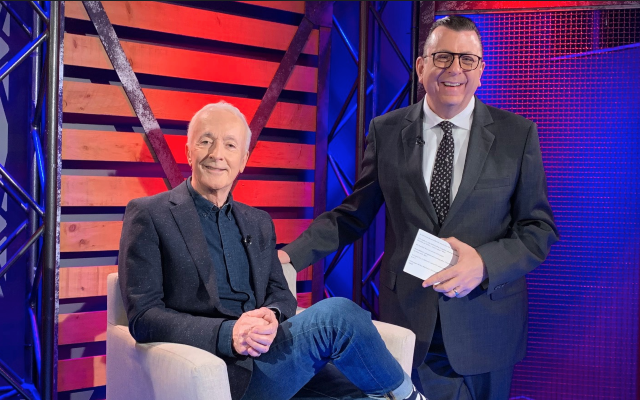
On an encore presentation of “Pop Life” on June 13, 2020 we welcome the droid you’ve been looking for, Anthony Daniels. As C-3PO he is the only actor to have appeared in all of the episodic films in the series, as well as many of its spin-offs, including television shows, video games and radio serials. On this twelfth episode of season five of “Pop Life,” he talks about his first stage appearances, the uncomfortable nature of the gold suit that made him famous and how he once felt like a “secret outcast” from the rest of the cast. Then the “Pop Life” panel, Marvel, DC, Lucasfilm and Hasbro artist Ken Lashley, CTV NewsChannel anchor and “Star Wars” super-fan Todd Van Der Heyden and Roger Christian, the Academy Award winning Set Decorator and Production Designer for “Star Wars”–he created the lightsaber and R2D2 and decided to put dice in the film as a nod to Han Solo gambling–discuss why “Star Wars” is still important forty two years after its initial release.
Film critic and pop culture historian Richard Crouse shares a toast with celebrity guests and entertainment pundits every week on CTV News Channel’s exciting talk show POP LIFE.
Featuring in-depth discussion and debate on pop culture and modern life, POP LIFE features sit-down interviews with celebrities from across the entertainment world, including rock legends Sting and Meat Loaf, musicians Josh Groban and Sarah Brightman, comedian Ken Jeong, writer Fran Lebowitz, superstar jazz musician Diana Krall, stand-up comedian and CNN host W. Kamau Bell, actors Danny DeVito and Jay Baruchel, celebrity chefs Bobby Flay and Nigella Lawson, and many more.
It has taken forty-two years but the story of the Resistance, begun in “Star Wars: A New Hope” comes to a conclusion in “Star Wars: The Rise of Skywalker.” With an amped-up story, featuring flying Stormtroopers and much talk of destiny, confronting fear and inner turmoil, the ancient conflict between the Jedi and the Sith promises to deliver big box office, but will it satisfy old school fans who have waited a lifetime for the film’s final showdown?
The events of “Episode VII: The Last Jedi” and the passing of Carrie Fisher presented challenges that helped shape the plot of the new film, but you’ll get no spoilers here. I will say that old footage of Fisher as General Leia Organa from “The Force Awakens” appears alongside new work from Darth Vader’s grandson, Kylo Ren (Adam Driver), Jedi apprentice Rey (Daisy Ridley), Stormtrooper-turned-Resistance-fighter Finn (John Boyega), Resistance pilot Poe Dameron (Oscar Isaac), Chewbacca (Joonas Suotamo) and the First Order’s General Hux (Domhnall Gleeson).
Add to that new characters like diabolical First Order Allegiant General Pryde (Richard E. Grant), Spice Runners of Kijimi leader Zorii Bliss (Keri Russell) and returning faves Lando Calrissian (Billy Dee Williams) and Mark Hamill’s Luke Skywalker (in what form I will not say) and you have a blended “Brady Bunch-style” family in space. That is, a complicated intergalactic family dynamic in which not everyone sees eye to eye.
Tasked with wrapping the Skywalker Saga up in a pretty bow director J.J. Abrams has made a film that is part fan service—many familiar faces come along for the ride—and part homage to the Original Trilogy. He replaces subtext with action, rehabilitates one character’s tarnished, cranky-old-man reputation (NO SPOILERS HERE) and essentially delivers the movie you expect.
Abrams knows there are no do overs on this one. “Do or do not; there is no try,” comes to mind. It is the wrap to one of the most popular and talked-about film franchises of all time. Expectations are high with the possibility of fan backlash ever present. Questions are answered—Rey’s parentage chief among them—quips are thrown, Chewbacca howls and star ships are blasted to Kingdom Come as “The Rise of Skywalker,” for better and for worse, replaces the nuanced take of Rian Johnson’s “The Last Jedi” with the more tried and true Star Wars tale of nature vs nurture and good vs evil.
Jam packed with action and plot, “The Rise of Skywalker” gets bogged down with exposition and tying up loose ends. Worse, it often drifts from the thing that made “Star Wars” great in the first place—the characters. They’re all present and accounted for but are often overshadowed by the whiz bang pacing and over-abundance of story.
Having said that, the film’s final third, the payoff to the Saga, hits several emotional high points. It’s the end of the Saga and, therefore (NO SPOILERS HERE JUST THE FACTS) the final appearances of several members of the original cast. Their exits are handled with sensitivity and should generate a sniffle or two from hard core fans.
The core of the movie is the anguished dynamic between Rey and Kylo. The push and pull between their logical vs biological family commitments is the most compelling part of the story. It also provides for several of the film’s most visually interesting scenes, including a climatic lightsaber battle on the wreckage of the Death Star.
“Star Wars: The Rise of Skywalker” ticks a lot of boxes for fans but—again, no spoilers but be careful—the mythic battle of good vs evil, of finding balance in the Force, that has fuelled the franchise for forty plus years, was really only going to resolve itself in one way. As such the metaphysical struggle is about the journey and not as much about the actual conclusion.
Richard speaks with “Rise of the Skywalker” star Joonas Suotamo about playing the iconic Wookie character Chewbacca, and what it is like wearing the fur suit for ten hours a day.
CHIPs: It’s a remake, a comedy and an action film and yet it doesn’t quite measure up to any of those descriptors. It’s a remake in the sense that writer-director-star Dax Shepard has lifted the title, character names and general situation from the classic TV show but they are simply pegs to hang his crude jokes on.
The Circle: While it is a pleasure to see Bill Paxton in his last big screen performance, “The Circle” often feels like an Exposition-A-Thon, a message in search of a story.
The Fate of the Furious: Preposterous is not a word most filmmakers would like to have applied to their work but in the case of the “Fast and Furious” franchise I think it is what they are going for. Somewhere along the way the down-‘n’-dirty car chase flicks veered from sublimely silly to simply silly. “The Fate of the Furious” is fast, furious but it’s not much fun. It’s an unholy mash-up of James Bond and the Marvel Universe, a movie bogged down by outrageous stunts and too many characters. Someone really should tell Vin Diesel and Company that more is not always more.
Fifty Shades Darker: Depending on your point of view “Fifty Shades of Grey” either made you want to gag or want to wear a gag. It’s a softcore look at hardcore BDSM (bondage, discipline, sadism and masochism) that spanked the competition on its opening weekend in 2015. Question is, will audiences still care about Grey’s proclivities and Ana’s misgivings or is it time to use our collective safeword? “Fifty Shades Darker” is a cold shower of a movie. “It’s all wrong,” Ana says at one point. “All of this is wrong.” Truer words have never been spoken.
The Mountain Between Us: Mountain survival movies usually end up with someone eating someone else to stay alive. “The Mountain Between Us” features the usual mountain survival tropes—there’s a plane crash, a showdown with a cougar and broken bones—but luckily for fans of stars Idris Elba and Kate Winslet cannibalism is not on the menu. Days pass and then weeks pass and soon they begin their trek to safety. “Where are we going?” she asks. “We’re alive,” he says. “That’s where were going.” There will be no spoilers here but I will say the crash and story of survival changes them in ways that couldn’t imagine… but ways the audience will see coming 100 miles away. It’s all a bit silly—three weeks in and unwashed they still are a fetching couple—but at least there’s no cannibalism and no, they don’t eat the dog.
The Mummy: As a horror film it’s a meh action film. As an action film it’s little more than a formulaic excuse to trot out some brand names in the kind of film Hollywood mistakenly thinks is a crowd pleaser.
The Shack: Bad things in life may be God’s will but I lay the blame for this bad movie directly on the shoulders of director Stuart Hazeldine who infuses this story with all the depth and insight of a “Davey and Goliath” cartoon.
The Snowman: We’ve seen this Nordic Noir before and better. Mix a curious lack of Oslo accents—the real mystery here is why these Norwegians speak as though they just graduated RADA—Val Kilmer in a Razzie worthy performance and you’re left with a movie that left me as cold as the snowman‘s grin.
Valerian and the City of a Thousand Planets: Movies like the high gloss crime thriller “La Femme Nikita,” the assassin mentor flick “Léon: The Professional” and outré sci fi opera “The Fifth Element” have come to define director Luc Besson’s outrageous style. Kinetic blasts of energy, his films are turbo charged fantasies that make eyeballs dance even if they don’t always engage the brain. His latest, “Valerian and the City of a Thousand Planets,” not only has one of the longest titles of the year but is also one of the most over-the-top, retina-frying movies of the year. Your eyes will beg for mercy.
Wonder Wheel: At the beginning of the film Mickey (Justin Timberlake) warns us that what we are about to see will be filtered through his playwright’s point of view. Keeping that promise, writer, director Woody Allen uses every amount of artifice at his disposal—including cinematographer Vittorio Storaro’s admittedly sumptuous photography—to create a film that is not only unreal but also unpleasant. “Oh God,” Ginny (Kate Winslet) cries out at one point. “Spare me the bad drama.” Amen to that.
THE UGLY
Song to Song: I think it’s time Terrence Malick and I called it quits. I used to look forward to his infrequent visits. Sure, sometimes he was a little obtuse and over stayed his welcome, but more often than not he was alluringly enigmatic. Then he started coming around more often and, well, maybe the old saying about familiarity breeding contempt is true. In “Song to Song” there’s a quick shot of a tattoo that sums up my feelings toward my relationship with Malick. Written in flowery script, the words “Empty Promises” fill the screen, reminding us of the promise of the director’s early work and amplifying the disappointment we feel today. This is the straw that broke the camel’s back, the Terrence Malick movie that put me off Terrence Malick movies. I’ll be nice though and say, it’s not him, it’s me.
EXTRA! EXTRRA! MOST COUNFOUNDING
mother!: Your interest in seeing “mother!,” the psychological thriller from “Black Swan” director Darren Aronofsky, may be judged on your keenness to watch American sweetheart Jenifer Lawrence flush a beating heart down a toilet. Aronofsky’s story of uninvited guests disrupting the serene lives of a poet and his wife refuses to cater to audience expectations. “mother!” is an uncomfortable watch, an off-kilter experience that revels in its own madness. As the weight of the weirdness and religious symbolism begins to feel crushing, you may wonder what the hell is going on. Are these people guilty of being the worst houseguests ever or is there something bigger, something biblical going on?
Aronofsky is generous with the biblical allusions—the house is a paradise, the stranger’s sons are clearly echoes of Cain and Abel, and there is a long sequence that can only be described as the Home-style Revelation—and builds toward a crescendo of wild action that has to be seen to be believed, but his characters are ciphers. Charismatic and appealing to a member, they feel like puppets in the director’s apocalyptic roadshow rather than characters we care about. Visually and thematically he doesn’t push button so much as he pokes the audience daring them to take the trip with him, it’s just too bad we didn’t have better company for the journey.
“mother!” is a deliberately opaque movie. Like looking into a self-reflective mirror you will take away whatever you put into it. The only thing sure about it is that it is most confounding studio movie of the year.
One of the most famous quotes from the “Star Wars” saga must haunt the dreams of every director who signs on to make one of these continuing stories. “Do. Or do not. There is no try.” The “Star Wars” films aren’t simply a night out at the movies, they are part of the fabric of many people’s lives. Some take it VERY seriously. On a 2001 census 21,000 Canadians put down their religion as Jedi Knight. That is serious fandom.
Finding a balance between the nostalgia many aficionados hold for the iconic series and moving it forward in an entertaining and organic way is a juggling act, one that director Rian Johnson has pulled off in “Star Wars: Episode VIII – The Last Jedi.”
Tried he did. Fail he did not.
Johnson, who has already been hired to pilot a new three-film “Star Wars” franchise, pushes the characters and the story into new territory while maintaining the gist of George Lucas’s vision.
Beginning immediately after the events of “The Force Awakens,” Force-sensitive Resistance fighter Rey (Daisy Ridley) is in the most “unknowable place in the galaxy,” the planet Ahch-To, home to the exiled Jedi Master (and Mister Miyagi stand in) Luke Skywalker (Mark Hamill). As she tries to convince him to train her in the ways of the Jedi, General Leia Organa (Carrie Fisher) and her Resistance do battle with the First Order, lead by the evil Supreme Leader Snoke (Andy Serkis) and his minions, General Hux (Domhnall Gleeson) and Vader-wannabe Kylo Ren (Adam Driver).
Like the other films “The Last Jedi” is basically a tale of good versus evil. Snoke wants control of the galaxy while the Resistance is exposed and fighting back. It’s an echo of the original story but our real world has become a more complicated place since the first movie hit theatres and this movie reflects that. There have always been grey areas and nuance in the portrayal of heroes and villains in the franchise but here Kylo wrestles with primal urges. His leader Snokes, eggs him on—“Kylo you are no Vader,” he taunts. “You are just a child in a mask.”—as he battles with the yin and yang of his personality. That to and fro gives Driver the latitude to surprise the audience in ways (NO SPOILERS HERE!) that may shock even the most hardened fans.
Johnson has not simply remade “Empire Strikes Back,” he’s made a film that bristles with energy and invention. With one eye on the past and one to the future “The Last Jedi” finds a winning mix of humour and humanity, of old and new and good and evil.
When the talk of resistance and legacy of the Jedi threatens to weigh things down Johnson counters with some comic relief. It’s a treat to see Carrie Fisher in her last turn as Leia—the film is dedicated to her: “In loving memory of our Princess Carrie Fisher”—and Hamill with light sabre in hand but it’s the spirit of the thing that will please audiences. Although a tad long, “The Last Jedi” is a giddy, gripping good time.
Hollywood has a long tradition of bending history to suit their stories.
For instance the title of the historical disaster film Krakatoa: East of Java is a geographical head-scratcher. Krakatoa was actually west of Java. In 10,000 BC woolly mammoths are used as labour to build the pyramids in Egypt. That’s Hollywood history. Woolly mammoths weren’t desert creatures and the pyramids weren’t built until 2500 BC. Then there’s Mel Gibson’s wardrobe from the future in Braveheart. The movie is set in the late 13th century, but the kilts he wears didn’t come into existence until 300 years later.
The movie theatre is definitely not Mr. Parker’s history class.
Detroit, the new film from Zero Dark Thirty director Kathryn Bigelow, aims to bring historical accuracy back to the big screen. The movie focuses on the Algiers Motel Incident, the most infamous episode of the Detroit riots of the summer of 1967. The shocking story details how young African-American men and women sought the safety of the motel only to come under fire from police who handled them as revolutionaries. When it was done three young African-America men lay dead, shot, allegedly at close range. None of the officers charged with the Algiers murders were convicted.
“The Algiers Motel is a real American tragedy,” says Bigelow. “One of the most important aspects of preparing this movie was to spend time with the people who actually lived it.”
Filming this important slice of history brings with it the responsibility of getting it right. To that end Bigelow, screenwriter and former journalist Mark Boal and investigative reporter David Zeman, did considerable research. “My marching orders were to find as many of the principles as I could who could tell us something about their perspective on what happened,” said Zeman.
That may be so, but even the best-researched true-life drama brings with it a degree of artistic licence. Take for instance Bigelow’s last movie, Zero Dark Thirty. She called it a “reported film,” suggesting it existed somewhere in the murky middle between drama and documentary, yet it drew fire from critics (including the CIA) who felt it exaggerated the enhanced interrogation techniques allegedly used in the search for Bin Laden. So despite the opening credit claim that the movie was “Based on Firsthand Accounts of Actual Events” it may have fudged some facts.
So while there’s nothing in Detroit as egregious as Season of the Witch’s plague outbreak 76 years before the Black Death struck, it will not be a 100 per cent true and accurate representation of real life — it’s not possible. What it can do, however, is open a dialogue about the past, and in Detroit’s case, the present.
In a statement Charles Ferrell, the director of public programs of Detroit’s Charles H. Wright Museum of African American History said the film, “echoes the current proliferation of extra-judicial fatal shootings of African Americans by police who have been exonerated and highlights the major issue of criminal police violence and racial injustice that this nation must face and resolve through dialogue and corrective actions.”
Perhaps instead of looking at Detroit as a historical document it might be better used as a springboard for further study and conversation into the systemic racism that allowed the Algiers Motel Incident to happen and why so little has changed in the intervening years.
There is a disclaimer at the end of “Detroit,” Kathryn Bigelow’s latest look back at our recent history. Before the final credits roll a title card reads something to the effect that the details of the bloody Algiers Motel Incident, the most infamous episode of the Detroit riots of the summer of 1967, were pieced together from available sources and eye witness accounts.
It reminds us that what we have just seen is an interpretation of history and not a strict, unequivocal statement of fact. The title card may be a reaction to the backlash that followed Bigelow last film “Zero Dark Thirty.” She called that film, a look at the decade long hunt for Osama bin Laden, a “reported film,” suggesting it existed somewhere in the murky middle between drama and documentary. Despite her claim the film drew fire from critics (including the CIA) who felt it exaggerated the enhanced interrogation techniques allegedly used in the search for Bin Laden.
Her new film is every bit as provocative but whereas “Zero Dark Thirty” felt of its time, “Detroit,” despite its 1967 setting, feels ripped from the headlines. It uses historical fact and dramatization as an urgent plea for further study and conversation into the systemic racism that enabled Detroit police to murder three young African American men and why so little has changed in the intervening years.
The film begins with a police raid of an unlicensed nightclub filled with African American men and women enjoying a drink, some music and each other’s company. Manhandling men and women alike the raid attracts the attention of the entire neighbourhood. As club goers are forced into paddy wagons for the crime of congregating and having a drink, cries of “You can’t do that,” erupt into rage and the frustrated shouts change to “Burn it down.” A riot breaks out leading to looting, curfews and mass arrests.
The story splinters to introduce Philip Krauss (Will Poulter), a racist trigger-happy Detroit cop who justifies gunning down a man who stole a bag of groceries because, “They’re destroying the city.”
Nearby are Larry Cleveland Reed (Algee Smith) and Fred Temple (Jacob Latimore), a wannabe Motown singer and his best friend respectively. When Larry’s big debut at the Fox Theatre is scuttled because of the riot outside the theatre’s doors he Fred head to the Algiers, a nearby hotel, “until all this slows down.”
The laid back vibe at the Algiers seems a million miles away from the violence on the street, which by this point has seen 3200 people arrested and blocks of Detroit burned to the ground. Larry and Fred meet some girls (Hannah Murray and Kaitlyn Dever), listen to John Coltrane and feel safe until another resident, Carl Cooper (Jason Mitchell), shoots a starter’s pistol out the window. “We should teach those pigs a lesson,” he says. The police below, including Krauss, think a sniper is shooting at them and invade the building, guns drawn. By the time their “investigation” is done three young African-America men lay dead, shot at close range.
The lone uniformed voice of reason comes from Melvin Dismukes (John Boyega), a security guard in a grocery store down the street from the Algiers who tries his best to prevent bloodshed.
“Detroit” is an uncomfortable, gruelling watch. The physical intimidation, racially based violence, murders utilized against Reed, Temple and others as they plead innocence, is sickening. “I will kill you one by one until I find out what’s happening here,” says Krauss. Using psychological games and hard-core interrogation tactics he (and a handful of others) terrorizes his suspects and it is gut wrenching. Bigelow has a historical POV setting up the story and in the subsequent court case but her handling of the interrogation sequences is pure psychological horror. Claustrophobic and violent, it is as compelling as it is abhorrent.
Bigelow uses archival footage and stills to set the stage but it is a combo of her kinetic, muscular filmmaking and strong performances that make an impression. Boyega channels a young Denzel Washington, radiating decency while Poulter is a snarling ogre who revels in the powerlessness and dehumanization of his victims. As a paratrooper recently returned from Vietnam Anthony Mackie is a stoic presence amid the chaos.
Best of the bunch is Algee Smith as the young singer whose dreams are crushed when the Fox Theatre is evacuated just before his debut. While the dirty cops assert that “one bad minute shouldn’t define their lives,” it is through Smith’s performance that the long term effects of the Algiers event are the most tangible. The repercussions of that vicious, lawless night echo throughout his psyche, changing him forever.
The story in “Detroit” is fifty years old but the names of Dontre Hamilton, Eric Garner, John Crawford III, Michael Brown Jr., Ezell Ford, Dante Parker or any number of others who have been killed at the hands of the police in recent times, echo throughout.
One day someone may write about Emma Watson without mentioning the Harry Potter franchise, but today is not that day. Few child stars have faced the glare of the spotlight as acutely as the core Potter cast and the fame that came along with playing Harry, Ron and Hermione will likely follow them around for as long as Potterheads roam the earth.
It’s not like they are crying over spilt potion, however. On screen Daniel Radcliffe takes on demanding roles that give him the chance to distance himself from Harry and, apparently, show his bum at every opportunity. Rupert Grint has kept a lower profile, starring in a few independent films and playing an upper-crust criminal on the television adaptation of Snatch.
Of the three Emma Watson has maintained the highest professional profile. Whether addressing the United Nations or starring opposite a heartbroken furry beast or accepting British GQ’s Woman of the Year Award she has rarely been far from view.
This weekend she follows up her biggest post-Potter hit, starring as Belle in the live action remake of Beauty and the Beast, with the high-tech thriller The Circle. Appearing opposite Tom Hanks she plays a young woman hired at The Circle, America’s most influential and possibly dangerous tech company.
She says, “I pick movies, not roles,” and has amassed a carefully curated IMDB page—including everything from This is the End’s axe wielding version of herself to Noah’s adopted daughter—designed to challenge an audience used to seeing her as Hermione and showcase strong and independent characters.
A year after Harry Potter and the Deathly Hallows – Part 2 she surprised fans by playing a wise-beyond-her years free spirit in The Perks of Being a Wallflower. “If you had told me that the first movie I was going to do coming out of Harry Potter was an American high school movie,” she told the Hollywood Reporter, “I would have laughed at you.”
Based on a popular junior adult novel, it uses one of the building blocks of teen drama—the friendless teen trying to navigate high school in his freshman year—but layers in equal amounts of teen angst and exuberance before the final class bell rings. Watson is terrific, avoiding the square-peg-in-a-round-hole clichés that could have dogged her character.
Her next starring role silenced Hermione comparisons forever. The Bling Ring plays like a Law & Order episode of The Hills. Based on actual events, it centers on a group of narcissistic Los Angeles teenagers who track the comings and goings of their favourite celebs on the internet. While one-named millennial stars like Paris, and Lindsay are out on the town the Ring “go shopping,” breaking into their homes, helping themselves to jewels, designer clothes and loose cash.
Watson’s performance nails the vapidity that made the robberies possible. Dead eyed, with a bored infliction on every word she mispronounces, her take on Nicki shows there’s more to her than being a wizard’s sidekick.
“I am aware I have a long way to go,” she told Elle UK. “I am not sure I deserve all the respect I get yet, but I’m working on it.”
The twenty-seven-year-old may have a long way to go, but one thing is for sure, if she continues to choose daring and exciting roles, she’s not going anywhere.