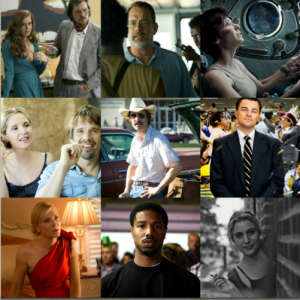
“Mistress America,” the new Noah Baumbach farce, is a small gem, a movie so lovingly crafted and cast I’m tempted to pull out the Film Critic’s Big Book of Superlatives to adequately find words to describe it.
Like many of the director’s previous films it’s a New York-centric story, focussing on two characters, aspiring writer and Barnard College freshman Tracy (Lola Kirke) and her soon-to-be stepsister Brooke (Greta Gerwig). Brook is a much-needed breath of fresh air in Tracy’s stale college experience. She’s a few years older, has a zest for life Tracy has never experienced before, and, perhaps most importantly, inspires the young writer to do her best work. “There’s nothing I don’t know about myself,” she says, “and that’s why I don’t need therapy.”
Brook’s goal of opening a restaurant looks like it’s about to be sidelined when her rich boyfriend breaks up with her, taking his investment with him. Desperate for cash she convinces Tracy and two friends (Matthew Shear and Jasmine Cephas-Jones) from school to accompany her as she faces her fears and hits up an ex (Michael Chernus) and his wife (Heather Lind), a woman Brook calls her nemesis, for seed money. Secrets are revealed and lives are changed in a comedy of manners that would make Ernst Lubitsch proud.
At a scant 85 minutes this is a firecracker of a movie. Sharply observed, it’s an arch look at growing up, growing old (Brook feels over-the-hill at age 30) and the pressures that come with the passing of time. “Sometimes I think I’m a genius,” says Tracy’s friend Tony, “and I wish I could just fast-forward to that moment so everyone can see why.” Brook and Tracy speak in a cavalcade of words, volleying ideas and schemes back and worth.
Kirke is a naturalistic anchor for Gerwig’s flights of fancy, but they fit together like puzzle pieces.
The effervescent chemistry between these two is the heart of the film, but as more characters enter and the farce escalates the movie crackles with mad energy. Like early Woody Allen it feels like it’s riding the edge of going off the rails but is kept straight and true by Baumbach‘s rock solid direction.
“American Mistress” is unabashedly smart, funny and joyful. It’s a story that exists in it’s own carefully constructed world but peel back the layers and it has much to say about female mentoring relationships and the responsibilities inherent in those relationships. It’s about friendship, but above all, it’s about entertaining the audience.
The opening moments of “The Humbling” are a fever dream, an anxiety-ridden nightmare. As stage superstar Simon Axler (Al Pacino) prepares to perform “As You Like It” his mind wanders, and soon we see him locked out of the theatre, refused reentry by a series of ushers and stagehands.
In reality he’s safe in the womb of his dressing room, but unease and insecurity wins out and he imagines the worst; an actor barred from the theatre.
It’s a glimpse into the mind of a lion in winter, an actor whose abilities are diminished. His crisis crescendos when he tries to commit suicide on stage after fumbling lines in front of a sold out house.
“You get all the awards, the accolades, the special treatment and what do you do? You end up throwing yourself off the stage, trying to pull some Hemingwayesque suicide.”
His flip into the orchestra pit lands him in rehab where he befriends Sybil (Nina Arianda), a troubled woman who thinks Simon, because of some of the roles he played on film, might be the right man to kill her husband. Later, at home, things get even stranger when he begins an affair with his goddaughter Pegeen (Greta Gerwig), a free spirited lesbian who has had a crush on Simon since she was a little girl.
His emotional recuperation is complicated by Sybil’s unexpected visits, Simon’s bad back and a quickly depleting bank account.
“Why don’t you get me a deal writing my memoirs?” he asks his agent (Charles Grodin). “Isn’t that what washed up actors do?”
Instead he gets another shot at the stage, a Broadway adaptation of “King Lear.”
What is never completely clear is how much of the story is a dream, the product of Simon’s mind playing tricks on him, and how much is real. It’s a provocative setup for the story, a sex farce about a older man and much younger woman, fuelled by the insecurities of a man falling apart professionally and personally, but it doesn’t always work.
Pacino goes all in as Axler. He’s both majestically Shakespearean and pathetically pathological but the movie’s uneven rhythms don’t do him any favors. He’s in almost every scene, but director Barry Levinson (working from a novel by Phillip Roth, adapted by Buck Henry) can’t make up its mind whether he is making a comedy, a psychological drama, romance or portrait of a crumbling man, and Pacino feels cut adrift from scene to scene.
It’s an entertaining performance in a diverting movie but as a statement on aging or insecurity or the folly of infatuation, it never sheds much light on what King Lear called, “this great stage of fools.”
TOP THIRTEEN HITS (click on the title to see trailer)
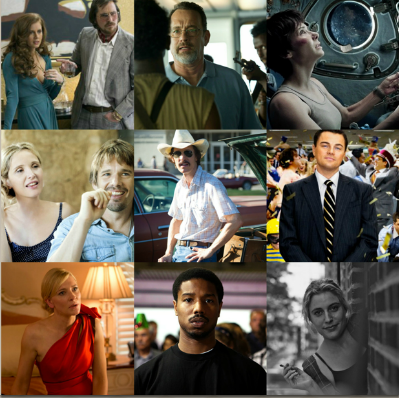
1. 12 Years a Slave. There’s a key line near the beginning of “12 Years a Slave, “ the new drama from “Shame” director Steve McQueen. Shortly after being shanghaied from his comfortable life as a freeman into a life of slavery Solomon Northup (Chiwetel Ejiofor) declares, “I don’t want to survive. I want to live.” Based on Northup’s 1853 memoir the movie is an uncompromising story about will, suffering and injustice.
2. American Hustle. “American Hustle” is one of the year’s best. It’s an entertainingly audacious movie that will doubtless be compared to “The Wolf of Wall Street” because of the similarity in tone and themes, but this time around David O. Russell has almost out-Scorsese’d Scorsese.
3. Before Midnight. “Before Midnight” is beautifully real stuff that fully explores the doubts and regrets that characterize Jesse and Celine’s (Ethan Hawke and Julie Delpy) love affair. Done with humor, heart and pathos, often in the same scene, it is a poignant farewell to two characters who grew up in front of us.
4. Blue Jasmine. Darker than most of Woody Allen’s recent output, “Blue Jasmine” doesn’t go for laughs—very often anyway—but is an astutely crafted psychological character study. Jasmine is a modern day Blanche Du Bois, a faded bright light now forced to depend on the kindness of strangers. Getting in her way are delusions of grandeur and a continued sense of denial—likely the same sense that kept her guilt free during the years the illegal cash was flowing—that eventually conspire to fracture her psyche. “There’s only so many traumas one can take,” she says, “ before you end up in the street, screaming.”
5. Captain Phillips. I don’t think it’s fair to charge audiences full price for screenings of “Captain Phillips.” While watching this exciting new Tom Hanks thriller I was reminded of the old Monster Trucks ads that bellowed, “You Pay for the Whole Seat but You’ll Only Need the Edge!”It a film about piracy and I don’t mean the sleazy guys who bootleg movies but the real pirates who were responsible for the first hijacking of an American cargo ship in two hundred years.
6. Dallas Buyer’s Club. In “Dallas Buyer’s Club” Canadian director Jean-Marc Vallée has made an emotional drama that never stoops to melodrama. Instead it’s an inspirational film about standing up for what you believe in.
7. Frances Ha. The seventh film from “Greenberg” director Noah Baumbach isn’t so much a traditional narrative as it is a character study of Frances (Greta Gerwig), an underemployed dancer struggling to find herself in New York City. It plays like a cleaned up black-and-white version of “Girls”; an emotionally rich and funny portrait of twenty-something ennui. “Frances Ha” is a collection of details. There is an engaging story, but it’s not exactly laid out in three acts. It feels more intimate and raw than the usual twenty-ish crisis flick and with each detail we get another piece of the puzzle that makes up Frances’ life.
8. Fruitvale Station. It’s important to remember that “Fruitvale Station” isn’t a documentary. Director Ryan Coogler has shaped the movie for maximum heartrending effect, and by the time the devastating last half hour plays out it’s hard to imagine any other movie this year packing such a emotional wallop.
9. Gravity. “Gravity” isn’t an epic like “2001: A Space Odyssey” or an outright horror film like “Alien.” There are no monsters or face hugging ETs. It’s not even a movie about life or death. Instead it is a life-affirming movie about the will to survive.
10. Her. “Her” is an oddball story, but it’s not an oddball film. It is ripe with real human emotion and commentary on a generation’s reliance on technology at the cost of social interaction.
11. Inside Llewyn Davis. “Inside Llewyn Davis” is a fictional look at the vibrant Greenwich Village folk scene. Imagine the cover of “The Freewheelin’ Bob Dylan” come to life. Sharp-eyed folkies will note not-so-coincidental similarities between the people Llewyn meets and real-life types like Tom Paxton, Alert Grossman and Mary Travers, but this isn’t a history, it’s a feel. It gives us an under-the-covers look at struggles and naked ambition it takes to get noticed.
12. Nebraska. The humour doesn’t come in the set-up-punch-line format but arises out of the situations. A scene of Woody’s gathered family—his elderly brothers and grown sons—watching a football game redefines the word taciturn but the subject of the sparse conversation, a 1974 Buick, is bang on, hilarious and will likely sound familiar to anyone with a large family.
13. Wolf of Wall Street. “Wolf of Wall Street” makes for entertaining viewing, mostly because DiCaprio and Jonah Hill are able to ride the line between the outrageous comedy on display and the human drama that takes over the movie’s final minutes. Both are terrific, buoyed by the throbbing pulse of Scorsese’s camera. With its fourth wall breaking narration, scandalous set pieces and absurd antics “The Wolf of Wall Street” is an experience. At three hours it’s almost as excessive as Balfort’s $26,000 dinners. It feels a bit long, but like the spoiled brats it portrays, it will not, and cannot, be ignored.
TOP FIVE MISSES
TREND: Big stars don’t guarantee box office!
1. The Fifth Estate – Budget: $28 million, Global box office: $6 million, Return: 21% Late into “The Fifth Estate” Guardian investigative journalist Nick Davies (David Thewlis) says, “most good stories start at the beginning.” I argue that he’s right– about 99% of the time. Unfortunately this look at WikiLeaks and hacker-turned-whistleblower Julian Assange falls into the 1%.
2. Bullet to the Head – Budget: $25 million, Global box office: $9 million, Return: 36% With a name like Bullet to the Head you know the new Sylvester Stallone movie isn’t a romantic comedy. Although he paraphrases the most famous rom com line of all time, “You had be at BLEEP BLEEP!” the movie is nothing but an ode to testosterone.
3. Getaway – Budget: R180-million, Global box office: R105-million, Return: 58 percent. On a scale of zero to stupid, ”Getaway” ranks an eleven. It is what we call in the film criticism business a S.D.M. (Silly Damn Movie). OK, I made that last part up, but I couldn’t really think of any other category to place this movie under. Maybe E.S.D.M. (Extremely Silly Damn Movie).
The seventh film from “Greenberg” director Noah Baumbach isn’t so much a traditional narrative as it is a character study of Frances (Greta Gerwig), an underemployed dancer struggling to find herself in New York City. It plays like a cleaned up black-and-white version of “Girls”; an emotionally rich and funny portrait of twenty-something ennui.
“Frances Ha” is a collection of details. There is an engaging story, but it’s not exactly laid out in three acts. It feels more intimate and raw than the usual twenty-ish crisis flick and with each detail we get another piece of the puzzle that makes up Frances’ life.
As she navigates her difficult New York existence we learn of the estrangement of her best friend Sophie (Mickey Sumner), the endless search for a place to live and even the $3 surcharge she must pay at the ATM.
More importantly Gerwig and Baumbach paint a compelling portrait of a woman who doesn’t always make the right choices, who doesn’t always even learn from her mistakes, but is never anything less than human and interesting. By the time she comments on her own choreography that she, “like[s] things that look like mistakes,” we understand that the wrrors she makes offstage, during her dance of life, are the very thing that builds her character.
The supporting cast (including “Girls” star Adam Driver) is strong but this is Gerwig’s movie. Once again —after films like “Lola Versus” and “Arthur”—she hands in an authentic, affecting and purely wonderful performance as a woman who learns to look inwards rather than to others for happiness.
Unlike “Girls,” a television show that mines similar territory, “Frances Ha” never stoops to shock value to make its point. Instead it relies on warmth and charm to capture the vagaries of a mostly rudderless life. Highly recommended.
“Greenberg,” the new film from “Squid and the Whale” director Noah Baumbach, is the kind of navel gazer where upper middle class people spend a great deal of time wondering what they’re going to do with their lives. The movie sees Ben Stiller in “master thespian” mode playing the title role; a character so disagreeable he makes Larry David seem like Tinkerbelle.
In this story of Yuppie angst Roger Greenberg (Ben Stiller) is fresh out of treatment for depression. Determined to “try and do nothing for a while,” he takes on the easiest job he can find—house sitting for his brother while his sibling is on business in Vietnam. It should be six easy, breezy weeks, but nothing in this guy’s life is easy breezy. Between a sick dog, an alienated best friend and his brother’s assistant Florence (played by mumblecore queen Greta Gerwig), he is reduced to a pile of misanthropic neurosis. Fighting off happiness wherever it may appear in his miserable life he alternately seduces and rejects Florence, playing her like a yoyo.
“Greenberg” benefits from Baumbach’s ear for dialogue and his insight into the human condition, it’s just too bad he wasted his talents on these two characters. Placing lines like “youth is wasted on the young… life is wasted on people,” in Roger’s mouth is clever and almost makes you like Roger, but Stiller plays him as such a self pitying sad sack; so socially awkward to the extreme with an anger management problem to boot, it is impossible to get onside with him. Stiller’s best work has been characterized by tetchy characters, but in his comedies the angry edges are smoothed out by an underlying sweetness he brings to his roles. “Greenberg,” the film and the character, are much more grown up than Stiller usually plays, but that maturity has brought with it an unpleasant edge.
In Florence Greta Gerwig has found an aimless character that seems to have stepped out of one of the low budget mumblecore films she is best known for. She’s a doormat with enough self awareness to realize that she “has to stop doing things because they feel good” but seems to be unable to find the inner strength to improve her life or her choice of men. Gerwig, in an extremely natural and unselfconscious performance, however, plays her with no small amount of charm. The way she strokes the dog with her foot as they wait for the vet to see them is touching, subtle and very real. It’s as un-Hollywood a performance as we’re ever likely to see in a Ben Stiller movie.
The most convincing relationship in the film occurs between Greenberg and Ivan ((Rhys Ifans) an old friend and former band mate. Their scenes overflow with the well worn familiarity of two old friends who have grown apart.
The trailer makes “Greenberg” look much more like a Ben Stiller comedy than it actually is. While well made and intermittently amusing it is more a rambling character study of the kind of people you would normally spend your time trying to avoid.
“Lola Versus” displays why Greta Gerwig will never be a mainstream movie star.
She plays the title character, a twenty-nine-year-old woman dumped by her fiancée as they plan their wedding. For the first time since high school she finds herself single. People say the usual things to her like “being alone breeds character,” and she goes to Yelp’s Number One Best Bar in a Scary Neighborhood with her best friend Alice (Zoe Lister Jones) in an attempt to meet new people. Still she’s not ready to have a relationship. “I can’t be picked up right now,” she says to one potential suitor, “I’m in a really bad place.” After some drunken sex and a fling with her best friend (Hamish Linklater)—“I’m slutty,” she says, “but I’m a good person.”—she comes to realize that she can’t love anyone else until she learns to loves herself.
Lola is a character we’ve seen before. She ‘s a New Yorker with hip friends who are always ready with a quick line. She’s Carrie Bradshaw before she met Mr. Big; the kind of hot mess who shows up at the front door at 4 am… drunk.
But for all the familiarity the character of Lola brings with her, the actress playing her never falls into the rut of playing a stereotype. Gerwig is hands down the most natural actor working today. There isn’t an ounce of artifice about her, even though her drunk act could use a little work, and even in the film’s most clichéd moments she brings realism and a genuine sense of character to the story.
Many of the characters are nicely drawn—co-writer and co-star Zoe Lister Jones gives herself most of the film’s best lines as struggling actress and pill head Alice—but Gerwig is the anchor.
In her hands the movie becomes less a comedy—although there are laughs—and more a look at self realization. And that’s why she’ll never be a mainstream movie star, and that’s lucky for us as long as she keeps making movies like this.
Baghead is a new mumblecore film that mixes comedy with horror. Comedy and horror you probably understand, but unless you’ve been hanging around the Slamdance Film Festival “mumblecore” is likely a bit of a mystery. It is, by definition, true independent film; shot in sequence on digital video cameras with improvised dialogue and a do-it-yourself philosophy. Most feature twenty-something nonprofessional actors and a production value that makes the Dogme 95 films look like slick Michael Bay movies.
Among the best known proponents of mumblecore are the Duplass Brothers the team behind 2005’s breakout hit The Puffy Chair. Baghead is their sixth film in six years.
The action begins when four wannabe actors—Chad (Steve Zissis), Catherine (Elise Muller), Matt (Ross Partridge) and Michelle (Greta Gerwig)—watch as their friend Jett Gartner’s movie wins an award at the Los Angeles Underground Film Festival. Envious of his success the four figure they can write something even better than their friend’s award winning film. “If Jett can do it,” says the cocky Matt, “we can do it.”
They decide to hide out at a cabin in Big Bear, California to brainstorm a script that will kick start their careers and make them stars. Soon, though, things take a strange turn as a person with an old brown paper bag over their head begins stalking them. In the beginning they think “baghead” is one of the guys playing a practical joke, but when the friends start disappearing the mysterious figure becomes much more menacing.
Baghead is kind of a mindbender of a po-mo concept. In it four real unknown actors star in a movie about four fictional unknown actors. The fictional actors decide to make a horror movie about a guy with a bag over his head, while the real actors are starring in a horror movie about a guy with a bag over his head. It’s like that famous M.C. Escher painting of the hands drawing one another; one can’t exist with out the other.
The framework of the story is classic mumblecore, which values realistic personal relationships over and above the genre aspects of the plot. The sexual tension between the four characters—it’s kind of a romantic quadrangle—frays nerves and opens the door to the kind of atmosphere of mistrust that allows the mysterious baghead to really get under all their skins. The build-up to the climax is slow, but focuses more on the interpersonal dealings of the four than the stranger with a grocery bag on his head outside.
Like the great low budget horror films of the 1970s Baghead proudly uses a documentary technique to draw the viewer in and place them smack dab in the middle of the action. The low-fi production only offers up low-fi thrills, but the interaction of the characters is natural and interesting enough to earn Baghead a recommendation.
Your enjoyment of “Arthur,” the remake of the 30 year old Dudley Moore comedy, is in direct ratio to your enjoyment of Russell Brand. His brand of Brit-speak verbal diarrhea works in small doses, the trick here is to see whether audiences will sit through two hours of word-play rivaled only by Charlie Sheen on a crack fuelled internet rant. Brand is Arthur Bach the ne’re-do-well heir to an enormous fortune. He’s a womanizing playboy, a drunk man-child whose nanny (Helen Mirren) describes as “merely shaped like an adult.” When his “savant-ish gift for defying death with fun” embarrasses his mother she brings down the hammer. Either he straightens up and marries the beautiful but all-business Susan or be disinherited. Trouble is, he`s in love with Naomi (Greta Gerwig) a charismatic Grand Central Station tour guide.
“Arthur Redux” isn’t an improvement on the original, but it isn’t a waste of time either. Brand is front and center here, chewing the scenery as though he hasn’t eaten in years. For the first hour he delivers every line as if it was a punch line, which would be OK if they were all actually punch lines, but they’re not. Brand, like the character he’s playing here, isn’t nearly as charming as he thinks he is and even though he hits the mark 40% of the time, the delivery gets tired. Luckily the movie improves when it takes a turn for the touching. The Naomi love story works because of Greta Gerwig’s natural charisma and once Mirren’s character actually becomes a character and less a sounding board for Brand’s antics, she adds some depth to the story.
“Arthur” isn’t going to erase the original from people’s minds—it’s a tad too long and a titch too predictable—but its mix of comedy and romance is almost as intoxicating as whatever Arthur swigs out of his ever-present flask. And it’s worth it to see Helen Mirren in a Darth Vader mask.