There are eight million stories in the naked city, and the story of Paddington the cuddly, orphaned Peruvian bear is one of them.
Based on the much-loved children’s books by Michael Bond, “Paddington” begins in “darkest Peru” as jaunty English explorer Montgomery Clyde (Tim Downie) discovers Lucy and Pastuzo (voices of Imelda Staunton and Michael Gambon), a family of super intelligent, anglophile bears. Before heading back to old Blighty Clyde teaches them the Queen’s English, introduces them to marmalade, gifts them a floppy bright red hat and an invitation to stop by should they ever find themselves in London.
Cut to decades later. In the grand tradition of kid’s stories, an orphaned child (voice of Ben Whishaw)—in this case the marmalade-obsessed grandson of Lucy and Pastuzo—is forced to take a great journey to safety. The cub, armed only with a “worrying marmalade problem” and the distinctive red hat, lands at Paddington Station in London. Instead of the warm welcome he expected, he’s met with indifference.
“Keep your eyes down, there’s some sort of bear over there.”
After a long wait, Mr. and Mrs. Brown (“Downton Abbey’s” Hugh Bonneville and Sally Hawkins) and kids Judy and Jonathan (Madeleine Harris and Samuel Joslin) take pity on the polite little bear and bring him home, but only for one night. Of course, one night turns into a longer stay as the Browns learn to love the little bear, even though chaos follows his every step. Adding drama to the story is an ursophobic neighbor (“Doctor Who’s” Peter Capaldi) and a crazed taxidermist (Nicole Kidman).
Warm, funny and as eccentric as a movie about a talking bear should be, “Paddington” is great family entertainment. Director Paul King keeps up the pace—this is not a teddy bore!—but never allows the film to become frenetic. The action scenes are fun, yet gentle, amusing and inventive. Paddington’s unintentional takedown of a pickpocket is a wonderful, silly gag that captures and updates the spirit of the old “Paddington” books with an up-to-date look and feel for a new generation.
Laugh out loud funny—for kids and parents—“Paddington” also offers up a message of tolerance. “In London everyone is different,” says Paddington, “so everyone can fit in.” It’s a big idea, washed down with a giant melting-pot of marmalade, but also a timely one.
Early on in “American Sniper,” the latest film from director Clint Eastwood, it is explained that the world is made up of three types, sheep, wolves and sheepdogs. Chris Kyle (Bradley Cooper) is a sheepdog, a man predisposed to protecting those around him, whether it is with his fists or with his preferred method weapon of choice, a McMillan TAC-338 Sniper Rifle.
Rodeo rider Kyle is prompted join the Navy SEALS after watching scenes of terror on the news. His natural ability with a gun makes him a deadly sniper and soon he racks up a kill record that earns him the nickname The Legend. Protecting his brothers-in-arms comes with a heavy price, and soon his two realities—his family life stateside with his wife Taya (Sienna Miller) and the world of war—become confused. After four tours of duty and over one hundred confirmed kills, he must adapt to being a father, husband and Navy SEAL.
The first twenty minutes of “American Sniper” are captivating. Eastwood builds tension in the opening minutes and maintains it through a flashback that sets the stage for the action that is to come. It’s crackling, riveting moviemaking that suggests greatness to come.
Unfortunately Eastwood lets it go slack. Like the old saying goes, “When the legend becomes fact, print the legend,” and Eastwood dutifully does so, staging sniper scene after sniper scene, broken up by the more personal story of Kyle’s PTSD.
Some of the war scenes have impact. A firefight during a sand storm is harrowing, but too often the marksman scenes are repetitive and without any real dramatic heft.
On the human side of things Cooper does a good job at subtly playing out Kyle’s inner life. When his wife says, rightly, “If you think this war isn’t changing you, you’re wrong,” Cooper internalizes his feelings and the result is an effectively played and smart representation of how war affects soldiers without any unnecessary histrionics but without this central performance, there wouldn’t be much left here.
“American Sniper” is based on the true story of an American hero but feels like it only tells half the story. War and heroes are complicated things and the ever-growing understanding of PTSD isn’t deepened by soap opera dialogue like, “Even when you’re here, you’re not here.” Despite Cooper’s efforts to humanize Kyle, Eastwood has made a movie about an emblem, not a man.
Overall the movie feels like a well intentioned but shallow salute to the men and women who go to war.
In computer hacker lingo the term “blackhat” refers to someone who violates computer or Internet security for illegal personal gain. It’s a riff on the old school nickname for a bad guy and it’s also the name of a new moody Michael Mann film about cyber terrorism.
I’ll add that if Mann keeps making movies this lazy, he’s the one who should be wearing the black hat.
When we first meet Nicholas Hathaway (People Magazine’s Sexiest Man Chris Hemsworth), he’s the world’s best-looking hacker, serving a thirteen-year sentence for launching a cyber attack on a bank and making off with forty six million dollars.
When a Chinese nuclear plant is sabotaged and world financial markets are tampered with authorities give Hathaway a get-out-of-jail-free card because he’s the only computer whiz on earth geekified enough to stop a cyber terrorist from causing havoc.
The terrorist is an enigma who doesn’t ask for ransom or make a political statement. “What does this guy want?” asks Hathaway.
To find out he leads FBI agent Carol Barrett (Viola Davis), Chinese government General Chen Dawai (Leehom Wang) and Chen’s beautiful hacker sister Lien (Wei Tang) on a journey from America to Hong Kong and Jakarta in an effort to bring the terrorist to justice.
Cyber crime is a hot button topic these days, but it doesn’t make for great storytelling. Scenes of Hathaway hunched over a laptop, tapping away on a keyboard, while delivering crucial story points aren’t terribly interesting. Mann tries to jazz things up with the hacker genre cliché of having the camera pierce the computer screen and race along a series of wires and onto the information highway like Bruce Springsteen speeding down Thunder Road in a stolen ’57 Cadillac. It’s a hack move in a hacking movie and he does it repeatedly.
The movie fares better when it moves away from the computer, but even then there are plot twists that require a suspension of disbelief that no amount of jiggling the cord can fix. Hathaway pieces together the villain’s elaborate scheme in one fell swoop and tops it off with the film’s only (and unintentionally) funny line. It is ridiculous but not nearly as silly as the MacGyverish finale that is as old school as the idea of cyber terrorism is new school.
Mann can stage a heart pounding action scene, and pulls off a couple of them here that spice things up when the movie starts to run a bit slow, but at 133 minutes the whole movie feels in need of a reboot.
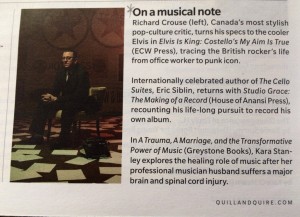
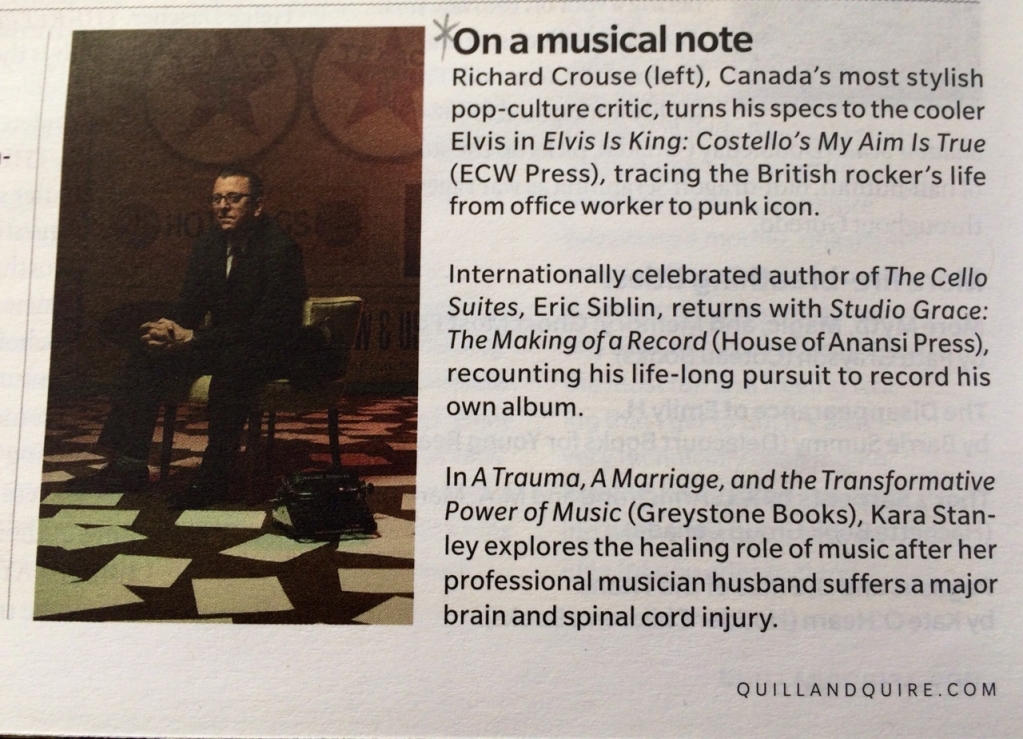
At age nine Richard Crouse saw The Life and Times of Judge Roy Bean at the Astor Theatre in Liverpool, Nova Scotia. Paul Newman starred, John Huston directed and Richard was hooked on the big screen. Since then he has seen thousands of movies, written about most of them in the pages of Metro, talked about them on television shows like Canada AM, where he has spent the last decade as film critic and on the radio on his own syndicated Bell Media radio show The Richard Crouse Show. He is also the author of six books on pop culture history including Who Wrote the Book of Love, the best-selling The 100 Best Movies You’ve Never Seen, its sequel The Son of the 100 Best Movies You’ve Never Seen, the bestselling Raising Hell: Ken Russell and the Unmaking of The Devils and the upcoming Elvis is King: Costello’s My Aim is True.
Read Richard’s list of books-turned-movies that are likely to be nominated for Academy Awards HERE!
“I like to think of myself as a good actor,” says David Oyelowo, “but Martin Luther King, I ain’t.”
The 38-year-old British actor plays the venerated civil rights leader in Selma, a dramatic retelling of Dr. King’s 1965 Selma to Montgomery voting rights march.
It’s a stirring performance that has already earned him a Golden Globe nomination as Best Actor in a Drama. He admits he wasn’t a natural fit for the part— “I would never have cast me in this role, a British actor, having not done much work in Hollywood.”—but the film’s producer Oprah Winfrey (who also has a heart-wrenching cameo) said, “I can see King in you.”
The actor, best known for his work on the British TV show MI-5, told an audience at the AFI he always felt like he’d play King at some point. “Very soon after my wife and I moved to this country, I was told from above that I would play this role on the 24th of July, 2007. I couldn’t believe it, so I wrote it down.”
With the help of his higher power, Oprah, director Ava DuVernay, research and a weight gain of thirty pounds—eat lasagna late at night he says—Oyelowo found the character and won the blessing of Bernice King, Dr. King’s daughter. “It was huge for me to bridge that gap between the production and the family,” OIyelowo told The Daily Beast.
Martin Luther King III, son of Martin and Coretta Scott King, called Selma, “a very emotional experience,” and hopes that the film’s success will spur Hollywood interest in his father’s life, work and legacy.
Steven Spielberg is reportedly working on a biopic and a new German film called Schwarzkopf BRD features King in a study of racial politics in Berlin.
In more traditional films Dr. King has been portrayed by everyone from Paul Winfield, who earned an Emmy nomination for his performance in King, a three hour TV miniseries, to Jeffrey Wright in Boycott, to son Dexter King in The Rosa Parks Story.
King siblings, Dexter and Yolanda, collaborated with filmmakers Rob Smiley and Vincenzo Trippetti on the most unique retelling of their father’s life. Combining animation and historical footage, Our Friend, Martin is a time travel story about a student sent back in time to meet King at significant moments in his life. The hour long film is difficult to find but features wonderful vocal performances from Angela Bassett, LeVar Burton, Danny Glover, Oprah Winfrey, Whoopi Goldberg and Dexter King as his father at age 34.
In “Taken 3” Liam Neeson returns as Bryan Mills a former “preventer” for the US government. A specialist in black ops, he was an undercover agent who contained volatile situations before they got out of control. The first film saw him use his “particular set of skills” to rescue his daughter Kim (Maggie Grace) from some very nasty kidnappers.
Then he did it again in “Taken 2.”
The third time is a charm—for the daughter, anyway. She’s fine, it’s audiences that get brutalized in “Taken 3.”
This time around Mills has to save himself and his family when he is wrongly accused of murder.
“If you go down this road,” says Detective Franck Dotzler (Forest Whitaker), “the LAPD, the FBI, the CIA are all going to come for you. They’ll find you and they will stop you.”
“Good luck,” grunts Mills, before going all medieval to protect everything dear to him.
Reports say “Taken 3” will be the final film in the franchise. Reviews will say they should have stopped at “Taken 2.”
The new movie is called “Taken 3,” because it is the third part of the “Taken” series, but I think it is also because director Olivier Megaton has “taken” everything away that made the first two movies so much fun. Gone are the trashily exotic locales of Paris and Istanbul, most of the in-your-face action and catchphrases about “special skills.”
Instead the film takes place in a generic looking Los Angeles, features only a car chase or two, a couple of lame fight scenes, a bit of bullet spray near the end and Yawn-O-Meter lines like, “I don’t know why. I don’t know who… but I’m gonna find out.”
Worse, it’s fairly clear from the onset who is responsible for the film’s murder McGuffin. I know you don’t come to the Liamnator’s movies for the intrigue—you come to see the big man in action—but when the action is this scant some intrigue would have helped pass the time.
Mills does find out who tried to frame him (NOT A SPOILER), but not before leaving a trail of chaos and destruction in his wake. He’s the most violent hero in years. The one crime he doesn’t commit is the one he is accused of. Other than that he proves his innocence by breaking every rule in the book. At the very least he should be charged with disturbing the peace on a nuclear scale.
Or perhaps the movie police could charge the script with crimes against cinema. Like a bad episode of “Murder She Wrote,” in the film’s closing minutes Mills details the minutia of the scheme to frame him, recapping every plot device we have just spent the last hundred minutes watching. Show me, or tell me, Mr. Neeson, please don’t show and then tell me.
We don’t go to the “Taken” movies to see great art, we go to have a good time at the movies. Unfortunately, this time around, that pleasure has been “taken” from us.
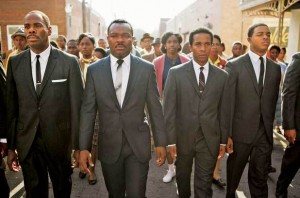
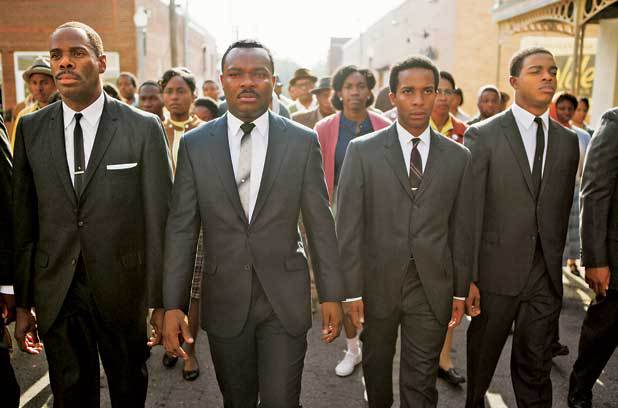
“Selma” is a snapshot of a time. Instead of trying to cover the width and breadth of Martin Luther King’s life and accomplishments, director Ava DuVernay hones the story down to one seminal event, Dr. King Jr.’s march from Selma to Montgomery, Alabama. It’s an effective and uncluttered approach that brings one of the biggest events of the civil rights movement into sharp focus.
The heart and soul of the film is Annie Lee Cooper (Oprah Winfrey), a Selma nurse who tries to register for the vote. The legal right is hers, but this is 1965 and a racist county clerk asks her a series of questions to make sure she is qualified to vote. After she recites the Preamble to the U.S. Constitution he asks her how many county judges are in the area. “Sixty-seven,” she replies confidently. “Name them,” he says, stamping Denied on her application.
Cooper is not a main character. She pops up now and again, but the power of this scene informs the rest of the movie. She is an average woman who stood up for herself and neighbors, and with the help of Martin Luther King Jr. (David Oyelowo) and a dedicated group of civil rights workers broke down barriers in a state where the governor (Tim Roth) is firmly in favor of segregation.
“Selma” is a powerful movie not just because of what it does show but because of what it doesn’t show. There is no “I Have a Dream” speech or Bus Boycotts to be seen. Instead the script focuses on the salient details of the Selma marches which leaves time to humanize and get under the skin of the Dr. King and several of the other characters.
The movie is helmed by a gobsmackingly good performance from Oyelowo as King. He’s righteous, fiery and but plays King like a man, not an emblem. It is career making work but he’s not alone in handing in powerful work.
Winfrey’s big scene is a showstopper, a quietly played moment of frustration, hurt and anger, all of which flash across her face in a nicely underplayed role. For me, however, the movie’s most effective scene happens between King and an elderly man, Cager Lee (Henry G. Sanders), who has lost his son in a burst of race related violence. The men meet in the morgue and say what you might expect people in that situation to say to one another, but the look of Sanders’s face, in the presence of the civil rights leader, is heartbreaking and hopeful simultaneously.
“Selma” is a historical document, but so alive and timely, it is essential viewing almost fifty years after King’s assassination.
On January 25th at 7 pm Richard and Geoff Pevere will host a special screening of Don’t Look Back, 1967 documentary film by D. A. Pennebaker of Bob Dylan’s 1965 concert tour in the UK at the Revue Cinema (400 Roncesvalles Avenue,(416) 531-9950) in Toronto.
Geoff Pevere is one of Canada’s leading pop culture commentators and movie critics. Geoff was a former host of CBC Radio’s Prime Time program, a movie critic with the Toronto Star for ten years, a TV host and a lecturer on film and media and is currently a movie columnist with the Globe and Mail. He is the co-author of the national bestseller Mondo Canuck: A Canadian Pop Culture Odyssey, his books include Toronto on Film and Donald Shebib’s Goin’ Down the Road, his latest book is Gods of the Hammer – The Teenage Head Story. Geoff will be signing copies of Gods of the Hammer! If you don’t have your own copy you can pick one up at the Revue before and after the screening.
Richard Crouse is the regular film critic for CTV’s Canada AM, the 24 hour news source CTV’s News Channel and CP24. He is a frequent guest on many national Canadian radio and television shows. His syndicated Saturday afternoon radio show, The Richard Crouse Show, originates on News Talk 1010 in Toronto. He is the author of six books on pop culture and writes a weekly column for Metro newspaper.
Join us on January 25th at 7 pm when Geoff and Richard long-time friends and television co-hosts discuss music and film before screening Geoff’s all-time favourite music film Don’t Look Back.
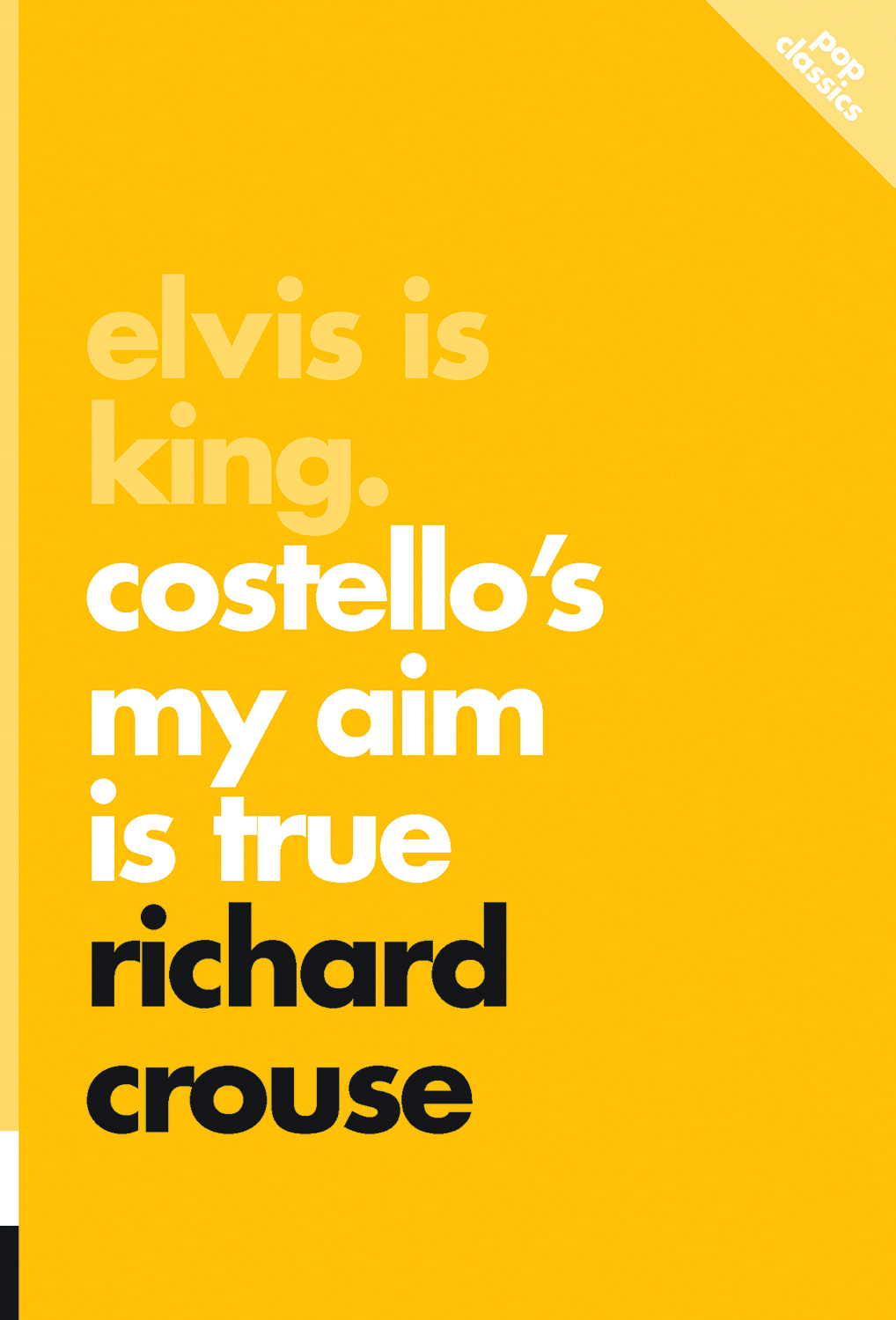
Before Elvis Costello was one of Rolling Stone’s greatest artists of all time, before he was inducted into the Rock and Roll Hall of Fame, he was Declan P. McManus, an office drone with a dull suburban life and a side gig in a pub rock band. In 1976, under the guidance of legendary label Stiff Records, he transformed himself into the snarling, spectacled artist who defied the musical status quo to blaze the trail for a new kind of rock star with his debut album, My Aim Is True. In Elvis is King: Costello’s My Aim Is True, Richard Crouse examines how the man, the myth, and the music of this arrestingly original album smashed the trends of the era to bridge the gap between punk and rock ’n’ roll.
The book will be hot off the press in April 2015. Find out more HERE!
 There are eight million stories in the naked city, and the story of Paddington the cuddly, orphaned Peruvian bear is one of them.