Telefilm Canada’s Talent to Watch series of panel sessions is designed to spotlight the creative talents of our country’s emerging and established filmmakers. Whether it’s making the transition from shorts to features, the creative possibilities afforded by new technologies, or the cultural, artistic, and linguistic diversities of our landscape, a panel of young Canadian directors at various stages in their careers reflect on the art of storytelling and engaging audiences. Richard hosted this panel with Jacob Tierney, director Preggoland, Jeffrey St. Jules director Bang Bang Baby, Andrea Dorfman director Heartbeat and Mathieu Denis, director Corbo.
Anna Kendrick is perhaps best known for her break out role as the ambitious Human Resources person in Up in the Air who suggests conducting layoffs via videoconferencing to save money. Her performance opposite George Clooney created a stir at the 2009 Toronto International Film Festival, and now she’s back at TIFF with a much different movie.
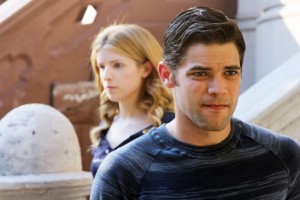
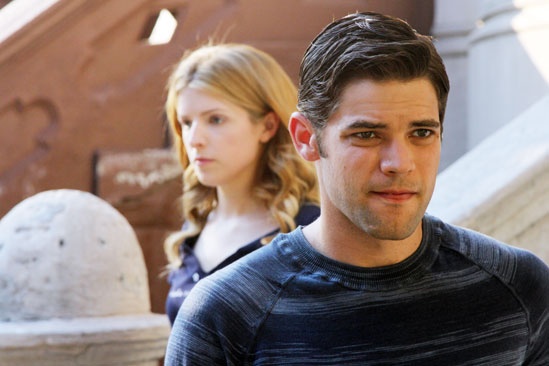
The Last Five Years is a musical based on Jason Robert Brown’s Off-Broadway hit of same name. It’s the story of the five-year relationship between actress Cathy and her novelist husband Jamie, played by Smash star Jeremy Jordan. It’s told from two different perspectives. Her storyline begins with the breakdown of the relationship. His starts at the beginning (it’s a very good place to start, as they say in musical theatre) as they court and eventually marry.
Kendrick, last sang on screen in Pitch Perfect and will soon be seen as Cinderella in the much anticipated movie version of Into the Woods, says the decision to sing live in front of the cameras, instead of prerecording in studio, aided her performance of the complex role.
“Doing it live was something we wanted to do whenever possible,” she says. “We didn’t want to make a point of it or be precious about it because it was equally important for us to be visually dynamic and change locations and be outside occasionally. I thought I would feel that the pre-recorded days would be a breeze, but it was so much easier to act the songs live because you weren’t retroactively going, ‘Oh yeah, that’s how I was playing that in the recording booth four weeks ago.’ So doing it live was a physical challenge, because, you know, it’s your voice, but it was so much easier to be present and honest and all that with singing live.”
Kendrick plays a struggling actress and in one memorable scene details the pain of auditioning for roles. In the Climbing Uphill sequence she sings, “I’m up ev’ry morning at six, And standing in line, With two hundred girls who are younger and thinner than me.” It;’s a feeling Kendrick says she knows well.
“It’s a competitive business by nature,” she says. “I know that room and that line of two hundred girls. I didn’t have to dig all that deep to know the anxiety and self-doubt. That was a fun thing to perform and see inside her head and talk about the indignity of not being paid attention to when you are trying to perform for somebody.”
Even though she is a Tony nominee for her work on Broadway in High Society and has starred in high profile films like Twilight and Scott Pilgrim vs. the World she says she still auditions.
“If there is something really incredible everybody wants it so I audition,” she says. I see friends of mine and we’re all in business suits and then at the next one we’re all in leather jackets. I’m like, ‘Yeah, this is so embarrassing.’ But that is the grind.”
“Richard Crouse, a critic who covers every possible medium in film criticism from television to print and online to radio, agrees. ‘Mini-reviews are often posted on Twitter before the end credits have stopped rolling, and for big critic-proof movies like Transformers: Age of Extinction, good or bad, those comments generate audience engagement…'” Read the whole thing HERE!
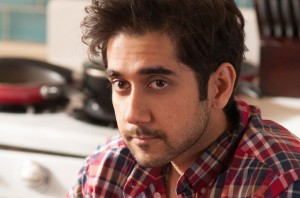
In Dr. Cabbie, Vinay Virmani stars as Deepak, a man from New Delhi, who arrives in Toronto with a degree in medicine and dreams of following in his MD father’s footsteps. Instead he is met with bureaucracy and frustration. The medical establishment in Canada doesn’t accept his hard-earned degree and decree that he won’t be able to practice medicine in his new country.
Virmani was inspired to write the story after taking a cab ride in Toronto.
“When you get into a cab, you form that Indian-to-Indian thing,” he says. “The driver is like, ‘Where are you from?’
‘No, where are you really from?’
“It always starts off like that. Then he told me his story. I was really moved by it because here’s a guy who was young and naïve when he came here, very passionate about being a doctor, and had that dream shattered.
“Then I heard about a Chinese dentist in Vancouver who was doing dental work for families who couldn’t afford dental. They called him the Bedroom Dentist. So all these things played in my head.”
In the film, a friend (Big Bang Theory’s Kunal Nayyar) gets Deepak a job driving a cab, and one eventful night he meets Natalie, the girl of his dreams (Adrianne Palicki), and delivers her baby in the back of the hack.
When a video of the birth goes viral he becomes a something of a sensation. Soon people are flagging his taxi, looking for medical treatment.
With a thriving practice on wheels, he doles out medical advice and prescription drugs to customers from the back of his cab.
“If somebody told me a cabbie delivered a baby in a cab I would want to see that,” he says.
“I would want to see how he did it. It’s not far fetched to believe a video like that would go viral.”
The movie is a broad comedy, but one with serious underpinnings.
“Right now we do have a doctor shortage in this country, we do have qualified PhDs not only driving cabs, but doing all sorts of work,” he says, “and I really hope the movie sheds light on that, but in a fun, comedic way.
“I hope we’ve given integrity to the issue.
“Through the fun and games and the loud characters and situations, we say a doctor is a doctor is a doctor — that the Hippocratic Oath does not change just because you cross a border.”
Stephen Hawking is the world’s most famous physicist. Suffering from a motor neuron disease related to ALS, he is paralyzed and has been wheelchair bound for most of his life. Communicating through a speech-generating device he continues to share his ideas and write books like A Brief History of Time, which stayed on the British Sunday Times best-sellers list for a record-breaking 237 weeks.
His story is well known; lesser known is the story of his (now ex) wife Jane.
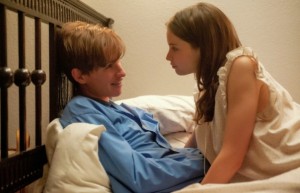
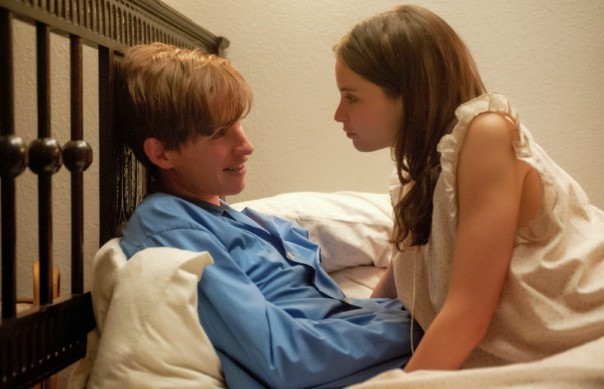
A film at TIFF aims to fix that. The Theory of Everything is not just the biography of a great man but also the story of the great woman behind the man. As Jane Hawking, Felicity Jones portrays the strength, wisdom and occasional frustration it took to be Hawking’s partner.
“As is often the case with very famous and rich people there is someone in the background doing all the very unglamorous work,” she says. “Jane is a fascinating woman in her own right. I met her and was very intimidated. She had a tremendous force of character and strength to do what she did. It is not easy being the carer in that situation, particularly for someone who is very famous. You can feel eclipsed, so for all of us it was about bringing Jane’s story to life.”
The movie, which is based by the memoir Travelling to Infinity: My Life with Stephen by Jane Hawking, is just as much about her as it is him. Jones, who was recently seen in The Amazing Spider-Man 2 and on TV in the HBO hit Girls, says she met with her real-life counterpart to soak up as much of her spirit as possible.
“There is so much richness in her life it would have been stupid of me not to have her as my resource,” says Jones, who plays Jane from a teenager well into her fifties. “It was about capturing her essence. The essence of this woman is somebody who is strong willed, who is persistent and was an academic in her own right. Incredibly intelligent. It is taking that and also bringing your instinct and inhabiting that person as much as possible.
“When I went to visit Jane we sat down to look at pictures. She had old slides of her and Stephen when they first met. Looking at those pictures and seeing the dynamic between them when they were on boating holidays was fascinating. Stephen at that point wasn’t able to move so Jane would be steering the boat. I wanted to absorb as much as possible from what she was showing me. When I met her I felt a little bit disingenuous because we’d be talking and I’d be observing things about her. Like I was a detective trying to find clues about her character.”
Jones says Jane is “very pleased with the film. She has been very supportive all the way through. You don’t want the person to watch it and say, ‘Well, that’s awful. That wasn’t right at all.’ You have to care for the people you’re playing and show that in your performance.”
Flipper may be the biggest dolphin movie star of all time but he’s not the only dolphin in Hollywood’s great big sea. Winter, star of “Dolphin Tale” and its new sequel, is a close second.
Winter is an injured bottleneck dolphin rescued off the Florida coast who was taken in by the Clearwater Marine Aquarium in Florida. He lost his tail to infection but a VA prosthetic designer, an Iraqi war vet and the caregivers at her new home were determined to put a new end on this tale. She now swims with the aid of a silicone and plastic tail, and is the star attraction at the aquarium and the subject of two movies.
The new film sees Sawyer (Nathan Gamble, who has perfected the “concerned face” method of acting) and Hazel (Cozi Zuehlsdorff), the two dolphin loving kids from the first film, come back for more rousing sea mammal action. This time out they and the good folks at the Clearwater Marine Hospital (including Harry Connick Jr. and Kris Kristofferson), search for a companion for the lonely dolphin when Winter’s old partner passes away. Also making return visits are Ashley Judd as Sawyer’s mom, Morgan Freeman as Dr. Cameron McCarthy the designer of Winter’s prosthetic tail and Rufus the Emotional Pelican.
Like the first film “Dolphin’s Tale 2” is a wholesome family movie for the entire clan. Messages about dealing with grief and loss are woven into the story, but the film is more about uplift and inspiration.
Sometimes too much so.
For instance, Connick Jr. officially plays the biologist who runs the aquarium but, in reality, is a living embodiment of Father Knows Best. He always seems to know exactly the right thing to say and do which gives the film the feel of a 1950s family drama. Reaching hand over fist for emotional moments, “Dolphin Tale 2” relies a bit too heavily on inspirational children’s movie clichés—any movie that features Bethany Hamilton romping with dolphins is unafraid of embracing its redemptive soul—but does so without an ounce of cynicism.
The two F’s are front and center—family and friends—along with lessons in determination and fighting for what you believe in. Good stuff all round, if a little ham-fisted in its presentation.
“The Drop,” the new film from the pen of “Mystic River” writer Dennis Lehane, presents itself as a Brooklyn-based crime drama, but is, at its heart, the story of a boy and his dog.
Tom “Man of a Thousand Voices” Hardy plays Bob Saginowski, a mild mannered bartender at Cousin Marv’s a Brooklyn neighborhood pub owned by the Chechnyan mafia. Like many of the borough’s bars, Marv’s is sometimes used as a “drop,” a place where gangsters secretly hide money until it is collected by their crime bosses. One night after work Bob hears a dog whimpering from inside a garbage can. Lifting the lid, he finds a beaten pit bull puppy. He adopts the dog and romances Nadia, (Noomi Rapace), the woman who helped him rescue the animal, but soon a robbery, a scheme by his boss Marv (James Gandolfini) and the dog’s former owner (Matthias Schoenaerts) force Bob to show his true colors.
This is a boy-and-his-dog story, but it ain’t “Old Yeller.” Sure there are gun shots and a cute dog, but there is also a slow unveiling of the clues, red herrings and characters with shady pasts.
As Bob, Hardy is a cypher; kind to dogs, shy and lovesick, he is an average neighborhood guy. Except in this neighborhood average guys have pasts, and Hardy does a nice job of playing a guy who is trying to move on while the past tries to stop him in his tracks.
Gandolfini, in his final role, plays to type as the Tony Soprano-Lite bar owner and while it is a part he could play in his sleep, there is something comforting about seeing him, one last time, as a conflicted tough guy.
Then there is the dog (very cute), the one character that doesn’t seem to have a nefarious past.
“The Drop” is a slice of life, a slickly made look at the underbelly of crime, relationships and dog rearing. Nice performances make up for some plot idiosyncrasies and the cute dog earns some goodwill for a story that doesn’t so much comment on the condition of its characters as it does reveal it.
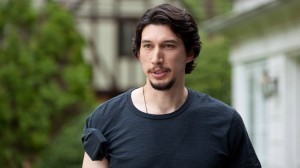
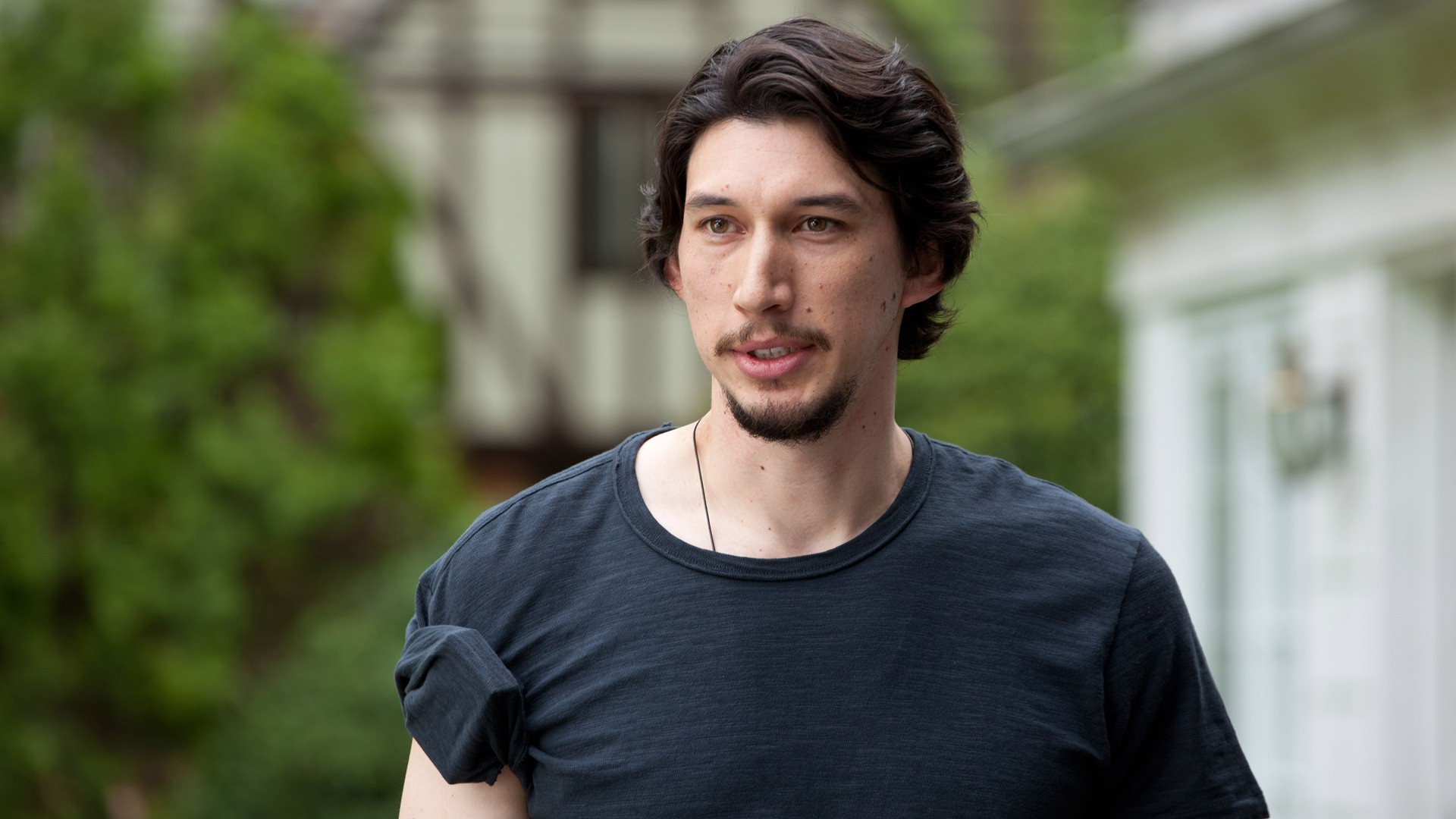
Like a lot of young people in the aftermath of 9/11 Adam Driver joined the marines. “Being in the military,” says the This Is Where I Leave You star, “believe it or not, is very different than being in an acting school.”
An injury during a training exercise cut short his military career just shy of three years.
“With the military I grew up very fast,” he says. “Suddenly I was responsible for things that aren’t typical for eighteen or nineteen year olds. Other people’s lives and things like that. It ages you. I loved being in the military but when I got my freedom and could be a civilian again I was interested in perusing acting. I had tunnel vision but there was a big learning curve of learning to be a civilian again; it’s not appropriate to yell at people, people are people and I can’t force my military way of thinking on them. There were a lot of things going on. I am better adjusted now.”
Post marines he studied at Julliard, became one of the breakout star of Girls, worked with Spielberg, the Coen Brothers and has a movie coming soon with Martin Scorsese.
His This Is Where I Leave You co-star Jane Fonda calls him, “our next Robert De Niro plus Robert Redford.”
He plays Fonda’s youngest son Phillip, a young man who arrives home for his father’s funeral with a much older finance (Connie Britton) and a chip on his shoulder because his siblings don’t take him seriously.
“I understood Phillip,” he says. “Similar to the military, you leave and grow into a different person. You experience things that obviously people weren’t with you when you experienced them, and you come back and want people to view you differently and acknowledge this man you’ve become.
“It’s like being a civilian when you have rank and are used to a certain level of respect. You’re Lance Corporal and you go to a Starbucks and somebody who probably went to college, and you’re jealous that you didn’t go to college, tells you to move and suddenly you’re angry. You don’t know who I am! I was a Lance Corporal! It means nothing. That kind of dynamic was really relatable to me.”
Driver has a host of projects on the way, including Hungry Hearts, a film that won him the Volpi Cup for Best Actor at the 71st Venice International Film Festival and a little thing called Star Wars Episode VII.
“Star Wars is a big thing,” he says. It’s huge but what [director] J. J. Abrams and [screenwriter] Larry Kasdan have written, the way they have decided to approach the project is how you approach anything. From the very beginning it is all about story and character. Effects and the spectacle, as in the original, won’t take a back seat because it is very much part of the story but the story dictates that instead of vice versa. Yes, this a long time ago in a galaxy far away, but at the same time it’s about loves and friendship, those universal things that gave the original movies such a long life and resonance. It’s all about just playing this moment and the next moment and hopefully at the end we’ll have a movie.”
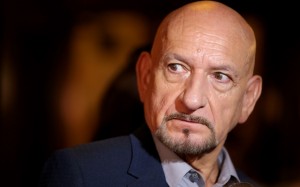
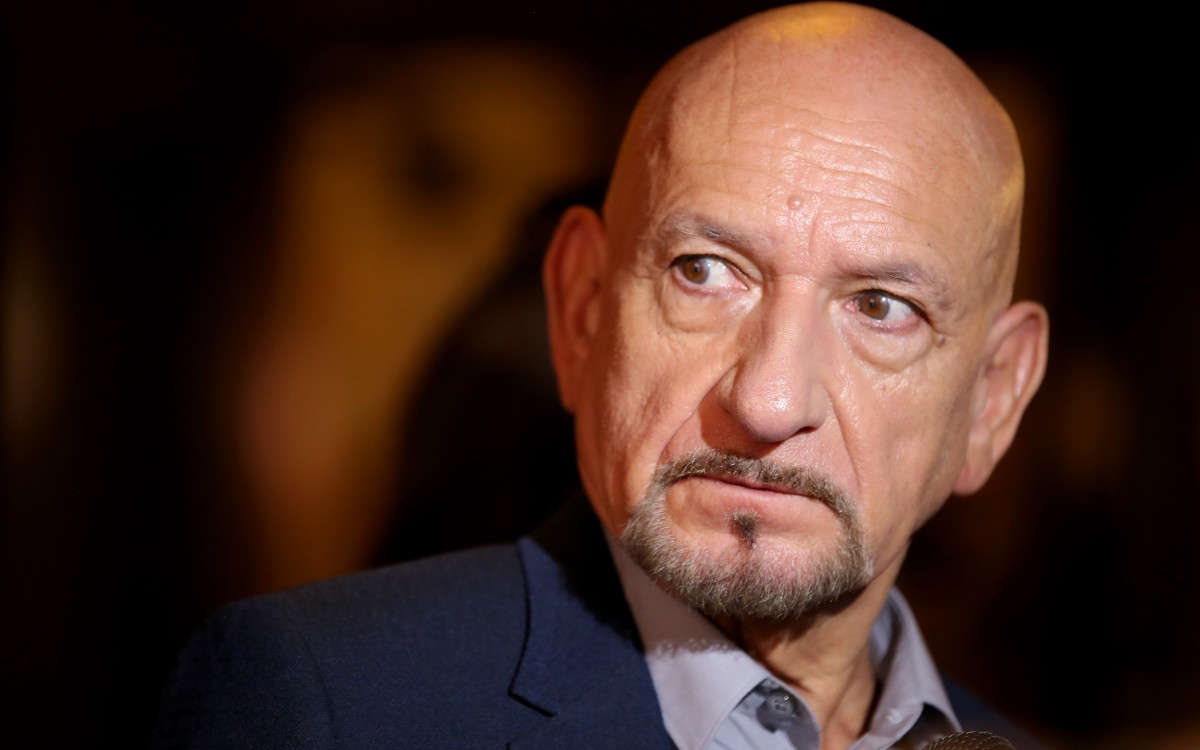
Outside the Elgin Theatre premier for his new film Learning to Drive, Sir Ben Kingsley caused quite a stir. He signed autographs, posed for pictures with fans, one of which gushed effusively after he walked away. “He’s my favorite,” she told your reporter excitedly.
When I tell Sir Ben about the enthusiastic fan he smiles broadly.
“If it means that she’s heard the story and it touched her, then I’m delighted,” he says. “The important thing for me is to tell the story. I’m sure I am a storyteller. I’m sure that is the right place for my DNA to be.
“Something happened to me and it stayed with me forever. I was playing Hamlet for the Royal Shakespeare Company and I was walking in open field just outside Stratford Upon Avon. A lovely young woman was on the opposite side of the field and seemed to be walking towards me, so I decided to tack to my right to avoid her feeling that I was intruding on her space. She tacked to her left. In other words, she mirrored me. Then I went the other way and she mirrored me. She was determined to meet me in the middle of this field. Then face-to-face, she said, ‘I saw Hamlet last night. How did you know about me?’ Something [I did] must have gone right in there [he points to his heart], straight through the sternum and I said, ‘I know.’ That’s the connection.
“It never left me. If it means that through storytelling something has been shifted, healed, touched in her, great. Good.”
In the TIFF film Learning to Drive he reunites with his Elegy co-star Patricia Clarkson. She plays Wendy, a divorcee who hires Darwan (Kingsley) to teach her how to drive so she can travel to upstate New York to visit her daughter. As she learns to navigate Manhattan’s mean streets, the pair form a bond, teaching one another about life and love.
“I think in a really beautifully fashioned play or screenplay you have a feeling that the gods look down and say, ‘I’m going to bring you two together,’” says Kingsley. “I love that idea in mythology that the gods look down and send somebody to somebody. It is only through very unfortunate, heartbreaking circumstances that Wendy finds herself in a taxi. Heartbroken. I am driving a heartbroken woman. And I loved in the way, as in all great stories, the little coincidences are the gods guiding and bringing people together for some purpose. Here it is not for a great romance, it is to heal.”
Darwan is the latest in a long list of characters, like Mohandas Gandhi, Itzhak Stern in Schindler’s List and Sexy Beasts’ Don Logan that have surprised Kingsley.
“I don’t know where they are,” Kingsley says about his characters, “if they’re inside me waiting to come out or whether they are outside of me. Are they hunting me or am I hunting them? I don’t know. I love to be surprised by a script and I was very pleased and delighted by the opportunity to play what Patricia Clarkson’s character coins as a ‘good man.’”