“The Double” plays like a movie made by the love child of David Lynch and Terry Gilliam. Based on Fyodor Dostoevsky novella about a man who finds his life being usurped by his doppelgänger, it is a quietly surreal story about the existential misfortune of a man (Jesse Eisenberg) with no sense of himself.
Eisenberg is Simon, an insecure twenty-something trying to make a name for himself, personally and professionally, to no avail. His boss (Wallace Shawn) ignores his ideas and even his mother isn’t a fan. He’s in love with co-worker Hannah (Mia Wasikowska), who lives in an apartment across the street from him, but like everyone else Hannah looks right through Simon.
“I have all these things that I want to say to her,” he says, “like how I can tell she’s a lonely person, even if other people can’t. Cause I know what it feels like to be lost and lonely and invisible.”
Everything changes when James (Eisenberg again) is hired at work. Physically he’s Simon’s doppelgänger, an exact match, but personality-wise he a polar opposite. Confident and charismatic, he excels at work and worst of all, Hannah wants to date him.
In front of the camera “The Double” writer-director Richard Ayoade is best known for playing computer nerd Maurice Moss on the much-loved British sitcom “The IT Crowd.” Behind the camera his work takes a much more darkly comedic approach. His first film, “Submarine,” was an edgy coming-of-age story that earned him a BAFTA nomination for Outstanding Debut by a British Writer, Director or Producer.
“The Double” strays into even stranger territory. Imagine “The Nutty Professor’s” Professor Julius Kelp / Buddy Love filtered through Dostoevsky’s “mystery of spiritual existence.” Ayoade creates a personal dystopia, inhabited by Simon, Hannah and James; a stylized study of paranoia with a few laughs thrown in. It’s an unabashedly weird movie that lets its freak flag fly.
This is Eisenberg’s film. He and Michael Cera (who tread on similar dual character territory in 2009’s “Youth in Revolt”) have made careers playing up the socially awkward nature of their characters, so half of “The Social Network” actor’s performance is no surprise. His work as Simon is something we’ve seen before from him, but his take on James is fresh, accomplished with shifts in body language. He effectively plays two characters in one movie.
In the end “The Double” stands as a unique movie, rich in Orwellian details and with good performances, but marred by a difficult, confusing story that may alienate less adventurous viewers.
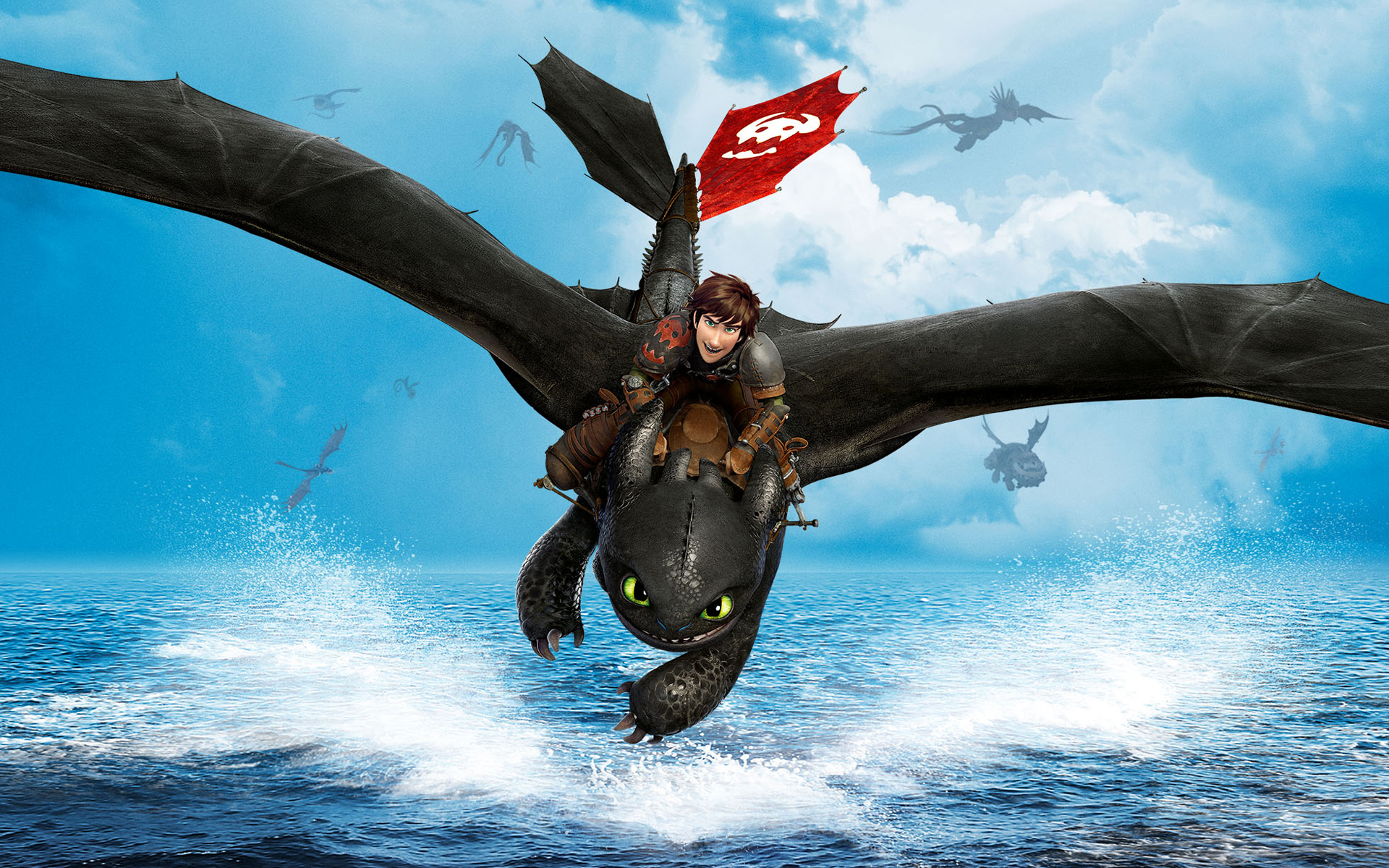
Jay Baruchel has a unique voice. Instantly recognizable, the nasally twang he uses to bring the character of How to Train Your Dragon 2’s Hiccup to life is so distinctive it even has it’s own facebook fan page.
You would think that kids, who made the Viking teenager and his dragon Toothless so popular on the big screen—the original 2010 movie grossed almost half a billion dollars— and on the TV show and video games, would be thrilled to meet the man behind the voice. Right?
“Friends who have kids will say, ‘Hey! Look! It’s Hiccup,” and then it is utter, sheer disappointment,” he says. “‘This is not Hiccup. It’s a real life human dirt bag I’m looking at.’ Although I have to say I was in a liquor store in Los Angeles a few months ago and I was saying something to the cashier and this guy turned around and said, ‘You’re funny. You know you’re doing something right when you get recognized by your voice,’ but usually with the kids, they’re super bummed to actually meet me.”
Baruchel has voiced Hiccup in two films (with at least one more on the way) and forty episodes of the television show. Director Dean DeBlois says that the actor and the character are now interchangeable, with Brauchel bringing character ideas to the table every time out.
“How much input I ultimately have is purely up to (Dean),” says Baruchel. “I have played this character for seven years and I think he has a very specific way of speaking and a specific way of communicating. What’s really cool is that Dean, who created this epic world that comes from his head and heart, and who has so many things to think about, still finds time to be a collaborator and will always allow me to find my own way into things. I’d like to think we can equally take ownership over (Hiccup).”
One of Hiccup’s vocal tics unmistakably came from Baruchel—his habit of calling his dragon by the nickname Bud.
“That is clearly me,” he says. “I remember the first time we did it in the first one and it just kind of stuck and became a thing. I call everyone Bud in real life and half the work is for me not to call every character in this movie Bud. It’s kind of specific to Toothless now. I still fit in some hoser wherever I can.”
The Hobbit author J.R.R. Tolkien described dragon Smaug as “a most specially greedy, strong and wicked worm.” The Flight of the Conchords have a song called Albi the Racist Dragon, and on Dragon Day at Cornell University, an effigy of one of the giant beasts is burned while students shout and dance.
They can be fiery, fearsome creatures. “Noble dragons don’t have friends,” writes Terry Pratchett in Guards! Guards! “The nearest they can get to the idea is an enemy who is still alive.”
It’s not hard to understand why the folks on Game of Thrones are wary of Daenerys Targaryen’s (Emilia Clarke) brood of the beasts when she spouts off lines like, “When my dragons are grown, we will take back what was stolen from me and destroy those who wronged me! We will lay waste to armies and burn cities to the ground!” Then there’s Bryagh, the serpentine villain of The Flight of Dragons who not only insults the movie’s heroes before dispatching them, he also gobbles up the eggs of other dragons!
Maybe if characters in movies paid more heed to the advice given by author Steven Brust — “Always speak politely to an enraged dragon” — then movies and TV wouldn’t have to offer up such a wide array of ways to rid the world of dragons. Look on IMDb, there are dozens of titles containing the phrase “dragon slayer.”
The 2010 animated hit How to Train Your Dragon begins in a remote Viking village where killing a dragon is “everything.” It focuses on Hiccup (Jay Baruchel), a kind- hearted boy who captures one of the flying behemoths and discovers two things: One, he can’t bring himself to kill it, and two, that dragons aren’t the fearful monsters everyone thinks they are. He becomes a Dragon Whisperer and the movie shows the serpentine creatures in a different light than the abysmal brutes usually seen on screen.
This weekend, How to Train Your Dragon 2 adds to the list of cinematic dragons who are more misunderstood than actually evil.
The 1941 Disney flick The Reluctant Dragon features a dragon that would rather recite poetry than cause havoc. “You’ve got to be mad to breathe fire,” he says, “but I’m not mad at anybody.”
In the live-action DragonHeart, a fire-breather must team with a dragon-slaying knight (Dennis Quaid) to end an evil king’s rule. When the giant serpent is accused of eating an adversary, he is indignant. “I merely chewed in self-defense, but I never swallowed.”
Eddie Murphy lent some comedic relief to the 1998 animated movie Mulan as the tiny, blue-horned Mushu. He may be the size of the Geico gecko, but don’t mention it. “I’m a dragon, not lizard. I don’t do that tongue thing.”
Thanks to Thom Ernst, Karen Gilmour, Ann Echlin and The National Club for inviting Richard to sit in on their Cinephile Society screening of Robert Altman’s “Nashville” last night. They had a full house and a very lively discussion afterwards. A great night in a really beautiful place to see a movie!
Richard is hosting the Nicholas Stoller “In Conversation”: at Just for Laughs this year!
Filmmaker Nicholas Stoller (Forgetting Sarah Marshall and Get Him to the Greek) is this year’s ‘In Conversation’ subject. His latest film, Neighbors, starring Seth Rogen and Zac Efron, laughed its way to a $51.1 million US debut over Mother’s Day weekend, and has grossed over $220 million worldwide thus far. In Conversation with Nicholas Stoller takes place at ComedyPRO on Thursday, July 24, 3 pm, at the Hyatt Regency Montreal. It is presented by the Telefilm Canada Feature Comedy Exchange, a CFC initiative in collaboration with Just For Laughs.
For film tickets by phone, online or in person: The Just For Laughs Box Office, 514-845-2322, hahaha.com presented by Videotron
“Edge of Tomorrow” may sound like the title of a soap opera, but it’s actually the name of a new and unusual Tom Cruise alien invasion flick. In it Cruise battles nasty space bugs called Mimics but the story is more “Groundhog Day” than it is “War of the Worlds.”
Set at the height of a worldwide battle between the human race and seemingly indestructible aliens called Mimics, Cruise plays William Cage, a marketing genius who lost his advertising firm when the world was thrown into chaos following the invasion. He now works for the army, selling war to the masses. He’s inspired millions of people to enlist by telling them the story of hero Rita (Emily Blunt), a legendary warrior with more Mimics notches on her belt than the rest of the army combined.
When he is pressed into active service on the eve of a massive offensive, he proves that while he may be an officer, he’s no gentleman. “I can’t stand the sight of blood,” he says trying to weasel out of the dangerous duty, “not so much as a paper cut.” His cowardly antics get him arrested and shipped to the front lines where, following a wild deployment scene that sees Cruise and Co plunged into Mimic territory, he is promptly killed.
That’s right. A Tom Cruise character in a Tom Cruise movie is killed in the first twenty minutes. But this is where things get interesting, and strange.
Instead of shuffling off this mortal coil, he actually wakes up and starts his journey all over again. Over and over he wakes to the unmelodious sound of a drill sergeant calling him “Maggot” but each time he has learned something more that helps him cope with the situation.
The only person who believes his strange story is Rita. Together they “reset the day” repeatedly and start anew with the info he’s learned. Eventually he’ll know enough to beat this unbeatable foe. Trouble is, he has to die every day…
Two thirds of “Edge of Tomorrow” is as Un-Cruiselike a movie as Tom has ever made. The “Groundhog Day” been-there, done-that section of the film is inventive, often played for laughs and presents Cruise in a way we’ve rarely ever seen him—as a coward. It’s a refreshing twist for him and gives him a chance to exercise his rarely used comedic chops. You know he’s going to turn heroic sooner or later, but it’s a blast to see him do something just outside his usual wheelhouse.
Just as important to the film is Blunt’s take on Rita. This is something different for her—she’s arguably best known for the comedy “The Devil Wears Prada”—and for action movies in general. Big budget blockbusters don’t usually make room for female characters unless they are sidekicks or girlfriends. Here Blunt avoids being objectified and is as strong, if not stronger than Cruise.
Director Doug Liman has figured out clever and entertaining ways to show the same thing over and over, keeping it exciting with interesting editing and changing perspectives. The first two reels are packed with energy and invention it’s only when the conventions that made the story enticing are put aside in the last reel that the movie becomes a standard Cruise action flick. A good Cruise action flick but still more standard than the promising first hour.
The first five-hankie film of the year, “The Fault in Our stars” is an adolescent “Love Story.” Based on John Green’s young adult novel about two teenagers who fall in love after meeting in a cancer support group, it’s a tearjerker that has been making teenage girls spout tears like water shooting from fire hydrants since its release in 2012.
“Divergent” star Shailene Woodley plays Hazel Grace Lancaster, a sixteen-year-old first diagnosed with cancer when she was thirteen. An experimental treatment has given her some semblance of a normal life, but the cancer is now in her lungs and she relies on a portable oxygen tank to keep her alive. “My lungs suck at being lungs,” she says, “but theoretically they should work for a while.”
Fearing that the young girl is spending far too much time alone compulsively reading a cancer memoir called An Imperial Affliction, her parents Frannie and Michael (Laura Dern, Sam Trammell), push her towards a support group for kids with cancer at a local church.
There she meets Augustus Waters (Ansel Elgort), a handsome eighteen-year-old former athlete who lost a leg to osteosarcoma. He falls for her but she keeps him in the friend zone in an attempt to protect him from what she sees as an unhappy ending to their potential romance. “I’m a grenade,” she says, “and one day I’m going to explode and obliterate everything in my wake and it is my responsibility to minimize the causalities.”
It sounds like it has all the elements of a major summer bummer, but despite being set in what Hazel calls the “Republic of Cancervania,” it avoids the maudlin. Instead the story is told with acerbic wit, filtered through the life experiences of characters who have rarely known a healthy day. In the film’s opening minutes Hazel says she doesn’t live in a world where “nothing is so messed up it can’t be fixed by a Peter Gabriel song,” suggesting that there won’t be any easy answers offered up here.
Spearheading the uniformly excellent cast is Woodley who strays into Jennifer Lawrence territory here. Her Hazel is a realist, with a fatalistic streak, but still a teen and Woodley finds a balance between those aspects of Hazel’s life and personality in a remarkably complex but natural performance. She’s wry, calling herself the “Keith Richard of cancer kids” while inventorying her daily intake of drugs. But she’s also wise beyond her years. On her parent’s struggle she says, “The only thing worse than biting it from cancer,” she says “is having a kid bite it from cancer.”
As a terminally ill girl who lets down walls to let love into her life Woodley drips with charisma. Her performance—with capable assistance from Elgort and Dern—brings genuine emotion to scenes that might have gone the way of over-the-top sentimentality or cliché.
It’s true that some of the dialogue is overwritten—these are the most articulate teens on film since Juno—and the second half succumbs to a hint of emotional manipulation, but it works.
My biggest complaint about the whole experience was being splashed by the tears of my fellow moviegoers. Bring a towel.
Perhaps Jon Favreau is still stinging from the reviews he received for “Cowboys & Aliens” or maybe a critic kicked his dog when he was young. Either way judging by his outburst at a food critic in the new comedy “Chef,” he holds some serious animosity for those who sit in judgment of the creative class.
I’ll keep that in mind as I write this review.
Favreau (who also wrote, directed, produced and stars in the film) is Carl Casper, a former hot shot cook, now a divorced work-a-day chef who spends so much time pumping out his boss’s high-end but unimaginative menu, he has no time to spend with his son Percy (Emjay Anthony).
When a famous restaurant critic (Oliver Platt) comes in Carl finds himself stuck between Riva, a restaurant owner (Dustin Hoffman) who wants to play it safe, and his own instincts to push the envelope.
“If you bought Stones tickets and they didn’t play Satisfaction, would you be happy,” asks Riva. “Go with the favorites.”
The plan backfires and Carl is stung by a review that slaps him for a “lack of imagination” and suggests “his dramatic weight gain can only be explained by his eating all the food that is sent back to the kitchen.”
A confrontation with the critic leads sets him on a path to regaining his passion, a journey that begins behind the wheel of a food truck.
The new film is more “Iron Chef” than “Iron Man” and it’s nice to see Favreau shelve the CGI of his biggest hits and return to the human heartbeat of films like “Elf” and “Swingers.” “Chef” is a crowd pleaser that combines its ingredients in a familiar but still delicious way. It’s somewhat predictable, but like comfort food it’s warmly inviting.
Favreau and his sidekick, sous chef Martin (John Leguizamo) are a natural culinary comedy team, with an easy chemistry that gives the movie much of its charm. Sofia Vergara and Scarlett Johansson, as Carl’s ex and current flame respectively, suggest that women find men who cook irresistible, or that Favreau is playing the Woody Allen card of casting slightly out of his league. Both hand in spirited performances and after a brief pasta seduction scene it’s clear Carl has figured out that the old saying, “the way to a man’s heart is through his stomach,” applies to women as well.
Robert Downey Jr lightens things up in a slick-talking role that was probably written for Vince Vaughn, and Russell Peters has a funny, but unrealistic cameo as a snap-happy cop.
Critic bashing aside, “Chef” is a lightweight, but enjoyable film; an amuse bouche that may leave you hungry for something more substantial but still manages to satisfy.