Sylvester Stallone wanted to make a version of “Citizen Kane” about rags-to-riches rock impresario Shep Gordon called “Citizen Insane,” but never got around to it. Mike Myers, however, did and has made a documentary about the flamboyant Gordon, a man who dated Sharon Stone, discovered Alice Cooper, hung out with Mick Jagger and partied at the house Napoleon built for Josephine.
For someone who says, “There’s nothing about fame that’s healthy… it has no intrinsic value,” Shep Gordon sure has made a lot of people very famous.
He discovered Alice Cooper when he and his band were starving on Sunset Boulevard, and set them on a path that lead to superstardom. He broke Anne Murray south of the border—“She’s so straight-laced she’s not even Middle America,” he says, “she’s Canadian.”—gave Groucho Marx a late career boost and vaulted Teddy Pendergrass and many others onto the charts.
He’s a character who offers up three bits of advice for anyone thinking of getting in the game. “Always get the money. Never forget the money. Always remember to never forget the money.”
From his 1970s heyday “Supermensch” teaches us that the infant on the cover of Billion Dollar Babies was named Lola, that Charlie Chaplin was her godfather and that Shep wasn’t immune to the lures of rock and roll excess. While he was raking it in with Cooper he had a house with a model train that transported people from the pool to the main house where vials of cocaine were hidden in the kitchen drawers.
That changed when he met chef Roger Vergé, the father of nouvelle cuisine. Unlike his music industry friends, Vergé was well adjusted, respected and happy. It changed Shep’s life, he morphed from a guy content to eat spaghetti and ketchup into a foodie who even married a raw food chef. It also opened up a new avenue of work for him, and with the dawn of the Food Network he helped redefine the term celebrity chef.
Despite all the success, he’s never had a very profitable love life. “Supermensch” examines this as well, in an unvarnished look at his life outside the spotlight. It’s these moments and Gordon’s insights on his relationship with the Dali Lama (that’s right, Shep knows everybody) that lift the film from a hero-worshipping portrait of 1970s excesses to a moving glimpse into the life of a man who seems to be able to make everyone except himself truly happy.
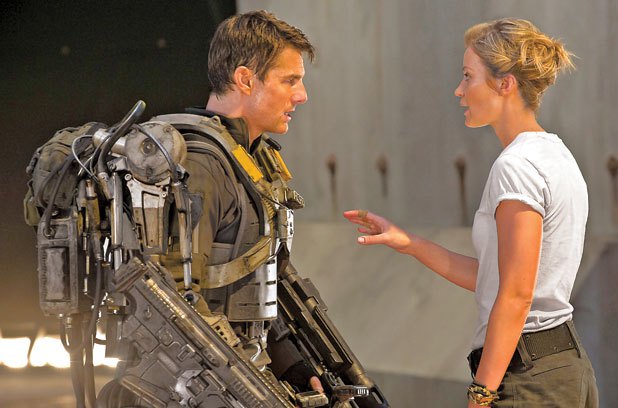
The tagline for Tom Cruise’s latest film is “Live. Die. Repeat.”
“How many times have we been here,” asks Rita (Emily Blunt). “For me, it’s been an eternity,” replies William (Cruise) as he relives the same day of an alien invasion over and over.
Edge of Tomorrow is a time-loop movie that can best be described as War of the Worlds meets Groundhog Day.
In Groundhog Day, Bill Murray says, “Every morning I wake up without a scratch on me, not a dent in the fender. I am an immortal.” His take on a drunk, suicide-prone weatherman who discovers the beauty of life by living the same day endlessly may be the granddaddy of all
Hollywood déjà vu stories, but many other movie characters have been caught in cinematic time circles.
The DVD cover for 2006’s Salvage asks the question, “What if every day you relived your own murder?” Originally called Gruesome for the festival circuit, the movie is as grim as Bill Murray’s film is life-affirming. Called a “digital video hell — spawn of Psycho, Eyes Without a Face and Groundhog Day,” by Variety, Salvage is the story of Claire (Lauren Currie Lewis), a convenience store worker who undergoes her murder over and over. Despite its extremely low budget — star Lewis doubled as the film’s make-up artist — Salvage was an official selection of the 2006 Sundance Festival.
The horror genre lends itself to time-bending tales. Camp Slaughter is a 2005 throwback to the slasher films of the 1980s. In this one, a group of modern teens stumble across Camp Hiawatha, a dangerous place where not-so-happy-campers are trapped in 1981 and forced to re-experience the night a maniacal murderer went on a killing spree. Labelled “Groundhog Day meets Friday the 13th (part 2,3,4,5,6,7,8… every one of them!),” by one critic, it’s gory good fun.
Not into gory? The Yuletide provides a less bloody backdrop for time-looping. The title Christmas Every Day is self-explanatory but 12 Dates of Christmas is better than the name suggests. Us Weekly called this Amy Smart romantic comedy about a woman stuck in an endless Christmas Eve, a sweet “nicely woven journey.”
Finally, the aptly named Repeaters is a Canadian film written by Arne Olsen, scribe of Power Rangers: The Movie. Repeaters is about a trio of recovering addicts who find themselves in “an impossible time labyrinth” after being electrocuted in a storm. Like most time-bending films, Repeaters is about learning from your mistakes. What sets it apart from some of the others are three unlikeable leads who use their situation to raise hell and break the law. It’s only when Kyle (Dustin Milligan) realizes they could be in big trouble if time suddenly unfreezes for them that familiar time-loop themes of redemption and self-reflection arise.
The director who used elaborate special effects to make Iron Man soar through the night sky and a spaceship land in the Wild West says, “there is nothing more cinematic and exciting than watching food be prepared.”
Jon Favreau, helmer of blockbusters like Iron Man 1 and 2 and Cowboys & Aliens, adds, “Modestly budgeted films like Eat Drink Man Woman or Jiro Dreams of Sushi are as compelling as any big budgeted Hollywood movie.”
In his new film Chef (which he wrote, directed, produced and stars in), Favreau plays Carl Casper, a chef set on a new culinary path after an influential food critic gives his restaurant a savage review.
The nugget of inspiration for the movie came two decades ago when Swingers, another film Favreau wrote and starred in, became a hit.
“The Big Night came out the year Swingers did,” he says, “and I remember seeing that film and feeling like they had really accomplished so much. With Swingers we had certain modest accomplishments. I was satisfied with it, but Big Night felt like a movie and felt like they had captured something larger.
“Maybe that was in the back of my head for the last 20 years. There was an envy that I had of what they were able to accomplish with the music, the culture, the performances, the food and how delightful it was. So I finally got to make my food movie.”
In those 20 years, Favreau has been in the Hollywood trenches as a producer, director, actor and writer and is quick to note the similarities and differences between the story of Chef and his real-life work in the movie business.
“The archetypes of the players on the stage in the food world and the movie world are very similar,” he says.
“The stakes are a bit higher in the food world, which is why it is dramatically appealing. One bad review can shut you down. Right now, the way reviews work in movies is that you’re reading 90 reviews. It’s all on Rotten Tomatoes, a compilation of numbers and you don’t really have that personal relationship with a specific critic as you do in the theatre world or the food world. In the food world you are eye-to-eye with that critic and you are eye-to-eye with the customer and when that food gets sent back to the kitchen you are looking at that plate. It’s a lot different.”
Favreau’s next film is a live-action remake of The Jungle Book, but he says he’ll likely flip-flop between big- and small-budget films in future.
“If I knew I could come up with a small story that I’d be excited about, next year I’d do this again but honestly, it hasn’t been since Swingers that I’ve been able to sit down and write something so fully formed so quickly.
“I somewhat envy the filmmakers who can come up with a small story each year because this was the best experience I’ve ever had.”
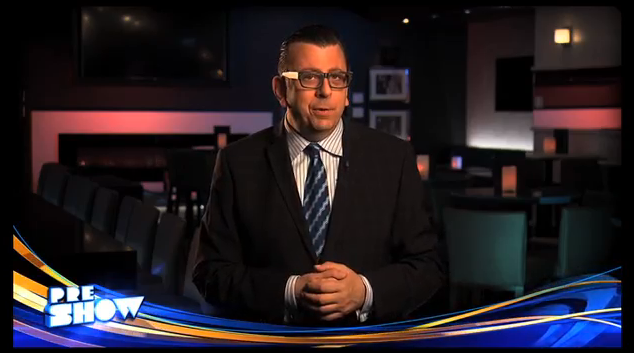
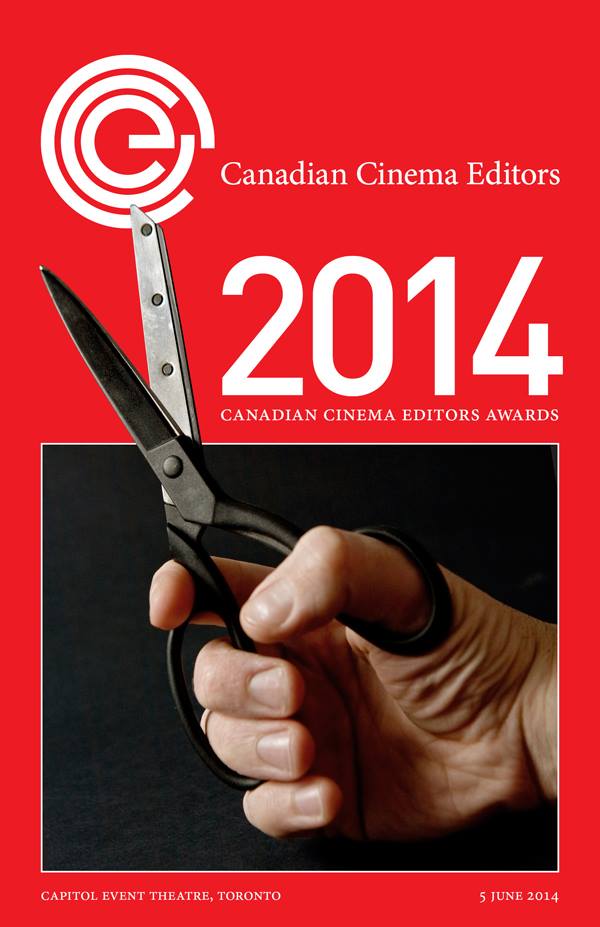
The 4th annual Canadian Cinema Editors Awards is thrilled to announce film expert Richard Crouse as this year’s host. The awards will be held at the Castlefield Event Theatre in Toronto on June 5th 2014. The C.C.E. Awards is the largest event of its kind in Canada, focusing on the significance of post-production in cinema.
“When I contacted Richard three years ago to come out and do the opening speech, I always hoped Richard would consider hosting one year,” reflects Paul Day, Co-President of the C.C.E. “He’s the perfect host for the Awards.” Fellow Co-President of the C.C. E.. Paul Winestock continues, “Two years ago our host, C.C.E. member Mark Sanders, suggested to Richard on stage that he host next year and he said yes on the spot so we feel honoured.”
The C.C.E., after only 6 years in existence, now boasts hundreds of members across Canada and growing. With social media and 500 readers for their newsletter, the C.C.E has clearly gained the attention of not just editors, but the industry as a whole.
The editor’s contribution to the final product has never been more important than it is in today’s technologically and creatively diverse world. Technology has arguably affected this craft more than others, and editing now finds itself in a pivotal place. More and more producers and directors are understanding that a great editor is one who knows more than the software, they help tell a good story with pace, performance, structure and style, bringing greater quality and production value to the screen. The C.C.E. shines the spotlight on these fine artists who work well behind the scenes on the ‘invisible art’.
“I’m thrilled to be invited to host the C.C.E. Awards,” says Crouse. “To paraphrase George C. Scott, if I was ever stranded on a desert island all I would need is food, water and a great editor.”