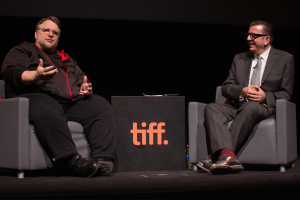
Joining us is special guest co-host filmmaker Vincenzo Natali.
Our special guest this week is film critic/author Richard Crouse discussing his book “Raising Hell: Ken Russell and the Unmaking of the Devils.”
I join the CTV NewsChanel to talk about the reimagined “Wuthering Heights,” the time travelling farce “Nirvanna: The Band The Show The Movie” and the nostalgic b-movie “Cold Storage.”
Watch the whole thing HERE!
SYNOPSIS: In “Cold Storage,” a new sci fi comedy starring Joe Keery, and now playing in theatres, an infectious, constantly mutating fungus threatens to end the world unless two storage company nightshift workers and a bioterror expert can combine forces and come to the rescue.
CAST: Georgina Campbell, Joe Keery, Sosie Bacon, Vanessa Redgrave, Lesley Manville, Liam Neeson. Directed by Jonny Campbell.
REVIEW: A throwback to the gross ‘n gory sci-fi and horror popcorn films of 80s and 90s, “Cold Storage” features practical effects, plenty of humor and an exploding eyeball or two.
“Stranger Things” star Joe Keery and Georgina Campbell play Travis and Naomi, nightshift workers at a self-storage company that sits on the site of a decommissioned US military base. Decades before, a deadly, constantly mutating organism, capable of destroying all life on the planet in the grimmest and goriest of ways, was sealed in the facility’s sublevel.
As Travis and Naomi go about their mundane jobs, rising temperatures in the building’s basement allow the rapidly mutating microorganism to grow and escape its underground prison. What began as a sleepy overnight shift soon turns into an outbreak situation that could endanger the entire planet.
With the help of grizzled bioterror expert Robert Quinn (Liam Neeson) Travis and Naomi try and save all of humanity. “You two may have started the night as minimum wage guards,” says Quinn, “but you’re a green light team now.”
Adapted from David Koepp’s (the screenwriter of “Jurassic Park,” “The Lost World,” “War of the Worlds” and “Indiana Jones and the Kingdom of the Crystal Skull”) 2019 sci-fi thriller of the same name, “Cold Storage” is a mix of comedy and gory exploding humans.
Practical special effects, done with very little CGI, bring a nice, nostalgic vibe to the film’s action. Exploding deer and fungus infected human effects are over-the-top and have a cool, retro handmade look that brings back memories of the visceral thrills of movies like “Re-Animator” and “Dead Alive.”
The script is laced with humor, but I wouldn’t call this a comedy. It’s more a sci fi horror with a few laughs, many of which some from Keery’s comic timing.
“Cold Storage” is a bit of b-movie fun that doesn’t take itself seriously, so neither should we.
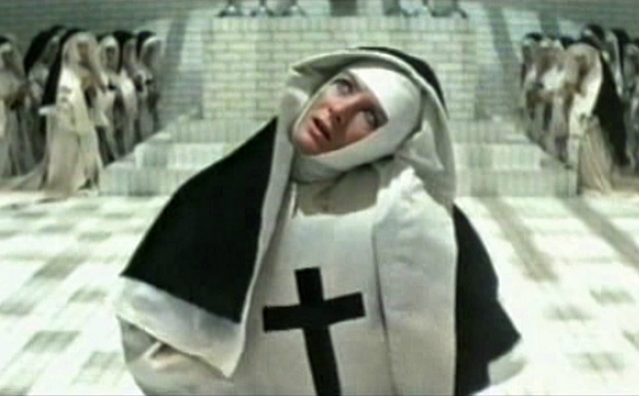
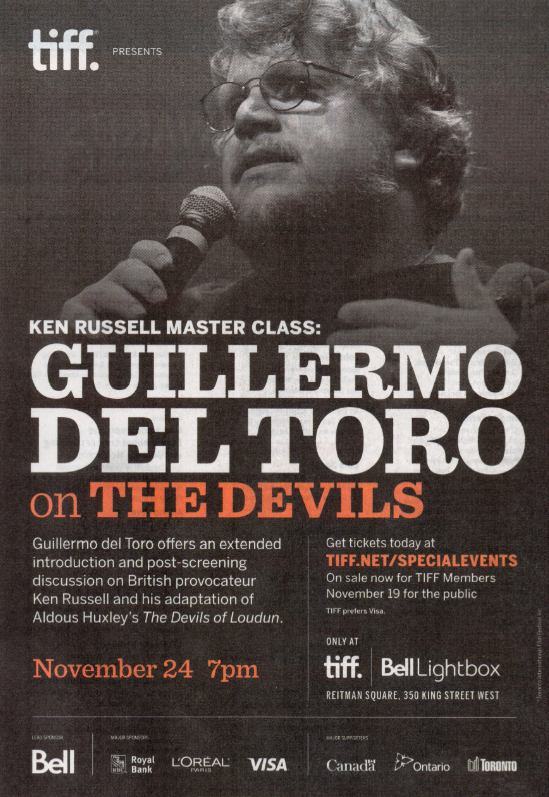
 “… Speaking by phone from Toronto, film critic Richard Crouse, who wrote the 2012 book “Raising Hell: Ken Russell and the Unmaking of the Devils,” said, “It’s a film that is about sex, about religion, about violence, and that corner in which all three of those things intersect. Good does not necessarily triumph over evil, and in that way I think Ken Russell, who was a devout Catholic, presented a story that helped him question his faith, deepen his faith, but also have a long hard look at his faith. And he did it on film, for everyone to see…”
Read the whole Boston Globe article by Ed Symkus HERE!
From the Facebook page Free Ken Russell’s The Devils: To answer another question many people have asked; yes, there WILL be a petition to sign. As this campaign is in its early days, I’m still working out the details, but keep your eyes peeled. In the meantime; SHARE, TWEET, BLOG, COMMENT and WRITE. Go to Twitter and tweet #FreeTheDevils
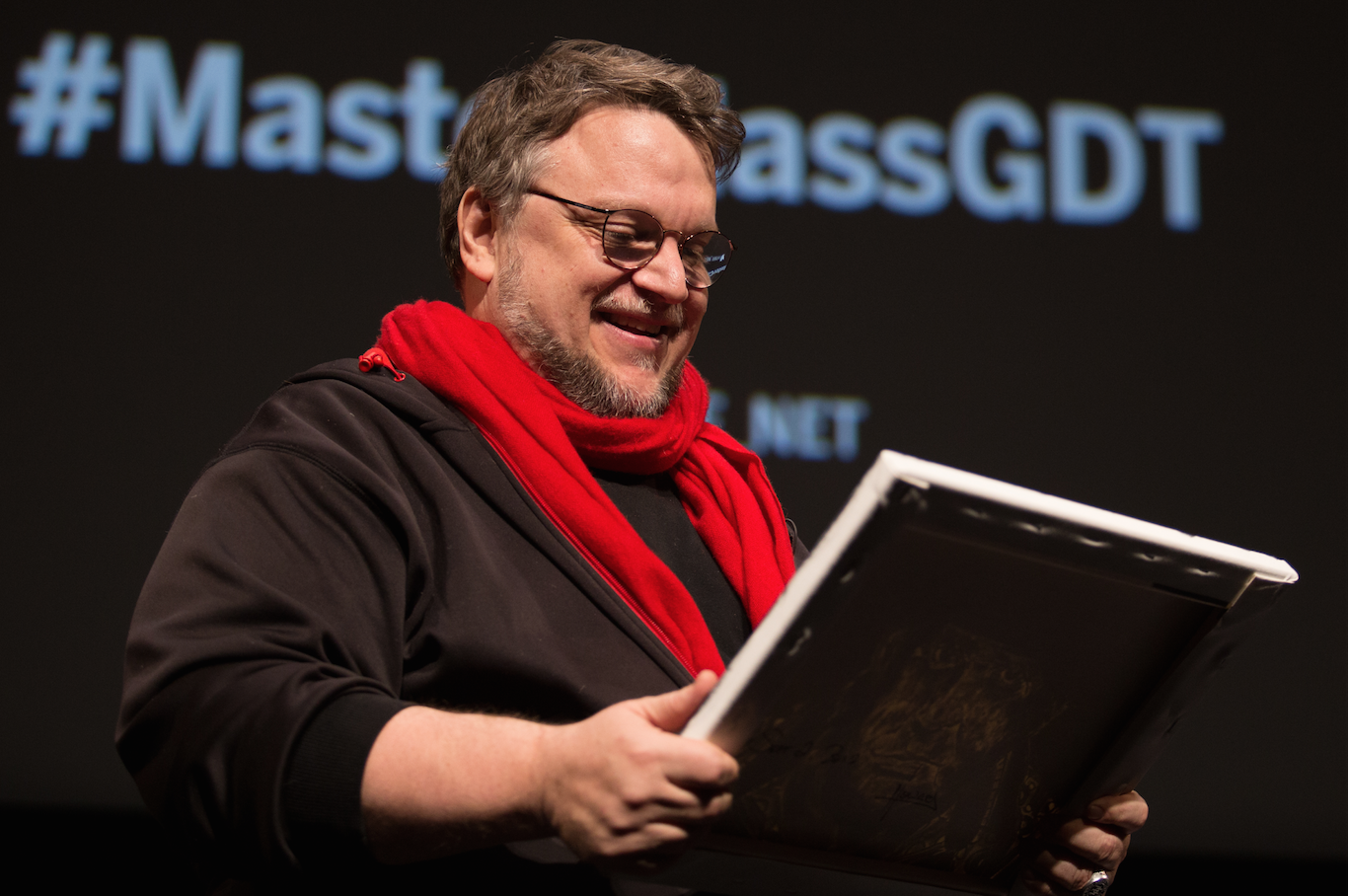
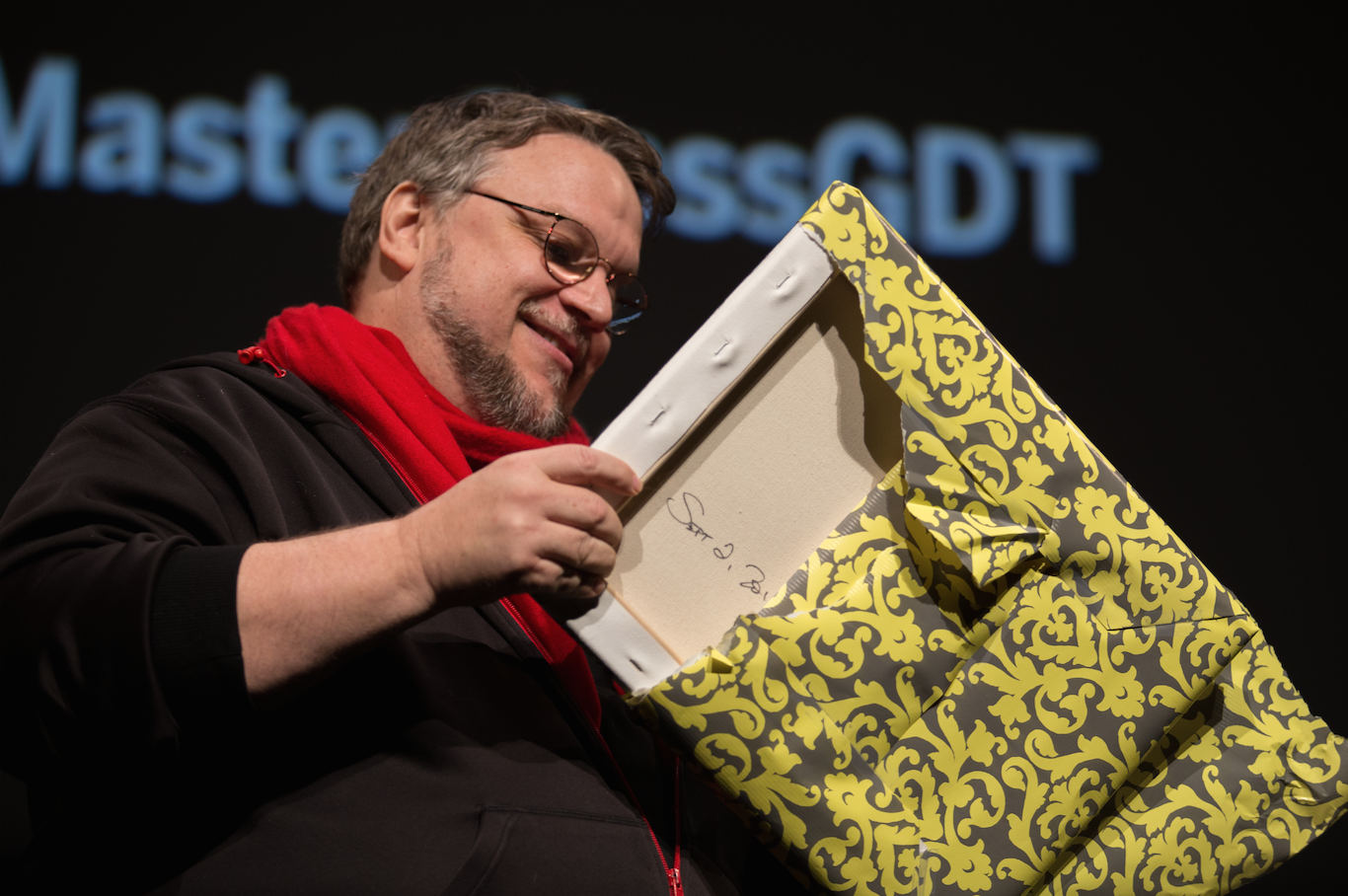
Read Guillermo Del Toro’s fiery plea for this hard-to-see masterpiece’s release on Blu Ray and DVD HERE.
Read about Richard’s book “Raising Hell: Ken Russell and the Unmaking of The Devils” HERE! Buy it HERE!






















 From The Projection Booth’s website:
Joining us is special guest co-host filmmaker Vincenzo Natali.
Our special guest this week is film critic/author Richard Crouse discussing his book “Raising Hell: Ken Russell and the Unmaking of the Devils.”
Instead of running the title card “based on a true story” up front, “The Whistleblower,” a new drama starring Rachel Weisz, Monica Bellucci and Vanessa Redgrave, begins with the disclaimer “inspired by true events. Some of the characters may be composites or fictitious.” No “just the facts ma’am” for this movie. The filmmakers decided to take a perfectly serviceable and important story and tart it up with Hollywood story elements. Because facts are often stranger than fiction, it’s a shame they didn’t stick more with the truth and less with the movie contrivances.
Weisz plays Kathryn Bolkovac a Nebraska policewoman based on a real life person of the same name. Divorced, she’s desperate to move across country to be closer to her kids but can’t lay her hands on either the job transfer or the money to make the trip. To raise the cash she takes a six month job as a peace keeper in Sarajevo, Bosnia. War has ended and a company called Democra Security has been contracted by the U.N. to help smooth the transition from strife to peace. Soon, however, she uncovers a human trafficking ring specializing in young women sold into prostitution. Uncovering a far reaching conspiracy she finds herself making some powerful enemies.
“The Whistleblower” is a well intentioned film that more often than not plays like an episode of “Law & Order: SVU,” albeit with more exotic locations. It’s a police procedural with many of the tried and true plot devices of the genre. Evidence seems to show up when needed, progress is inevitably slowed by bureaucratic process and the main character is true blue. “I’m an American police officer,” she says to a young woman afraid that the U.N. isn’t going to be able to help, “it doesn’t matter who I work for.” No that’s plucky.
Where it differs from other procedurals is in its uncompromising imagery. A dank dungeon brothel is identified by close-ups of chains, dirty mattresses and used condoms and a scene involving the bad guys disciplining one of their captives is too grim to be described here. Those scenes have impact and underline the importance of telling this story from a humanist standpoint, but from a cinematic perspective it all feels kind of standard and often borders on the sanctimonious.
Weisz, in the role that Mariska Hargitay would have played if this was a TV movie, brings some depth to the gritty cop stereotype we’ve seen a hundred times before, conveying urgency and determination.
“The Whistleblower” is topped by an effective and exciting final reel but for my money it takes just a bit too long to get there.
Anyone who tries to argue that Shakespeare is no longer relevant only has to see “Coriolanus,” the new film by Ralph Fiennes, based on the Bard’s 1608 play, to be proven wrong. The story of a banished Roman hero who vows revenge on his city has echoes of the Occupy Wall Street movement, the Tea Party and the 99%. That it also has a towering performance by Vanessa Redgrave is simply the icing on the top of a very old cake.
Set in present day Rome, the film centers on the title character (Fiennes), a great warrior who despises the people he is sworn to protect. When his run for elected office is undone by his extreme opinions, scheming politicians and an end run by his mother, Volumnia (Vanessa Redgrave) he is banished from Rome. Seeking revenge he hatches a plan with his sworn enemy Tullus Aufidius (Gerard Butler) to destroy Rome. A dramatic appeal from Volumnia changes his mind, but alienates his new ally.
Ralph Fiennes, in his directorial debut, takes a little known play and makes it relevant for our times. In light of the world’s recent social unrest—London riots, Occupy this and that, Syria—Fiennes has reached deep into the past to place modern events in context. The four hundred old dialogue reveals the primal nature of man—and how it hasn’t changed.
The fight for power, the thirst for revenge, the bond between a mother and son, the disenfranchisement of the people; these topics are as fresh today as they were in Shakespeare’s day.
Timeliness aside, the film works as a dramatic piece. Fiennes uses handheld cameras to add a sense immediacy, as though we’re watching a live newscast. As usual the wobbly cam makes one feel seasick by the time the first double-cross has happened, but it does add visual energy. Add to that battle scenes shot by The Hurt Locker cinematographer Barry Ackroyd and you have a movie filled with lines like “Death, that dark spirit, in ‘s nervy arm doth lie; Which, being advanced, declines, and then men die,” and yet feels absolutely modern.
As for the acting, Fiennes is fine, refined yet feral. Voldemort with a nose and a habit a furiously spitting as he speaks. Gerrad Butler surprises with his range and Brian Cox as the backstabbing politico Menenius, a two-faced senator playing both sides against the middle is powerful, but it is Vanessa Redgrave who controls the screen.
Distilling decades of performing Shakespeare on film and the stage she hits all the right notes, creating a character who would be recognizable to a seventeenth century audience, but works beautifully on screen. Her final showdown with her son on a barren road is a tour-de-force and worth the price of admission alone.
“Coriolanus” isn’t the masterful work that Ian McKellan’s “Richard III” was, but it is a passionate, interesting film that feels ripped from the headlines.