The first time most of us noticed Emily Blunt she was “’on-the-edge of sickness thin.” To play the role of Emily Chalton, the prickly first assistant to the editor in The Devil Wears Prada, Blunt had to drop pounds from her already slight frame. “It wasn’t like doughnuts were snatched out of my hand,” says the 5′ 7½” actress, but she was encouraged to slim down. So much so she would occasionally cry from hunger during the shoot. Luckily, though rake thin, she still had the energy to steal the movie from her more seasoned co-stars, Meryl Streep and Stanley Tucci.
Although the character fell directly into the love-to-hate-her category, audiences found Blunt irresistible. Her mix of vulnerability and fork-tongued charm—crowned by crystal clear blue eyes and a face anchored with a cleft chin that would make Kirk Douglas envious—earned the title Best Female Scene-Stealer from Entertainment Weekly and nominations for everything from a Teen Choice Award to a Golden Globe.
The kudos and notoriety that followed her Prada performance on this side of the Atlantic were simply an echo of her much-admired, though lesser seen work, in the UK.
After dabbling in drama at age 12 to help conquer a stutter she made her professional stage debut while still in school. From there it was a short leap to the small screen and praised performances in British television period pieces. It was, however, only when she left the lace-bonnets behind and took on a role in the critically-acclaimed My Summer of Love that she really made a splash. The story of a teenage infatuation between Mona (Nathalie Press) and the manipulative and cynical Tamsin (Blunt) earned both Press and Blunt equal shares in an Evening Standard British Film Award for Most Promising Newcomer.
When asked why she is so often cast as bad girls like Tasmin she says, “I have sly eyes. When I was in school they always said, ‘Emily can never be elected Head Girl because you never know what she’s thinking.’” Just don‘t ask her to further explain her acting method. “I think it’s embarrassing to hear people talk about their process because you always sound wanky,” she says bluntly.
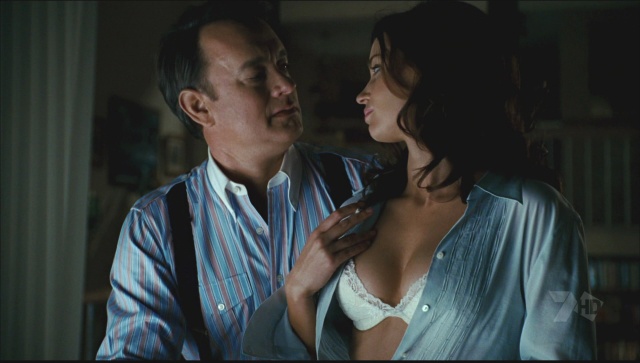
We can say that she has an enigmatic quality which has served her well in supporting parts as diverse as a gawky, uptight French teacher in The Jane Austen Book Club, an oversexed young women opposite Tom Hanks in Charlie Wilson’s War and as a babysitter in Dan in Real Life, all movies she says, that share “a very human heartbeat.”
Even when she appears in something less than Oscar worthy, take the 2005 miniseries Empire, for instance, a project she dismisses as “the sad little brother of Rome,” she still stands out, giving her characters both subtlety and complexity. She’s not a flashy actor; often she expresses an idea with a simple lift of an eyebrow or an understated movement, a trait she shares with her acting idol Cate Blanchett.
While she says “I want to do my own thing and not emulate anyone else,” she calls Blanchett’s chameleon-like ability to disappear into a variety of roles very brave.
The disappearing act is a trick Blunt seems to have picked up from Blanchett. Following a bravura turn in the offbeat comedy Sunshine Cleaning, and the now obligatory for stars-on-the-rise Simpson’s cameo, she took on, and disappeared into, the most challenging role of her career to date. In The Young Victoria Blunt returned to the period roles that defined the early part of her career, playing Queen Victoria from headstrong teen to Queen of the Realm to love sick widow.
“I definitely made a real play for the part because I knew it would be one of those roles that people would hound because it was so rare and so well written,” she says. “It’s hard to find a film that is shouldered by a woman about a girl like that who is so remarkable and so complex. I went in and met them and said, ‘I love it. I’m very aware that a lot of other people do as well but I’d like you to give me a chance.”
Since then she’s worked nonstop, in movies both big—like this month’s mega budget Gulliver’s Travels—and small—a 10 minute short named Curiosity, shot on a budget of £2,000. Mixed into that eclectic stew is The Wolfman, a reimagining of the 1941 Lon Chaney classic which airs on TMN and Movie Central this month. Blunt says she took the role for two reasons. First to work with co-stars Anthony Hopkins and Benicio Del Toro and secondly because her character Gwen is “the girl in a werewolf film, and that’s cool.”
One more very cool job in Emily Blunt’s white-hot career.
It’s quite a year to be a talking fox in Hollywood. After a long absence these carnivorous mammals are coming back strong with a surreal cameo in “Antichrist” (“Chaos Reigns!”) and now a starring role in a charming new stop-motion animation from director Wes Anderson, “Fantastic Mr. Fox.”
Loosely based on a Roald “Charlie and the Chocolate Factory” Dahl story of the same name, the story involves Mr. Fox (George Clooney) a smooth talking chicken thief who is part Danny Ocean, part John Robie (look it up!). When a chicken run goes wrong and he and Mrs. Fox (Meryl Streep) get busted he tries to go straight, but after buying a tree house he can’t afford he decides to return to a life of crime for one last big job. He sets his sights on the area’s three biggest and baddest farmers: Boggis (Robin Hurlstone), Bunce (Hugo Guinness) and Bean (Michael Gambon).
This has been an extraordinary year for kid’s filmed entertainment. “Up,” “Where the Wild Things Are” and “Coraline” are about as good as it gets when it comes to family films. They are movies that don’t talk down to their young audience; treat them with respect and give them a rollicking good time. You can add “Fantastic Mr. Fox” to that list.
Wes Anderson’s mix of deliberately old-school stop motion animation—you can see the fur moving where the animators have touched the puppet characters—gentle humor and action is unlike any other movie this year. In its pacing and style it is decidedly old fashioned, a throw back to the colorful Rankin and Bass animated Christmas specials, but without the schmaltz. I doubt you’d find an existential line like, “Now he’s just another dead rat in a dumpster behind a Chinese restaurant” in any other vintage stop motion film for kids and it is that edge that sets “Fantastic Mr. Fox” apart from the pap, like the recent “Astro Boy,” that passes for kid flicks.
You can tell it’s a Wes Anderson film because it’s loaded with his trademark subjects—sibling rivalry and unusual parental figures abound—and it has his quirky sensibility stamped all over it—there’s a transcendentally meditating fox!—but it is the vocal performances that really bring it to life.
George Clooney brings charm, wit and warmth to Mr. Fox. He’s an unpredictable character, smooth one minute, a wild animal the next, and Clooney gives him a nice sense of mischievousness. Meryl Streep doesn’t have as much to do, but it’s worth the price of admission to hear this celebrated actress (15 Oscar nominations and 2 wins) say, “Am I being flirted with by a psychotic rat?” The deliberate, naturalistic dialogue also comes easily to supporting cast members Bill Murray, Michael Gambon and Eric Anderson (brother of Wes) who makes his debut as Kristofferson, the athletic cousin.
Its stylish looks, engaging story and over-all wonky feel made me very happy. There are few kid’s films as fantastic as “Mr. Fox.”
The trailer for “Hope Springs” make it look like an elderomcom. That is, a romantic comedy for the old age pension set. Instead it is a touching look at a couple who have forgotten how to b a couple. Add to that a performance from Meryl Streep that could be at acting classes and you have an unexpectedly engaging adult movie released during the silly summer season.
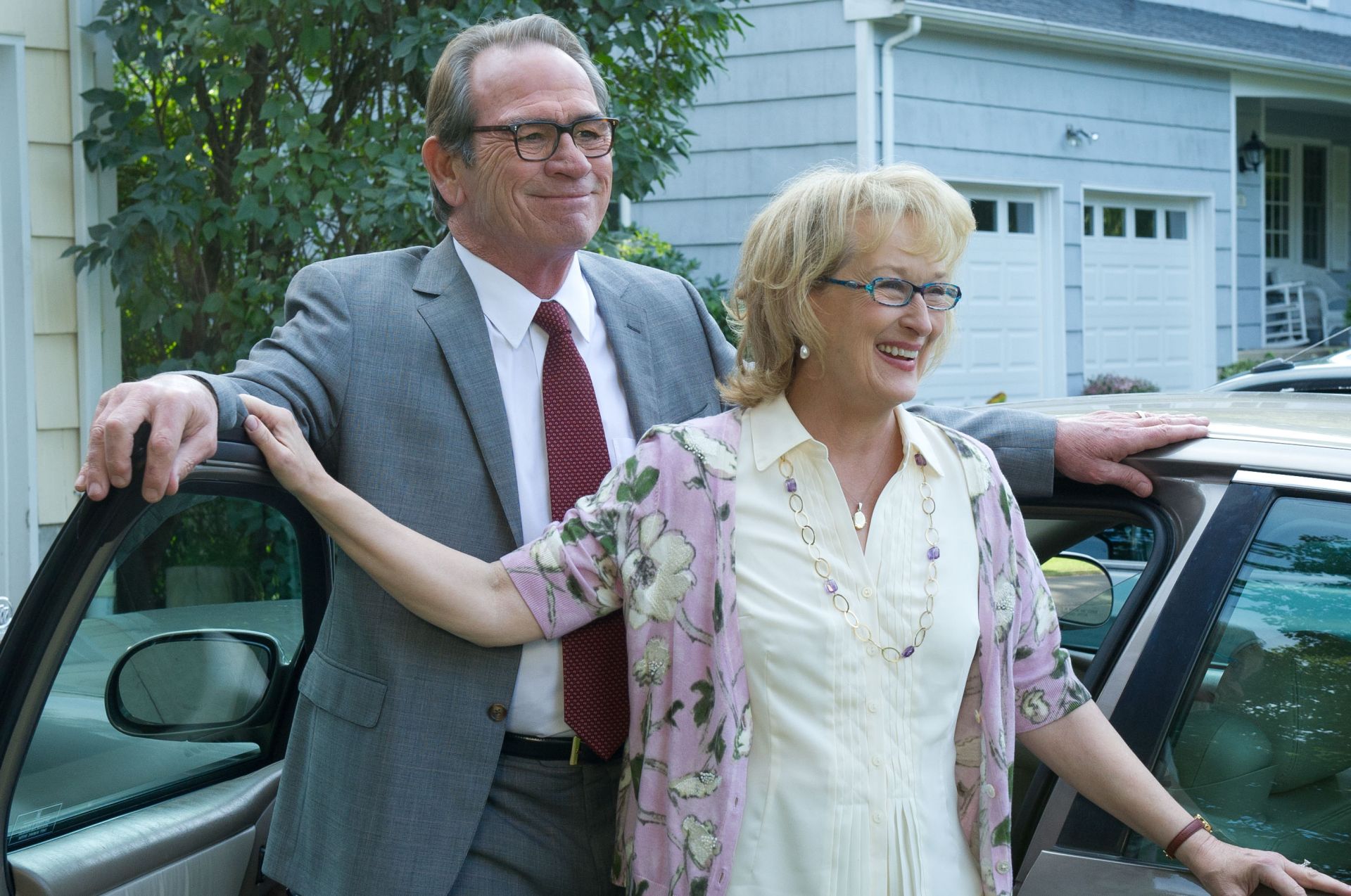
The movie opens on the occasion of Kay (Streep) and Arnold’s (Tommy Lee Jones thirty-first anniversary. “It isn’t anything special,” says Kay, “just an off year.” The Nebraska couple have raised their kids, they sleep in separate rooms and enjoy a comfortable, but disconnected life. When Kay finds a book titled “You Can Have the Marriage You Want” she decides it’s time to have a real marriage again. She books an intensive week of couple’s therapy with the book’s author Dr. Feld (Steve Carell) even though Arnold is uninterested and thinks it is a waste of time. Travelling to Maine they check into the local Econolodge and begin to explore their marriage… and one another.
There is something touching about watching these two characters remembering and reliving their thirty-one years together. Even though the script doesn’t dig too deep—unusual for a movie with therapy as a central plot device—the performances are so rich with meaning the script’s vagueness isn’t a hindrance.
Streep is masterful as a woman who has suppressed her real feelings and is now ready to assert herself, no matter how painful the result. “To be with somebody,” she says, “but not really be with them is worse than being alone.” In a commanding performance she steals every scene she’s in, even when she is silent. Her reactions to Arnold’s behavior are subtle, but heartfelt and heartbreaking.
Tommy Lee Jones has playing a grumpy old coot down pat, but here he brings something more to the table. He’s a plain-spoken accountant who waits just a bit too long to understand that there is trouble at home. Where Streep’s performance is external—she’s a reactor who talks about her feeling—his is internal. It’s his body language and facial expressions that help us understand the character, and understand we do.
Carell is the most understated of the three, in a role that requires him to do little more than ask questions and bring his warm, compassionate side.
There aren’t many big surprises in “Hope Springs,” but what the story lacks in twists it more than makes up for in emotional depth.
The film begins in the present with Margaret Thatcher, the longest serving British Prime Minister of the twentieth century, diminished by age. Once the most powerful woman in Europe she now goes unrecognized at her local convenience store. She daydreams conversations with her late husband and reflects on the past, which leads us into the “greatest hits” biographical format that makes up most of the movie.
What follows is the inevitable mega montage of newscasts, archival footage, snippets from Thatcher’s speeches and some behind-the-scenes intrigue all framed by more private moments–both past and present.
It’s all rather standard, elevated by a performance which, once again, displays what a great technician Meryl Streep is. She embodies Thatcher, from the flamboyant hair to the ever-present pearls although the real heavy lifting is done in the “lion in winter” scenes. It’s there she goes beyond the showy impersonation and becomes an emotional, well rounded portrait.
Despite the title there’s nothing terribly complicated about “It’s Complicated,” the new slice of lifestyle porn from director Nancy Meyers that nicks its name from a facebook status. The pitch goes something like this: two men vie for the affection of one woman. Been there done that, but it becomes something a little more interesting when you attached the names Meryl Streep, Alec Baldwin, two dramatic actors who can do funny and Steve Martin, a funny actor who can do serious.
Jane (Meryl Streep) is a divorcee in Santa Barbara. Her last daughter is leaving the nest and now she wonders who she’ll watch “The Hills” with. She may not have to wonder for long. At her son’s graduation in New York she reconnects with her ex husband Jake (Alec Baldwin). They’ve been apart for ten years ever since he had an affair with Agness (Lake Bell), a much younger woman who is now his wife. The two unexpectedly hit it off, and now the roles are reversed—Jane becomes an ex-wife with benefits when she begins an affair with her former husband. The complication the title refers to is Adam (Steve Martin) an earnest architect hired to redesign Jane’s home but who instead falls in love with her.
It’s a standard setup for a screwball comedy and in the end not all that important. The important thing is whether or not you want to watch these people as they navigate the triangle that has become their love life. Luckily, Nancy Meyers has cast well, putting together a powerhouse front line cast that compensates for the story’s simplicity.
Meryl Steep is in “Mama Mia” mode here, having fun with the role of a restaurant owner who’s richer than the Dean in Dean & Deluca. She’s loose, funny and relaxed. Steve Martin has the least showy role as Adam, the lovesick architect, but his performance makes me wish he would aim a little higher and never again crack another “Pink Panther” script.
Despite Meryl and Martin the movie belongs to Alec Baldwin who steals every scene he’s in. The easy way with a line that has earned him an Emmy or two for his work on “30 Rock” translates well here and his vanity free performance—Hairy! Fat! Nude!—is easy going fun. This trio works through the hackier material, even selling the prerequisite “parents getting high for the first time in twenty years” scene. It’s been done many times before but it’s worth it this time around to see Baldwin super toking and Streep, high off one puff, gaze into a mirror and ask, incredulously, “Is this what I look like?”
On the minus side Lake Bell, who was the only funny thing in “Over Her Dead Body,” a bad Eva Longoria comedy from a couple of years ago, is wasted, cast as a stereotype, but leave it to Nancy Meyers to turn conventional Hollywood wisdom on its head and downplay the young characters in favor of the older ones.
“It’s Complicated” is an enjoyable watch, it’s a fluffy diversion from the heavier drama that tends to come out during the holiday season. Go for the Nancy Meyers trademarks—beautiful rich people who don’t seem to have to work, nice houses and exotic sports cars—and stay for the agreeable charm of the cast.
Julie & Julia isn’t a typical book adaptation, although it is based around two books. The story takes its lead from two very different tomes, one a blog inspired book by a self confessed “government drone by day, renegade foodie by night,” the other a classic by chef Julia Child. Bringing together the stories of Julie Powell, who made a name for herself on-line by blogging about her 2002 attempt to make all 536 recipes from Mastering the Art of French Cooking in just 365 days, and Julia Child’s coming of age in France in the 1950s seems like it shouldn’t work, but the mix and match of the two stories has resulted in one of the most delightful films of the year so far.
The contemporary story begins with Julie Powell (Amy Adams), a frustrated writer working as a temp at a government agency. Looking for a way to make her mark she hits on the idea of cooking her way through the seminal Julia Child cookbook on French food in one year, blogging as she goes. Turning the dial back fifty years we are then introduced to Julia Child (Meryl Streep) and her foreign diplomat husband Paul (Stanley Tucci) at the beginning of their life in France. “French people eat French food everyday,” a delighted Julia says on arrival. The stories mix and mingle, following the lives of these two women as they search for something to enhance their lives and find it in food.
Directed by Nora Ephron, a filmmaker who is occasionally pitch perfect—Sleepless in Seattle—and occasionally not—Bewitched—the movie has an awkward structure, but after a rocky start rights itself as the two, seemingly disparate stories come together thematically. As similarities emerge—both women are bored government workers with doting husbands who are looking for something to fulfill them—the movie’s flashback structure starts to make sense.
Either of these narratives could have carried the film on their own—although I found the Julia Child storyline more compelling—but bringing them together gives the story a depth I’m not sure the Julie Powell story could have achieved on its own.
At the forefront here is the performance of Meryl Streep as the indomitable Julia Childs. Standing 6’ 2” Childs, with her distinctive voice and formidable stature, is an easy target for mimicry. Dan Aykroyd’s bloody Saturday Night Live take-off on Julia is a classic—and one that she herself enjoyed, keeping a copy of it to show guests—so the trick for any actor playing her is to reach past the parody and find a real character. Streep does this, playing Childs with gusto, bringing out the real person beneath the character’s affectations. It’s the kind of performance the Academy loves, so look for it to be nominated at awards time.
Amy Adams is a bit more of a slow burn. Her mousy character gets bowled over in the early part of the film by Streep’s zesty performance, but manages to establish an interesting character by the time the credits roll.
Julie & Julia is an unexpectedly touching, uplifting story, unconventionally told, that will leave you feeling better when you leave the theater than you did when you went in.
Lions for Lambs has a tagline that reads like the moral from one of Aesop’s fables: If you don’t STAND for something, you might FALL for anything. Directed by Robert Redford—his first stint behind the camera in seven years—and starring mega stars Redford, Tom Cruise and Meryl Streep, the film weaves three stories together to underline the importance of courage, honesty and standing up for what is right and what you believe in.
Cruise and Streep play a Republican Senator with a new plan for victory in the Middle East and a skeptical reporter. Redford is a college professor who spends his running time debating with a bright, but lazy student while Michael Peña and Derek Luke play college students who enlist in the army to help serve their country.
I’d say Redford balances these three storylines, but there’s nothing balanced about Lions for Lambs, and that’s OK, this isn’t a documentary and the filmmaker is entitled to his point of view. So instead of finding a way to juggle these story threads he jumps back and forth between them willy-nilly.
The problem with making socially conscious films is that occasionally the passion of the message trumps the director’s instincts as a filmmaker. Redford is clearly preaching from a hate the war but support the troops platform, but unfortunately it really feels like we’re being preached to. He forgoes most of the action, instead presenting one of the stagiest and wordiest movies of the year; pedantic beyond belief.
It’s more of a pastiche than a movie, with ideas bouncing off the viewer hard and fast from a number of sources. The trouble is the ideas seem hackneyed as though we’ve heard it all before. The script presents the idea that the press, by reporting on every move of the White House, may actually simply be acting as a PR arm of the government; that America’s kids don’t have a sense of social responsibility anymore, oh, and that old chestnut, War is Hell. It’s simplistic and for all its wordy bluster is about as deep as a lunch tray.
Lions for Lambs was clearly designed to spark debate among its viewers, but I would guess the only quest they’ll be asking when they leave the theatre is, “Why didn’t we go see No Country for Old Men instead?”
Imagine if James Bong burst into song while pummeling the bad guys; or if Sophie’s Choice was a musical. Picture that and you’ll get how surreal it is to see Pierce Brosnan and fourteen time Oscar nominee (and two time winner) Meryl Streep prancing about a Greek Island singing the songs of 70s pop group ABBA.
Mama Mia! (their exclamation mark, not mine), the big screen adaptation of the wildly popular Broadway musical—apparently 30,000 people worldwide take in the stage show every single day—is a strange spectacle so unrelentingly sunny in its outlook viewers should take some heavy duty SPF 85 to the theater to prevent sunstroke.
In the film Donna (Streep) is a free spirited owner of a rundown B&B on the Greek Mediterranean on the alleged site of Aphrodite’s fountain of love. Twenty years previous she had summer romances with a trio of men—businessman Sam Carmichael (Pierce Brosnan), the uptight Harry Bright (Colin Firth) and slacker Bill (Stellan Skarsgard)—one of whom is the father of her daughter Sophie (Amanda Seyfried).
After Sophie reads her Mom’s tell-all diary she realizes she has three possible fathers and becomes obsessed with finding the right man to walk her down the aisle at her upcoming wedding to Sky (Dominic Cooper). Unbeknownst to her mother, she forges invitations in Donna’s name to all three men. When the three arrive on the island, unaware of each other or Sophie’s existence, they spend the next twenty-four hours rekindling old romances, starting new ones and randomly bursting into song. Of course, Sophie’s choice is to decide which of these men is her real dad.
Directed by Phyllida Lloyd, who helmed the original stage show, Mama Mia! is a light and frothy confection that feels like a mix of High School Musical and Casey Kasem’s American Top 40 circa 1976. The silly story is buoyed by chart toppers by ABBA like I Have a Dream, Money, Money, Money and the title track but is let down by the director who fails to take advantage of the film’s beautiful island location with it’s crystal blue water, palm trees and clear skies. Instead she chooses to shoot the movie as though she was mounting a stage show. Maybe a better director—maybe, Julie Taymor’s Mama Mia!—could have opened this up some and made it more visually exciting.
That’s a picky little point though when there is so much else going on. Despite its idyllic vacation setting this is a movie that doesn’t know how to relax. If Meryl Streep isn’t dancing, she’s singing, if she isn’t singing she doing physical comedy. Ditto for the rest of the cast. As they say, if everyday was Christmas you wouldn’t appreciate it as much and the same is true at the movies when every second of a film is jammed with stimulus.
The unyielding pace mars the first hour of the film, cramming in too many songs, too many pratfalls and too much exposition. What probably works very well on stage with real actors loses some of its oomph when translated to the screen, although the abandon of the film’s Dancing Queen number is infectious and was probably a showstopper on the boards as it is in the movie.
It pays off, though, in the last half hour when, despite myself, I began to tap my foot to the songs and give in to the film’s cheery charms. The songs bring back a nostalgia for a simpler time when pop music was more fun than it is today—there isn’t a hint of gansta rap or emo in Mama Mia!—and the audience I saw it with were clapping and singing along with each musical number.
Mama Mia! starts off fluffy as Cool Whip on Jello, but develops a wistful feel in the last thirty minutes as the relationship between Sophie and her mother and three dads deepens. This is largely due to the performance of Meryl Streep.
Anyone who only regards Streep as a capital “S” serious actress may have to revise their opinion after seeing her play air guitar, sing to a fish or do a bang-on Celine Dion impression in The Winner Takes it All.
A project like Mama Mia! is on the opposite end of the spectrum from the films that made her famous, and even though this is likely part of her Robert De Niro Retirement Plan—she seems to have reached the juncture in her career where she leaves the interesting roles behind and takes only high ticket jobs—she commits completely and hands in a vibrant, energetic performance that is the emotional core of the movie.
I wish I could say the same thing about Pierce Brosnan. He’s fine in the film until he opens his mouth to sing. His vocal performance on S.O.S. is the kind of singing that people generally do when they think no one is listening and puts to rest the myth that all Irish people can sing.
Mama Mia! is a crowd pleasing confection that, for better or worse, will have you humming Dancing Queen as you exit the theater.
Prime has a great set-up for farce. A 37 year-old divorcee begins a new romance with a much younger man. The only person she can confide in is her therapist, the woman who is always telling her to move on with her life and try new things. The trouble is the younger man is the therapist’s son. Could be either very funny or quite tragic, but falls somewhere in between.
Uma Thurman brings her usual “umessence” to the role of the divorced woman, but like Meryl Streep she isn’t a naturally gifted comedic actress and several scenes here fall flat as a result. Sandra Bullock was originally cast in Uma’s role and I think it would have been a much different movie with Bullock’s lighter touch in the lead.
 The first time most of us noticed Emily Blunt she was “’on-the-edge of sickness thin.” To play the role of Emily Chalton, the prickly first assistant to the editor in The Devil Wears Prada, Blunt had to drop pounds from her already slight frame. “It wasn’t like doughnuts were snatched out of my hand,” says the 5′ 7½” actress, but she was encouraged to slim down. So much so she would occasionally cry from hunger during the shoot. Luckily, though rake thin, she still had the energy to steal the movie from her more seasoned co-stars, Meryl Streep and Stanley Tucci.