Celebrate the 10th anniversary of “Mad Max: Fury Road” with us and check out my filmed introduction to the classic action movie on the big screen!
“It is a chase movie where characters chase immortality, a new life in a better place, love and one another across a vivid landscape. Gone are the grey tones of dystopian movies like ‘The Road.’ In its place is a dusty but vibrant backdrop that frames the non-stop action. Miller keeps the pedal to the metal but he keeps the action earthbound. The laws of physics are respected by the director’s use of practical effects. So, for instance, when a car blows up it doesn’t rocket into space, instead it explodes spectacularly but organically…” HERE‘s a preview. To see the whole thing, check your local Cineplex listings for times and a theatre near you!
I spoke with legendary film director George Miller about making five “Mad Max” films over the last forty-five years, the political timeliness of “Furiosa: A Mad Max Saga” and what all his movies have in common.
LOGLINE: A mix of Norse and Greek mythology set against an apocalyptic backdrop, and set 15 to 20 years before the events of “Mad Max: Fury Road,” “Furiosa: A Mad Max Saga” is a high-octane origin story. Kidnapped from the Place of Great Abundance by Warlord Dementus’s (Chris Hemsworth) henchmen, young Furiosa (played by Alyla Browne as a child, Anya Taylor-Joy as an adult) vows vengeance for the death of her mother as Immortan Joe (Lachy Hulme) and Dementus vie for supremacy of the Wasteland. “When things go bonkers,” says Dementus, “you have to adapt.”
CAST: Anya Taylor-Joy, Alyla Browne, Chris Hemsworth, Tom Burke, Lachy Hulme, Nathan Jones, Josh Helman, John Howard, Angus Sampson, Charlee Fraser, Quaden Bayles, Daniel Webber. Directed by George Miller.
REVIEW: A pedal-to-the-metal epic, “Furiosa: A Mad Max Saga” follows the big-block engine power of “Fury Road” with a film that brings a backstory to the strong-willed Furiosa (Taylor-Joy). As expected, Miller delivers a high-octane apocalyptic tale with a fierce Taylor-Joy and charismatic warlord Hemsworth, that features action scenes that’ll make your eyes pop out of their sockets.
The extended “Stowaway” action sequence, for instance, featuring all manner of souped-up vehicles blazing through the dusty Wasteland, makes Monster Trucks look like a Hot Wheels rally. Frenetic in the extreme, Miller’s restless camera is in constant motion, capturing the (mostly) practical stunts in his singular, propulsive style.
The actual revenge story is “Fury Road”-Lite, but the breeziness of the plot is offset by the scorching leads. The transition between Alyla Browne as the young Furiosa to Taylor-Joy, who is a reflection of the character played by Charlize Theron, is graceful and effective.
With a minimum of dialogue—she speaks maybe 30 lines in total—Taylor-Joy portrays the strong will, intelligence and furious emotion that drives the character on her hero’s journey, even if we don’t meet the adult Furiosa until roughly an hour into the action. As a warlord who snacks on human blood sausages, Hemsworth has a fake nose and the showier role. He’s an operatic villain who licks the tears of his victims and gets around on a grand Roman chariot powered by motorbikes, not horses. He’s entertainingly over-the-top, even in a bigger-than-life movie featuring characters with names like The People Eater and Rictus Erectus.
“Furiosa: A Mad Max Saga” is an experience. It doesn’t hit the heights of “Fury Road,” one of the greatest action movies ever made, but in its examination of love and hope in hopeless times, it is both ridiculous and sublime as it tears across the screen like greased lightning.
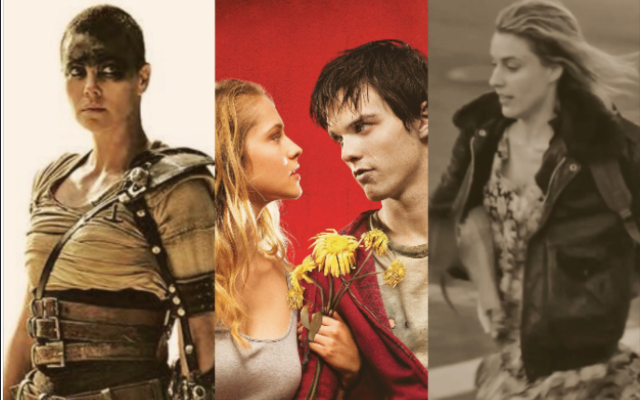
What to watch when you’ve already watched everything Part Three! Binge worthy, not cringe worthy recommendations from Isolation Studios in the eerily quiet downtown Toronto. Three movies to stream, rent or buy from the comfort of home isolation. Today, road warriors, romantic zombies and an underemployed dancer.
In American Honey, a road trip movie now playing at the Toronto International Film Festival before it heads to a national release later this year, Riley Keough plays a Fagin-like character, tough-as-nails with a glare that could peel the paint off the walls.
She is Krystal, the leader of a travelling band of door-to-door magazine sellers who picks up new recruits along the way with one simple job interview question: “Do you got anyone who’s going to miss you?”
It is a bravura performance in a movie that, once and for all, proves she’s not just Elvis Presley’s granddaughter; she can really act.
Making the free-form drama with British director Andrea Arnold and a cast of mostly newcomers was an unconventional occurrence for the Girlfriend Experience star.
“I didn’t know what the (bleep) anybody else was doing,” she says.
“I wasn’t on set for anything except for my own stuff. Nobody knew what the movie was about until we watched it. I literally had no idea.”
Keough, who has appeared in Magic Mike, Mad Max: Fury Road and will soon be seen in the Netflix film The Discovery and Steven Soderbergh’s Logan Lucky, says the lack of traditional structure did “all the right things” for her performance.
“It makes you able to do anything,” she says.
“You don’t want to get into the habit of only doing things that are structured and safe. Hit your mark and look that way.
“You have nothing, so you actually have to do something. You’re not going off a whole script and character arc and knowing all these blah, blah, blah things. You’re just existing as this person. You are forced to exist as this person. You don’t get a chance to think about anything at all.”
Hitting marks and finding the light “is just (bleeping) annoying,” she says. “Excuse my French. This was a nice break from it.”
Set in a world where regular folks still open the door for rattily dressed kids selling magazines, it’s a story about families lost and families found, about poverty, disenfranchised youth and finding freedom on the road.
“I think Krystal had been doing this for a long time so that’s all she knew,” Keough says of her tough-talking character.
“This world does exist. I think she grew up ‘on crew’ and she knows the most. We ran into another mag crew. In the movie you see us shaking hands with another mag crew.”
At well over two-and-a-half hours American Honey has an emphasis on naturalism and all that entails: the mundane and the pulse racing in equal measure.
It’s not a traditional road flick. Here, the destination isn’t as important as the journey.
Life on the road taught Keough a thing or two. “I learned not to drink too much,” she says.
“I really think I learned it. Legitimately.”
She laughs, perhaps remembering some long nights while making this movie, then adds in a more serious tone, “I learned a lot of really profound things but I don’t know how comfortable I am talking about them.”
In polite society no one would dare ask a stranger about his or her father’s violent death, but celebrity culture is not polite society.
Over the years I’ve heard interviewers ask questions ranging from the innocuous — “What are you wearing?” — to the silly — “How do you keep your bum in such great shape?” — but rarely have I heard anything as unnecessarily meddling as the query aimed at Charlize Theron during a press conference I hosted several years ago.
A reporter asked the actress about seeing her mother shoot her abusive, alcoholic father dead when she was a teenager. But instead of breaking down Theron said, “I’m not talking about that,” with an icy finality that made everyone freeze.
I admired her for not over sharing, not spilling the intimate details of her life à la the Kardashian Klan. She’s careful what she says to the press, avoids scandal and damage controls the ones that inevitably pop up in every celeb’s life. For instance, recently she said, short and sweetly, “We both decided to separate,” when accused of “ghosting” on her romance with Sean Penn.
She understands some things should only be spoken about when and where she chooses and not at the behest of an aggressive reporter looking to dredge up painful memories for the sake of “good television.” Theron is media savvy so I was surprised a few weeks ago when she caused a media hurly burly with comments about the burden of being beautiful.
Chatting up her new film The Huntsman: Winter’s War with British GQ she said, “How many roles are out there for the gorgeous, BLEEPINGing, gown-wearing eight-foot model? When meaty roles come through, I’ve been in the room and pretty people get turned away first.”
She is a beautiful woman, that is as clear as the perfectly positioned nose on her face, but is she intimating that being beautiful has harmed her career?
Turns out she wasn’t, or so she claims. Alleging a misquote, she later apologized, saying that playing “deconstructed characters” appeals because, “how many characters really are there out there for a woman wearing a gown? You have to play real people.
The mea culpa was unnecessary. She works in a business where beauty is a commodity.
The problem with her earlier statement is that publicly acknowledging one’s own looks carries with it a hint of arrogance, a suggestion that winning the genetic lottery somehow makes you superior, but she simply said something others already have.
Keira Knightley claims she almost lost the role in Pride and Prejudice because the director thought she was too pretty and Jessica Biel says being Esquire’s 2005 Sexiest Woman cost her work.
Theron may have missed out on a job or two because of her looks, but it’s also an element of what made her a star.
That and talent, and just as you wouldn’t apologize for skin colour or having red hair or being tall or short, she doesn’t need to say sorry for being beautiful.
Any year that gives us the eyeball bulging thrills of “Mad Max: Fury Road,” the subtle yearning of “Carol” and everything in between can’t be all bad. Sure, there were some stinkers and more nostalgia than you could shake a lightsaber at, but when I think back on 2015 I’ll remember Max’s pole riders, Lili Tomlin as the world’s fieriest grandmother, “Chewie we’re home,” Leo sleeping inside a horse and “Ex Machina’s” disco dance party.
BEST MOVIES OF 2015
The Big Short
“The Big Short” is an infuriating movie. Not because it’s poorly made but because it is so well made. It takes years of banking bafflegab and distils it down to the essence in what may be the funniest, smartest and most maddening look at why America’s housing market crashed in 2008.
Based on Michael Lewis‘ nonfiction best-seller of the same name, the film presents a cavalcade of facts and information formed into a story about how four investment-bankers—played by Christian Bale, Steve Carell, Finn Wittrock, John Magaro—saw the financial meltdown coming when no one else did. Taking on the arrogance of Wall Street’s old boy network, they bet against the American economy and, in the process, expose an unprecedented level of financial criminality.
The movie explains that Wall Street likes to use confusing terms to make you think only they can understand what they do. “It’s like 2+2 = fish,” says one banker, expressing disbelief at the financial manipulations used by the big banks. To make the financial mumbo-jumbo sexy the McKay uses a variety of tricks, including cutting to Margot Robbie in a bubble bath explaining subprime loans in plain language. It’s a spoonful of sugar to help the expositional medicine go down. From the simple—one loan officer calls his clients “Ninjas, no income, no job.”—to the incredibly complex world of CDOs (collateralized debt obligations) “The Big Short” doesn’t shy away from tackling complex financial transactions but it never feels dry or forced. McKay is a showman, and layers the film with fourth-wall-breaking celebrity cameos and concise social commentary woven into the drama.
“The Big Short” features strong performances—Bale stretches in ways we haven’t seen from him before—but it is the film’s unflinching depiction of unbridled greed that will resonate.
Brooklyn
“Brooklyn,” a new film starring Saoirse Ronan as an Irish girl who immigrates to New York in the 1950s, asks a simple question: Is home where the heart is or where the marriage licence is?
Written by Nick Hornby (from a novel by Colm Tóibín) “Brooklyn” is a heartfelt coming-of-age journey that skilfully avoids any trace of mawkishness or sentimentality. A sharp script and John Crowley’s no nonsense direction are in part responsible for the movie’s tone, but the film’s beating heart is Saoirse Ronan’s remarkable performance.
As one of the great faces in movies she can speak volumes with a look, and here, as a girl whose body is in New York but heart lies in Ireland, her melancholy and homesickness is so real you can reach out and touch it. Call her Little Meryl if you like, but there is no denying the power of her work.
“Brooklyn” is a movie about decisions that makes all the right decisions. Some situations may be familiar but Ronan’s exemplarily work helps us ignore the familiar tropes as she milks every bit of emotion from a profoundly touching story.
Carol
“Carol,” a new film starring Cate Blanchett and Rooney Mara, is a love story but one painted in shades of loneliness and longing. It’s about love at first sight and how that love that may be too good to last.
Based on a 1952 Patricia Highsmith novel titled “The Price of Salt,” “Carol” is a haunting romance, elegantly directed by Todd Haynes. Blanchett and Rooney subtly play out the story, making the most of gestures and tentative looks that in most movies wouldn’t register but here convey a richness of emotion. It’s about nuance not grand gestures.
Both Blanchett and Mara do much with limited dialogue. The real performances here are happening internally and their faces and eyes convey as much as any lines of dialogue could hope to.
“Carol” is first-class filmmaking— cinematographer Ed Lachman even uses Super 16mm film stock to create the grainy feel of a 1950s period piece—with beautifully wrought, timeless performances and a love story for the ages.
Creed
How do you breathe new life into a forty-year-old film series? If you’re Albert R. Broccoli you hire Daniel Craig, but if you’re Sylvester Stallone gracefully you pass the torch. “Creed” is the “Rocky 1.0,” the evolution of a story that began in 1976.
“Creed” satisfies on two levels. One as a new, inspiring overcoming-the-odds story while simultaneously providing a nostalgic blast. It’s not a remake—although in a way it almost feels like a remake of the entire “Rocky” series—but attempts to bring the same kind fist-in-the-air triumphant feel as Stallone’s other boxing flicks.
Is it a knock-out?
With a story ripe with underdog theatrics, the signature “Rocky” swelling trumpet score and familiar characters and situations, “Creed” clicks in the part of your brain that grew up watching the “Rocky” movies on VHS. Like Otis Redding’s’s cover of “Satisfaction”, the movie feels vaguely familiar but it also has good beat and you can dance to it, so it gets a pass.
“Creed” maybe named after Michael B. Jordan’s character and ostensibly center on the young boxer, but let’s get real, this is a “Rocky” movie and Stallone is the star. He plays Balboa as a lion in winter, an old man who has trouble climbing (let alone sprinting) the 72 stone steps leading up to the entrance of the Philadelphia Museum of Art made iconic in the first movie. It’s a poignant, engaging and moving performance that ranks as one of Stallone’s best.
For decades on “Creed” proves the blend of boxing and underdogs is still a potent mix, made better by rich performances and Stallone’s quietly affecting work.
Ex Machina
“Ex Machina” is a high tech thriller that by and large ignores the tech to get down to the nitty gritty. Director and screenwriter Alex Garland (who previously scripted “28 Days Later” and “Sunshine”) places the story firmly in the world of artificial intelligence and then showcases the humanity (or lack thereof) of his characters, both flesh-and-blood and robotic.
With the cool austerity of Stanley Kubrick director Garland creates the antiseptic world of Bateman’s lair. Clinical and precise, it’s a stark backdrop for a sci fi story that is more concerned with ideas than special effects. It’s a “Frankenstein” story that is, as Bateman says, not interested in what people are thinking, but how people think.
Oscar Isaac once again proves to be a quiet but potent on-screen force as Bateman, always the smartest guy in the room, but one lacking the interpersonal skills to truly connect with people. Domhnall Gleeson (who will next be seen alongside Isaac in “Star Wars: Episode VII – The Force Awakens”) is sympathetic and determined but it is Alicia Vikander who really impresses. She’s equal parts warmth and chilly precision as a robot who wants more than to be a machine.
“Ex Machina” is being presented as sci fi, but it really is a human drama; a human drama where the main character has a fibre optic nervous system.
Inside Out
If you’ve ever looked at someone and wondered what’s going on inside their head—and who hasn’t?—the Pixar film “Inside Out” tries to provide some answers.
Loosely based on the mood swings of director Pete Docter’s 12-year-old daughter it’s an action adventure set in the subconscious of a young girl.
I don’t know if there is such a thing as an instant classic but “Inside Out” is the best argument for creating the term I’ve come across for some time.
From dazzling animation, to a script that toggles between childlike wonder and ingenious introspection “Inside Out” is glued together with a degree of emotional acumen not often found in mainstream film.
In other words, it will make you laugh, cry and think.
“Inside Out” is a film that will deepen with repeat viewings, which is probably a good thing as when it hits Blu-ray kids are going to want to watch it again and again, and for once, parents won’t mind joining in.
Mad Max: Fury Road
It’s been thirty years since there was a new “Mad Max” movie but “Fury Road” was worth the wait. The years have not stilled director George Miller’s restless camera or his outrageous way with steampunk influenced design or character names. If Imperator Furiosa isn’t the best character name of the year, I don’t know what is. Her title, however, might as well have been Mad Maxine as she is more the focus of the story than the titular character.
Tom Hardy pulls his weight as Max. His powerful physicality mixed with a haunted look—maybe we should call him Passive Aggressive Max—and gearbox permanently shifted to survival makes him an imposing center of the film, but it is Charlize Theron who dominates.
As Furiosa she lives up to her name as a force to be reckoned with. She’s a one-armed bandit (literally) who not only provides much of the action in the film, but its heart as well.
The real star, however, is Miller. Thirty years after he last played in Mad Max’s world he revisits it with a film that doesn’t feel like a sequel or a reboot, but a fresh look at an familiar character. His off-the-wall sensibility and demented Hot Wheels style designs give the movie a look and feel that no other director could replicate
Spotlight
Like “All the President’s Men,” the new Michael Keaton drama is a story about newspaper reporters taking on the establishment. Instead of going after the highest office in the land, as Woodward and Bernstein did in their Watergate exposé, in “Spotlight” Keaton, Mark Ruffalo and Rachel McAdams play Boston Globe reporters delving into the Catholic Church’s cover-up of abusive priests.
“Spotlight” is set just fourteen years ago, but feels of another age. The internet has, by and large, rendered this kind of methodical reporting obsolete. The door knocking, working-the-phones investigation with months to form and write stories is now the kind of thing that exists only in the movies. We see it all here in detail and much of it is very interesting. The reporter’s investigation allows for huge loads of exposition in the form of interviews with witnesses and victims and exports and while there’s a bit too much, “Are you telling me..?” the slow and steady unveiling of details is compelling stuff.
Director and co-writer Tom McCarthy keeps it simple and straightforward, allowing the occasional “gotcha!” revelations speak for themselves. Clues and information are uncovered slowly, with a minimum of red herrings. The result is portrait of the kind of grunt work the Spotlight team used to break the story, not nearly as flashy or verbose as Aaron Sorkin’s overwritten and over sentimentalized look at news gathering, “The Newsroom.”
“Spotlight” is a refreshingly barebones movie that allows the story to provide the fireworks.
Star Wars: the Force Awakens
There’s good news for Star Wars fans. The initials in director J.J. Abrams’s name definitely do not stand for Jar Jar. His take on the “Star Wars” universe does everything the much-maligned prequels did not; that is it focuses on character and adventure not treaties or political dealings. It delivers a nostalgic blast while at the same time offering a new hope that the series can be freshened up.
Abrams gets away from the political bafflegab that made the prequels such a chore. Instead he returns to the basics, good vs. evil, fathers and sons, keeping it on track as an action-adventure with great characters.
Rey is the female lead everyone has been waiting for Marvel to make a movie about. Abrams beat them to the punch. She’s powerful, human, self-sufficient — “Don’t take my hand,” she snarls at Finn as he tries to lead her to safety — and would never even consider wearing a gold bikini.
As a Stormtrooper who finds redemption, Finn is the catalyst for much of the film’s action. He’s a little bit goofy, a lot brave and in over his head but because he thinks with his heart and not his head he’s a welcome, charming presence.
Poe Dameron has the swagger of a young Han Solo while BB-8 has personality plus and purrs like a cat. Kylo Ren, on the other hand, is a robed evildoer prone to childish temper tantrums.
Connecting these new characters to the universe are legends from the past, Han Solo, Chewbacca and Leia (Carrie Fisher).
Teaming Solo, Chewie and the Millennium Falcon provides an undeniable nostalgic rush but they are here as more than just cameos to pay tribute to the past.
Ford’s Spencer Tracy-esque vibe allows him the gravitas to utter lines like “The galaxy is counting on us,” while sidekick Chewie says much without actually speaking words. Leia has a smaller role, but it’s a blast to see Ford and Fisher, both looking age appropriate, together again.
Their first meeting exemplifies the movie’s playful tone. “You’ve changed your hair,” Hans says to his old flame, noticing her famous bagel hair buns are gone. What could have been a grand reunion is underplayed and instead the call back to the past is presented as a warm moment between two old friends.
It’s that kind of warmth and humanity that separates “The Force Awakens” from other big budget blockbuster entertainment. The finale is big and loud like the Marvel movies but unlike “The Avengers” films Abrams keeps the emotional core alive right up until the end.
It’s the right mix of space-opera-cool and character that will please the hard-core fans that see this as just another piece of a much larger puzzle but also works as a standalone story as well.
“Star Wars: The Force Awakens” is a blast, nostalgic and otherwise.
Straight Outta Compton
“Straight Outta Compton,” the new biopic of original gangster rap band N.W.A. and their turbulent rise and fall, is at once a very specific look at the birth of a musical genre and a universal music industry story about how money, ego and bad management will break a band a part faster than you can say, “Boyz-N-The Hood.”
“Straight Outta Compton” plays like dozens of music bios that came before but despite featuring music industry clichés—sometimes the clichés of cheating managers, ego and excess are clichés because they’re true—it spends more time on the characters than the situation. It’s funnier and warmer than you might anticipate a movie about the ferocious and profane beginnings of gangster rap, a music born out of frustration and a need to be heard, but the emotional truth of the film is based in the relationship between the leads, particularly Dre, Eazy and Cube. A palpable sense of camaraderie is present throughout, and it grounds the film during its more excessive moments.
At two-and-a-half hours “Straight Outta Compton” is a detailed look at the band that, although it takes liberties with the facts in favour of drama, grabs the rhythm of the time by the throat and doesn’t let go. Echoes of the Rodney King trial reverberate throughout the film giving the movie, in light of Black Lives Matter, a timely feel that showcases the prescient nature of Ice Cube’s rhymes.
Honorary Mentions
Bloody and by times bloody terrifying, every frame of “Crimson Peak” drips with Guillermo del Toro’s Grand-Guignol sensibility. Madness and murder are front and center, coupled with arch performances—Chastain in particular embodies the Hammer Horror style of wild-eye-acting—and the director’s flawless instinct for creating unease in the audience. It’s a transport to another world, a place where the ground seeps red and old houses moan in the wind. With atmosphere to burn it’s an operatic companion piece to “The Devil’s Backbone” and “Pan’s Labyrinth” that plays like a fever dream.
It would be easy to write “It Follows” off as a teen horror, but it is much more than that. It’s a study — and a creepy one at that — of teen angst filtered through primal dread — fear of the dark, being alone, apparitions — and physical fear. An anxiety inducing synthesizer score adds to the atmosphere of unease, making this one of the most unsettling and original horror movies of the year.
“Sicario” (it means “hitman” in Spanish) begins with a tightly wound sequence and doesn’t go slack for the next ninety minutes. Director Denis Villeneuve has made a slow burn of a film, deliberately paced, that weaves complex quasi-morality with a sense of hopelessness into an edge of your seat story.