As the title suggests “Once Were Brothers: Robbie Robertson and the Band” is a study of a brotherhood that changed the way music was made in the 1970s and 80s.
The documentary, inspired by Robertson’s 2016 memoir “Testimony,” produced by the powerhouse duo of Ron Howard and Brain Grazer and directed by Daniel Roher, details the guitarist’s early life as the son of Mohawk mother Dolly and “Hebrew gangster” father named Alexander Klegerman who died before he was born. An interest in music and storytelling came from visiting his relatives on the Six Nations Reserve, inspiring him to pick up a guitar and express himself.
His “personal big bang” came with the discovery of rock and roll. An even bigger bang came when the teenaged Robertson saw Rompin’ Ronnie Hawkins, a flamboyant, ex-pat Southern American rock-a-billy musician playing in Toronto. The music, a frenetic blend of rock and roll and hopped-up country music, expertly played by a band that included drummer Levon Helm, spoke to Robertson, revealing an aural passageway to a world he had only ever read about. Eventually, at age sixteen, he joined the band, a move that set on the path to helping to take Bob Dylan electric, and form a band that melded Hank Williams, Muddy Waters with roots music into something that had never been heard before. When they played together, talking head and fan Bruce Springsteen says, “something happened that couldn’t happen on their own. Something miraculous.”
The Band, Canadian multi-instrumentalists and singers Rick Danko, Richard Manuel and keyboardist Garth Hudson alongside Robbie Robertson and Helm, made classic albums like “Music from Big Pink,” “The Band” and “Stage Fright,” and formed a logical, if not biological, musical family. “I was an only child so this brotherhood was so powerful,” says Robertson. But like all families there were problems. Unbridled creativity and stardom led to drug abuse and in 1976, after sixteen years together and documenting their final star-studded concert in the Martin Scorsese-directed “The Last Waltz,” they went their separate ways. Robertson says the idea was, “to get back together and make music like never before… everyone just forgot to come back.”
This is Robertson’s documentary. Helm, Danko and Manuel are all gone, while Hudson appears only in archival clips so the film has the feeling of a requiem for a friendship and brotherhood lost. Other than a visit to Helm’s deathbed, Robertson hadn’t spoken to his old bandmate in years. The film chalks up the skism in their relationship to drugs, jealousy and fighting the way only people who love one another can.
With a deep, sonorous voice that makes you wish he would narrate every documentary made from now on, Robertson eloquently shares his story, sometimes funny—having a hypnotist on stage at the Fillmore West to help him overcome nerves—and sometimes heartfelt—”I still loved him but something was broken,” he says of his relationship with Helm. “It was like glass. Hard to put back together.”—in a way that doesn’t lay blame, simply present his side of a much-debated rock ‘n roll feud.
Adding colour to the story are testimonials from Springsteen, Eric Clapton, ex-wife Dominique Robertson and, best of all, Hawkins who livens things up with his reminisces. “There was enough flour and sugar in that to make us sneeze biscuits,” he says of the cocaine backstage at “The Last Waltz.”
The final word on The Band is, of course, the music they left behind. Their musical partnership may have ended amid acrimony but “Once Were Brothers: Robbie Robertson and the Band” understands that the lasting legacy is in the songs. Music appears throughout but Roher bookends the film with remarkable performances. Early on we see the guys, crammed into a small room, so closely packed they’re almost sitting on top of one another, rip through a version of “Up on Cripple Creek” so transcendent it could only be played by musicians connecting on a spiritual level. Roher finishes things off with footage from “The Last Waltz” that showcases the band in all their ragged glory proving that in the end, it’s the music that matters.
As promised “Carmine Street Guitars,” the new documentary from Ron Mann, is about guitars. Beautiful stringed instruments hand made with love by artesian Rick Kelly. But it isn’t just about guitars. Sure, we hear music, solo performances by pickers and grinners like “Captain” Kirk Douglas, Lenny Kaye, Eleanor Friedberger, Charlie Sexton and Bill Frisell, but it’s about tradition and the personal connections between creators and their instruments.
For decades Kelly and his shop Carmine Street Guitars has been a Greenwich Village landmark. Untouched by modern conveniences like cell phones and computers, Kelly uses tools handed down from his grandfather, salvages old wood from New York landmarks like McSorley’s Old Ale House—the “bones of the city,” he calls them—to create one-of-a-kind instruments he says have a resonance that newer materials cannot duplicate. With him is apprentice, Cindy Hulej, a woodworker who burns beautiful designs into the faces of the guitars she creates.
It’s a slice of life doc, a week in the life of the shop as musicians come in, hang out and talk about guitars. Mann creates a rhythm that echoes the slow pace of life inside the store. Kelly is soft spoken, an old-school artist in a rapidly changing city, somehow dodging the homogenization that is putting people like him out of business. His icy demeanor toward a high rolling real estate agent tells you everything you need to know regarding his feelings toward the people who value glass and steel over heart and soul.
“Carmine Street Guitars” is an ode to tradition, to artistry, to slowing down. It’s an understated hang-out movie that has as much resonance as the old wood Kelly uses to make his guitars.
Oscar-winning documentarian Errol Morris has travelled the world chronicling the famous and infamous. To find the subject for his latest film “The B-Side: Elsa Dorfman’s Portrait Photography” he looked closer to home. Next door in fact, to the home of his friend, portrait photographer Elsa Dorfman.
It’s a film as simple and unpretentious as its subject. In 76 quick minutes Morris lets Dorfman narrate the story in her thick Massachusetts accent. A friendship with Beat poet Allen Ginsberg opened the door for her to take photos of many literary and music stars, including W.H. Auden, Anais Nin, Joni Mitchell and Bob Dylan. Local heroes like Jonathan Richman also found their way before her camera but it is the pictures of her family and friends that define her work. “What you’re wearing is OK,” she says. “Who you are is OK. You don’t have to be cosmetized.” It is, she says, an acceptance of “everydayness.”
Much of “The B-Side” takes place in Elsa’s cluttered archive. “A lot of these are mistakes but because they are 20×24 they are too expensive to throw away,” she says. “The ones they don’t take I call the B-side.”
In 1980 she found a format that came to define her work, the Polaroid Land 20×24 camera. Producing large-scale photos became her trademark, although by her own assessment her straightforward approach never brought her fame or media attention.
Perhaps its because the pictures aren’t slick and neither is Elsa. Her work is almost folk art, an outsiders look at the world. She captured her subjects as they are the moment they stood in front of her camera. No touch ups or after effects. The pictures are documents of moments in time, plain and simple. “I am really interested in the surfaces of people,” she says. “I am totally not interest in capturing your soul. I am only interested in how they seem.” Her method was effective. In one newspaper article the mother of a subject raves, “It looks more like Faye than Faye herself.”
“The B-Side: Elsa Dorfman’s Portrait Photography” is a quiet look at Dorfman and the art and life she created. “I was lucky in a way to find the cameras and to like it,” she says. “It’s a real way of being a quote artist and having an offbeat life. Inventing a way of living that is comfortable. It worked. I feel very grateful that it worked.”
Asif Kapadia’s documentary Amy features never-before-seen footage and over 100 interviews with people from singer Amy Winehouse’s personal and professional life. It is a heartbreaking up-close-and-personal look at a woman who, as Tony Bennett says in the movie, didn’t live long enough to learn how to live.
Kapadia may be best known as the filmmaker behind the BAFTA winning documentary Senna but says, “It’s funny, but I am really a drama guy.”
His docs are structured like feature films. Amy, for instance, plays on a few levels, featuring several dramatic arcs. It’s a cautionary tale of the effects of international stardom. It’s a portrait of drug addiction, exploitation and a woman who looked to men for protection, and chose badly. It’s the story of Amy, a fiercely talented person who laid her heart bare in her art only to have the thing that should have been her saviour, her music, ultimately be her undoing.
When I asked Kapadia if he looked at other music docs before beginning work on Amy he said, “I don’t have references I look to. I just kind of make it up as I’m going along. For example, in the sequence with the paparazzi, I’m thinking of Raging Bull, with flashguns going off. I’m not thinking of a doc where you have someone’s life and then they pick up a guitar and sing.”
Here’s a list of other music bios—some docs, some features—that take a dramatic approach and give a complete look at the personal and creative lives of their subjects.
Anvil: The Story of Anvil: It would be easy to call Anvil a real-life Spinal Tap. The story of the heaviest heavy metal band you’ve never heard of bears a strong resemblance to the legendary fictional band, but it is so much more than that. It is a story of passion, of trying to beat the odds, of friendship, of hope against hope. It’s also quite funny and the music will peel the paint off your home theatre walls.
I’m Not There: It’s an elliptical and metaphoric retelling of Bob Dylan’s life, but none of the characters in it are called Bob Dylan. Most of them don’t look like Dylan, and the one who most looks like Dylan is a woman, played by Cate Blanchett. Yet I felt I knew more about what makes Bob Dylan tick when I left the theatre than I did about Johnny Cash following Walk the Line or Ray Charles after Ray.
Something from Nothing: The Art of Rap: A vibrant look at the art of hip hop, the first documentary from Ice-T profiles the passion of the grandmasters of rap: Afrika Bambaataa, Treach Criss, Doug E. Fresh, KRS-One, Dr. Dre and more. Worth it to hear Snoop Dogg’s (now Snoop Lion) songwriting methodology: “I need to smoke a lot of weed, and have a couple girls there because I like looking at them.”
Get on Up: James Brown was known as many things; The Godfather of Soul, Soul Brother No. 1, Mr. Dynamite and The Hardest Working Man in Show Business but he preferred to be called Mr. Brown. His rise from poverty to the top of the R&B charts is brought to life in a knock out performance from Chadwick Boseman, who plays Brown from age 16 to 60.
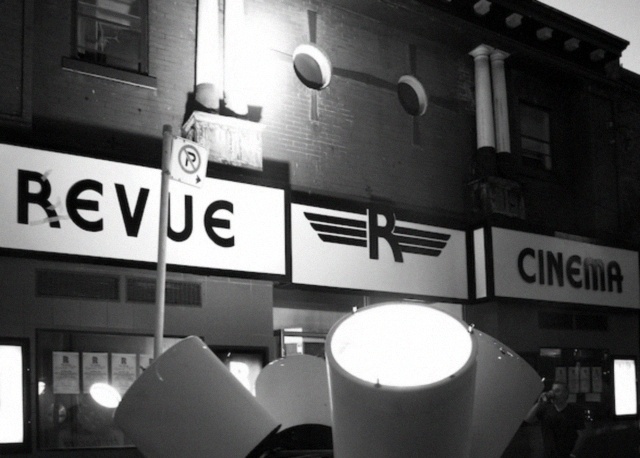
On January 25th at 7 pm Richard and Geoff Pevere will host a special screening of Don’t Look Back, 1967 documentary film by D. A. Pennebaker of Bob Dylan’s 1965 concert tour in the UK at the Revue Cinema (400 Roncesvalles Avenue,(416) 531-9950) in Toronto.
Geoff Pevere is one of Canada’s leading pop culture commentators and movie critics. Geoff was a former host of CBC Radio’s Prime Time program, a movie critic with the Toronto Star for ten years, a TV host and a lecturer on film and media and is currently a movie columnist with the Globe and Mail. He is the co-author of the national bestseller Mondo Canuck: A Canadian Pop Culture Odyssey, his books include Toronto on Film and Donald Shebib’s Goin’ Down the Road, his latest book is Gods of the Hammer – The Teenage Head Story. Geoff will be signing copies of Gods of the Hammer! If you don’t have your own copy you can pick one up at the Revue before and after the screening.
Richard Crouse is the regular film critic for CTV’s Canada AM, the 24 hour news source CTV’s News Channel and CP24. He is a frequent guest on many national Canadian radio and television shows. His syndicated Saturday afternoon radio show, The Richard Crouse Show, originates on News Talk 1010 in Toronto. He is the author of six books on pop culture and writes a weekly column for Metro newspaper.
Join us on January 25th at 7 pm when Geoff and Richard long-time friends and television co-hosts discuss music and film before screening Geoff’s all-time favourite music film Don’t Look Back.
Rock ’n’ roll and the movies have always had an uneasy relationship. For every film that hits all the right notes, like Quadrophenia or A Hard Day’s Night, there’s a host of tone-deaf films like Light of Day, featuring Michael J. Fox and Joan Jett as musical siblings, or Sgt. Pepper’s Lonely Hearts Club Band, a glam-rock-and-disco re-imagining of the Beatles classic.
Rock ’n’ roll biographies are equally hit-and-miss. In The Buddy Holly Story, the toothy Gary Busey earned an Academy Award nomination for his portrayal of the rock legend, but Roger Ebert sneered that Dennis Quaid played Jerry Lee Lewis in Great Balls of Fire “as a grinning simpleton with a crazy streak.”
This weekend, Jersey Boys — directed by Clint Eastwood, and based on the Tony Award-winning musical — tells the story of ’60s hitmakers The Four Seasons. Songs like Big Girls Don’t Cry, Walk Like A Man and Can’t Take My Eyes Off You made them one of the biggest-selling rock acts of all time.
Lesser known than the Four Seasons but louder, faster and dirtier were The Runaways, the subject of a rambunctious 2010 movie. Set back when you could still drink a bottle of stolen booze in the shade of the Hollywood sign, The Runaways focuses on two glue-sniffing, tough girls named Joan Jett (Kristen Stewart) and Cherie Currie (Dakota Fanning) who formed the underage all-girl band. The music of The Runaways was described as the “sound of hormones raging,” and this film captures that.
I’m Not There is a hard movie to describe. It’s a metaphoric retelling of Bob Dylan’s life, but none of the characters in it are called Bob Dylan. Most of them don’t look like Dylan, and the one who most looks like Dylan is a woman. Unlike Walk the Line or Ray, which were both standard-issue Hollywood biopics, there is nothing linear here, but then there is nothing straightforward about the man, so there should be nothing straightforward about the movie.
Sex & Drugs & Rock & Roll is the title of eccentric English singer Ian Dury’s biggest hit and the 2010 biopic about his eventful life. Starring Andy Serkis, the film is as high voltage as one of Dury’s legendary live performances.
Finally, the film Control details the short life of Joy Division singer Ian Curtis (Sam Riley). After seeing the film at Cannes, Curtis’s bass player Peter Hook said he knew the movie “would be very well received because, even though it’s two hours long, only two people went to the toilet the whole time. In fact, one of them was (Joy Division founding member) Bernard (Sumner). The other one was a 70-year-old woman.”
In the new Coen Brothers film Inside Llewyn Davis Golden Globe nominee Oscar Isaac works opposite an all-star cast. From Justin Timberlake to Carey Mulligan and John Goodman there’s no shortage of star power on the marquee.
There was one co-star, however, he wasn’t looking forward to working with. In fact, he described working with a red Mackerel cat named Ulysses as “daunting.”
“I’m not afraid of cats,” he says, “but a cat put me in the hospital once. It bit me. Ninety percent of cat bites are highly infectious. The next morning I woke up with a red line going up my arm. It had gotten into my lymphatic system. I had to go to the hospital and I was there for two days. That was six years ago.
“Then you cut to the Coens and they’re like, ‘We’ve got five cats and we’re going to attach them to you and you’re going to run as fast as you can.’ It was daunting.”
In his first leading role the thirty-three year old actor, who previously had smaller parts in Sucker Punch, Drive and W.E., plays a broody folk singer in 1961 Greenwich Village. To pull off the role he had to perform many songs live on film, an experience he describes as “so incredibly joyful I have no way of communicating it.”
“I knew I could play Llewyn. I knew what was required, which was playing these amazing, beautiful old folk songs that have been passed down. So the songs are great. I’m working with [executive music producer] T-Bone [Burnett} and he’s going to tell me if I am sounding false and is building my confidence throughout and Joel and Ethan [Coen] are filming it so in a way you’d have to try really hard to f**k that up.”
Inside Llewyn Davis is garnering attention for the young actor. Recently he was on the Today show when his name was announced as a Best Actor Golden Globe nominee.
“After the segment was over I went downstairs,” he says. “Then my name came out and I was immediately escorted up the steps to get back on, in front of the cameras to get reaction before I even had a moment to possibly formulate what I would say about it. It’s such a huge thing. I’m still trying to wrap my mind around the fact that I was even cast in this movie.”
This is a hard one to describe. It’s a metaphoric retelling of Bob Dylan’s life, but none of the characters in it are called Bob Dylan. Most of them don’t look like Dylan, and the one who most looks like Dylan is a woman. It’s a long, strange trip down memory lane with one of the most enigmatic characters of the 20th century.
Director Todd Haynes has assembled an all star cast to embody different segments of the folk singer’s life. When we first meet the Dylan character he is portrayed by a 13-year-old African-American child (Marcus Carl Franklin) obsessed with folk music. Later he’s glimpsed in his Pat Garret and Billy the Kid stage, played in that sequence by Richard Gere. British actor Ben Whishaw punctuates the proceedings, popping up now and again spouting the kind of elliptical nonsense that often make Dylan’s interviews an exercise in frustration.
Cate Blanchett is deservedly being touted for an Oscar nomination—will it be Best Actor or Actress?—for her take on the caustic, amphetamine-fueled Dylan circa 1965. In one of the more literal sequences Batman portrayer Christian Bale is Jack, a folk singer who embraces Christianity, eschewing the life of a music star to become an evangelist.
A bit murkier is Heath Ledger’s story thread featuring him as a chauvinistic movie star with a mysterious French girlfriend (Charlotte Gainsbourg).
How does it all relate to Dylan, the mumbling superstar who has made a career of keeping people guessing about his personal life? It’s hard to say, because as you may have guessed the movie isn’t a traditional biopic. What Haynes has done here is create a kind of tone poem using different elements from Dylan’s life to create an overall feel for this mysterious and elliptical character.
Unlike Walk the Line or Ray, which were both standard issue Hollywood biopics, I’m Not There doesn’t offer up an obvious timeline of the man’s life. There is nothing linear here, or even connected in many cases. Using a variety of styles from Warholian Pop Art to Godard’s jump-cuts and cinéma vérité, Haynes has cobbled together a portrait of the essence of Dylan. There is nothing straightforward about the man, so there should be nothing straightforward about the movie. It’s fascinating stuff, and while some may find it frustrating, I felt I knew more about what makes Bob Dylan tick when I walked out of the theatre after I’m Not There than I did for Johnny Cash following Walk the Line or Ray Charles after Ray.
At almost three hours it’s a taxing movie, but for the patient, the adventurous and the curious I’m Not There offers many pleasures from the amazing soundtrack to Cate Blanchett’s superior performance.
During her short life Edie Sedgwick was a complex character who was many things to many people. She was an heiress, a drug addict, Vogue’s “Youthquaker” of 1965, one of Andy Warhol’s Superstars, the Queen of underground art scene and a relative of one of the signatories of the Declaration of Independence. She was the darling of hip New York society who battled mental illness. She was a poor little rich girl who lived at the seedy Chelsea Hotel. In death she became a legend.
A new film, Factory Girl, attempts to present Sedgwick in all her multifaceted glory, but only manages to skim the surface. Director George Hickenlooper is clearly in love with the topic and the times and it shows. The movie made me want to time travel back to 1966 New York to check out the art scene and go to at least one of the parties shown in the movie. He has recreated Warhol’s famous tinfoil-wall papered factory with great care and taken pains to get the small stuff right. It’s the larger details that the movie has trouble with.
The basic problem here is that the two main characters—Edie and Andy—are presented as one dimensional people, so self-obsessed and emotionally detached that it’s hard for the audience to care one way or another about them. By the time Edie’s life starts to spin out of control it’s too late for her and the audience. Never given the chance to connect with her on a level other than the superficial her downfall seems somehow inevitable and contrived.
Superficially though, the main actors nail it. They look great, Guy Pierce mimics Warhol’s frail, pale-skinned cool to a tee, while Sienna Miller (who’s actually much prettier than Edie was) brings the glamour and enchantment to Edie that made the real-life Edie so interesting. Too bad they didn’t dig a little deeper.
Factory Girl is all surface and no heart, but it’s a pretty good surface.