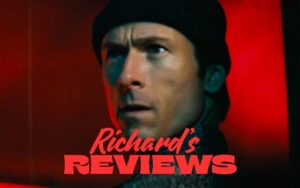
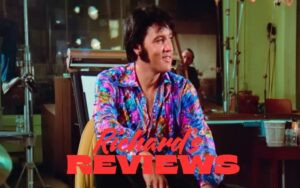
I appear on “CTV News at 11:30” with anchor Andria Case to talk about the weekend’s best shows and movies including the concert film “EPiC: Elvis Presley in Concert” and the thriller “How to Make a Killing.”
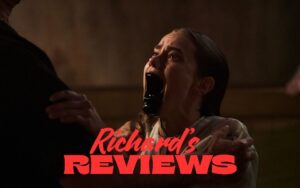
I join “CTV News Toronto at Five” with anchor Zuraidah Alman to talk about new movies in theatres including the return of the king in “EPiC: Elvis Presley in Concert,” the dark comedy “How to Make a Killing” and the horror movie “Diabolic.”
I join CTV Atlantic’s Todd Battis to talk about the return of the king in “EPiC: Elvis Presley in Concert,” the dark comedy “How to Make a Killing” and the horror movie “Diabolic.”
I join the CTV NewsChanel to talk about the return of the king in “EPiC: Elvis Presley in Concert,” the dark comedy “How to Make a Killing,” the heist film “Crime 1201” and the inspirational “I Can Only Imagine 2.”
I sit in on the CFRA Ottawa morning show with guest host Andrew Pinsent to talk about the new movies coming to theatres including the return of the king in “EPiC: Elvis Presley in Concert,” the heist film “Crime 101,” the dark comedy “How to Make a Killing” and the horror movie “Diabolic.”
I join the Bell Media Radio Network national night time show “Shane Hewitt and the Night Shift” to talk about the collaboration between Dreake and McDonald’s Canada, why Ian McKellan doesn’t likie the Oscar nominated movie “Hamnet,” the Super Bowl Bad Bunny boost, the hybrid documentary/concert film “EPiC: Elvis Presley in Concert,” and I’ll suggest some epic Elvis cocktails top enjoy with the movie!
Fast reviews for busy people! Watch as I review three movies in less time than it takes to sing “Hm, ooh, yeah-yeah, yeah” Have a look as I race against the clock to tell you about the return of the king in “EPiC: Elvis Presley in Concert,” the dark comedy “How to Make a Killing” and the horror movie “Diabolic.”
“Elvis,” the new King of Rock ‘n Roll biopic from maximalist director Baz Luhrmann, begins with a sparkling, bedazzled Warner Bros logo and gets flashier and gaudier from there.
The movie is told from the point of view of Elvis’s (Austin Butler) manager Colonel Tom Parker (Tom Hanks under an inch or two of makeup), a huckster with a flair for spotting talent and a gift for manipulation.
Working on the carnival circuit taught Parker that a great act “gave the audience feelings they weren’t sure if they should enjoy,” a standard the early, hip-shaking Elvis met and exceeded.
Their partnership is one of the best known, and well documented success stories of the twentieth century. For twenty years, through the birth of rock ‘n roll of the late 1950s and the cheesy Hollywood years to the legendary 1968 Comeback Special and the Las Vegas rise and fall, Elvis and the Colonel shimmied and shook their way to the top of the charts and into the history books.
“Elvis” covers a lot of ground. From young Elvis (Chaydon Jay) discovering his love of music from the Black rhythm and blues artists and Mississippi church music he absorbed as a kid to his final white jumpsuit days in Vegas, Luhrmann shakes, rattles and rolls throughout in a blur of images and spectacular sound design.
It entertains the eye but feels akin to skipping a stone on a lake. If you hold the stone just right and throw it across the still water at the correct angle, it will skim along for what seems like forever without ever piercing the surface.
“Elvis” is a great looking movie. A pop art explosion that vividly essays the story’s various time frames and styles, it makes an impact visually and sonically. Unfortunately, Luhrmann is content to make your eyeballs dance, your gold TCB chains rattle and simply skim across the surface.
We do learn that Elvis was the sum of his country music and R’n’B experiences and influences, was fueled by the adoration of his audience and aware of the social change of the 1960s, but there is no excavation, no real exploration of what made the singer or his manager actually tick. It may seem fitting that a movie about a man who drove pink Cadillacs and wore phoenix embroidered jumpsuits and capes is over-the-top, but those images are so woven into the fabric of popular culture already that this feels clichéd, more like greatest hits album than a biography.
Butler is a charismatic performer, playing Elvis through several stages of his life, and despite the superficiality of the storytelling hands in a rounded performance that transcends impersonation of a man who spawned a generation (or two) of impersonators.
It’s rare to see Hanks play a character with no redeeming qualities. “I am the man who gave the world Elvis Presley,” he says, “and yet there are some who would make me out to be the villain of this story.” His take on Colonel Parker grates, with the theatrical Dutch accent and imperious, manipulative manner, he is certainly the villain of the piece. He’s a pantomime of the big, bad music manager, one who saw his client as a musical ATM machine and little more.
By the time the end credits roll “Elvis” emerges as an idealized look at the boy from Tupelo who became the King by paying tribute to the power of the music that made a legend.
Jay Gatsby, the doomed millionaire and star of F. Scott Fitzgerald’s novel, is one of the most famous characters of the twentieth century. Representing the ultimate self-made-American man he is, at once, a romantic, fatally idealistic figure and a poseur with grandiose ideas, much like the new Baz Luhrman movie about Gatsby’s short but eventful life.
We first meet narrator Nick Carraway (Tobey Maguire) when he is at a sanatorium being treated for severe alcoholism and bouts of depression. Part of his treatment involves writing a memoir about the events that brought him to his current state. Flashback to the Jazz Age, early 1920s in New York. Nick is working as a stockbroker in the city while living in a wealthy enclave known as West Egg. His neighbor is the enigmatic Jay Gatsby (Leonardo Di Caprio), whose ornate mansion—more of a palace really—plays hosts to wild weekend parties that attract a mix of the era’s well-heeled and round-heeled.
Across the water is the estate of Nick’s cousin, Daisy (Carey Mulligan), and her husband, Tom Buchanan (Joel Edgerton). She’s a debutant; he’s old money, a sports star with a short temper and a roving eye.
Nick soon learns that Gatsby was Daisy’s first love. That’s not the only secret in Gatsby’s life, however. Turns out he isn’t the aristocrat he claims to be, but the son of dirt-poor farmers who reinvented himself as Jay Gatsby, making a fortune bootlegging alcohol and manipulating the stock market.
Gatsby and Daisy pick up where they left off, but Gatsby proves unable to control the future as adeptly as he created his past.
Baz Luhrman may be the perfect person to retell Jay Gatsby’s Roaring Twenties’ story. Equally at home with razzle-dazzle and substance, he captures the tone of the Jazz Age while still allowing the story’s deeper resonance to shine through the gloss.
The movie’s first hour focuses on the superficial. Luhrman’s restless camera sweeps and swoops, never settling in one place for too long. It’s so over the top it makes the effervescent “Moulin Rouge!” look subdued but it also captures the unbridled optimism of the age. Gatsby’s parties are bacchanals complete with giant champagne bottles that shoot glitter over crowds of scantily clad flappers, gallons of bootleg whiskey served by white-gloved waiters and other “riotous amusements on offer.”
It’s eye candy, pure and simple, and yet the sense of doom that hangs over the beautiful and damned characters in the story is palpable. Without it this would be just another story about pretty people doing pretty-people things, but Luhrman broadens the story to inject some real-life feeling into a mannered story about a life that feels unreal.
He stays quite faithful to Fitzgerald’s book—even including the novel’s famous last line, “So we beat on, boats against the current, borne back ceaselessly into the past,” which was noticeably absent from the Robert Redford version—but has structured the story to have a cinematic arc.
As the story changes so does the look and feel of the film—it slows down, luxuriating in the details, not only of the character’s lives, but of their situation as well. It’s an extremely stylish movie, but aside from some curious music choices—like the anachronism of a Jay-Z rap blaring over 1920’s NYC footage—the style doesn’t overwhelm the narrative.
As Gatsby Di Caprio not only makes the best movie star entrance ever—complete with swelling music, fireworks and zooming camera—but also plays a more tortured Gatsby than we’ve seen before. He’s smooth and slick in an “Old sport” kind of way, but bubbling just under the surface is an inner turmoil that trumps the mannered façade.
Maguire and Edgerton hand in effective performances—Maguire is a passive observer for the most part, Edgerton more aggressive—but Carey Mulligan steals the show.
Daisy is one of Fitzgerald’s “bright precious things,” a hothouse flower and Mulligan has a face capable of simultaneously showing great happiness and profound sadness, a duality that serves her character well. She effortlessly tosses off shallow lines like, “Your life is adorable,” while digging deep to convey Daisy’s conflicted nature.
“The Great Gatsby” is a flashy, in-your-face 3D movie but despite the sophisticated use of special effects it still maintains a classic feel, driven by a respect for the story and interesting performances.
 I appear on “CTV News at 11:30” with anchor Andria Case to talk about the weekend’s best shows and movies including the concert film “EPiC: Elvis Presley in Concert” and the thriller “How to Make a Killing.”