In Hollywood careers are built on images. While actors often complain about being pigeon-holed, for many being synonymous with a genre has been the cornerstone of their careers. Think Stallone, think action pictures. Drew Barrymore is joined at the hip to romantic comedies and the very sight of Jim Carrey causes laughter.
Then there’s Joseph Gordon-Levitt.
He’s quickly becoming one of Hollywood’s go-to guys even though he has yet to settle into an easily defined persona.
He’s been acting since age four, but the first time most of us saw him he was playing an ancient alien trapped in an adolescent’s body on the sitcom Third Rock from the Sun. He left the show after six years and for a time made the kind of films you would expect a young sitcom star to make: 10 Things I Hate About You, a teen version of Shakespeare’s The Taming of the Shrew and the animated Treasure Planet.
Then things got interesting.
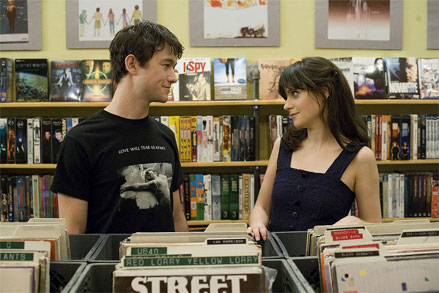
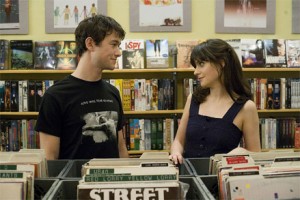
After a short break from the screen to study at Columbia University he vowed to “only make good films.” What followed is an eclectic IMDB listing that includes everything from low-budget movies like Manic, to indie comedy 500 Days of Summer, to his blockbuster work with Christopher Nolan in Inception and The Dark Knight Rises, and this weekend’s thriller Premium Rush.
Here’s a look back at some of the films that made the former sitcom star into one of the most in demand actors working today.
Made for just $500,000, Brick is a high school film noir featuring Gordon-Levitt as a teenager who investigates the disappearance of his girlfriend. The twist is, the dialogue — like “the ape blows or I clam” — sounds ripped from Dashiell Hammett’s playbook. The actor will soon be seen in Brick director Rian Johnson’s next film Looper.
In Mysterious Skin he wore blue contact lenses to play a child-abuse victim turned hustler. Roger Ebert wrote, “This is not an easy movie.” And the Guardian called it a “disorienting hallucination of a film.” But both praised his performance.
The Lookout sees him playing a man with a head injury: “The hardest thing I’ve ever done in my life,” he said. While in Killshot, he’s a wannabe assassin opposite Mickey Rourke.
It’s these off-the-wall choices, mixed with more mainstream fare, that prompted the Philadelphia Inquirer to describe Gordon-Levitt as a “surprisingly formidable, and formidably surprising, leading man.”
Sparkle actress Tika Sumpter says the movie “adds another diamond” to the legend of Whitney Houston. The film, a remake of a 1976 picture of the same name, stars the late singer in her final role.
The movie, in which she plays the single mother of a musical prodigy, was being heralded as her comeback, but instead is her swansong. She passed away in February, the result of an accidental drowning in the bathtub of her Beverly Hilton hotel room.
Houston’s co-star Jordan Sparks said, “She lights up the screen, and you can just tell she’s so full of joy to be doing this.”
Houston is not the first performer to earn posthumous praise for a film role. In 2008 Heath Ledger won an Academy Award for his performance as the Joker in The Dark Knight, released after his January, 2008 death from accidental prescription drug overdose.
River Phoenix, another actor cut down at the height of his popularity, didn’t live to see his final completed film Silent Tongue, a movie described as “a haunting tale of love, death and shame in the Old West.” Dark Blood, the film Phoenix was just 11 days away from finishing when he overdosed in front of the Viper Room in Los Angeles, was thought lost to time, but has recently been resurrected and will debut in September at the Netherlands Film Festival.
Old Hollywood also saw its share of tragic ends and last performances.
The 1930s superstar Jean Harlow died of renal failure while filming Saratoga. Instead of replacing her, MGM used three doubles (one for close-ups, another for long shots and a third for dubbing the actress’s lines) and rejigged the story. The salvaged movie became MGM’s biggest hit of 1937.
Gary Cooper’s last film, The Naked Edge, released a month after his death wasn’t as well received.
Despite Cooper’s best efforts — his cancer required that he take frequent oxygen breaks — the thriller was a flop.
The Misfits was also a bomb, but is best remembered as the final completed film for two superstars.
Clark Gable didn’t live to see it; he suffered a heart attack two days after wrapping and died soon afterwards. Marilyn Monroe saw it but reportedly hated the movie and her performance.
Chris Farley, John Candy and Phil Hartman passed before their final films, Dirty Work, Wagon’s East and Small Soldiers, hit theatres, but left behind a legacy of laughter.
This weekend a movie called The Watch is opening in theatres. The Ben Stiller comedy was originally called Neighborhood Watch but the February, 2012 shooting of Trayvon Martin by a neighborhood watch coordinator in Florida led to the change.
In a statement, 20th Century Fox said, “As the subject matter of this alien invasion comedy bears no relation whatsoever to the recent tragic events in Florida, the studio altered the title to avoid any accidental or unintended misimpression that it might.”
The sad incident that prompted the name change was unusual, but title tweaking is commonplace in Hollywood.
Sometimes moniker modification happens for practical reasons.
In the early stages of development, American Pie was known as Teenage Sex Comedy That Can Be Made For Under $10 Million That Your Reader Will Love But The Executive Will Hate. That unwieldy name got the attention of Universal Studios who changed it to East Great Falls High and then Comfort Food before settling on American Pie.
The Tribal Rites of the New Saturday Night was also considered too long a name and changed to Saturday Night Fever, lifted from the Bee Gees song Night Fever.
A Roy Orbison song triggered the title of one of Julia Roberts’s most famous movies.
Pretty Women went into production under the name 3,000, the amount Julia’s working girl was paid for the night, but research showed audiences thought it sounded like the title of a sci-fi flick. Director Garry Marshal settled on the Oribson classic after listening to dozens of hit songs for inspiration.
Occasionally titles are changed to avoid confusion with other projects. Goodfellas was called Wiseguy but changed so as not be mistaken for the Ken Wahl television series. The Real World was the working title for Reality Bites, but was altered when MTV began airing a reality show of the same name.
One of the most famous James Bond titles was improved by a typo.
The story of a villain who creates the next day’s headlines and then causes them to come true was called Tomorrow Never Lies, but when a marketing executive mistakenly typed Tomorrow Never Dies in a memo the mistake was deemed more catchy and commercial.
Finally, would you see a movie called Do Androids Dream of Electric Sheep? Marketers didn’t think so and called it Blade Runner instead.
How about The Last First Kiss? That one became the Will Smith movie Hitch.
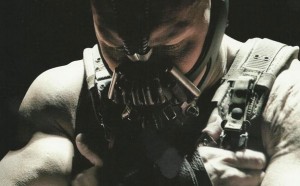
Sometimes even villains get a second chance. The Dark Knight Rises, the last entry in Christopher Nolan’s epic Batman trilogy, digs deep into Caped Crusader lore to reintroduce brawny bad guy Bane.
The abnormally strong antihero first appeared in the comics in 1993 but after a ridiculous appearance in Batman & Robin earned the title as the worst on-screen Batman baddie. As a scrawny convict pumped up by a drug known as Venom he did little except growl and act as the punch line for a bad joke by his creator Dr. Jason Woodrue. “I call this little number Bane,” he says. “Bane of humanity!”
The movie killed the Batman franchise for seven years, and it looked like Bane, played by wrestler Jeep Swenson—Holy haberdashery, Batman who chose his bad lucha libre mask?—would also be relegated to the big Scoundrel Cemetery in the Sky.
Then Nolan cast Tom Hardy, got rid of the ridiculous mask and gave the brute a second chance. So Bane is back and super-evil, but how do other Batman big-screen baddies stack up on the Bat-scale of finest to vilest?
The Bat’s Best:
Cesar Romero and Jack Nicholson both played The Joker, Batman’s arch nemesis, but Heath Ledger’s Oscar-winning take on the psychotic clown in The Dark Knight is the most menacingly memorable.
Burgess Meredith made The Penguin’s trademark squawking voice popular, but it was Danny DeVito in Batman Returns who really showed what a megalomaniacal monster he really was. “You’re just jealous because I’m a genuine freak and you have to wear a mask.”
Batman has battled plenty of female foes but feline fiend Catwoman is the pick of the litter. Whether it’s Lee Meriwether meowing, “You’re going to see the purr-fect crime, when I get Batman in my claws,” or Michelle Pfeiffer wielding a twelve-foot bullwhip, the creepy kitty is fun enough for nine lifetimes.
The Winged-One’s Worst:
Too many one-liners from Two-Face in Batman Forever left critics unable to turn the other cheek after Tommy Lee Jones’s over-the-top performance.
As played by Uma Thurman in Batman & Robin botanist-turned-eco-terrorist Poison Ivy proved that not even Mother Nature gets it right every time.
If for no other reason than the joke “Ice to see you!” Batman & Robin’s cold-blooded killer Mr. Freeze (Arnold Schwarzenegger) makes the worst-of list. The Governator should’ve been sent to the cooler for his line-readings in this one.
“We fought dinosaurs in the ice age,” Sid the Sloth says in this weekend’s Ice Age: Continental Drift. “It didn’t make sense, but it was fun.”
It doesn’t make sense because dinosaurs were already extinct by the time Manny, Sid and Diego entered the ice age, but the popular kids’ movies aren’t trying to teach, they’re simply continuing a long-held Hollywood tradition of bending history to suit their stories.
Here are 10 other bits of Hollywood history that earn a failing grade.
1 When Dinosaurs Ruled the Earth drew on Phoenician, Latin and Sanskrit to create a fake caveman language. Here’s a quick Berlitz primer in cavespeak: For “come back” say “neecha,” “akita” is “look” and “neecro” is “bad.”
2 The man-eating Rhedosaurusis in The Beast from 20,000 Fathoms is a dinosaur, but one that no paleontologist would recognize. It’s rumoured the mythical beast’s name was inspired by the initials of the man who created it, special effects wiz Ray Harryhausen.
3 Mel Gibson wore clothes from the future in Braveheart. The movie is set in the late 13th century, but the kilts he wears didn’t come into existence until 300 years later.
4 Instead of dying in the gladiatorial arena, as Gladiator would have you believe, Emperor Commodus was strangled in a bathtub a decade after his would-be movie assassin (played by Russell Crowe) died.
5 The Spartans in 300 run into battle against the Persian army protected only by leather thongs and rock-hard abs, when in fact they wore bronze armour.
6 As a knight returning from the Crusades in 1272, Nic Cage discovers a plague outbreak in Season of the Witch. Trouble is, the Black Death didn’t strike until 76 years later.
7 In 10,000 BC woolly mammoths are used as labour to build the pyramids in Egypt. Wrong! Woolly mammoths weren’t desert creatures and the pyramids weren’t built until 2500 BC.
8 In Elizabeth: The Golden Age, the Queen is courted by Ivan the Terrible in 1585, who, in reality, was dead by then, felled by a stroke while playing chess.
9 California joins the Union at the end of Legend of Zorro in a ceremony that includes President Lincoln. Whoops! California became a state in 1850 and Lincoln wasn’t president until 1861.
10 The title of the historical disaster film Krakatoa: East of Java is a geographical head-scratcher. Krakatoa was actually west of Java.
Play it again, Sam. Hollywood has long been a fan of movie reboots. Spider-Man is the latest flick to get a an actor makeover.
The adage, “The only constant is change,” is only partially true in Hollywood. The list of recent movie reboots is as long as Lindsay Lohan’s arrest record, and there’s more on the way — we’ll soon see new versions of Death Wish, Fletch and Highlander — but while the titles stay the same, the faces change.
This weekend, Peter Parker swings back into theatres, but instead of Tobey Maguire behind the familiar red-and-black-webbed mask it’s Social Network star Andrew Garfield.
Not everyone is happy about the change. 1234zoomer commented on the new movie: “IS NOT GOING TO BE THE SAME WITHOUT TOBBY!!!,” (her uppercase and spelling, not mine), but Maguire has been gracious, saying, “I am excited to see the next chapter unfold in this incredible story.”
Whether the new Spidey acknowledges Maguire is yet to be seen, but at least one replacement had the manners to recognize their precursor on screen.
George Lazenby paid a tongue-in-cheek tribute to Sean Connery in On Her Majesty’s Secret Service. After a wild battle to rescue Contessa Teresa (played by Diana Rigg) the new James Bond didn’t get the girl. “This never happened to the other fellow,” he says, looking dejectedly into the camera.
Former Bond Connery went on to co-star in The Hunt for Red October with Alec Baldwin playing Jack Ryan, a character later played by Harrison Ford and Ben Affleck.
It’s rumoured that Chris Pine (who took over the part of Captain Kirk in Star Trek from William Shatner) will soon reprise the role.
The Batman franchise has also had a revolving cast. Since 1943 seven actors have played the Caped Crusader, including Lewis G. Wilson, who at 23 remains the youngest actor to play the character, and George Clooney who admits he was “really bad” in Batman & Robin.
It’s not only the Caped Crusader who changes from time to time. Harvey Dent, the handsome district attorney who turns into villain Two Face has been played by Billy Dee Williams, Tommy Lee Jones and Aaron Eckhart and The Dark Knight’s Maggie Gyllenhaal took over the role of Rachel Dawes from Batman Begins star Katie Holmes.
Finally, Jodie Foster’s take on FBI agent Clarice Starling in Silence of the Lambs was ranked the sixth greatest protagonist in film history on AFI’s 100 Years… 100 Heroes and Villains list, but when she declined to reprise the role in Hannibal, Julianne Moore stepped in.
“When I’m lyin’ in bed at night,” Tom Waits sang, “I don’t wanna grow up.”
He’s not the only one. In recent years Cineplexes have been overrun by boy-men: adult males who still act as though they’re 16 years old.
This weekend in the Seth MacFarlane comedy Ted, Mark Wahlberg is John, a man-child who had trouble letting go of his childhood teddy bear who came to life as the result of a childhood wish.
He does everything with Ted — including cower when a storm hits. “Thunder buddies for life, right, Johnny?” says Ted. John replies with an answer we can’t print here.
That’s one of the hallmarks of the man-child movie, they’re raunchy.
Step Brothers is a rude and crude arrested development comedy with enough swearing to make Lenny Bruce blush. Will Ferrell and John C. Reilly play spoiled, unemployed men thrown together Brady-Bunch style when their patents wed.
They don’t get along at first — they even try to bury one another alive — but soon their shared passion for karaoke brings them together, like two overgrown kids in a playground.
Adam Sandler has made a career playing testosterone-fuelled men who never grew up. In Mr. Deeds, Just Go with It, The Waterboy and Happy Gilmore he plays characters with the emotional age of a Baby Gap customer, but the classic is Billy Madison, where he plays a hotel heir forced to go back to grade school.
As Sandler was throwing temper tantrums on screen Jason Segel was slowly defining his child-man act. I Love You Man, with its Man Cave and Rush soundtrack, was a warm up to his most grown-up portrayal of an adolescent man. In Jeff, Who Lives at Home he plays a 30-something who lives at home and is obsessed with the M. Night Shyamalan film Signs. Overgrown and underdeveloped he turns an outing to the hardware store into a wild day.
Peter Pan with a plan
The common link to many of these man-child movies is one man — producer Judd Apatow.
• If it ain’t broke… Not since Jerry Lewis has one man made so much money presenting the age-old gag of self-infantilizing on screen.
• Big names. He’s worked with Ferrell, Sandler and Segel, and it was his R-rated The 40-Year-Old Virgin and Knocked Up that gave us Seth Rogen’s brand of prolonged childhood.
• Plans to recruit Paul Reubens? Apatow even recently announced he’s thinking about making a movie with pop culture’s ultimate man-child, Pee Wee Herman.
When one thinks about movie princesses a few names come top of mind: Snow White, Cinderella, Aurora and Belle. This fab four have come to define what being a movie princess is all about. Or at least they used to.
Once upon a time a movie princess was a damsel in distress, swathed in pink and jewels, waiting for Prince Charming to come to the rescue.
Lately, however, the movies have given us a different kind of princess, one who is more into grrrl-power than girly-girl.
Related:
Scotland — home of the Brave, land of the castles
Mark Andrews, the co-director of this weekend’s cinema release Brave, the story of a Celtic princess who rebels against her mother, calls the movie’s lead character “an anti-princess.”
“She’s an active and action-oriented person,” he says. “She wants to get out in the outdoors of the Highlands, escaping from castle life and exploring the woods.”
Brave isn’t the first movie to shatter the stereotype of the pretty pink princess.
According to Roger Ebert, Ariel, the teenage mermaid princess of The Little Mermaid, “is a fully realized female character who thinks and acts independently, even rebelliously, instead of hanging around passively while the fates decide her destiny.”
In other words, she still marries her prince charming, but for the first time a Disney princess gave a lesson in independence and had a hand (or fin) in deciding her fate.
The success of that movie led to a new batch of princesses who were empowered and could look after themselves and others.
Pocahontas was an adventurous princess who put her own life at risk to stop a war between her people, the Powhatans, and the British settlers, and the fiery Mulan broke gender boundaries by enlisting in the army and saving China from total devastation at the hands of the Huns.
Jasmine, the daughter of the wealthy Sultan of Agrabah and the princess at the heart of Aladdin, didn’t fight off invaders but she did do something that made her unique in the Disney princess world.
Tired of life in the royal palace, instead of waiting for rescue, the independently minded noblewoman made her own way, even deciding to marry a commoner rather than a prince.
But not all anti-princesses are animated.
The recent mega-flop John Carter featured Martian
Princess Dejah Thoris (Lynn Collins) who, despite falling for the prince charming title character, was also a warrior and a scientist who wasn’t afraid to stand up for things she believed in.
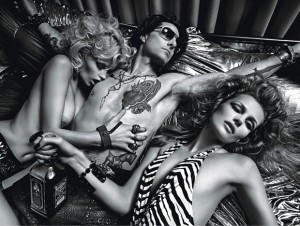
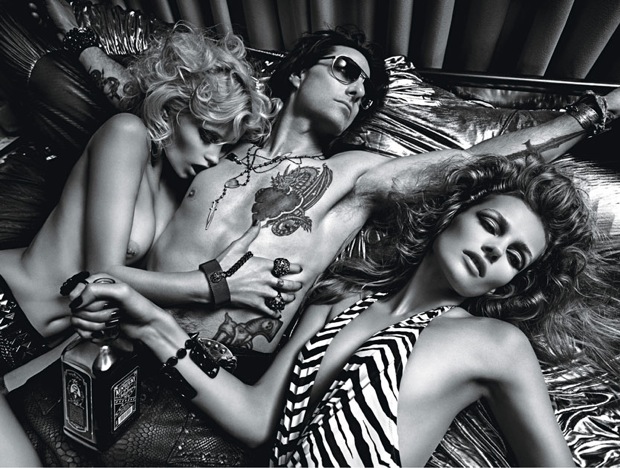
In Rock of Ages Tom Cruise plays superstar Stacee Jaxx. He’s Ozzy Osbourne with Axl Rose’s attitude and Prince’s trademarked revealing chaps, a spicy stew of rebellion, decadence and Jack Daniels.
The first time we see Jaxx in the film he’s on a round bed, buried under several scantily clad women. It’s a memorable first look at the character, but it’s not exactly an original one.
Director Adam Shankman admits that the idea came from a similar scene — featuring KISS singer Paul Stanley — in the heavy metal documentary The Decline of Western Civilization Part II: The Metal Years.
It’s not the first time a music movie has taken its cue from real rock life.
For a year before shooting playing Jim Morrison in The Doors Val Kilmer immersed himself in the singer’s life, wearing his clothes and spending time at the Lizard King’s favorite Sunset Strip bars.
Despite the film’s many factual errors — drummer John Densmore claims “A third of it is fiction” — the recording studio scene where Jim smashes a TV is true, and even Jim’s disgruntled ex-band mates said they couldn’t distinguish Kilmer’s voice from the real Morrison’s.
The Doors weren’t the only musicians fooled by an actor.
Joan Jett was annoyed that Kristen Stewart wore leather pants when playing her in The Runaways — it would have been more authentic if she had worn jeans she said — but she was impressed with Stewart’s voice. When she first heard a recording of the actress belting out one of her songs she thought it was actually a tape of her old band.
Sex Pistols’ singer Johnny Rotten dismissed Sid and Nancy — the story of Sid Vicious’s life and death — as “mere fantasy” but Gary Oldham bought at least one authentic bit of Sid to the film by wearing the bass player’s real chain necklace in several scenes. Sid’s mom gave the actor the necklace to wear during filming.
Just as Shankman and Cruise borrowed from The Decline of Western Civilization, the Bob Dylan doc Don’t Look Back has inspired scenes in movies such as Bob Roberts and I’m Not There.
The mockumentary Walk Hard: The Dewey Cox Story parodies the movie in a press conference scene when a reporter compares Dewey to Dylan. “Why doesn’t anyone ask Bob Dylan why he sounds so much like Dewey Cox?” Dewey replies, echoing Dylan’s response to a reporter who likened Dylan to singer-songwriter Donovan.
 In Hollywood careers are built on images. While actors often complain about being pigeon-holed, for many being synonymous with a genre has been the cornerstone of their careers. Think Stallone, think action pictures. Drew Barrymore is joined at the hip to romantic comedies and the very sight of Jim Carrey causes laughter.