Mark S. Reinhart, author of Abraham Lincoln on Screen claims the 16th President of the United States, “is the most frequently portrayed American historical figure in the history of the film and television arts.”
Portrayed over 300 times on film and TV, Honest Abe has done everything from pardon a sentry who fell asleep on duty in the 1908 short film The Reprieve: An Episode in the Life of Abraham Lincoln, to getting revenge on his assassin in Police Squad to teaming up with Star Trek’s Captain Kirk to explain the concepts of good and evil to the aliens of Excalbia.
In this weekend’s Abraham Lincoln, starring Daniel Day Lewis, the prez oversees the passing of the 13th Amendment, guaranteeing freedom for the country’s slaves and ending the Civil War.
Day-Lewis is a lock for an Oscar nomination, and a favorite to win, but his portrayal stands in the shadow of two movie legends.
Henry Fonda played the title character in Young Mr. Lincoln, a melodramatic and inaccurate chronicle of Abe’s formative years. Wearing specially made boots that made him appear taller, Fonda was honored to play the pres. “I felt as if I were portraying Christ himself on film,” he said.
Canadian-born Raymond Massey, played Lincoln multiple times on stage and film. He was so attached to the character a colleague joked that Massey wouldn’t be satisfied with his Lincoln impression until someone assassinated him.
For a certain generation, however, Lincoln might be best remembered for a speech that began with, “Fourscore and seven minutes ago…” and ended with, “PARTY ON, DUDES!” But Bill & Ted’s Excellent Adventure isn’t the only movie to take a light-hearted look at the Great Emancipator.
In Coneheads Dan Aykroyd’s character uses Abe’s famous stovepipe top hat to cover his oblong head. One of Brendan Fraser’s seven wishes in Bedazzled is to be president but he soon learns to be careful what he wishes for when he is zapped back into history as Lincoln watching a play at Ford’s Theatre. Abe also gets a laugh in Night at the Museum: Battle of the Smithsonian when the Lincoln Memorial comes to life.
Perhaps the strangest portrayal came earlier this year. Abraham Lincoln: Vampire Hunter is exactly as advertised, leading one critic to call it, “a funny, scary, and cheer-worthy adventure that somehow manages to make the 16th President of the United States a bad-ass action hero.”
In the song Bohemian Rhapsody, Freddy Mercury poses questions that must have passed through the minds of many movie characters. “Is this the real life? Is this just fantasy?”
Over the years in movies, like Bohemian Rhapsody, Freddy Mercury, filmmakers have used the idea of an alternate reality, a variation of a real place, but turned by 180 degrees, to tell their stories.
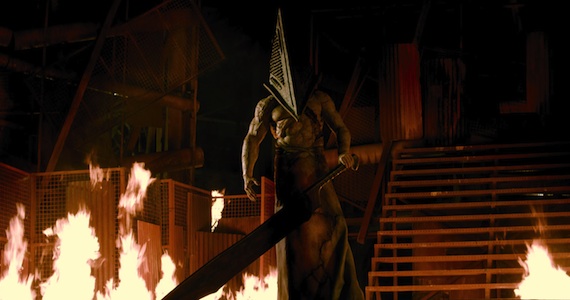
For example, in this weekend’s Silent Hill: Revelation 3D a teenager, (Adelaide Clemens), stumbles into her town’s dark side when she crosses over into an alternate reality — the ultimate bad side of the tracks. It’s a hellish, but vaguely familiar place where she finally comes to understand the nightmares that have tormented her since childhood.
One of the most famous filmic alternate realities appears in It’s a Wonderful Life, starring Jimmy Stewart as George Bailey, a man who is shown what would have happened to the town of Bedford Falls had he never been born. In that world, the idyllic small town turned into a tough, unfriendly place called Pottersville, where George’s friend Violet is a stripper, his uncle is in an insane asylum and his wife is a spinster. “Strange, isn’t it?,” says his
Guardian angel Clarence. “Each man’s life touches so many other lives. When he isn’t around, he leaves an awful hole, doesn’t he?”
Bill Murray learns about self-redemption via alternate realities in two films. In Scrooged, he’s a cutthroat television executive taken to the past, future and alternate present by three spirits who teach him about the spirit of Christmas. After his strange journey, he says, “I was a schmuck, and now I’m not a schmuck!” Redemption.
Groundhog Day has Murray as a grumpy weatherman sent to the small town of Punxsutawney, Pennsylvania to report on whether or not the weather predicting groundhog Punxsutawney Phil sees his shadow. He hates the gig until the day he wakes up and realizes he is doomed to live the same day over and over again. His trip to the alternate reality teaches him to make the most of everyday.
Finally, the alternate reality in Being John Malkovich was a more confined place. Craig, played by John Cusack, finds a portal that leads into John Malkovich’s brain, where, he says, “You see the world through John Malkovich’s eyes. Then, after about 15 minutes, you’re spit out into a ditch on the side of the New Jersey Turnpike!”
If the name Alex Cross sounds familiar you’re either an avid reader of crime novels or a Morgan Freeman fan.
The character is the star of 20 books by author James Patterson, two films starring Freeman and now a third, the simply titled Alex Cross, with Tyler Perry in the lead role.
In the books and films Cross is a Washington D.C. cop with a Ph.D. in psychology. In other words, as he says in Kiss the Girls, “I’m a forensic psychologist. It’s a fancy way of saying I’m a guy who walks into a room like that and determines the hows and whys.”
Related:
Denise Richards channels her inner Tyler Perry
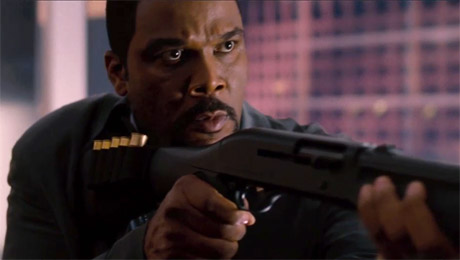
In the new film, Perry, best known as the director and star of the Madea comedies, squares off against a serial killer (Matthew Fox) who claims to have murdered one of the detective’s relatives.
The first Cross novel to make the leap to the big screen was Kiss the Girls, the second book in the series. Denzel Washington was originally set to star, but dropped out due to scheduling conflicts. Morgan Freeman stepped in, starring opposite Ashley Judd.
In the film Cross’s niece disappears, the likely victim of Casanova, a kidnapper and killer of young women. Aiding Cross is Dr. Kate McTiernan (Judd), a surgeon, who narrowly escaped the sadomasochist killer’s grasp.
The movie was a hit with audiences, but not the critics, although Roger Ebert wrote that Freeman and Judd, “are so good, you almost wish they’d decided not to make a thriller at all… and had simply found a way to construct a drama exploring their personalities.”
The movie was withheld from release in central Virginia out of respect for the families of three girls who had been murdered in the area.
Four years later, despite some reservations, Freeman reprised the role. “I didn’t want to do the same thing twice,” he said, adding that he changed his mind because he realized he “liked Alex Cross. And the fact that he’s black is totally incidental. That’s a rare thing for a black actor to find.”
Along Came a Spider sees Cross solve the case of a kidnapped congressman’s daughter. Once again critics hated the film — which currently sits at 32 per cent on Rotten Tomatoes — but praised Freeman’s performance. New York Times scribe Elvis Mitchell called it “a classless, underdeveloped thriller,” but wrote that it “couldn’t be better served than it is by Mr. Freeman.”
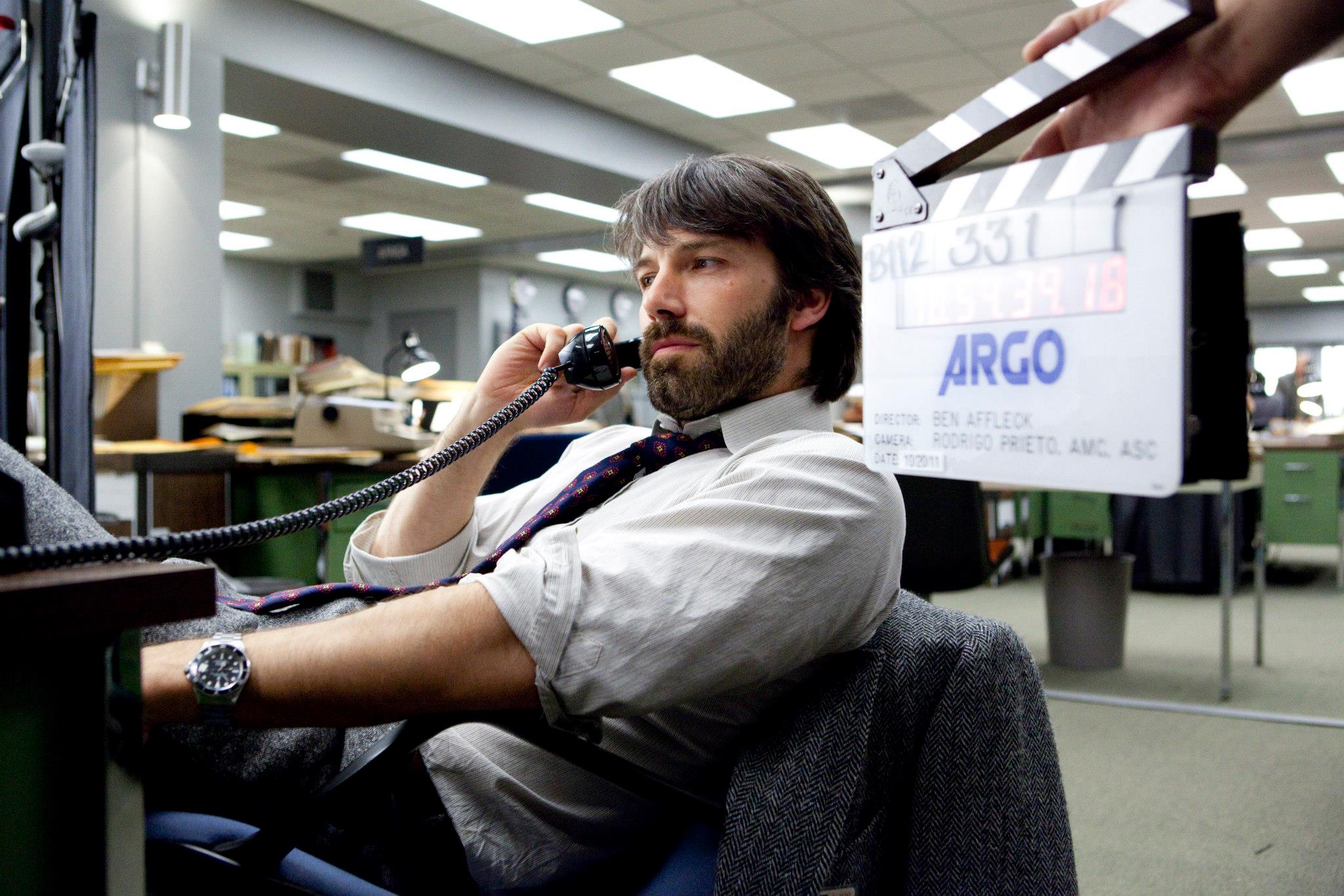
It’s no spoiler to tell you the action in Argo, the new thriller starring and directed by Ben Affleck, centres around a daring escape. Based on the real life covert operation to free six American diplomats after the seizure of their embassy in Tehran, the movie showcases the cooperation between Canadian diplomat Ken Taylor and the CIA that led to the film’s exciting climax.
Even if you already know how the movie ends — and in this case it’s a matter of public record — nothing will keep you on the edge of your seat quite like a daring escape.
The big screen version of The Fugitive, starring Harrison Ford as Richard Kimble, a wrongly accused man on the lam from the law, is essentially one big escape sequence. The most famous is the crash between Kimble’s prison transport van and a freight train. To film the scene where the wanted man makes his way out of the twisted wreck they actually crashed a van into a train, although the image of Ford jumping from the ruin was added later.
Not surprisingly, some of the best escape movies tip their hand by including the word escape in the title.
The Great Escape sees Steve McQueen lead a cast of Second World War allied POWs who arrange a mass escape from a German camp. Motorcycle enthusiast McQueen refused to sign on to do the movie until a cycle chase was included in the script. The director agreed, and when the scene was shot even allowed McQueen to ride along as a German soldier. In the final, edited sequence McQueen, in disguise, is seen chasing after himself.
Based on a true story, Escape from Alcatraz starred Clint Eastwood as one-third of a team who staged the only successful escape from the island prison. Many of the dangerous looking stunts in the film were as risky as they looked. Director Don Siegel insisted the actors do their own stunts, but twice feared his stars had been lost to the strong currents of San Francisco Bay.
Finally, in Escape from New York, the city is transformed into a giant maximum-security prison. The twist is one of the prisoners is hired, after the President’s plane crashes, to get the Commander-In-Chief out safely. In this one The Great Escape alum Donald Pleasence plays the president, although it’s never explained why the U.S. leader has an English accent.
If extraterrestrials (ET) were to study earth by watching movies and television they might end up with a skewed idea about what life is like on the third rock from the sun.
Alien anthropologists could be forgiven for thinking that Chuck Norris is an indestructible force for good, that all waitresses in New York live in spacious apartments and that all telephone numbers begin with the digits 555.
ET’s might also deduce that bursting into song is as important to school life as readin’, writin’ and zit cream. The peppy casts of High School Musical (described in the Urban Dictionary as “obviously written by old people who have no recollection of what high school was about”) and Glee have made singing in the halls acceptable.
And they’re not alone. Movies are full of teen opera singers, rock stars and rappers who belt out tunes between (and sometimes during) classes.
This weekend, Anna Kendrick stars in Pitch Perfect, a school comedy about a girl who reluctantly joins The Bellas, a straight-laced campus all-girl singing group, only to end up performing a “songs about sex” medley highlighting Blackstreet’s No Diggity. The Bellas (and their male counterparts The Treblemakers) join a long list of students who express themselves in song.
The most famous school on the planet has to be Hogwarts, the fictional British boarding school for witches and wizards featured in Harry Potter. Less known is their singing group, the Frog Choir. They don’t appear in any of the books but made their debut in the Prisoner of Azkaban, the third Potter film. Director Alfonso Cuarón came up with the idea for the chorus, who perform while carrying toads, and got the approval of the grand wizard herself, J.K. Rowling, to include them.
Singing is used to reach difficult, rowdy students in The Chorus. The Oscar nominated French film was France’s number one movie of 2004, and made star and producer Gérard Jugnot, who mortgaged his Paris apartment to help finance the film, the highest paid actor of that year.
Finally, music transforms the lives of two former Disney stars — Vanessa Hudgens and Aly Michalka — in Bandslam, a rock ’n’ roll high school fable.
Part Disney show, part Monkees, part music video and part Mickey and Judy, it’s a surprisingly fun little music movie that is just a couple of notes away from being completely in tune.
Over the course of dozens of movies, Clint Eastwood has played everything from cops and criminals to journalists and radio announcers to cowboys and even an astronaut.
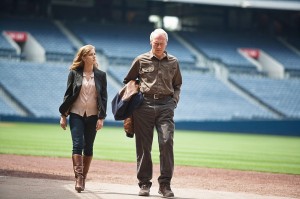
This weekend in Trouble with the Curve he’s playing a character he’s never tried before — sort of.
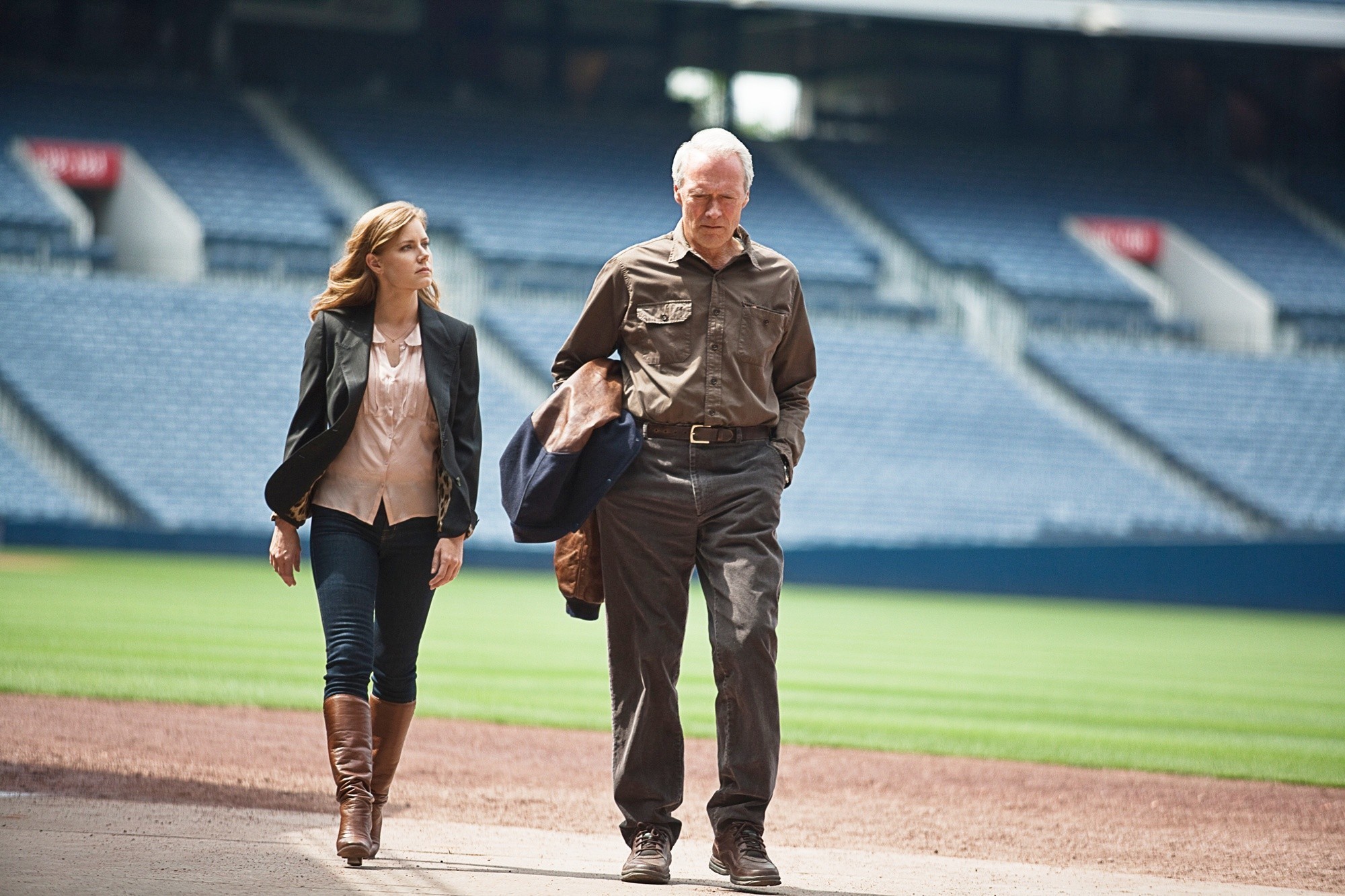
He’s a baseball scout who brings his daughter (Amy Adams) along as he recruits new players. It’s his first baseball movie, but it isn’t the first time he’s played this kind of role — a man on the proverbial one last job.
The person who comes out of retirement, or takes on one last gig before hanging up his or her spurs, is a common movie character.
Blade Runner, Gone in Sixty Seconds, The Usual Suspects and The Wild Bunch all feature people going in for one last kick at the can.
In Eastwood’s case it’s a case of real life paralleling art to an extent. After Gran Torino, Eastwood announced his retirement from acting, but was coaxed back for one last acting job by his long time collaborator Robert Lorenz, who makes his directing debut with this movie.
Eastwood’s most famous “one last job” film is Unforgiven. He plays William Munny, an aging gunman who tried unsuccessfully to go straight and lead a normal life. “I’m just a fella now,” he says. “I ain’t no different than anyone else no more.”
But when he finds himself broke he saddles up one more time, reluctantly bringing along his old partner Ned (Morgan Freeman) to gun down some bad guys for money. “Just ‘cause we’re goin’ on this killing, that don’t mean I’m gonna go back to bein’ the way I was. I just need the money, to get a new start for them youngsters.”
At the time Eastwood said this would be the last movie that he would both perform in and direct, but has gone on to act in and direct many more, including the “one last time” movie Space Cowboys.
In front of the camera Clint is Frank Corvin, a retired rocket pilot called back into service when NASA finds they have a problem that only he can solve.
He recruits his old compatriots — Tommy Lee Jones, Donald Sutherland and James Garner — for one last journey into space.
NASA offered use of their “vomit comet” plane for the weightless scenes, but Eastwood said no, thinking the older actors couldn’t handle the physical stress of zero gravity.
The Umbrella Corporation is the largest and most powerful corporate entity in the world. At least, in the world of the Resident Evil movies it is.
Since R.E. first appeared on the big screen in 2002, the Umbrella Corp has been responsible for weapons research, the release of the mutating T-virus, experiments on humans, and the creation of biologically engineered supersoldiers.
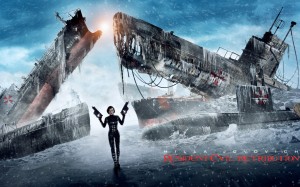
In this weekend’s Resident Evil: Retribution Umbrella’s genetic experiments turn the global population into “legions of the flesh eating undead.”
Turning the world’s people into zombies is pretty dastardly stuff, but Umbrella isn’t the only cinematic corporation bending the rules and causing harm.
How about Blade Runner’s morally despicable Tyrell Corporation?
Led by a CEO with a God complex, the company genetically engineered organic robots called replicants for use as slaves on space colonies.
Visually indistinguishable from humans, they are banned from earth, and if found on the planet are killed immediately.
That plot inspired another popular sci-fi flick.
When writer Edward Neumeier was asked about the plot of Blade Runner he replied, “It’s about cop-hunting robots.”
Inspired, he created RoboCop’s story about megacorporation Omni Consumer Products who builds the title character, a superhuman cyborg law enforcer.
It’s likely that defense firm Cyberdyne Systems had nothing but good intentions when it developed Skynet, the Global Digital Defense Network that features at the center of all the Terminator movies.
The idea was to remove the possibility of human error when responding to military threats. Who knew the technology would one day eliminate the human race?
Elimination of humankind was not on the minds of Soylent Corporation, the entity running things in the sci-fi flick Soylent Green. Set in an overpopulated, polluted world they came up with an alternative food source, Soylent Red and Yellow made of “high-energy plankton.”
A third product, Soylent Green, becomes NYC’s most popular snack until a cop (Charlton Heston) discovers the green wafer’s main ingredient. “Soylent Green is people!”
I doubt even Mitt “Corporations are people!” Romney would approve of District 9’s Multi-National United. Despite their slogan, “Paving the way to unity,” they create alien apartheid in South Africa for the purpose of performing experiments on the hapless ET’s who landed in South Africa. Most of these cinematic corporations sound innocuous.
At least the name of the corporation in Mel Brooks’s Silent Movie was truthful about what they do — Engulf & Devour.
It should come as no surprise that there are dozens, if not hundreds of movies about writers. After all, who is coming up with the ideas for these movies? Writers! The very people who put pen to paper, or fingers to keyboards, and come up with the ideas that are the building blocks of film.
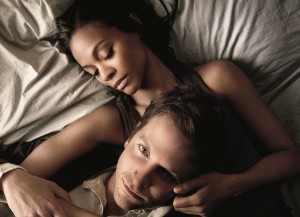
This weekend The Words, starring Bradley Cooper, Denis Quaid and Zoe Saldana, is the latest movie to explore the process of putting words in the right order.
Woody Allen has featured writers in many of his movies—Meryl Streep plays a writer in Manhattan, in Midnight in Paris Owen Wilson portrays a screenwriter visiting Paris–but Deconstructing Harry features his most vivid portrayal of a tormented author. Woody plays a novelist with writer’s block whose characters come back to haunt him. “I’m a guy who can’t function well in life but can in art,” he says.
Allen also played a writer in The Front, a movie about a talentless hack who “fronted” for blacklisted writers. Allen’s performance, however, is overshadowed by Zero Mostel as an out-of-work comic in this savage indictment of the McCarthy witch-hunt.
David Cronenberg’s Naked Lunch is probably the most hallucinatory look at the writing process ever put on film. How strange is it? Typewriters turn into bugs, that’s how weird it is.
To get into the character of Hunter S. Thompson for Where the Buffalo Roam, Bill Murray hung out with the Gonzo journalist. In preparation for Fear and Loathing in Las Vegas Johnny Depp did the same thing, which led to a friendship that lasted until the writer’s death. “He knew I worshiped him,” said Depp, “and I know that he loved me, so he may have been part father figure, part mentor, but I’d say the closest thing is brothers. We were like brothers.”
Mrs. Parker and the Vicious Circle showcased the alcohol-fuelled work of satirist, poet and all round bon vivant Dorothy Parker. Jennifer Jason Leigh, plays the writer from her heyday at the legendary Algonquin Round Table to her time as a Hollywood screenwriter. Of her Tinsel Town work she said, “I write doodads because it’s a doodad kind of town.”
Finally, 2002 was a particularly good year for writers on film. Nicole Kidman won and Oscar playing author Virginia Wolfe in The Hours and Adaptation featured Nicolas Cage, the star of the film, also playing the film’s writer!
We can all imagine the fear that comes along with being chased by a werewolf. Or waking up to find Dracula staring down at you. They are living, breathing (or in Drac’s case, dead and not so breathing, but you get the idea) embodiments of evil. But how about inanimate objects? Have you ever been terrified of a lamp? Or creeped out by a tire?
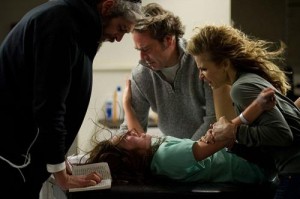
In this weekend’s The Possession, a Dybbuk Box purchased at a yard sale brings misfortune to everyone who comes in contact with it.
It’s not the first time that the movies have imbued an inert object with evil powers.
There have been loads of haunted houses in the movies. In most of them, however, the house is merely a vessel for a spirit or some unseen entity that makes its presence know by making the walls bleed or randomly slamming doors. Rarer is the house that is actually evil.
Stephen King wrote about a house that eats people in the third installment of his Dark Tower series. On screen Robert Zemeckis and Steven Spielberg visualized the idea in the appropriately titled Monster House.
In this animated movie three teens figure out the house across the street is a man-eating monster.
By the time they got around to the fourth installment of the most famous haunted house series, the Amityville Horror, filmmakers had to figure out a new plotline apart from the tired “new owners move in to the house, get freaked out leave,” storyline. In The Amityville Horror: The Evil Escapes, a cursed lamp causes all sorts of trouble when it is shipped from the evil Long Island house to a Californian mansion.
Much weirder is Rubber, the story of a killer tire — yes, you read that right — with psychokinetic powers — think Carrie with treads — who terrorizes the American southwest. It’s an absurdist tract on how and why we watch movies, what entertainment is and the movie business, among other things. But frankly, mostly it’s about a tire rolling around the desert and while there is something kind of hypnotic about watching the tire on its murderous journey — think Natural Born Killers but round and rubbery — that doesn’t mean Rubber is a good movie.
Finally, think bed bugs are bad? How about a hungry bed? The title of this one sums it up: Death Bed: The Bed that Eats.
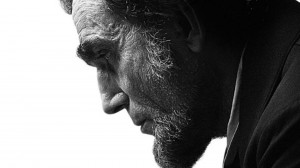 Mark S. Reinhart, author of Abraham Lincoln on Screen claims the 16th President of the United States, “is the most frequently portrayed American historical figure in the history of the film and television arts.”