“If this movie doesn’t make your skin crawl . . . it’s on too tight!” — advertising tagline for Black Christmas
Canada is a nation of firsts. Torontonian Don Munroe built the first table hockey game here in the early 1930s. Other parts of the country can lay claim to the Jolly Jumper, the celebration of Labour Day, artificial hearts, the Robertson square-head screwdriver, and it was a Canadian who mixed the world’s first Bloody Caesar. The country has broken ground in many fields, including film. Florence Lawrence, the first performer to be identified by name on screen, was born in Hamilton, Ontario, while the first aboriginal actor to portray a Native American on television, Jay Silverheels, hailed from the Six Nations Indian Reserve in Brantford, Ontario.
In a more macabre vein, without a groundbreaking 1974 Canadian horror film there might never have been a Jason Voorhees, Freddy Krueger or Michael Myers. Between them the gruesome threesome have sliced and diced their way through at least two dozen movies, but the mayhem they imposed on promiscuous college girls and studly teens owes much to one film made in Toronto, a movie Film Threat magazine calls “the first modern slasher movie.”
Director Bob Clark didn’t invent the slasher film with Black Christmas — arguably Psycho, Peeping Tom or Bay of Blood (Reazione a catena) were the granddaddies of gore — but he did establish the format. Mix and match the fear of an unwelcome visitor to a sorority house brimming with randy college girls, a holiday-turned-violent theme, the anonymous phone call used to terrorize girls, a motiveless killer, a mysterious male stalking young women, and a female lead who must conquer her own fear in order to stay alive and you have the plot of dozens of films that were to follow.
Shot in Toronto between February and May 1974 on a budget of roughly $600,000, Black Christmas is about an unseen psychotic killer named Billy who makes disturbing, obscenity laced phone calls to a group of sorority girls. Soon he escalates from one-sided phone sex to dispatching the girls one by one in brutal fashion.
“It was originally called Stop Me,” says Clark, who was killed in an April 2007 car accident, “I don’t think I’m taking unfair credit, but Black Christmas was my title, my idea. I love the contrast of the idea of Christmas, the jolliest of all seasons with this dark kind of imagery. Both a horror film and Christmas have tremendous trappings that make a nice juxtaposition.”
Apparently others agreed with him. In the next two decades a tsunami of holiday themed horrors — Christmas and otherwise — drifted into theaters; My Bloody Valentine, New Year’s Evil, April Fools Day and a Santa’s sack of movies featuring death by Christmas tree light.
What sets Black Christmas apart from the rest of the Christmas horror pack are the memorable characters. The standout is a pre-Lois Lane Margot Kidder as the sharp-featured brunette Barb, whose alcoholic tendencies foreshadowed the actress’s troubled real life. “One of my favorite memories is Margot coming to the set for her famous turtles-screwing-for-three-days scene,” says Clark. “She was supposed to be imbibing, and she was, to get in character. She was definitely there.”
As Barb she thumbs her nose at any form of authority — be it the thick as a brick Sgt. Nash or the threatening caller — and steals every scene she’s in with her reckless energy. When she slurs, “This is a sorority house, not a convent,” it is lewd, raunchy and sexy-funny.
Argentine-born Olivia Hussey as Jess is not the typical sorority slasher movie heroine. Hussey brings a quiet strength to Jess that hints at a fountain of inner resolve. It has often been said that slasher films are the most Republican of genres because of the punishment meted out on people who go against conservative middle-American values. In other words smoking pot and jumping from bed to bed is bound to earn you a one way ticket to hell courtesy of some masked madman, while the virgin of the group usually makes it through bloodied but unbowed. In Black Christmas Jess rebels against her boyfriend, and is planning to have an abortion. Clearly she is no virgin, and yet she is the sole survivor of Billy’s rampage.
The boyfriends of Claire and Jess — Chris Hayden(Art Hindle) and Peter Smythe(Keir Dullea) — are studies in opposites. The Halifax-born Hindle plays Chris as earnest and loving (although he does wear a raccoon coat), a stand-up guy who loves his girlfriend even if their relationship is chaste.
Keir Dullea as Peter is a different story. Peter is an eccentric musician who realizes too late that he has traded one passion for another. His love of music overshadowed his feelings for Jess and now she is backing away from him. He is prone to fits of anger, and this hot-headed behavior is the perfect red herring (or McGuffin as Hitchcock used to call them) to make us think he is the killer. It is interesting to imagine how the character might have differed if Clark’s first choice for Peter, Malcolm McDowell, had accepted the part.
During shooting Dullea was only available for a week as he had other commitments in Europe. In his short time on the film, he never met Margot Kidder and worked with John Saxon only briefly. “My total experience with working with anybody was Olivia Hussey,” he says. Clark shot all of Dullea’s scenes first and in editing made it appear as though he was there for the whole time.
Like Black Christmas’s other imported movie star, Olivia Hussey, Keir Dullea’s early career showed great promise, but didn’t mature into full-blown movie stardom. Two films hinted at his star potential — 1963’s Lisa and David and Bunny Lake is Missing in 1965 — but it wasn’t until he played astronaut Dave Bowman in Kubrick’s 2001: A Space Odyssey in 1968 that his full promise was reached. He failed to really capitalize on the notoriety that movie earned him, leading Noel Coward to famously quip, “Keir Dullea, gone tomorrow.”
Uncredited but very effective are the actors who voiced the obscene phone calls. The disembodied voices of unseen evil were supplied by a number of people including Bob Clark, actor Nick Mancuso and several female actors. “[The phone calls are] a compilation of about five actor’s voices,” says Clark. “I remember what Nick brought it to was an intensity that certainly I had never seen before,” said sound designer and composer Carl Zitrer who engineered the calls, mixing in reverb and an array of spooky sounds.
Was Black Christmas the inspiration for John Carpenter’s seminal slasher flick Halloween? It’s a question that has sparked a fair amount of debate, so let’s break it down. There are similarities that cannot be denied between the two films.
Most obviously both films open with a point of view shot of the killer creeping around the outside of a house at night. Clark uses this shot, and many POV angles to great effect in Black Christmas, but he wasn’t the first to use the subjective camera to create fear. Clark simply took an old idea and put a new spin on it. He would later say that he hoped to break new ground by “employing some, if not new, certainly reworked and rethought cinematic ideas.” Mario Bava used distorted POV in Blood and Black Lace, and Hitchcock used it in the shower scene in Psycho, just to name a couple famous examples. Clark’s innovation in Black Christmas was to make the point of view shot his centerpiece, using it create a mood of terror rather than a secondary complement to the horror already on screen.
Clark’s film is unique in that we never see the killer, he moves in the shadows, a subliminal figure of terror unlike the very visible Michael Myers in Halloween. What they share, however, is motive – neither of them has one. They are striking out at these victims for no reason. Carpenter says he modelled Michael Myers’ relentless passion for killing on a film by Michael Crichton. “I must tell you that I cribbed from Westworld – Yul Brynner as a robot gunfighter who malfunctions and keeps coming after them. I just took it a step further, but I gave you no explanation.” Pre-Black Christmas movie homicidal maniacs always had a motive, but we never know why Billy targeted the Pi Kappa Sig house or its inhabitants.
There is one major difference between the two – Billy is literally a raving lunatic, screaming and grunting his way through the film, whereas Michael Myers (and later, Jason Voorhees) is unnaturally silent.
It may have just been weird synchronicity that two films about homicidal maniacs open with unusual POV shots, and share an ideological bent, but there is no question that Black Christmas and Halloween are similar.
“I absolve John Carpenter every time,” says Clark. “The facts are that I was going to direct a film John wrote a couple of years after Black Christmas. He was a big fan of Black Christmas… and he asked me if I was ever going to do a sequel.
“I said, ‘I would make it the following fall and somehow in the interim the killer had been caught and had been institutionalized. I would have him escape one night, and now he is free in the community… and he starts staking them again at the Black Christmas sorority house, and I was going to call it Halloween.’
“I think he was influenced by it, as were a few others. When you think about what John Carpenter did, [however], wrote a script — really quite different from that idea —directed it, edited it and did the music. It was a terrific piece of work. Maybe the title Halloween he should have given me a little of, but I didn’t own that either.”
Despite the rave reviews, and the prediction of Olivia Hussey’s personal psychic that the film would make a bundle, Black Christmas didn’t fare well at the box-office in the USA. To boost admissions, in some markets the movie’s name was changed to A Stranger in the House to avoid confusion with the flurry of blaxploitation films that were appearing at the time. It was also released as Silent Night, Evil Night.
Viewed through today’s eyes the movie holds up. It is very stylish, although slower in sections, and with a lower body count than modern horror fans are used to, but it is still capable, more than three decades after its conception, to raise goose bumps. A testament to the film’s enduring ability to scare came when NBC cancelled an airing of the film because they felt it was too intense for television audiences. It has also earned the seal of approval from Quentin Tarantino, who cites it as one of his favorite movies.
“It’s an interesting film.” says Clark, “I thought it was a good, scary, classic horror story, and those have a way of surviving.”
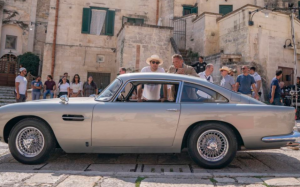
Richard writes about five cars made popular by the movies.
“Often the biggest star in a movie isn’t the one with their name in the title. Will Smith, Kate Winslet and Tom Cruise are big stars, but the cars they drive frequently get as much attention as they do. Many of the bestselling cars in history vaulted to iconic status after appearing as product placement on the big screen. It’s called “brand awareness,” and Mike Jackson, GM North America vice-president for marketing and advertising, said that the right car in the right movie “represents the perfect intersection of entertainment, marketing and design.” It can also lead to big sales, as these examples show…” Read the whole thing HERE!
In the annals of the lore of the American West the names of Black cowboys like Nat Love and Rufus Buck don’t loom as large as Billy the Kid or Wyatt Earp. A new movie, “The Harder They Fall,” starring Jonathan Majors and Idris Elba, and now playing in theatres, aims to change that.
“While the events of this story are fictional,” reads an opening title card, “These. People. Existed.”
In real life Nat Love (Majors), Rufus Buck (Elba), Bill Pickett (Edi Gathegi), Cherokee Bill (LaKeith Stanfield), Stagecoach Mary (Zazie Beetz), Jim Beckwourth (RJ Cyler) never crossed paths, but writer, director Jeymes Samuel imagines a revenge story that brings them all together in wild and increasingly violent ways.
The film’s story is put into motion when Love, as a child, sees Buck kill his parents. To finish off the heinous act, they let the youngster live, but carve a cross into his forehead.
Cut to years later. It’s the late 1800s and Love is now an outlaw, and gang leader. He’s a kind of Robin Hood who only robs people who rob banks. When he and his gang steal $25,000 Buck planned on using to fund a town for Black Americans, it puts the two men (and their gangs) on a bloody collision course.
As the final showdown between the hunter and the hunted nears, the film flips back-and-forth between the two groups, introducing the characters and, of course, gun fights, bank robberies, and bar fights.
Remember when you first saw “Reservoir Dogs” and it felt like you had entered a parallel universe? It felt familiar, yet new and exciting. That movie was a reimagination of what a gangster movie could be, and the first forty-minutes or so of “The Harder They Fall” gave me the same rush. It plays with many of the same elements we expect from a revenge style Western, but it feels fresh and daring. The cutting and pasting of styles, from classic Hollywood and bloody b-movies to the anachronistic dialogue and music and charismatic cast, it’s an exciting eyeful. Director Jeymes Samuel has reinvigorated the genre by telling the story through a Black lens, with plenty of stylised spaghetti western action and humour.
The rest of the film is a bit of a mixed bag. The story telling bogs down slightly in the middle leading up to the final shoot out, which has a body count that would make Tarantino proud. Keeping things interesting are the cast.
Cherokee Bill played by Stanfield, has a long scene on a train that makes you wish there could be an entire movie about this character alone. Stanfield’s laid back take on the stone cold killer who claims to abhor violence, but is quick on the trigger, is worth the price of admission alone.
Danielle Deadwyler as the androgynous Cuffee also warrants further exploration. A loyal sharp shooter, they get the job done, but there is a great deal of humanity tucked away under their thousand-yard stare.
At the center of it all is “Lovecraft County’s” Majors. He’s the engine that fuels the action, and it is his story that provides the emotional undercurrent beneath the bloodshed.
There are no actual heroes anywhere here, just interesting actors inhabiting outsized characters.
“The Harder They Fall” is a crowd pleaser that mixes and matches real life with fiction, tradition with innovation and does so with blood splattered panache.
“Dune,” the latest cinematic take on the Frank Herbert 1965 classic, now playing in theatres, is part one of the planned two-part series. So be forewarned, the two-and-a-half-hour movie doesn’t wrap things up with a tidy bow. For some, the film’s last line, “This is only the beginning,” will be a promise of more interesting movies ahead, for others, who prefer tighter storytelling and a clear-cut finale, it may come off as a threat.
Director and co-writer Denis Villeneuve benefits from the parceled-out storytelling. Where David Lynch’s ill-fated 1984 version attempted to cover the complexity of the entire book, Villeneuve is given the time for world building, to explain the various and complex spiritual sci-fi elements that make up the story.
Here are the Cole’s Notes.
Set 8,000 years in the future, the story focusses on Paul Atreides (Timothée Chalamet), son of an aristocratic family and possibly, just maybe, a prophet. His father, Duke Leto Atreides (Oscar Isaac), has been bestowed stewardship of Arrakis, the desert planet also known as Dune. His mother, Lady Jessica (Rebecca Ferguson), is part of the Bene Gesserit, a social, religious, and political alliance who can magically control enemies by modulating their vocal tones.
Their new domain, Arrakis, is a desolate, almost inhabitable place that is home to the Fremen, a group of people who have lived on the planet for thousands of years. It is also the universe’s only source of mélange, also known as “spice.” It’s a drug with the power to extend human life, facilitate superhuman planes of thought and can even make faster-than-light travel possible. It is the most valuable commodity in the universe and those who control it, control everything.
When Baron Vladimir Harkonnen (Stellan Skarsgård doing his best impression of Marlon Brando in “Apocalypse Now”), the former steward of Arrakis, double crosses the Atreides clan, Paul and his mother are left in the desert to die. If they are to survive it will be with the help of the Fremen—including Chani (Zendaya) and Stilgar (Javier Bardem)—who call Paul “The Chosen One” and believe he has the power to bring peace to their world.
There’s more. Lots more, but that’s the non-spoilerific version.
Villeneuve lays out the information methodically, allowing the various story points and character motivations to seep into the fabric of the film and make an impact before moving on. There’s a lot to get through, but it doesn’t feel onerous like so many origin stories do.
Also effective are the large scale, and I mean large as in you need three or four eyes to take it all in, action scenes. The entire movie is big. So big it makes even the giant humans Jason Momoa and Dave Bautista, who play swordmaster Duncan Idaho and warrior Glossu Rabban respectively, look puny by comparison. As for the action, Villeneuve pulls out all the stops, staging world ending battles with elegance. Often major battle sequences can be muddled, a blur of colours and glints of metal, but Villeneuve delivers clear cut, tense sequences with a clarity that is unusual for modern action.
“Dune” is big and beautiful, with plentiful action and a really charismatic performance from Momoa. It is unquestionably well made, with thought provoking themes of exploitation of Indigenous peoples, environmentalism and colonialism.
So why didn’t I like it more than I did?
Partially because it’s an epic with no payoff. The cliffhanger nature of the story is frustrating after a two-and-a-half-hour wait. As good audience members we allow ourselves to be caught up in the world, humourless and bleak as it often is, to get to know the characters and then what? Wait for two years for the next movie? Apparently so, and the ending feels abrupt.
Nonetheless, “Dune” is formidable. It’s a grim, immersive movie that doesn’t shy away from the darkness that propels the story or the high-mindedness of the ideas contained within. Eventually, when we have a part two, it will feel like one piece, much like “The Lord of the Rings” franchise, but right now, despite its scope, it feels incomplete.
Truman Capote was the best-known literary writer of his day. The author of “Other Voices, Other Rooms,” “Breakfast at Tiffany’s” and the world’s first nonfiction novel “In Cold Blood” was as famous for his nasally voice and trading bon mots with Johnny Carson as he was for his perfectly crafted prose. A new documentary, “The Capote Tapes” from director Ebs Burnough, dives deep to examine the man behind the talk show clips.
He was, by depending on who you ask a, “candied tarantula,” a charmer with a sharp tongue, or “the most lionized writer since of Voltaire.” His combination of wit and unfettered commentary—”He’s a marvelous performer,” Capote says of Marlon Brando, “but he’s so dumb it makes your skin crawl.”—made him a one-of-a-kind, even in jaded world of New York City high society. “You looked forward to seeing him because you knew it was nobody else like him,” says Lauren Bacall.
Capote died early, at age 59, but left behind a well-documented life. Burnough uses a combination of archival footage, TV appearances, stills and, most importantly, previously unheard audio interviews George Plimpton conducted for a book he never wrote. Some of the footage will look familiar to Capotians, particularly the well documented 1966 Black and White Ball at the Plaza Hotel in New York City, but the audio tapes are exciting and provide new insight.
Interview subjects like Capote’s pal Dotson Rader dig deep, offering up suggestions that the writer never felt loved even though he was adored by millions. Norman Mailer describes Capote’s courage in living as an openly gay man in a repressed era.
The coverage of his literary career, particularly the “In Cold Blood” saga—Capote may have allowed himself to become too close to the story’s subjects—covers familiar ground. It isn’t until the film’s latter half when it explores the writing of “Answered Prayers,” Capote’s ten-years-in-the-making novel on New York’s not-so-polite-society that Burnough tills new ground.
The book was never finished, although he did manage to pound out three chapters of gossipy secrets about his closest friends before his death. Published in excerpts it was reviled as a literary work and destroyed the goodwill Capote had built among the wealthy women he called “his swans.” It was the end of Capote as a great writer and raconteur, and soon he soon lost the battle with booze and drugs.
Was the book simply ahead of its time? Was it Capote’s prescient unveiling of the tell-all celebrity culture that would soon become the norm by way of reality television or was it a misguided attempt at exposing the world around him? The film leans toward the former, but Jay McInerney, interviewed at length, suggests we’ll never know for sure. He’s convinced the book was never finished.
“The Capote Tapes” is a compelling portrait of a pioneer, a brilliant gay man who came from humble beginnings to rise to the top of the literary world on his own terms, even if those terms were ultimately his undoing.
Yesterday rumours on Twitter had it that Michael Caine was retiring from acting, calling it quits after a celebrated career. Turns out that isn’t true!
“Regarding retirement, I’ve spent over 50 years getting up at 6 a.m. to make movies, and I’m not getting rid of my alarm clock!” Caine said in a statement to Variety.
I wanted to share a quick interview soundbite with you from an interview I did with Michael Caine a few years ago. Click HERE to watch the video!
Keeping track of the storylines of the various “Halloween” movies and their sequels can be a mind-bending experience. Forty-three years ago the original John Carpenter-directed movie established many of the rules of the slasher genre, and spawned a prolific franchise that so far has churned out an additional 11 movies detailing unstoppable masked killer Michael Myers’ penchant for killing good looking teenagers.
There have been reboots, returns, prequels and sequel to remakes. Laurie Strode, the original film’s heroine played by Jamie Lee Curtis, has faked her own death, gone into hiding, decapitated, shot and stabbed Myers and yet, a new movie, “Halloween Kills,” featuring Strode and Myers, hit theatres this weekend.
Director David Gordon Green gets around the labyrinthine comings-and-goings of the mad masked killer by simply ignoring the movies made between 1981 and 2009. His 2018 film, “Halloween,” is a direct sequel to the 1978 film of the same name.
Confused? No need to be.
All you really need to know is that after an extended flashback to 1978, it’s Halloween night in Haddonfield, Illinois, and the action picks up minutes after the 2018 sequel. Michael Myers, the “essence of evil,” is in the basement of a burning house, trapped there by Laurie (Jamie Lee Curtis), her daughter Karen (Judy Greer) and granddaughter Allyson (Andi Matichak). The nightmare should be over, but this a “Halloween” movie which means the nightmare will never be over. Myers manages to escape and, as he resumes his killing spree, Laurie, her family and some motivated townsfolk aim to end his reign of terror. “You and Allyson should not have to keep running,” Laurie tells Karen. “Evil dies tonight.”
The best horror movies are never about the monster or the killings. That’s the gooey, gory stuff that keeps us in our seats, ready to absorb the larger social messages woven into the script. “Halloween Kills” wants to make poignant, timely points about how anger divides us and fear keeps us apart, but, trouble is, “Halloween Kills” is not one of the better horror films.
Far from it.
It is brutal. Michael Myers is as unrelenting and remorseless as ever, maybe even more so. Green’s interesting POV shots of the victims coupled with nasty, squishy sound effects provide several memorable moments of gory glee that horror fans will enjoy. Slash, slash, squirt, squirt! Oh my! He’s got blood on his shirt!
The first half of the movie offers up rather inventive kills. It’s fun when Myers is onscreen, lumbering his way toward another victim. Unfortunately, it’s less fun when the vigilante mob endlessly chants “evil dies tonight.” We get it.
And everything else about the plot.
For such a simple story, they sure do waste time explaining the same points over and over. Add to that over baked dialogue—”Let him take my head,” Laurie sneers, “as I take his.”—and a too-long running time and you’ll be wishing it was already November 1.
The story of “Mass,” a new drama from writer-director Fran Kranz, now playing in theatres, is simple but the emotions it evokes are anything but.
A bland meeting room in an Episcopal church in Idaho is the backdrop for the meeting of two couples bound together by shared trauma. Years before, Richard and Linda’s (Reed Birney and Ann Dowd) son Hayden shot and killed eleven kids in a high school massacre, including Gail and Jay’s (Martha Plimpton and Jason Isaacs) son Evan. The intimate summit is meant to provide clarity and closure, but distrust and frustration steer the proceedings as they volley anger and recrimination back and forth.
“Mass” often feels like a stage play transposed to the screen. The bulk of the “action” takes place in one room, around a table as the four hash out the events that shaped their lives in the aftermath of the tragedy. A tempest of anguish, blame and forgiveness, it forcefully mines the emotion of the situation without resorting to sensational flashbacks or lurid recreations of the film’s defining event. Instead, director Kranz trusts the performances and the words to do the job. “I loved Hayden so much,” says Richard, “but maybe he should never have been born.”
Questions about responsibility, radicalization, gun culture and mental illness are woven into “Mass’s” fabric, but the movie is more interested in the human dynamic than answering those queries. This is about the who, not the why.
To that end the main cast members are never anything less than believable. Each explore a different avenue of grief and remembrance, and each deliver an acting masterclass. Restrained and realistic, the actors go deep, unconcerned with flashy pyrotechnics or showboating.
“Mass” is raw and real, devastating, nuanced and somber, a beautifully acted study in misery that allows for a flicker of hope.
Fans of The Beatles and The Rolling Stones may disagree, but The Velvet Underground are arguably the most influential band of the late 1960s and early 1970s. “The Velvet Underground didn’t sell many records,” said Brian Eno, “but everyone who bought one went out and started a band.”
They pointed the direction for everyone from David Bowie and Patti Smith to U2 and The Black Angels, and “The Velvet Underground,” a striking new documentary from director Todd Haynes, and now playing on Apple TV+, aims to bring people up to date on one of the most ahead-of-their-times bands of the 20th century.
Narrated by interviews with friends, family, colleagues, and, most importantly of all, the band, guitarist and singer Lou Reed, guitarist Sterling Morrison, bassist and violist John Cale, singer Nico, and drummer Maureen “Moe” Tucker, the film is a trippy look at the tumultuous time in New York City’s art world that gave birth to the band. “That love and peace crap,” says Tucker, “we hated that.”
Using split screens, montages and plenty of archival footage, Haynes paints an impressionistic portrait of the influences—early rock n’ roll, doo-wop, gay life in New York, drugs, Andy Warhol and more—that go a long way to reconcile how Cale’s experimental “drone” work—the “hum of Western civilization,” he calls it—blended with Reed’s more melodic sense to form a renegade sound nobody had heard before. Add to that, lyrics that essayed heroin addiction, death, sado-masochism and other topics not usually sung about in three-minute pop songs and the result is aggressively radio unfriendly rock whose echoes are still felt today. “We didn’t put things in,” Reed said, “we took things out.”
Haynes meticulously walks us through the band’s history, the rise, fall and ugly dissolution, wallpapering the movie with a visual onslaught of images that suggests the multi-media presentation Andy Warhol created for the band’s live performances. The pop artist saw those shows as a “chance to combine music, art and films,” and the documentary continues that spirit to capture the excitement of the story. The storytelling is rather conventional, linear, but the visuals are an idiosyncratic eyeful that match the ambitious nature of the music.
“The Velvet Underground” focusses on the band’s classic line-up heyday, giving later incarnations a bit of a short shrift. Nonetheless, the doc captures the mood and the spirit of a band music journalists have struggled to pigeonhole for decades.
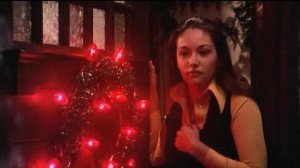 “If this movie doesn’t make your skin crawl . . . it’s on too tight!” — advertising tagline for Black Christmas