“Breath,” directed by “The Mentalist” star Simon Baker in his helming debut, is a coming-of-age tale about two boys who learn about life and love through surfing is specific in its subject but universal in its themes.
Bruce and Ivan, a.k.a. Pikelet and Loonie (Samson Coulter and Ben Spence) are teenagers growing up in remote 1970s western Australian. Desperate for adventure they form an unlikely friendship with Sando (Baker), a former surfing star who now mentors young athletes. Sando is spiritual surfer who not only teaches the kids about how to glide across the water but also how to live their lives. Their idyllic life lessons are threatened when Pikelet has a brief affair with Sando’s wife, Eva (Elizabeth Debicki).
“Breath” is an enjoyably but languidly paced film that captures the slower pace of life in 1970s Australia. Baker displays a connection to the material, allowing the story to play out in its own time. The affair subplot dips into melodrama but the rest of the film is an evocative portrait of the time and place.
On a technical note, the cinematography—credited to “water cinematographer” Rick Rifici—adds much visual flair to the storytelling.
“Madeline’s Madeline” begins with a nursed telling the audience, “What you are experiencing is just a metaphor.” That sets up the tone for what is to come, a boldly dissociative study of creativity and identity told through the lens of a sixteen year old girl.
The film essays the main people in Madeline’s (Helena Howard) life, with her mother Regina (Miranda July), acting teacher and maternal figure Evangeline (Molly Parker) and, finally, herself as she prepares to be part of an avant grade theatre production.
“Madeline’s Madeline” is a bold film. Madeline’s experiences, both real and imagined, merge creating a dreamy, unsettling pastiche of real life. She is a complicated character, beautifully played by newcomer Howard, with a multi-faceted personality that may be the result of mental illness or in expression of her creative spirit or her troubled relationship with Regina. Director Josephine Decker sets the stage, employing frenetic editing, overwhelming sound design and other experimental film techniques to place the viewer in Madeline’s headspace.
“Madeline’s Madeline” may prove too challenging, too psychedelic for casual viewing. Howard is a powerhouse, careening through the film untethered to the realities of narrative form but the oblique storytelling does the viewer no favours.
Today we meet two men who followed in the footsteps of their famous fathers but created their own unique paths, novelist Martin Amis and puppeteer Brian Henson.
“Crazy Rich Asians,” based on the phenomenally successful books by Kevin Kwan, is a mix of “Cinderella” and a rom com with a side order of “Pride and Prejudice.”
Constance Wu plays Rachel Chu, an NYU economics professor, who dates historian Nick Young (Henry Golding). After a year of seeing one another he invites her to his best friend’s wedding and to meet his family in Singapore. She jumps at the chance because she knows nothing about them. Every time she brings up the family he changes the subject. “Maybe his parents are poor and he has to send them money,” says her mother Kerry (Kheng Hua Tan).
Turns out just the opposite is true.
When it begins to dawn on Rachel that his family is well off she asks him straight up. “We’re comfortable,” he says. “That is exactly what a super rich person would say,” she says. He is the son of unimaginably rich parents, the wealthiest people on the island. Nick is prince charming, a good-looking heir to a fortune who downplays his status. “Damn, Rachel, says Goh Peik Lin (Awkwafina), “he’s like an Asian Bachelor.”
She is the Meghan to his Harry but there are problems. Catapulted into a world of opulence Rachel finds herself under scrutiny. Nick’s family doesn’t approve of her job, her background or the fact that a single mother raised her. “If Nick chooses me,” she says to his mother Eleanor (Michelle Yeoh), “he would lose his family. And if he chooses his family, he might spend the rest of his life resenting you.”
“Crazy Rich Asians” is an effervescent concoction so fizzy it’ll make your tongue tingle. A glittery surface built around a solid chassis, it contains a bit of something for everyone, from romance and Lifestyles of the Rich and Singaporean to melodrama and philosophy, from exotic locations to comedy. But at its heart it is the story of a woman, Rachel, who is secure enough in her own place in the world to not be seduced by the cornucopia of riches on offer. It’s about character and how it relates to individualism versus tradition.
The plotting is pure rom com—couple fall in love, are forced apart and (SPOILER ALERT ONLY IF YOU’VE NEVER SEEN A ROM COM BEFORE) yet find a way to make their love work despite all obstacles—but it is populated with appealing characters to guide the story.
Wu is the film’s beating heart, bringing empathy and humanity to the high-flying world portrayed. Ditto Gemma Chan, an extravagantly wealthy woman trying to make sense of a marriage torn apart by money and status. As Nick’s icy mother Michelle Yeoh displays an ability to reveal much by doing very little.
On the com side of things is Awkwafina as Rachel’s best friend. She steals every scene she’s in, even when up against veteran eye catcher Ken Jeong.
“Crazy Rich Asians” is an escapist fantasy that entertains with its labyrinthine soap opera twists and turns, lush settings and all Asian cast—a first in a quarter century in Hollywood—but also digs a little deeper into the similarities and differences between the characters and cultures.
If director Peter Berg’s oeuvre could be boiled down to one sentence it might read something like, “American heroes battle against overwhelming odds.“ Films like “Lone Survivor,“ “The Kingdom“ and “Patriot Games“ have carved out a singular niche for Berg in the action genre. True to form, his new film “Mile 22 “ pits Berg regular Mark Wahlberg and a small team of “problem solvers” against the military might of a corrupt government.
Wahlberg plays CIA operative James Silva, a fast talker and thinker who “only responds to two things, intelligence and pain.“ He heads a team who fight the “new wars,“ the conflicts that don’t make the front pages. They live in a world of violence and “unknown knowns.” “This is dark work,“ Silva says.
Their search for deadly radioactive powder, fear powder as Silva calls it, leads to Li Noor (Iko Uwais), a Southeast Asian informant who wants out of Indonesia. The informant has a disk containing the location of the deadly stuff but will only give the code to open the disc if they guarantee his safe transport out of the country. Trouble is, the corrupt government will do whatever it takes to keep him in their borders.
“Mile 22“ is a violent movie. How violent? The GNP of some small countries probably couldn’t cover Berg’s bullet budget. By the time the informant is scraping one of his victims Max back and forth against a broken, jagged window you may wonder how many more unusual ways there are to off a person. Their handler, played by John Malkovich, says they are involved in “a higher form of patriotism” but the film’s hyper kinetic editing and palpable joy in blowing away the bad guys suggest their elevated patriotism may have a hint of psychopathy mixed in.
Large sections of the film play like a first person shooter video game. There’s even a “scoreboard” where the vital statistics of the team are listed and then go dark as they are killed.
“Mile 22“ wants to make a statement about the murky depths our protectors brave to keep us safe but ends up expending more ammunition than insight.
“Never Saw it Coming,” based on the novel by Linwood Barclay, is a very dark comedy set against a backdrop of violence, murder and fraud.
Emily Hampshire is Keisha Ceylon, a con artist in an unhappy relationship who puts food on the table as a pseudo psychic. For a fee—always upfront—she preys on vulnerable families, offering phony information in outstanding missing person’s cases. An edgy character through and through, she even occasionally sets up a disappearance and later split the finder’s fee with a the supposedly disappeared person. When a consultation with Wendell Garfield (Eric Roberts), a wealthy man whose wife had vanished, takes a bad turn, Keisha discovers an even darker path in life.
Tightly constructed, “Never Saw it Coming” is a story about the lengths a person will go to survive, to provide for their family. Keisha’s morally dubious—to say the least—actions have unexpected results and that’s what keeps the story buoyant. In any other film Keisha would be the villain, or at the least, a very shady character not to be trusted. Here Hampshire infuses her with considerable charm, even when she is doing terrible things. She is one of the rare baddies you might just end up rooting for.
“Never Saw it Coming” isn’t a complicated tale. It’s an aptly named story that sees its main character thrown into a bad situation, ripe with violence and deceit, that provides enough twists to keep you guessing until the end credits roll.
Memory and regret hang heavy over “Nico, 1988,” an uncompromising biopic detailing the last years of 1960’s Velvet Underground icon Christa Päffgen a.k.a Nico (Trine Dyrholm).
Long removed from the New York City scene and band that made her a legend, Nico, who now prefers to be called by her real name Christa, is touring across Europe with an uninspired band and her drug-addicted son (Sandor Funtek).
Voice ravaged by hard living and heroin, she is unpredictable and unhappy. Her efforts to forge a new phase of her career are sidelined by an overwhelming interest in her legendary career. “Didn’t she sleep with one of the Rolling Stones? Which one was it? The one that drowned?” What about her work with The Velvet Underground? The ghosts of her past haunt her.
“Nico, 1988” is a gloomy film about the power of art as a survival tactic. Her life in shambles, Christa persists because she has something left to say, even if there aren’t many people interested in listening. As such, the movie works best in the moments when it allows her the chance to express herself. Not the diva behaviour, disrupting a restaurant in search of drugs or berating those around her, but letting her true spirit soar. To watch her sing “My Heart is Empty” in front of an Iron Curtain audience who risked arrest to see her perform is a galvanising moment in the film. Pure rock and roll passion filtered through anger, hurt and a desire to be heard. It’s the movie’s best scene, a sequence of catharsis that brings this portrait of a seemingly cool, detached woman roaring to life.
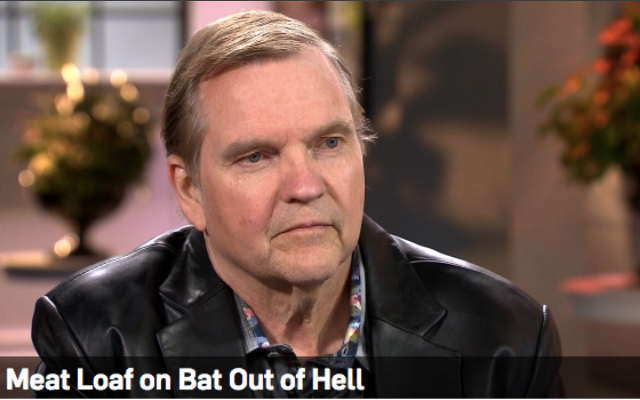
On the Pop Life Podcast this week we meet two men who have persevered to find success. Jonathan Goldsmith, “the world’s most interesting man,” and Meat Loaf, whose album Bat Out of Hell was rejected by the record industry before it was embraced by fans.
“The Meg” stars Jason Statham. There’s a giant shark. Its tagline is “Pleased to eat you.” There is no need for a review. You know exactly what you’re getting into here but, because I am paid by the word, here we go.
Based on the book Meg: A Novel of Deep Terror by Steve Alten, “the Meg” sees action-man Statham play Jonas Taylor, a rescue diver who must face his fears to save the crew of a marooned deep-sea submersible from a fate worse than sharknado. Think Quint from “Jaws” without the expressive range. Years before Taylor narrowly escaped being eaten by a 70-foot shark, the Carcharodon megalodon—“Meg” for short—a 100,000 pound, prehistoric great white thought to have been extinct for about 2 million years. Now it appears the giant beast is back and hungry for the crew trapped inside the submersible. Hired by Chinese oceanographer (Winston Chao) Taylor must not only save the stranded sailors but also make sure the Meg doesn’t eat the world… or something. “Man versus Maggie isn’t a fight,” he grunts, “it’s a slaughter.
“The Meg” tries to take all of the thrills of Shark Week and compress them into two hours. It almost gets there but not quite. There are some silly thrills but humungous squids, scientific mumbo jumbo and b-movie dialogue that would make Roger Corman blush buffer the excitements.
“The Meg” is ridiculous. Start to finish. It’s a giant shark story that plays like a watery “Valley of Gwangi.” The key to its ridiculous effervescence is twofold. First, the aforementioned giant shark. Second, Jason Statham, the po-faced hero who, deep down, knows this is silly but is too stoic to admit it to himself or to us. Some people are method actors, relying on past experiences to create their performances. Statham simply glowers. He’s an actor whose dead-eyed stares make up 95% of his method. Running, punching and blowing up sharks comprise the other 5%. Range? He don’t need no stinking range, he just needs to save the world or at least whatever is in peril. A reassuring presence, he’s exactly the same in every movie regardless of the plot. No surprises, just extreme machismo with a side order of sentimentality. Here it works. He’s like a silent movie star, easy to read and fun to watch and without him “The Meg” wouldn’t be nearly as much fun.
“The Meg” has a few scenes that’ll make you chew your popcorn a bit faster and doesn’t skimp on the silly. In fact, there probably won’t be a more hare-brained underwater adventure this year until “Aquaman.”