Check out Ian Johnston’s “Toronto Storeys” article “Famous Hollywood Movies You Probably Didn’t Know Were Filmed In Toronto.”
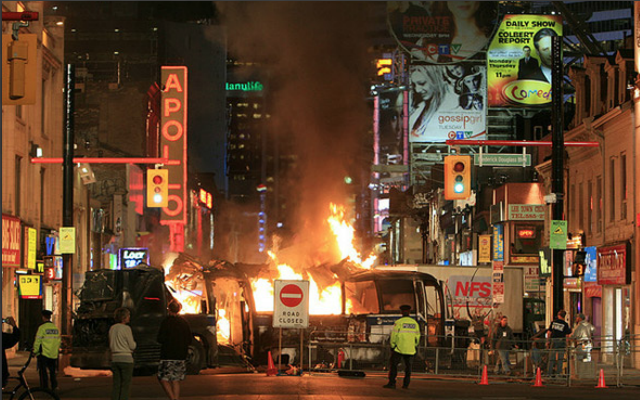
“I looked down the street and there was a bus on its side that burst into flames. I realized suddenly I was on a movie set. It was pretty cool…” Click HERE to read the whole thing!
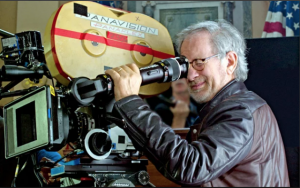
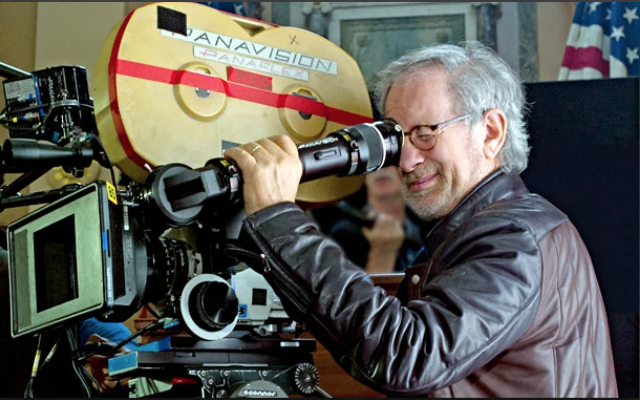
You don’t have to overtax the Google machine to find negative comments about being on set with Steven Spielberg. Type in “working with Steven Spielberg” and in 0.57 seconds 20,900,000 results appear, including an article where Shia LaBeouf rants, “He’s less a director than he is a f—ing company.”
LaBeouf’s resume is dotted with Spielberg-produced or -directed films like Disturbia, Transformers, Eagle Eye and, most famously, Indiana Jones and the Kingdom of the Crystal Skull, but if Spielberg ever does the same search it’s unlikely they’ll ever pair up again. “You get there, and you realize you’re not meeting the Spielberg you dream of,” LaBeouf told Variety. “You’re meeting a different Spielberg, who is in a different stage in his career.”
But that’s pretty much it for the negativity. There’s a story about Crispin Glover suing Spielberg for using his likeness in Back to the Future Part II and the critical drone that his films are overly sentimental, but primarily it’s LaBeouf against Spielberg and the world. Most of his other co-workers have nothing but praise for the filmmaker Empire magazine ranked as the greatest film director of all time.
This weekend he returns to theatres with Ready Player One, a sci-fi film that brings a virtual reality world called the OASIS to vivid life. Star Tye Sheridan calls the director a great and passionate collaborator who makes everyone feel equal on set. Co-star Ralph Ineson calls Spielberg “one of the most iconic figures of the last 100 years,” adding that it was difficult to takes notes from him on set. “When he is speaking to you your mind vaguely goes blank the first few times because your internal monologue just goes, ‘My god, Steven Spielberg is giving me a note.’ And then you realize you haven’t actually heard the note.”
All directors give suggestions on set, but it seems it’s the way Spielberg speaks to his actors that sets him apart.
Ed Burns remembers making a mess of several takes on the set of Saving Private Ryan to the point where Tom Hanks said to him, “I’ve seen you act before, and this isn’t acting.” Afraid he would be replaced, he got nervous and continued to blow take after take but Spielberg didn’t offer guidance. Two weeks passed. The cast started laying bets on who would be fired first.
Turns out, no one was fired and Burns learned a lesson he would later take into his own directorial efforts like Sidewalks of New York. The actor reports that Spielberg said, “I like to give my actors three takes to figure it out. If I step in after the first take and give you a note, especially with young actors, you’ll hear me rather than your own voice.”
Burns calls the experience “a life changer” adding it taught him that being a director is “about knowing when to give direction.”
The superstar director says the listening lesson was learned early in life. “From a very young age my parents taught me probably the most valuable lesson of my life: Sometimes it’s better not to talk, but to listen.”
There’s someone else Spielberg keeps in mind when making a film. “I always like to think of the audience when I am directing. Because I am the audience.”
In brand crazy Hollywood “Ready Player One,” the new sci fi film from Steven Spielberg, is an everything-old-is-new-again hybrid. Based on the novel of the same name from author Ernest Cline it’s not a reboot or reimagining of a comic book or old film. It’s an original story that may appeal to folks who say the movies only recycle ideas. At the same time it’s stuffed to the gills with enough pop culture icons to warm the hearts of any nostalgic moviegoer.
It’s 2045 and the world is a mess. Cities are a hodgepodge of dystopian horrors, overcrowded, polluted and corrupt. For the people, whatever joy can be mined from the desolate, depressing life comes from immersing themselves in a virtual reality world called OASIS (Ontologically Anthropocentric Sensory Immersive Simulation). “Except for eating, sleeping and bathroom breaks,” says Wade Watts (Tye Sheridan), “everyone does everything in the OASIS.” Based on 1980s movies, pop culture and videogames, it’s a technological escape from the all-too-real societal ills that make life miserable. “These days reality,” Wade says, “is a bummer.”
When OASIS creator James Halliday (Mark Rylance) died he created a way for Watts and his on-line Gunter pals—egg hunters—to find a way out of their IRL problems. The creator left behind an Easter Egg—if you don’t know that an Easter Egg is a hidden game message or image, give up now—amongst the game’s familiar pop culture characters. Whoever finds the three keys that unlock the Easter Egg will inherit the OASIS empire. Money, power, the whole nine yards. Watts, who lives in a vertical trailer park called The Stacks in Columbus, Ohio, along with his digital team the High Five, work to navigate the game and change their lives. In a race against time, they must beat the Sixers, an army of gamers employed by evil corporation Innovative Online Industries, in a war for control of the future.
Think your kids spend too much time playing video games? Get a load of Wade, Art3mis (Olivia Cooke), Aech (Lena Waithe), Daito (Win Morisaki) and Shoto (Philip Zhao). This crowd are best friends, although for most of the movie they have never met on terra ferma. They spend all their time on line, forming friendships, falling in love and eventually fighting for their real life lives.
“Ready Player One” takes off like a rocket. There’s a lot of set-up and Spielberg finds a way to impart information and keep it lively. He fills the screen with an industrial view of the future, contrasting Wade’s dour real life with his vivid on line adventures, visually developing the push and pull between reality and virtual reality that fuels the film’s story. A wild car race, featuring Freddy Krueger, King Kong and the Batmobile, establishes the OASIS in a way that the minutes of exposition surrounding it never could. It also establishes the film’s love of spectacle over story.
Spielberg dives deep into the VR world, intoxicated by the endless possibilities of mixing-and-matching pop culture iconography with an adventure story. When Wade says, “The limit of reality is your own imagination,” he could very well be talking to the director. The result is a frenetic film that is fun for a while but the whimsy soon gets bogged down with feverish detail. It’s a little too long, there’s too much exposition, too many twists for a story that can be boiled down to the notion that we should spend more time in the real world.
A tribute to “The Shining” is often quite fun and there are moments of levity but it isn’t about anything other than the adventure. The commentary on our own virtual lives are never expanded upon. Of a spark of on-line love between Art3mis and Wade, who hadn’t yet met outside OASIS, Art3mis says, “You only see what I want you to see. You don’t know me.” It’s a good starting point for a conversation about what happens when avatars become real people but instead we get more exposition.
“Ready Player One” is pure escapism that begs the question, Will there ever be a video game movie that really works? The function of storytelling is vastly different between videogames and film and yet filmmakers try for a amalgam, the best of both worlds. What we usually end up with is what Steven Spielberg finds in his treatment of “Ready Player One,” a film that honours the spirit of the games at the expense of great storytelling.
“Mary Goes Round,” a new film starring “You’re the Worst’s” Aya Cash, has a clever tagline that pretty much sums up the story, “Blood is thicker than vodka.” The story of emotional resolution is part “Days of Wine and Roses,” part “Jersey Girl.”
Cash is the title character, a young woman and barely functioning alcoholic. A rough upbringing saw her left to her own devices after the death of her mother. She barely got to know her father (John Ralston) or teenaged half-sister Robyn (Sara Waisglass). In an only-in-the-movies twist she’s also a substance abuse counsellor who loses everything after a drunk driving charge. Put on extended leave by her job she returns to her hometown, Niagara Falls where she discovers her father is dying of cancer. With the help of an AA sponsor (Melanie Nicholls-King) and a gradual blossoming of self-awareness Mary battles her inner demons.
“Mary Goes Round” doesn’t break new ground. Sobriety dramas usually involved both spectrums of human behaviour, from the lowest points in the character’s lives to some sort of reckoning and this movie is no different. What it does well is build characters we want to root for. With some dark humour and several genuinely poignant moments director Molly McGlynn—who loosely based the story on her own life—gives Cash, Waisglass, Ralston and Nicholls-King the space to create characters all dealing with some level of shame and addiction but mostly, humanity.
The film’s expected uptick at the end feels earned, coming with the message that looking beyond one’s own borders might reveal the path to happiness. It’s a sentimental end to a story that begins with a harder edge but through strong direction and nice character work, it satisfies nonetheless.
“There are no good guys in this story,” says financial whistleblower Dan David. “Not even me.” That’s a grabby intro for a documentary that exposes greed on a level that would make Gordon Gekko blush. “The China Hustle,” from director Jed Rothstein, is a companion piece to “Inside Job” and “Enron: The Smartest Guys in the Room,” movies about money manipulation that should send a chill down the back of anyone with an ATM card.
The story really begins after the 2008 stock market crash. Giant losses put companies in the position of having to generate large sums of cash quickly in the global market. David, like many others, looked to China. “If you want to be a criminal,” says one talking head, “it’s best to go somewhere with no cops. That was China.” China offered new markets, little oversight and he potential to print money. Cue a stock market feeding frenzy but because foreigners can’t invest directly in Chinese companies along came something called the reverse merger, a mix-and-match of American shell companies and foreign entities. It was a recipe for disaster, ripe with fraud and greed, kind of like investing your retirement money in lottery tickets.
Stories of financial malfeasance are so common that “The China Hustle” doesn’t seem like it will offer anything new. Regular folks put up their savings, lose everything while money managers and banks keep the fees. The story may be familiar but it is compelling. Greed and risk are compelling subjects and the kind of scam carefully detailed here is a prime example of extreme avarice. But why do people get sucked into these situations time and time again? It’s like the punch line of the old Wall Street joke says, “This time it is different.” And so it goes. The hope of easy money is irresistible.
You don’t need to be a trader to understand “The China Hustle.” It isn’t so much a lesson in economics as it is a film about due diligence and common sense. In the micro the film’s message can be boiled down to something everyone’s grandmother said, there’s no such thing as free money. The larger story is more complicated, like an economic detective story. It’s a timely one too. This isn’t a history lesson. The events from our recent past detailed here still reverberate and now as the Trump government seeks to deregulate banks even further, it is a story of abuse and lack of oversight that could easily repeat itself.
Beau Dick, who passed away last year at age 61, was an artist and activist born in Kingcome Inlet, a Kwakwaka’wakw village north of Vancouver Island, British Columbia. A new documentary, “Maker Of Monsters: The Extraordinary Life Of Beau Dick,” details his life from apprentice artist, learning to carve traditional totem poles from his father and grandfather, to master craftsman who mixed elements of Japanese manga and other styles into beautiful wooden masks that sell at galleries all over the world.
“My experience is that anyone who encounters a piece of Beau’s immediately has an emotional reaction,” says Vancouver gallery owner and “Maker of Monsters” co-producer LaTiesha Fazakas, “because his work is so animated and it feels like you’re encountering a character when you encounter one of his masks.”
The same could be said for the man himself. A soft-spoken narrator, he weaves the story of his growth as an artist and First Nations activist throughout this engaging documentary, building a portrait of a person one friend called magical. “You can see it in him,” she says.
“For the longest time I couldn’t recognize Beau’s work,” says collector Hervé Curat, “and to me that was magic. Too many artists have a fantastic style but they have only one. So many times I have looked at his work and thought, ‘That has to be Beau because nobody else would dare do that.’
His work as an artist and activist—we see his 2013 public copper-cutting ceremony at the BC Legislature to protest the disregard of Indigenous treaty rights—are inseparable but “Maker of Monsters” makes sure to emphasize the man behind the art and social action. The result is a loving look at the legacy of a charismatic presence whose concern for his people’s culture and the environment was genuine and wide ranging. “Who is our family?” he asks near the end of the movie. “All of us.”
This week on Pop Life music industry icon Scott Borchetta on what pushed him to start his own record company. Then the panel, Blue Rodeo’s Jim Cuddy, music industry legend Denise Donlon and singer/actor Ana Goldja, chime in on the state of music.
Film critic and pop culture historian Richard Crouse shares a toast with celebrity guests and entertainment pundits every week on CTV News Channel’s all-new talk show POP LIFE.
Featuring in-depth discussion and debate on pop culture and modern life, POP LIFE features sit-down interviews with celebrities from across the entertainment world, including superstar jazz musician Diana Krall, legendary rock star Meatloaf, stand-up comedian and CNN host W. Kamau Bell, actor and best-selling author Chris Colfer, celebrity chef Jeremiah Tower, and many more.
Watch all new shows every Saturday at 8:30 pm on Saturday or 2:30 pm on Sunday on the CTV NessChannel! (channel 1501 on Bell Fibe, 62 on Rogers) AND on CTV midnight on Saturday nights. Also, check your listings for airings on Bravo and Gusto.
Imagine the painstaking process that goes into making stop-motion animated films like Isle of Dogs. Instead of using computer-generated imagery, animators meticulously manipulate little puppets a centimetre or two at a time, shoot a frame or two and repeat the process until the film is done. On average, working at a good clip, a stop-motion animator can complete one or two minutes of film per week.
According to whom you speak, the process is either a labour of love or pure torture.
“People think it’s monotonous and tedious, but I think stop motion creates a dream quality,” said legendary animator Ray Harryhausen. “I never found it tedious or monotonous.”
Others, like The Boxtrolls producer Travis Knight, say “It’s the worst way to make a movie. It makes no sense.”
However you feel about the method, the results are beautiful. At its best, stop motion has a timeless quality and otherworldly charm born from the old-fashioned process that brings it to the screen. It’s handmade with a level of craftsmanship and soul that not even the most skilled programmer working on an advanced computer can imitate.
“There’s a strange quality in stop-motion photography, like in King Kong,” says Harryhausen, “that adds to the fantasy. If you make things too real, sometimes you bring it down to the mundane. In Kong, you knew he wasn’t real, but he looked like a nightmare, you know? He acted real, and the dinosaurs looked real. But there was something about them that had a magic that you don’t quite get yet in CGI.”
Director Wes Anderson says Harryhausen’s work and the stop-motion animated holiday specials of Rankin/Bass Productions inspired Isle of Dogs.
“I really liked these TV Christmas specials in America,” he said. “I always liked the creatures in the Harryhausen-type films, but really these American Christmas specials were probably the thing that really made me want to do it.”
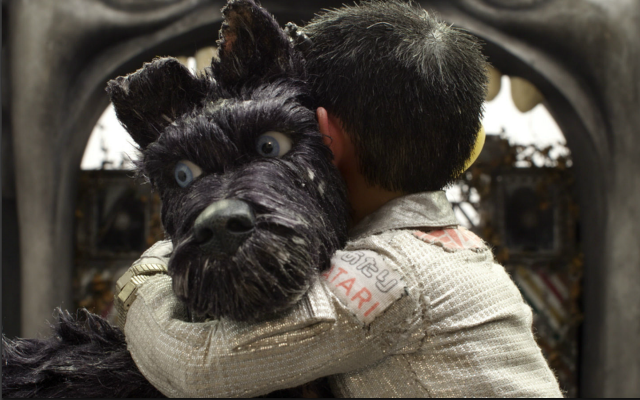
A film still from Isle of Dogs Behind the Scenes (in virtual reality) by Paul Raphael, Felix Lajeunesse and the Isle of Dogs Production Team.
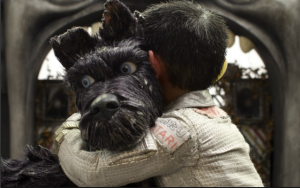
Isle of Dogs, which became the first animated film to ever open the Berlin Film Festival in February, tells the story of the exile of the dogs of Megasaki City to a vast garbage dump, and a 12-year-old boy who sets off to find his lost pet.
The film’s handmade technique is already earning rave reviews. Slate said that Anderson’s stop-motion animations, including 2009’s Fantastic Mr. Fox, “are the warmest, the most emotionally accessible, the most real” of all of Anderson’s films.
That’s the magic of stop motion. From its earliest usage in 1897’s The Humpty Dumpty Circus, to the pioneering work of Harryhausen and Willis O’Brien, to the advanced visions of Aardman’s Wallace and Gromit movies, the exquisite Coraline from Henry Selick, and Czech filmmaker Jan Švankmajer, who mixes stop motion with live actors, all stop-motion films have one thing in common — a humanity that shines through the technology. It isn’t perfect, it’s primal.
Animation, as Pixar’s Brad Bird says, is about creating the illusion of life. Stop motion, with its reliance on the animator’s hands-on skills, presents an imperfect but organic image that can ignite imaginations.
Harryhausen told me it was the stop motion of the original 1933 King Kong that changed his life. “I saw it when I was 13,” he said, “and I haven’t been the same since.”
Max Winkler, director of the coming-of-age movie Flower, corrects me when I mention the film was shot in only 16 days.
“Fifteen-and-a-half days,” he says. “I would have done wonders with that extra half!”
Star Zoey Deutch chimes in. “It is not my job to go, ‘I don’t have enough time.’ My job is to figure out a way to make it work and service the story and the character. All I know is that what is important for a movie that shoots for 15-and-a-half days or for six months is preparation and what you bring to the table before the table is set. That is the most important element.”
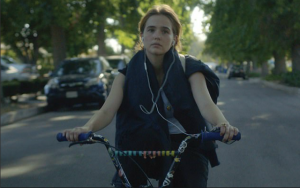
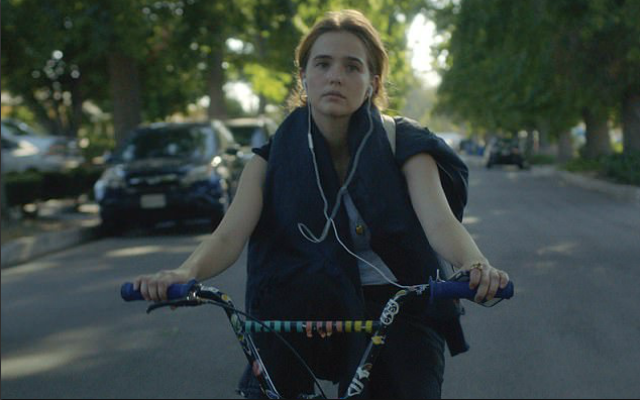
Flower is a coming-of-age story in reverse. When we first meet the adolescent main character Erica, played by Deutch, she is already jaded by life. Her father is in jail and she is involved in a very dubious blackmail scheme to earn his bail money.
Over the course of time she regains her innocence, flip flopping the usual teen movie formula.
Winkler, the son of television icon Henry (The Fonz) Winkler, says the success of Flower is a testament to Deutch’s handling of the role.
“It is such a fine line to tread, to have that bravado but at the same time the intense vulnerability to know that she is really just doing this to cover up all this intense fear she has.”
The actress, best known for turns in Before I Fall and Why Him?, finds the qualities that make us feel for Erica. Do we care about Erica the blackmailer? Not particularly. But we can care about why she resorts to blackmail and that’s where Deutch shines.
“I was 20 when we shot this,” says Deutch, “which isn’t so far from 17 so I was able to pull and be inspired from my own experiences. … Erica is very frustrated by the world and she is very frustrating. I remember being frustrated and being frustrating to other people for sure.”
Deutch is winning raves for her work as the rebellious and sassy teen — The Wrap called her performance “truly exceptional” while The Playlist christened her as “charismatic, uber-magnetic” — but don’t ask her about her craft.
“The truth is, and the reason you can probably sense my hesitancy,” she says, “is that I find it really pretentious when actors talk about process. The way I talk about it sounds pretentious so I steer away from it. I would rather be self-deprecating than sound like overly precious about the whole thing.”
Flower is a coming-of-age story — in reverse.
She will say that the authenticity of the character came from research and conversation with her director and fellow cast members.
“I did a lot of reading,” she says, “everything from books about female teenage angst and struggle, like Reviving Ophelia. We were always talking about consent and how Erica always relies on her charms and never allows anyone else any semblance of control over her.”
Winkler and Deutch only spent 15-and-a-half days on set but have forged a mutual appreciation for society. “My greatest feeling about this movie is just how brilliant Zoey is in it,” Winkler says.
“There is something really special in pure entertainment,” says Deutch, “and I think Max made something super entertaining and super interesting and super different.”
 Check out Ian Johnston’s “Toronto Storeys” article “Famous Hollywood Movies You Probably Didn’t Know Were Filmed In Toronto.”