ParaNorman writer and director Chris Butler uses pop culture references to describe what his movie is all about.
“Its John Carpenter meets John Hughes,” he explains. Later he says, “It’s like the characters of The Breakfast Club dropped into The Fog.” After that he notes, “It’s an episode of Scooby Doo directed by Sam Raimi.”
If that doesn’t paint a picture for you, he goes on to explain that “the original idea was, ‘How cool would it be to do a stop-motion zombie movie for kids?’ Just as a concept alone I’m sold.”
In the movie Norman is a young boy with a special supernatural talent. “He’s trying to figure out what his gift means,” says Butler. “He can see and speak to dead people and quite often that is the only intelligent conversation he gets.” His ability doesn’t exactly endear him to his schoolmates, or family for that matter, until a witch’s curse brings a zombie plague to the town. Then everybody wants to hang out with Norman.
“I grew up watching all the movies that I shouldn’t have watched and frankly I think they made me the sophisticated and level headed person I am today,” Butler laughs. Those movies definitely had an influence on me but then the story broadened in scope and became as much about the horror influences as it did about the family movie influences that I grew up watching. It became a love letter to the era of 80s moviemaking that I sorely miss.
The result is an entertaining film with one foot in the supernatural and the other firmly grounded in the reality of kid’s lives.
“I thought it was an interesting approach,” he says. “When you’re 11 years old the kid who lives down the lane, who bullies you everyday, is as real a terror as any kind of fictional monster. It was about juxtaposing the fictional horror of movies and monsters with the real horror of how middle school sucks.”
But is ParaNorman, with its green-faced zombies, too scary for kids?
“I think parents also know their kids,” Butler says. “It’s difficult to come up with a specific age range. Just a couple of days ago someone said their five year old had seen it. Not only did she love it, and wasn’t particularly scared by it, but she also got the quite sophisticated message that is underneath it. Whereas maybe a more timid ten year old may not want to go see it.”
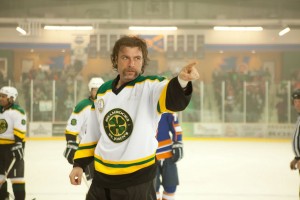
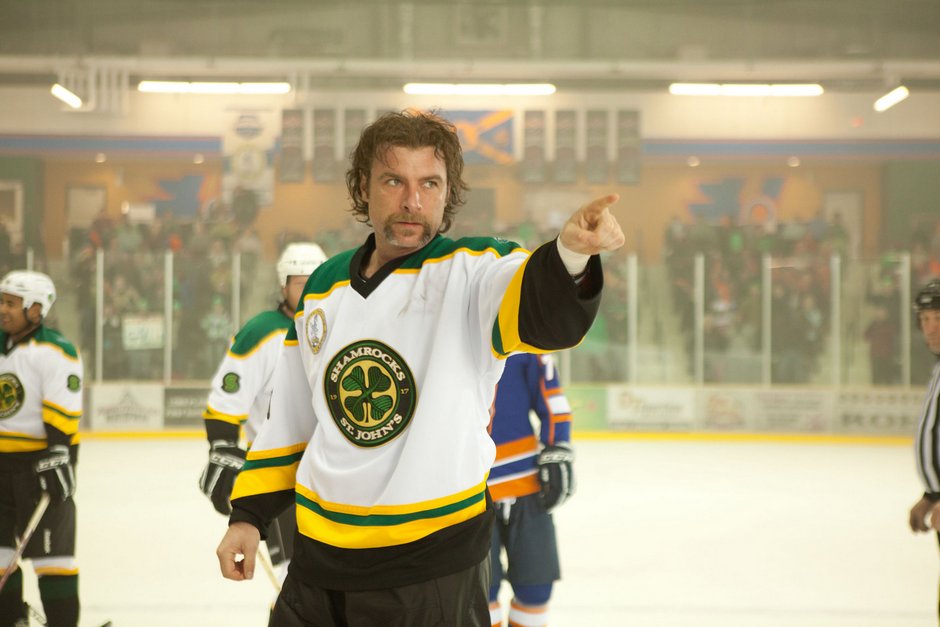
In Goon Liev Schreiber embodies one of the great hockey traditions. As Ross Rhea he’s a bruiser, the kind of hockey player that makes Don Cherry grin from ear to ear. Whether he’s gliding down the ice or trading blows with another player, he looks like a natural. Like someone who grew up on skates.
“I could never play hockey,” he admits, but adds, growing up on New York’s Lower East Side gave him the chance to catch Rangers games from time to time.
How then did he manage the professional level hockey he plays in the movie?
“Easy,” he says, “I had a fantastic double. But I also went to hockey camp for six weeks and polished up my skills and now I play. I love it. We played almost every night on set and now I’m looking for a league in the city to join. A very elderly gentleman’s league. The problem is I’m no good with the puck. All I’m good at is hitting and unfortunately it’s not nice to do that in these leagues.”
For the Yale educated actor the trick to creating a believable character was research. At six-foot-three, with broad shoulders and a Wendel Clark handlebar moustache he looks the part, but he dug deeper to humanize a man who beats people up for a living.
“I don’t know how to approach anything than from the beginning,” he says. “What is an enforcer? Who can I talk to? And I quickly hooked on to Bob Probert (one half of the Red Wings’s “Bruise Brothers”). I wouldn’t say the character is based on him but I would say he was in my heart when I was playing this role.”
Added to the on-ice action is his character’s impending retirement from the game.
“You take somebody like Ross Rhea who’s probably been skating and playing hockey since he could walk. That’s all his life was ever about and at the tender age of thirty-nine or forty it is suddenly over and there is nothing else. There are no more fans. There are no more teammates. No more games. That is a hard transition for a guy to make.
“I’m not so sure that some of these tragedies that have occurred with these enforcers didn’t have something to do with that. What you’re left with is a battered body, a battered spirit and a habit, maybe, of taking things to control pain, and doing things to control pain.
“Goon is a love letter to those guys. It is saying to them, You’re not undervalued, you’re not underappreciated. We know what you went through and how much of your body, mind and spirit you gave to this game in the course of your life and we’re grateful you did.”
One thing Schreiber didn’t do to prepare was revisit a classic hockey movie.
“I had seen Slap Shot years ago and loved it,” he says, “but I put it out of my head because I wanted to start with a clean slate.”
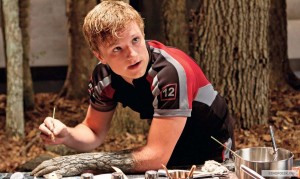
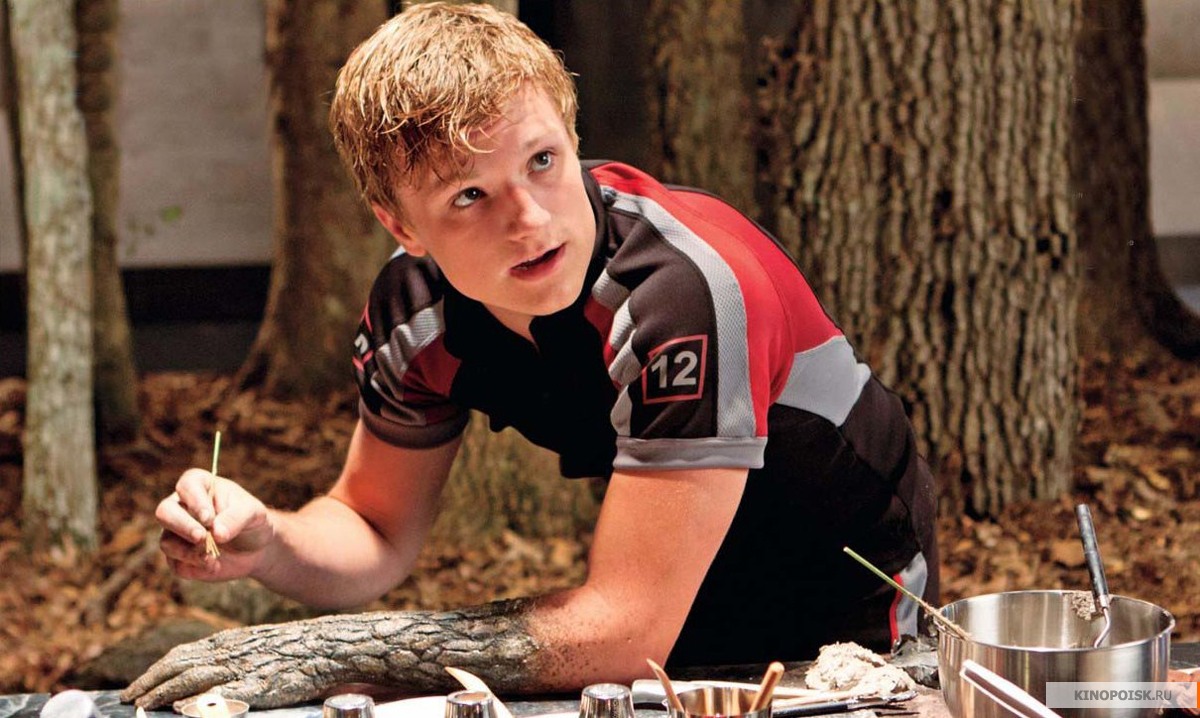
Josh Hutcherson grew up on film sets. As a child actor he worked with Julianne Moore and Annette Bening in the Oscar nominated The Kids Are Alright. He also appeared with Tim Robbins and Kristen Stewart in Zathura. So it’s safe to say he’s used to seeing stars on set. While shooting The Hunger Games, however, he saw stars of a different kind when Jennifer Lawrence “threw an incredibly perfect kick right to my temple.”
“It was a complete accident,” he says, “but I went down and saw stars. She was crying and saying how sorry she was and I was trying to comfort her, even though I was the one in pain.”
Taking a kick to the head was one of the challenges of making the action film, but Hutcherson says the main test was making a movie that was true to the spirit of the book.
“The world outside Hollywood has this idea that when a big book is made into a movie it’s only so Hollywood can cash in on it. That is not at all what our mission was. We didn’t want this to be the book on tape version, but we wanted to tell the story as if you were reading it in the book. Pretty much everyone involved with the movie from the actors to the cameramen and grips on set loved the books and wanted to see it done properly.”
The story, he says, resonated with him but it was the character Peeta that drew him in.
“I liked who Peeta was as a person,” he says. “He really believes strongly in not changing his beliefs no matter what kind of circumstances he’s in, and that is something I’ve always prided myself in believing in.”
As a result he makes an indelible impression as the idealistic Tribute from District 12.
“If there is one character I want to be known for it is definitely this,” he says. “The books are extremely powerful and the character is someone I really connected with.”
The process of making the film so satisfying, says the nineteen-year-old actor, that even if he didn’t get to play Peeta again–but don’t worry, he will–he is happy.
“Liam (Hemsworth) said if something happened and we didn’t get to make another one of these, we’re so happy having this be the one, and I agree,” he says. “We don’t feel like an open wound where it needs to be healed up. This is its own, free-standing thing.”
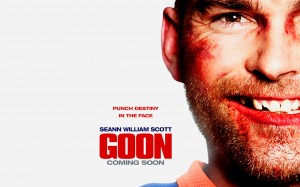
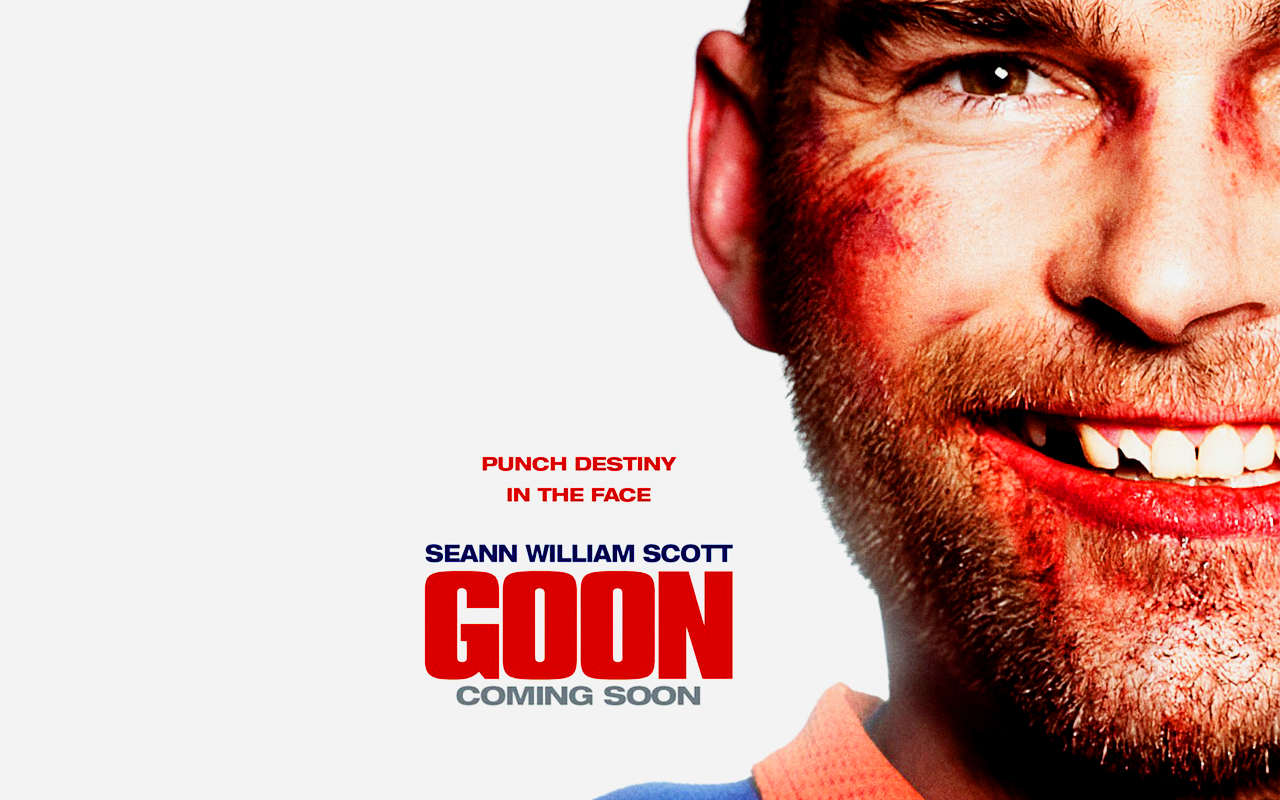
“My girlfriend gets pissed,” says Seann William Scott, “because I don’t do anything except watch movies.”
His on-screen education becomes clear as he explains how he tackled the character of Doug Glatt, the impossibly sweet, but violent hockey enforcer in Goon.
“He’s not Peter Sellers in Being There,” he says. “I wanted to make sure he came across as a real guy,” says Scott. “Not Forest Gump on skates.”
Director Mike Dowse chimes in with his own film comparisons.
“Doug reminded me of Lenny from Mice and Men or Rocky Balboa or even Chauncey Gardner. A great simpleton character.”
It’s a risky role. Play him too broadly and he’ll be a caricature, underplay him and the audience won’t care about him.
“It’s a performance thing,” says Dowse. “What we did was develop a ‘Doug Filter’ that Seann would put on as an actor. We talked about how Doug isn’t slow, he’s careful. He chooses his words. He tries to be polite. Once Seann got the filter, you could throw anything through it. It’s a really difficult thing to do; play a simpleton smartly.”
Throwing ideas through the filter is one thing, but Doug also throws punches. Lots of them.
“As violent as it is, and as wild as the fights are, you still love my character,” says Scott, “because he doesn’t fight just to fight. He has a moral code. Doug is such a good, sweet guy, you can get away with that because there is an interesting dichotomy between the guy who’s out on the ice bleeding for his team and the man he is off ice.”
“We weren’t trying to glorify the violence at all,” says Dowse. “We’re just trying to show the impact of being in this guy’s skates and having the audience experience that.”
“I also loved how polite these guys are,” Scott says of the hockey enforcers he met while researching the part. “They’re like, ‘Good fight,’ after they’ve just beaten someone on the ice.”
One aspect of the role that eluded Scott was the skating.
“If there are any shots of me skating fairly well that would be my double,” he laughs. “Anytime I’m falling down, that was me. The double had to actually dumb down his skating to match mine.”
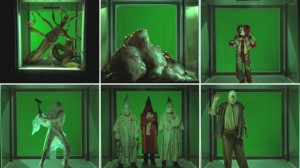
You wouldn’t expect that from the pen behind some of the creepiest episodes of TV shows like Buffy the Vampire Slayer and Lost. Or the man also wrote the big-monster movie Cloverfield and directed Cabin in the Woods, the genre busting horror flick. But Drew Goddard was so disturbed by the first horror film he ever saw he had trouble sleeping for a month.
“My younger brother loved horror movies way before I did and one night he put on Sleepaway Camp,” he says, “which is not a very good movie. But to be fair I don’t remember because I’ve never been able to watch it again because it scared me so bad. I remember the first scene being something along the lines of two kids on a boat with their father and it is a very realistic depiction of their father having an accident and dying. Absolutely traumatized me.
“Then the movie gets crazier and crazier. It was The Crying Game before The Crying Game. So it was definitely the kind of thing a seven year old should NOT be witnessing. I remember I had to sleep in the hall outside my parent’s room for months afterwards because I was so scared by that.”
Later, in his teens he discovered the fun and escapism in horror movies. “There is a joy in being terrified,” he says, and it is that kind of rush he brought to his directorial debut Cabin in the Woods, co-written with his Buffy collaborator Joss Whedon.
“This movie came from a place of love,” he says. “We just love horror movies and set out to make a great horror movie. Then we started working on it and thought, ‘We’re not developing this for a studio. We have the freedom to do what we want, so let’s do whatever we want. Let’s put everything we’ve ever wanted to see in one movie into this one movie.’”
The result is a movie HitFix said, “is not just a great horror film, but also a thesis on why we need horror films and what role they serve in our diet.”
Goddard appreciated the raves the film has been receiving, but wants people to know he and Whedon aren’t trying to reinvent the horror wheel.
“From the structure there is more to it than five kids going out to the woods,” says Goddard, “but it’s not like we set out to unravel everything. It was more like, let’s do this and let the have the character’s ask the questions and have it be part of the fabric of the movie.
“It really came about by us saying we love the experience of going to horror cinema, and let’s try and give the audience the best possible time.”
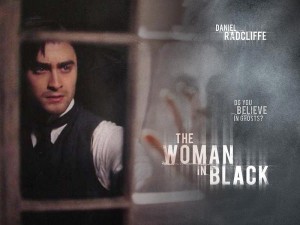
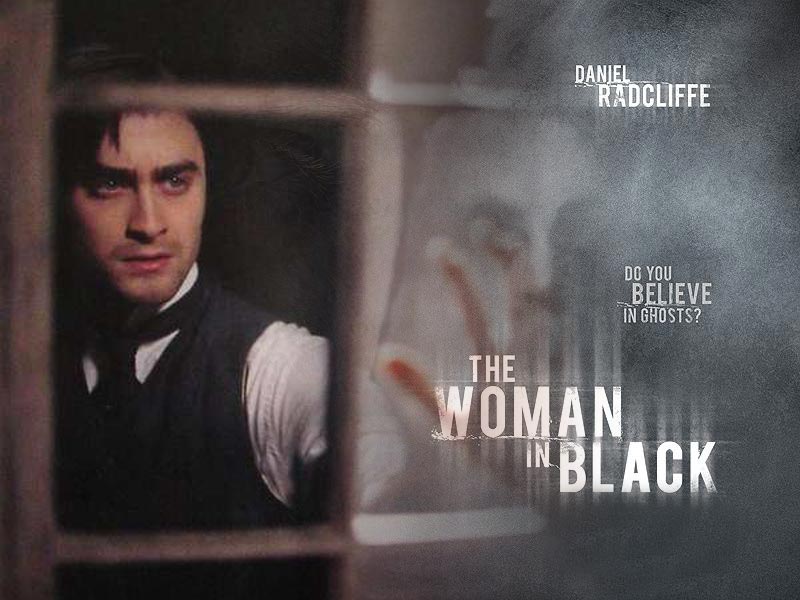
At the Canadian premier of The Woman in Black a young woman yelled, “I love you!” as Daniel Radcliffe took the stage to introduce the film.
“I love you too,” he replied with a smirk. “But I think we should see other people.”
The audience laughed but probably missed the double meaning of his comment. For ten years Radcliffe has been the face of Harry Potter, one of the biggest grossing movie franchises ever. Now that Potter has ended the twenty-two year old actor has moved on, and hopes his audience will follow along.
In his first major non-wizard role Radcliffe plays Arthur Kipps, a widowed lawyer who travels to a remote English village to settle the affairs of Alice Drablow. Ms. Drablow may have shuffled off this mortal coil but the locals are convinced she still haunts her old house. Worse, because she still mourns her son Nathaniel, a toddler who drowned on her estate, whenever she is seen, a village child dies. His presence on her at her home, the dilapidated Eel Marsh House, stirs up her spirit, and soon the local children start dropping like flies.
“I wanted to be a part of telling this story,” he says. “One of the things that made it really stand out was that it was a genre movie but also that it was unusual for its genre. Nowadays we’re saturated with gory, gratuitous, visually upsetting films. But this is all about suspense and what you don’t see and James (Watkins), our director, really lets the tension build. That’s very important. The main thing about it was the story. It is very classic and very chilling.”
It isn’t surprising Radcliffe would be drawn to a story with a timeless feel. In conversation he reveals that his favorite movie is a David Niven wartime fantasy made forty-three years before he was born.
“I love A Matter of Life and Death because it achieves so much visually and is one of the most impressive visually and imaginative films ever,” he says, “and they didn’t have visual effects. What I love is when the frame freezes and you can still see the actors moving slightly. But it doesn’t matter because you suspend your disbelief and you don’t care.”
He’s hoping audiences will respond similarly to The Woman in Black’s focus on character over special effects.
“I like classic films and great storytelling. Ultimately if it is not on the page it will not be in the film. The first port of call in any script is a strong story. However good the characters or the parts might be, no one is going to care unless they are invested in a very good story and that is what I thought this was.”
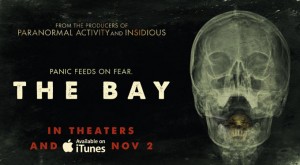
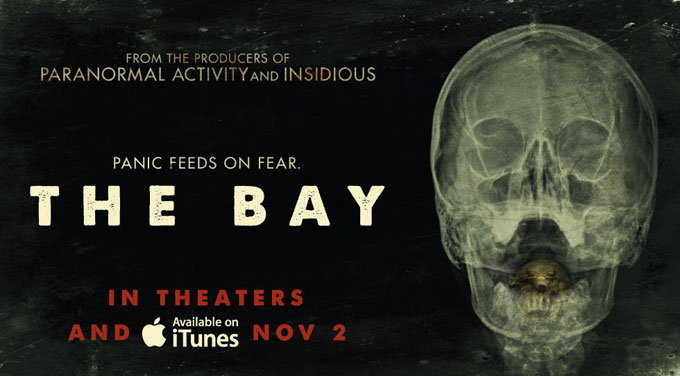
Director Barry Levinson describes The Bay, his new found-footage film, as “a busy in-your-face movie.” The story of a Fourth of July eco disaster in the Eastern Seaboard town of Claridge has the shocks you expect from a horror film, but the scariest thing about the story is its plausibility. Levinson spoke about the film at the Toronto International Film Festival.
The beginning: “It came up when I had a meeting about doing a documentary about the Chesapeake Bay. That was the first time I had heard that it was forty percent dead, that it is seriously polluted; has dead zones in it. It is a toxic soup. They asked if I would do the documentary so I started to do some research, and part of my research was learning that PBS had already done a done a documentary and given all this information. I was like, ‘Holy god, this is amazing. What a terrific documentary.’ But somehow people didn’t seem to be all that concerned.
The next step: “I think there is so much clutter that we just sometimes don’t pay attention. Then I thought, maybe we need to take all that science, all of those facts and put it into a storytelling mechanism. A film, with characters struggling on that given day and maybe that makes the facts more interesting because we’ve given a real context to it all. People will die. This will happen. That’s what led to the idea of doing The Bay.”
The “found-footage” set-up: “If it was going to be a documentary why don’t we shoot it as though we collected all the footage from all these different people? That just by its nature seemed to be the way to go about it. That made the most sense. Then you have to use unknown actors because if you use really well known actors it kills all the credibility. Even though we’ll know it’s a movie if you try and say this is actual footage shot by these people and it’s Brad Pitt, it kills all credibility.”
“Found footage is normally pretty contained. It’s in a house. You’re in the woods. Here you’re all over the place. You’re underwater, you’re above water. It has a bigger canvas to it. But it was the footage that was collected to make sense of what happened and who didn’t do what they should have done, etc.”
With the name Trayvon Martin on everyone’s lips, along comes a movie that may be the timeliest film of the year. “Fruitvale Station,” winner of the Grand Jury Prize and Audience Award for U.S. dramatic film at the 2013 Sundance Film Festival, tells the true story of Oscar Grant III (“Friday Night Light’s” star Michael B. Jordan), a 22-year-old who was shot in cold blood at in Oakland, California’s Fruitvale subway stop on New Year’s Day, 2009.
The movie begins, film noir like, with the death of the main character. Except it’s not a character, it is grainy cell phone footage of the real Grant being shot to death. It’s a jarring way to begin the film, particularly given the events that follow.
Grant woke up on December 31, 2008 filled with a sense of purpose.
The ex-convict saw the New Year as a new start, a chance to be a better person to the three women in his life, mother (Oscar winner Octavia Spencer), girlfriend Sophina (Melonie Diaz) and four year-old daughter Tatiana (Ariana Neal).
The movie counts down his final hours and attempts to affect change in his life, culminating with a tragic showdown with BART (Bay Area Rapid Transit Police Department) officers after midnight on the first day of the year.
“Fruitvale Station” is a quiet movie, one that builds in intensity through a series of scenes detailing how being a better man is harder than Oscar thought it would be. “I thought I could start over fresh,” he says, “but it ain’t working out.”
Despite the film’s gritty style—hand held cameras, down and dirty language—the character of Oscar is portrayed in a positive light. He’s a flawed man trying to reform himself, and if the movie has a failing it’s in its treatment of the lead character.
Finely portrayed by Michael B. Jordan, Oscar is the key to the film’s success or failure, but it occasionally feels that director Ryan Coogler doesn’t trust the story or the character to win over the audience. He over compensates, manipulating situations for maximum emotional effect. A scene in which Tatiana tells her dad she doesn’t want him to go out that night, that’s she’s scared he’ll get shot, for instance, feels heavy handed and unnecessary.
Having said that, it’s important to remember that “Fruitvale Station” isn’t a documentary. Coogler has shaped the movie for maximum heartrending effect, and by the time the devastating last half hour plays out it’s hard to imagine any other movie this year packing such a emotional wallop.
The seventh film from “Greenberg” director Noah Baumbach isn’t so much a traditional narrative as it is a character study of Frances (Greta Gerwig), an underemployed dancer struggling to find herself in New York City. It plays like a cleaned up black-and-white version of “Girls”; an emotionally rich and funny portrait of twenty-something ennui.
“Frances Ha” is a collection of details. There is an engaging story, but it’s not exactly laid out in three acts. It feels more intimate and raw than the usual twenty-ish crisis flick and with each detail we get another piece of the puzzle that makes up Frances’ life.
As she navigates her difficult New York existence we learn of the estrangement of her best friend Sophie (Mickey Sumner), the endless search for a place to live and even the $3 surcharge she must pay at the ATM.
More importantly Gerwig and Baumbach paint a compelling portrait of a woman who doesn’t always make the right choices, who doesn’t always even learn from her mistakes, but is never anything less than human and interesting. By the time she comments on her own choreography that she, “like[s] things that look like mistakes,” we understand that the wrrors she makes offstage, during her dance of life, are the very thing that builds her character.
The supporting cast (including “Girls” star Adam Driver) is strong but this is Gerwig’s movie. Once again —after films like “Lola Versus” and “Arthur”—she hands in an authentic, affecting and purely wonderful performance as a woman who learns to look inwards rather than to others for happiness.
Unlike “Girls,” a television show that mines similar territory, “Frances Ha” never stoops to shock value to make its point. Instead it relies on warmth and charm to capture the vagaries of a mostly rudderless life. Highly recommended.
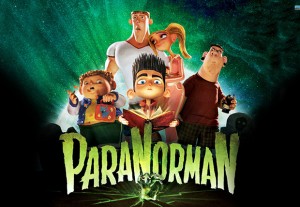 ParaNorman writer and director Chris Butler uses pop culture references to describe what his movie is all about.