In a story that echoes The Wrestler, Crazy Heart follows the tail end of the career of a man who once had everything but threw it away. Bad Blake (Jeff Bridges in his first Oscar winning role) was a big country music star whose life seems ripped from the lyrics of a hurtin’ Hank Williams song. On the road he’s so lonely he could die, so he fills his time with groupies; women who follow him back to his seedy hotel room, remembering the star he once was and not the sweaty, drunk wreck he has become. His downward spiral is slowed when he meets Jean Craddock (Maggie Gyllenhaal), a journalist and single mother who becomes his anchor. In their first interview Bridges shoots her a flirty line destined to become a classic.
“I wanna talk about how bad you make this room look,” he says, looking at her framed against the peeling wallpaper of his motel room. “I never knew what a dump it was until you came in here.”
It’s a sharp line that says two things about the character. First it shows that Blake is used to charming women and secondly, that he speaks like a songwriter, like someone who knows how to play with words.
“It is the sign of a master craftsman at work,” says Crazy Heart writer / director Scott Cooper of Blake’s enticing words. “A man who can write a line like ‘I used to be somebody but now I’m someone else,’ or ‘Sometimes fallin’ feels like flyin’’ or ‘Pick up your crazy heart and give it one more try.’ That line seemed to me like something George Jones or Waylon Jennings might write, and it felt very appropriate. I hope it comes across as organic.”
The line is the beginning of Bad Blake’s redemption. Seeing her he realizes that beyond these seedy motel rooms he is forced to stay in and the crappy bowling alleys he has to play, that seeing her he realizes there is something better out there for him to aspire to.
“He now knows he has a purpose in life and someone is making him feel like he has a purpose and someone is helping him,” says Cooper, “even though he doesn’t yet quite understand that he is rediscovering his artistry. And he says to her, “I haven’t seen anybody blush in I don’t know how long,” and she says, “Well my capillaries are close to the skin.” She doesn’t give him all the credit, but they are flirting and we know that this may be the beginning of an unlikely but a good relationship.”
It’s a line that could have come off as stilted in the hands of a lesser actor but Cooper had ever confidence in Bridges and his ability to deliver the words with just the right amount of emphasis.
“I told Jeff that any time he says this writing I didn’t want it to come across as clever or seem overly written. I wanted it to feel organic. You can throw those lines away and Jeff does that beautifully. That’s why you hire people with his instincts and abilities.”
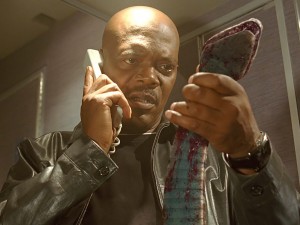
Like Edith Piaf’s La Vie en Rose, the first verse of Howl by Alan Ginsberg, Angelina Jolie’s lips, Dylan’s Subterranean Homesick Blues, or delicate chocolate flecks in mint ice cream, the sound of Samuel L. Jackson saying “Motherfucker,” is sublime. No one says it quite like him. It is as artful as Pavorotti’s high c, and a lot less showy than Cirque du Soleil. It is his Pietà and in Snakes on a Plane he uses it sparingly, but very effectively.
In case you missed 2007 Snakes on a Plane was not just a movie, not even just a Samuel L. Jackson movie, but a full blown Internet sensation, hyped on the Internet by fanboys (and girls) who eagerly anticipated the movie’s opening by posting their own SoaP posters and fan literature even before they have seen little more than a trailer. They created websites and even wrote some dialogue—most notably, “I have had it with these mother fucking snakes on this mother fucking plane!”—that eventually made it in to the film all based on the allure of a simple, but very silly title.
The beauty of the narrative is in its simplicity. There’s a plane. There are snakes. Samuel L. Jackson wants the snakes off the plane. End of story.
“There’s not a lot you need to say about that,” says Jackson of the film’s plot. “As long as people get bitten and there’s blood and you see the snakes on the people’s arms, or on their breasts or in their face or wherever they’re getting bit, it’s different.”
The idea for the film hatched in the mid ’90s, when David Dalessandro read about a Hawaiian Forestry Service employee whose job it was to catch non-indigenous snakes at the Honolulu airport that had stowed away on flights from Guam. “I said, ‘Well gee wiz, what if one of the snakes that came over was poisonous? Just what if?’”
The resulting script, Venom, kicked around Hollywood for years, but didn’t catch fire until screenwriter Josh Friedman was brought on board. On his blog, I Find Your Lack of Faith Disturbing, he wrote about the movie and introduced the now famous line. On-line response to the line was so explosive the name of the film was changed from Venom (and later Pacific Flight 121) to Snakes on a Plane.
The line and title not only caught on with audiences but with its prospective star. “I was reading the trades and I saw ‘Ronny Yu to do Snakes on a Plane,’” says Jackson, “and I knew Ronny so I emailed him to see what it was, hoping it wasn’t a euphemism for something else and it was what I thought it was: poisonous snakes, loose on a plane.”
“Everyone thought it was a joke: Snakes on a Plane, what a stupid title,” said Dalessandro. “But the title doesn’t mean that it’s a spoof. If somebody made a movie called A Policeman in a Skyscraper, and it was made as well as Diehard, no one would care what the title is.”
Classic though the movie line may be, it didn’t translate well to network television. Somehow “I have had it with these monkey fighting snakes on this Monday to Friday plane” didn’t have as much oomph as the original.
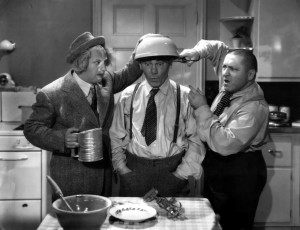
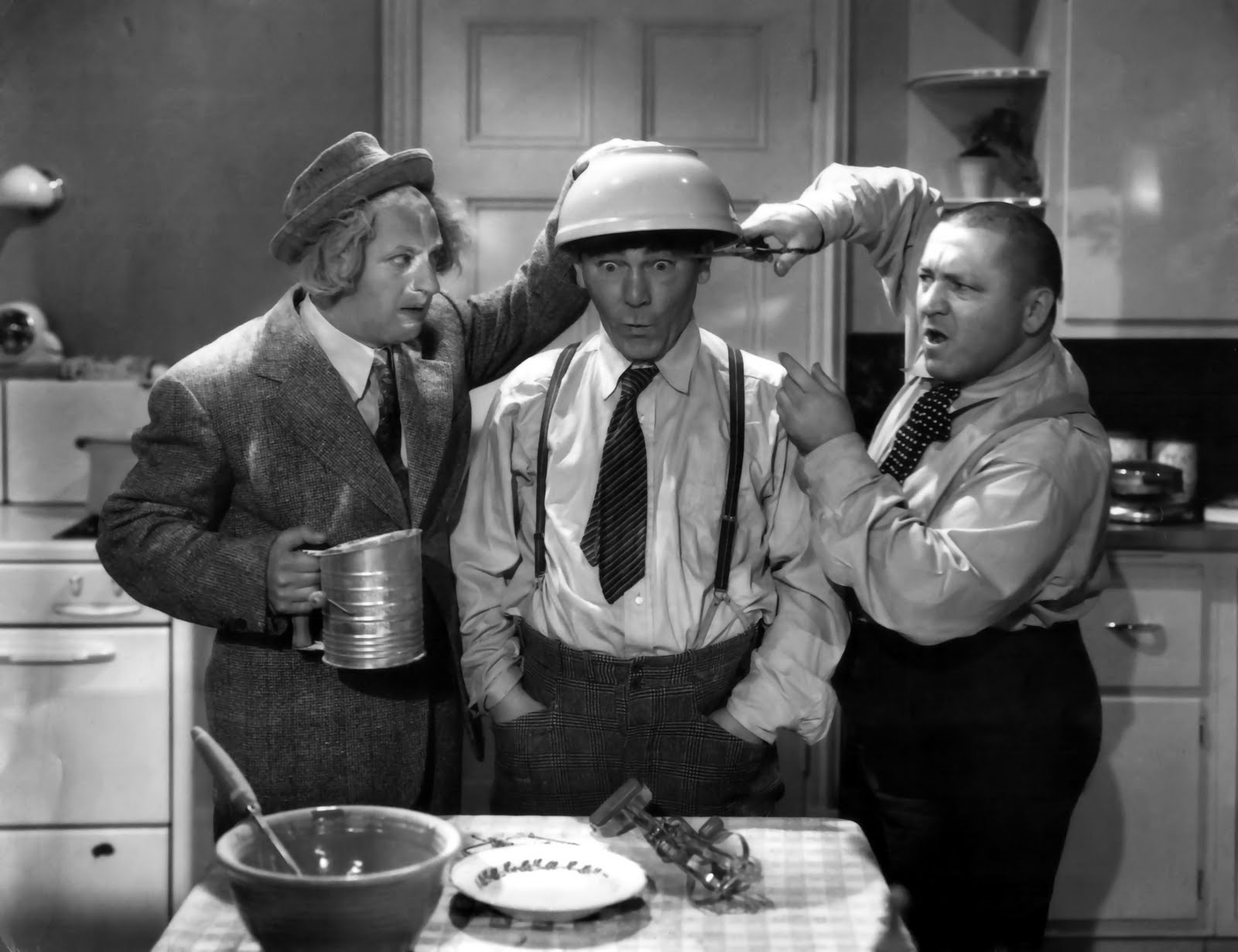
What do you get when you combine yuks with nyahh-ha-ha? “Nyuk, nyuk, nyuk” of course! It’s the most famous of the Three Stooges catchphrases, uttered by Curly in many of the team’s 190 short films.
The phrase—and others like “woo-woo-woo!,” “soitenly!” and the much loved dog bark—came from a variety of sources.
Curly borrowed and adapted comedian Hugh Herbert’s phrase “hoo-hoo-hoo.” Hebert was famous—first on vaudeville and later in films—for playing absent-minded characters, wringing his hands and mumbling, “hoo-hoo-hoo, wonderful, wonderful, hoo hoo hoo!” The rhythm of Herbert’s phrasing inspired Daffy Duck’s “hoo hoo, hoo hoo” line and Curly who changed the words to “woo woo woo” and exaggerated the delivery. In the 1940’s Herbert adopted “woo woo” as well.
Many of Curly’s other quirks came from working on stage as a stooge for a noted vaudeville comic.
“Catch phrases like, ‘Get outta here,’ and “Why, I outta…’ a lot of that originated in the earlier days at the time that they were in partnership with a very skilled Irish-American comic named Ted Healey,” says David J. Hogan, author of Three Stooges FAQ: Everything Left to Know About the Eye-Poking, Face-Slapping, Head-Thumping Geniuses.
“The act was called Ted Healey and His Stooges and Healey was the chief antagonist and the three boys ended up as his stooges. It was a frankly antagonistic approach on stage. A lot of slapping and insults thrown back-and-forth and so after the boys went out on their own and joined Columbia in 1934 they simply took a lot of that with them.
Curly’s most famous line the three words most associated with Stoogedom—the onomatopoeic “Nyuk, nyuk, nyuk”—are featured in many of the Stooges shorts, but rarely appeared in the scripts.
During their heyday the Stooges were under contact to work 40 weeks a year, making ten eighteen minutes shorts in that time. According to Hogan the shooting schedule for each of the films was only four days, “so a lot of usable footage had be done and put in the can every day. That’s a pretty blistering pace.”
He’s goes on to say that while the boys would show up knowing their lines and their blocking, occasionally due to the pace, a line would be forgotten. It was in those moments, the theory goes, when Curly created the distinctive Stooge “nyuk, nyuk, nyuk” laugh.
“It’s often thought that the “nyuk, nyuk, nyuk” was something that Curly resorted to if he forgot his lines,” says Hogan. “I guess he did that occasionally and he was quick enough that he could fill up that silence. In something similar, if he forgot a line he might drop to the floor and do that pivot on his shoulder in a circle. It was a time filler and it was something very funny. It worked.”
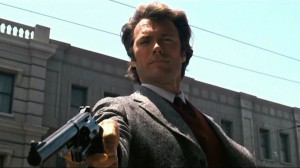
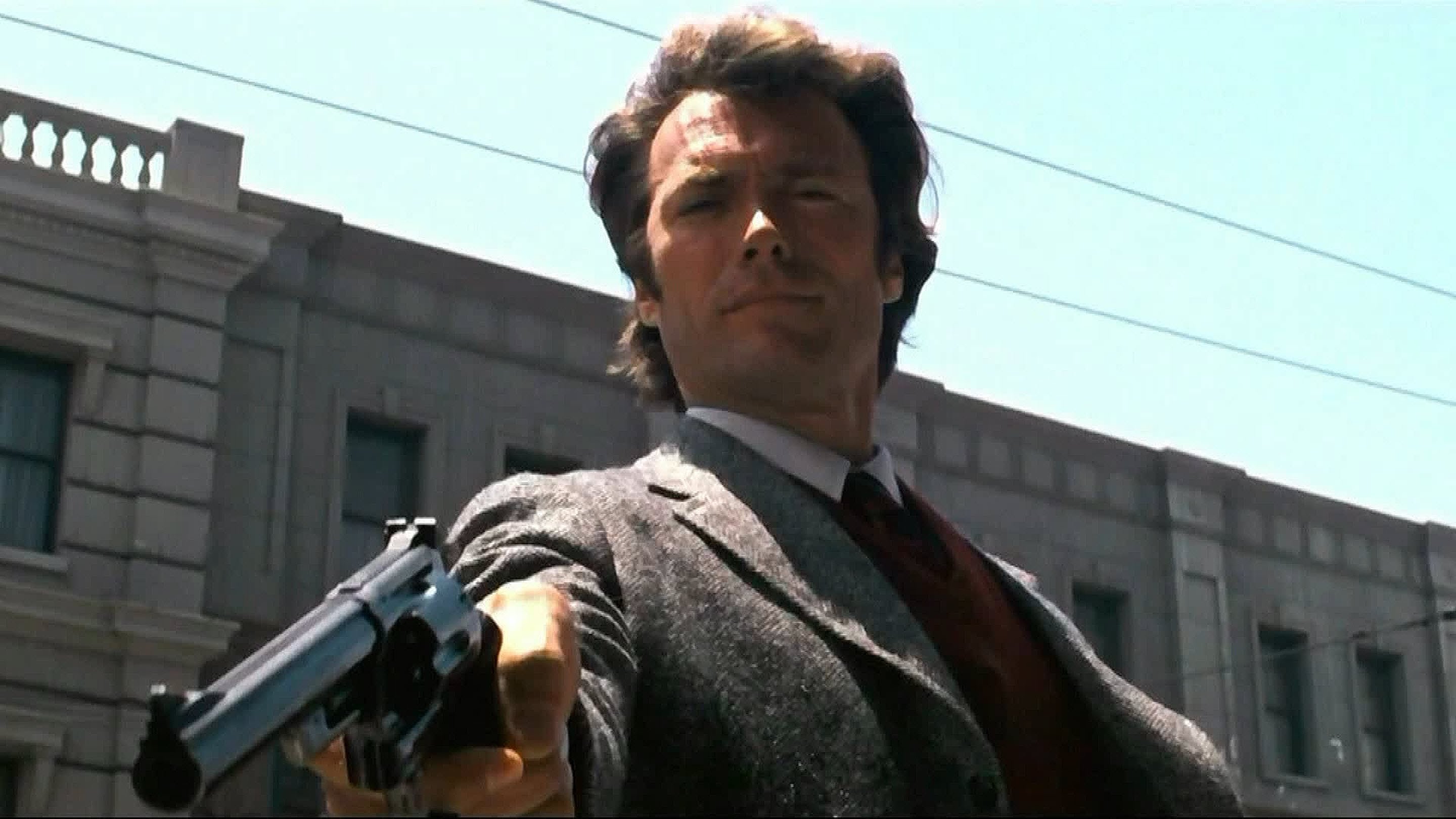
“I know what you’re thinking. ‘Did he fire six shots or only five?’ Well, to tell you the truth, in all this excitement I kind of lost track myself. But being as this is a .44 Magnum, the most powerful handgun in the world, and would blow your head clean off, you’ve got to ask yourself one question: Do I feel lucky? Well, do ya, punk?” – Harry Callahan (Clint Eastwood) in Dirty Harry, 1971
Before Dirty Harry Clint Eastwood was a star. He had worked his way up from playing uncredited characters in b-movie turkeys like 1955’s Revenge of the Creature to supporting roles in everything from a Francis the Talking Mule comedy to a string of westerns and war pictures. Television’s Rawhide made him a household name in America and his trio of spaghetti westerns with Sergio Leone—A Fistful of Dollars, For A Few Dollars More and The Good, The Bad, and the Ugly—made him an international star, but it took an urban vigilante movie to make him a legend.
Loosely based on real life San Francisco police inspector Dave Toschi, one of the investigators of the Zodiac murders, Dirty Harry, is the story of SFPD Inspector Harry Callahan (Eastwood) charged with bringing a serial killer to justice. Callahan lives by his own code of ethics and is unafraid to bend the rules to get the bad guy. He’s generally cool, calm and collected, but he took cool to a whole new level early in the film.
Seeing a bank robbery in progress Callahan approaches the scene without waiting for back up. Pointing his .44 Smith & Wesson Model 29 Magnum revolver in a robber’s face he says the words (written by future Apocalypse Now screenwriter John Milius) that made Clint Eastwood a superstar.
“I know what you’re thinking. ‘Did he fire six shots or only five?’ Well, to tell you the truth, in all this excitement I kind of lost track myself. But being as this is a .44 Magnum, the most powerful handgun in the world, and would blow your head clean off, you’ve got to ask yourself one question: Do I feel lucky? Well, do ya, punk?”
“It’s a very commanding moment,” says former Time critic and Eastwood biographer Richard Schickel. “I mean he’s already a star, there’s no question about that, but in that moment the command of the screen, the command of himself, the strange humor of it, which is a real Clint kind of sense of humor working in that scene, it’s just great. That’s the moment. [After that] there’s no question that this guy is going to be, for a long time a major, major star. So I think in terms of his career, that’s the important line.”
Dirty Harry became Eastwood’s signature role, but it almost didn’t happen. Written for an older man the part was offered to Robert Mitchum, John Wayne, Burt Lancaster and Frank Sinatra (who had to pass because a wrist injury prevented him from convincingly holding the weighty .44 Magnum). Then it was put forward to Steve McQueen (who turned it down, saying, “I’m only good doing authority my way.”) and Paul Newman who thought it was too right wing for him but suggested Clint.
“Like most pictures that I’ve done I had no idea if anyone would want to see it,” Eastwood says in the documentary The Eastwood Factor (directed by Schickel). “I figured I’d like to see it. If I hadn’t played in it I’d like to see it with somebody else. I just went at it from that angle.”
It was a perfect marriage of character and actor. Jay Cocks of Time wrote that Eastwood gave “his best performance so far, tense, tough, full of implicit identification with his character.” But not all critics liked the movie.
Roger Ebert condemned the film for its “fascist moral position” even though he grudgingly admitted it was well made. Not so with Pauline Kael the doyenne of film criticism. She called Dirty Harry a “right-wing fantasy [that is] a remarkably single-minded attack on liberal values” and labeled it “fascist medievalism.”
“It is suspenseful, it has a moral that I think is very potent, not at all what Pauline Kael thought it was,” argues Schikle. “She’s so full of shit. That woman. I mean, she persisted with that on every movie [Eastwood] made. I think the last one she reviewed was Unforgiven and she didn’t like that. Well crikey, that’s absurd.
“[Dirty Harry] is a movie that gets left off the My Favorite Clint Movies list that people make, but I think it is such a great movie. It holds up beautifully. It is the movie that projected him out of the ranks of stars and into the much smaller rank of superstars.”
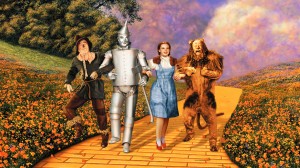
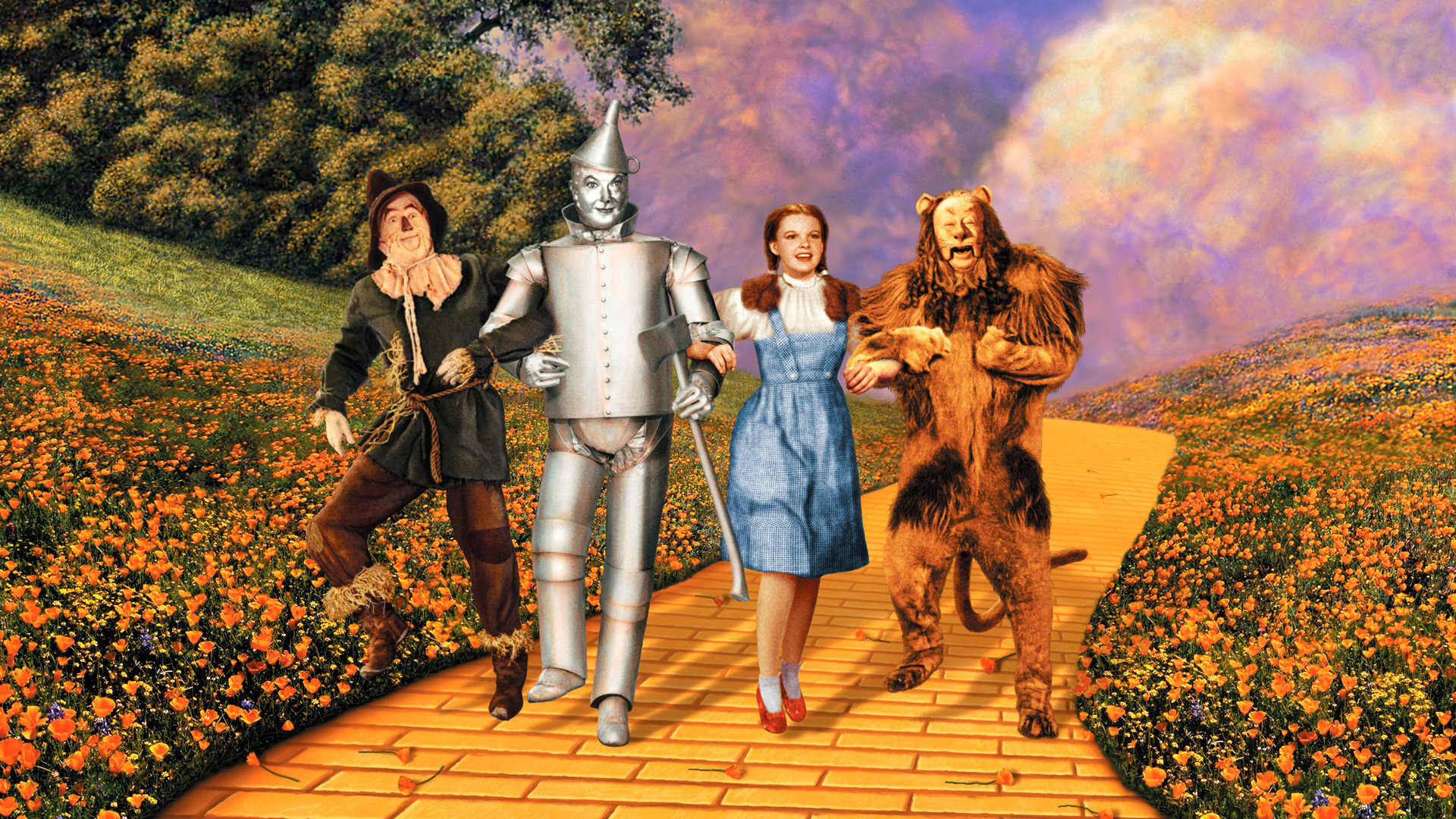
It’s unlikely anyone needs a synopsis of The Wizard of Oz—my favorite is Rick Polito’s of the Marin Independent Journal, who wrote, “Transported to a surreal landscape, a young girl kills the first person she meets and then teams up with three strangers to kill again.”— but just in case you haven’t read a book or magazine or gone on-line or snapped on your TV in the last seventy years, here goes: Dorothy Gale (Judy Garland) and her dog Toto are swept away from black and white Kansas by a tornado that lands them in a Technicolor world of wonder called Oz. Realizing that there is no place like home Dot sets off on the Yellow Brick Road in search of the powerful Wizard of Oz who can help her return home. Along the path she hooks up with some unusual new friends—a Scarecrow (Ray Bolger), a Tin Woodman (Jack Haley) and Cowardly Lion (Bert Lahr)—and makes one enemy, the Wicked Witch of the West (Margaret Hamilton) who badly wants Dorothy’s bedazzled Ruby Slippers. Hope I didn’t spoil it for you.
Since 1939 The Wizard of Oz’s most famous line has been used a thousand different ways. From Avatar to Honey, I Shrunk the Kids, variations of “Toto, I’ve a feeling we’re not in Kansas anymore” have dotted scripts, often used as a punch line in violent situations. For instance it draws a laugh in the wild video game Crash Nitro Kart but in 1939 it wasn’t the joke but a set up for a joke.
“The line ‘Toto, I’ve a feeling we’re not in Kansas anymore’ is the line that became classic but it is basically there as a setup for Judy Garland’s next line, when Billie Burke comes into view, and Garland says, ‘Now I KNOW I’m not in Kansas,’” says Wizard of Oz expert John Fricke. “It really is an adult humor kind of line. What’s impressive about it is that this 16 year old girl would have the Elaine Stritch kind of take on what has just happened to her and to not read it with an adult tone but read it with that great sincerity that Garland had yet with the dryness the line requires.”
Who, exactly, wrote what on The Wizard of Oz is a bit of a mystery. Three writers are credited in the titles—Noel Langley, Florence Ryerson and Edgar Allan Woolf—but a long list of Hollywood who’s who worked on the script. It’s likely that most of what appears on screen came from the pens of those three—they came up with the idea to have Frank Morgan appear as not only The Wizard of Oz but Professor Marvel, The Gatekeeper, The Carriage Driver and The Doorman and they created the “There’s no place like Home” ending motif—but at one time or another Herman J. Mankiewicz (who went on to win an Oscar three years later for his Citizen Kane script) and Ogden Nash were among the fourteen screenwriters who also contributed material. (In fact, the surviving versions of the film’s multiple scripts makes a pile five feet high.) Who wrote the movie’s “Kansas” line—it doesn’t appear in the original Frank L. Baum books—is up for debate. Regardless of who wrote the line, however, it has gone on to become one of the most quoted in movie history.
“It sort of sums up the whole plot in one line: ‘Toto, I’ve a feeling we’re not in Kansas anymore,’ says Fricke. “Plus by the time she gets to ‘Now I KNOW we’re not in Kansas’ you’ve had Munchkins peaking up from behind the bushes; you’ve had this pink bubble coming into view; you’ve had Judy backing off camera and Billie Burke turning up so you are kind of emotionally removed from the first line. The second line is the payoff and the button but I don’t think people usually put them together. There’s too much going on at any moment on the Wizard of Oz, especially if you see it on the big screen and are so over whelmed by it or if you are seeing it for the first time.”
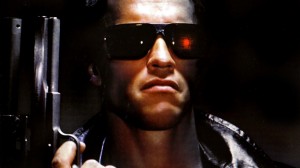
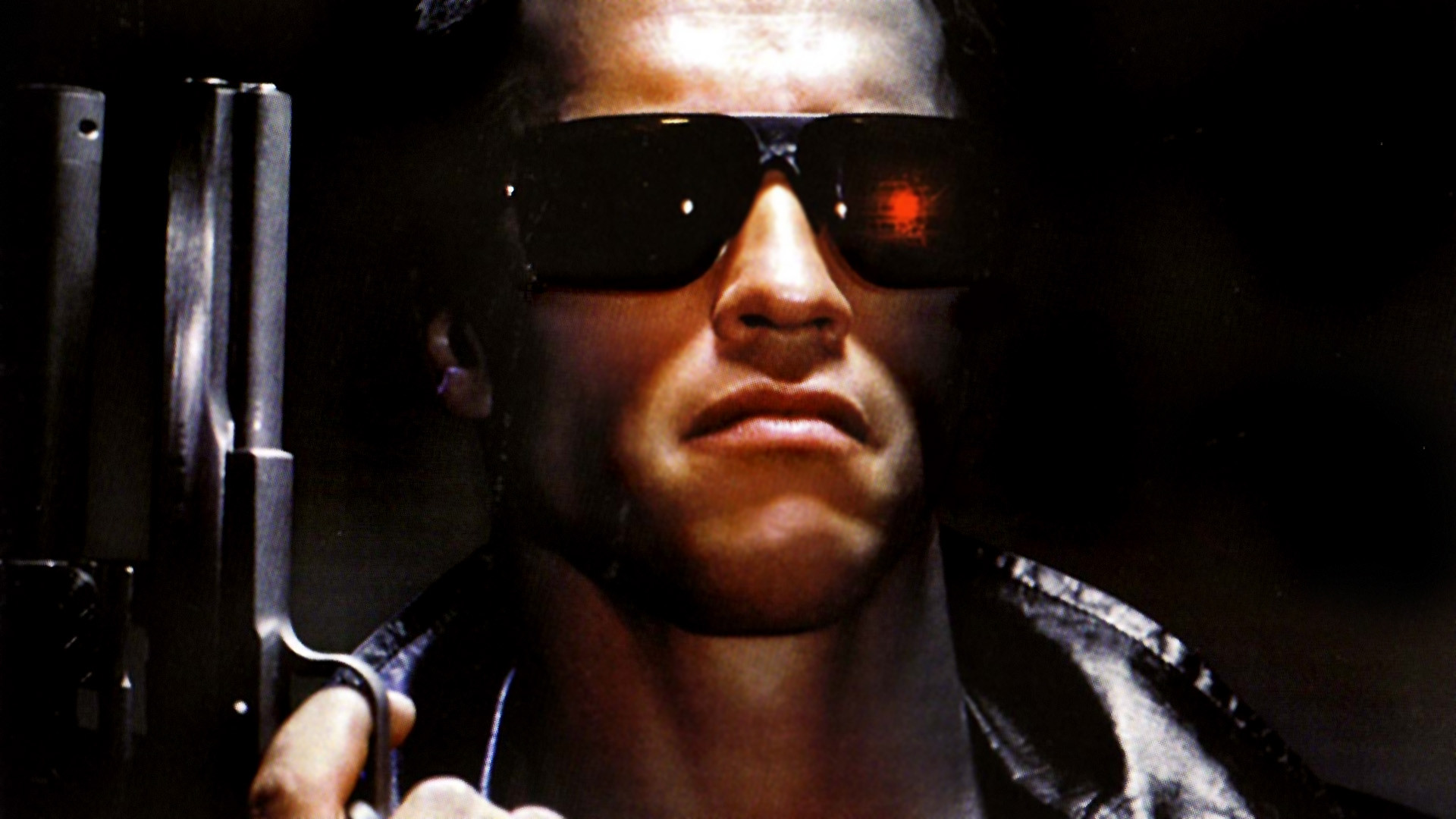
Where would Arnold Schwarzenegger’s career be without these three simple words: “I’ll be back”? Taken from The Terminator it’s as simple a phrase as was ever uttered in the movies, but became a pop culture catchphrase, and came to define Arnold’s career on screen and off.
He’s used the line—or a slight variation on it—in two other Terminator movies and eight other films. In 1993’s Last Action Hero he says it three times!
“I’ll be back,” he says. “Ha! Bet you didn’t expect me to say that!”
Later Danny Madigan (Austin O’Brien), after Arnold uses his signature line, says “You always say that.”
“I do?”
“Everybody waits for you to say it. It is like your calling card.”
Few actors have done so much with so little. But the perfectly crafted phrase almost didn’t happen.
“In the treatment it was ‘I’ll come back,’” says The Terminator director and co-writer James Cameron. “In the script it was ‘I’ll be back.’ I don’t remember why I changed it. It just sounded better.”
The line certainly played no small part in establishing Schwarzenegger larger-than-life action hero image even though Arnold has said he didn’t give the line a second thought when making the movie.
“There is something about the way the line plays,” says Cameron, “not just Arnold’s delivery, but the fact that you’ve seen enough of him in action up to that point to know that when he says ‘I’ll be back’ something really bad is going to happen. There is a counterpoint between the innocence of the words and the threat that is a wink to the audience. And the audience likes to be in the position of knowing what is going to happen next. They may not know the details but they know something bad is going to happen and then it pays off. He just comes flying through the window in a car and takes out the whole place. So there is something kind of delicious about the anticipation that it produces.”
In his new autobiography, Total Recall, Schwarzenegger recalls, “Our biggest disagreement was about ‘I’ll be back’. I was arguing for ‘I will be back’. I felt that the line would sound more machine-like and menacing without the contraction.
“It’s feminine when you say the I’ll, I complained, repeating it for Jim so he could hear the problem. ‘I’ll I’ll I’ll. It doesn’t feel rugged to me.’ He looked at me like I’d lost my mind. ‘Let’s stick with I’ll,’ he said. But I wasn’t ready to let it go, and we went back and forth. Finally Jim yelled, ‘Look, just trust me, OK? I don’t tell you how to act, and you don’t tell me how to write.’
“And we shot it as written in the script. The truth was that, even after all these years of speaking English, I still didn’t understand contractions.”
The line’s popularity wasn’t planned. Cameron, who has three lines on AFI’s 100 Years… 100 Movie Quotes list—“I’ll be back,” “Hasta la vista, baby” from T2 and Titanic’s “I’m king of the world!—says it is a bad idea to try and write catchphrases.
“I think it is a very hard thing to try and do that,” he says. “I think I was somewhat self conscious about it when I did Terminator 2 and he says ‘Hasta le vista baby.’ That I knew I was doing a line, an Arnold line. I think it is a very dangerous area because it can so easily blow up on you and I tend not to do that.
“I really realized how fragile that was when I had written True Lies. I didn’t think it was funny enough so I hired a comedy team to come in and punch up the dialogue.
“I wanted it to be an action comedy. All they did was write about twenty Arnold one-liners. It really reminded me of bad James Bond. The James Bond films have evolved as well, they don’t do that anymore but there was always that kind of wink and a nod to the audience. A stupid line, a cap line to the scene and they wrote about twenty of those and I threw them all out. I hated them. I realized tonally it was going to screw up the movie. Then I decided maybe this movie isn’t funny enough, but I’m gong to shoot it as it is and it was still funny.”
Arnold has been associated with dozens of one-liners. So many, in fact that a you tube video titled 160 Greatest Arnold Schwarzenegger Quotes had over two million hits at press time, but as widely imitated as “Hasta la vista, baby” was—even Chilean president Michelle Bachelet aped Arnold’s famous delivery of the line—“I’ll be back” remains his most iconic line.
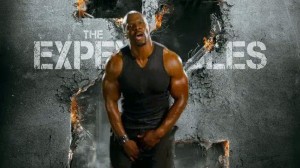
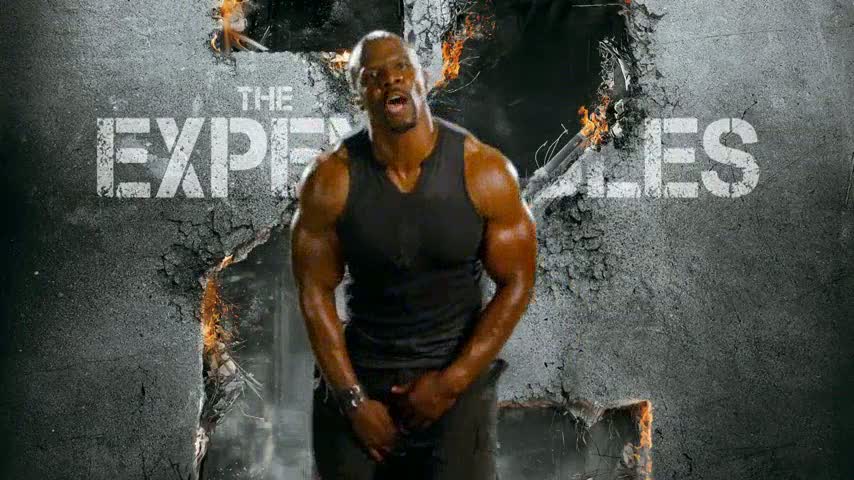
NFLer-turned-actor Terry Crews has a history with Arnold Schwarzenegger.
The pair has most famously co-starred in two installments of The Expendables, but their initial onscreen encounter came years before.
“My first movie was called The 6th Day with Arnold. I’ll never forget it,” says Crews. “He was getting cloned and I was a goon. I had to jump up on these steps and say, ‘Adam Gibson come with us.’ The first time I ran up the steps, faced him and Arnold said, ‘What do you want?’ I couldn’t talk. I’m not even kidding you. Everything in my head said, ‘You don’t belong here. You’re an athlete. You have too many concussions; you don’t know what’s going on. They hired the wrong guy.’
“Then something went wrong with the camera, and I’m telling you I pulled myself to the side and said, ‘What the fuck is wrong with you? You wanna keep doing security?’ I literally yelled and cussed myself out. Then when they were ready I ran to him and said, ‘Adam Gibson! Come with us.’ When we were done Arnold said, ‘I like this guy, he’s emotional.’”
Crews’s career, which now spans sitcoms like Everybody Hates Chris, to reality shows like The Family Crews and Stars Earn Stripes, to movies like White Chicks and critical hits like HBO’s The Newsroom, has come full circle with The Expendables 2, where he shares a scene with Schwarzenegger.
“In the last movie we weren’t with him because he was the Governor and they could only film on Sunday,” he says. “It was him and Bruce [Willis] and they built that one scene and we weren’t even around. To have the chance to all be together, man, I was ecstatic.”
In person Crews’s action hero dimensions—he’s 6’3″ and carries 230 well-defined pounds—mask his more down to earth side. He’s gregarious; a talker who laughs easily and frequently uses words like ecstatic and thankful to describe his life and career. He underlines his sense of gratitude when speaking of his hardscrabble life in hometown Flint, Michigan.
“Flint is a city you have to escape,” he says. “I’m just being real. You have to escape that city because there are a lot of reasons your dreams get killed there. Talk about all these dynamics happening all at once the city, friends dying, crack, killings, shootings, it was not a fun place to be and I knew I had to go. Football was my way out but as I sit here now, there is no end to my thankfulness.”
He appreciates the gigs in The Expendables movies, (“People in Flint can’t believe it,” he says. “I can’t believe it!”), and working on them has reinforced his work ethic.
“Watching Sly and Arnold and Bruce and all these guys on the set I realized they all had the same attitude,” he says. “They work like crazy. The effort that Sly puts in, it’s as if he never did a movie before. You watch that and you realize that’s how they made it. That’s who they are.
“I look at it as something I can never take lightly. I always have to stay in a mode of appreciation and never ever entitlement because I was never entitled. It’s about the effort and what the work is.”
Director Rodrigo Cortés compares watching his new paranormal thriller Red Lights to taking in a magic show.
“In the beginning you feel comfortable when you see the magician moving his hands,” he says. “You know what’s happening; you know where the card is. Then little-by-little things become harder and you don’t know exactly where he hid the card, so you look closer. From that moment on you start not trusting him until you have the final revelation of the magic trick.”
The film is an exploration of “where our beliefs come from,” he says, “which I find fascinating. It’s about human nature and contradiction and ambivalence.”
It was that magical complexity that drew star Cillian Murphy to the story of two paranormal debunkers and their greatest challenge, psychokinetic superstar Simon Silver (Robert De Niro).
“I enjoy doing films that are intelligent or presuppose that the audience is intelligent,” the Dark Knight star says.
Murphy, who became an atheist after researching his role as a nuclear physicist for the sci fi film Sunshine—“That was a powerful time for me,” he says.”—adds the experience of immersing himself into Cortés’s preternatural story didn’t change his world-view.
“There is a thematic crossover occasionally between the two films,” he says, “but my position has remained the same since [Sunshine]. This movie hasn’t changed that in any way.
“We have to be, as actors, open, blank canvases and not transpose our beliefs or morals or lack of them on a character.”
Despite having previously explored philosophical themes on screen in movies like Inception and In Time the Irish born actor says he doesn’t go out of his way to find scripts that contain metaphysical motifs.
“I have no plan or strategy,” he says. “When a script comes in, if it’s good, great. If it’s not good, I don’t do it. That is how I have tried to operate. I try and not repeat myself and always have a challenge.
“I’ve had a lot of questions regarding a thread between various roles or various types of films and it’s entirely random. I’ve never met any actor who’s had a plan or a strategy. ‘In five years time I’m going to have done this and this and worked with this guy.’ You can’t do it.”
He not only looks to challenge himself, but the audience as well. The beauty of the film,” he says, “is that confounds your expectations.”
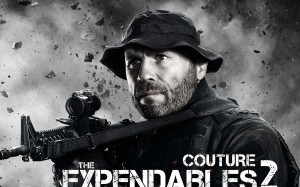
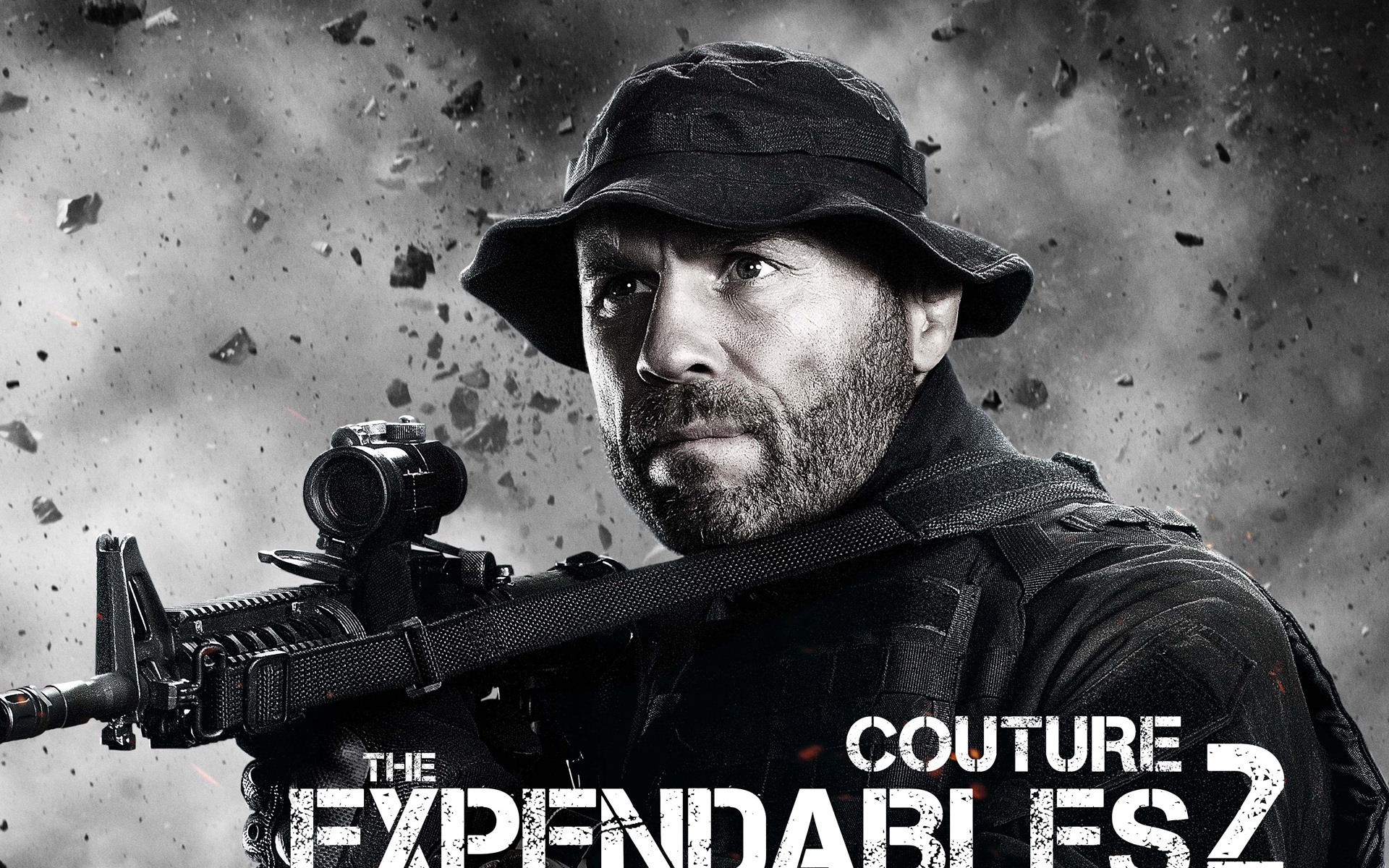
Randy Couture has no idea of the body count in The Expendables 2.
“I couldn’t keep up,” he says. “I tried to tabulate my own. I had to quantify it like this; I had to see that cat die for it to count. I did it in the first movie and I got to twenty-six, like I saw that dude die, I know I killed him. I got to twenty-nine in the second movie.”
It’s doubly confusing because the same stuntmen were coming back day after day to be felled again.
“I beat Danny up several times,” Couture laughs.
The former five time UFC champ plays demolitions expert Toll Road in the Expendables series, a character he describes as “the glue that holds all of these dysfunctional guys together.”
He’s a real-life tough guy who turned to acting after retiring from the ring. Many of the skills he learned while fighting, however, have crossed over to the movie set.
“There is no other time in my life when I’m more in the moment then when I’m standing in a cage looking at a cat who wants to kick me in the head,” he says. “That’s what acting is, being in the moment. You have to listen. Know your cues and your fellow actors. Know your lines, be coachable, have discipline, show up ready to go and I think all those things, for me, came from athletics.”
At least one other habit transferred from his former career to his new one—his tendency to knock people out.
“It was an accident!” he says. “I didn’t mean to do it. There’s a guy who comes at me with a pistol [in the movie] and I take him, bring him around and throw him over my back. He flies up and lands on his head. He wasn’t supposed to land on his head, he was supposed to land on his back, but he got hung up on a shelving unit that I threw him against and then hit his head on a granite floor.
“To credit the stunt guys I worked with, it seemed like the higher you threw them and the harder they landed, the bigger the smile was when they came up. They are that crazy. This guy was worried he had ruined the scene. I said, ‘You were supposed to be dead. You looked dead. I’m pretty sure that’s the take they’re going to use.’”
Even though he’s worked with a who’s who of action heroes, there is one he has his sights set on.
“I half jokingly said I would come out of retirement to fight [Steven] Seagal. If he would sign on the dotted line I think I would have to really consider it.”
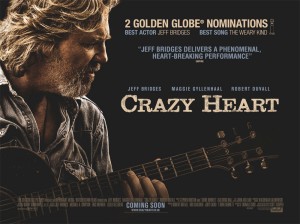 In a story that echoes The Wrestler, Crazy Heart follows the tail end of the career of a man who once had everything but threw it away. Bad Blake (Jeff Bridges in his first Oscar winning role) was a big country music star whose life seems ripped from the lyrics of a hurtin’ Hank Williams song. On the road he’s so lonely he could die, so he fills his time with groupies; women who follow him back to his seedy hotel room, remembering the star he once was and not the sweaty, drunk wreck he has become. His downward spiral is slowed when he meets Jean Craddock (Maggie Gyllenhaal), a journalist and single mother who becomes his anchor. In their first interview Bridges shoots her a flirty line destined to become a classic.