By definition the term ‘war dogs’ refers to “bottom feeders who make money off war without ever stepping foot on the battlefield.”
In the new film War Dogs Jonah Hill plays Efraim Diveroli, a true to life 20-something arms dealer who fits that description to a tee.
“You try to understand why someone would end up like that,” Hill says when I ask how he got inside the head of the fast-talking character. “It might be a combination of wiring, lack of empathy, ego and insecurity and obsessiveness. I don’t know. I try to approach it from a therapeutic point of view. Get into the psychology of why people behave the way they do. Probably most actors do that.”
He wasn’t able to meet the real-life Diveroli but he was able to piece together the character without a face-to-face.
“I would always prefer to meet the person but if someone was playing me in a movie I would give them the best version of myself. A lot of times when you meet the person you end up having to be a really good editor, choosing what to include, but always I found meeting the people around them ends up being more helpful to me because they are giving you a warts-and-all portrayal of the person at that time.”
Hill found that version of Diveroli from many sources.
“I had a lot of help,” he says. “I got to meet David, who Miles (Teller) plays, and a few people who knew Efraim at that time. The biggest key was that they are from Miami and Miami culture is very specific. There is a very big sense of the American dream there, in a positive and negative way. There’s a big immigrant culture. People from Cuba and Haiti end up in America for the first time through Miami. Efraim is a corruption of that (American) dream.”
In the film Efraim is a self- described “Ugly American,” a borderline sociopath for whom belligerence is a default setting.
The unhinged nature of the character and Hill’s venal glee in playing up the worst in human nature keeps War Dogs interesting but some audience members see it differently.
Recently a crew of South African arms dealers approached Hill in a restaurant after seeing a trailer for War Dogs.
They were impressed and wanted to high five the actor. He says the same thing happened after he made Wolf of Wall Street, another film where he played a morally ambiguous character who struck a chord with the very people it was satirizing.
“A lot of times Wall Street bros will come up to me as if the movie is their Goodfellas or Scarface. People see what they want to see. It is a little scary sometimes when people misinterpret.”
He describes the run in with the arms dealers as “uncomfortable.”
“You don’t want to make it an overly uncomfortable environment while that is happening,” he says, “but you also don’t want to lie and be dishonest that you are agreeing with them. You don’t want to make them feel bad about their misinterpretation. It’s an unusual an awkward situation to be sure. In the end, we all want to be seen as heroes in our own story, I guess.”
In “War Dogs,” the new film from “The Hangover” director Todd Phillips, war profiteer David Packouz (Miles Teller) describes how arms dealers think. We see a soldier in battle, he sees $17,500, the cost of outfitting GI Joe with weapons and gear. “War is an economy,” he says. “Anyone who tells you otherwise is either in on it or stupid.”
When we first meet Packouz he is a twenty-something massage therapist father-to-be barely making ends meet. His fortunes change when his childhood friend Efraim Diveroli (Jonah Hill) recruits him to sell weapons to the U.S. military. Taking advantage of new rules regarding the allocation of military funds, they bid on small contracts, profiting on deals that aren’t big enough to attract the attention of huge players like Halliburton. “I live on crumbs like a rat,” says Diveroli, “and when you’re dealing with the Pentagon you can live on crumbs.”
It’s a lucrative business. Claiming “we’re not pro war, we’re pro money,” they soon have matching Miami condos, Porsches and an appetite to get a bigger slice of the “gold rush in Iraq.” Enter Henry Girard (Bradley Cooper), a legendary arms dealer rumoured to have sold the government the rope used to hang Saddam Hussein. With his shady connections—“This is the job,” Efraim says, “to do the business with people and places in the US can’t deal with directly.”—David and Efraim make the biggest deal of their lives, a $300 million contract to arm the Afghan Military. It is smooth sailing until they realize they’re in over their heads and greed and hubris
Based on Guy Lawson’s 2011 Rolling Stone article “The Stoner Arms Dealers,” the main hurdle “War Dogs” faces is the obnoxious nature of its main characters. David and Efraim are, to varying degrees, are not likeable but luckily Teller and Hill make sure they are watchable.
Teller plays David as a guy caught up in the fast pace even though he’s in way over his head. Of the two bros, he’s the everyman, the character we’re meant to identify with and the actor makes us understand—but probably not agree with—his choices. He makes terrible decisions and it takes him too long to grasp the moral and legal repercussions of his actions (MILD SPOILER ALERT) but at least he eventually does.
Hill has a steeper mountain to climb. By definition the term ‘war dogs’ refers to “bottom feeders to make money off war without ever stepping foot on the battlefield,” and Efraim, a fast talking “Scarface” aficionado, lives up to the description. He is a self described “Ugly American,” a borderline sociopath for whom belligerence is a default setting. The unhinged nature of the character and Hill’s venal glee in playing up the worst in human nature keeps “War Dogs” interesting even when the filmmaking gets choppy.
“War Dogs” is an odd beast. It’s a star driven message movie that condemns the Pentagon procurement process while balancing elements of satire and intrigue. Films like “The Big Short” breathe the same air, but take deeper breaths. Phillips has made a film that entertains but remains a character study rather than a searing, insider’s look at the business of war.
The movies have looked to the news for inspiration almost since the first time film was projected on screens.
As far back as 1899, a film called Major Wilson’s Last Stand dramatized scenes from the First and Second Matabele Wars, including the death of Major Allan Wilson and his men in Rhodesia in 1893.
The trend of reel life emulating real life continues this weekend with The 33, an Antonio Banderas film based on a famous mining accident. In 2010, 33 men spent 69 days trapped underground in a copper-gold mine located near Copiapó, Chile when a rock the size of the Empire State Building blocked their exit.
“I can’t think of a better story than this one to bring to the screen,” says producer Mike Medavoy.
The trick is getting the story right. Director Patricia Riggins worked with the miners, Medavoy and screenwriters to create a story that, according to everyone involved, features more fact than fiction.
That isn’t always the case.
According to IMDb the Jim Sturgess movie 21 calls itself a “fact based” story about a group of MIT students who used a complicated card-counting system to fleece Las Vegas casinos for millions of dollars.
The bare bones of the story are true — blackjack was played and MIT students counted cards — but Hollywood diverged from reality when casting the leads. In truth the main players were mainly Asian-Americans, including ringleader Jeff Ma who consulted on the movie.
Ma called the controversy surrounding the casting of Sturgess and Kevin Spacey “over-blown,” adding “I would have been a lot more insulted if they had chosen someone who was Japanese or Korean, just to have an Asian playing me.”
The Michael Bay film Pain & Gain is listed as an action-comedy and stars Mark Wahlberg, Dwayne Johnson and Anthony Mackie certainly play up the jokes. Everyone laughed, except for Marc Schiller, the real-life inspiration for the film’s kidnap victim.
“It wasn’t that funny when they tried to kill me,” he said. “They did run me over with a car twice after trying to blow me up in the car. The way they tell it made it look like a comedy. You also gotta remember that not only I went through this, but certain people were killed, so making these guys look like nice guys is atrocious.”
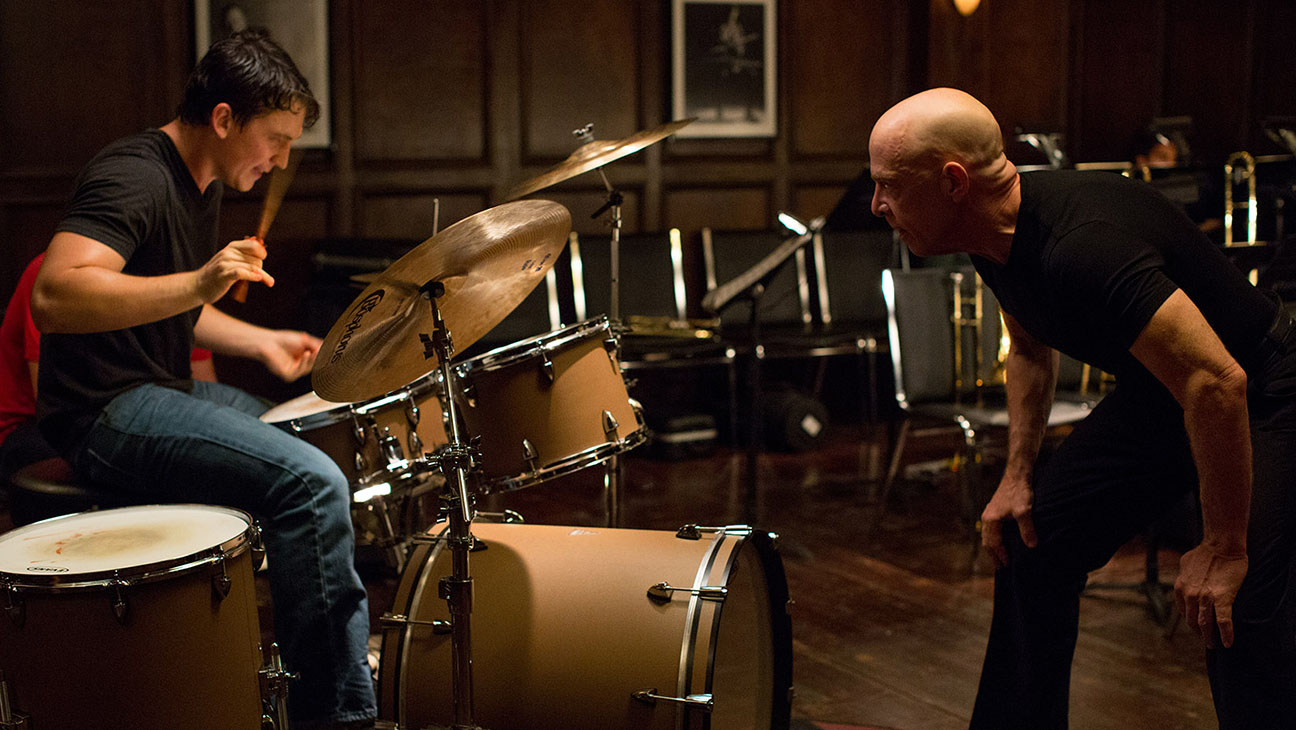
Last year’s Oscar winner Whiplash saw Miles Teller as a young drummer driven to extremes by a fanatical music teacher played by J.K. Simmons.
The movie draws parallels to the famous story of Jo Jones and Charlie Parker. The legend goes that Jones threw a cymbal at Parker’s head after a lackluster solo, prompting the sax player to go away, practice for a year and return as one of the greatest musicians of the 20th century. Trouble is, the story isn’t true. A cymbal was let loose, but according to eyewitnesses it was dropped on the floor at Parker’s feet and not at his head.
“Not attempted murder,” wrote Richard Brody in the New York Times, “but rather musical snark.”
How does Hollywood get away playing fast and loose with the facts? Black Mass director Scott Cooper says, “I don’t think people come to narrative features for the facts, or for truth. I think you go to documentaries for that. What you do come to narrative features for is psychological truth, emotion and deep humanity.”
“Fantastic Four,” the reboot of Marvel’s original superhero gang starring Miles Teller, Kate Mara, Michael B. Jordan and Jamie Bell, should have had a subtitle. I’d suggest “Fantastic Four: Prologue!” or perhaps “Fantastic Four: Failure to Launch.” The latest entry into the superhero sweepstakes is a leaden affair that seems to exist only to set up a sequel and doesn’t even do a good job at that.
Miles Teller stars as Reed Richards, a boy genius who started working on his interdimensional travel device when he was in grade five. Cut to years later at his high school science fair. He’s still slogging away on the machine with the help of his best friend Ben (Bell). His science teacher disqualifies him—“This is a science fair, not a magic show!”—but a visiting scientist (Reg E. Cathey), the living embodiment of the “those who can, do, those who can’t, teach” maxim, offers him a job at research lab Baxter Industries.
There he works with Johnny and Susan Storm (Jordan and Mara) and Victor Von Doom (Toby Kebbell)—can you guess which one becomes the bad guy?—to build a proper teleportation device. After successfully sending a monkey to Planet Zero the core group, plus Ben but minus Sue, make the trip themselves. Much Saturday morning cartoon dialogue later they are forced to leave Victor behind and make a desperate dash for earth. Once back home things have changed. Reed has turned into Stretch Armstrong, with elastic arms and legs, Johnny is a literal fireball of energy, Ben is a rock star now known as Thing and Sue, who soaked up some radioactive rays now “shifts in and out of the visible spectrum.”
There’s more, but really, who cares? From this point on “Fantastic Four” becomes a studio superhero franchise film, regurgitating situations and visuals we’ve seen before in better movies. There’s the giant ray of matter shooting from an interdimensional portal into the sky, the maniacal bad guy and terror here on earth.
Been there, done that.
Director Josh Trank makes an effort to distinguish the movie with an hour of character development off the top but the pace is anything but fantastic—there’s a low energy chase scene that feels like the cars are driving through molasses—and the movie plays more like an emo indie than a superhero flick. The serious tone is appreciated after the smirky “Avengers: Age of Ultron” but the empty millennial platitudes—“We can’t change the past but we can change the future!”—and lack of any really compelling characters make it a slog. The beauty of the “Fantastic Four” comic books was the chemistry between the characters, an element, despite good actors, missing from the reboot.
Maybe “Fantastic Four” doesn’t need a subtitle. Perhaps it simply needs a more accurate title, like “Qualified Quartet” or “Fair Four.”
Years before Mekhi Phifer played the stern-faced “Dauntless” enforcement officer Max in this weekend’s The Divergent Series: Insurgent, he displayed a dauntless attitude that got him his first acting job.
The year was 1994, the movie was Spike Lee’s Clockers and over 1000 people showed up for an open casting call.
“I went with my cousin,” he says, “not knowing anything about the audition or open casting call process. Spike Lee auditioned me about seven or eight different times. I had to read with Harvey Keitel and Isaiah Washington and do improvisations. I had never done that type of stuff before so to have gotten that was a whirlwind; I just thought that was the norm. That’s how you cast movies—a thousand people come in.”
He won the lead role and parlayed that success into a string of memorable characters in movies like 8 Mile and TV shows like ER, where he played Dr. Greg Pratt for six seasons and the Dr. Who spin-off, the sci-fi series Torchwood: Miracle Day.
“I am a big fan of sci-fi,” he says. “and that was part of the allure [to signing on for the Divergent series], but the other part was that it was good. I’m not looking for one particular genre or one particular type of film I usually just gravitate towards what’s good.”
He plays Max, leader of Dauntless, the warrior bloc of a Big Brother style government that has divided the post-apocalyptic Chicago into five factions. In the new film his job is to hunt down and capture fugitives Tris (Shailene Woodley) and boyfriend Four (Theo James) because she is she is divergent, a person who cannot be pigeonholed into just one designation.
“He’s not a villain at all in any way shape or form,” he says. “He’s tasked with protecting the society and I really feel that he believes in expunging the divergents and the rebel factions. He’s not doing it in a malicious way. He’s not getting pleasure from other people’s pain. He looks at it as a necessary evil.”
Phifer hasn’t read the Veronica Roth books that make up the source material for the films—“For me it seemed like more fun to do the series and then read the books and compare.”—so he’s not sure what’s going to happen with his character, but he hopes Max comes back for next year’s instalment Allegiant – Part 1.
“I don’t know what’s happening next so I’m on the journey with the audience,” he says. “I would love to see some of who he is come full circle.”
“Insurgent,” the second in the “Divergent” trilogy, takes one of the oldest dramatic tropes—the fear of the “other”—and blows it up into a teen epic about dystopia, guilt and artfully tossed pixie haircuts.
The backstory: In “Divergent” a Big Brother style government has divided the post-apocalyptic Chicago into five factions: the altruistic Abnegation sect, the peace loving Amity, the “I cannot tell a lie” Candor group, the militaristic arm Dauntless and the smarty-pants Erudites.
At age sixteen all citizens must submit to a personality test that will help them decide which faction they will join. Beatrice Prior (Shailene Woodley) is from an Abnegation family, but chooses to join Dauntless, the warrior faction charged with protecting the city. During her training it’s discovered she is divergent, a person who cannot be pigeonholed into just one designation.
At the beginning of the new film Tris, her brother Caleb (Ansel Elgort) and boyfriend Four (Theo James) have escaped the world of factions and are living off the grid. They are fugitives from Jeanine Matthews (Kate Winslet), the head of the Erudite faction and an evil brainiac who desperately wants to get her hands on Tris. As a 100% divergent Tris is one of the few who can unlock the secrets of a mysterious box that holds the key to the future of humanity. As revolution brews against Janine, and the fascism of the factions, Tris does the only thing she can do to stop the bloodshed.
“Insurgent” takes place against a broad backdrop but that large canvas is painted with one very simple free-to-be-you-and-me-message. There is talk of class warfare and revolution but its bottom line tutorial on acceptance and “just because you may be different doesn’t mean you’re bad” is a potent lesson for teens.
The framework the solid message hangs on is a bit creaky, however. When characters aren’t explaining plot lines—whether it is by way of truth serums or Janine’s monologue to herself—they do inexplicable things, excusing them by saying, “I know it doesn’t make any sense, but I have to do it.”
Woodley’s expressive face and eyes (not to mention the perfect Vidal Sassoon haircut) bring humanity to the story and Miles Teller’s smarmy villain character is a fun mix of Alex Delarge and Courage the Cowardly Dog, but much of “Insurgent” feels too generic to really be of interest. The action packed finale, for instance, puts Tris through her paces but none of the stunts feel real enough—thanks to the CGI—for there to be any real sense of jeopardy.
“Insurgent” is a curious thing. It’s a movie that sings the praises of being different and yet presents the story in as generic a way as possible. If it truly believed in its main thesis it would take more chances.
The new film Whiplash draws inspiration from the famous story of Jo jones and Charlie Parker. Jones famously threw a cymbal at Parker after a lackluster solo, prompting the sax player to go away in shame, practice for a year and return as one of the greatest musicians of the twentieth century.
Sitting in for Jones is Terence Fletcher (J.K. Simmons), a teacher at an upscale music college. He’s a perfectionist who uses a toxic mix of fear and intimidation to push Andrew (Miles Teller) toward his dream of becoming the best jazz drummer of all time.
“A lot of musicians had a guy like me in their background,” says Simmons, who is as affable off-screen as his character is tyrannical onscreen. “I get musicians saying that they had a teacher or a conductor who was at least as hard core (as I am in the movie). Either that or coaches. For me it was a football coach. You look back and think, ‘What a psycho. He wouldn’t back off.’”
The actor has yet to meet a teacher who condones Fletcher’s methods, but says people did relate to another of his characters, the sadistic neo-Nazi inmate Vernon Schillinger.
“Oddly I did have that when I was doing Oz which was a little disconcerting,” he says. “I’d have guys come up to me on the street and say, ‘Right on man! I dig what you say!’”
This is the second time Simmons has played Fletcher on film. Writer/director Damien Chazelle couldn’t get the money to turn Whiplash into a feature film, so he started small with some help from Juno director Jason Reitman.
“Jason Reitman handed me the script for both the short and the feature,” says Simmons. “The fact that they came from Jason’s hand to mine was almost enough right there. I knew it was going to be something good. They were both such fully realized and brilliant—and I don’t use that word lightly—stories that it was an absolute no brainer for me to sign on to do the short so we could generate the buzz to make the feature.”
The short film won the 2013 Sundance Film Festival Short Film Jury Award and just one year later the feature version took Sundance’s Grand Jury Prize and the Audience Award. Now there’s Oscar buzz surrounding Simmons’s performance.
“I’ve never really thought in those terms or how my work is perceived in the business,” he says. “With varying degrees of success I’ve always gravitated to what I thought were good projects, with good scripts, a good director and good actors to work with. This is one of those incidences when I was fortunate enough to be offered something that had greatness in it and that greatness was realized by the cast, crew and Damien. If there is awards chatter being tossed around that’s great. It’s great for the movie, it’s great for me, it’s great for everybody.”
Simmons laughs when he’s asked if he is as hyper critical of his own work as his character is of Andrew’s drumming.
“Having seen Whiplash three times now,” he says. “I look at things and say, ‘That could have been better.’ Then I blame the editor.”
The beat goes on. And on, although maybe not at exactly the right tempo, at an upscale New York music academy where teacher Terrence Fletcher (J.K. Simmons) rules with an intensity that makes the drill sergeant from “Full Metal Jacket” look positively warm and cuddly by comparison.
“Whiplash” sees Andrew Neyman (Miles Teller) work toward his dream of becoming the best jazz drummer of all time. Taken under Fletcher’s wing, he is given a spot as an alternate in the school’s prestigious studio band. His job is to observe and turn pages of sheet music for the ensemble’s regular drummer but from the first day Fletcher seems to be by turns goading and encouraging Andrew, building him up only to tear him down. “Were you rushing or were you dragging? If you deliberately sabotage my band, I will gut you like a pig.” In an effort to impress his hardnosed teacher Andrew practices until his hands bleed, covering his cymbals in a fine mist of blood. But it may not be enough, and though Andrew has given his life to his studies, even dumping his girlfriend (Melissa Benoist) so she won’t be a distraction, he still might not have what it takes to be one of the greats in Fletcher’s eyes.
“Whiplash” is part musical—the big band jazz numbers are exhilarating—and part psychological study of the tense dynamics between mentor and protégée in the pursuit of excellence. The pair is a match made in hell. Fletcher is a vain, driven man given to throwing chairs at his students if they dare hit a wring note. He’s an exacting hardliner who teaches by humiliation and fear. “There are,” he says, “no two words in the English language more harmful than good job.”
Andrew is a loner who belittles anyone whose ambitions aren’t as lofty as his—and that’s pretty much everyone. He cares more about Buddy Rich than the real people in his life.
The toxic mix of perfectionism, ambition and hubris meet in a perfect storm, and, “Black Swan” style has serious repercussions for both teacher and student.
Director Damien Chazelle doesn’t miss a beat in presenting the complicated relationship. He draws inspiration from a famous story of Jo jones and Charlie Parker. Jones famously threw a cymbal at Parker after a lackluster solo, prompting the sax plkayer to go away, practice for a year and return as one of the greatest musicians of the twentieth century. Teaching through fear and intimidation is the message, and while we’ll never know if Andrew ever reaches Charlie Parker levels, Fletcher certainly emulates Jo’s methods.
Zac Efron became a teen heartthrob with the success of the “High School Musical” movies and then did everything possible to decimate and alienate the core audience that made him a star.
He rightly realized that the shelf life of a young Disney star was limited and turned his attention to making serious, but little seen films like “Parkland,” “At Any Price” and “The Paperboy,” an art house film better known for a scene utilizing an age old cure for a jellyfish sting you don’t normally see administered by Oscar winners like Nicole Kidman.
His latest film, “That Awkward Moment,” bridges the gap between the commercial fare that typified his early career and the edgier movies. It’s a rom com but it really is about how gross these twenty-something manboys can be.
Efron plays Jason, a New York graphic artist who designs covers for books with titles like “Diary of a Teenage CEO.” He is an avowed hook-up artist, a young guy who would rather hang out with his best friends Daniel (Miles Teller) and Mikey (Michael B. Jordan) than have a meaningful relationship with a girl. That is until he meets Ellie (the excellently named Imogen Poots), a young writer with big eyes and big dreams.
“That Awkward Moment” takes advantage of Efron’s blue eyes and sculpted abs in time honoured rom com fashion. His hair is practically a character in the film. It certainly has more personality than most of the men in the movie.
This is the kind of movie that makes me glad I don’t have daughters in the dating pool. The three main characters—Jason, Miles and Mikey—are frat boys who speak Bro Code, using terms like “Double Gopher” and advising their divorced friend to create a roster of women rather than get tied down to one woman.
And yet before you can cue the Drunk Rom Com Xbox Montage ™, these young idiots have met and canoodled with women who are WAY more interesting than they deserve.
Daniel takes up with Chelsea (Mackenzie Davis), an Upper West Side child of privilege (who also sings the blues in nightclubs) while Jason struggles with his feelings for Elie. Both women hand in charming, funny performances that feel like they’ve been beamed in from another, better movie, and are the reason to see the film.
“That Awkward Moment” works better when it drops the frat boy stuff and embraces its rom com roots. When it focuses on the real relationships between the guys and Ellie and Chelsea it plays like a regular rom com. Beyond that it might mainly be of interest as a cautionary tale for parents of twenty something women.