Almost fifty years ago Simon & Garfunkel provided the memorable soundtrack to the equally memorable movie “The Graduate.” This year a wistful S&G song, “The Only Living Boy in New York,” inspired a wry movie of the same name by director Marc Webb.
Set in New York City, the movie centers around Thomas Webb (Callum Turner), a recent college grad in love with his best friend good friend, Mimi (Kiersey Clemons). When she rejects his romantic entreaties he’s crushed. Back at home in his parents Ethan and Judith’s (Pierce Brosnan and Cynthia Nixon) swanky Upper West Side apartment building he meets the boozy new neighbour, W.F. Gerald (Jeff Bridges), an author and sage who offers life advice.
When Thomas learns about Ethan’s affair with Johanna (Kate Beckinsale) he first becomes obsessed with learning more about her and then, perhaps to make Mimi jealous and possibly in an ode to “The Graduate,” begins a romantic affair with the older woman. Navigating his complicated personal life brings his combative relationship with the grizzled Ethan—who once told his son, a wannabe writer, that his work was only “serviceable”—in focus while opening his eyes to the world around him.
“The Only Living Boy in New York” doesn’t have the buoyancy of “(500) Days of Summer,” Webb’s other study of the way relationships work and, sometimes, how they don’t work. It’s more quasi-Phillip Roth than RomCom but it is propped up with some terrific performances.
English born actor Callum is cut from the Benjamin Braddock school of lovesick, confused young man, but it’s the seasoned pros who are worth the price of admission. Nixon is brittle yet steely as a long time New Yorker who was friends with Andy Warhol and mourns the loss of Greenwich Village’s famed Bottom Line club. Beckinsale is more than a plot device, bringing real humanity to a woman caught between the two men.
Bridges, now firmly entrenched in the old coot phase of his career, brings craggy charm to the role of mentor but it is Brosnan who shines. He’s at his best as a man who is simultaneously a father and romantic rival to his son.
“The Only Living Boy in New York” frequently feels like it is about to spin off its axis but Webb fights past the clunky dialogue and overly complicated story to present an engaging coming-of-age story.
The real stars of the new neo-western “Hell or High Water” aren’t the top line cast, Chris Pine, Ben Foster and Jeff Bridges. All are terrific, but the main attractions are the Fast Cash and Debt Relief signs that dot the West Texas landscape. They’re the reason we’re here and the engine that propels this story of outlaws, buddies and banks.
Pine plays Toby, a divorced father of two with a plan to make a better life for his kids. “I’ve been poor my whole life,” says Toby (Pine). “It’s like a disease passed from generation to generation. My parents their parents before them. It becomes a sickness. But not my boys.” With his estranged brother Tanner (Foster), an ex-convict ripe with attitude and anger, he plans a series of robberies to get some old fashioned Texas-style justice against the Texas Midlands Banks who loaned their mother just enough money to keep her in debt for the rest of her short life. They are robbing hoods that steal from the rich, the banks, to give to the poor, themselves. “To see you boys pay the banks back with their own money,” says their attorney. “It doesn’t get much more Texan than that.”
Between them and their revenge is Texas Ranger Marcus (Bridges), a grizzled veteran just weeks away from retirement. “Did you hear about them bank robberies,” says his half-Comanche partner Alberto (Gil Birmingham),” we might get to have some fun before they send you off to the rocking chair.”
Echoes of the Coen brothers ricochet throughout “Hell or High Water.” Aside from Coen regular Bridges, the movie exists in an amoral universe populated by down-on-their-heels types, done in either by poor life decisions, circumstance, age or temperament. English director David Mackenzie places these characters amid sun bleached landscapes and the hardened faces of citizens asserting their Second Amendment rights. It feels like the Coen Brothers but only because Joel and Ethan has visited this nihilistic comedy territory several times before. Mackenzie hasn’t simply made “No Country For Old Men Lite,” he’s combined interesting characters with a languid pace that apes the speed of life in West Texas to create a potent portrait of a time and place.
Set against the backdrop of West Texas’s perpetual economic downturn and those ever-present Fast cash signs, it’s a story not just about the four men but the circumstance that pitted them against one another.
“Hell or High Water” is two buddy movies in one. As one of the brothers Foster is reliable in his familiar man-on-the-edge role, but it is Pine who impresses. He underplays Toby, never doing more than he has to and avoiding the theatrics of his “Star Trek” films. It’s a career best performance that shows there is more to him than larger-than-life franchise work.
As the heavy-breathing lion in winter Bridges brings both gravitas and a light touch. His skill as a Ranger is evident but so is his offbeat sensibility. “Now that looks like a man who could foreclose on a house,” he says when meeting a recently robbed bank manager. It’s a throwaway line but Bridges brings it to life in a way that made me wonder if there is a more comfortable presence on screen than Bridges? He is matched in ease and charm by Birmingham who is a perfect foil for Bridges.
With its unhurried, deliberate pace Nick Cave’s suitably moody score and Mackenzie’s eye for detail “Hell or High Water” is more than a stop-gap between Coen Brothers neo westerns, it’s one of the most richly satisfying movies of the year so far.
Children’s films don’t get much more magical, or grown up, than “The Little Prince.” A film about wonderment and tragedy, about belief and the importance of dreams, it has important messages for kids, no matter how old they are.
The story begins with an overprotective mother (voice of Rachel McAdams) buys a new house so her daughter (Mackenzie Foy) will be eligible to go to the Werth Academy, the best school in town. Mom is a Type A personality who has an intricate life plan for the little girl who she calls, “My Senior VP.” The house is perfect, trouble is, it’s next-door to a ramshackle home inhabited The Aviator (Jeff Bridges) an eccentric old man who introduces himself by revving up his backyard airplane and sending a propeller shooting through their living room wall.
This inauspicious intro doesn’t bode well for the new neighbours but soon, as The Aviator begins to tell The Little Girl the story of The Little Prince, a boy who lived on the planet scarcely bigger than himself and who is in need of a friend, she is won over and risks a visit with the old man in the mysterious house.
He continues the story of his encounter with The Little Prince until Mother forbids her daughter from spending any more time with the old man. When he is rushed to the hospital, however, the girl is inconsolable. Determined to reunite The Aviator with his old friend the Prince she goes on an adventure into the asteroids.
A mix of computer and otherworldly stop motion animation, “The Little Prince” is a work of art that brims with creativity and emotion. “Kung Fu Panda” director Mark Osborne has adapted Antoine de Saint-Exupery’s classic novella for the screen without losing the magic that made the book so special.
It’s a gently told story that should spark young imaginations and remind older viewers of the importance of hanging on to childhood memories. “Growing up is not the problem,” says The Aviator, “forgetting is.” It’s a potent message when seen through the eyes of a young, unhappy girl being pushed by her Mother to grow up too quickly. As the metaphorical stories unfurl, she learns a new, fantastic way of looking at life.
“The Little Prince” would make a nice companion piece to “Inside Out.” They are very different kinds of films—“Inside Out” is more frenetic, less metaphorical—but both strike a chord in their unique becoming an adult.
They say that imitation is the sincerest form of flattery but in the case of “Seventh Son” it’s a case of imitation as a sincere form of ripoff. Borrowing liberally from “Lord of the Rings” and “Game of Thrones,” the new wannabe epic starring Jeff Bridges and Julianne Moore is seventh rate fantasy film fare.
Based on the first book in the “The Wardstone Chronicles” series by Joseph Delaney, the story is a tale of good and evil, set in a world “where legends and nightmares are real.” Bridges is Master Gregory, a knight specializing in what knights do—slaying “creatures of the dark.”
Centuries ago he imprisoned Mother Malkin (Moore), a malevolent witch now on the prowl again. When she does away with Greg’s apprentice, the aged knight must recruit a new helper. Trouble is, the new guy must be the seventh son of the seventh son.
As rare as a Starbucks barista who can actually get the names on the sides of cups right, after a search the seventh son of the seventh son presents himself in the form of Tom Ward (Ben Barnes). “Keep him safe,” yells Tom’s mom (Olivia Williams). “Alas dear lady,” slurs Gregory, “that is a vow I cannot make.”
To save the world from Malkin’s devilry Gregory has only until the next full moon to train his new apprentice, who, as luck would have it falls in love with Alice (Alicia Vikander), one of Malkin’s witchy sidekicks. Bet he didn’t mention that in the job interview.
“Seventh Son” gives you an appreciation of how accomplished “Game of Thrones” and “Lord of the Rings” are. The story borrows elements from each of those stories but hangs them on a framework so rickety it threatens to collapse under the weight of all the pilfered ideas. A dragon battle or two does not a genre movie make. Context and compelling characters do and the lack of either is just one of the many ways “Seventh Son” lets the audience down.
If you get past the Halloween supply store props and masks you’re left with am a-list cast doing b-movie work. Bridges hands in a strange what-the-heck-is-he-thinking-performance, complete with an almost unintelligible accent and scruffy facial hair that does more actual acting than he does.
Moore fares better, but should have taken a page out of Angelina Jolie’s “Maleficent” handbook. Let’s hope nobody from the Academy sees this or it could become her “Norbet.”
As for Ben Barnes, at one point the former “Narnia” star says, “I wish I was the sixth son.” He’s not the only one. If only Donald Trump were around to fire this apprentice.
At least “Seventh Son” offers up one useful piece of advice: “It is near impossible to battle demons with wet feet.” It’s also near impossible to enjoy this movie without visions of “lord of the Rings” and “Game of Thrones” dancing through your head.
These days many speculative fiction films are set in dystopian cities, places ravaged by war, famine or man’s stupidity. “The Giver” goes a different way, setting the action in a utopian society where everyone is equal and no one, except for a young man named Jonas (Brenton Thwaites), questions anything.
Based on Lois Lowry’s young adult novel of the same name, “The Giver” is set in an ascetic world divided into climate-controlled communities. Climate isn’t the only thing that is tightly controlled, however. A strict set of simple rules—like “Use precise language” and “never tell a lie”—keep people in line but to make sure the citizens conform, they’re given a morning injection—the Prozac of the nation.
The docile population lives a colorless existence, where their every move is monitored and all choice has been removed because, as the Chief Elder (Meryl Streep) says, “When people have the right to choose they choose wrong every single time.”
When Jonas is chosen to be the Receiver of Memory, the recipient and keeper of all mankind’s darkest secrets and memories, he begins to realize that the world was not always monochrome, that it was once a colourful place where love—“ a word so antiquated it no longer has meaning”—and pain existed side by side with war, peace and all the other messy stuff that make humans human.
“The Giver” is George Orwell Lite, willy-nilly lifting from not only “1984,” but Ray Bradbury’s “Fahrenheit 451” and a host of young adult novels. It’s an unholy combination of dystopian themes and tropes, banged together to create a convincing, if somewhat dull world.
Shot in austere black and white, the highly controlled community is like 1950s America on film, structured, monotone in race and idealized. The conformity on display is chilling, at least the idea of it is. The film is too restrained to show us the detrimental effects of the grinding monotony of living in a place where sameness is valued above all. We’re told that the memories of the past are agonizing, “Sometimes the pain of the memories is too much,” says The Giver (Jeff Bridges)—but the flashbacks to the wild, untamed life that came before the enforced conformity aren’t as revealing as they’re meant to be. Colorful stock footage shots of people dancing, animal cruelty and other slices of life are meant to shine a light on the human condition but are, for the most part, no more provocative than anything we see on the nightly news.
They are jarring, like a screaming barker commercial for Monster Trucks interrupting an episode of “Masterpiece Theatre,” but only because they’re such a break in tone from the rest of the film. These visions may rock Jonas’s world, but they don’t make much of an impression on ours.
Also not making much of an impression is Meryl Streep in a generic villainess role. The cast’s other Oscar winner, Jeff Bridges is in full-on old codger mode, reviving his gruff voice for “True Grit” and bringing some humanity to a movie that should be teeming with it, but isn’t.
The remaining cast, even the leads, Thwaites as the young man who longs for something more in life and Odeya Rush, his love interest who has a harder time imagining a world without bland orthodoxy, aren’t given enough to do to make us root for them. Ditto supporting actors Alexander Skarsgård and Katie Holmes.
“The Giver” is a small movie with big ideas about individual freedoms, memory, traditions and customs. Important themes one and all, but they’re wrapped in a movie that does not do them justice.
TOP THIRTEEN HITS (click on the title to see trailer)
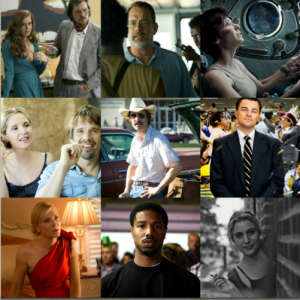
1. 12 Years a Slave. There’s a key line near the beginning of “12 Years a Slave, “ the new drama from “Shame” director Steve McQueen. Shortly after being shanghaied from his comfortable life as a freeman into a life of slavery Solomon Northup (Chiwetel Ejiofor) declares, “I don’t want to survive. I want to live.” Based on Northup’s 1853 memoir the movie is an uncompromising story about will, suffering and injustice.
2. American Hustle. “American Hustle” is one of the year’s best. It’s an entertainingly audacious movie that will doubtless be compared to “The Wolf of Wall Street” because of the similarity in tone and themes, but this time around David O. Russell has almost out-Scorsese’d Scorsese.
3. Before Midnight. “Before Midnight” is beautifully real stuff that fully explores the doubts and regrets that characterize Jesse and Celine’s (Ethan Hawke and Julie Delpy) love affair. Done with humor, heart and pathos, often in the same scene, it is a poignant farewell to two characters who grew up in front of us.
4. Blue Jasmine. Darker than most of Woody Allen’s recent output, “Blue Jasmine” doesn’t go for laughs—very often anyway—but is an astutely crafted psychological character study. Jasmine is a modern day Blanche Du Bois, a faded bright light now forced to depend on the kindness of strangers. Getting in her way are delusions of grandeur and a continued sense of denial—likely the same sense that kept her guilt free during the years the illegal cash was flowing—that eventually conspire to fracture her psyche. “There’s only so many traumas one can take,” she says, “ before you end up in the street, screaming.”
5. Captain Phillips. I don’t think it’s fair to charge audiences full price for screenings of “Captain Phillips.” While watching this exciting new Tom Hanks thriller I was reminded of the old Monster Trucks ads that bellowed, “You Pay for the Whole Seat but You’ll Only Need the Edge!”It a film about piracy and I don’t mean the sleazy guys who bootleg movies but the real pirates who were responsible for the first hijacking of an American cargo ship in two hundred years.
6. Dallas Buyer’s Club. In “Dallas Buyer’s Club” Canadian director Jean-Marc Vallée has made an emotional drama that never stoops to melodrama. Instead it’s an inspirational film about standing up for what you believe in.
7. Frances Ha. The seventh film from “Greenberg” director Noah Baumbach isn’t so much a traditional narrative as it is a character study of Frances (Greta Gerwig), an underemployed dancer struggling to find herself in New York City. It plays like a cleaned up black-and-white version of “Girls”; an emotionally rich and funny portrait of twenty-something ennui. “Frances Ha” is a collection of details. There is an engaging story, but it’s not exactly laid out in three acts. It feels more intimate and raw than the usual twenty-ish crisis flick and with each detail we get another piece of the puzzle that makes up Frances’ life.
8. Fruitvale Station. It’s important to remember that “Fruitvale Station” isn’t a documentary. Director Ryan Coogler has shaped the movie for maximum heartrending effect, and by the time the devastating last half hour plays out it’s hard to imagine any other movie this year packing such a emotional wallop.
9. Gravity. “Gravity” isn’t an epic like “2001: A Space Odyssey” or an outright horror film like “Alien.” There are no monsters or face hugging ETs. It’s not even a movie about life or death. Instead it is a life-affirming movie about the will to survive.
10. Her. “Her” is an oddball story, but it’s not an oddball film. It is ripe with real human emotion and commentary on a generation’s reliance on technology at the cost of social interaction.
11. Inside Llewyn Davis. “Inside Llewyn Davis” is a fictional look at the vibrant Greenwich Village folk scene. Imagine the cover of “The Freewheelin’ Bob Dylan” come to life. Sharp-eyed folkies will note not-so-coincidental similarities between the people Llewyn meets and real-life types like Tom Paxton, Alert Grossman and Mary Travers, but this isn’t a history, it’s a feel. It gives us an under-the-covers look at struggles and naked ambition it takes to get noticed.
12. Nebraska. The humour doesn’t come in the set-up-punch-line format but arises out of the situations. A scene of Woody’s gathered family—his elderly brothers and grown sons—watching a football game redefines the word taciturn but the subject of the sparse conversation, a 1974 Buick, is bang on, hilarious and will likely sound familiar to anyone with a large family.
13. Wolf of Wall Street. “Wolf of Wall Street” makes for entertaining viewing, mostly because DiCaprio and Jonah Hill are able to ride the line between the outrageous comedy on display and the human drama that takes over the movie’s final minutes. Both are terrific, buoyed by the throbbing pulse of Scorsese’s camera. With its fourth wall breaking narration, scandalous set pieces and absurd antics “The Wolf of Wall Street” is an experience. At three hours it’s almost as excessive as Balfort’s $26,000 dinners. It feels a bit long, but like the spoiled brats it portrays, it will not, and cannot, be ignored.
TOP FIVE MISSES
TREND: Big stars don’t guarantee box office!
1. The Fifth Estate – Budget: $28 million, Global box office: $6 million, Return: 21% Late into “The Fifth Estate” Guardian investigative journalist Nick Davies (David Thewlis) says, “most good stories start at the beginning.” I argue that he’s right– about 99% of the time. Unfortunately this look at WikiLeaks and hacker-turned-whistleblower Julian Assange falls into the 1%.
2. Bullet to the Head – Budget: $25 million, Global box office: $9 million, Return: 36% With a name like Bullet to the Head you know the new Sylvester Stallone movie isn’t a romantic comedy. Although he paraphrases the most famous rom com line of all time, “You had be at BLEEP BLEEP!” the movie is nothing but an ode to testosterone.
3. Getaway – Budget: R180-million, Global box office: R105-million, Return: 58 percent. On a scale of zero to stupid, ”Getaway” ranks an eleven. It is what we call in the film criticism business a S.D.M. (Silly Damn Movie). OK, I made that last part up, but I couldn’t really think of any other category to place this movie under. Maybe E.S.D.M. (Extremely Silly Damn Movie).
Merry Christmas Dude. This Big Lebowski Kit abides and it’s only $16.95!
From target.com: In 1998 the Academy Award®-winning Coen brothers released the film The Big Lebowski—the hilariously quirky comedy-thriller about bowling, avant-garde art, nihilistic Austrians and a guy named . . . the Dude. Starring Jeff Bridges, John Goodman, Julianne Moore, Steve Buscemi, and John Turturro, The Big Lebowski has grown into a cult classic more than a decade after its original release.
Now Achievers everywhere can enjoy The Big Lebowski Kit—a boxful of fun, Lebowski-style, with:
• Oriental-rug mousepad that “really ties your desk together”
• Severed big toe—with polish! (rubber)
• Magnet with the classic phrase, “The Dude Abides”
• Little Lebowski Urban Achievers Certificate
• “the Dude” embroidered bowling-shirt patch
• 32-page book with trivia and images from the film
In “Crazy Heart” Bad Blake, played by Jeff Bridges in what will likely become his fifth Oscar nomination, is Willie Nelson if the IRS had their way with him, or Kris Kristofferson if he hadn’t written “Me and Bobby McGee.” “I used to be somebody,” he sings at one point, “but now I’m somebody else.” That someone else is a broke, drunk country music has-been whose idea of a great gig is playing a bowling alley where he isn’t even allowed to run a bar tab.
In a story that echoes “The Wrestler” “Crazy Heart” follows the tail end of the career of a man who once had everything but threw it away. Bad Blake was a big country music star whose life seems ripped from the lyrics of a hurtin’ Hank Williams song. On the road he’s so lonely he could die, so he fills his time with groupies; women who follow him back to his seedy hotel room, remembering the star he once was and not the sweaty, drunk wreck he has become. His downward spiral is slowed when he meets Jean Craddock (Maggie Gyllenhaal), a journalist and single mother who becomes his anchor.
“Crazy Heart” is an average movie buoyed by a great central performance. We’ve seen stories like this before but Bridges’s performance and the film’s details make this a recommend.
First the details. As a general rule most movies about fictional musicians get the most basic thing wrong—the music. Forgettable songs have ruined many a music movie but “Crazy Heart” and composers T-Bone Burnett and Stephen Bruton (who died of cancer before the film was released) nail an authentic country sound. The songs sound Grand Ole Opry ready and once filtered through Bridges’s weathered vocal chords could be echoes from any small town honky tonk or dive bar. It’s hurtin’ music and is spot on.
Beyond the music there are the small details that add so much to the film. There are the nice shards of dialogue like Bad’s flirty remark to Jean as they do an interview in a dingy motel room, “I want to talk about how bad you make this room look” and the accurate portrayal of small town bars and bowling alleys.
It all helps to elevate the predictable story, but none of it would matter a whit if Jeff Bridges wasn’t firmly in control. His Bad Blake is pure outlaw country, a hard drinking and cigarette smoking poet who breathes the same air as Waylon Jennings and Merle Haggart. Bridges throws his vanity out the window, allowing his gut to peak out from behind his guitar and wrinkles to peer out from the sides of his aviators. More than that, however, he nails the troubled charm that made Bad a star and then brought him to his knees. It’s complex work but Bridges, with his smooth, relaxed way with a character makes it look easy. Don’t be fooled; this is the work of a master who is often underrated.
“Crazy Heart” has some major flaws but is worth a look for the performances from Bridges, Gyllenhaal (although she seems a tad young for the part) and Colin Farrell in a small un-credited part as Bad’s former protégé.
In a story that echoes The Wrestler, Crazy Heart follows the tail end of the career of a man who once had everything but threw it away. Bad Blake (Jeff Bridges in his first Oscar winning role) was a big country music star whose life seems ripped from the lyrics of a hurtin’ Hank Williams song. On the road he’s so lonely he could die, so he fills his time with groupies; women who follow him back to his seedy hotel room, remembering the star he once was and not the sweaty, drunk wreck he has become. His downward spiral is slowed when he meets Jean Craddock (Maggie Gyllenhaal), a journalist and single mother who becomes his anchor. In their first interview Bridges shoots her a flirty line destined to become a classic.
“I wanna talk about how bad you make this room look,” he says, looking at her framed against the peeling wallpaper of his motel room. “I never knew what a dump it was until you came in here.”
It’s a sharp line that says two things about the character. First it shows that Blake is used to charming women and secondly, that he speaks like a songwriter, like someone who knows how to play with words.
“It is the sign of a master craftsman at work,” says Crazy Heart writer / director Scott Cooper of Blake’s enticing words. “A man who can write a line like ‘I used to be somebody but now I’m someone else,’ or ‘Sometimes fallin’ feels like flyin’’ or ‘Pick up your crazy heart and give it one more try.’ That line seemed to me like something George Jones or Waylon Jennings might write, and it felt very appropriate. I hope it comes across as organic.”
The line is the beginning of Bad Blake’s redemption. Seeing her he realizes that beyond these seedy motel rooms he is forced to stay in and the crappy bowling alleys he has to play, that seeing her he realizes there is something better out there for him to aspire to.
“He now knows he has a purpose in life and someone is making him feel like he has a purpose and someone is helping him,” says Cooper, “even though he doesn’t yet quite understand that he is rediscovering his artistry. And he says to her, “I haven’t seen anybody blush in I don’t know how long,” and she says, “Well my capillaries are close to the skin.” She doesn’t give him all the credit, but they are flirting and we know that this may be the beginning of an unlikely but a good relationship.”
It’s a line that could have come off as stilted in the hands of a lesser actor but Cooper had ever confidence in Bridges and his ability to deliver the words with just the right amount of emphasis.
“I told Jeff that any time he says this writing I didn’t want it to come across as clever or seem overly written. I wanted it to feel organic. You can throw those lines away and Jeff does that beautifully. That’s why you hire people with his instincts and abilities.”