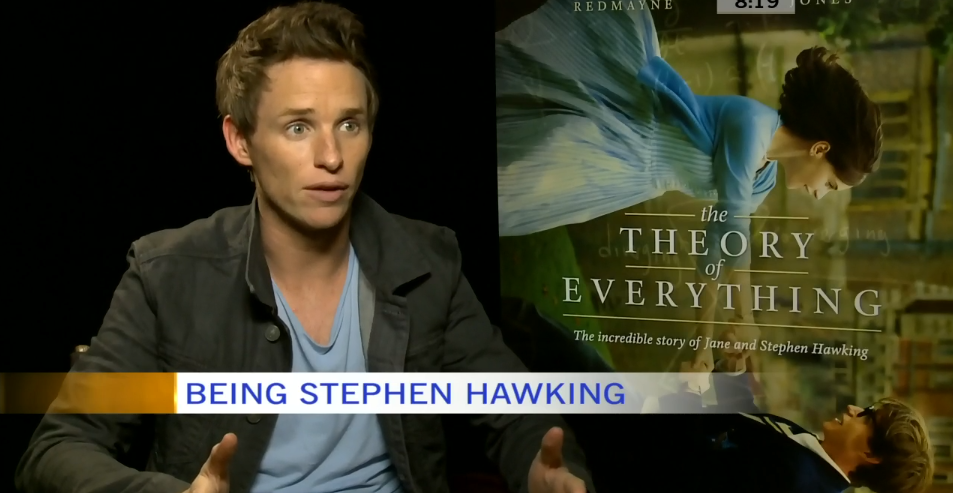
Richard’s “Canada AM” interview with “The Theory of Everything” star Eddie Redmayne. They talk about shooting the film and Stephen Hawking’s reaction to seeing his life portrayed on screen. Watch the whole thing HERE!
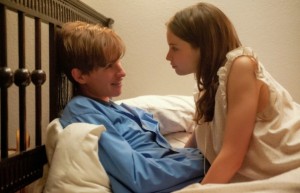
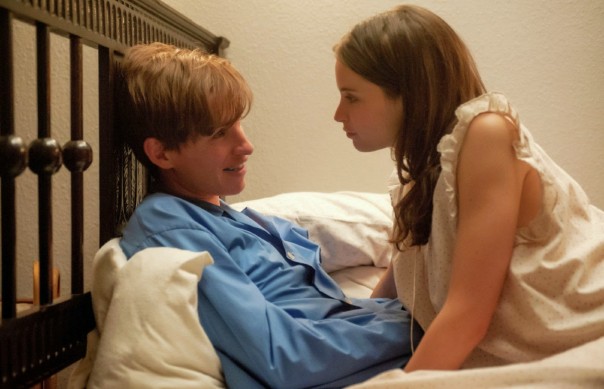
From IMDB: The story of the physicist Stephen Hawking and Jane Wilde, the literature student he fell in love with whilst studying at Cambridge in the 1960s.
Stephen Hawking is the world’s most famous physicist. Suffering from a motor neuron disease related to ALS, he is paralyzed and has been wheelchair bound for most of his life. Communicating through a speech-generating device he continues to share his ideas and write books like A Brief History of Time, which stayed on the British Sunday Times best-sellers list for a record-breaking 237 weeks.
His story is well known; lesser known is the story of his (now ex) wife Jane.
A film at TIFF aims to fix that. The Theory of Everything is not just the biography of a great man but also the story of the great woman behind the man. As Jane Hawking, Felicity Jones portrays the strength, wisdom and occasional frustration it took to be Hawking’s partner.
“As is often the case with very famous and rich people there is someone in the background doing all the very unglamorous work,” she says. “Jane is a fascinating woman in her own right. I met her and was very intimidated. She had a tremendous force of character and strength to do what she did. It is not easy being the carer in that situation, particularly for someone who is very famous. You can feel eclipsed, so for all of us it was about bringing Jane’s story to life.”
The movie, which is based by the memoir Travelling to Infinity: My Life with Stephen by Jane Hawking, is just as much about her as it is him. Jones, who was recently seen in The Amazing Spider-Man 2 and on TV in the HBO hit Girls, says she met with her real-life counterpart to soak up as much of her spirit as possible.
“There is so much richness in her life it would have been stupid of me not to have her as my resource,” says Jones, who plays Jane from a teenager well into her fifties. “It was about capturing her essence. The essence of this woman is somebody who is strong willed, who is persistent and was an academic in her own right. Incredibly intelligent. It is taking that and also bringing your instinct and inhabiting that person as much as possible.
“When I went to visit Jane we sat down to look at pictures. She had old slides of her and Stephen when they first met. Looking at those pictures and seeing the dynamic between them when they were on boating holidays was fascinating. Stephen at that point wasn’t able to move so Jane would be steering the boat. I wanted to absorb as much as possible from what she was showing me. When I met her I felt a little bit disingenuous because we’d be talking and I’d be observing things about her. Like I was a detective trying to find clues about her character.”
Jones says Jane is “very pleased with the film. She has been very supportive all the way through. You don’t want the person to watch it and say, ‘Well, that’s awful. That wasn’t right at all.’ You have to care for the people you’re playing and show that in your performance.”
The Oscar battle of the biopics is in full swing with the release of “My Week with Marilyn.” Michelle Williams hands in exactly the kind of performance the Academy loves. As Marilyn Monroe she turns the camera on Hollywood, playing one of its biggest stars at the peak of her career.
Based on two books by Colin Clark, “The Prince, The Showgirl and Me” and “My Week with Marilyn,” the movie’s main character isn’t Munroe, but Clark (Eddie Redmayne), the third assistant director on “The Prince and the Showgirl” starring Sir Laurence Olivier (Kenneth Branagh) and Munroe. It was the summer of 1956 and Clark was a twenty-three-year-old, who, like the rest of the planet, was smitten with Monroe. The two form a bond, and for a few days it looks like his love for her might actually be reciprocated. Perhaps this should have been titled “The Week I Almost Made It with Marilyn.”
Everyone has been predicting Oscar success for Williams and rightly so, she’s very good, but the bulk of the movie is carried by Redmayne. It is his coming of age story that really fuels the movie’s dramatic arc and his youthful excitement at meeting and, possibly mating with, the movie star is infectious. Of course he’s playing against Williams and Branagh in much showier roles, so I suspect he’ll get the sort shrift attention wise.
As for the above the title stars, Branagh shows two sides to Olivier, the flamboyantly theatrical public persona contrasted against his testy frustration of having to work overshadowed the unprofessional movie star from America. “She’s all instinct, no craft,” he says.
Branagh is very good, but when placed against Williams’s Monroe his work seems to lack the soul she brings to every frame of film. He does have many of the film’s best lines, however. His delivery of lines like, “Trying to teach Marilyn to act is like teaching Urdu to a badger,” is letter perfect and adds much to the movie.
Even almost fifty years after her death Monroe is still one of the best-known actresses in the world. Her famous face adorns everything from wine bottles to Volkswagen commercials, and yet Williams manages to bring something new to someone we thought we knew so well. Her off-screen life, as dramatic as anything she ever did on screen, is tenderly portrayed here but the story isn’t as interesting as the performance.
Williams plays Monroe as a coddled woman-child, crippled by nerves, insecurity, but long on instinct but she goes beyond the little girl lost act so often associated with Monroe. She digs deep, cleaving the role into two parts—the sex-bomb and the vulnerable real life counterpart.
“Shall I be her?” she asks Colin as a crowd descends on them in public. She then shifts effortlessly from the private to the public Marilyn, blowing kisses and turning the flirt up to eleven. But when she is behind closed doors the performance glows. While some of the dialogue is a bit too Psyche 101—“Why do the people I love always leave me?” she pouts at one point—the complexity behind her eyes isn’t.
Williams has perfected playing dour characters in movies like “Blue Valentine,”—so it is a bit of a revelation to see her smile here—but this is something else—well rounded and revelatory.
“My Week with Marilyn” feels a little old-fashioned. The show biz story about, as they say in the film, “a great actor who wants to be a movie star and a movie star who wants to be a great actor,” is overtly theatrical, but Williams brings real soul and heart, handing in the Oscar worthy performance that eluded Monroe in real life.
 Richard’s “Canada AM” interview with “The Theory of Everything” star Eddie Redmayne. They talk about shooting the film and Stephen Hawking’s reaction to seeing his life portrayed on screen. Watch the whole thing HERE!