Don McKellar is best known as a movie director, writer and actor but says, “I’ve always found the feature film format slightly restrictive.”
The director of big screen gems like Childstar, Last Night and The Grand Seduction is behind the camera once again, this time for Michael: Every Day, a CBC television comedy debuting Sunday, Jan. 15.
“I’ve always been interested in television and whether it is attention deficit disorder or something, I’ve always liked short formats,” he says. “My first films were short and then I did 32 Short Films About Glenn Gould. I like the road movie format because it is episodic, so fracturing narratives is always something I have always been interested in.
“Television is a natural home for me. I like breaking up stories. In a way I think it throws off the viewer’s expectations. If it is done well in some ways it can have more surprises than a feature film which you know, one way or another, is going to wrap up after a couple of hours. We don’t know anymore with television how long the narrative is going to be. It could go on forever or just a few episodes.”
The new show is a revival of sorts. Michael: Every Day is the continuing story of the relationship between title character, played by Matt Watts, and his psychiatrist, played by long-time McKellar collaborator Bob Martin. In 2011 the first season, then titled Michael: Tuesdays & Thursdays, was nominated for a Canadian Screen Award before being cancelled.
“I can’t pretend it was our idea [to bring the show back],” says McKellar. “There was a regime change at the CBC and as I understand it when the new people came in they said, ‘OK, let’s look and see how the CBC has been doing over the last while.’ They looked at our show and said, ‘That’s the kind of show we should be doing.’ They reordered it and we said yes. It was not our intention but it was very exciting once we had the option. The five-year gap, once we thought about it, was an interesting hook. What happened to these characters in five years?”
It’s an unusual trajectory for a show and McKellar thinks it is a brash move.
“As has been discussed widely, TV is having a moment and I think Canada is catching up,” he says. “I think there was a feeling for a long time that the American cable shows were doing something interesting and now, finally, it has tilted down to network television. In Canada the CBC has realized they have this licence to do more ambitious stuff. I give them credit for going for it. They have made some bold choices and this is one of them. I hope the audience responds because these things don’t last forever.”
The new climate in television offers more interesting shows for the viewer and, according to McKellar, a new freedom for the creative side.
“For me as a director, I think that people are just now staring to realize that directors can actually do things in television. It’s not just mechanical.
“It gives me a bit of space to get in there and try some more filmic stuff. I think that is happening in television in general.”
Years before Kim Cattrall found international stardom as Samantha Jones, the brash best friend of Carrie, Miranda and Charlotte on Sex and the City, she learned a valuable lesson from a Hollywood legend. The 24-year-old actress was starring opposite Jack Lemmon in Tribute, a film version of the Broadway show that earned Lemmon a Tony nomination.
Lemmon had dozens of credits, including classics like Some like It Hot and The Apartment under his belt and two Oscars on his mantelpiece at home.
“How do you have longevity?” she asked the veteran actor.
“Take things that scare the pants off you,” he replied.
It’s advice she took to heart, particularly when approaching her new project, Sensitive Skin for HBO Canada.
“I think for me to bring this story to North America was the scariest thing,” she says. “Hanging in there and really trusting my instincts because I doubted them sometimes. I put it on the shelf and I walked away but I kept coming back and I think the thing that kept me coming back was the fear of it.
“I could go on playing Samantha for the rest of my life but I wouldn’t be very happy. I wouldn’t be advancing in any way. This was really hard sometimes and it did scare me daily on the set. I never had children but I can imagine it’s like having a child, or going through the gestation period. Instead of nine months it was almost nine years and you go through periods of real doubt and self-doubt.”
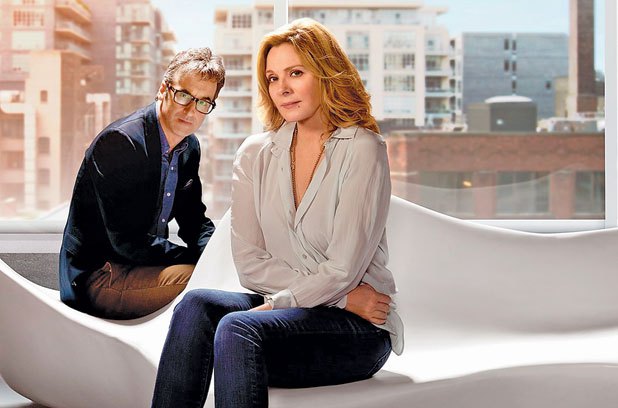
Returning to television for the first time since Sex and the City, Cattrall plays Davina, a woman on the verge of a mid-life crisis who, along with her husband Al (Don McKellar), shakes the cobwebs off her suburban life by moving downtown.
“It’s the change of the guard, isn’t it? I’m starting to play characters who are of a certain age and it is a feeling of, ‘Am I really ready for this?’ Holding onto yesterday instead of embracing whatever this is,” she says.
The show not only focuses on Davina and Al — “One of the things I’m most proud of is that you really believe Don and I are a couple,” she says. — but also Toronto, the city they call home. She credits McKellar, who also directed the series, with capturing the look and feel of Hogtown.
“He’s made Toronto look like the city it is,” she says. “Which is very difficult to capture. Because he has lived there his whole life, we were shooting in neighbourhoods the crew didn’t even know about. It’s so diverse. The city is almost a character as well. We’ve really given Toronto a midlife crisis too.”
Sensitive Skin premieres Sunday on HBO Canada at 8 p.m. ET/MT.
“We’ve been looking for a doctor eight years,” says the mayor of Tickle Head, Newfoundland in the new Don McKellar comedy “The Grand Seduction.”
“Well,” replies Murray (Brendan Gleeson), with perfect logic, “let’s stop looking and start finding.”
And that’s just what they do, using every underhanded and dirty trick in the book. These are decent people who try and do the right thing, but they also understand that sometimes you have to bend the rules to get what you want.
Tickle Head, “a small harbor with a big heart,” has had more of its share of hardship since the bottom fell out of the fishery. Unemployment is high and the only jobs are “in town” in St. John’s, a ferry ride away.
The town fathers have a bid on a petrochemical byproduct repurposing plant that makes… well, it doesn’t matter, as they say in the film, it makes jobs. That’s what’s important. One key element is missing, a doctor. The factory deal won’t go through unless there is a local doctor.
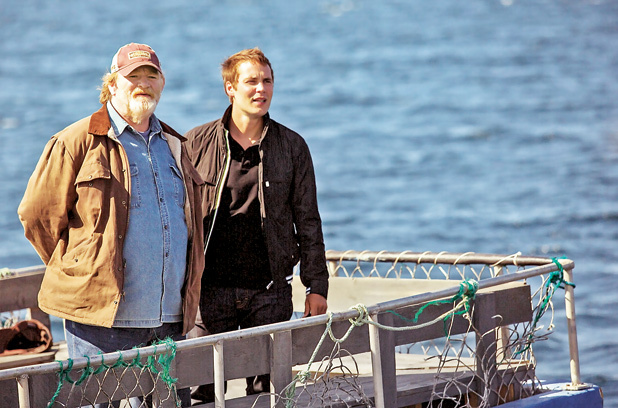
When Paul Lewis (Taylor Kitsch), a city slicker plastic surgeon, lands in the harbour for a month long residency, the entire place (population 121) bands together to convince him to stay… by any means necessary.
Not everyone in town is on board. Kathleen (Liane Balaban) doesn’t want an oil company to set up shop in her harbor and certainly doesn’t want to be used as bait to attract the new doctor.
A remake of the French-Canadian hit “La Grande Seduction” is a comedy with a poignant edge. The set-up is outrageous—they spy on Dr. Lewis, tap his phone and even stage a tournament of cricket, his favorite game—but this is a story of a town fighting for survival of their town and their way of life.
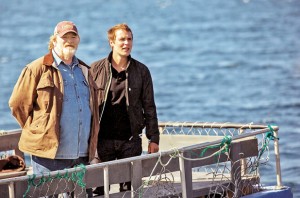
There are plenty of laughs along the way—Gordon Pinsent is particularly effective as the deadpan Simon, who has never left Tickle Head—but the heart and soul of the film is in its fondness for the people and their harbor.
The Grand Seduction premiered at the Toronto International Film Festival last September, but the movie’s star was more concerned about an audience a little east of there.
“I felt they would let us know if they didn’t like it,” says Brendan Gleeson.
The film is set in a small Newfoundland harbour named Tickle Head where the town fathers have a bid on a petrochemical byproduct repurposing plant that makes … well, it doesn’t matter, as they say in the movie, it makes jobs.
One key element that’s missing, however, is a local doctor.
When Paul Lewis (Taylor Kitsch), a city slicker plastic surgeon, lands in the harbour for a month-long residency, the entire place (population: 121) bands together to convince him to stay — by any means necessary.
“I really wanted to be at the premier in St. John’s,” said Gleeson, who is best known as Alastor ‘Mad-Eye’ Moody in the Harry Potter series, “because to me, if the movie worked there, I could let it go.
“That’s all I cared about, really. It needed to have the imprimatur of the Newfoundlanders on it for me. Their reaction was quiet until they felt the reassurance that it was OK, that they could trust it a little bit more.”
The production spent seven weeks shooting on The Rock.
“The land and the sea in Newfoundland has a way of worming itself into your heart where you don’t feel quite complete without it,” said Gleeson.
Co-star Kitsch concurs. “It’s a very simple (way of life),” he says, “and obviously the pace is a lot slower, but once you get into that, you don’t want to leave it.
“They are very in the moment when you’re talking to them.
“You feel like they are incredibly genuine and grounded and there’s no ulterior motive,” he said. “Maybe I’m a bit jaded because of the business, but it is refreshing. It is kind of what it means to be a Canadian.”
Kitsch spent his off hours training for Lone Survivor, a Mark Wahlberg war film he shot immediately after wrapping on The Grand Seduction but he took some time to enjoy a great Newfoundland pastime — fishing.
“My best friend is an avid fisherman,” he says, “so he’d be figuring out what was going on with the moon and what the best tide is and when we should go and would get genuinely upset if we weren’t there at exactly 6:12 a.m. dropping lures into the water.”
The Kelowna, B.C.-born Kitsch is an in-demand actor these days and can currently be seen in the HBO movie The Normal Heart, but says he’d love to do more work in Canada. “I absolutely loved being in Canada,” he says, “working on home soil with a bunch of Canadians. “If the opportunity presents itself and it’s right, I’m in.”
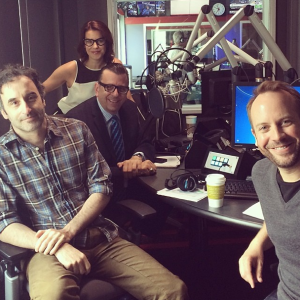
Be sure to listen in to Entertainment Extra on Saturday afternoon from 4 to 5 pm on NewsTalk 1010 in Toronto and worldwide on the web! This week Teddy Wilson from InnerSpace, The Grand Seduction director Don McKellar and Teri Hart and Richard discuss many earth shatteringly important things.
“3 Days In Havana,” a new sunny noir starring “Alley McBeal’s” Gil Bellows shows the non-all-inclusive side of Cuba. Stylish, and nicely shot, it reveals the flip side of the city that tourists never get to see. That is, unless you’re a visitor with a way with a knife.
Bellows (who co-directs with Tony Pantages) plays Jack Petty, a man straight out of a Graham Greene novel. He’s a bored insurance agent on his way to Cuba for a convention. Looking for a good time he hooks up with Harry Smith (Greg Wise), a loose cannon travel writer, who introduces Jack to Havana’s sordid side. When Smith turns up dead—murdered and left in Jack’s hotel bathroom—the mild mannered insurance salesman soon discovers his new friend might have been an assassin hired to kill a Cuban arms dealer. In a case of mistaken identity Jack finds himself involved in a wild conspiracy and is forced to prove his innocence.
A pastiche of styles, from French New Wave to Tarantino and everything in between, “3 Days in Havana” seems to value style above story. Hitchcock covered similar ground in movies like “North By Northwest,” but that film made more sense than anything Bellows and company have on display.
Despite some nice performances from Bellows, Don McKellar as a French crime capo and Phyllida Law, the story doesn’t measure up to the intrigue.
At a scant 82 minutes “3 Days in Havana” doesn’t give itself time enough to flesh out the plot points, but as a travelogue, it does almost make a trip to sunny Cuba—despite the bad guys, mistaken identities and violence—sound like a good antidote to our recent subzero weather.
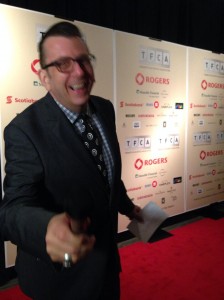
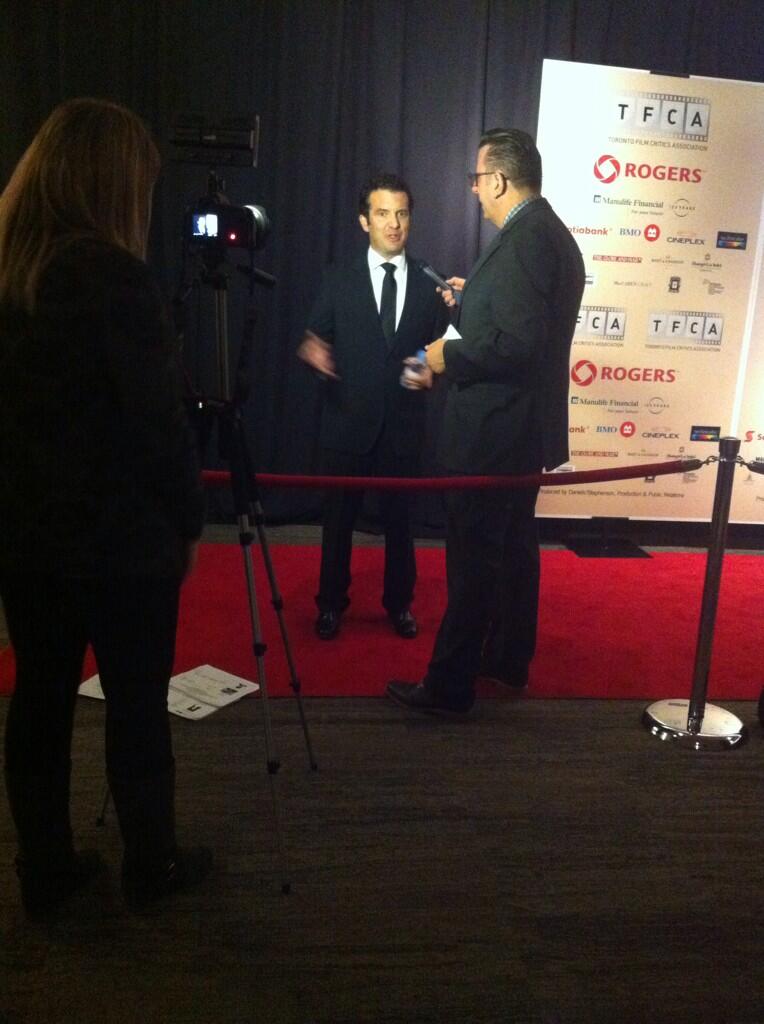
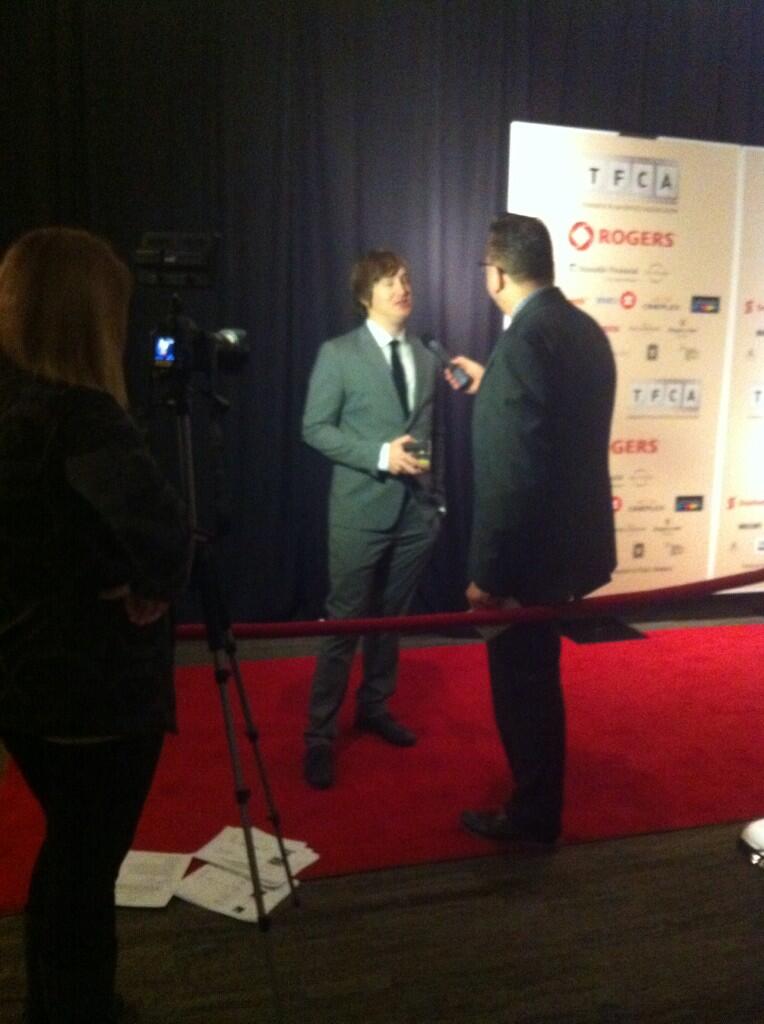
From top to bottom, left to right, Richard on carpet, Paul Gross, Rick Mercer and The Dirties director Matt Johnson. Richard’s other red carpet guests included Jian Ghomeshi, Sarah Gadon, Kim Cattrall, Don McKellar, Katie Bolan, Bruce McDonald, Jennifer Baichwal, Edward Burtynsky, Nicholas de Pencier, Noah co-directors Patrick Cederberg and Walter Woodman, the F-Word writer Elan Mastai and Dr. Cabbie star Vinay Virmani.
If there’s one thing you can count on at the Victoria Film Festival, it’s food, glorious food — on and off screen.
This year is no exception, starting with Friday night’s opening gala presentation at Empire Capitol 6 — a film that gives new meaning to the term “frozen food.”
It’s The Chef of the South Polar, Japanese director Shuichi Okita’s stunningly photographed portrait of life in Dome Fuji, an isolated Antarctic research station where Jun Nishimura, a gourmet chef, dishes up a mouth-watering variety of culinary creations to boost the morale of scientific researchers battling homesickness, isolation and sub-zero temperatures.
The South Pole theme will be reflected post-screening at the Atrium, 800 Yates St. The lobby is being transformed into a sparkling ice castle with a faux glacier and bar sculpted out of ice. Expect music by Lady Gaga-influenced local DJ Veela (a.k.a. Victoria Burnett), food by local restaurants such as Bon Rouge, Pescatores and Sips Artisan Bistro, as well as Driftwood Brewery’s Reel Beer and other festival-specific cocktails and surprises.
Okita’s visual feast continues a long tradition of putting foodie flicks on the festival menu. So will Saturday’s Canadian Opening Gala presentation — the world première of Food Security: It’s in your Hands, Duncan-based director Nick Versteeg’s new documentary (7 p.m., Odeon).
Versteeg’s film encourages viewers to change how we think about farming and food by relating his own experiences growing food on his hobby farm the Laughing Geese, with input from experts on topics from soil to the fate of bees.
Festival-goers have long hungered for such films, says festival director Kathy Kay.
“Outside of film festivals, you don’t often get a chance to see them,” Kay says. “It’s always a good opportunity. Victoria in particular has such a foodie culture, so we always have our eyes peeled.”
As for the festival itself, it’s going on a bit of a diet this year thanks to arts cutbacks. The festival program guide is smaller than usual, with expanded descriptions going online; and fewer guests are being brought in.
“That’s been key. We’re lean and mean,” laughs Kay, who is mounting this year’s festival on a $646,000 budget. “We get money from the Victoria Foundation which has helped offset our problems, and we generated $130,000 from our box office.”
This year’s guests include Bruce McDonald (Trigger, Hardcore Logo 2), Ron Mann (In the Wake of the Flood), Larry Weinstein (Politics Is Cruel) and Don McKellar (Twitch City), with CTV film critic Richard Crouse returning to emcee Springboard.
Speakers at that popular opening-weekend industry event include Angie Burns, vice-president of publicity and promotions for Maple Pictures, Telefilm Canada’s John Dippong, independent production pioneer Pat Ferns, and Tom Alexander, Mongrel Media’s director of theatrical releasing. This year’s Springboard highlights include Ferns’s Friday pitching workshop, and The Great Convergence: Film, TV and the Internet, a Sunday master class conducted by Rainbow Media’s Harold Gronenthal.
Success lies in the ability to be as resourceful as possible, notes Kay. They’re hoping that reducing the size of the program guide but printing more copies will boost box-office revenues and continue the festival’s trend of rising attendance each year.
More than 160 films from 23 countries will be shown during the 10-day showcase, including a generous slate of Canadian and homegrown fare. It includes the première of Victoria filmmaker Jim Knox’s feature debut Cascadia, and shorts by locals Apeman Struthers (Down to the Sea on Drugs, Part One), Maureen Bradley (Pants on Fire) and Alice Faye Hopewell (Dearest).
Popular programs such as Sips ‘n’ Cinema, Dinner and More Than a Movie — featuring erotic fare at the Superior — and Converge, where viewers take to the streets to watch short films in offbeat venues, will also be back.
New initiatives include Contemplating Victoria (see sidebar), and a Grindhouse double-bill.
It opens with Machete Maidens Unleashed, Australian director Mark Hartley’s documentary recalling how directors of shlock and exploitation flicks in the 1970s shot them in the Philippines because of its exotic locations and cheap labour.
It will be followed by The Big Bird Cage, Jack Hill’s steamy 1972 “women in prison” exploitation flick starring Pam Grier as a buxom revolutionary who, with the help of a nymphomanic inmate (Anitra Ford), engineers a prison breakout to provide “babes” to satisfy the itches of mercenaries who work for her sleazy guerrilla-leader boyfriend (Sid Haig).
And don’t forget about those two Oscar-nominated films booked at the 11th hour to fill the Saturday night time slot that was to have been filled by horror meister George A. Romero before he announced he’d have to cancel for personal reasons.
The Illusionist, Sylvain Chomet’s adaptation of the Jacques Tati classic, screens at 6:45 p.m., followed at 9:15 by Alejandro Inarritu’s Biutiful, starring Javier Bardem as a man coming to terms with his imperfect life while wandering through Barcelona.
I have often joked that the Toronto Film Festival wouldn’t be the same without Don McKellar. Every year since I can remember he has a movie playing at the fest, and this year is no different. This year he returns with Blindness, a film he adapted from the 1995 novel of the same name by José Saramago about an epidemic that causes blindness in a modern city, resulting in the collapse of society. Directed by Fernando Meirelles, who made one of my favorite TIFF films ever, City of God, a few years ago, it stars McKellar, Mark Ruffalo, Julianne Moore and Danny Glover along with an international cast.
The Canadian-Brazilian-Japanese co-production opened the Cannes film festival this year to middling reviews but should fare better with the hometown crowd.
Director Meirelles is unfailing stylish in his presentation of this highly metaphorical work, so, ironically a movie about Blindness is a treat for the eyes. His handling of the story and view of the humanity of the characters is challenging, but a tad disengaged to make the film’s social commentary truly effective. He avoids the clichés of most horror films—Blindness would likely have been a much different movie in the hands of George A. Romero or the like—instead delivering a thoughtful film that doesn’t quite live up to the intensity and promise of the novel.