1. Admission: Tina Fey is Portia Nathan, a mildly compulsive Princeton admissions officer—they jokingly call her their “golden retriever” because of her record of recruiting a-plus students—who leads a quiet, ordered life with professor Mark (Michael Sheen). They share a love of poetry, hatred of kids and not much else. Her well ordered life is thrown into disarray when John Pressman (Rudd), a free-spirited former classmate and now teacher at an alternative school, introduces her to Jeremiah Balakian (Nat Wolff), a brilliant young man who may be the child she gave up for adoption seventeen years ago. “Admission” is familiar enough to not jar the sensibilities of undemanding rom com fans, but there is more here than immediately meets the eye.
2. The Bling Ring: Based on actual events, “The Bling Ring” centers around a group of narcissistic Los Angeles area teenagers, Rebecca (Katie Chang), Marc (Israel Broussard), Nicki (Emma Watson), Sam (Taissa Fermiga) and Chloe (Claire Julien).
Their modus operandi? They track the comings and goings of their favorite celebs on via internet. While one-named millennial stars like Paris, Lindsay, Megan or Audrina are out on the town or out of town completely, the Ring “go shopping,” breaking into their homes and help themselves to jewels, designer clothes and loose cash. More than that, they live vicariously through the lives of the rich and famous folks they’re burgling.
“The Bling Ring” plays like a “Law & Order” episode of “The Hills.” The crime spree is device that keeps the story moving forward, but the fascinating thing is the portrait of these self-absorbed kids who aspire to hosting reality shows or becoming a “lifestyle brand” as a career. They want fame and money, but are so tied up with the idea of fame and money they are blind to virtually everything else.
“The Bling Ring” is a fascinating art-house glimpse of fame found, just not the fame the thieving teens sought. They are the robbers TMZ made famous, a group of kids who redefined narcissism in an already narcissistic town.
3. The East: Britt Marling stars as corporate spy Jane Owen, code name Sarah. Her latest job involves going deep undercover to infiltrate a shadowy group of eco-terrorists called The East. The collective—think real life activists Anonymous—run by the charismatic anarchist Benji (Alexander Skarsgård), is on the eve of their biggest demonstration yet, an act of sabotage that will make headlines and make a very public statement of their anti-corporate stance.
Sarah is accepted by the group, save for the truculent Izzy (Ellen Page), and begins to develop Stockholm syndrome. Or does she?
It’s a morally complex movie, with Sarah at the center of the ethical hurricane as she starts to question her role as both a spy and a would-be member of the radical group. She weighs the morality of both sides and… well, go see the movie.
“The East” deliberately paints shades of grey into the story, allowing for good and bad, evil and sympathetic characters on both sides. It may be too nuanced for folks who like their spy stories to take sides, but Sarah, as the source of the plot’s push-and-pull, is too complex a creation to play it straight. Marling brings strength and fighting spirit to Sarah in a performance that could finally make her a star.
4. The Iceman: Based on “The Iceman: The True Story of a Cold-Blooded Killer” by crime writer Anthony Bruno the movie begins on Kuklinski’s first date with his wife to be Deborah (Winona Ryder). He’s quiet and reserved, but charming and she is won over by his charisma. They marry, have kids and lead a normal life. At least at home. Deborah had no idea her mild mannered husband was an expert assassin, who paid for the kid’s private school and her jewels by slicing throats, shooting and choking the enemies of his boss Roy DeMeo (Ray Liotta).
Kuklinski was dubbed the Iceman for two reasons. When he was arrested police found a stash of bodies he had frozen to obscure time of death and because of his icy demeanor. It’s a role Shannon was born to play. From certain angles he looks like an everyman, the kind of guy who goes home at night to his wife and two kids. From other angles he’s menacing, the kind of guy you don’t want to meet in a dark alley.
Shannon is cooler than Mr. Freeze as the title character in “The Iceman,” and he’s joined by Chris Evans in a career making performance as a ice cream truck driving killer, Liotta in mobster mode—between Shannon and Liotta it’s a showdown of the steely stares—the welcome return of Wynonna Ryder and David Schwimmer playing against type as a slimy mafia enforcer.
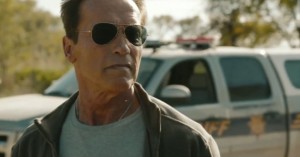
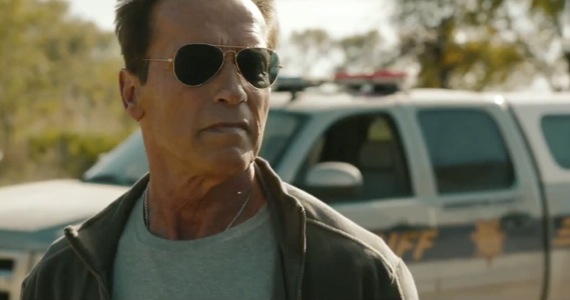
5. The Last Stand: Near the beginning of the movie the head lawman of the sleepy border town of Summerton Junction, Sheriff Ray Owens (Arnold Schwarzenegger), says, “Should be a quiet weekend.” Of course whenever Arnold, or any eighties action star says, “Should be a quiet weekend,” you know all hell is about to break loose. And break loose it does.
In a parallel story ruthless drug lord Gabriel Cortez (Eduardo Noriega) stages an elaborate escape and heads for the Mexican border, which just happens to lie outside Arnold’s… er… Owens’s town. As Cortez speeds toward the border he has a quick cell phone call with Owens. “Do you wanna play?,” he yells. “Let’s play!” And play they do… with big guns.
Schwarzenegger is moving noticeably slower these days—How are you Sheriff? “Old,” he says.—but his comic timing is still there and no one else can battle through this kind of cheesefest and emerge with his action cred intact.
“The Last Stand” is not a movie to be taken seriously, but it wasn’t made to be taken seriously. Why else would cult director Jee-woon Kim cast Johnny Knoxville?
6. The Lone Ranger: Set against a backdrop of corruption during the building of the railway’s westward expansion through Native American territory, this is the origin story of how attorney John Reid (Armie Hammer), a law and order man who doesn’t believe in vengeance, met Tonto (Johnny Depp) and became the Wild West’s masked crusader.
The unlikely pair are brought together by their mutual enmity toward Butch Cavendish (William Fichtner), a cannibalistic outlaw who Reid wants to bring to justice and Tonto wants dead. That pursuit uncovers massive corruption during the building of the railway’s westward expansion through Native American territory beginning with a conspiracy to start a war between the US Calvary and the Comanche Nation.
“The Lone Ranger” is state of the art nouveau Western, complete with circling vultures, unspoiled landscapes, gruff, unshaven men and even a beer drinking horse. Surprisingly nimble footed for a two-and-a-half hour epic, it is unexpectedly funny but more violent than your typical summer tent pole flick.
7. Pacific Rim: Director Guillermo Del Toro has made an end-of-the-world scenario fun.
In the world he creates in “Pacific Rim” the planet is threatened with destruction by Kaijus, colossal beasts with an appetite for destruction. Coming to our world through a breach in a portal beneath the Pacific Ocean, the earth is losing the war against these beasts. The main of line of defense, giant robots called Jaegers—operated by pilots who mind meld with the metal behemoths; the deeper the connection, the better they fight—are being decommissioned in favor of a giant wall. “Kaijus are evolving,” says one military man, “and we’re losing Jaegers faster than we can build them.”
In the months before the machines are made obsolete a driven colonel, Stacker Pentecost (Idris Alba), assembles a crack team of Jaeger pilots—including burned out former pilot Raleigh Becket (Charlie “Sons of Anarchy” Hunnam) and talented but untested trainee Mako Mori (Rinko Kikuchi) to launch one last attack to close the portal and save the planet.
Del Toro has supersized a Godzilla story, adding in 50s b-movie tropes with state of the art sci fi to create something fresh. It’s a thrill ride from the beginning, a giant action movie that doesn’t just rely on a cool premise.
In other words, “Battleship” this ain’t.
8. Pain and Gain: Near the beginning a voiceover says, “Unfortunately, this is based on a true story.” It’s the real-life tale of three Miami-based body builders (Mark Wahlberg, Dwayne Johnson, and Anthony Mackie) chasing the American Dream. Pumped up and steroid crazy they abduct a prominent local businessman (Tony Shalhoub). They beat and torture the self-made millionaire until he signs over all his wealth—houses, cars, boats and money. The story eventually becomes so outlandish Bay flashes up a graphic in the last half hour reminding us that this is “still a true story.”
This is a seriously weird movie. It’s Bay working with a tiny—for him—budget of just $26 million. The guy has made commercials that cost more than that, but has delivered the darkest comedy—imagine if the Coen Brothers did gruesome slapstick—to come down the pike in a while.
9. Rush: When we first meet Niki Lauda (Daniel Brühl) and James Hunt (Chris Hemsworth) they are third stringers, talented Formula 3 drivers desperate for a chance to move up to the big show. Lauda makes a financial deal that lands him on Team Ferrari while Hunt uses tenacity, charm and a touch of desperation to grab a spot with the McLaren team.
Bad blood flows between the two, stemming back to an incident when Hunt edged Lauda off the track the first time they faced off against one another. That rivalry spills over from the track as the two engage in name-calling and spar in the press.
In the 1976 season Lauda seems unstoppable, a sure bet to reclaim his World Champion title. Then tragedy strikes as Lauda is badly burned in a fiery crash. During his recuperation Hunt rises in the ranks, leading to a showdown, just 50 days after Lauda’s accident, for the World Championship at the Japan Grand Prix.
“Rush” is more than “Rocky” on four wheels, it’s an exhilarating, stylish film with pedal-to-the-metal verve.
10. The Sapphires: The year is 1968. Dave Lovelace is an English (Chris O’Dowd) piano player with a love for Otis Redding and booze. While hosting a talent show in remote Australia hosting he discovers three sisters, Cynthia (Miranda Tapsekll), Gail (Deborah Mailman), Julie (Jessica Mauboy), with amazing voices but a tired country and western style repertoire. Adding cousin Kay (Shari Sebbens) as background singer and dance captain, he molds them into the Australian Supremes and gets them their first gigs—in Vietnam singing for the troops.
“The Sapphires” is a feel good movie that succeeds despite the cliché story. It’s based—one imagines very loosely based—on a true story, but make no mistake, this is a Hollywood-ized (filtered through an Australian sensibility) version of the tale.
Authenticity aside, it’s the performances and the music that make “The Sapphires” worth a look. We first noticed O’Dowd on this side of the Atlantic as the charming love interest in “Bridesmaids.” He brings it again in “The Sapphires,” mixing roguish appeal with bang on comic timing.
“The Sapphires” is a slight, but entertaining take on the effect of music to change people’s lives.
11. The To Do List: High school valedictorian Brandy Klark (Aubrey Plaza) is an overachiever. She’s the publisher of her own magazine, Women With a Y, a straight A student with a full scholarship to Georgetown University and has a Perfect Attendance certificate proudly hanging on her wall.
She’s also a virgin, a status she hopes to change soon with the help of Rusty Waters (Scott Porter), a college surfer stud with a perfect smile. Attacking her new project with the gusto that won her accolades in school, she gets the advice of friends and family (Christopher Mintz-Plasse, Alia Shawkat, Sarah Steele and Rachel Bilson) and makes up a “to do” list, applying the same zeal that made her a mathlete to losing her virginity.
Telling the story from a female point of view is a nice turnaround from the usual boycentric sex comedy story.
“The To Do List” is endearingly off-kilter, a different take on the “Porky’s” style of sexual coming-of-age stories usually that are usually headlined by the male members of the cast. I wish it was a bit shorter—did they really need 100 minutes to tell this story?—and a bit funnier, but for anyone who came of age just as The New Kids on the Block were calling it quits (for the first time) there is much to enjoy here.
12. Warm Bodies: Nicholas Hoult plays R (pronounced “arrgghhgghh”), an existential zombie who wants more out of life… or death, or whatever it is you call his current state. “Why can’t I connect with people?” he wonders in the narration. “Why is my posture so bad? Of yeah, I’m dead.” There’s been a plague of some sort which has left him and most of the population hungry for brains, while the sole human survivors live behind a giant wall.
Zombies and humans alike are terrified of the Bonies—evolved zombies who’ll eat anything with a heartbeat. “So will I,” says R, “but at least I’m conflicted about it.”
On a feeding trip R encounters a team of humans on the search for supplies. One zombie attack later he has eaten the brains of Perry (Dave Franco). When he gets a glimpse of Perry’s girlfriend Julie (Teresa Palmer) he loses his appetite. Perry’s memories come flooding into R’s zombie brain and he begins to feel something he hasn’t felt for a long time—human emotions.
It’s “Walking Dead” meets “Romeo and Juliet” with a twist—it just might be that love and hope can still set hearts a flutter, even ones that haven’t beaten in a while.
Any movie with the line, “I know it’s really hard to meet guys now… in the apocalypse and everything,” is OK by me.
13. You’re Next: On the occasion of their parents 35th wedding anniversary the Davidson kids and assorted wives, girl and boy friends gather at a remote Tudor mansion—is there any other type in these kinds of movies?—to enjoy dinner and one another, but instead end up in a fight for their lives. Only one of the guests, Erin (Sharni Vinson), has the know-how to protect herself, but will it be enough?
It’s hard to discuss “You’re Next,” which had its world premiere at the 2011 Toronto International Film Festival Midnight Madness program, without giving away a major plot twist, but I will say there is a Manson Family aspect to the story that really creeped me out. That plus the anxiety-inducing John Carpenter style score throbbing in the background and the “moist” sound effects accompanying the wet work. It’s all effective but it is the idea behind the movie that is truly disturbing.
There is a rawness to the filmmaking—and let’s just say that there are no future Meryl Streeps in the cast—that although there is very little actual gore, is chilling.
I don’t know what it says about my mental make-up, but I really liked “You’re Next.” It’s disturbing, violent and without any redeeming social value, but I enjoyed sitting in the theatre with my hands over my eyes, afraid of what I might see next. I’m not usually a fan of head trauma, but from what I saw as I peeked through my fingers, it works well.
“Escape Plan” is the kind of movie you used to rent on DVD back when there were video rental stores on every corner. It wouldn’t have been your first, second or maybe third. It’s the kind of movie you chose when everything you actually wanted to see was gone. “This doesn’t look too bad,” you’d say to yourself, warily holding the case in your hand.
Combine low expectations with a couple of beers and maybe a fast forward button and “Escape Plan” is passable. But take any of those elements away and add in the price of a big screen ticket and the movie becomes way less passable.
Sylvester Stallone is Ray Breslin, a lawyer-turned-escape artist. He’s the Houdini of the penal system, a man who makes a lot of money as structural-security authority.
In other words he escapes prisons for a living.
He’s broken out of fourteen maximum-security jails but when he takes a job at The Tomb, a privately run prison where the worst-of-the-worst—people who need to be “disappeared”—are warehoused everything goes wrong. The deal changes and it looks like he might live out the rest of his years behind bars. Up against the evil Warden Hobbs (Jim Caviezel) he schemes with another inmate Rottmayer (Arnold Schwarzenegger) to “Papillon” their way out.
This is the kind of movie that used to go straight to DVD. The real question here is how “Escape Plan” escaped that fate and made it to the big screen.
On the upside it has a pretty good villain in Caviezel who is the nastiest warden since “Caged Heat’s” McQueen. There’s a twist I did not see coming and hearing Arnold say, “You punch like a vegetarian,” is always welcome, but I always hoped when Arnold said, “I’ll be back,” it would be in a good movie.
On the downside, and it is, admittedly, a lopsided pro and con list, there is dialogue that sounds like it was run through the Cliché-O-Matic™–not the new, updated iOS 7 version, but an older analogue model—to a couple of lame attempts at creating new catchphrases to the sight of two aging action stars trying to relive the glory years.
“Escape Plan” is further proof that the Sly and Arnie show only really works if the work “Expendable” is in the title.
When you think of the movies of Arnold Schwarzenegger or Sylvester Stallone gut busting action comes to mind. The names Steve Martin and Adam Sandler are forever connected to comedy while Daniel Day Lewis is synonymous with serious drama. Meg Ryan? She’ll always be a romantic comedy star just as the mere mention of Robert Eglund’s can name send a chill down the spine.
But what about Tom Hanks? Hanks is a rarity among a-listers. He’s an actor who has avoided stereotyping by pasting together a resume that includes every almost genre of film.
This weekend he stars in Captain Phillips, a drama based on the true story of the 2009 hijacking of the MV Maersk Alabama by Somali pirates.
It’s a heroic role—in real life President Obama said Capt. Richard Phillips’ courage “is a model for all Americans.”—but it’s a far cry from his last movie, Cloud Atlas, which saw him play three characters, one of which tossed a critic out of a skyscraper window.
His varied IMDB listing includes everything from comedies like Splash (“What you looking at? You never seen a guy who slept with a fish before?”) to Academy Award winning dramas like Philadelphia, where he played a gay lawyer with AIDS suing his firm for discrimination and Forrest Gump.
In the kid’s classic Toy Story (and its subsequent sequels) he’s Woody, a stuffed pull-string cowboy doll. Director John Lasseter says he wanted Hanks to play the character because of his “ability to take emotions and make them appealing.”
Much darker is Road to Perdition, the 2002 Sam Mendes film that cast Hanks as Michael Sullivan, Sr, an ace hitman who must protect his son from a mob assassin. “I just got this guy,” says Hanks. “If you’re a man, and you’ve got offspring… emotionally, it’s devastating.”
Different still is Nothing in Common, a dramedy that saw Hanks play a successful advertising executive trying to cope with his parents’ (Jackie Gleason and Eva Marie Saint) break up. “[It] has a bit of a split personality,” Hanks said, “because we’re trying to be very funny in the same movie in which we’re trying to be very touching.”
Hanks says, “I’m not looking for any particular kind of story,” and his varied approach to his work hasn’t hurt him one bit. Recently he was named America’s “best-liked movie star,” in a poll by Public Policy Polling.
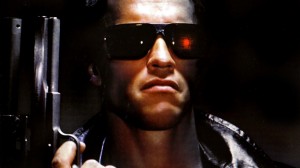
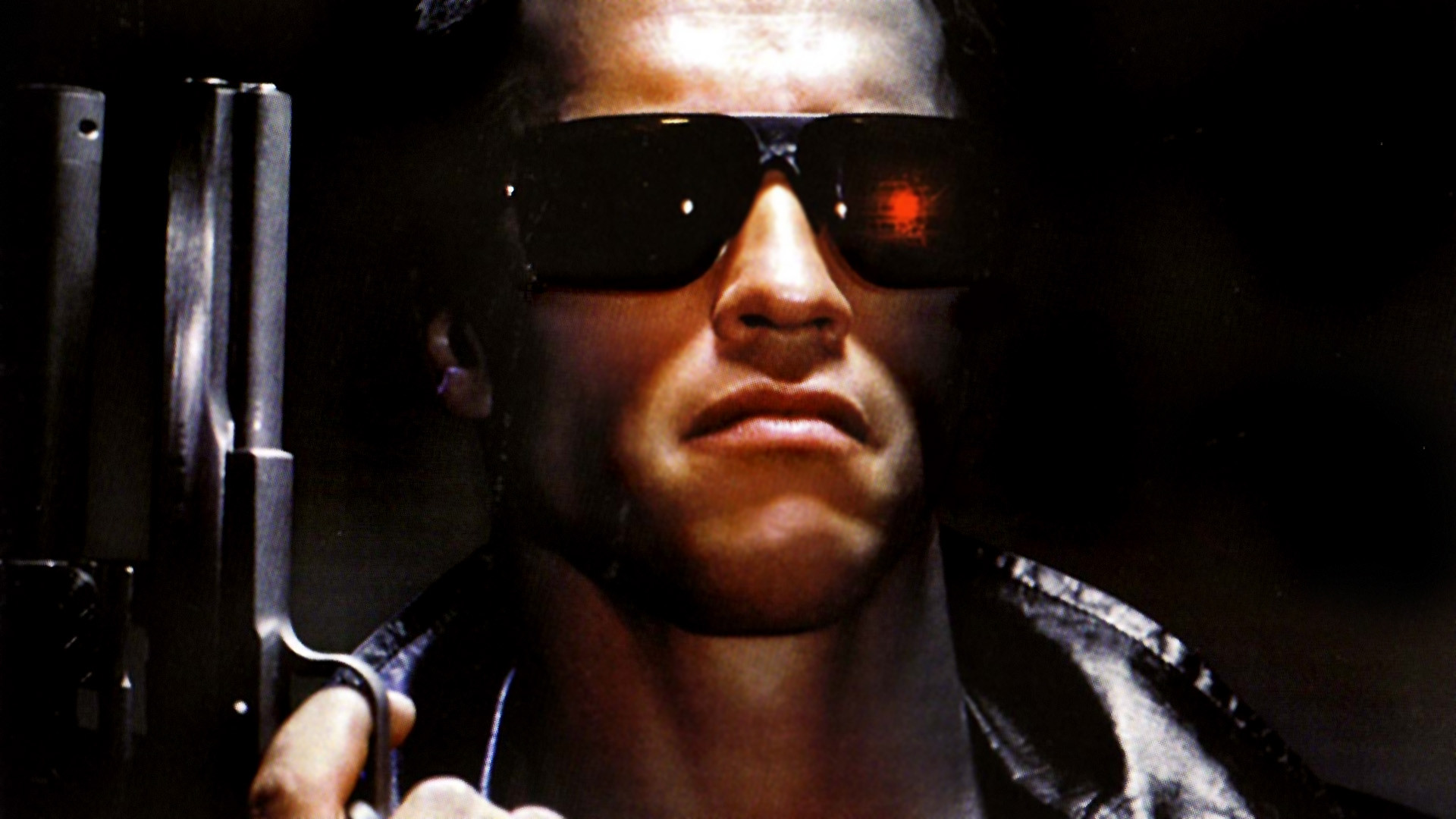
Where would Arnold Schwarzenegger’s career be without these three simple words: “I’ll be back”? Taken from The Terminator it’s as simple a phrase as was ever uttered in the movies, but became a pop culture catchphrase, and came to define Arnold’s career on screen and off.
He’s used the line—or a slight variation on it—in two other Terminator movies and eight other films. In 1993’s Last Action Hero he says it three times!
“I’ll be back,” he says. “Ha! Bet you didn’t expect me to say that!”
Later Danny Madigan (Austin O’Brien), after Arnold uses his signature line, says “You always say that.”
“I do?”
“Everybody waits for you to say it. It is like your calling card.”
Few actors have done so much with so little. But the perfectly crafted phrase almost didn’t happen.
“In the treatment it was ‘I’ll come back,’” says The Terminator director and co-writer James Cameron. “In the script it was ‘I’ll be back.’ I don’t remember why I changed it. It just sounded better.”
The line certainly played no small part in establishing Schwarzenegger larger-than-life action hero image even though Arnold has said he didn’t give the line a second thought when making the movie.
“There is something about the way the line plays,” says Cameron, “not just Arnold’s delivery, but the fact that you’ve seen enough of him in action up to that point to know that when he says ‘I’ll be back’ something really bad is going to happen. There is a counterpoint between the innocence of the words and the threat that is a wink to the audience. And the audience likes to be in the position of knowing what is going to happen next. They may not know the details but they know something bad is going to happen and then it pays off. He just comes flying through the window in a car and takes out the whole place. So there is something kind of delicious about the anticipation that it produces.”
In his new autobiography, Total Recall, Schwarzenegger recalls, “Our biggest disagreement was about ‘I’ll be back’. I was arguing for ‘I will be back’. I felt that the line would sound more machine-like and menacing without the contraction.
“It’s feminine when you say the I’ll, I complained, repeating it for Jim so he could hear the problem. ‘I’ll I’ll I’ll. It doesn’t feel rugged to me.’ He looked at me like I’d lost my mind. ‘Let’s stick with I’ll,’ he said. But I wasn’t ready to let it go, and we went back and forth. Finally Jim yelled, ‘Look, just trust me, OK? I don’t tell you how to act, and you don’t tell me how to write.’
“And we shot it as written in the script. The truth was that, even after all these years of speaking English, I still didn’t understand contractions.”
The line’s popularity wasn’t planned. Cameron, who has three lines on AFI’s 100 Years… 100 Movie Quotes list—“I’ll be back,” “Hasta la vista, baby” from T2 and Titanic’s “I’m king of the world!—says it is a bad idea to try and write catchphrases.
“I think it is a very hard thing to try and do that,” he says. “I think I was somewhat self conscious about it when I did Terminator 2 and he says ‘Hasta le vista baby.’ That I knew I was doing a line, an Arnold line. I think it is a very dangerous area because it can so easily blow up on you and I tend not to do that.
“I really realized how fragile that was when I had written True Lies. I didn’t think it was funny enough so I hired a comedy team to come in and punch up the dialogue.
“I wanted it to be an action comedy. All they did was write about twenty Arnold one-liners. It really reminded me of bad James Bond. The James Bond films have evolved as well, they don’t do that anymore but there was always that kind of wink and a nod to the audience. A stupid line, a cap line to the scene and they wrote about twenty of those and I threw them all out. I hated them. I realized tonally it was going to screw up the movie. Then I decided maybe this movie isn’t funny enough, but I’m gong to shoot it as it is and it was still funny.”
Arnold has been associated with dozens of one-liners. So many, in fact that a you tube video titled 160 Greatest Arnold Schwarzenegger Quotes had over two million hits at press time, but as widely imitated as “Hasta la vista, baby” was—even Chilean president Michelle Bachelet aped Arnold’s famous delivery of the line—“I’ll be back” remains his most iconic line.
Arnold Schwarzenegger is back and along with him is a lot of no frills action. In “The Last Stand,” his first starring role since 2003, he co-stars with bullets, blood and body count.
Near the beginning of the movie the head lawman of the sleepy border town of Summerton Junction, Sheriff Ray Owens (Arnold), says, “Should be a quiet weekend.” Of course whenever Arnold, or any eighties action star says, “Should be a quiet weekend,” you know all hell is about to break loose. And break loose it does.
In a parallel story ruthless drug lord Gabriel Cortez (Eduardo Noriega) stages an elaborate escape and heads for the Mexican border, which just happens to lie outside Arnold’s… er… Owens’s town. As Cortez speeds toward the border he has a quick cell phone call with Owens. “Do you wanna play?,” he yells. “Let’s play!” And play they do… with big guns.
“The Last Stand” opens with a shot of a cop eating a donut. It’s the first cliché of the film, but it’s not the last.
From the snarling bad guy (actually guys, Peter Stormare is evil as well, yelling, “Bring me THE GUN!” several times), to Arnold’s one-liners, to the bumbling country deputies, the movie is exactly what you think it is going to be. It has an enjoyable simplicity, anchored by Arnold’s no-nonsense performance. Like the non-CGI actioners “Jack Reacher” and “Bullet to the Head,” it’s a Saturday matinee romp that doesn’t make much sense—despite having wild high tech equipment the FBI can’t seem to locate a Corvette speeding through the desert in broad daylight—but is a fun throwback to the years when Arnold was the king of the screen.
He’s moving noticeably slower these days—How are you Sheriff? “Old,” he says.—but his comic timing is still there and no one else can battle through this kind of cheesefest and emerge with his action cred intact.
“The Last Stand” is not a movie to be taken seriously, but it wasn’t made to be taken seriously. Why else would cult director Jee-woon Kim cast Johnny Knoxville?
“The Expendables 2” has Cold War undertones to go along with a cast that found fame during that time. Aging action heroes Sylvester Stallone, Dolph Lundgren, Chuck Norris, Jean-Claude Van Damme, Bruce Willis and Arnold Schwarzenegger act out a shoot ‘em up with so much blood and guts it would make James Bond positively red with envy.
I could tell you the plot of “The Expendables 2,” but this movie isn’t about the story. It’s a revenge flick about a team of mercenaries who will take on any mission, no matter dangerous, for money. Imagine what they’ll do for payback! In other words: “Track ‘em. Find ‘em. Kill ‘em.”
The old guys are mixed-and-matched with (slightly younger and more limber) film fighters Jason Statham, Jet Li, Randy Couture, Terry Crews and Liam Hemsworth.
There’s enough grizzled faces on display here to make you think you’re watching at Mount Rushmore. The difference is, these faces speak. They say things like, “Rest in pieces,” after they’ve shredded a bad guy.
Most of the dialogue sounds as though it was run through the Action-Movie-Cliché-O-Matic™. The ever-popular “Houston we have a problem,” line makes an appearance, even though no one in the cast is named Houston and the film isn’t set in Texas.
More successful are some of the meta-jokes about clichés and the surreal cameo by Chuck Norris.
Mostly though the dialogue gets in the way of the big action scenes, which, let’s face it, are the real reason to see a movie like this. When the actors are speaking instead of shooting your mind wanders. “Why does Stallone have a Ming the Merciless moustache?” you may wonder. “How much did they set aside in the budget for arthritis medicine?”
But these are nit-picky points. How do you review a movie like “The Expendables 2”? I can say if you have a soft spot for 80s action, you’ll probably like it. If not, go see “Hope Springs” instead. The best review for the movie actually appears in the film. At one point Bruce Willis says, “A nice touch. A little extreme, but nice.” My thoughts exactly.
“The Expendables,” the new film starring every action star known to man, including Sylvester Stallone, Jason Statham and Arnold Schwarzenegger (and that’s just the Ss!), is a nostalgia fest celebrating those cinematic days of yore when gangs of mercenaries led by action heroes like Dolph Lundgren could bring down governments and spread the American way of life armed only with an arsenal of guns, knives, grenades and one liners. That the heyday of this kind of movie, and most of the actors in it, was twenty-five years ago is not going to prevent “The Expendables” from kicking butt and lots of it.
In this blood and testosterone splattered story Stallone leads a group of freelance soldiers—knife tosser Lee Christmas (Jason Statham) hand-to-hand expert Ying Yang (Jet Li), sniper Gunner (Dolph Lundgren), big gun toter Terry Crews and MMA superstar Randy Couture—whose motto is “if the money’s right we don’t care where the job is.” When they take a job to bring down a dictator (David Zayas who plays Angel on “Dexter”) and American drug lord (Eric Roberts, whose sister Julia has a very different kind of movie opening on the same day as this one) on the South American Isle of Vilena, however, they may have finally found one hotspot worse than Bosnia, Sierra Leone and all the other hellish places they’ve fought for pay, combined. The only thing than can get them to go back there is—you guessed it—a woman. Cue the explosions.
Not that there aren’t some retina scorching action scenes. Stallone (who also directed) uses each of the individual talents of his actors well—it’s always a pleasure to see Jet Li in action—and several things blow up real good, but when the movie tries to go deep it stumbles. When Mickey Rourke, who plays Tool, a former soldier of fortune who now sets up their engagements—think Charlie on “Charlie’s Angels”—drones on about trying to “save what was left of my soul” it grinds the movie to a near halt.
This weekend Arnold Schwarzenegger takes on first lead role in ten years. In the Last Stand he’s Sheriff Ray Owens, a rootin’, tooin’ small town lawman who battles a Mexican drug cartel.
It’s the first time Arnold has fought drug lords, but Hollywood often looks to the cartels for a supply of bad guys.
As recently as last year Oliver Stone cast Salma Hayek as the ruthless cartel leader in Savages, aided and abetted by Benicio Del Toro as her henchman.
There are also rumors that Scarface, the legendarily violent Al Pacino movie about a Cuban immigrant who takes over the south Florida drug trade, is about to be remade and relocated to the world of Mexican drug cartels.
In Traffic, the Oscar winning Steven Soderbergh movie, Clifton Collins Jr. plays the colorfully named hit man for the Tijuana Obregón Drug Cartel, Frankie Flowers. He meets an unpleasant end, but while he is alive his preferred weapon is a bomb. Why? “I don’t really like guns. You shoot someone in the head three times and some pinche doctor will keep them alive.”
The Johnny Depp movie Blow was actually renamed Cartel in some markets. Based on the book Blow: How a Small Town Boy Made $100 Million with the Medellín Cocaine Cartel and Lost It All, Depp plays George Jung, the man who launched the American cocaine market in the 1970s.
Jung forged his link to the Columbian Medellín cartel while in jail. “I went in with a Bachelor of marijuana,” he says, “and came out with a Doctorate of cocaine.” His business with them made him a millionaire—he weighed the money rather than take the time to count it—but also proved his undoing.
Jung never got even with the cartel but El Mariachi, Antonio Banderas’s guitar playing gunslinger in Desperado is determined to get even with the drug lord who killed his wife. In a twist—and this is a spoiler if you haven’t seen the film—the drug baron is actually El Mariachi’s older brother, Bucho.
Finally, Colombiana is another cartel revenge flick. Zoe Saldana is Cataleya Restrepo, who as a ten-year old saw her parents killed by a Bogota drug lord. Instead of calling the police she instead becomes an assassin who vows to avenge her family’s deaths. Her journey starts with ten words: “I want to be a killer. Can you help me?”
This weekend a remake of the 1990 Arnold Schwarzenegger sci fi favorite Total Recall hits screens with Colin Farrell replacing the Governator. Unlike the original, Farrell is more mental than muscles, but like its predecessor it is a story about memories, some real, some implanted. The movie asks the question, Is anything real, or are we watching the memory Farrell ordered?
Memory is an intangible, a mental process to attain, amass, remember and retrieve information. Not exactly the most cinematic subject, but nonetheless filmmakers have used memory as the backbone for movies for decades.
Most memory movies use amnesia as a starting point. The loss of memory propels the plot of the Hitchcock classic Spellbound. Gregory Peck plays a man whose guilt at the death of his younger brother causes amnesia. The movie broke box office records when it opened but Hitchcock dismissed it as “just another manhunt wrapped up in pseudo-psychoanalysis.”
Who could forget Matt Damon as one of the most popular (and violent) amnesiacs of recent years? In the Bourne Identity he is Jason Bourne, a CIA operative who loses his memory while on a mission. As he tries to regain his memory, he discovers he has a unique and deadly skill set. As he brings his past into focus, he doesn’t like what he discovers. “Everything I found out,” her says, “I want to forget.”
Eternal Sunshine of the Spotless Mind presented a different take on memory loss. In this strange and romantic Jim Carrey (he also once played an amnesic in The Majestic) movie people pay to have painful memories erased from their minds.
Short-term memory loss has provided the backdrop for comedies like the world’s only brain-damage-rom-com, 50 First Dates—Adam Sandler woos Drew Barrymore even tough she forgets who he is everyday—and complex thrillers like Memento.
Directed by Christopher Nolan, Memento stars Guy Pearce as a man with short-term memory loss, who uses notes and tattoos to hunt the person he’s convinced killed his wife. “Facts, not memories,” he says, “that’s how you investigate.” This brain-teasing film is deliberately disorienting and cannot be forgotten once seen.
Finally, two romantic and sad movies explore Alzheimer’s disease. The Notebook pairs James Garner and Gena Rowland in a heartbreaking study of love and memory loss while Away From Her sees Julie Christie and Gordon Pinsent long term marriage torn apart by the disease.
 1. Admission: Tina Fey is Portia Nathan, a mildly compulsive Princeton admissions officer—they jokingly call her their “golden retriever” because of her record of recruiting a-plus students—who leads a quiet, ordered life with professor Mark (Michael Sheen). They share a love of poetry, hatred of kids and not much else. Her well ordered life is thrown into disarray when John Pressman (Rudd), a free-spirited former classmate and now teacher at an alternative school, introduces her to Jeremiah Balakian (Nat Wolff), a brilliant young man who may be the child she gave up for adoption seventeen years ago. “Admission” is familiar enough to not jar the sensibilities of undemanding rom com fans, but there is more here than immediately meets the eye.