FATHERLAND: 3 ½ STARS. “a somber movie, heavy with ideas but not heavy handed.”
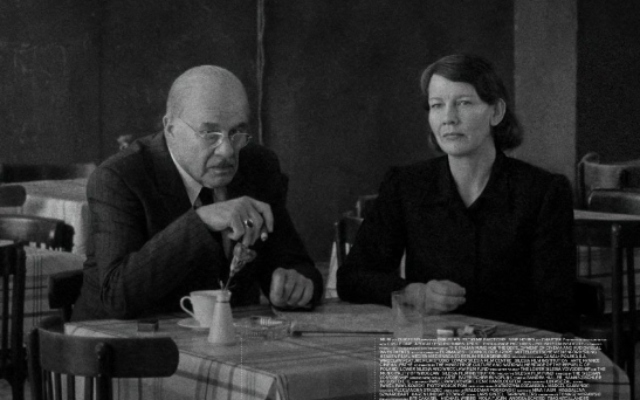
SYNOPSIS: “Fatherland,” a new historical drama now playing in theatres, is a fictional account of Nobel-winning writer Thomas Mann and his daughter Erika as they encounter a post-war Germany split into West and East.
CAST: Sandra Hüller, Hanns Zischler, August Diehl. Directed by Paweł Pawlikowski.
REVIEW: “Fatherland’s” slow burn story is an understated, but powerful study in reckoning with the echoes of the past in post-war Germany.
Set in the summer of 1949, “Fatherland” stars Hanns Zischler and Sandra Hüller as and Nobel Prize-winning writer Thomas Mann Thomas Mann and his writer and activist daughter Erika. On a car trip, after sixteen years of exile in America they travel from American-occupied Frankfurt to Soviet-controlled Weimar where will Thomas accept the Goethe Prize and deliver a speech advocating freedom.
In West Germany Erika is sent anonymous letters accusing her father of being a traitor to his ″fatherland,” and it is suggested that the trip to East Germany could result in charges being levied against Thomas in his adopted American homeland.
Still, they continue as the trip becomes an existential journey, forcing them to grapple with the harsh realities of the country they once called home and a divide in their family’s relations.
Shot in striking black and white, this mix of personal and political has one eye on the past, the other on the future. As Thomas and Erika deal with the wreckage of the past, they must also grapple with ideas of reconciliation and acceptance in all aspects of their lives.
It’s a somber movie, heavy with ideas but not heavy handed. Hüller and Zischler hand in restrained performances, relying on the gravity of the script, co-written by Paweł Pawlikowski and Hendrik Handloegten, and the intensity of the situation to carry the day over any sort of histrionics.
The result is a deeply felt movie about a very specific situation that opens up to become a universal look at moral responsibility, heritage and humanity and the co-opting of art. It’s a period piece but in its examination of political division and polarization it feels contemporary.