2023 was the year Taylor Swift ruled, while everyone else drooled. On the music charts, in arenas all over the world and even in movie theatres, the “Shake It Off” singer had the Midas touch in a year so stellar her home state of Pennsylvania declared 2023 the Taylor Swift Era.
She soaked up the lion’s share of attention and headlines, but the entertainment gods still found time to bless us with other forms of amusement.
They gave us many great movies that found their way to the few screens that weren’t playing “Taylor Swift: The Eras Tour” movie.
Here is my alphabetical list of my favourite films that screened while Miss. Swift entertained the world.
“Air” is a crowd-pleaser, a movie whose specificity, in this case the story of Air Jordans and Nike, becomes a universal story of inspiration, determination and risk taking.
“Are You There God? It’s Me, Margaret” perfectly captures Margaret’s tentative steps into adolescence and the life-changing power that comes along with each of her discoveries. Like the book, which runs an economical 149 pages, the movie is a small story that tackles big issues..
Director Cord Jefferson’s “American Fiction” asks why stereotypes of Black trauma are so prevalent in entertainment by not so subtly satirizing the process and the people who create the limited view of Black life in books and on screens.
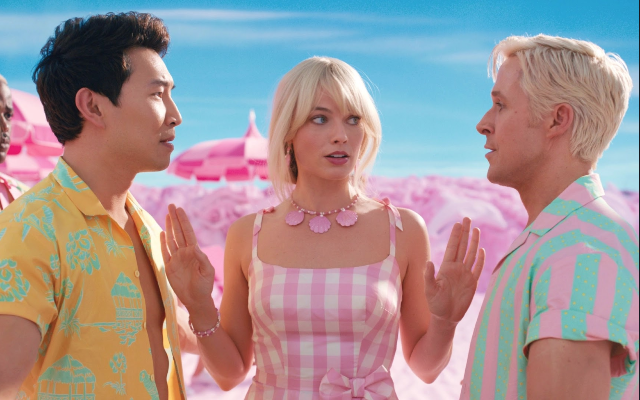
“Barbie” has both style and substance, and while its story may get overactive and muddled in its last reel, Gerwig’s point of view on gender roles and the way that women are treated in society pulls few punches.
“Beau Is Afraid” swings for the fences, burrowing in on its grandiose emotional ideas even if it often feels like a three-hour panic attack. Unpredictable, unexpected and ultimately, unexplainable, it’s challenging cinema that connects on a subconscious level.
It is a blast to watch Jamie Foxx in full flight, but it is in “The Burial’s” quieter moments that Gary really comes to life.
“Creed III,” of course, leads up to a showdown between the two frenemies, but as a director Michael B. Jordan finds a way to make the inevitable fight more personal, more dynamic than the usual boxing movie finale. It’s a knockout climax to a sometimes formulaic, but always heartfelt and entertaining, story of ambition and regret.
“Dream Scenario” does feature some surreal dream sequences, but it’s not really about dreams. It’s about life as a modern, viral celebrity, on display in the unblinking eye of the public, social media and cancel culture.
At its core, “Flora and Son” is a love story, but it’s not a rom com. This is about the love of family, music and self and is a rousing crowd-pleaser that breathes the same air as director John Carney’s other films, Sing Street and Once.
“The Holdovers” is a warmhearted coming-of-all-ages movie that never succumbs to cheap melodrama. An uplifting tale of, as Armistead Maupin put it, embracing your logical family instead of your biological one, it avoids overt sentimentality.
Atmospheric and gothic though “Humanist Vampire Seeking Consenting Suicidal Person” may be, the movie is actually a tender-hearted story that uses the undead to celebrate life.
Part work-place comedy—think “High Fidelity” only set in a video store—part character study, “I Like Movies” is sweet-natured, funny film that digs deep to make us feel empathy for Lawrence, a socially awkward character who hides his real feelings behind a facade of bluster and pretension.
“The Killer” is a slickly made, stylish thriller, with an anxiety inducing score from Trent Reznor and Atticus Ross, that uses the central character’s aloofness as a hook to pull you to the edge of your seat.
Robert De Niro has played dastardly characters before, but he’s never been as vile as he is in “Killers of the Flower Moon.” And this is an actor who played The Devil in “Angel Heart.”
“Leo” presents a kinder, gentler Adam Sandler than the one who got into an on-screen brawl with beloved game show host Bob Barker in Happy Gilmore.
“Mission: Impossible—Dead Reckoning” is the ne plus ultra of modern, big-budget studio filmmaking. Director Christopher McQuarrie manages the breathless, super-sized movies with an expert hand, blending old school action movie filmmaking with real stakes.
“Oppenheimer,” the brainiest blockbuster of the season is a period piece about a man who moral conundrums regarding power and the way it is wielded, that resonates just as loudly today as they did when the events took place.
“Perfect Days” is a contemplative movie that examines the simple pleasures in life. Music, literature and nature are showcased, but this poetic, profound film celebrates finding contentment in all aspects of life.
In “The Pigeon Tunnel,” Errol Morris doesn’t attempt to chip away at the façade and get at the underlying truth of John le Carré’s life, because he knows, in the hands of master storyteller, a good story is a good story, whether it is true or not.
An off-kilter “Frankenstein” story, “Poor Things” is a coming-of-age… a long strange journey unlike any other, but one with a strong message of female agency and a spectacular performance from Emma Stone.
“The Royal Hotel” isn’t a travelogue or a Shirley Valentine-style journey of self-discovery. What begins as a lark, an adventure in Australia, soon turns into a cabin-in-the-woods style horror movie, where the boogeyman is toxic male behavior.
Your spidey senses won’t be the only thing left tingling after “Spider-Man: Across the Spider-Verse.”
It is the focus on Jones as a brilliant musician and not simply another rock ‘n’ roll casualty, that elevates “The Stones and Brian Jones.” The story has its sordid moments, but director Nick Bloomfield emphasizes the very heart of Jones’s being, the music.
The 4K “Stop Making Sense” restoration of the four-decade old movie is a joyful, high-energy revisiting of a classic. A document of a band working at the top of their game, it captures the love of music and performance in a way few other have.
The movie doesn’t break much new ground, the break-up-and-make-up story beats are predictable, but the sweet and sassy performances and genuine family vibe make “You Are So Not Invited to My Bat Mitzvah” a welcome addition to the Sandler Family catalogue.
Confident in its uneasy, experimental execution, unblinking in its representation of the facilitation of evil, “The Zone of Interest” isn’t an easy watch, but will resonate long after the end credits have rolled.
On the Saturday December 30, 2023 edition of the Richard Crouse: As we approach the end of another year, I wanted to lighten things up a bit, so today we’re having an and have a look at two movies guaranteed to make you laugh.
First, we’ll meet Jon Heder, Jon Gries and Efren Ramirez, the stars of “Napoleon Dynamite,” the movie Jim Carrey said “changed comedy movies.” The story of a listless and alienated teenager who decides to help his new friend Pedro win the class presidency in their small western high school, while dealing with his bizarre family life back home, is one of the most quoted movies of all time. We go deep on the legacy of the movie.
Then, I welcome brothers David and Jerry Zucker, and Jim Abrahams, the writers and co-directors of “Airplane!,” the 1980 hit spoof about which David Letterman said, “film comedy became different after that movie.” the Zuckers and Abrahams have a new book, “Surely You Can’t Be Serious: The True Story of Airplane!,” available now wherever you buy fine books, will stop by in just a bit to tell all about the making of the movie and the film’s lasting impact.
Each week on the nationally syndicated Richard Crouse Show, Canada’s most recognized movie critic brings together some of the most interesting and opinionated people from the movies, television and music to put a fresh spin on news from the world of lifestyle and pop-culture. Tune into this show to hear in-depth interviews with actors and directors, to find out what’s going on behind the scenes of your favourite shows and movies and get a new take on current trends. Recent guests include Chris Pratt, Elvis Costello, Baz Luhrmann, Martin Freeman, David Cronenberg, Mayim Bialik, The Kids in the Hall and many more!
Listen to the show live here:
C-FAX 1070 in Victoria
SAT 5:00 PM to 6:00 PM
SUN 10:00 AM to 11:00 AM
CJAD in Montreal
SAT 8 PM to 9:00 PM
CFRA in Ottawa
SAT 8 PM to 9:00 PM
NEWSTALK 610 CKTB in St. Catharines
Sat 8:00 PM to 9:00 PM
NEWSTALK 1010 in Toronto
SAT 8 PM to 9:00 PM
NEWSTALK 1290 CJBK
SAT 8 PM to 9:00 PM
AM 1150 in Kelowna
SAT 11 PM to Midnight
BNN BLOOMBERG RADIO 1410
SAT 8 PM to 9:00 PM
Click HERE to catch up on shows you might have missed!
There are underdog sports movies, and then there is “The Boys in the Boat,” the new film from director George Clooney, now playing in theatres. Set during the Great Depression, the characters in this film fight expectations and fascism.
Based upon Daniel James Brown’s book of the same name, “The Boys in the Boat” centers on Joe Rantz (Callum Turner), a struggling University of Washington student who, unable to pay the balance of his tuition for the semester, signs up for the school’s rowing team because it comes with a part-time job and a place to live.
“The depression hit everyone hard,” he says. “No jobs. No food. We were broke.”
Under the tutelage of coach Al Ulbrickson (Joel Edgerton) and boatbuilder George Pocock (Peter Guinness), Rantz and the Washington Huskies, his team of inexperienced, working-class student rowers, are pitted against the richest schools in the country.
“We rowed out of need,” Rantz says. “The need to stay in school. The need to eat. To sleep.”
Through need and determination, the Huskies earned a run at the gold at the 1936’s Nazi-overseen Berlin Olympics.
“They said we couldn’t compete with the richest schools in the nation,” Rantz says. “They said we couldn’t beat the Germans. But they didn’t understand who we were.”
An old-fashioned story of grit and perseverance, “The Boys on the Boat” is a mix of stoicism and sports. Of course, the sport is simply the vessel by which the characters glide through the story. The movie spends a fair amount of time on the water, but rowing is secondary to the rush of inspiration that fuels the story. It’s a story of team work, of young men coming together to overcome not only the economic hardships of their lives and illness on the eve of their big row, but also the Nazis.
Unfortunately, the movie also attempts to play tug-a-rope with your heartstrings. It works its way through to the inevitable happy ending with crowd-pleasing beats that will seem very familiar to anyone with a knowledge of 1990s era sports flicks.
Still, it is a handsomely mounted movie with several intense competition scenes that will set your pulse racing, even if the overly sentimental presentation doesn’t.
The glitzy new musical version of “The Color Purple” maintains the talking points of Alice Walker’s Pulitzer Prize-winning novel and Stephen Spielberg’s Oscar-nominated film adaptation, but adds in a touch of old Hollywood glamor and rousing gospel, blues and jazz songs.
Set in Jim Crow era rural Georgia, Fantasia Barrino reprises her role from the Broadway stage to play Celie Harris, a timid young woman whose life is marred abuse and separation from loved ones. Impregnated by her father when she was just a teen, her baby is given away. Later, when she is shipped off to live with the abusive Albert Johnson (Colman Domingo), a man she is forced to call “Mister,” she is disconnected from her beloved sister Nettie (Ciara).
The cruel and overbearing Mister tells his terrified wife she’ll never see her sister again and blocks any communication between the two. “Whatever I say, go,” he tells her.
Isolated from everything she has ever known, she perseveres through strength of will, the power of imagination and the friendship of the indomitable Sofia (Danielle Brooks) and flamboyant blues chanteuse Shug Avery (Taraji P. Henson).
Reimagined as a period drama with a healthy dose of magic realism, the new “The Color Purple” is a journey of self-discovery and triumph over adversity as Celie opts to take agency over her life and not be a docile victim. Despite her trauma, she has an eye to the future, hope and, above all, resilience.
Barrino plays Celie as soft-spoken, allowing the songs, like the moving “Superpower,” to stand out, fuelled by cathartic, powerhouse performances. The role is a weighty one, a stand-in for the evolution of many marginalized people, but this version of “The Color Purple” is an emotional Broadway-style crowd pleaser that turns Celie’s ordeal into a journey of empowerment.
The addition of musical weaves joy into the story.
Director Blitz Bazawule allows Celie’s flights of imagination to temper the story’s built-in oppressive tone. The film’s opening scene, featuring Mister playing banjo, while his horse’s hoof clomps keep time, is subtle, while a scene in which Shug, (a terrific Henson), takes Celie to the movies, becomes a luscious Art Deco fantasy reimagination of the song “What About Love?” It is lavish and lovely.
In terms of staging, one show stopping scene sees Celie sing to Shug while perched atop of spinning gramophone record. It’s a blast of old-school Hollywood glamour that cleverly demonstrates Celie’s use of imagination as a coping mechanism.
This isn’t the “The Color Purple” of old. Boldly stylized, it embraces humor, music, imagination and leaves some space for Mister’s redemption and a slightly more explicit depiction of the relationship between Celie and Shug than in the previous film version. More than anything, though, it is a tuneful, joyful journey from powerless to empowered, from heartbroken to healed that is sure to entertain and inspire in equal measure.
“Ferrari,” director Michael Mann’s long gestating look at the summer of 1957 and the existential crisis that plagued Italian motor racing pioneer Enzo Ferrari, both personally and professionally, goes flat out, even when it isn’t on the racetrack.
When we first meet Ferrari (Adam Driver) he is a cultural hero in Italy, but his company and marriage are falling apart. His advisors tell him he must take on a partner, like Ford or Fiat, and
Increase his consumer car sales by four times if he hopes to stay afloat. Trouble is, Ferrari wants complete control of his company, and that means no partner and concentrating on race cars, not street vehicles.
At home, his infidelity pushes his wife Laura (Penélope Cruz) to extremes. She doesn’t care if he sleeps around, just so long as nobody knows about it. When he arrives home after the maid has served coffee, Laura expresses her displeasure by taking a potshot at him with a gun she carries for protection. That is, unfortunately, the extent of the passion left in the marriage.
Unbeknownst to Laura, who is grieving the loss of their young son, Enzo has a long-term relationship, and has fathered a son, with Lina Lardi (Shailene Woodley), a woman he met, and fell in love with, during the war. As their son’s baptism approaches, Lina wants to know if the child will carry the name Ferrari, but Enzo has other things on his mind, like the imminent collapse of his company.
His financial advisor Giacomo Cuoghi (Giuseppe Bonifati) suggests entering the grueling, 1000-mile open road race, the Mille Miglia. A win would establish Ferrari supreme over their main rival Maserati, and hopefully encourage sales. “Win the Mille Miglia, Enzo,” Cuoghi says. “Or you are out of business.”
Working from a script by Troy Kennedy Martin, who wrote 1969s “The Italian Job,” Mann’s film feels like two movies on one. On one hand there’s the drama with Laura, Lina and the company. On the other is a piercing look at the dangerous world of racing, circa 1957. “It is our deadly passion,” Enzo tells racers Alfonso de Portago (Gabriel Leone), Peter Collins (Jack O’Connell), and Piero Taruffi (Patrick Dempsey). “Our terrible joy.”
The racing scenes are exciting, shot with verve and style, with a couple of unexpected turns (literally) that vividly capture the dangers of racing. But the racing scenes feel conventional when stacked up against the more complex portraits of Enzo and Laura.
Driver plays Enzo as a charismatic man of action, a physically imposing person haunted by the voices of those who have gone before him, his father, his son and racing colleagues taken too soon. It reveals a rich inner life hidden by his stolid façade. Driver doles out Ferrari’s personality in dribs and drabs; the contented lover with Lina, the hard driving boss with his racers and the stoic husband no longer in love with his wife. All aspects of this performance come packaged in the form of a man treated like a deity—a priest even refers to him as a “god”—but prone to real world failings. Driver captures the public and personal to create a complex portrait of a man driven by a variety of forces.
He is at his best when opposite Cruz. Laura is a supporting character in the story over-all, but her agony/rage for a loveless marriage, a son she was powerless to save and a company she co-founded but is unable to have a say in, is palpable.
You can’t make a movie about Enzo Ferrari and not include racing, particularly the career defining Mille Miglia, but Mann wisely keeps the focus on the interpersonal. “Ferrari” has race scenes, several very effective ones, but the memorable moments happen when Driver and Cruz put the pedal to the emotional metal.
On the Saturday December 23, 2023 edition of the Richard Crouse Show we have look at some of the greatest Christmas songs of all time.
First we meet Moe Berg, one forth of the Trans-Canada Highwaymen, a new band that consists of four of this country’s best rock singer-songwriters, Sloan’s Chris Murphy, Odds’ Craig Nothey and former Barenaked Ladies frontman Steven Page.
The album, “Explosive Hits Vol. 1,” is covers of Canadian AM rock radio hits from the 1960s and 70’s and it’s super fun. Moe Berg and I talk about the new album, and then get into the spirit of the season as Moe talks about a Christmas song he wrote with the Pursuit of Happiness and a tune he loves so much, he has a plaque with the lyrics.
“Furious Devotion” author Richard Balls joins me to talk about “Fairytale of New York,” a song that is an Irish folk-style ballad and was written as a duet, with the Pogues’ singer Shane MacGowan and Kristy MacColl as bickering former lovers on Christmas Eve. A song about their youthful hopes crushed by alcohol and drug addiction doesn’t sound like a Christmas cracker, but in the UK it was the most-played Christmas song of the 21st century and re-enters the music charts every December.
We’ll also get to know Larry Weinstein, director of the documentary “Dreaming of a Jewish Christmas,” a musical documentary about the amazing story of a group of Jewish songwriters who wrote the soundtrack to Christmas, and we’ll learn how the Cuban Missile Crisis inspired one of the most popular Christmas songs of all time.
Finally we wrap with Brent Butt, the star, writer and/or producer of TV shows such as “Corner Gas,” “Hiccups” and “Corner Gas Animated,” and the author of the best-selling thriller “Huge,” and home designer, television host and producer, best-selling author, sought-after public speaker, and host of her own special Tuscan getaways Debbie Travis on their favorite Christmas songs and stories.
Listen to the whole thing HERE! (Link coming soon!)
Here’s some info on The Richard Crouse Show!
Each week on the nationally syndicated Richard Crouse Show, Canada’s most recognized movie critic brings together some of the most interesting and opinionated people from the movies, television and music to put a fresh spin on news from the world of lifestyle and pop-culture. Tune into this show to hear in-depth interviews with actors and directors, to find out what’s going on behind the scenes of your favourite shows and movies and get a new take on current trends. Recent guests include Chris Pratt, Elvis Costello, Baz Luhrmann, Martin Freeman, David Cronenberg, Mayim Bialik, The Kids in the Hall and many more!
Listen to the show live here:
C-FAX 1070 in Victoria
SAT 5:00 PM to 6:00 PM
SUN 10:00 AM to 11:00 AM
CJAD in Montreal
SAT 8 PM to 9:00 PM
CFRA in Ottawa
SAT 8 PM to 9:00 PM
NEWSTALK 610 CKTB in St. Catharines
Sat 8:00 PM to 9:00 PM
NEWSTALK 1010 in Toronto
SAT 8 PM to 9:00 PM
NEWSTALK 1290 CJBK
SAT 8 PM to 9:00 PM
AM 1150 in Kelowna
SAT 11 PM to Midnight
BNN BLOOMBERG RADIO 1410
SAT 8 PM to 9:00 PM
Click HERE to catch up on shows you might have missed!
Jason Mamoa returns as the universe’s most famous merman in “Aquaman and the Lost Kingdom,” the last film of the DCEU, now playing in theatres.
“I’m the King of Atlantis,” says Arthur Curry / Aquaman (Mamoa). “Half a billion from every known species in the sea call this place home. But that doesn’t mean they all like me.”
Angriest of all the seafarers is David Kane / Black Manta (Yahya Abdul-Mateen II), a pirate and high-seas mercenary who holds Arthur responsible for the death of his father. Jesse Kane perished when his hijacked Russian nuclear submarine flooded with water. Aquaman could have saved him, but refused. Now, Black Manta wants revenge and is prepared to use the dark magic of the cursed Black Trident to get it.
“I’m going to kill Aquaman,” he says, “and destroy everything he holds dear. I’m going to murder his family and burn his kingdom to ash. Even if I have to make a deal with the devil to do it.”
Like I said, he’s angry.
To stop Black Manta from destroying everything important in his life, Aquaman decides to join forces with his estranged half-brother Orm Marius / Ocean Master (Patrick Wilson). Trouble is, the former King of Atlantis is being held in a desert jail for crimes against his old kingdom. Wearing a camouflage suit, Aquaman liberates Orm, and reluctantly, the former king agrees to battle Black Manta.
“I don’t know what lies ahead,” says Aquaman as they begin their adventure. “But we can’t leave our children in a world without hope.”
“Aquaman and the Lost Kingdom” has the vibe of an episode of the Saturday morning cartoon “Super Friends.” A mix of goofy humour and action, it delivers spectacle, but ultimately feels like it is hobbled by too much exposition, too much muddy CGI, not enough character development and not enough Black Manta. After a messy first hour of set-up, it catches a wave in the second half, but even when it picks up, the stakes are never high enough to match the first drama of the first film.
Mamoa is game. He understands that Aquaman is a mix of kitsch, charm and action chops, (“There are those who think I’m ridiculous,” he says.), a mighty underwater superhero who rides around the sea courtesy of a giant sea monkey, but the tonal shifts, whether because of reshoots or rewrites or just jerky editing, often make for disjointed viewing. The fine balance of humour and emotion isn’t as carefully calibrated here as it was in the first movie, and the character’s sudden temperament swings, from beast mode to jokester, are jarring.
Abdul-Mateen II is underused. He’s a villain with relatively little screen time whose thirst for retribution is matched only by his ability to make the silly, retro-sci fi Black Manta suit look cool.
Many movies have been fuelled by revenge, but here it quickly becomes a McGuffin, the thing that gets the movie in motion, but is soon forgotten as other plotlines crowd it out of the picture. His scheme to speed the warming of the planet by detonating his store of orichalcum fuel, is the work of a supervillain for sure, but is underdeveloped. “It has to be stopped,” says Atlanna (Nicole Kidman) in a textbook definition of understatement.
Of the supporting characters Wilson is given the only character arc. From disgraced leader to unlikely hero (no spoilers here), he’s as stoic as Aquaman is playful, but, nonetheless, delivers the film’s funniest scene (again no spoilers here, but it would not be out of place on the icky reality show “Fear Factor”). His presence, however, allows the film to explore a redemption storyline that gives the otherwise generic plot a bit of juice.
Amber Heard fans, and haters, may be divided by her appearance. Supporters will think she is underused, while the haters will think she takes up too much screen time. Suffice to say, she is a supporting character who appears throughout, but has little to do with the main action.
“Aquaman and the Lost Kingdom” has its moments (stick around for the amusing mid-credit scene), but the script’s choppy waters, and a low stakes storyline offer a low reward.
The smart, funny and insightful, “American Fiction,” winner of this year’s Toronto Film Festival People’s Choice Award, is a satire that sees Jeffrey Wright as an exasperated novelist who confronts racial stereotypes by writing a book that forces him to balance hypocrisy with selling out.
An adaptation of Percival Everett’s 2001 novel “Erasure,” the film stars Wright as Thelonious “Monk” Ellison, an author and English Lit professor frustrated that his publisher rejects his latest work as not being “Black enough,” while another book, “We Lives in da Ghetto” by Sintara Golden (Issa Rae), is heralded by critics as a modern masterpiece.
As Monk struggles personally—his brother Cliff (an excellent Sterling K. Brown) is experiencing a massive life shift while his mother Agnes (Leslie Uggams) is in decline, and will soon need a care home, which the family cannot afford—his professional life turns upside down.
“Monk,” says his agent Arthur (John Ortiz), “your books are good, but they’re not popular. Editors want a Black book.”
“They have a Black book,” says Monk. “I’m Black and it’s my book.”
Angry, on a whim he bangs out “My Pafology,” a satire of Golden’s book under the pseudonym Stagg R. Leigh. Filled with tired and reductive stereotypes of gang violence and broken homes, his gag novel becomes a publishing sensation, receiving an offer of a $750,000 advance and huge marketing campaign.
Monk is the only person, it seems, who gets the joke. “It’s the most lucrative joke you’ve ever told,” says Arthur.
It may have started as a joke, but Monk needs the money. If he accepts the offer, however, does that mean he’s perpetuating tropes that play into what he regards as “Black trauma porn”?
“American Fiction” finds sharp humor in identity politics, perception and culture wars. Serious in its message but playful in tone, it can cut to the quick. In one scene, Monk and Golden, the only two Black jurors on a literary panel, are castigated to by the white judges to “hear Black voices.” It is one of the film’s funniest scenes, but the performative nature of the sentiment is all too realistic.
As Monk, we see Wright in a different sort of role. Given the chance to flex his rarely-used comedy muscles, he excels, playing up his curmudgeonly character’s conundrum to maximum effect. It’s bittersweet. As he watches the fictious Stagg R. Leigh’s book become successful. It confirms his feelings about the biases of the publishing industry. He reacts with a mix of outrage and humor. It’s a bravura work that hopefully means it won’t take thirty years to give Wright another leading role in a theatrical release.
Giving Wright a run for his money is Brown who steals every scene he’s in. His character Cliff is a mess, pushing personal boundaries as a man coming out of the closet and building a new life. Like Wright, Sterling creates a character that gets laughs, but the laughs aren’t shallow, they come from a deep well of pain and Cliff’s lived experience.
Director Cord Jefferson’s “American Fiction” asks why stereotypes of Black trauma are so prevalent in entertainment by not so subtly satirizing the process and the people who create the limited view of Black life in books and on screens. It is insightful but never forgets to entertain.
Steeped in tragedy and trauma, “The Iron Claw,” a movie about the Von Erich wrestling family starring Zac Efron and Jeremy Allen White, and now playing in theatres, isn’t a sports movie. Set against the backdrop of professional wrestling, the movie is study of toxic masculinity and how the sins of the father can be visited on their sons.
The film begins with Fritz Von Erich (Holt McCallany) patriarch of the championship Von Erich wrestling dynasty. Early in his career, in an attempt to create a villainous heel persona, he changed his name from Jack Adkisson to the German sounding Fritz Von Erich. The switch purposely stoked post-war animosity and made him a wrestler audiences loved to hate.
In the ring he was a relentless competitor, the purveyor of the deadly Iron Claw, his much-feared finishing move that squeezed his opponent’s face into mush. Outside the ring his drive to win saw him push his sons Kevin (Efron), Kerry (White), David (Harris Dickinson) and Mike (Stanley Simons), into the family business.
“Now, we all know Kerry’s my favourite, then Kev, then David, then Mike,” said Fritz. “But the rankings can always change.”
Under Fritz’s hardnosed guidance, the Von Erich’s became one of the first wrestling families to become popular, winning championship belts and fans for their high-flying, acrobatic style but their accomplishments are tempered by tragedy, which son Kevin blames on a curse brought on by the family’s adopted name.
“Ever since I was a child, people said my family was cursed,” Kevin said. “Mom tried to protect us with God. Dad tried to protect us with wrestling. He said if we were the toughest, the strongest, nothing could ever hurt us. I believed him. We all did.”
“The Iron Claw” is about sports, and clearly stars Efron and White spent time in the gym to prepare for their shirtless bouts in the ring, but like all good sports movies it isn’t about the sport. It’s about the universal subjects of tragedy, brotherhood, brawn and bullies. The backdrop may be unusual, but anyone who has ever been browbeaten by a bully will find notes that resonate in the Von Erich story.
At the heart of the film are Efron and White as sons Kevin and Kerry. Both hand in performances etched by their physicality but deepened by the emotional turmoil that envelopes each character.
Efron digs deep in a career best performance. As Kevin watches his family fall apart, he slips into a depression, afraid that the curse is real and may affect his own wife (Lily James) and kids. For such a physical film, it’s internal work that reveals a well of emotion and sublimated anger underneath the character’s bulky frame.
White has a showier role, but as Kerry, the son who pays a huge personal price for wanting to please his overbearing father at any cost, he is more outward in his reactions to the story’s twists, but the sadness he carries with him is palpable.
Maura Tierney does a lot with little as mother Doris Von Erich. A stoic figure, when her buried feelings threaten to overflow, the look on her face has such quiet intensity it speaks louder than words.
McCallany has a much larger role. He is the catalyst, the bully who pushed his sons toward the ring by any means necessary. He’s the movie’s obvious boogeyman. Trouble is, the family can’t see it until it is too late.
“The Iron Claw” is a slow moving, somber movie that looks beyond the ring to focus on the price this family paid for success.
 “Barbie” has both style and substance, and while its story may get overactive and muddled in its last reel, Gerwig’s point of view on gender roles and the way that women are treated in society pulls few punches.
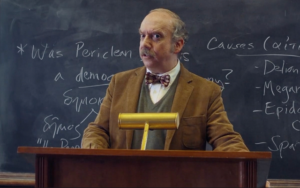 “The Holdovers” is a warmhearted coming-of-all-ages movie that never succumbs to cheap melodrama. An uplifting tale of, as Armistead Maupin put it, embracing your logical family instead of your biological one, it avoids overt sentimentality.
 “Leo” presents a kinder, gentler Adam Sandler than the one who got into an on-screen brawl with beloved game show host Bob Barker in Happy Gilmore.
 “The Royal Hotel” isn’t a travelogue or a Shirley Valentine-style journey of self-discovery. What begins as a lark, an adventure in Australia, soon turns into a cabin-in-the-woods style horror movie, where the boogeyman is toxic male behavior.