The opening of “Rare Beasts,” the ambitious new film on VOD starring Billie Piper, who also wrote and directed, is the tail end of the worst date of all time. Over a dinner and a glass or two of wine TV writer Mandy (Piper) and over-confident Pete (Leo Bill) butt heads, discussing everything from his ultra-traditional view of women as a wives and mothers, to the size of her teeth. It appears he doesn’t really like women, but can’t imagine his life without one by his side. Or, at least, in his kitchen and bedroom.
They are oil and water, chalk and cheese. In a rom com, this would be an example of exactly the kind of misogynist bottom-of-the-barrel person Mandy should shun until Mr. Right comes along, particularly after Mandy snaps back after one of his outbursts, “Those are classic rapist remarks.”
But “Rare Beasts” is no rom com. It feels more like a thriller, because Mandy and Pete’s first meeting is so awful, as time ticks on, you’ll be on the edge of your seat wondering what will happen between them.
Mandy is the insecure single mother of Larch (Toby Woolf) who attempts to tame her negative thoughts with a Stuart Smiley-style mantra, “Even though I am scared and angry, I still love and respect myself.” The disastrous date is the beginning of a strained relationship, born out of insecurity and now small amount of self-loathing. “I want to unveil myself one piece at a time,” she says, “so that I can talk you through what I physically hate about myself.”
Despite their complete incompatibility and Pete’s claim of finding women “intolerable,” the pair struggle through a relationship, driven by dysfunction. She visits his parents on holiday in Spain and they even discuss marriage.
“Rare Beasts” has audacity on its side. Piper populates the film with difficult characters, neurosis and up-close-and-personal shots of Mandy that almost peer inside her head to reveal the character’s inner chaos. It is confrontational in its treatment of the form—perhaps we’ll call it a non rom com—and its characters, who are almost as disconnected as the storytelling.
Piper bolts through the story, slowing every now and again to focus on memorable scenes, like a party of coke-snorting new mothers, or taking a detour into more darkly whimsical moments. The result is a dizzying, off kilter film that paints a modern picture of feminism while establishing Piper as a fearless (and often quite funny) filmmaker.
“The Night House,” a new thriller starring Rebecca Hall and now playing in theatres, explores the psychological damage left behind after tragedy and secrets tear a couple apart.
When we first meet upstate New York high school teacher Beth (Hall) she is lost in grief in the aftermath of her husband Owen’s (Evan Jonigkeit) sudden death. She’s angry, self-medicating with alcohol to dull the pain.
At night, alone in the beautiful lake house he built for them, she is tormented by ghostly visions. Bloody footprints appear, the stereo snaps on by itself to play “their song” and there are loud knocks at the door, but when she opens the door, there’s nobody there. During the daylight hours, she’s left with her grief and a nagging sense that Owen left behind as many secrets as he did memories.
Her friend Claire (Sarah Goldberg) and neighbour Mel (Vondie Curtis-Hall) offer support, but the horrifying visions and aural experiences continue, pushing her to the edge. As she packs up his things, clothes, books, the compiled ephemera of a life, she uncovers evidence that Owen had a hidden life involving the occult and a number of women who look remarkably like Beth.
“The Night House” is a gothic psychological horror film anchored by Hall’s remarkable performance. She turns the idea of the grieving widow on its head, playing Beth as indignant and unsympathetic. As she cycles through the stages of grief, focusing on the anger, it’s gut wrenching. An early scene with the mother of one of her students complaining about her son’s poor grade is brutal in its honesty laid bare. She is an open wound and Hall commits to the edgier aspects of the character, allowing the viewer a window into Beth’s world.
Director David Bruckner builds plenty of atmosphere and a sense of the strange that keeps the off-kilter story afloat despite the script’s leaps of logic. As Beth’s inner turmoil escalates the story adds in too many elements that don’t go anywhere like a second house in the woods and Beth’s doppelganger. As the script becomes more and more convoluted the intensity built in the film’s first half dissipates.
“The Night House” is a provocative look at grief with a great lead performance but is undone by a drawn-out approach to the story.
This is movie review of THE DEVILS directed by Ken Russell! My guest is Richard Crouse who wrote the book “Raising Hell And The Unmaking Of The Devils”. This is a segment, which was part of my interview with Richard Crouse on his life and career!
Two years ago, the documentary “Amazing Grace” showcased Aretha Franklin remarkable 1972 two-night stand at the New Temple Missionary Baptist Church in Los Angeles. It’s a soul stirring window into Franklin’s vocal ability as she caresses and stretches the notes of the songs to maximum effect.
A new film, “Respect,” starring Jennifer Hudson and now playing in theatres, broadens the scope, detailing Franklin’s life from her beginnings, singing in her father’s church, to the height of her fame.
We first meet Aretha as a ten-year-old (Sky Dakota Turner) phenom, blessed with a beautiful voice. “You have a talent,” her Baptist minister father Clarence (Forest Whitaker) says, “they call genius.” She’s ten, says a friend, but her voice is going on thirty. Her guiding light is mother Barbara (Audra McDonald), who tells her, “Singing in sacred and you shouldn’t do it because somebody wants you to. What’s important is that you are treated with dignity and respect.”
Despite that advice, her father controls every aspect of her life. Using his connections, Rev. Franklin secures a recording contact with music producer John Hammond (Tate Donovan) at Columbia Records. Four low-selling albums of jazz and blues standards follow as she struggles to find her voice on vinyl.
The climb to the top of the charts came with advice from a legend, Dinah Washington (Mary J. Blige), who told her, “Honey, find the songs that move you. Until you do that, you ain’t going nowhere,” and a new manager (and love interest) in the form of Ted White (Marlon Wayans). Taking the career reigns from Franklin’s father, White breaks ranks with Columbia, and gets a new record deal and a new sound with producer Jerry Wexler (Marc Maron).
As Franklin becomes known as the Queen of Soul, she and White struggle with personal demons that threaten to sidetrack her rise to superstardom.
First and foremost, “Respect” is a tribute to the genius of Aretha Franklin and the talent of Jennifer Hudson. Franklin left an indelible mark on several generation and styles of music, and her life’s work is well represented here, from her roots in the church, to her genre-bending chart toppers and the civil rights activism that defined her life off stage.
Hudson is given ample opportunity to showcase Franklin’s vocal stylings, and does so with a voice that sounds heaven sent. As a rousing jukebox musical “Respect” succeeds spectacularly well.
It’s in the telling of Franklin’s life that the movie hits a few sour notes. There is a lot of ground to cover, from alcoholism and racism to sexism and becoming pregnant at the age of 12, it’s a complicated story told in fits and starts, wedged between musical numbers.
The film’s early scenes, featuring the wonderful Skye Dakota Turner as the ten-year-old “Ree,” are nicely developed and paint a vivid picture of Franklin’s young life. It’s when “Respect” adopts the Wikipedia bullet point approach to quickly cover a lot of ground that the movie loses some of its dramatic thrust.
“Respect” skims the surface of a long, interesting life—the story ends rather abruptly in 1972 with the recording of Franklin’s landmark “Amazing Grace” gospel album—but presents a rousing tribute to Franklin’s lifeblood, the music.
“Free Guy,” the new Ryan Reynolds action comedy now playing in theatres, has its philosophical moments but no one will confuse its search for the meaning of life with the explorations of Joseph Campbell or Socrates. This is pure pop philosophy that breathes the same air “The Truman Show” and “Edtv,” movies about men who yearn for more than life has offered them.
Reynolds is Guy, a bank teller in Free City, a video game metropolis where the main characters wear sunglasses, have devil-may-care attitudes, cool hair and treat laws as suggestions, not hard and fast rules. Everyone else, including Guy and his best friend Buddy (Lil Rel Howery), are NPC, non-player-characters, who exist simple to give the Sunglasses People someone to rob, beat down, or, in rare cases, flirt with.
They are set decoration in the grand video game of life. “People with sunglasses never talk to people like us,” Buddy says.
One day Guy’s orderly life is thrown a curve when he spots Molotov Girl (Jodie Comer), a gunslinging sunglasses person, who also happen to be the woman of his dreams. Consumed with feelings he has never had before; his behaviors change as he looks for love and meaning in his life. “Maybe I’ll get some sunglasses of my own,” he says.
IRL (In Real Life) Millie (also played by Comer) and Keys (Joe Keery) are former coding superstars whose idea for a videogame that would actually change and grow independently of its users was stolen by evil video game developer Antoine (Taika Waititi). Keys now works for Antoine, while Millie is obsessed with infiltrating the game as Molotov Girl to get evidence for her lawsuit against the obnoxious tech giant.
Soon the line between Guy’s algorithmic life and Millie’s quest blend as “Free Guy” asks, “Do you you have to be a spectator in your own life?”
You need a lot of hyphens to describe “Free Guy.” It’s a video game-rom com-satire-action-comedy that tackles, in a lighthearted way, questions that people had grappled with for thousands of years. “What is the meaning of life?” Guy asks. “What if nothing matters.” But don’t fret, this isn’t Camus. The nihilism that usually goes along with big questions about life is replaced with video game action and brewing romance.
Reynolds brings his trademarked way with a line to play man child Guy. He’s the definition of bright-eyed-and-bushy-tailed, able to give Guy the naïve quality he would have as someone just coming to consciousness, driven by feelings he doesn’t understand, as it slowly dawns on him that he is free to make his own decisions.
Comer, best known for her Emmy Award winning work in “Killing Eve,” deftly hops between real life and Free City, creating two characters with a shared goal. She’s mostly present as a sounding board for Guy’s awakening, but Comer brings personality to both roles.
Ultimately “Free Guy” doesn’t teach us anything about life we couldn’t have learned from any number of episodes of “Oprah,” but the message that life doesn’t have to be something that just happens to us is delivered with a heaping helping of humor, heart and Reynold’s brand of irreverence.
Based on the 1982 film of the same name by Harry Hurwitz, “The Comeback Trail,” now on VOD, is star Robert de Niro’s third Hollywood satire after 1997’s “Wag the Dog” and 2008’s “What Just Happened.” It doesn’t pack the same kind of sardonic punch as those films but supplies a laugh or two.
Set in 1974, De Niro plays Max Barber, a Hollywood hanger-on and producer of bottom-of-the-bill b-movies with names like “Killer Nuns.” He dreams of the big time, of making an epic but his reputation and lack of money put his dream out of reach until he concocts a deadly scam.
With his unsuspecting partner and nephew Walter (Zach Braff), Barber sets up a new film starring Duke Montana (Tommy Lee Jones), a suicidal western star living in a home for retired and forgotten, actors. The tough old coot spends his days playing Russian Roulette, but when Barber offers him a gig, Duke thinks this might his comeback and puts away the gun.
Barber, who is being pressured by gangster Reggie Fontaine (Morgan Freeman) to repay a sizeable loan, has other ideas. His scam is to kill Duke, shut down the movie he never planned to finish, and, make a killing, literally, with the insurance money.
But, like so many things in Barber’s life, his scheme doesn’t go as planned.
“The Comeback Trail” is a movie in love with the movies. Barber and Fontaine banter in movie references—“I’m gonna choke you.” “Like Tony Curtis in the Boston Strangler?”—and, ultimately, it sings the praises of the power of the movies to inspire and transform lives.
Film fans may enjoy the sentiment but they likely won’t be as impressed by the slack pacing and obvious telegraphing of joke after joke. It takes ages to get to the heart of the one-joke premise and, while there are mild laughs sprinkled throughout, as soon as director George Gallo (who wrote “Midnight Run”) allows the story to limp on to the film set-with-the-film, the movie starts to run out of steam.
Of the three Oscar winners who headline “The Comeback Trail,” only Jones appears invested in creating a memorable character. His take on the “broke-down-over-the-hill-has been” Montana has enough flashes of pathos to hint at what this movie could have been, a bittersweet comedy about the dreamers who live and breathe celluloid, but the movie’s silly tone lets him down.
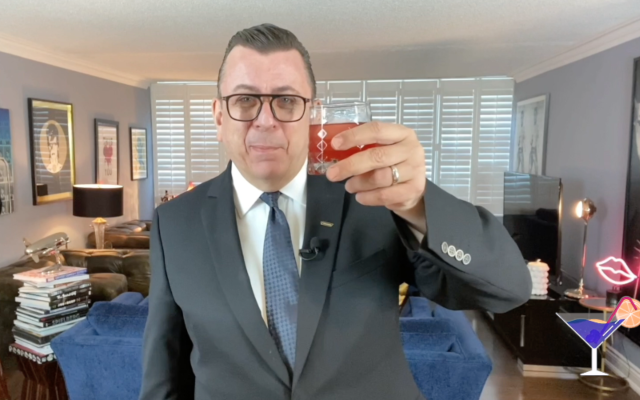
I make the perfect cocktail to enjoy while watching Harley Quinn, Bloodsport and Peacemaker rampage through “The Suicide Squad.” Have a drink and a think about the movie with me!
The difference between the 2017 “Suicide Squad” film starring Will Smith and this weekend’s sequel, “The Suicide Squad,” goes far beyond adding the definite article to the title. I accused the first film of “trying to echo the very movies it should be an antidote to.” You know, the self-important, self-absorbed superhero blockbusters that forgot to unpack the fun along with the story. “The Suicide Squad,” now playing in theatres, has some social commentary but it doesn’t forget the fun. Or the violence, daddy issues or anthropomorphic weasel.
There’s a lot happening in “The Suicide Squad.”
At the beginning of the non-stop 132-minute rollercoaster ride, cold-blooded government official Amanda Waller (Viola Davis) offers a selection of the world’s worst criminals a deal. the Join Task Force X, a.k.a. the Suicide Squad, work for her and, and in exchange she’ll reduce their sentences at the notorious Belle Reve prison. Stray outside the job, however, and a chip inserted at the base of their skull will be detonated, ending the mission forever.
Signing on for the mission to invade the (fictional) South American republic of Corto Maltese and steal and destroy a piece of alien technology from evil scientist The Thinker (Peter Capaldi), are a motley crew of supervillains.
There’s assassin Bloodsport (Idris Elba), patriotic vigilante Peacemaker (John Cena) who will kill anything or anyone in the name of peace, the neurotic “experiment gone wrong” Polka-Dot Man (David Dastmalchian), the dumb-as-a-stump fish-human hybrid Prince Nanaue (Sylvester Stallone), the rodent loving thief Ratcatcher 2 (Daniela Melchior), the unhinged Captain Boomerang (Jai Courtney), crazed criminal and former psychiatrist Harley Quinn (Margot Robbie) and field leader Rick Flag (Joel Kinnaman).
Add to that TDK (Nathan Fillion), Weasel (Sean Gunn), Blackguard (Pete Davidson), Javelin (Flula Borg), Mongal (Mayling Ng) and Savant (Michael Rooker), and you have a dysfunctional “Brady Bunch” charged with saving the world, if a giant, telepathic alien starfish doesn’t get them first.
“The Suicide Squad” has many of the same features as a Marvel movie. The world is at stake, there’s an alien lifeform causing trouble, there’s villains and a team of outsiders with special skills who fight back. They may look the same on paper, and share blockbuster budgets, but DCEU’s “The Suicide Squad” is seedier; a sister from a different mister.
The kills are squishier and bloodier than anything seen in “The Avengers.” The sense of humour is more juvenile than “Thor: Ragnarok” and you’re not likely to find a cute rat with a backpack in “Black Widow.”
James Gunn has not forgotten his schlocky Troma Films roots. His resume includes a screenwriting credit for “Tromeo and Juliet,” and “The Suicide Squad” pays homage to “The Toxic Avenger.” That sensibility helps define the new Squad movie’s most memorable bits but Gunn also tempers the gross stuff with a certain kind of sweetness and some not-so-subtle social commentary.
When the characters aren’t in motion, kicking, shooting, punching, gouging or stabbing, they often engage in character work, explaining how and why life pushed them toward joining this unorthodox team. The stories are dysfunctional—being trapped in a box with live, hungry rats is the stuff of nightmares—but they create a bond between the Squad that is unexpected in a movie that, in the beginning anyway, values brutality more than empathy.
Built into the story of an invasion of another country are questions of US foreign policy and military integrity. Casting the likable John Cena as Peacemaker, a “hero” willing to do anything to protect his perceived ideology, is subversively brilliant. When one Squad member snarls, “Peacemaker… what a joke,” the line drips with meaning.
But don’t get the idea that “The Suicide Squad” has fallen prey to the foibles of the self-serious 2017 version. Gunn brings enough fun and absurd action to make the sonic overload of the second kick at the can equal parts silly and serious.
A gritty story of second chances, “Lorelei,” starring Jena Malone and Pablo Schreiber and now on VOD, pulls career high performances from its veteran leads.
Schreiber plays Wayland, a biker fresh out of prison after a fifteen-year stint for armed robbery. He kept his mouth shut, didn’t implicate any of his brothers and is welcomed warmly back into the fold. But the next day when he reconnects with Lola (Malone), his childhood sweetheart, he sees a way out of his old life.
They reconnect over drinks, and soon Wayland moves in with Lola and her three kids, Demin (Parker Pascoe-Sheppard), Dodger (Chancellor Perry) and Periwinkle (Amelia Borgerding), all named after different shades of blue. “Time goes fast,” she says. “Not in prison,” he replies. His readjustment into civilian life is rocky, despite his best efforts at holding a job and parenting Lola’s kids.
Money is tight and the lure of his old ways looms and as tensions rise at home, Lola attempts to fulfill a dream they had when they were young. Before prison. Before the kids. Before life’s curveballs.
“Lorelei” could easily have fallen into stereotypes, but director Sabrina Doyle avoids poverty porn to provide an authentic portrait of people struggling to keep their heads above water. The entire movie is on simmer, threatening to boil over at any moments, but the chaotic chemistry Malone and Schreiber keep the relationship interesting. Completing the picture are very strong performances from the kids, all newcomers, who provide the film’s best reason to care about the action on screen. Issues of gender identity and race within the children are handled with sensitivity and realism.
“Lorelei” was produced by the folks behind “The Florida Project,” another slice-of-life movie, ripe with struggle and strife. Like that Oscar nominated film, it shifts from pragmatism to whimsy in the third act, capping the gritty story of second chances with an endearing ending.